CNBC: ‘Best States To Live In’ Mutilate Kids, Free Criminals, Take All Your Money

CNBC wants you to believe states run by Democrats are the best to live in. But they rigged the data.

How a McDonald's men's room perfectly captures blue-state decline


This week while dining at a McDonald’s in South Burlington, Vermont, I went to the men's room — and for a split second thought I’d entered a wormhole to the 1990s.

Did you ever go to a dance club that was illuminated by black-light bulbs? You know, the ones that glow purple-blue and make dirt and dandruff stand out like Christmas tree lights on your shirt?

My business partner and I were thrown out of a popular chain music supply store by three stoop-shouldered men in their 20s because we refused to wear masks.

That’s what it looked like. It was so dim I could barely navigate to the sink. I glanced up at the ceiling fixtures and sure enough, the bulbs were all dim blue. Why?

The answer will tell you all you need to know about how far my state has fallen.

Sugar crash

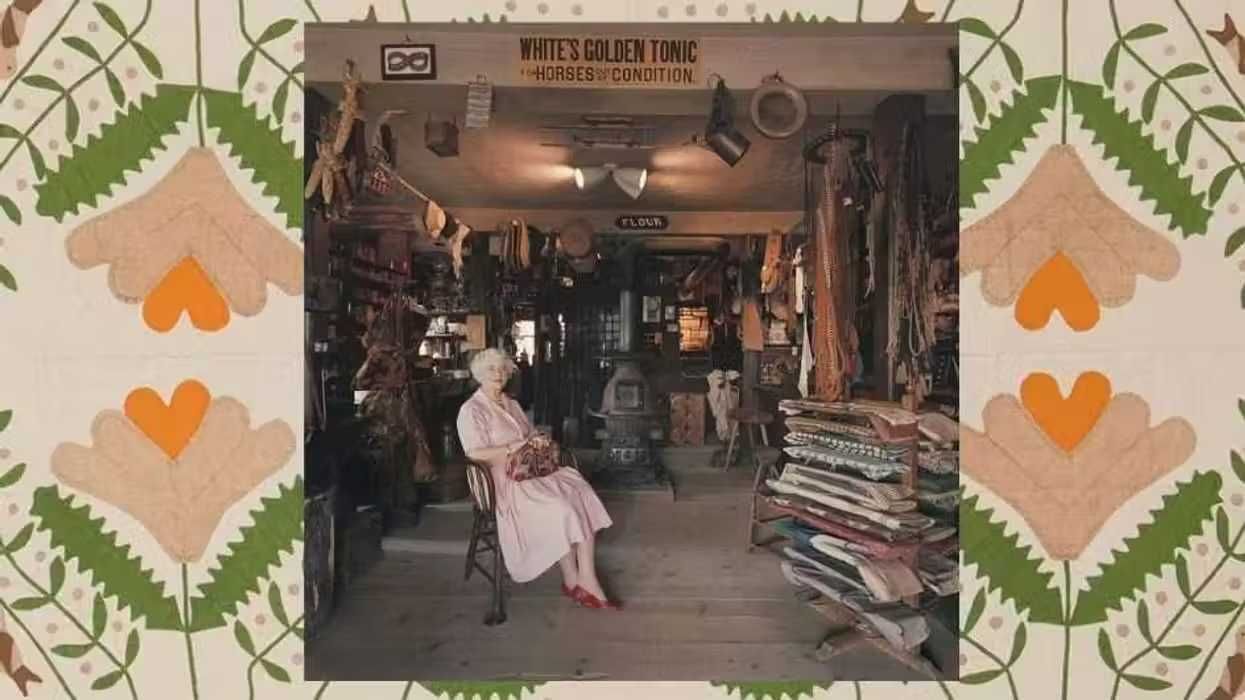
Consider this a companion piece to my recent article about sugar heiress Electra Havemeyer Webb and the priceless collection of American art, architecture, and industry she bequeathed to the people of the Green Mountain State.

I’m sorry to report that Mrs. Webb’s 39-acre park of wonders is an island of civility and charm losing its shoreline to blight, criminality, and despair. The same can be said of the other remaining pockets of old Vermont still hanging on.

At first, that men’s room was more puzzling than depressing. I’ve never seen a McDonald’s with a “sci-fi dystopia” decor before.

Then it hit me: This must be one of the gratingly permanent neurotic hangers-on from the days of COVID. Of course!

If such a conclusion would have never occurred to you, you must live in a red state. Or at least one of the relatively saner blue states of the northern plains.

If so, let me explain what those of us in deep Democrat territory lived through during COVID.

New England breakdown

Here in New England, the entire region went clinically insane. Everything shut down. Elderly men wearing masks outdoors on city streets screamed (yes, vocally screamed), “WHERE’S YOUR MASK?!” at people like me who went barefaced on Main Street in January.

People were thrown out of urgent care waiting rooms for not being vaccinated. A doctor implied she would report me to the state health board because I would not promise her that I would obey the governor’s self-quarantine order simply because I visited my family at Christmas.

My business partner and I were thrown out of a popular chain music supply store by three stoop-shouldered men in their 20s because we refused to wear masks. Then the restaurant across the street threw us out for the same reason, while mothers actually clutched their children to their bosom and stared at us as if we were muggers.

Yes, I know this sounds like something out of “Invasion of the Body Snatchers,” butI’m telling the truth. All of this really happened, and almost everyone went along with it.

Germ warfare

Today, six years later, the neurosis of that era has become the “new normal.” While the incidence has decreased, you still see people every day wearing masks outdoors on the street or alone in their cars. The post office in South Burlington still has not taken down its jury-rigged plexiglass barriers between the counter worker and the customer. The all-caps sign ordering you to STAND HERE is still there.

So naturally I thought the bulbs in the McDonald’s were meant to emit some kind of special germ-killing wavelength. Doesn’t that seem like something the geniuses who came up with all-day face diapers and “six feet apart” would suggest?

I drove 45 minutes home to the outskirts of Montpelier believing I’d figured it out. And then I did a little research.

The dim blue bulbs are not there to banish germs. They are installed to frustrate IV drug users by shining a light that makes it impossible to locate a blue vein under the skin. They are there to stop junkies from making the bathroom their private opium den or — should they overdose — their public deathbed.

“Officials in Philadelphia are handing out blue light bulbs because the glow supposedly masks the blue-tinted lines of veins — making it harder for intravenous drug users to find a vein,” National Public Radio’s Steve Inskeep intoned in 2019. That’s right, a full seven years ago.

You can find quite a bit of mainstream coverage of this phenomenon starting in about 2018. CBS News covered it in 2018, and so did Fortune magazine.

RELATED: How an NYC socialite's riches preserve America's beautiful, bustling past

Electra Havemeyer Webb. Slim Aarons/Getty Images; Background: Shelburne Museum
‘Symbolic violence’

And, from what I can tell, most of the more critical follow-up coverage only second-guessed this “important harm reduction measure” because it might make shooting up drugs more dangerous for the poor junkies. I couldn’t find any coverage that even mentioned the more important effect.

That more important effect is the degradation of civil society for normal, respectable people. The capitulation to the tyranny of junkies, criminals, and vagrants. We are a society that will not say: “No. You cannot make a place like McDonalds, which used to be a treat for children, into a no-go zone that arranges itself around the habits of low-lifes without doing a thing to make children and families feel welcome.”

Look at how an Inverse article criticized the blue lights. The article headline called the practice “symbolic violence.”

“But there are some huge problems with this approach,” author Peter Hess wrote. “Research has shown that drug users will still try to inject drugs in a blue-lit bathroom, even if it means they could accidentally miss their vein, which increases the risk of infection or soft tissue damage.”

Stand and fight

Pardon me for not giving a tinker’s damn if some addict gets soft-tissue damage. I’m part of the majority class of normal, productive citizens. We matter too. It is us and our families who pay the price for this, quite literally through taxes confiscated from us to give “safe injection spaces” for people who ought to be in a psychiatric ward. We’re paying a social and morale tax, too, as the world adds bumper cushions for the worst among us while telling law-abiding people to suck it up or get out.

This dystopia-in-a-bathroom story is just one symptom of an ongoing decline in areas governed by Democrats, progressives, and communists.

Burlington, Vermont, once a glittering city on the shores of Lake Champlain, is losing businesses in the tourist district because the city’s progressive mayor and her city council cry crocodile tears for the “unsheltered” community and refuse to hire enough police to crack down on open prostitution and drug crime.

My town, Montpelier, is barely holding on. The 19th-century Victorian Main Street is still there, but its charm is becoming blurrier and harder to see through the accumulation of graffiti, rutted streets, and open homeless encampments and drug dens in the alleys.

Whenever one writes an article like this, the most common reaction is, “Why don’t you just move, then?” My response: “Why don’t you stand and fight for the town you love?”

Maryland Governor Wes Moore's 'Climate Study' Is Bankrolled by Left-Wing Rockefeller Fund Amid Push To Force Oil Companies To Pay Billions in Damages

The left-wing environmental nonprofit Rockefeller Family Fund (RFF) is bankrolling a study commissioned by Maryland governor Wes Moore (D.) to "assess the undue burden Marylanders are paying for extreme weather events," records show. The group says the study is the first step in passing a law that would require oil companies to pay the state billions of dollars in climate damages.

The post Maryland Governor Wes Moore's 'Climate Study' Is Bankrolled by Left-Wing Rockefeller Fund Amid Push To Force Oil Companies To Pay Billions in Damages appeared first on .

That Old Familiar Bern

Even if you loathe Bernie Sanders, you will adore this phenomenal and utterly charming 500-plus page love letter to the state of Vermont and its people. Superbly written—Chiasson is a Wellesley College English professor and a well-known poet—it is also immersively researched, since Chiasson, who's now 55, grew up in Burlington during the 1980s when Sanders served as the small city's mayor for eight years. The only child of a struggling single mom, Chiasson interweaves his own teenage memories with Sanders's unlikely political rise, and the result is as compelling and enjoyable a book as you will encounter this year, or any other.

The post That Old Familiar Bern appeared first on .

SCOTUS sides with officer over protester in qualified immunity case, reversing lower-court opinion


In a case stemming from a protest over a decade ago, the Supreme Court delivered a decision this week about qualified immunity.

The Supreme Court on Monday ruled in Zorn v. Linton that a Vermont state police sergeant is entitled to qualified immunity in a case brought by a protester following a dispute at the Vermont Capitol in 2015.

'We reverse.'

In an unsigned per curiam opinion, the majority reversed the decision of a lower court, which had sided against the police officer's use of force in the case: "The Second Circuit held that Zorn was not entitled to qualified immunity.

"We reverse," the SCOTUS opinion stated.

RELATED: The next big Supreme Court shift might not be abortion or guns

Photo by Chip Somodevilla/Getty Images
The case revolves around a protest at the Vermont governor's inauguration on January 8, 2015. Shela Linton, a protester participating in an organized sit-in at the state Capitol building to demand universal health care, "anticipated being forcibly removed."

After some other protesters were removed by police officers, Sergeant Jacob Zorn approached Linton and attempted to get her to comply. When she resisted, Zorn unlinked her arms from the human chain the protesters had formed, "put [her arm] behind her back in a rear wristlock, and twisted her arm."

Linton alleged that Zorn's actions resulted in "physical and psychological injuries including post-traumatic stress disorder," the opinion stated.

Officials enjoy qualified immunity "unless their conduct violates clearly established law," the opinion said. The bar for finding an official in violation is quite high since it generally demands both a precedent in case law as well as a "high degree of specificity."

The Supreme Court's ruling argued that the lower court relied too heavily on a 2004 case, Amnesty America v. West Hartford, which itself arguably did not clearly establish that the specific use of force employed by Zorn violated the Constitution: "Reasonable officials would not 'interpret [Amnesty America] to establish' that using a routine wristlock to move a resistant protester after warning her, without more, violates the Constitution."

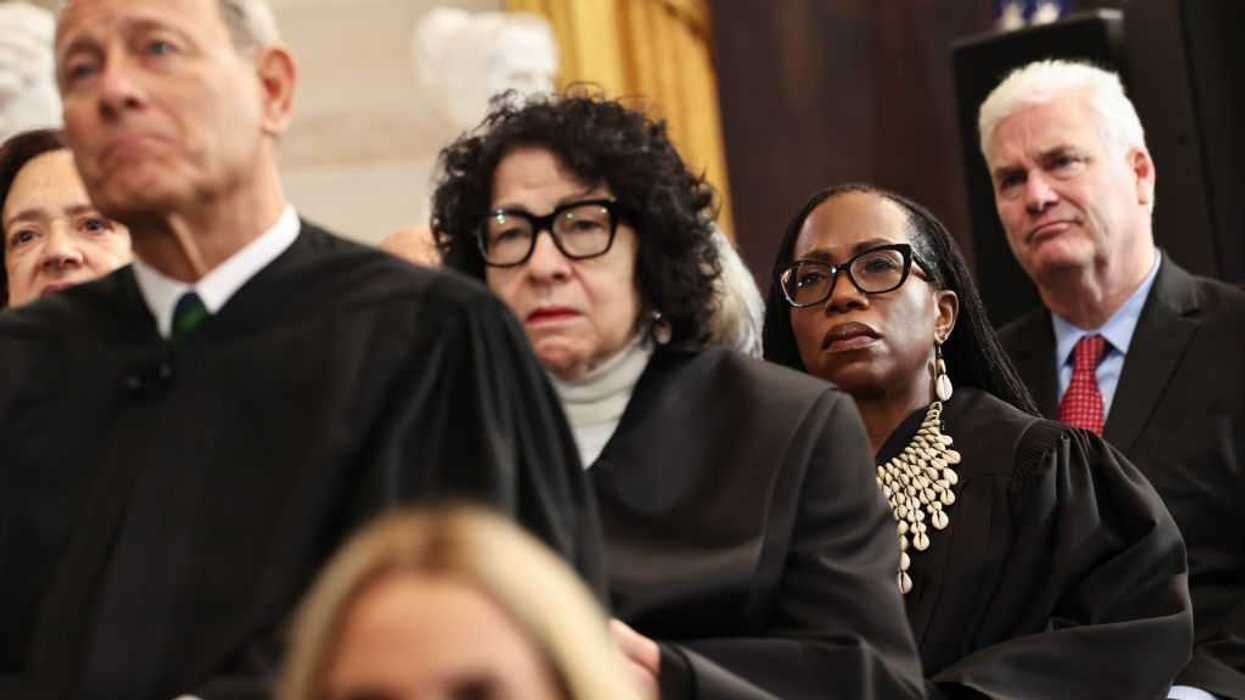
Justice Sonia Sotomayor dissented from the majority opinion and was joined by Justices Elena Kagan and Ketanji Brown Jackson. The dissenting opinion held that "the Second Circuit did not err in holding that Zorn is not entitled to qualified immunity at this stage. At the very least, the decision below was not so wrong as to warrant the 'extraordinary remedy of a summary reversal.'"

Like Blaze News? Bypass the censors, sign up for our newsletters, and get stories like this direct to your inbox. Sign up here!

22 Times Democrats Invited Noncitizens To Vote In U.S. Elections

Senate Democrats are currently blocking the SAVE America Act, which would require documentary proof of citizenship to register to vote and photo ID to cast a ballot. They insist the legislation is unnecessary, arguing noncitizen voting is already illegal. Sen. Alex Padilla said noncitizen voting in federal elections “is already a felony” and that the […]

The four Americans who just restored my faith in 'customer service'


“Yes, Mister Josh, I understand your concern and assure you that I will offer the highest-quality service to resolve your problem.”

At least, I think that’s what “Lakshmi” said in her thick Indian accent. But what does it matter? Every company that hires Bangladeshi call centers to “serve” American customers is really only saying one thing — and it isn’t “thank you, come again.”

I was hearing a young-middle-age American female voice with the pleasant but not obsequious tone I haven’t heard in customer service since 1999.

It’s not Lakshmi’s fault. She’s just doing her job, and she’s just a normal person trying to get paid. But I don’t want to hear her singsong, robotic repetition of an unctuous phone script. I want what I paid for, without excuses and without having to battle an AI phone tree and then strain to understand someone who barely speaks English.

But this article is actually about the blessed, wondrous competence of American workers, so let me put the bitterness away and tell you what happened.

Susan and Jennifer happened. And thank God, because I was at the end of my tether in a freezing-cold house trying to convince someone on the Indian subcontinent that possible propane leaks in a Vermont winter were serious business.

Spoiler: There was no leak, but we’ll get to that.

Mousetrap

Last week I thought there was a dead animal in the house. That smell must have been a mouse corpse that one of the cats snagged but never ate. Surely it was under the bed or under the chest of drawers. That’s where Mina the tabby was racing around at night, yowling, with her claws scrabbling on the wood floors.

She’s an excellent mouser, and it’s a good thing, because country houses have critters. This is the beginning of my third year living on a dirt road in the sticks after a lifetime of city living. Those first few years teach citified boys like me a lot of lessons about what nature and the real world are like outside “comfy” urban areas. You better keep your well pump in good order, or you don’t drink or wash. Better have water backup for when the power goes out.

After hours of pulling out furniture and crawling around with a flashlight, I couldn’t find the dead varmint. But I did find out that the rotten-egg smell was coming from the valve joint in the copper pipe that feeds propane into my cast-iron heat stove.

Propane users, you’re going to laugh, I know. But I assumed quite reasonably that this meant I had a leak. After shutting off the tap on the outdoor tank and closing the valve indoors, I called the nationally known brand-name fuel company that I use.

That’s when Lakshmi “entered the chat.” Imagine my irritated surprise when my call to the American company — it has a transfer station and local drivers right across the river; I can see it from my back yard — got routed to Bangladesh.

Subcontinental shuffle

No, you cannot reach the local people directly. Yes, I have tried. You must call the national number and get transferred to Bangladesh, which then acts as an intermediary. Only the call center can know the local phone number, apparently. If you do find a local number and call it, and it’s after hours or a weekend, you get a robot lady telling you how sorry she is and how you’ll have to call the 800 number. You guessed it: Back to Bangladesh.

The company’s phone script claims to take possible leaks seriously. It claims to be “sending an emergency technician right away.” But you can’t really know this. You just have to trust that Rohan or Lakshmi really did call the people who are located 500 yards from your house, that those people know who you are, and that they really will come to your house.

No, you may not have the contact number. No, they will not guarantee you that the driver or tech will call you with an ETA. You just have to “trust” them.

One hour goes by. Two. Three. Four. Five. Every hour, I call the company back and work hard to keep my voice pleasant and groveling enough that they’ll deign to continue speaking to me. Give these people one excuse, and they’ll leave you stranded and freezing. And with every call, I have to repeat the same “verification procedures” of reciting my name, address, billing address, phone number, and last four of my SSN just to get these people to be willing to talk to me.

“We have dispatched someone,” said Lakshmi/Rohan every time I called. They won’t tell me who. They won’t tell me an ETA. They don’t actually care that I’m starting to freeze my backside off.

But Susan cared.

RELATED: Pizza Hut Classic: Retro fun ruined by non-English-speaking staff, indifferent customer service

Photo by Blaze News

Sweet competence

On the fifth call to the national number, I thought I must have been dreaming. “Hi there, thanks for calling Nationally Known Fuel Company. I’m Susan. How can I help you today?”

“Are you really a live person?” I asked. I thought it was a trick. I was hearing a young-middle-age American female voice with the pleasant but not obsequious tone I haven’t heard in customer service since 1999.

“Yes,” Susan laughed.

I thanked her for being human and explained the situation. She was immediately riled.

“Are you serious? It’s been five hours since you first called us?” she asked, sounding genuinely incredulous. “That is not acceptable. It’s winter there, and I’m from Vermont. Hold on. I’m going to call the local dispatch manager personally.”

I almost cried over the competence of it. That interaction used to be common. If you’re 50 or older, this is the customer service you remember for most of your life. But it’s as rare as hen’s teeth today.

Voice of America

True to her word, Susan called the local dispatch manager, Jennifer. In a few minutes, Jennifer was calling me. And then everything got better.

“I am so sorry you’ve been waiting so long,” Jennifer said. I could tell she was my age, and from her particular American accent, she sounded just like the gals I went to high school with. Solid, no-nonsense Gen X.

It turned out that Jennifer had a much worse day than I did. She had been up all night alone in the dispatch office due to short staff. Between getting a snooze on the cot, she was trying to get propane trucks out to freezing customers who ran out. The main local truck broke down, leaving the rookie delivery guy stranded. She couldn’t find the emergency technician.

Jennifer told me all this to explain why everything was FUBAR, but she didn’t tell me in order to excuse the problem. She focused on getting me back up and running, but wanted me to know that if she had her way, none of her customers would have had to go through the hassle.

It gets better. Jennifer explained to me that I almost certainly did not have a propane leak. The odor, she explained, happens because fuel companies add an offensive odorant to the propane as a safety measure and a supply alert. When a propane tank runs low, the odorant that settles to the bottom of the tank vaporizes and becomes very apparent around the appliance. Yeah, technically, that means something is “leaking,” but in such tiny amounts that no one is getting poisoned.

“When you smell that, it almost always means your tank is about to give out. I regularly stop techs from running out to people, because it’s never a leak; it’s a delivery problem.”

Jennifer and I decided I didn’t need a tech (I already knew I was safe, having shut off all valves and airing out the house as precaution), but just a delivery.

“I’m looking at your account, and you’re due for a fill tomorrow. It was so cold in December, you probably went through it faster like everyone else. I’m gonna get Dickie out to you this afternoon.”

Neighborly help

She was right. Dickie got here, and my tank was on fumes. He laughed at me good-naturedly because I thought I had a leak, but I told him this was a first-time city-boy-goes-country lesson for me.

But it gets even better. Paul, another local, called me later to apologize for the delay and frustration. I told Paul that Jennifer had explained what happened and that I felt just as bad for all of them with the troubles they were having.

Paul insisted on giving me a $300 tank of propane for free as an apology. Wow.

Here’s the lesson for American companies. I nearly canceled my contract with this nationally known company. If they want to shunt American customers to a call center drone around the world, then they don’t want my business. There are plenty of other companies I can use.

But I’m sticking with them for now because of Susan, Jennifer, Dickie, and Paul. All of these people are Americans, and they’re local to me. I probably pass them in the grocery store in Montpelier. They know what winters are like, and they treated me as they would want their families treated in a situation like this.

Those four competent, pleasant Americans are the reason I’m going to stay a customer, at least for now. I want them to keep their jobs. My decision to remain a customer is not unconditional. If I have to deal with Lakshmi again in an emergency, I’m done. I can walk into five local, family-owned fuel dealers any day of the week and actually speak to an American who is my neighbor.

“Globalization” is a con job by corporations who see themselves as “global corporate citizens” because it pays them more to treat their customers like trash than it does to provide good service. So far, we American customers haven’t found a way to make the market punish them into better behavior. I wish I knew how we could.

No cheap prices are worth the aggravation of living in this fantasy world where we pretend a Hindi speaker across the globe is just as capable of keeping my Vermont house warm as someone who lives here. God bless those local Americans.

'Trans' teens need someone to care, not 'health care'


Montpelier, Vermont, population 8,000: This is the smallest state capital in the country. If you have seen a postcard of a downtown in Vermont, it’s almost certainly Montpelier.

When I rolled into town in a U-Haul 23 years ago and came through a mountain pass and saw the town, I thought Disney rolled out a series of false fronts of Victorian Americana, because it looked like a movie set.

She was genuinely sweet, polite, and helpful. And she was so obviously a girl on the cusp of a womanhood I fear she will never have.

But when you get out of the car and look closely, you see the cancer. Like most Vermont towns and cities, “woke” has infected the shared public brain. Montpelier is bedecked with trans/queer flags, BLM signs, graffiti exhorting people to “fight the man.”

The city clerk posts on local online forums about how oppressed the “undocumented neighbors” are and how important it is to let them vote in city elections. Until recently there was an upscale, overpriced Marxist (heh) coffee and dessert shop named “Delicious Dissent.” Clenched-fist graphics sat alongside messages like “for the workers” in flowing, girly script painted on the windows.

Meeting 'Johnny'

But the people are even sadder, and “Johnny” is the saddest. She was the teen girl who checked out my order at one of the local markets. “Johnny” is not the name on her tag, but it’s a close approximation. She wore the name tag next to a series of buttons telling onlookers that her pronouns were “he/him” and that “nonbinary identities are valid.”

Readers, I had to leave quickly after my order, because I was tearing up, wishing this poor girl had better influences in her life.

We’re used to young wokesters being snide and socially aggressive; they’re often loud and insufferable. Not Johnny. I didn’t even notice her strange name badge and buttons at first because I was thinking about how unusually polite she was for a store clerk in 2026. Where I live, you are lucky to get eye contact from a clerk. More often, they ignore you, leave you to bag your own order, and stare at their phones while fiddling with the metal bull rings hanging from the middle of their noses.

Johnny was different. “Hi, how are you this evening?” she asked me. I perked up, eager to have that rare pleasant business transaction. We chitchatted about the coming snowstorm as she went through my items. But as I looked at her, my heart got soft and the sadness came.

She was morbidly obese, as are so many people in this town. Not just chubby, but dangerously fat. Heart-attack-by-30 fat. Her breasts were smashed down in a binder (a strap confused women wear when they’re trying to look like a “man”). Her hair had four inches of natural color and bright blue ends that had grown out. It wasn’t washed. Her face was covered with cystic acne, and her uniform hadn’t been cleaned.

Girl, interrupted

“Johnny.” “He/him.” A blind man could not have mistaken this girl for a man. Her voice was a girl’s voice. Her demeanor was feminine. She was genuinely sweet, polite, and helpful. And she was so obviously a girl on the cusp of a womanhood I fear she will never have. How long will it be before she gets “top surgery” — a cosmetic mastectomy — funded by Medicaid through the state? How long until she starts taking testosterone and permanently turns her voice into that frog-kazoo croak that “trans men” develop?

I don’t know anything about Johnny’s home life, but I can make some educated guesses. At absolute best, whatever parents she has neglected her. More likely, they have been actively abusive. No sane, moral parents allow or encourage their teen girl to strap down her breasts, eat to the point of dangerous obesity, never shower, and try to tell the world that she’s a male.

It’s not unlikely that her parent(s), however, actively encourage these morbid choices. Too many people in Vermont are in a state of actual psychosis. They are literally disconnected from reality. They actually believe girls can become men. They genuinely believe that most of us are white supremacists just waiting to lynch one of the approximately seven black people in town.

Bad education

And anyway, once the kids are in the public school system, their glazed-eyed “Karen” teachers encourage their self-destruction.

In 2021, the Burlington School District surveyed the sexual orientation and gender identity views of high school students. Yes. Teachers and adults are asking children who they want to sleep with and whether they believe they’re the opposite sex. Yes, this is child sexual abuse. Yes, they get away with it. Yes, everyone acts as though this is normal and not predatory.

The results, proudly published on the state health department’s website, are shocking. Fully 30% of these kids told survey-takers that they were “LGBTQ+.” Really? Nearly one-third of the students are either homosexual, bisexual, “transgender,” “nonbinary,” or “queer” (whatever the hell that means)?

Between parents who ought to be in prison and teachers, administrators, and health officials, kids like “Johnny” don’t have a chance.

RELATED: 'The Emperor vs. the Twink': Joe Allen attacks the transhumanoids

Photo by Michael Kovac/Getty Images for Vanity Fair

Someone cared

Had I been born three decades later than I was, I would have ended up the male version of Johnny. I grew up fatherless, with only a temporary stepfather who beat me senseless and tried to murder my mother after molesting my sister. My mother was deranged with borderline personality disorder and tore through the house like a trailer-park version of Joan Crawford in “Mommie Dearest.”

Unsurprisingly, I turned out to be a homosexual beset with intractable PTSD. By the time I was 13, I had been placed in an institution for being “incorrigible.” That was no day in the park, but it was better than remaining at home with a gorgon wearing a mother mask.

In sixth grade, I remember walking to school one day in an almost catatonic state. I felt nothing. I thought nothing. It’s a hard feeling to describe, but I think “dissociation” is closest. For no reason I can remember, I pulled a red crayon out of my backpack and colored in my lips as if I were a stripper getting ready to perform.

Then I sat down in class and stared at the blackboard. I could hear Ms. Haag’s voice as she gave the lesson, but I heard the mush-mouth of the teacher’s voice in the old Charlie Brown cartoons. When class was over, Ms. Haag pulled a chair up in front of my desk and sat down, looking me in the eye. She held onto my hand and asked, “Josh, why did you put that on your mouth? Is something wrong that you want to talk about?”

“I don’t know” was all I said. And I didn’t know. I still don’t know. But someone cared. My teacher cared. Someone noticed, and someone said something.

A blind eye

There will be no Ms. Haag for today’s Johnnys. When society has been turned upside down, nothing is normal. Beauty is called ugly. Violence is called love. Men are called women. Abuse is called care.

Some grown-up somewhere in Johnny’s life has looked at her and felt what I felt. She wanted to ask Johnny what was wrong, because she could see that something — many things, probably — was terribly wrong. But she can’t. Because if you notice the horror, you are targeted. You’re called a child abuser for objecting to child abuse. You’re called a predator for wanting to shield the innocent. Any genuinely caring teacher who tried to intervene would be fired and then held up for public scorn as a bigoted tormentor of children.

I know how insane this reads, but it’s true. I live here, and I’ve been targeted for speaking out. This is the end-state of a society that runs on boundless narcissism and pathological lying. It’s satanic.

When I left the store with the bag that Johnny packed my order in, I put on my seatbelt and waited for a few minutes because I needed to cry. I wanted to be Johnny’s dad and save her. My God, won’t somebody help her?

All I can do for Johnny is pray, and I have been, even though I confess I’m not sure anyone is listening. Would you pray for her, too?