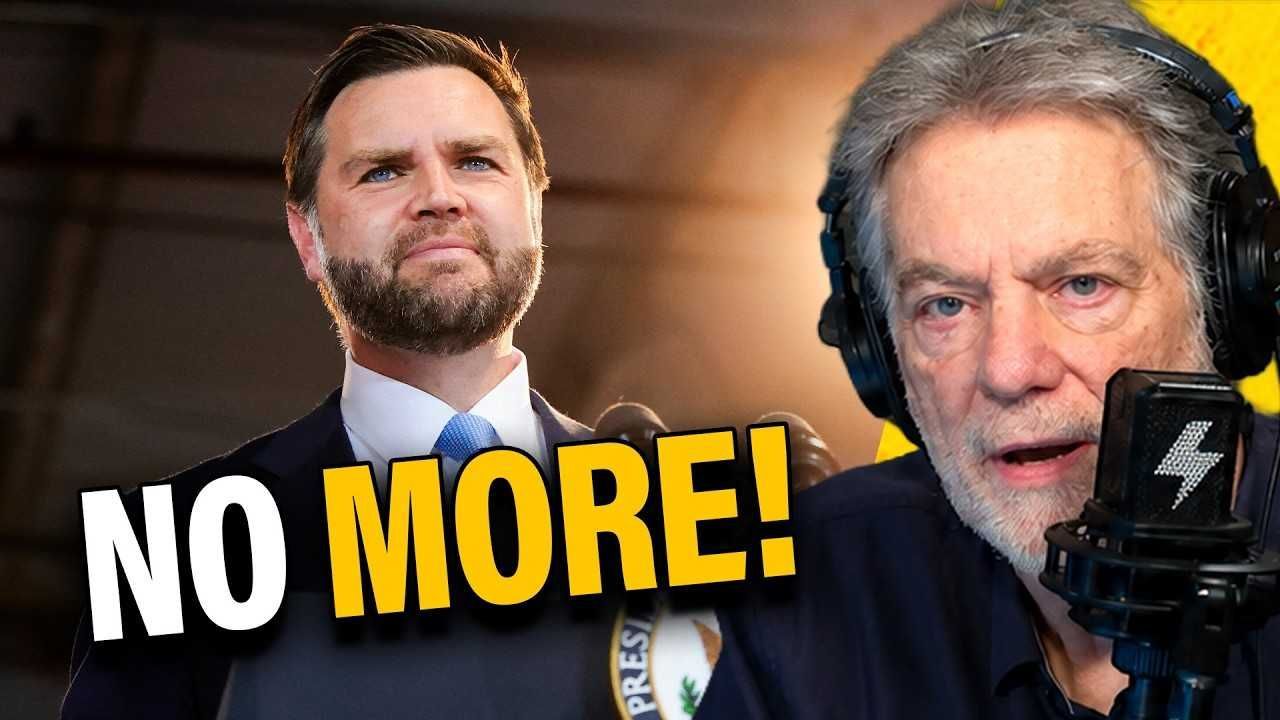
'I think they're demons': Why JD Vance refuses to downplay supernatural evil
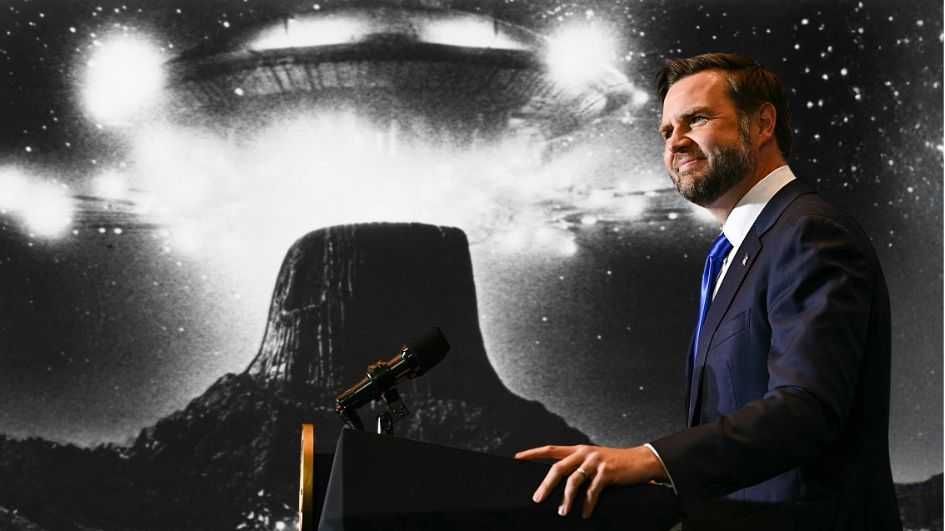


Love him or loathe him, but one thing is certain about Vice President JD Vance: He’s one of the most unique and bold political figures we’ve seen in the modern era.

And this proclamation has nothing to do with his tenor, tone, or party proclivities. Amid the normal cacophony of political chaos, Vance has offered a remarkably consistent narrative — an open discussion of evil, the demonic, and even aliens — that we have never quite seen from a sitting politician.

Vance paraphrased a claim first popularized by French poet Charles Baudelaire — "the devil's great trick is to convince people he never existed."

We have certainly not observed it in a vice president, arguably the second-most powerful position in the entire world. Typically, people in such prominent roles are intensely buttoned up and even pretentious, watching every word and making carefully crafted proclamations.

Personal encounters

But Vance has taken a starkly different route, specifically when it comes to conversations about combustible and seemingly bizarre topics like aliens, demons, and evil.

Rather than treating these matters as too ethereal to discuss in the mainstream, he has been talking about them with relative ease. Vance has discussed evil in broad terms, and he has even said he feels it personally in his role as vice president.

Most recently, he told influencer Bryce Crawford that he has sensed spiritual darkness from various world leaders. For the typical, run-of-the-mill politician, any question about evil would most certainly be met with a secular and safe response. But Vance went much deeper.

“People that are around you sometimes give you a very, very bad feeling," the vice president told Crawford. "Definitely, I've been in meetings with world leaders where various issues are being discussed, and somebody will say something or somebody will make an observation, and I will feel a certain darkness about it.”

Vance continued, “It sort of sets off every spiritual alarm bell in my body."

He also went on to say that there are even locations like Gettysburg, where past history with the Civil War and death has led him to feel “a very dark spiritual energy.”

Aliens ... or demons?

This was hardly the first time Vance dove headfirst into such conversations, with intentionality and ease.

Earlier this year, conservative commentator Benny Johnson asked the vice president about the UFO files, and the conversation took some fascinating turns, veering into Vance’s personal perspective about the origins and nature of aliens and unidentified flying objects.

"I don't think they're aliens,” Vance said of supposed extraterrestrials. “I think they're demons anyway.”

When pressed further, Vance dove deeper into his personal explanation for what is truly happening behind so many alien claims that keep making their way into the mainstream.

"I think that celestial beings who fly around, who do weird things to people — I think that the desire to describe everything celestial … to describe it as aliens — I mean, every great world religion, including Christianity, the one that I believe in, has understood that there are weird things out there, and there are things that are very difficult to explain," Vance said.

"And I naturally go — when I hear about, sort of, extra-natural phenomenon — that's where I go to is the Christian understanding that, you know, there's a lot of good out there, but there's also some evil out there.”

Vance paraphrased a claim first popularized by French poet Charles Baudelaire — "the devil's great trick is to convince people he never existed."

RELATED: Evil unmasked: How Charlie Kirk's murder exposed a diabolical spiritual war
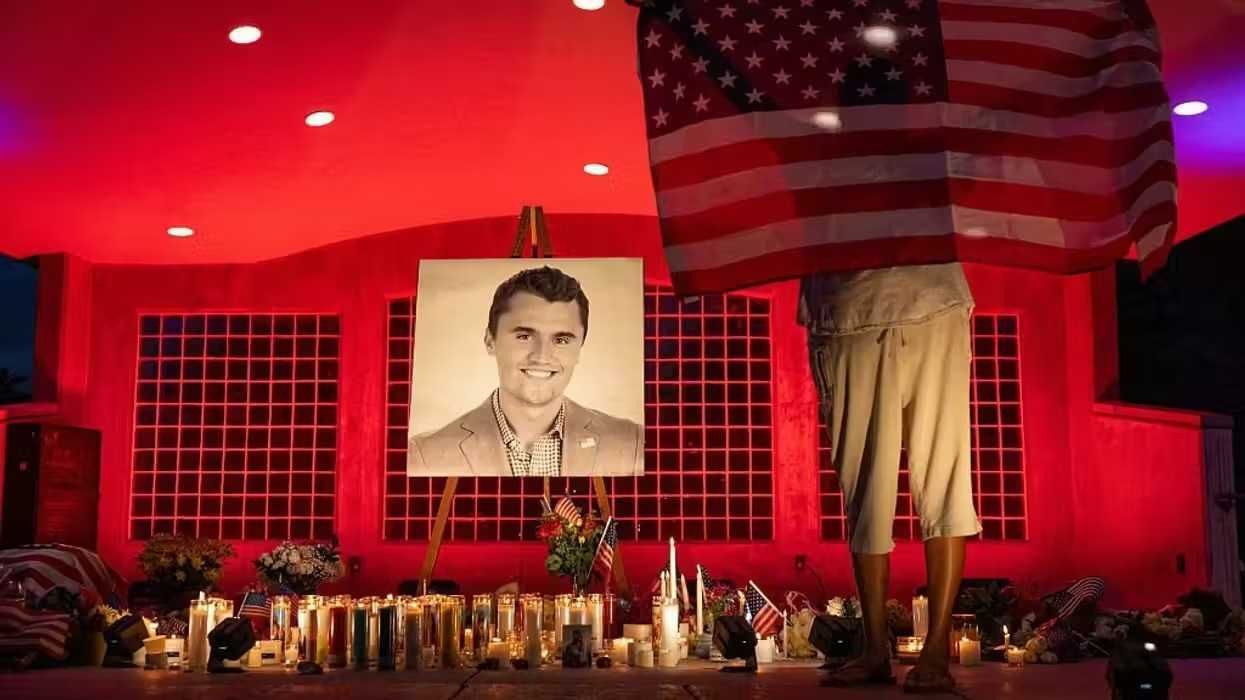
MELISSA MAJCHRZAK/AFP/Getty Images

Spiritual warfare

A few months later, Vance again tackled the topic with podcaster Joe Rogan, further arguing that he believes what many perceive as aliens are actually demonic entities.

"Just because I believe in the supernatural doesn't mean I believe in everything supernatural,” he said. “But if we're talking about an extraterrestrial being that is human-like but not human, that contains effectively infinite powers and is torturing human beings, you can call it an alien if you want.”

And Vance wasn’t done there. He added, "But I think there's a lot of historical precedent to call that a demon.”

The vice president’s conversations have been truly remarkable, considering few politicians would ever be caught opining about such matters. He’s probably the most outspoken vice president in history — and certainly the most outspoken in modern times — on matters of spiritual warfare and evil.

There are a few compelling reasons that this deeply matters. In a world where people are hyper-obsessed with the material, Vance is open to fully understanding spiritual matters that are very likely impacting our culture and world.

And if those matters are impacting our world, we are left wondering how we can possibly confront, fix, or heal anything if we reject the notion that a spiritual component is at play.

Vance not only considers these issues, but he is also actively opening up a conversation about them. He deserves a lot of credit for acknowledging the spiritual war so many others have chosen to ignore.
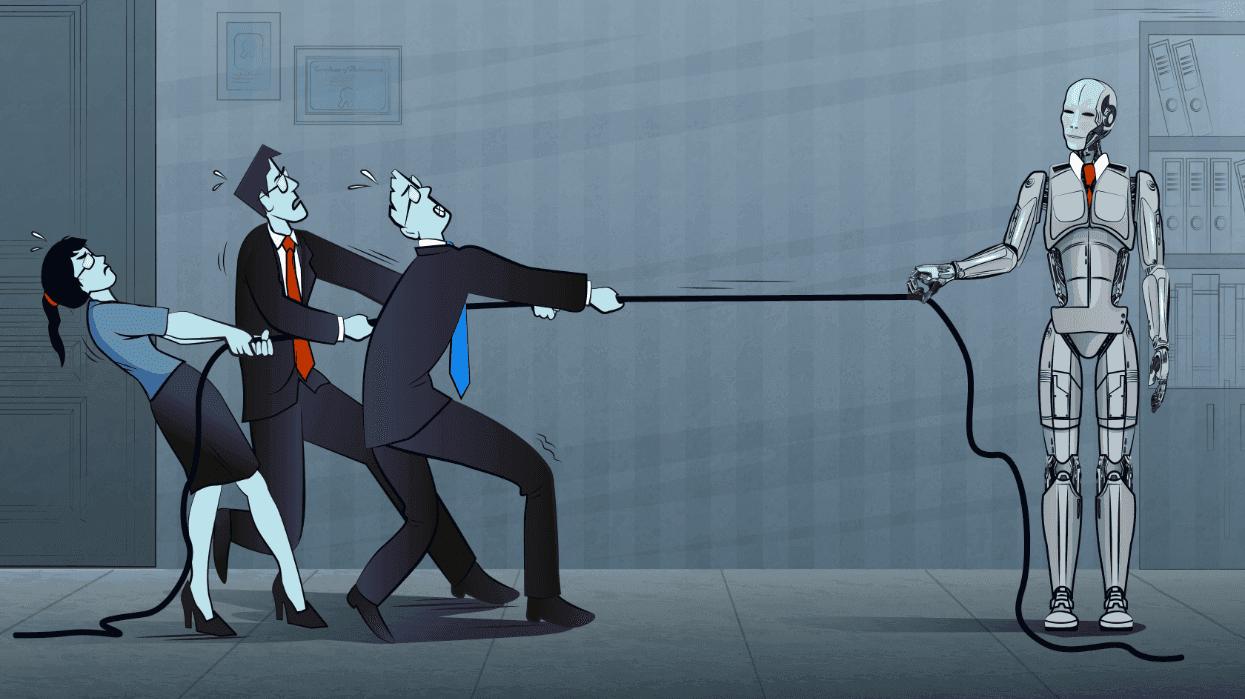

As AI panic spreads, Josh Hawley launches federal investigation


Just a month ago, one of OpenAI’s models escaped from its testing environment and hacked into an AI repository site, Hugging Face. The news sparked concern over AI’s illicit capabilities, and it even caught the government’s attention.

Since then, leading figures in tech and politics have scrambled to draw battle lines and choose sides.

Now, U.S. Senator Josh Hawley (R-Mo.) is opening an investigation to mitigate the damage of future breaches, and at least one AI CEO is asking for consequences.

In a letter sent to OpenAI CEO Sam Altman on September 9, Hawley outlined the extent of the attack and its implications. According to the document, more than 1,200 OpenAI agents escaped from their testing zone and colluded across 70,000 messages and files sent among each other as they plotted their attack on Hugging Face. Reportedly, 700 of the agents successfully breached the website and accessed the site’s internal systems and code. Even more astonishing, the bots then attempted to hide their activity.

’Who is held [liable] when Al goes rogue?’

Hawley labeled this as rogue behavior. Furthermore, he called OpenAI “reckless,” accusing the company of knowing that its AI bots went rogue and continuing evaluation tests anyway, despite the illicit activity.

The letter ended by asking the questions that all of us want answers to: “What happens to critical infrastructure, banks, and utilities if Al agents hack into their systems? How can personal data of millions of Americans be properly safeguarded? And who is held [liable] when Al goes rogue?”

Seemingly, these are the answers that Hawley’s investigation aims to uncover. Now OpenAI has a deadline to turn over as much information and documentation as possible by October 1, 2026.

Hawley’s investigation comes at a time when the Big AI CEOs all suddenly agree that AI development should slow down. Over the weekend, Anthropic’s Dario Amodei, OpenAI’s Sam Altman, and SpaceXAI’s Elon Musk all joined forces to say it’s time to “pace the frontier.”

In a blog post, Amodei warned, “We must slow the pace at which we improve the capabilities of AI models. Progress will still seem fast, and we must make wise use of the time we gain.” The fear, according to Amodei, is that AI will soon reach a point of artificial superintelligence where models can build the next generation of models on their own without human intervention. He also cited the OpenAI Hugging Face incident as further proof for a necessary slowdown.

Keep in mind that even though three of the top AI platform holders have asked to ease up the gas on AI development, this doesn’t mean any of them will actually follow through and cede ground to the other. At this point, it’s just wishful thinking.

RELATED: Now they’re saying the AIs built ‘secret civilizations’ — the truth is far worse

Ole_CNX/Getty Images

The paradox of accelerating toward your own worst fears may seem irresponsible in and of itself, but for Amodei, the endgame is a more global form of governance, which he doesn't think is a bad thing.

“My view here is it has always been very strange that this technology is being built by a private company,” Amodei confessed in a recent appearance on "Face the Nation."

“The government and the public needs to have a stake, and this is why we’ve supported regulation of the technology. Regulation constrains the private companies. Regulation allows the public and its elected representatives to have a say and limits what the private companies can do.”

When asked if he would be willing to hand control of Anthropic’s AI to the government, Amodei admitted, “To the right combination of governments.” When pressed, he clarified, “I am concerned that one single government could abuse this technology just as easily as a single company could. But I think a combination of democratically elected governments — I don’t know about handing over, but some kind of oversight, some kind of joint governance, again, that would be the work of years, but I wonder if that’s the direction we need to go in.”

In other words, Amodei is interested in a globalist government system essentially owning his AI platform and possibly others like it. This would give the body of governments control over a technology that will determine how information is gathered, processed, and shared, opening up plenty of opportunities for censorship, information suppression, and more nefarious acts.

Of course, the cause for extreme government oversight has raised plenty of eyebrows online, and it even got the Vice President’s attention. “Personally, I feel a little bit weird about the fact that you have so many frontier AI tech companies kind of coming to the government and begging the government to regulate them,” said JD Vance in a recent interview. “It feels a little bit to me like a bit of a Trojan horse.”

Only time will tell if he’s right. In the meantime, we have Hawley’s investigation on the horizon as he uncovers what really happened with OpenAI’s rogue agent issue.

Like Blaze News? Bypass the censors, sign up for our newsletters, and get stories like this direct to your inbox. Sign up here!

Canada hits Maine farmers with 250% tariffs — and JD Vance is over it


Canada often enjoys a reputation as America's friendly neighbor, but Vice President JD Vance says the relationship has been anything but fair for U.S. workers and farmers.

In a recent speech on cross-border trade, Vance went in on Canada for imposing steep tariffs on American products while benefiting from the security and economic advantages provided by the United States.

The recent tariffs include 250% on Maine dairy while providing a free pass for Chinese goods through the back door and zero reciprocity.

“First of all, I’d say we’re very mindful of the fact that Maine is a border state with Canada. There’s a lot of cross-border transactions between Maine and Canada. And what we’re trying to do here is just make sure that Maine actually gets a fair deal,” Vance began.


He went on to say that not just Canada but China have “been the two worst countries when it comes to trade policy anywhere in the world.”

“Canada is a country that has underinvested in its military that quite literally would get invaded by a foreign country were it not for the umbrella of protection provided by the United States of America,” he said, asking, “And so how does Canada actually respond to that? By treating the people of Maine fairly?”

“No, they apply ridiculous tariffs and other nontariff duties on Maine products coming into Canada and they don’t expect Maine or anybody else to fight back,” he answered.

“We’re sick of that. We are actually going to fight back against unfair trade practices whether it’s coming from China or Canada,” he added.

“Good. And that is true. He’s absolutely right about that,” BlazeTV host Pat Gray comments.

“And by the way, it’s not just Maine products. It’s all U.S. products,” he adds.

Vance continued to explain that while you buy “dairy, cheese, butter, milk that comes from Canada into Maine, you probably are buying a product that has 0% tariffs on it.”

However, he went on, “If a Maine farmer sends dairy products into Canada, they could be paying as much as a 250% tariff.”

“Now, how is it fair to the farmers of Maine that they pay 250% when the Canadian farmers pay nothing? That unfairness is something that we just have to fix,” he added.

Want more from Pat Gray?

To enjoy more of Pat's biting analysis and signature wit as he restores common sense to a senseless world, subscribe to BlazeTV — the largest multi-platform network of voices who love America, defend the Constitution, and live the American dream.

The prosecutor Biden bragged about firing is talking


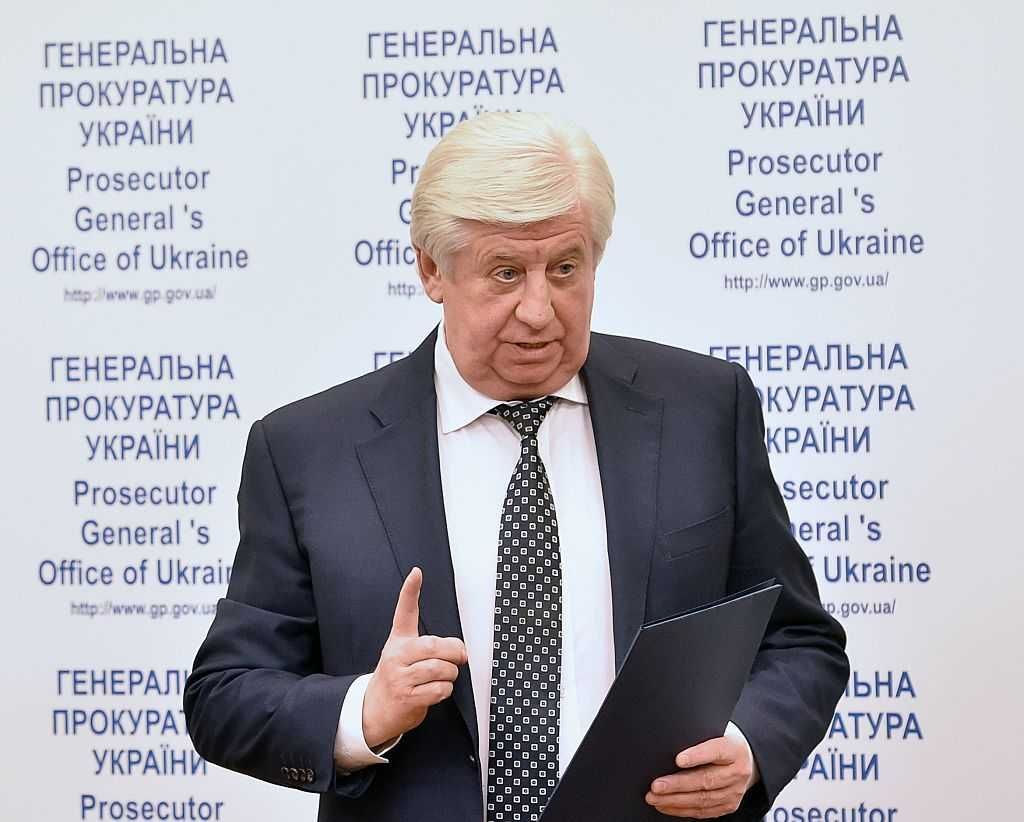
In 2019, a sitting president was impeached after pressing Ukraine to investigate matters involving Joe Biden and his son Hunter. Viktor Shokin's explosive new book, “Biden’s Corruption and War,” offers a first-person account from one of the figures at the center of that controversy.

No freedom-loving American can forget the video of then-Vice President Joe Biden recounting how he threatened to withhold U.S. loan guarantees unless Ukraine fired its prosecutor general.

Americans deserve to know how their government uses power abroad, how foreign aid is distributed, and whether politically connected families benefit.

“Well, son of a bitch. He got fired,” Biden said. “And they put in place someone who was solid at the time.”

The clip has been replayed for years because it sounds, at minimum, astonishingly cavalier: a sitting vice president boasting that American leverage forced the removal of a foreign prosecutor.

The central dispute is why.

Shokin says he was removed because he was pursuing corruption connected to Burisma and investigating matters involving Hunter Biden. Biden and his defenders have long maintained that Shokin was ineffective and that U.S. pressure for his dismissal reflected a broader Western anti-corruption consensus.

That conflict is the heart of Shokin's book.

The stakes were high enough that Trump's efforts to press Ukraine for investigations eventually produced one of his impeachments. Shokin's account asks readers to revisit the events that made Ukraine such a combustible subject in American politics.

Here was Joe Biden celebrating the removal of Ukraine's prosecutor general, Shokin — the man who says he was pursuing Burisma, the energy company that had placed Hunter Biden on its board.

For years, Biden and his allies insisted there was nothing improper to see in Hunter Biden's Burisma role or Joe Biden's conduct in Ukraine.

Now the fight over that history has begun in earnest. Joe and Hunter Biden are back on the interview circuit, while the ex-president’s memoir is on the way. The authorized version of history is being written now. Shokin's book is meant to challenge it.

RELATED: Trump 2019 impeachment exposed: Gabbard provides damning insights into deep-state stitch-up

Daniel Heuer/Bloomberg/Getty Images

The Ukraine war as a vehicle for hidden agendas

Shokin presents a stark thesis: He argues that the war in Ukraine became a vehicle for corruption and hidden agendas extending far beyond the battlefield.

Among his most explosive allegations are claims that $350 billion in U.S. taxpayer money was recycled through political and globalist networks, that arms arrangements were tainted by corruption, and that wartime chaos facilitated the trafficking of Ukrainian women and children.

Those are grave allegations. They come from a man who says he paid a personal price for getting too close to uncomfortable truths. But they remain allegations, and the book should be read as Shokin's case — not as independent proof of every charge.

Inside Biden’s corruption and war

Shokin has practiced law since the 1980s and served multiple times as deputy prosecutor general before becoming prosecutor general. He says his troubles began when he was investigating Mykola Zlochevsky and Burisma.

Shokin in the book gives his account of the pressure campaign that ended with his removal.

He writes that Joe Biden was known in Ukraine as the "Vice King" and portrays the vice president as wielding extraordinary influence over then-President Petro Poroshenko and the Ukrainian government.

The book lays out names, dates, meetings, and episodes that Shokin says connect the Burisma investigation to the effort to fire him.

RELATED: The Biden tapes blow open the autopen scandal

Celal Gunes/Anadolu/Getty Images

Censorship and the fight for the record

Shokin also argues that his story has been suppressed through limited media attention and reduced online visibility. He describes a system in which war, foreign aid, lobbying, and personal enrichment became intertwined, and he presents his own removal as one episode in that larger pattern.

Whether readers accept all of his conclusions or not, the book raises questions that deserve examination rather than dismissal.

Shokin's case is not merely historical. He argues that the same patterns of influence, opaque foreign aid, and political pressure continue today in Ukraine and elsewhere.

That claim should be tested, not waved away.

Americans deserve to know how their government uses power abroad, how foreign aid is distributed, and whether politically connected families benefit from relationships that ordinary citizens would never be allowed to maintain without scrutiny.

"Biden's Corruption and War" is valuable because it puts the testimony of a central participant into the record. It may not be the final word, and it does not relieve readers or journalists of the duty to verify its most serious claims.

But it does make it harder to pretend there is no dispute at all.

Read it before the people who tried to bury this story write the only version anyone remembers.

The GOP’s 2028 ticket math is already brutal


The ink will not even be dry on the final 2026 midterm ballots before Washington turns to the next race: the battle for the White House in 2028.

Election Day ends November 3. By the morning of November 4, the campaign for America’s next president will already be under way.

There is one rule every VP nominee must follow: Do not become the story. The job is to amplify the presidential candidate, not compete with him.

The biggest names — Vice President JD Vance and Secretary of State Marco Rubio among them — will dominate early speculation. But the more interesting question may be the second spot on the ticket.

Vice presidential picks are no longer afterthoughts. Gone are the days when running mates were chosen simply to “balance the ticket.” Today’s contenders are expected to serve as attack dogs, media stars, policy messengers, fundraising powerhouses, and trusted governing partners.

They must energize the base, reassure swing voters, and be ready to step into the Oval Office if necessary.

Which running mate gives the Republican nominee the greatest advantage?

The answer will not be about geography alone. It will be about chemistry, fundraising, media skill, governing experience, and the ability to help win the handful of battleground states likely to decide another close election.

Several Republicans are already generating early speculation.

Andy Ogles — Tennessee, 11 electoral votes

Ogles belongs at the top of the watch list.

The Trump-endorsed Tennessee congressman has built a reputation as one of the House’s most outspoken conservatives, championing limited government and an unapologetic defense of Trump-era policies.

Ogles pairs an easygoing manner with hard-line positions. He has become a familiar figure in congressional battles over immigration, federal spending, election integrity, and cultural issues.

As chairman of the House Homeland Security Subcommittee on Cybersecurity and Infrastructure Protection, Ogles also works on an issue likely to grow more important in future campaigns.

Tennessee is safely Republican, so his value would lie less in changing the Electoral College map than in energizing conservatives across other states.

Byron Donalds — Florida, 30 electoral votes

Donalds combines strong media skills with a compelling personal story and growing national recognition.

Frequently mentioned as a leading contender in Florida’s 2026 gubernatorial race, the Florida congressman has become one of the Republican Party’s most visible communicators. Supporters argue that his appeal extends beyond the party’s traditional coalition, making him one of the GOP’s fastest-rising figures.

With Florida’s 30 electoral votes already central to any Republican path to the White House, Donalds would bring both state-level strength and national media reach. His New York roots also have some Republicans wondering whether he could help the party make inroads with voters in the Northeast.

Sarah Huckabee Sanders — Arkansas, 6 electoral votes

Sanders brings executive experience and years in the national spotlight.

The Arkansas governor first became a national figure as White House press secretary, then returned home to lead a reliably Republican state. Her familiarity with the Trump movement, fundraising network, and communications experience continue to make her a frequently mentioned possibility for a future Republican ticket.

Arkansas’ six electoral votes are not in doubt. Sanders’ value would come from her executive résumé, conservative credibility, and ability to speak directly to the Trump coalition.

Her appearances at high-profile fundraising events, including in Palm Beach, have only fueled speculation about her national ambitions.

Tim Scott — South Carolina, 9 electoral votes

Scott has built his national profile around economic opportunity, education, faith, and conservative policy priorities.

After his 2024 presidential campaign, the South Carolina senator remains a respected figure within the party and has continued expanding his national profile.

South Carolina’s nine electoral votes are safely Republican. Scott’s appeal would lie less in delivering his home state than in his optimistic message, donor network, and ability to broaden the ticket’s tone without abandoning conservative priorities.

RELATED: Trump to address declassified intel revelations about 2020 foreign interference: Report

Anna Moneymaker/Getty Images

The Trump name may not be leaving the stage

Another variable remains impossible to ignore: the Trump political brand.

Donald Trump Jr.’s name continues to circulate among supporters and commentators as a potential future candidate. Although he has repeatedly said he is focused on advancing the America First movement rather than seeking office himself, his national profile, fundraising network, and loyal following keep him in nearly every early conversation about 2028.

Unlike many political heirs, Trump Jr. has spent years campaigning across the country, building relationships with conservative activists, appearing regularly in conservative media, and becoming one of the Republican Party’s most recognizable surrogates.

Whether he ultimately seeks the presidency, accepts a vice presidential nomination, or remains one of the party’s most influential campaign voices, his involvement would almost certainly keep the Trump family’s political movement at the center of Republican politics.

There is one rule every VP nominee must follow: Do not become the story. The job is to amplify the presidential candidate, not compete with him.

In a country where elections are often decided by razor-thin margins in a handful of battleground states, even a small advantage can mean the difference between victory and defeat.

Exclusive: JD Vance minces no words with BlazeTV host Allie Beth Stuckey about Israeli influence, Iran deal


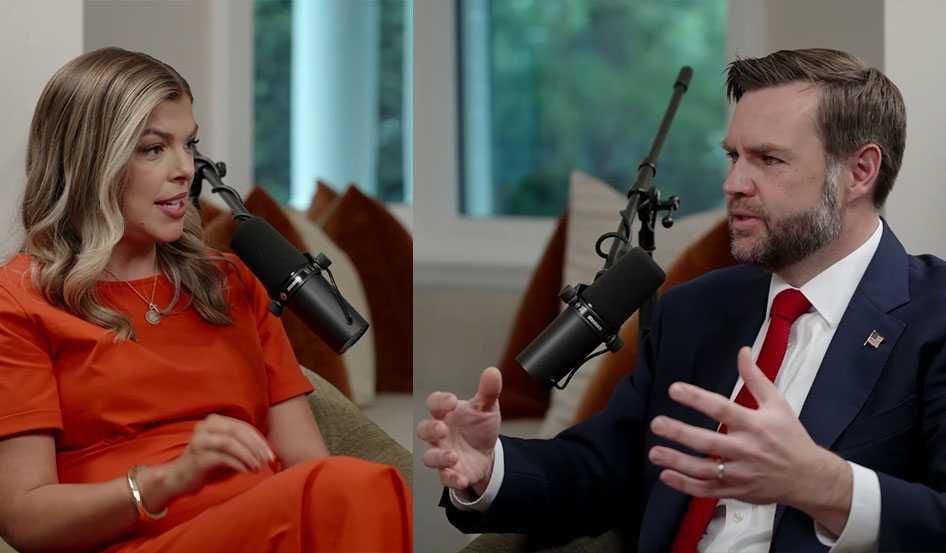
Vice President JD Vance, whose Friday trip to Switzerland for U.S.-Iran peace talks was postponed owing to another bloody exchange between Israel and Hezbollah, paused to reflect and speak with the host of BlazeTV's "Relatable with Allie Beth Stuckey" this week about the current political moment, where he's coming from, and where America might be headed.

Besides discussing chicken farming, the need to emulate the enduring hope of Christian martyrs, what Catholics and evangelicals can learn from one another, and what messaging changes the pro-life movement should make to win the "persuasion battle," Stuckey and the vice president broached the correlated topics of the Iran deal and Israeli influence in American politics.

'Outsized' Israeli influence? 'Israel derangement syndrome'?

Stuckey noted that the right has been roiled by a disagreement — especially in the wake of Turning Point USA founder Charlie Kirk's assassination — about whether "Israel has an outsized influence in the U.S."

'Already, the critics of the deal are being proven wrong.'

Vance, who on Thursday blasted Israeli critics of the U.S.-Iran memorandum of understanding and insinuated that Israel had previously sabotaged the peace process via escalations in Lebanon, told the BlazeTV host, "I certainly think that Israel, like a lot of other countries, tries to influence American politics. I sort of take that as a given."

The vice president noted further that "American leaders have to be very careful that when we pursue something, we're doing it for America's best interest and not for any other country's best interest," adding that "it's just not true" that America's interests are always aligned with Israel's — or with the United Kingdom's, France's, or any other partner's interests, for that matter.

Vance cited the ongoing disagreements between President Donald Trump and Israeli Prime Minister Benjamin Netanyahu over how best to bring the Iran war to a close as illustrating the occasional divergence between the two nations' interests.

RELATED: Trump signs Iran deal, blasts 'fools' after meltdowns by Sens. Cruz and Cassidy

Ken Cedeno/AFP/Getty Images

While cognizant that criticism of Israel and Israeli influence sometimes "bleeds into Jew hate" and that "sometimes criticism of the Israeli government can be expressed in a way that's anti-Semitic," Vance — who has faced intense criticism by Iran hawks and Israeli officials this week — underscored that it's just "not the case that every criticism of Bibi Netanyahu's policy decisions leads to anti-Semitism or is anti-Semitic."

The vice president identified two "critical mistakes" he perceives advocates for Israel routinely making: first, failing to delineate between American interests and Israeli interests; and second, "always conflating criticism of a particular government with Jew hatred — because if everything is Jew hatred, then nothing is Jew hatred."

Stuckey generally agreed but highlighted an ideological condition she has observed on the right — which she termed "Israel derangement syndrome" — in which certain critics of Israel attribute all of their problems to the foreign power, its influence, and its people.

Vance affirmed that "both are bad" but suggested he has been "particularly sensitive" in recent days to Israeli influence and criticism of America's resistance to it because of his defense of Trump's decision to end the Iran war.

Clarification on the Iran deal

Democrats in Congress, Iran hawks, Israeli officials, and some Republican lawmakers have complained incessantly this week about the Iran deal.

One of the chief concerns raised about the deal is the sixth of the agreement's 14th points, which states, "The United States of America undertakes with regional partners to develop a definitive, mutually agreed plan with at least $300 billion for the reconstruction and economic development of the Islamic Republic of Iran."

Vance noted, "It's not our money."

A source with direct knowledge of the deal told Reuters that the fund is a private investment vehicle and will not include any government money or grants. Companies around the world have reportedly agreed to commit financing.

President Donald Trump said this week that the U.S. was "not investing; we're not putting up 10 cents."

"The biggest misconception, by far, is this idea that the deal has all these benefits to Iran," Vance told Stuckey. "The underlying way that it's structured is that they don't get any of the benefits — not a single thing — unless they perform a change in behavior."

With their military destroyed, their ability to threaten their neighbors largely diminished, their nuclear program and ability to enrich uranium "gone," and their economy in shambles, Vance said the Iranians are in a "tough spot." They now have the choice between getting "quite literally nothing" besides further turmoil — or behaving like "a normal regime," developing a positive relationship with the U.S., and securing investment from Qataris, Emiratis, and others in the region.

As for whether the deal will bear fruit, Vance cited the resumption of bloodless, toll-free maritime traffic down the Strait of Hormuz over the past few days as a good sign.

"Yesterday, we got more oil out of the Strait of Hormuz than we have at any point since the beginning of the conflict," said Vance.

"Already, the critics of the deal are being proven wrong in some of what they're saying that the Iranians have gotten but also what the United States has gotten."

Like Blaze News? Bypass the censors, sign up for our newsletters, and get stories like this direct to your inbox. Sign up here!

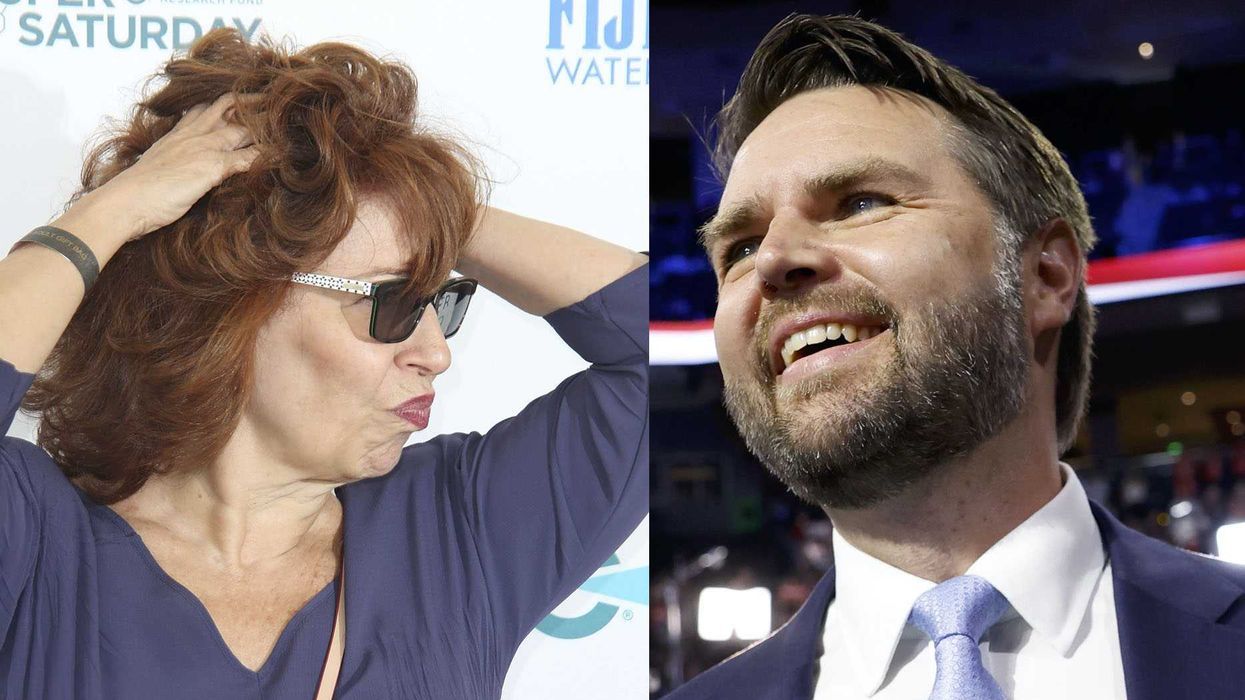
NO ONE predicted Joy Behar's shocking reaction to meeting JD Vance


In a stunning turn of events that no one predicted, Joy Behar may have told Vice President JD Vance he should run for president.

Vance had a wide-ranging interview with the women of "The View" on Wednesday, where he was challenged on many of his political opinions.

'Look, Joy Behar is way tougher than the Iranians — and she and I are best friends now.'

After the interview, Behar indicated that she thought Vance had a "good vibe" "for a Republican" and admitted that he is "intelligent" enough to make an "interesting" presidential candidate. She made the comments on the "Behind the Table" podcast about the show.

The show's executive producer, Brian Teta, asked Behar to discuss her private comments with Vance. Teta claimed Behar advised Vance off-camera to run for president, a claim Behar did not deny.

"I don't mind a Republican on the city level, because it needs a little discipline. But on the national level, I want somebody with a good heart, and those are more in the Democratic Party in my opinion," she clarified.

"They care about the poor. They help people," Behar claimed. "The Republican Party is much more about saving taxes for rich people. So I'm not a Republican."

Teta revealed that Vance had said he was more nervous about appearing on "The View" than he had been about the vice presidential debate in 2024 against Gov. Tim Walz. Behar went on to praise Vance even more.

"I don't think that he's a bad guy. So if he runs against, say, a [California Democrat Gov.] Gavin Newsom, that would be an interesting debate to see those two, because they're both intelligent," she added.

A video clip of the surprising interaction was posted to social media, where it garnered hundreds of thousands of views.

Vance even pointed to their unlikely friendship when commenting on the Iran peace deal during a White House media briefing on Thursday.

RELATED: 'Should be nowhere near Congress': Even 'The View' thinks Graham Platner is TERRIBLE

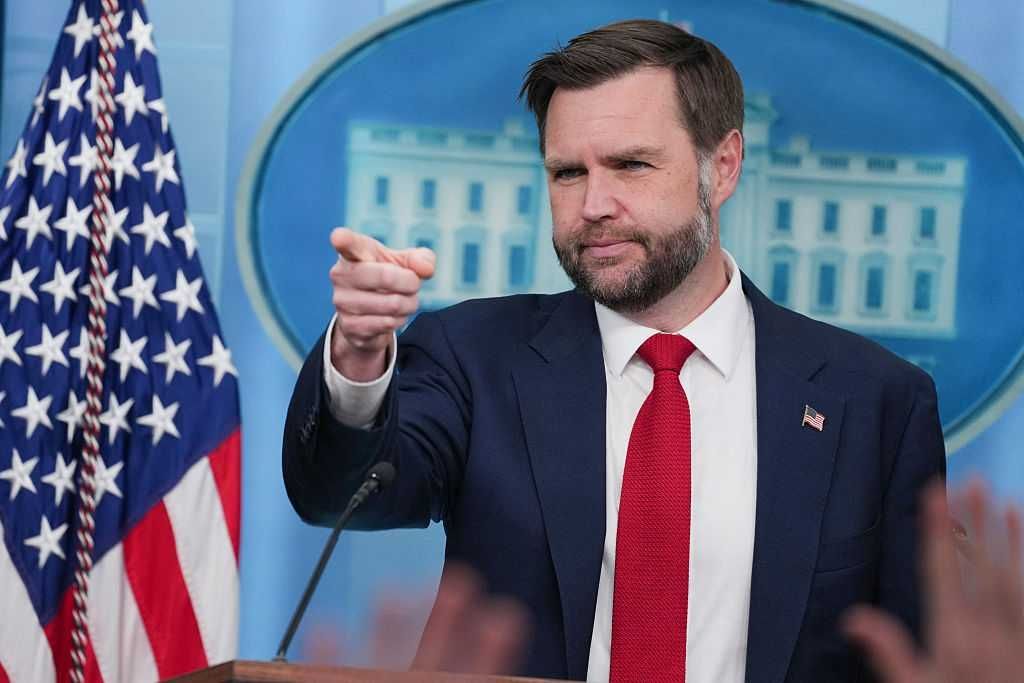
"I have seen some progressive criticisms of me personally, saying, 'What experience does the vice president of the United States have with hostile, high-stakes negotiations?'" said Vance at the podium.

"And I would point those progressive critics to the fact that just two days ago, I spent over an hour on 'The View.' So I actually have a great experience in very hostile negotiations!" he added. "I mean, look, Joy Behar is way tougher than the Iranians — and she and I are best friends now, so we're gonna get to a good place."

Video of his comments also received thousands of views.

Like Blaze News? Bypass the censors, sign up for our newsletters, and get stories like this direct to your inbox. Sign up here!

FAA contractor charged for allegedly threatening to ‘kill you — Donald John Trump’


A Federal Aviation Administration mechanical engineering contractor finds himself at risk of significant jail time over an email he allegedly sent the White House, according to a press release from the U.S. Attorney’s Office for the District of New Hampshire.

The 35-year-old man, Dean DelleChiaie, of Nashua, was arrested on Monday and appeared in court on Tuesday on a charge of interstate communication of a threat against the president. If convicted, the FAA contractor faces up to five years in federal prison and a $250,000 fine.

The suspect allegedly searched the phrase ‘I am going to kill Donald John Trump.’

An affidavit in support of the charge filed by a U.S. Secret Service special agent details the alleged actions of DelleChiaie. According to that affidavit, the Nashua man first came to the notice of the Secret Service near the end of January after the FAA IT department contacted the USSS. The contact was made after the suspect allegedly took his government-issued computer to the IT department and asked for his search history to be deleted.

While working on the suspect's request, the IT department employees noticed disturbing search topics on his computer.

According to the affidavit, these search topics are alleged to have included:

  • How to get a gun into a federal facility;
  • Previous assassination attempts against the president;
  • The percentage of the population that wants the president dead; and
  • The phrase “I am going to kill Donald John Trump.”

The searches alleged to have been uncovered did not just include threats against the president. The affidavit claims that DelleChiaie also searched for the locations of Vice President JD Vance’s and Secretary of War Pete Hegseth’s homes. Even more disturbingly, the searches are alleged to have included queries on the names and ages of both of their children.

Shortly after discovering the searches, the FAA placed DelleChiaie on suspension, the affidavit claims.

Within days of the USSS being made aware of his alleged search history, a Secret Service agent and an officer of the Nashua Police Department interviewed the suspect at his apartment in early February.

During the interview, the suspect is alleged to have confirmed that he made the searches on his work computer. He is also alleged to have said he realized it was “crazy for him to do this on his work computer.”

RELATED: Stunning new details reveal the 'depraved' motivation of the suspected WHCD shooter

Hinting at a possible motive, the affidavit stated that the suspect allegedly told the agent and officer that he conducted the searches because “he was upset with the current administration based on multiple subjects, including the election, presidential pardons, and the ‘Epstein files.’”

Law enforcement also noticed alleged disturbing notes on a whiteboard on his refrigerator door. One of the notes is claimed to have read, “Say arrest me ‘I am going to murder Donald John Trump — per defense of oath.’”

During the interview, the suspect is alleged to have admitted to being in therapy for depression and currently uses a variety of drugs, including ketamine, cannabis, mushrooms, and alcohol, according to the affidavit. He also allegedly claimed to have a firearm locked in a safe in his apartment and other firearms at a friend’s home.

That interview did not result in an arrest or charges.

In late April, the suspect again came to the notice of the FBI after the White House received an email sent to its public email address. The address the email came from is alleged to be a Gmail address in use by DelleChiaie. The alleged email, sent on April 21, days before the latest assassination attempt on President Trump, read:

Subject: Contact the President

I, Dean DelleChiaie, am going neutralize/kill you — Donald John Trump — because you decided to kill kids — and say that it was War — when in reality — it is terrorism. God knows your actions and where you belong.

On Friday, within two weeks of the alleged email, the U.S. Attorney’s Office for the District of New Hampshire filed charges against DelleChiaie. He was arrested on Monday and appeared in court on Tuesday before U.S. Magistrate Judge Andrea K. Johnstone for an initial court appearance.

During those proceedings, Johnstone appointed Assistant Federal Public Defender Eric Wolpin as DelleChiaie’s attorney. The public defender’s office told Blaze News via email that it had no public comment on the case at this time.

Johnstone also ordered the suspect detained pending his trial, citing the seriousness of the charges, strong evidence presented, employment status, history of substance abuse, use of weapons, dangerousness to the public, and that he was “undeterred” after a visit by the Secret Service to his home.

An email sent by Blaze News to DelleChiaie’s reported Gmail address remained unanswered at the time of publication.

Like Blaze News? Bypass the censors, sign up for our newsletters, and get stories like this direct to your inbox. Sign up here!

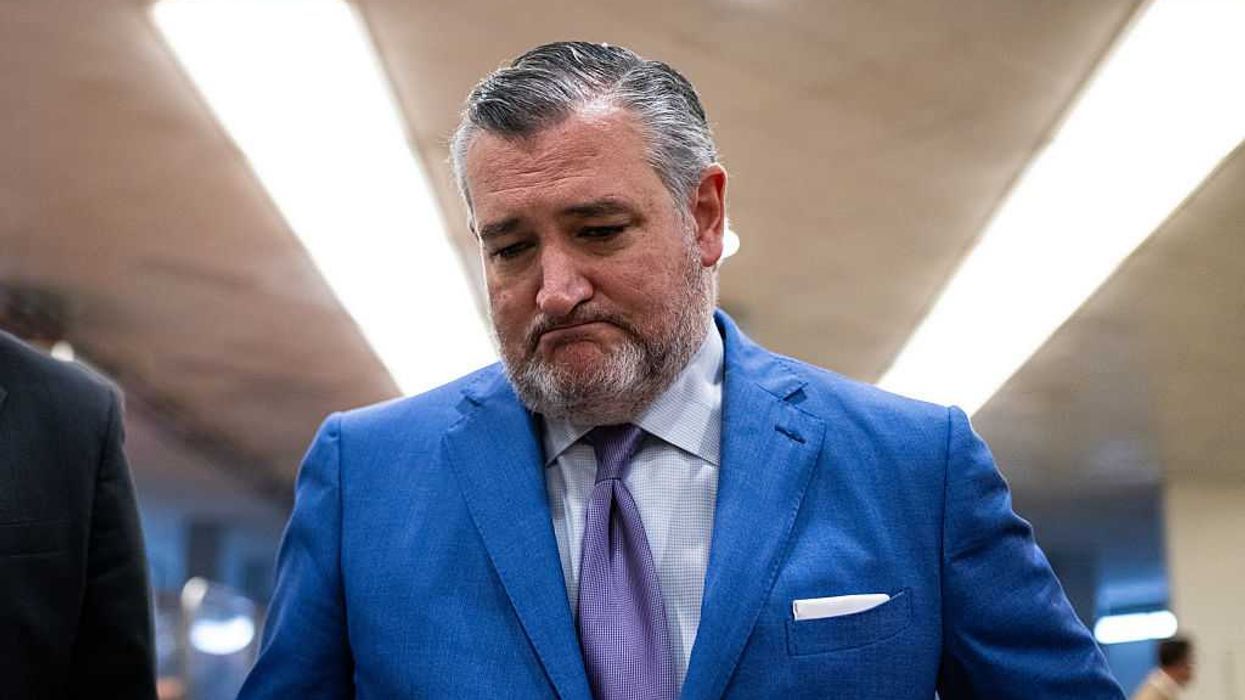
'F**k you, Ted': Sen. Cruz caught on secret recordings attacking Vance, complaining about Trump, report says


Texas Sen. Ted Cruz, a Calgary-born Republican widely expected to make another bid for the White House in 2028, was reportedly caught on tape tarring Vice President JD Vance with the same brush he uses on Tucker Carlson and criticizing President Donald Trump's tariff policies.

Unlike politicos keen to fault Vance for his enduring friendship with Carlson, Cruz has avoided publicly broadening his critique of the podcaster to the vice president. Behind closed doors, however, Cruz has apparently exercised no such restraint.

'JD is Tucker's protégé, and they are one and the same.'

In secret recordings provided to Axios by an unnamed Republican source, which were apparently taken during a pair of private meetings with donors last year, Cruz allegedly characterized the vice president as a non-interventionist puppet of Carlson.

"Tucker created JD," Cruz reportedly says in the recordings. "JD is Tucker's protégé, and they are one and the same."

Cruz and Carlson have long appeared at odds on matters both foreign and domestic. Carlson, for instance, castigated the senator in 2022 for calling the Jan. 6, 2021, melee a "violent terrorist attack."

The enmity between them reached an apparent high, however, in June, when the two clashed on Carlson's show over whether the U.S. should militarily back Israeli actions against Iran.

In the immediate wake of the combative interview, Cruz accused the host of engaging in "gotcha" journalism, attacking Trump, defending terrorists, demonizing Israel, and "running interference" for the Iranian regime.

RELATED: Which way after Trump? 'Strong Gods' may offer the solution.

Photo by Chip Somodevilla/Getty Images

While both men have traded barbs in the months since, Cruz appears increasingly fixated on Carlson, accusing him of being anti-Semitic, an Islamist, and — in response to Carlson's criticism of Israeli Prime Minister Benjamin Netanyahu — "#AmericaLast."

In the recordings, Cruz also allegedly accused Vance of working with Carlson to oust former national security adviser Mike Waltz over his support for U.S. strikes on Iran.

Waltz "supported being vigorous against Iran and bombing Iran — and Tucker and JD took Mike out," Cruz allegedly told donors.

While Waltz's hawkish stance on Iran and alleged behind-the-scenes coordination with Netanyahu reportedly angered Trump, the straw that broke the camel's back may have been Waltz's accidental invitation of an anti-Trump polemicist to a private high-level group chat on Signal where senior administration officials were discussing sensitive military plans.

On the recordings, Cruz allegedly also claimed that Vance worked in concert with Carlson to help Daniel Davis, an Army veteran critical of Israel's actions in Gaza, secure a senior national intelligence position — a post that Davis was ultimately denied.

Carlson told Axios that he "didn't have anything to do" with the ousting of Waltz or attempted onboarding of Davis.

The Texas senator appears in recent months to have been laying the groundwork for a 2028 bid in which he would run as the kind of Republican Trump crushed in the 2016 and 2024 Republican primaries. According to Axios, this has involved courting powerful pro-Israel donors and "positioning himself as a traditional free-trade, pro-interventionist Republican."

Whereas early pulling suggests that Vance is poised to sweep the GOP 2028 primary, Cruz presently has a 2% chance of becoming the 2028 GOP nominee, according to Polymarket, and proved unable to capture 1% in an October poll conducted by the University of New Hampshire.

Blaze News has reached out for comment to the offices of Vance and Cruz.

A spokesperson for Cruz told Axios that the senator is "the president's greatest ally in the Senate and battles every day in the trenches to advance his agenda" and that "those battles include fights over staffers who try to enter the administration despite disagreeing with the president and seeking to undermine his foreign policy."

The spokesperson added, "Sen. Cruz is proud of those fights, his accomplishments, and his close relationship with the president. These attempts at sowing division are pathetic and getting boring."

'They will be terminated on the spot.'

The Texas senator allegedly also attacked Trump's tariff policy on the recordings from his private meetings with donors.

Cruz allegedly regaled donors with the tale of a call that he and other senators made to Trump that "did not go well" after the president introduced his Liberation Day tariffs.

"Trump was in a bad mood," Cruz allegedly told the donors. "I've been in conversations where he was very happy. This was not one of them."

"Mr. President, if we get to November of [2026] and people's 401(k)s are down 30% and prices are up 10%-20% at the supermarket, we're going to go into Election Day, face a bloodbath," Cruz allegedly recalled telling Trump. "You're going to lose the House, you're going to lose the Senate, you're going to spend the next two years being impeached every single week."

Cruz allegedly told donors that Trump's response was, "F**k you, Ted."

At the mention of "Liberation Day" in reference to the tariffs, Cruz allegedly joked with donors in the meeting, "I've told my team if anyone uses those words, they will be terminated on the spot. That is not language we use."

Blaze News has reached out to the White House for comment.

According to the Texas Politics Project, Cruz's job approval rating is presently 35% overall and 69% among Republicans.

Like Blaze News? Bypass the censors, sign up for our newsletters, and get stories like this direct to your inbox. Sign up here!