How Trump Can Avoid the Vietnam Trap

It turns out that an agreement with Iran is valid for only slightly more than two Scaramuccis. After dealing a significant blow to Iran's war machine, Donald Trump hoped to extricate the country from further conflict in the Persian Gulf. Last month's memorandum of understanding set a 60-day period for further negotiations, during which oil would flow freely out of the Gulf. Iran would open the Strait of Hormuz, and the United States would lift its blockade and allow the regime to sell oil.

The post How Trump Can Avoid the Vietnam Trap appeared first on .

REVIEW: ‘Heartbreak Ridge’

When Platoon was released at the end of 1986, I was in college, and the level of excitement was immense. A few months after rah-rah, blah-blah Top Gun had been largely ignored by my fellow left-leaning students, we were all finally going to be shown what it meant to be "in the shit," as Max Fischer would say with awe to Vietnam vet Herman Blume in Rushmore. I didn't see Top Gun until years later, and I hated Platoon. The military movie of the era that spoke to me, an unlikely ROTC cadet who would soon become an unlikely second lieutenant (and sent off to fight a small war in Southwest Asia), was a movie that came out the same month as Platoon: Heartbreak Ridge.

The post REVIEW: ‘Heartbreak Ridge’ appeared first on .

Leftists Replaced The Constitution With These Four Texts To Enable Mass Migration

If America is to ever experience a renewal, it must first understand not only what was taken from it, but the mechanisms, etched in American mythos, that allowed it to happen.

Ronald Reagan's 1984 Memorial Day speech observing interment of unknown Vietnam service member 'healed scars,' writer says


In his essay for We Are the Mighty, Stephen Ruiz declared that President Ronald Reagan's 1984 Memorial Day speech observing the interment of an unknown Vietnam service member at Arlington National Cemetery "healed scars."

"We write no last chapters," Reagan told the crowd, Ruiz recalled. "We close no books. We put away no final memories. An end to America's involvement in Vietnam cannot come before we've achieved the fullest possible accounting of those missing in action."

'The Vietnam Unknown never heard such cheers.'

More from Ruiz's essay:

A decade after the final U.S. troops left Vietnam on March 29, 1973, some service members who fought in Southeast Asia couldn’t forget the harsh treatment that fellow Americans heaped upon them. Some were spat on while others received the middle finger or were called “baby killers.” They served their country and were blamed for the United States not defeating the North Vietnamese.

Reagan realized old wounds can’t go unattended. Two years after the dedication of the Vietnam Veterans Memorial in Washington, D.C., Reagan used his oratorical gifts to promote a better understanding of what Vietnam veterans endured.

The president continued a tradition from past wars and awarded the Medal of Honor to the Vietnam Unknown. That nice moment was not enough for Reagan. He reached out to military families residing in a continual, painful limbo because of a loved one MIA. Reagan told them that a grateful nation understood their plight.

"They live day and night with uncertainty, with an emptiness, with a void that we cannot fathom," Reagan said, Ruiz recalled.

The author noted that Reagan's speech added references to President Abraham Lincoln's Gettysburg Address — and that volunteers read nearly 58,000 names on the Vietnam Veterans Wall in 1982 over the course of three days.

Ruiz also noted that Reagan read from a newspaper article about a restaurant dinner former Marines shared and that a group of college students — "some of them likely still in diapers when the first U.S. troops arrived in Vietnam in 1965," Ruiz wrote — mingled with them, then applauded them as the veterans left the eatery.

Ruiz remembered that Reagan, reading from the newspaper article, quoted one former Marine's response: “The whole week, it was worth it just for that."

RELATED: Stories Behind the Stars: On a mission to honor every American who died in WWII

"The Vietnam Unknown never heard such cheers," Ruiz added in his essay. "In so many ways, wars never end for those who knew someone MIA. So many unanswered questions remain, threatening to expose a deep sense of loss always lingering just below the surface."

The author added that "in 1984, Reagan was acutely aware of that."

In his speech, the president said of the unknown soldier, "About him we may well wonder, as others have: As a child, did he play on some street in a great American city? Or did he work beside his father on a farm out in America's heartland? Did he marry? Did he have children? Did he look expectantly to return to a bride?"

In conclusion, Reagan noted, "Today, we simply say with pride, 'Thank you, dear son. May God cradle you in His loving arms.'"

Like Blaze News? Bypass the censors, sign up for our newsletters, and get stories like this direct to your inbox. Sign up here!

This Memorial Day, these are some of the dead we remember


Memorial Day means different things to different Americans. For some, especially those whose losses remain fresh, no national holiday is required to preserve memory. Grief already structures daily life; the formal rituals of remembrance — flags, ceremonies, cemetery visits — may still offer recognition, but the dead are hardly absent.

For others, the connection is more distant: a grandfather never met, a name on an old photograph, a relative spoken about only occasionally. The holiday can become less an occasion for immediate mourning than a meditation on inheritance and historical continuity.

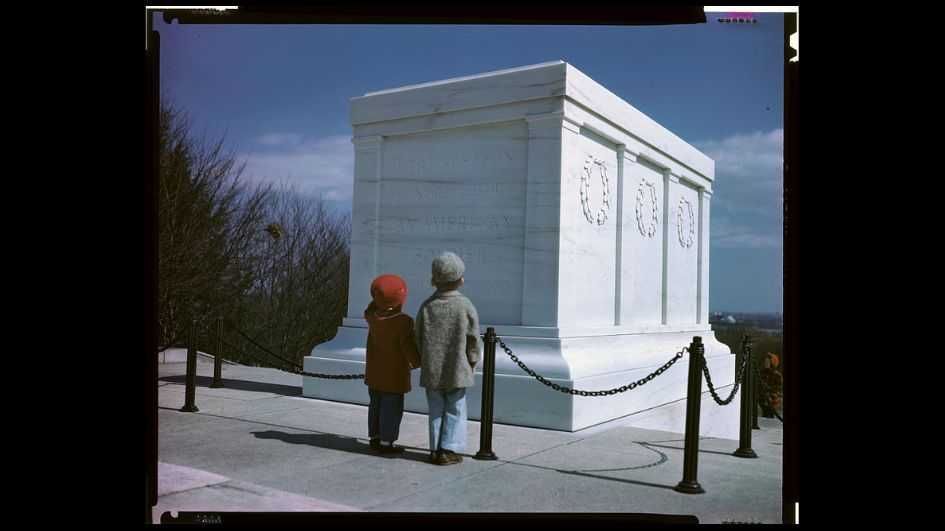
Memorial Day, like the Tomb of the Unknown Soldier, exists because modern war produces anonymity at a scale human beings struggle to comprehend.

Still other Americans may have no direct personal connection to war at all. For them, that distance is itself a kind of blessing. Memorial Day may register primarily as a feeling of generalized gratitude — gratitude for the country itself and for those who fought on its behalf.

Yet the holiday’s deeper purpose is more specific and, in some ways, more demanding. Memorial Day asks us to remember individuals whose lives were interrupted by war, individuals with whom we may have nothing in common but our shared nation.

In recent years, debates over immigration, national identity, and social cohesion have forced Americans to ask what citizenship actually means. Memorial Day offers one answer older and less ideological than many offered by contemporary politics: Citizenship implies obligations not only to the living, but to the dead. A nation becomes more than a marketplace or administrative zone when its citizens believe they owe remembrance to those whose lives became bound up with the country’s history.

Memorial Day is one of our few remaining holidays that ask us to remember strangers. Not celebrities or family members or ideological allies, but ordinary people, fellow Americans whose lives were cut short by violence that history inevitably turns abstract.

In an increasingly individualized society, that obligation can feel unfamiliar. Yet to remember our fellow citizens across distance, class, region, and even generations is to affirm that we belong to one another in ways deeper than convenience or self-interest.

These are a few of the many Americans we remember today.

James Robert Montgomery

When Drew Gilpin Faust wrote about the Civil War’s culture of mourning in "This Republic of Suffering," she lingered over a bloodstained letter written by James Robert Montgomery, a 26-year-old Confederate signal corps soldier mortally wounded at Spotsylvania in 1864.

A former law student from Mississippi, Montgomery spent his last moments taking pen to paper and — in labored but still elegant script — composing a farewell message to his father:

“I write to you because I know you would be delighted to read a word from your dying son.”

The word “delighted” now feels shocking. Yet, as Faust observed, Civil War Americans placed immense importance on the final words of the dying. Even in agony, Montgomery worried about consoling those at home.

“I would like to rest in the grave yard with my dear mother and brothers but it’s a matter of minor importance,” he wrote, just before signing off as “your dying son.” “Let us all try to reunite in heaven.”

His final resting place remains in Virginia.

Bert Stiles

Before World War II, Bert Stiles was a Colorado college student obsessed with becoming a writer. The son of a Denver electrician and a music teacher, he spent summers working as a junior forest ranger in Estes Park, experiences that became material for his short stories. While attending Colorado College, he wrote constantly — stories, poetry, newspaper features — and briefly embraced the pacifist sentiments common on American campuses before the war.

In 1941, convinced he could become a serious writer, Stiles hitchhiked repeatedly to New York to meet literary agents who had shown interest in his work. He eventually found mentors willing to support him, and his stories soon began appearing in publications like the Saturday Evening Post.

For many celebrated American writers, war became a harsh but formative education — the crucible from which emerged figures like Ernest Hemingway, Norman Mailer, and James Jones. Looking backward, it can almost seem like a foregone conclusion that their talent would survive long enough to become literature. But for every writer history remembers, there were others swallowed by the machinery of war before their lives had fully begun. History offers no exemption for promise.

Stiles continued writing throughout his combat service, producing articles and journal entries while flying bombing missions over Germany with the Eighth Air Force. He completed a full combat tour in B-17 bombers, volunteered for a second tour flying P-51 Mustangs, and was killed in November 1944 during a dogfight south of Hanover. He was 23 years old.

Henry T. Waskow

War correspondent Ernie Pyle became famous during World War II not for writing about generals or battlefield strategy, but for documenting the emotional lives of ordinary American soldiers. His most enduring dispatch may have been his account of the death of Captain Henry T. Waskow during the Italian campaign in 1944.

Pyle wrote:

Capt. Waskow was a company commander in the 36th Division. He had led his company since long before it left the States. He was very young, only in his middle twenties, but he carried in him a sincerity and gentleness that made people want to be guided by him.

“After my own father, he came next,” a sergeant told me.

Pyle described soldiers bringing Waskow’s body down a mountain trail by mule under moonlight alongside other dead men. One by one, exhausted infantrymen approached the body, lingering beside their captain in silence.

One soldier looked down and muttered simply, "God damn it." Another stood over him for a moment before saying, “I sure am sorry, sir.”

Then one man sat beside Waskow’s body, holding the dead captain’s hand silently for several minutes before gently straightening his shirt collar and rearranging the torn edges of his uniform around the wound.

Thomas Joseph Fox Jr.

After he was killed in action in 1970, Thomas Joseph Fox Jr. was remembered by friends as an easygoing Sacramento teenager who loved football, rock music, and cars.

One fellow artilleryman later recalled Fox borrowing his Creedence Clearwater Revival tapes at a fire base near Chu Lai. Fox talked often about home. When his tour ended, he said, he wanted to spend weekends at William Land Park waxing and polishing his car while watching girls drive by.

Another childhood friend remembered playing tackle football with Fox at East Portal Park just before he shipped out to Vietnam. After the game, Fox encouraged him to try out for the high school football team — a small moment the friend said he still carried with him more than 40 years later.

One friend who enlisted alongside him later recalled escorting his body back to Sacramento by train.

“I miss you, old friend,” he wrote decades later. “I think about you all the time.”

Marvin Winston Murray

Marvin Winston Murray had been in Vietnam less than two months when he died at 21.

A high school classmate from New York City remembered practicing relay handoffs with Murray during track practice in New York.

Years later, the memory still lingered with him. After unexpectedly encountering friends dressed for Murray’s funeral while home on military leave himself, he eventually visited the Vietnam Veterans Memorial to see Murray’s name etched into the black stone wall.

“I’m going to get a rubbing,” he wrote decades later. “So I can frame it.”

Dan Bullock

Dan Bullock was only 15 years old when he was killed in the Vietnam War in 1969, likely the youngest American serviceman to die there. He had enlisted in the Marines at 14 after altering his birth certificate to appear older.

Born in North Carolina and later raised in Brooklyn, Bullock talked about becoming a pilot, then a policeman, and finally a Marine. “Mostly he wanted to make his mark in life,” his father later said. “He wanted to be something.”

Bullock arrived in Vietnam in May 1969 and was dead just 21 days later after an attack on An Hoa Combat Base. The Marines around him did not know his real age, but many sensed something unusual about him. One recalled years later: “He was younger, and he didn’t belong.”

When a reporter visited the family’s home, they searched for his last letter home but couldn’t find it. The line his stepmother remembered poignantly captures a certain youthful bravado.

“He said he was fine,” she recalled. “He said he didn’t have any holes in him.”

Chance Phelps

Chance Phelps was funny, outdoorsy, and always on the move — “the kind of person who had to be in the thick of things,” as his mother later put it.

Raised partly in Wyoming and Colorado, Phelps loved football, hunting, fishing, and making people laugh. A former teammate remembered him as “kind of like a country boy,” always smiling and doing something goofy. Another friend later admitted that before Iraq, “I thought we were both invincible, that nothing could touch us.”

After the attacks of Sept. 11, Phelps told his mother he felt compelled to serve.

“I absolutely have to go,” he said. “I’ve got to do something.”

Phelps was 19 when he was killed near Ramadi in April 2004, barely a month after arriving in Iraq. When Marines came to inform his mother in the middle of the night, she later recalled being struck most by one detail:

“They were crying.”

Unknown

At Arlington National Cemetery, the remains of one unidentified American serviceman from World War I lies buried without a name. The tomb simply reads:

“Here rests in honored glory an American soldier known but to God.”

Memorial Day, like the Tomb of the Unknown Soldier, exists because modern war produces anonymity at a scale human beings struggle to comprehend. Each grave, each name carved into stone is an attempt to resist that anonymity, to point to an ordinary human life of infinite value.

Today is our humble opportunity to come together as a country and proclaim: These people existed. They belonged to us. They should not disappear.

Coups and Consequences

On November 2, 1963, South Vietnamese military officers murdered their president of nine years, Ngo Dinh Diem, and took control of the nation's government. The American hand was invisible at the time, but regime change came to fruition only because of active encouragement by the U.S. ambassador, who believed that a coup would improve South Vietnam's war effort. In the months that followed, however, South Vietnam experienced a succession of coups and countercoups, whose debilitating effects drew the United States further into the Vietnam war. As the crisis intensified, South Vietnamese and American participants raged against one another about the merits and consequences of deposing Diem. Although most of those individuals are no longer with us, the debate and some of its ardor have survived.

The post Coups and Consequences appeared first on .

Every attendee who was awarded by Trump during the State of the Union


President Donald Trump awarded several honors and medals during his historic State of the Union Tuesday night. Here is every honor Trump awarded during the joint address.

'He was a legend long before this evening.'

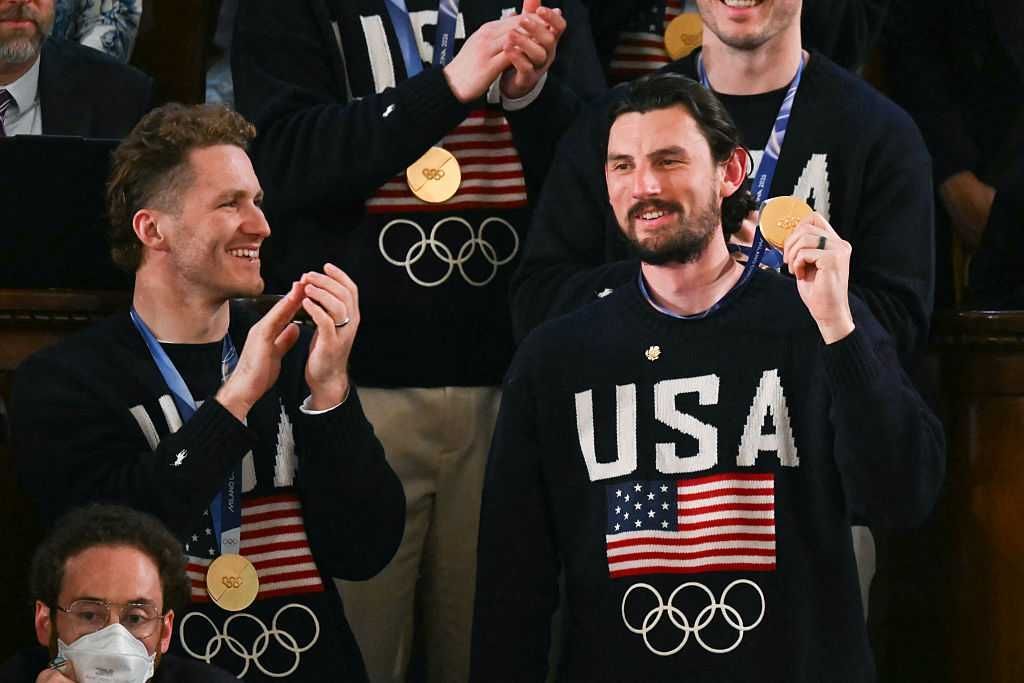
1. Connor Hellebuyck, Presidential Medal of Freedom

Photo by ANDREW CABALLERO-REYNOLDS / AFP via Getty Images
As goalie, Connor Hellebuyck played an integral role on the USA men's hockey team that brought home the gold for the first time in 46 years. Trump hosted the team at the White House on Tuesday, just days after their historic victory, later inviting them to attend the State of the Union.

During his joint address, Trump announced that he would bestow Hellebuyck with the Presidential Medal of Freedom, America's highest civilian honor. Trump also noted that he took a vote from the team members in the Oval Office as to whether he should award Hellebuyck the medal, and they unanimously supported the idea.

Trump's address was a beacon of patriotism, and this moment was no exception.

"What special champions you are," Trump said.

2. Andrew Wolfe, Purple Heart

Photo by Win McNamee/Getty Images

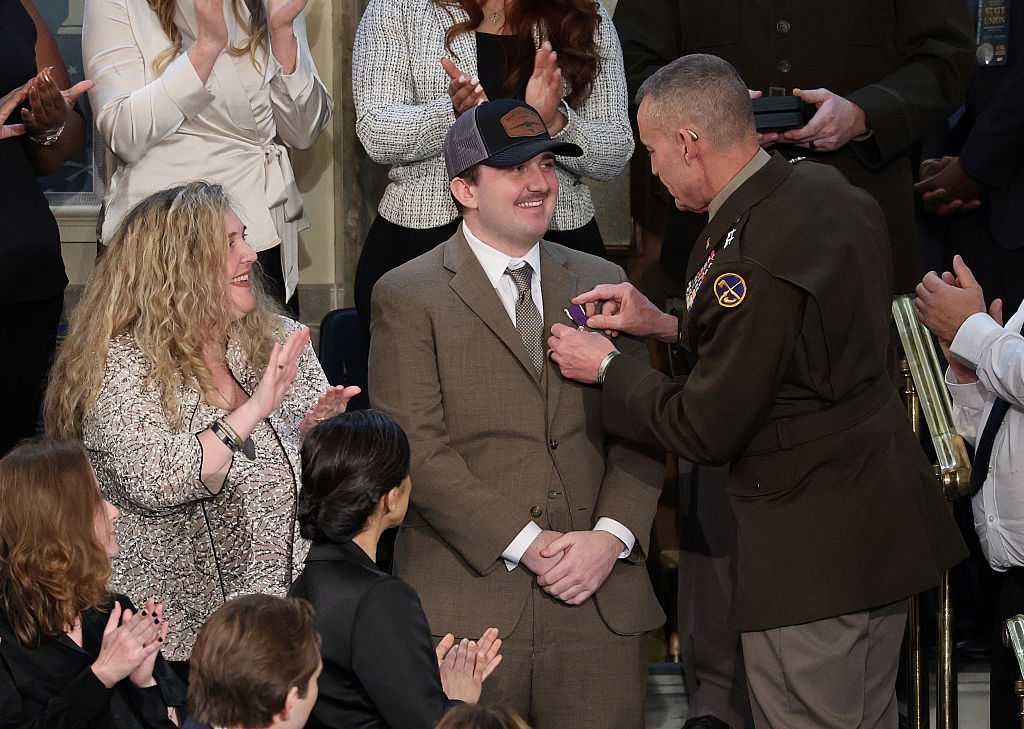
Andrew Wolfe was one of the two National Guardsmen who were ambushed and shot, allegedly by an Afghan national, just feet from the White House in November. Wolfe was not expected to survive, but he miraculously pulled through and appeared at the State of the Union alongside his mother.

To commend his service, Trump awarded Wolfe the Purple Heart.

"It was a solemn and unforgettable moment, one that ensured their courage and sacrifice were honored not only by West Virginia but also before the entire nation," West Virginia Gov. Patrick Morrisey (R) said in a statement.

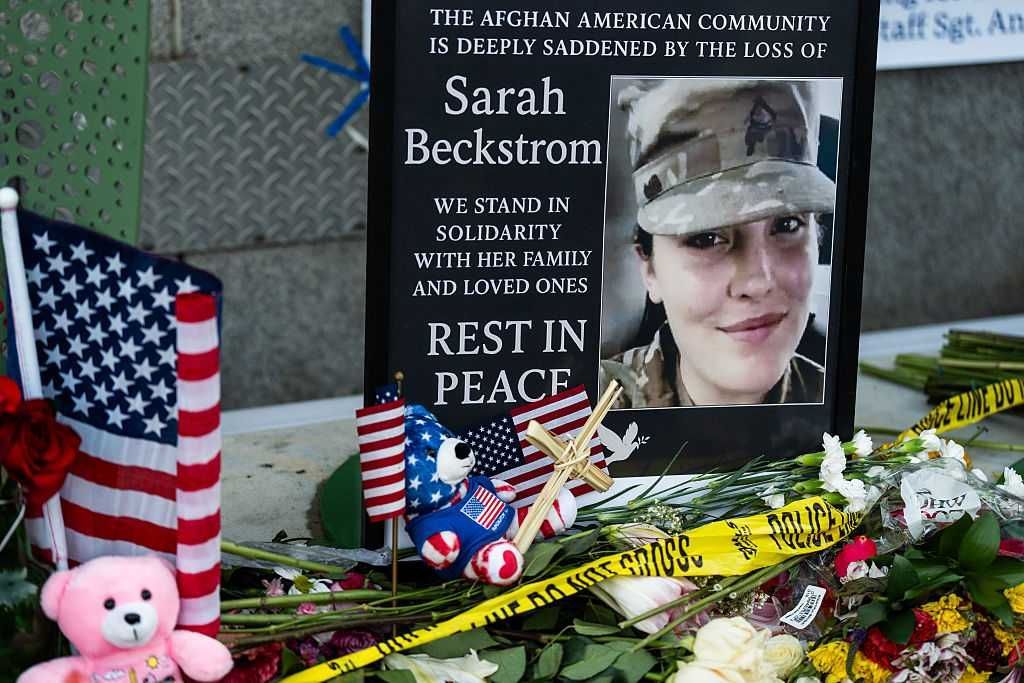
3. Sarah Beckstrom, Purple Heart

Photo by Demetrius Freeman/The Washington Post via Getty Images
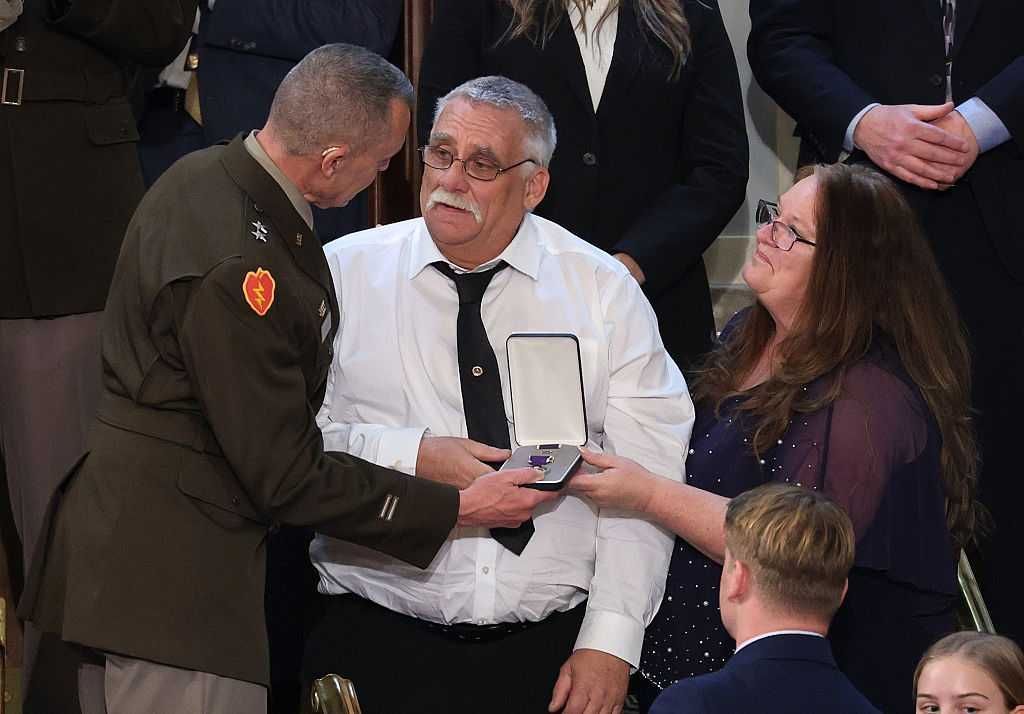
Sarah Beckstrom was the second National Guardsman recognized at the State of the Union and was posthumously awarded the Purple Heart. Beckstrom was serving alongside Wolfe when she was ambushed and fatally shot in November at just 20 years old.

Photo by Win McNamee/Getty Images

Beckstrom's parents accepted the award on behalf of their late daughter Tuesday night, marking a solemn moment.

“West Virginia will never forget their service, their bravery, or their sacrifice," Morrisey said.

4. Scott Ruskan, Legion of Merit

Photo by Win McNamee/Getty Images

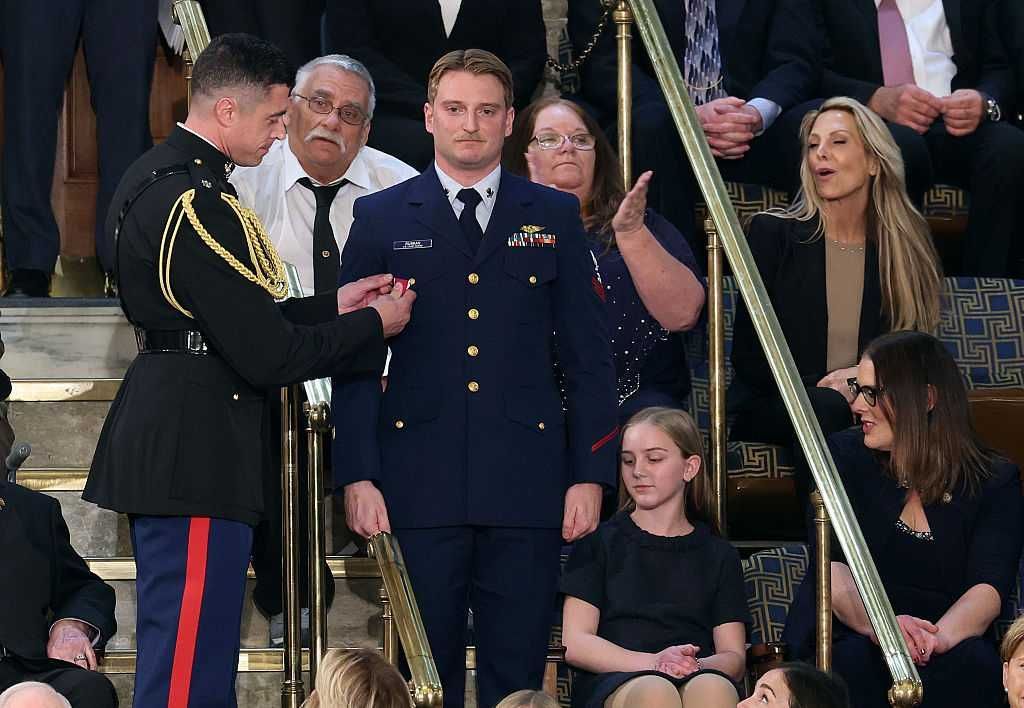
Scott Ruskan, an aviation survival technician and rescue swimmer for the United States Coast Guard, was recognized for saving nearly 170 people during the floods that devastated central Texas back in July. Those rescued included children attending Camp Mystic.

Trump awarded Ruskan the Legion of Merit for his "extraordinary heroism."

Ruskan accepted the award alongside 11-year-old Milly Cate McClymond, one of the girls he rescued from Camp Mystic.

"As the waters threatened to sweep her away, 11-year-old Milly Cate McClymond closed her eyes and prayed to God," Trump said. "She thought she was going to die. Those prayers were answered when Coast Guard rescue swimmer Scott Ruskan descended from a helicopter above ... and he lifted not just Milly Cate but 164 others to safety."

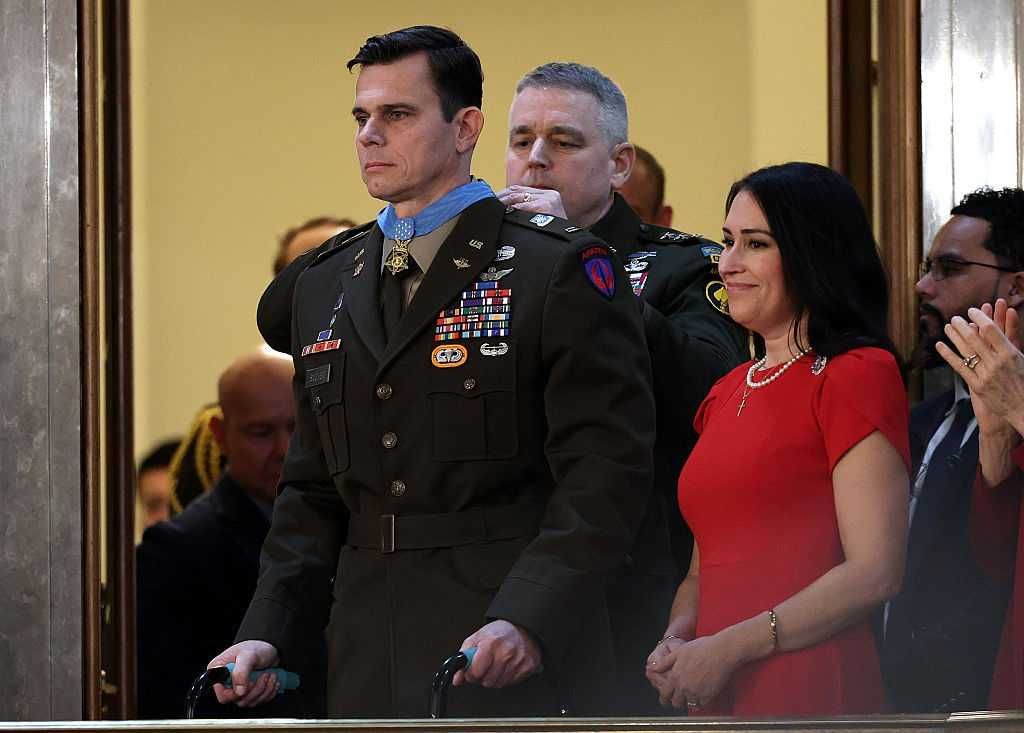
5. Eric Slover, Medal of Honor

Photo by Chip Somodevilla/Getty Images
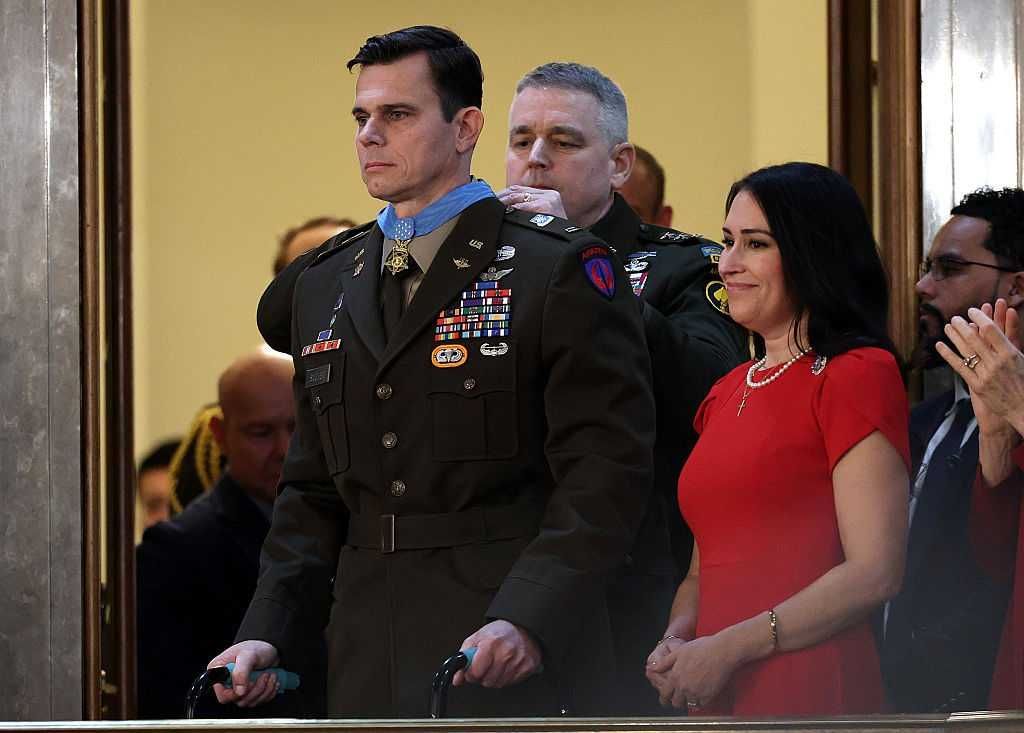
Chief Warrant Officer Eric Slover was recognized for his role in capturing Venezuelan ex-dictator Nicolas Maduro in January, successfully piloting the Chinook mission despite being shot several times and sustaining severe injuries to his legs.

Despite being severely wounded, Slover stood up in a walker to accept the highest military decoration, the Medal of Honor.

"Chief Warrant Officer Slover is still recovering from his serious wounds," Trump said, "but I'm thrilled to say that he is here tonight with his wife, Amy."

"The success of the entire mission and the lives of his fellow warriors hinged on Eric's ability to take the searing pain. It was unbelievable, what's happened to his legs," he continued.

6. Royce Williams, Medal of Honor

Photo by Mandel NGAN / AFP via Getty Images
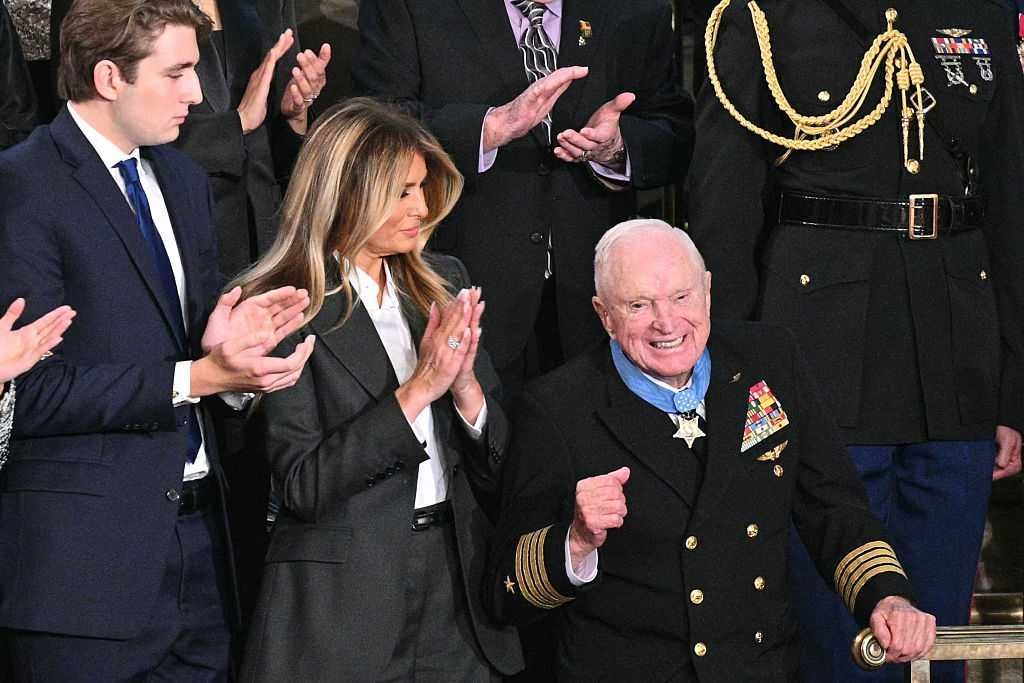
Retired Navy Captain Royce Williams was also awarded the Medal of Honor Tuesday night, commending the 100-year-old veteran's service in World War II, the Korean War, and the Vietnam War. First lady Melania Trump, who sat beside Williams, bestowed the award on the war hero during the address.

In 1952, Williams found himself in a 35-minute dogfight against the Soviets, where he downed four enemy aircraft, survived a 37mm cannon, and still returned to the deck of the USS Oriskany just off the coast of North Korea. His fellow servicemen later counted 263 holes in the frame of his F9F-5 Panther.

"Tonight, at 100 years old, this brave Navy captain is finally getting the recognition he deserves. He was a legend long before this evening," Trump said.

Like Blaze News? Bypass the censors, sign up for our newsletters, and get stories like this direct to your inbox. Sign up here!

Thank Your Local ICE Agents For Their Service

Even when some make wrong decisions, ICE and CBP agents broadly deserve our honor and respect.

In the Mind of McNamara

One of the few aspects of the Vietnam war about which most historians agree is that Robert McNamara horribly mismanaged it as secretary of defense. There is no agreement, however, on how McNamara did the nation such a disservice. For those who view American intervention in Vietnam as unnecessary and inherently futile, McNamara is condemned for getting the United States into the war and then for refusing to get it out once he himself became disillusioned. For those who view the intervention as a noble cause that could have ended victoriously, McNamara's principal failing was his imposition of severe restraints on the military.

The post In the Mind of McNamara appeared first on .

Our Rankings, Ourselves

After the death of Hulk Hogan this past summer amid 17-time champion John Cena’s final year wrestling, countless WWE fans debated who is the greatest wrestler ever. Who can blame them? Fighting over who is the GOAT is as American as apple pie.

The post Our Rankings, Ourselves appeared first on .