Brazil’s election is a chilling warning for America



Flávio Bolsonaro has fled Brazil after losing a presidential election he entered as the favorite. He finished ahead of President Luiz Inácio Lula da Silva in the first round, then — if the reporting is accurate — lost Sunday’s runoff by more than 4 million votes.

Within days, a Brazilian Supreme Court justice ordered Flávio to surrender his passports in connection with a money-laundering investigation. He denies wrongdoing. He instead reached Miami, where the Trump administration has agreed to admit him and his family. His father, Jair Bolsonaro, is serving a 27-year sentence under house arrest. The Brazilian right has lost an election and watched its most prominent family come under the power of a judiciary it rightly regards as openly hostile.

Republicans should prepare to defend the constitutional order while they still have the power to do so. Nobody is coming to save us.

The election itself was hardly free of controversy. As voting was supposed to end, Supreme Court Justice Cristiano Zanin — who previously represented Lula — ordered polling times extended by two hours after complaints about “transportation problems.” Some polling places had already shut down. The order was then narrowed to those still open. Flávio challenged the result. The final margin was far larger than the number of votes cast after the ordinary closing time, so that extension alone cannot explain Lula’s victory. It does not follow that every concern about how Brazil conducted the election has been settled.

Jair Bolsonaro was a controversial president who openly rejected the fashionable positions of the global elite on abortion, affirmative action, drugs, and religion. He sought closer ties with America and Israel. After losing to Lula in 2022, he questioned the integrity of the electronic voting system, claiming voting machines had been hacked. Brazil’s Supreme Court subsequently convicted him of attempting a coup and sentenced him to 27 years and three months. Bolsonaro denies the charges. His supporters see the prosecution as political punishment; his opponents see it as the defense of constitutional order. The sentence carries the force of law. It does not oblige anyone to surrender his judgment about the court.

Without a thorough review of both elections by independent organizations, it is impossible to know whether the Brazilian races were fraudulent. Given the progressive political leanings of most of the organizations that conduct such reviews, it is unlikely they would declare the elections legitimate if blatant evidence was uncovered.

Even if an independent agency did claim that one or both Bolsonaros had been cheated out of a victory, it is unlikely that there is a government or international body willing to take action to pressure Brazil into removing Lula and installing Flávio. The results of the elections may appear highly suspect, but Lula remains in office and will be allowed to further consolidate power and punish his enemies. Without an outside authority to which they can appeal, Brazilian conservatives appear trapped in an increasingly dangerous political situation.

RELATED: Democracy may be dying. Conservatives can’t sit this one out.
Blaze Media Illustration

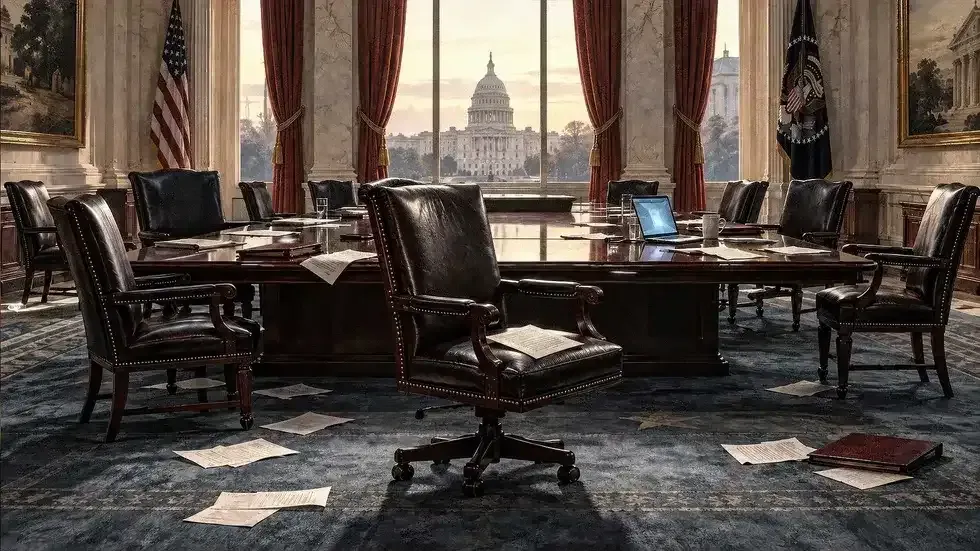
American conservatives should recognize the danger. Donald Trump lost a bitterly contested election in 2020, fought the result in court, faced criminal prosecutions connected to efforts to overturn it, and eventually returned to the White House. The parallels are hard to miss. When judges and prosecutors become participants in an all-or-nothing political struggle, appeals to their neutrality will satisfy fewer and fewer Americans.

Meanwhile, American progressives are making plans for a new institutional crisis of their own.

Recordings released by DataRepublican show figures associated with the United Democracy Alliance discussing “red lines” for treating the federal government as illegitimate, an options memo for governors, and the possibility of a constitutional “refounding moment” — i.e., replacing the Constitution. One participant described the crisis as “a real window of opportunity”; another spoke of an “extra constitutional process.”

Contingency planning is one thing. Treating a breakdown as the opportunity to replace the constitutional order is quite another. Why are these people developing criteria for when elected national institutions may be discarded, and who authorized them to decide?

RELATED: The GOP still has a loser mentality
Blaze Media Illustration

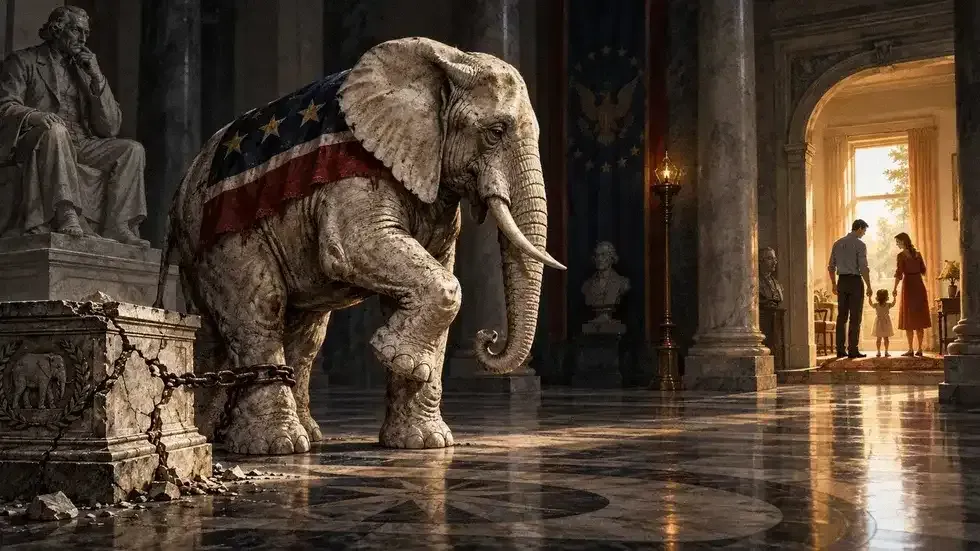
Republicans respond as if the next constitutional crisis can be resolved with speeches. They have failed to turn much of Trump’s agenda into durable law. The House passed the SAVE America Act, but Republicans have failed to get it through the Senate. Party leaders who warn of election disorder have been unable to enact one of their own signature election bills.

To call congressional Republicans a total failure may be too generous. Failure assumes they were trying. Too many seem content to run out the clock on Trump and wait for MAGA to loosen its hold on the party. They would rather preserve their place in a failing political arrangement and throw the country into chaos than confront the possibility that the establishment itself needs to be replaced.

Conservatives had better understand what time it is. A stern lecture about civic responsibility will not stop a riot. Brilliant arguments about separation of powers will not restrain officials determined to bend the rules. A court’s seal does not make every political judgment impartial. If a constitutional crisis arrives, the right will need more than faith that its opponents will play fair.

The Bolsonaros can come to America. Americans have nowhere else to go. There will be no neutral power waiting offshore to repair our institutions, no foreign president to return the country to us. Republicans should prepare to defend the constitutional order while they still have the power to do so. Nobody is coming to save us.
California says ‘trust us’ on voter eligibility. Why?


It should be utterly embarrassing that the United States, a global leader in cutting-edge technology, still has election practices that are no better than those in many third-world nations. Election officials in Los Angeles recently admitted in federal court that they possess no independent means of verifying whether the people on their voter rolls are U.S. citizens. They simply take the voter’s word for it.

The Justice Department this week charged 28 noncitizens in the Golden State with election crimes, including voting. Eleven of the defendants were arrested.

The evidence that noncitizens appear on rolls and sometimes vote is no longer theoretical.

Acting Deputy Attorney General Trent McCotter’s response was direct: “This Department of Justice will not look the other way while noncitizens vote in federal elections. Unfortunately, the same can’t be said for California and L.A. County.”

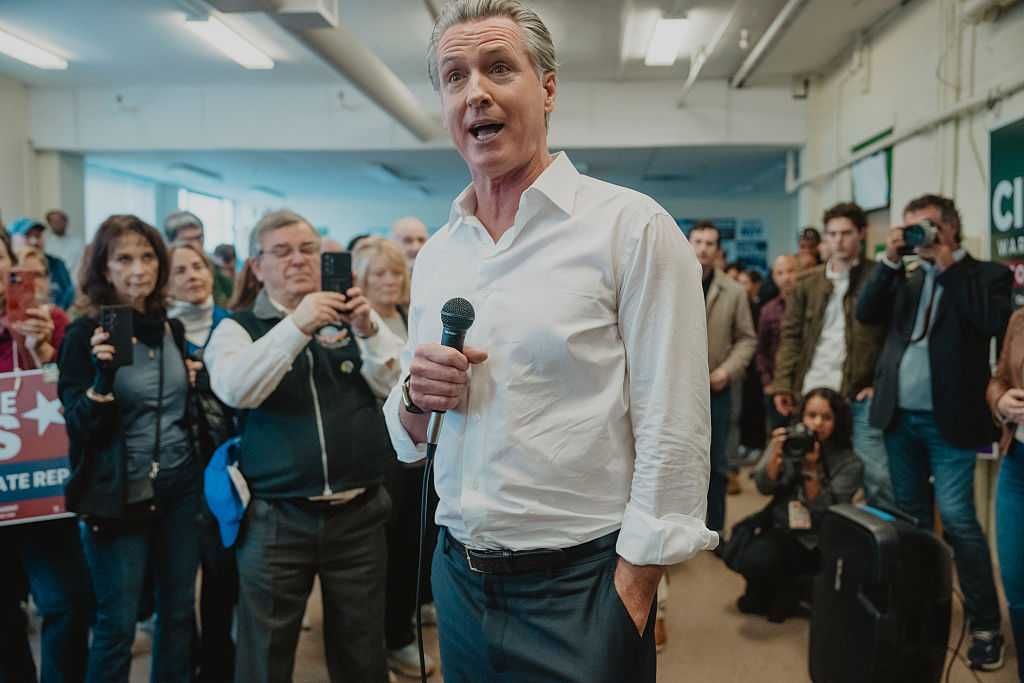
Governor Gavin Newsom’s office replied that California follows the National Voter Registration Act’s 1990s self-attestation rules. That is precisely the problem. The law that currently governs federal registration treats citizenship as a matter of personal declaration rather than documentary fact. In a state with millions of noncitizens, that is an invitation for error at best and fraud at worst.

The Safeguard American Voter Eligibility Act was written to close the gap by requiring documentary proof of citizenship to register and photo identification to vote. Currently stalled in the Senate, the SAVE Act is not radical. It is the minimum standard most other developed democracies already enforce. Its failure to become law is not the result of technical mystery. It is the result of political choice.

The evidence that noncitizens appear on rolls and sometimes vote is no longer theoretical.

A reported software glitch in New Jersey added roughly 6,600 self-declared noncitizens to the rolls. The state's later review found that about 340 cast ballots. Iowa’s secretary of state identified 277 noncitizens registered; 35 of them cast ballots counted in the 2024 election. Ohio found 137 people who had twice confirmed noncitizenship to the Bureau of Motor Vehicles and were on the rolls anyway. A grand jury indicted several for illegal voting across multiple cycles.

RELATED: Kamala’s voter-roll freakout hits blue states hard

Mario Tama/Getty Images

Federal prosecutors continue to bring cases — 16 aliens charged in North Carolina, New York, and Idaho for illegal voting and false claims of citizenship, among others. These are not internet rumors. They are findings by secretaries of state and federal charging documents.

Critics respond that the numbers are small relative to total ballots and have never swung a statewide or national election. That is true in most races and irrelevant to the principle. Every illegal vote cancels a legal one. In close local contests — school boards, city councils, state legislative seats — a few dozen votes can decide outcomes.

When California is handed a list of 20,000 suspected cases and declines to sequester the ballots or conduct a prompt, transparent review, it is not protecting election integrity. It is prioritizing the administrative convenience of self-attestation over the statutory requirement that only citizens vote in federal elections.

Officials who minimize the issue are part of the problem. Newsom’s office described the 28 California charges as “0.0001% of California voters” and argued that raising the issue near an election “sows distrust.” Meanwhile, Los Angeles County attorneys have called the federal list “unreliable” and said there is “no basis” for the claim of widespread problems.

Election administrators in other states also try to muddy the waters, saying that noncitizen voting is “vanishingly rare,” “infinitesimal,” or so uncommon that aggressive verification is unnecessary. These statements treat any documented instance as a rounding error rather than a violation of law.

RELATED: Republicans cannot serve two masters on immigration

Kent NISHIMURA/AFP via Getty Images

The remedy is straightforward and has been long available. Documentary proof of citizenship at registration closes the self-attestation loophole. Photo identification at the polls confirms that the person casting the ballot matches the registrant. Systematic comparison of voter rolls against federal immigration databases, followed by prompt removal of confirmed noncitizens, keeps the lists clean.

States that have implemented elements of this approach — Wyoming, Kansas, and others — have not collapsed into chaos. The extra administrative work is well worth the price of a system in which citizenship is a prerequisite rather than a suggestion.

Immigration enforcement does not stop at the border. It includes the recognition that the right to vote is reserved for citizens. When officials treat noncitizen registration and voting as an acceptable residual cost of motor-voter convenience, they are making a policy choice that dilutes the franchise of the people who live under the laws those votes enact.

Election integrity is not a mystery. It requires the political courage to require proof, to clean the rolls, and to pass the SAVE Act. The alternative is continued reliance on trust alone in a system that California’s own federal prosecutor has shown cannot verify the most basic eligibility requirement. Citizens are entitled to better.

The Pennsylvania Supreme Court's ballot decision is a step in the right direction


In its coverage of the Pennsylvania Supreme Court’s recent cast vote record decision, Democracy Docket framed the ruling as a dangerous victory for “election deniers” and claimed it gave a “DHS conspiracy theorist access to 2020 election data.”

That framing misses the central point of the case: The court did not authorize the exposure of anyone’s private vote. It allowed access to election records that help the public verify whether reported vote totals match recorded vote data.

In a republic, ballot secrecy protects the voter. Transparency protects the result. Both principles can coexist, and the Pennsylvania Supreme Court understood that.

Americans across the political spectrum have lost faith in election systems at different moments and for different reasons.

The court’s actual holding was straightforward: Cast vote records, or CVRs, are not the “contents of ballot boxes or voting machines” under Pennsylvania’s Election Code and therefore are not categorically exempt from public disclosure.

A CVR is not a physical ballot. It does not contain information about voters. It contains information about ballots — and ballots do not contain personally identifying information.

A properly configured CVR cannot link a ballot to a voter in a way that compromises ballot secrecy. In the Lycoming County system at issue, the data was randomized and did not contain personally identifying voter information.

The court explained that the CVR numbers do not correspond to the order in which voters checked in or cast ballots and that those randomization features “significantly decrease the likelihood” of identifying an individual vote. The court concluded that disclosure would allow the public to check the math without violating ballot secrecy.

There is a line of thinking that says a CVR can be kept from the public if there is some edge case where the voter behind a ballot could be reasonably guessed. What that argument misses is that ballot secrecy exists to protect voters from the state — not to protect the state from public scrutiny.

If a government builds or certifies a voting system that allows officials, vendors, or anyone else to identify which voter cast which ballot, the problem is not the citizen asking for public records and the remedy is not secrecy for the government. The remedy is fixing, randomizing, or decertifying the system.

If a county claims that it cannot disclose a CVR because the public could determine how individual voters voted by matching multiple records together, that should trigger an immediate and serious response from state election authorities.

A voting system that allows ballots to be connected back to voters is not merely inconvenient for public-records compliance. It is a direct threat to ballot secrecy.

Public access to CVRs is not about exposing voters. It is about allowing citizens to confirm that election totals add up. Bloomberg Law captured the ruling more accurately: Pennsylvanians may review raw voting records to ensure elections are accurate; the court said disclosure promotes trust, confidence, and legitimacy without violating voter secrecy law.

Americans across the political spectrum have lost faith in election systems at different moments and for different reasons. In September 2024, Gallup found that only 57% of Americans were confident that presidential votes would be accurately cast and counted nationwide, with a massive partisan gap: 84% of Democrats expressed confidence, compared with only 28% of Republicans.

After the 2024 election, AP-NORC found that about six in 10 Americans believed the presidential vote was counted accurately nationwide, while independents remained notably less confident.

In April 2026, Reuters/Ipsos found sharp partisan divides on election fraud beliefs, while also finding that majorities of both Democrats and Republicans remained confident their own ballots would be counted.

This is not a one-party problem. Republicans have raised concerns about mail ballots, voter rolls, citizenship verification, ballot harvesting, and machine tabulation. Democrats, too, have raised serious concerns about election technology when the perceived threat came from foreign interference or insecure electronic systems.

RELATED: The FBI should get a warrant before reading your messages

J. David Ake/Getty Images

After the 2016 election, the Clinton campaign joined recount efforts in key states, with Marc Elias writing that the campaign had examined allegations involving hacking, outside interference, and voting technology.

In the years that followed, prominent Democrats pushed aggressively for paper ballots, audits, and replacement of insecure voting machines. Oregon Democratic Sen. Ron Wyden’s PAVE Act, backed by Democratic senators, including Elizabeth Warren (Mass.), Cory Booker (N.J.), Kamala Harris (Calif.), Tammy Baldwin (Wisc.), Kirsten Gillibrand (N.Y.), and others, would have mandated hand-marked paper ballots and risk-limiting audits in federal elections.

Let’s be honest: Concern about election technology was not invented in 2020. Democrats were warning about electronic voting systems, paperless machines, hacking, and public confidence long before the current fight over CVRs.

In the case of Pennsylvania, election researcher Heather Honey asked a basic question: Can the public inspect the data necessary to verify the count? The Pennsylvania Supreme Court answered yes, subject to the election code and subject to the protection of ballot secrecy. That should be an easy win for anyone who claims to care about democracy.

Instead, Democracy Docket labeled Honey a “conspiracy theorist” and portrayed the ruling as a victory for sinister forces. But the court did not adopt a conspiracy theory. It adopted a transparency principle. In fact, the court said disclosure promotes “fair, honest, and transparent elections.”

I know Heather Honey as a hard-working, dedicated patriot, a wonderful person, and a loving parent. Her biggest personal failing, as far as I can tell, is that she is a Philadelphia Eagles fan — a burden no court can remedy.

The attack on Heather Honey is totally misplaced. If Democracy Docket disagrees with the legal reasoning, it should argue the law. If it believes certain CVR formats in certain counties could threaten secrecy, then the correct response is not to smear citizens who request public records.

RELATED: Age verification laws do not make us safer

Samuel Boivin/NurPhoto/Getty Images

The correct response is to demand voting systems that protect ballot secrecy by design: randomized ballot records, standardized public CVR formats, and certification standards that make it impossible to connect a ballot back to a voter.

Marc Elias, the founder of Democracy Docket, has built a platform devoted to voting rights and election litigation. He knows better than most that election legitimacy depends not only on access to the ballot, but on public confidence that lawful votes are accurately counted.

CVR transparency is one way to earn it. It does not reveal who someone voted for or publish private voter choices. Properly handled, it lets citizens, researchers, journalists, campaigns, and watchdogs compare reported totals against underlying tabulation records. It is a public audit trail.

And if any county says its CVRs cannot be disclosed because the records would allow ballots to be matched back to voters, then the public-records request is not the scandal. The voting system is.

Democracy does not become weaker when citizens can verify government math. It becomes stronger.

So Democracy Docket should correct its framing, and Marc Elias should leave Heather Honey alone. She is simply defending one of democracy’s oldest and most important rules:

Trust the voters. Protect the secret ballot. And let the people check the math.

Tiny Wisconsin Town Takes On Lawfare Goliath In Battle For Paper Ballots

'I thought is was a little absurd because we were such a small community,' Thornapple election chief Suzanne Pinnow said.

Fulton County: ‘We Don’t Dispute’ 315,000 Votes Lacking Poll Workers’ Signatures Were Counted In 2020

'When the law demands three signatures on tabulator tapes and the county fails to follow the rules, those 315,000 votes are, by definition, uncertified.'

Trump plans major shake-up of how Americans vote ahead of 2026 midterm elections


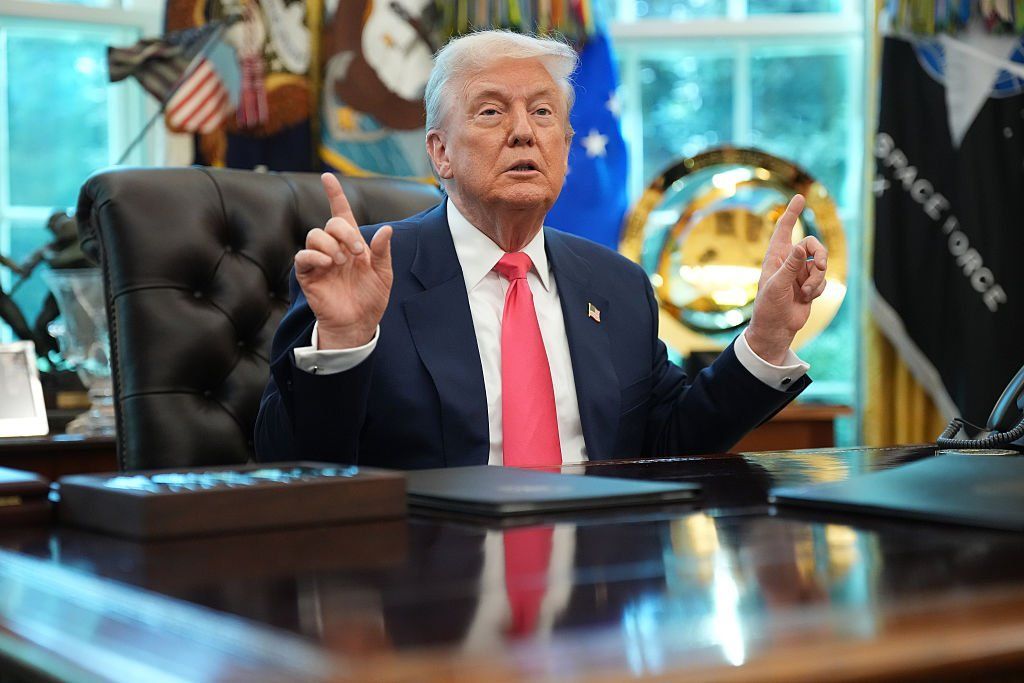
President Donald Trump announced on Monday that he will "lead a movement to get rid of MAIL-IN BALLOTS, and also, while we're at it, Highly 'Inaccurate,' Very Expensive, and Seriously Controversial VOTING MACHINES."

The president — whose announcement comes just 10 days after a pair of councilmen in Hamtramck, Michigan, were charged with election and absentee ballot fraud — indicated that he will kick off this initiative with a forthcoming executive order aimed at ensuring honesty in the 2026 midterm elections.

'Democrats are virtually Unelectable without using this completely disproven Mail-In SCAM.'

The president has long raised concerns over mail-in voting and voting machines.

Ahead of the 2020 election, Trump warned that mail-in voting "WILL LEAD TO MASSIVE FRAUD AND ABUSE" and noted that "unless changed by the courts, will lead to the most CORRUPT ELECTION in our Nation's History!"

Trump also warned: "RIGGED 2020 ELECTION: MILLIONS OF MAIL-IN BALLOTS WILL BE PRINTED BY FOREIGN COUNTRIES, AND OTHERS. IT WILL BE THE SCANDAL OF OUR TIMES!"

Absent corrective action over such concerns, former President Joe Biden managed to somehow win the 2020 election, netting millions more votes than Kamala Harris did in 2024.

— (@)

FBI Director Kash Patel vindicated some of Trump's concerns, revealing in June that intelligence reports from August 2020 detailed "allegations of plans from the [Chinese Communist Party] to manufacture fake driver's licenses and ship them into the United States for the purpose of facilitating fraudulent mail-in ballots — allegations which, while substantiated, were abruptly recalled and never disclosed to the public."

'ELECTIONS CAN NEVER BE HONEST WITH MAIL IN BALLOTS/VOTING.'

Between January 1 and June 30, 2020, U.S. Customs and Border Protection seized 1,513 shipments containing fraudulent documents, including 19,888 counterfeit U.S. driver's licenses.

RELATED: Election officials rage as Trump administration pushes for election security

Photo by Andrew Harnik/Getty Images

In addition to possible exploitation by bad actors at home and abroad, Politico highlighted another reason why Trump might want to spike mail-in voting: Historically, Democrats have turned in more mail-in votes than Republicans, who alternatively vote more often in person.

According to a 2024 Pew Research Center survey, 62% of respondents who identified as Republicans or leaned Republican said voters should be able to vote early or absentee if they had a documented reason for not voting in person on Election Day. Only 17% of Democrats or Democratic-leaning respondents said the same.

The Election Assistance Commission indicated that nearly 15 million mail-in ballots were returned at ballot drop boxes in the 2024 election.

"With their HORRIBLE Radical Left policies, like Open Borders, Men Playing in Women's Sports, Transgender and 'WOKE' for everyone, and so much more, Democrats are virtually Unelectable without using this completely disproven Mail-In SCAM," Trump wrote on Monday. "ELECTIONS CAN NEVER BE HONEST WITH MAIL IN BALLOTS/VOTING, and everybody, IN PARTICULAR THE DEMOCRATS, KNOWS THIS."

Trump suggested further that other countries have ditched mail-in voting "because of the MASSIVE VOTER FRAUD ENCOUNTERED."

The president suggested it would be worthwhile to scrap voting machines because they supposedly "cost Ten Times more than accurate and sophisticated Watermark Paper, which is faster, and leaves NO DOUBT, at the end of the evening, as to who WON, and who LOST, the Election."

The Elections Clause of the U.S. Constitution holds that "the Times, Places and Manner of holding Elections for Senators and Representatives, shall be prescribed in each State by the Legislature thereof."

Trump's allusion to working with the Republican Party to "BRING HONESTY AND INTEGRITY BACK TO OUR ELECTIONS" signals an intention to lean on congressional Republicans to wield their constitutional authority to "make or alter such Regulations, except as to the Places of chusing Senators."

Rep. Troy Nehls (R-Texas) expressed support for Trump's initiative, writing, "We must do everything we can to protect the integrity of our elections. No more mail-in ballots!"

Wyoming Secretary of State Chuck Gray (R) called the elimination of mail-in ballots "common sense."

Like Blaze News? Bypass the censors, sign up for our newsletters, and get stories like this direct to your inbox. Sign up here!

Georgia Secretary Of State’s Office Hooks Up With Democrats To Disparage Election Integrity Grassroots

Despite repeated calls for tolerance of differing opinions, the speakers seemed to be 'singing from the same hymnal' in support of the status quo.