Yet another state's districts found to be racist, resulting in new map for 2026 midterms


Amid the several race-based redistricting fights across the country ahead of the midterms, including states like Texas and California, one Southern state joined the ranks Monday in a move that has left nobody satisfied.

A federal judge ordered a small redistricting effort after finding back in August that the current Alabama state Senate district map violated the Voting Rights Act.

The new plan does enough to remedy the disparities while not upsetting other districts.

On Monday, U.S. District Judge Anna Manasco, a first-term Trump appointee, ordered that a new map that rearranged District 25 and District 26, two Montgomery-area districts, be implemented in time for the 2026 midterms.

Democrat state Senator Kirk Hatcher currently represents Senate District 26, and Republican state Senator Will Barfoot represents Senate District 25.

RELATED: North Carolina Republicans will 'follow Trump's call' to redistrict the state

Alabama Governor Kay Ivey (R).Photo by Stew Milne/Getty Images

The primary issue with the old district map was that it was found to "pack" black voters into one district, weakening their voting power in other districts.

Manasco wrote that the new plan “unpacks District 26 by moving some Black voters from District 26 into the adjacent District 25.”

The decision has been met with a widespread lack of enthusiasm in the Republican trifecta state, with many uncertain that a satisfactory outcome could be achieved.

Manasco wrote that the new plan does enough to remedy the disparities while not upsetting other districts.

Court-appointed special master Richard Allen warned in a court filing that the plan only “weakly remedies” the Voting Rights Act violation.

“As the law currently stands, states like Alabama are put to the virtually impossible task of protecting some voters based on race without discriminating against any other voters based on race. I remain hopeful that we will somehow find the ‘magic map’ that will both satisfy the federal court and also be fair to all Alabamians,” Republican Governor Kay Ivey wrote in September, according to the AP.

Based on this reasoning, Ivey declined to call a special session for the legislature to redraw the district maps in September.

The new map does not upset the partisan distribution of power in the state, where Republicans hold a majority, 27 to 8.

Like Blaze News? Bypass the censors, sign up for our newsletters, and get stories like this direct to your inbox. Sign up here!

The Voting Rights Act Needs To Be Aligned With A Constitutional Definition Of Equality

VRA Needs Aligning With A Constitutional Definition Of Equality

Conservative SCOTUS justices appear skeptical about race-based redistricting


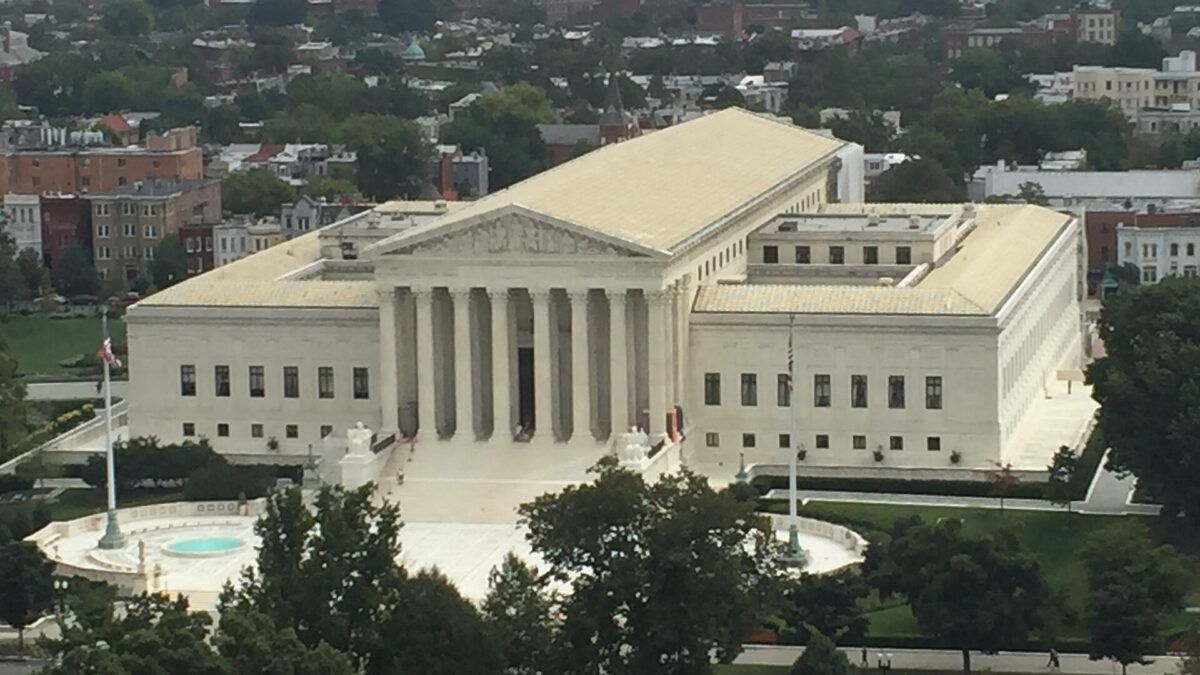
The U.S. Supreme Court heard oral arguments on Wednesday in Louisiana v. Callais.

The outcome of the case, which centers on the creation of a second black-majority congressional district in the Bayou State, may not only impact the Voting Rights Act and states' corresponding ability to undertake race-based gerrymandering, but the balance of power in the U.S. House of Representatives as well.

Conservative justices on the high court — including Justice Brett Kavanaugh, who voted in 2023 to uphold the relevant VRA provision in a similar case pertaining to Alabama's map but who warned that "the authority to conduct race-based redistricting cannot extend indefinitely into the future" — appear skeptical over the continued use of race in redistricting.

Background

Section 2 of the VRA, which the Supreme Court indicated in 1980 was a restatement of the protections afforded by the 15th Amendment, enables private citizens and the federal government to challenge allegedly discriminatory voting practices, including minority-vote dilution.

The Supreme Court has previously held that under certain circumstances, Section 2 may require the creation of one or more majority-minority districts in a redistricting map.

The Congressional Research Service noted that in its 1986 Thornburg v. Gingles decision, SCOTUS established a three-prong test for proving vote dilution under Section 2:

  1. "The minority group must be able to demonstrate that it is sufficiently large and geographically compact to constitute a majority in a single-member district";
  2. "The minority group must be able to show that it is politically cohesive"; and
  3. The minority group must be able to prove that the majority group "votes sufficiently as a bloc to enable it ... usually to defeat the minority's preferred candidate."

In 2022, a group of black voters took Louisiana to court, complaining that the state legislature adopted a congressional map where, despite the state being one-third black, only one of six districts was majority black. The plaintiffs, who alleged that the map violated Section 2, won the day.

RELATED: North Carolina Republicans will 'follow Trump's call' to redistrict the state

Photo by Chip Somodevilla / POOL / AFP) (Photo by CHIP SOMODEVILLA/POOL/AFP via Getty Images

A federal court agreed that the map was likely violative, prohibited its use in future elections, and told Louisiana to draft a new map, this time with two majority-black districts.

'Explicit race-based districting embarks us on a most dangerous course.'

Obliging an order from an Obama U.S. district judge, Shelly Dick, the Louisiana legislature drew a new map last year that boasted a second race-based district that stretches roughly 250 miles from Shreveport in the northwest to Baton Rouge in the southeast, and cuts strategically through black metropolitan areas.

This proved intolerable to another group. This time, the plaintiffs were one dozen non-black voters who contended the map was an unconstitutional racial gerrymander that violated both the 14th and 15th Amendments.

"The State has engaged in explicit, racial segregation of voters and intentional discrimination against voters based on race," the lawsuit said. "The State has drawn lines between neighbors and divided communities. In most cases, the lines separate African American and non-African American voters from their communities and assign them to Districts with dominating populations far away."

The case was kicked up to SCOTUS after a three-judge district court agreed with the plaintiffs and blocked the state from using the second map.

The high court issued an unsigned order in May 2024 putting the lesser court's ruling on hold, thereby setting the stage for the election of Democratic Rep. Cleo Fields in the newly drawn district.

The high court first heard oral arguments in the case in March, but in June, it rescheduled the case for reargument.

Justice Clarence Thomas noted in his dissenting opinion at the time of the order for reargument that the case should have been decided then, particularly when the court's approach to Section 2 is "broken beyond repair," and the conflict the high court's Section 2 "jurisprudence has sown with the Constitution is too severe to ignore."

Growing skepticism

The court heard oral arguments on Wednesday regarding the constitutionality of drawing majority-black districts to comply with the VRA.

While Louisiana previously supported the new map, it is now singing a different tune, suggesting that race-based redistricting is unconstitutional. The Trump administration has also weighed in, stating in a brief opposing the second map that "as Louisiana now concedes, Section 2 cannot justify the racially gerrymandered majority-minority district created to appease the Robinson court."

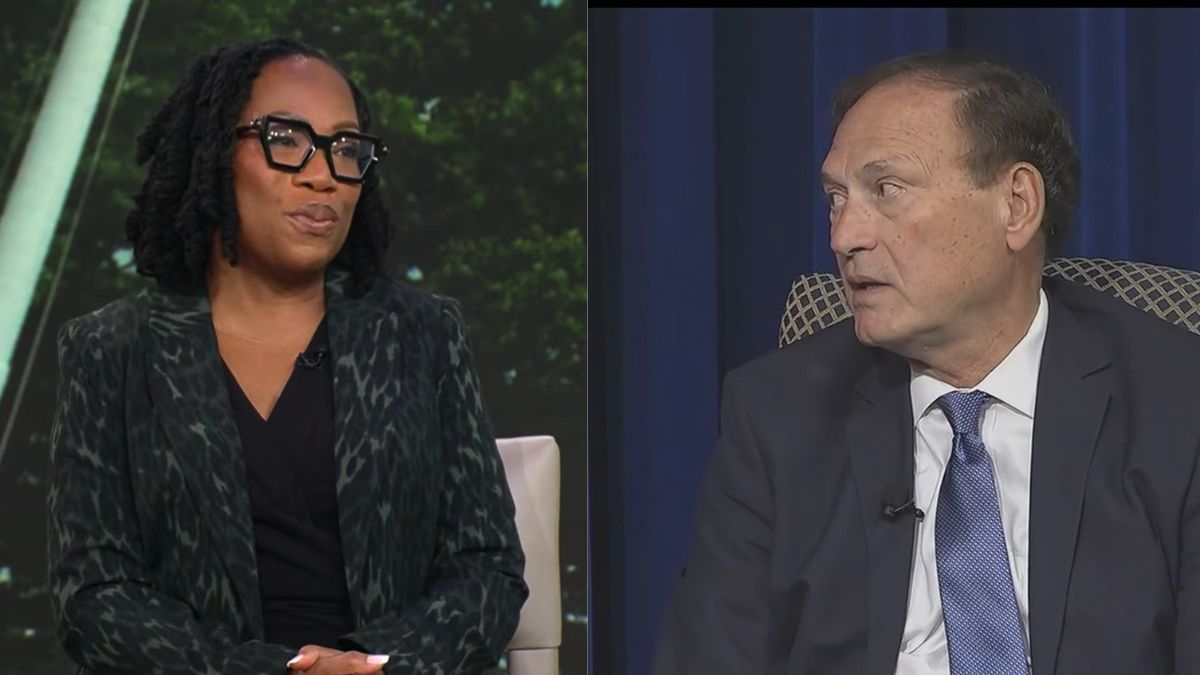
Justice Ketanji Brown Jackson and the other liberal justices appeared largely convinced during oral arguments that race-based redistricting was not only lawful but a social good. Conservative justices, on the other hand, expressed deep skepticism over the practice.

In his colloquy with Janai Nelson, the president of the NAACP Legal Defense Fund who was arguing on behalf of a group of black voters supportive of the second map, Justice Kavanaugh invoked former Justice Anthony Kennedy, noting:

He said the sorting of persons with an intent to divide by reason of race raises the most serious constitutional questions. And he added that explicit race-based districting embarks us on a most dangerous course. It is necessary to bear in mind that redistricting must comply with the overriding demands of Equal Protection clause.

Kavanaugh did not appear entirely convinced by Nelson's subsequent argument that "Section 2 is addressing a pre-existing problem. It is not producing it, and in fact, it reduces it more broadly across society."

'It would be a seismic development both legally and politically.'

While Justice Amy Coney Barrett pressed the matter of whether Section 2 was itself constitutional but improperly interpreted and unlawfully applied, Justices Clarence Thomas and Samuel Alito questioned whether the redrawn maps satisfied the three-prong Section 2 test previously established by SCOTUS, specifically asking whether the new black-majority district was sufficiently compact.

Alito also insinuated that contrary to the purportedly noble cause guiding the creation of the black-majority district, the real objective appeared ultimately to be "seeking a partisan advantage."

Meanwhile, Justice Neil Gorsuch expressed concern that states are effectively given license under the current interpretation of Section 2 to "intentionally discriminate on the basis of race" — a hard sell, especially on an indefinite basis.

Justices Coney Barrett and John Roberts played their cards closer to their chests.

It's clear by the left's pearl-clutching over the case that the stakes are high.

Failed Georgia gubernatorial candidate Stacey Abrams' nonprofit Fair Fight Action claimed in a recent report that a ruling defanging the VRA provision at issue "could help secure an additional 27 safe Republican U.S. House seats when compared to the 2024 House maps" and "cement one-party control of the U.S. House for at least a generation."

Law professor Jonathan Turley noted that "if the Court were to reject such districts or declare a sunsetting of the provision, it would be a seismic development both legally and politically."

Like Blaze News? Bypass the censors, sign up for our newsletters, and get stories like this direct to your inbox. Sign up here!

In Race-Based Redistricting Battle, Louisiana Urges SCOTUS To Uphold America’s ‘Color Blind’ Constitution

We believe these cases are 'good vehicle[s] for the Supreme Court to address some of these issues that have been percolating for a very long time.'

Upcoming SCOTUS Case Could Reshape Redistricting As We Know It

The ideal outcome in Louisiana v. Callais would be for SCOTUS to definitively declare that 'race should never be a factor in redistricting,' Hans von Spakovsky said.

SCOTUS Stays Lower Court Ruling In North Dakota Voting Rights Act Dispute

On Thursday, the U.S. Supreme Court temporarily blocked a lower court ruling centered on provisions of the 1965 Voting Rights Act. In a 6-3 decision, the justices stayed a ruling by the 8th Circuit Court of Appeals, which had sided against two American Indian tribes in an ongoing dispute over North Dakota’s state legislative map. […]

Michigan Senate Passes Bills Threatening Election Integrity

Secretary of State Jocelyn Benson helped craft the legislation, which is backed by a left-wing activist group.