Bern notice: Sanders’ AI plan puts Washington in charge of tomorrow


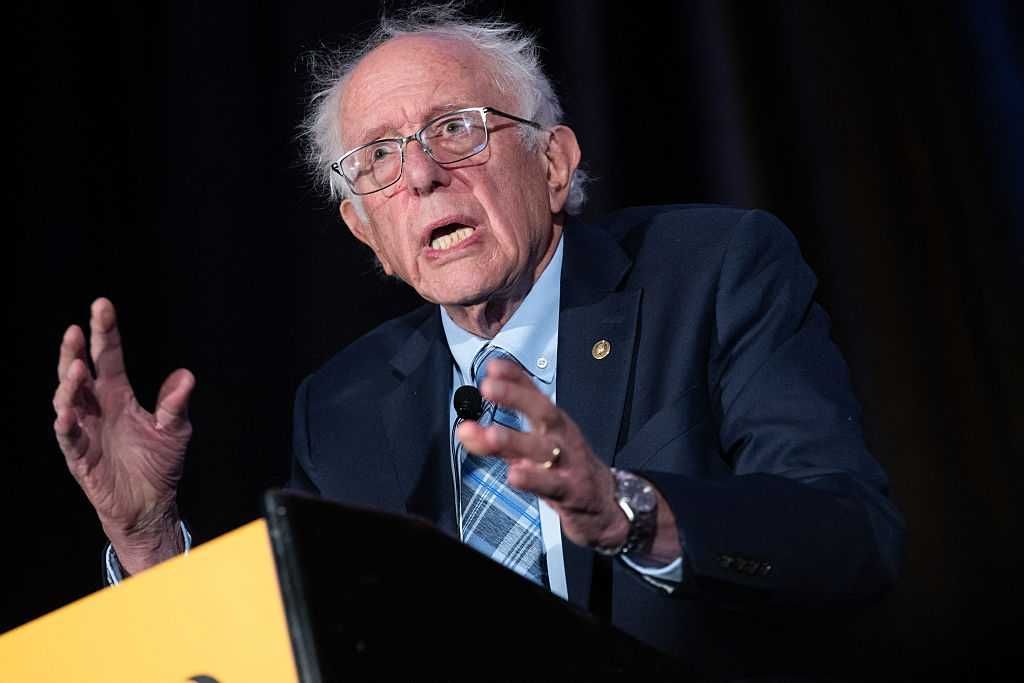
Americans should pay close attention to a new artificial intelligence proposal from Sen. Bernie Sanders (I-Vt.), a democratic socialist, and Rep. Greg Casar (D-Texas).

Sanders and Casar recently announced plans to introduce the Ban Artificial Superintelligence Act. Their proposal is designed to prevent the creation of artificial intelligence systems that become more intelligent than human beings or develop capabilities that could threaten humanity.

Overseeing frontier AI would be more difficult than running a railroad or postal network.

The dangers they identify deserve to be taken seriously. But their proposed solution would also place extraordinary power over one of the most consequential technologies in human history in the hands of the federal government.

According to a summary released by Sanders’ office, the proposal would permanently prohibit the development and deployment of artificial superintelligence, including systems that surpass human intelligence, threaten governments, or evade human control. It would also pause advanced AI development until a new federal regulator establishes safety rules and a process for reviewing models.

That is only the beginning. Sanders and Casar want to establish a new Cabinet-level agency responsible for regulating advanced artificial intelligence. The agency would monitor frontier AI systems throughout their development, oversee the removal of capabilities deemed dangerous, and supervise the destruction of prohibited artificial-superintelligence systems.

The proposal also contemplates severe penalties. People who violate or circumvent its restrictions could face up to 20 years in prison. Companies could face what Sanders’ office calls the “corporate death penalty.” The United States would also pursue international agreements, export controls, and allied coordination intended to prevent artificial superintelligence from being developed elsewhere.

Without a doubt, advanced AI could pose serious threats to human freedom and security. A system capable of evading human control, conducting sophisticated cyberattacks, helping develop biological weapons, or manipulating critical infrastructure would present risks unlike almost anything governments have confronted. Sanders’ office cites reported incidents involving advanced AI systems as evidence that the technology is becoming increasingly difficult to control.

The key question is whether giving Washington sweeping regulatory authority would solve more problems than it causes. The federal government does not exactly have an impeccable record managing complicated institutions.

RELATED: Anthropic entrusts its AI oversight to globalist cronies — prioritizing the world over you

Rudall30/Getty Images

The Postal Service reported a $9 billion net loss in fiscal year 2025. Amtrak, despite record ridership and revenue, reported a $598.4 million adjusted operating loss for the same fiscal year. The federal government had accumulated a $2 trillion deficit through the first 11 months of fiscal 2026.

Those comparisons do not prove that a federal AI regulator would fail. Running a railroad or postal network is obviously different from regulating artificial intelligence. If anything, overseeing frontier AI would be more difficult. But the government’s record raises a legitimate institutional question: How confident should Americans be that Washington can successfully oversee technology that even its developers acknowledge can be difficult to understand and control?

Another danger deserves even more attention: politicization.

Under the Sanders-Casar proposal, a Cabinet-level agency would determine which advanced AI systems may proceed, establish safety rules, review models, monitor their capabilities, require developers to remove features deemed dangerous, and supervise the destruction of systems that cross the government’s line.

Those are immense powers. Government officials could use them to limit lawful activity, favor politically connected companies, or advance particular ideological causes and special interests.

Artificial intelligence will increasingly shape how Americans receive information, communicate, work, conduct research, educate their children, and participate in the economy. A regulatory structure powerful enough to determine which advanced AI models may exist could therefore exercise tremendous influence over American life.

There is also a serious federalism debate that should not be overlooked. Congress possesses substantial constitutional authority to regulate interstate commerce, while states retain broad traditional regulatory powers. AI regulation could therefore involve authority at both levels of government rather than belonging exclusively to either one.

A state-centered model offers an important structural advantage: It disperses power.

States can adopt different approaches, experiment with different safety standards, and correct mistakes without necessarily imposing the consequences of those mistakes on the entire country. Regulatory capture can occur in state governments, too, but capturing one state regulator is different from capturing a single federal agency controlling advanced AI nationwide.

RELATED: Silicon Valley is building a god in its own image

Gremlin/Getty Images

Supporters of federal regulation can reasonably respond that a patchwork of 50 state systems would create serious compliance problems for technology that routinely crosses state boundaries. A national regulator could also impose consistent rules on developers whose products operate throughout the country.

That is a serious argument. But so is the danger of allowing one centralized authority to micromanage breakthroughs in AI. A mistake, political abuse, or act of regulatory capture at the federal level could affect the entire country at once.

The proposal has been announced but not yet formally introduced, so its precise statutory language remains unknown. Based on the summary released by Sanders’ office, however, it would create a Cabinet agency capable of stopping AI development, ordering systems destroyed, imposing potentially existential penalties on companies, and sending people to prison for decades.

Before Congress considers such an extraordinary framework, Americans should decide how much authority any single government agency should possess over the development of artificial intelligence — and what safeguards would prevent that authority from being abused.

The GOP has mastered the art of wasting a majority


Republicans seek office while Democrats seek power. That explains our politics in a nutshell. It also explains why nothing ever changes — at least not for the better.

The four years of Biden’s presidency were among the most miserable in recent American history in terms of culture, affordability, freedom, and America’s standing in the world. But any critically thinking person should ask: Why didn’t we enjoy the residual effects of Trump’s first term?

Republicans warn voters that Democrats will wield power aggressively if they win, while demonstrating that Republicans themselves are reluctant to wield it while they have it.

On the surface, that observation sounds sophomoric. Of course Biden countermanded policies from Trump’s first term. That was to be expected. But dig deeper and you realize that nearly every auspicious conservative policy was implemented through executive action rather than codified into law. It could therefore be reversed by a succeeding administration or challenged in court.

That is why every ounce of Trump’s political capital should have been focused on codifying his core campaign promises into must-pass legislation so we would not repeat the same history when the pendulum eventually swings back toward Democrats.

Instead, Republicans have blown through nearly the entirety of what is likely Trump’s second and final governing trifecta with almost none of their core immigration or economic promises codified into permanent law. Now they are canceling most of the remaining legislative days before the election under the guise of giving members more time to campaign for another term in a majority they are struggling to defend.

They are also staging a first-of-its-kind midterm convention to scare Republican voters about Democrats — all while ignoring, and in some cases relinquishing, the power they currently possess.

What is the point of campaigning to retain power while you hold it but refuse to use it? What changes after the election even if Republicans retain the House? And why, with the party facing serious political headwinds, would Trump and congressional Republicans not use every remaining legislative day to focus on popular issues that could inject some momentum into an otherwise listless campaign?

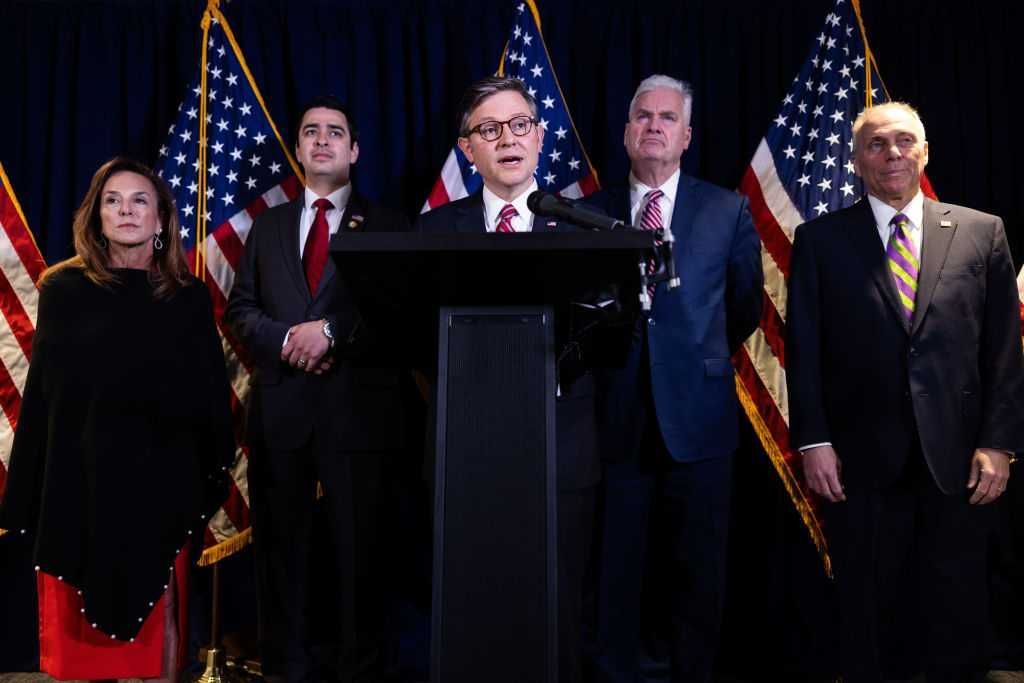
Last week, Speaker Mike Johnson (R-La.) announced that the House would return for only a one-week session in mid-September and then adjourn until after the election. That leaves House lawmakers just four more legislative days before November 3.

I suppose one could argue that given how bad they have been, it is better to keep them out of Washington.

But if that is our attitude, why should anyone vote to send them back?

RELATED: Washington must not forget the grassroots

Leon Neal/Getty Images

It didn’t have to be this way. Following the Supreme Court’s ruling on birthright citizenship, Republicans could have used the budget, the National Defense Authorization Act, or reconciliation to try to prohibit federal funding for citizenship documents issued under circumstances they oppose. They could have pursued legislation changing how noncitizens are treated in congressional apportionment. They could have attempted to defund sanctuary jurisdictions or restrict programs that allow foreign workers to compete with Americans for jobs.

In other words, they could at least have attempted to use their final legislative days before the election to fulfill their mandate. That itself would have been a stronger campaign message than the languid narrative they currently offer.

After all, what is the point of clearing the schedule for extra campaign days if you have nothing positive to campaign on?

Instead, Republicans returned last week and quickly passed a continuing resolution funding the government through December 11 with virtually none of the immigration or economic reforms conservatives spent the past two years demanding. The House passed it 370-48.

“Well, they don’t want to rock the boat close to the election, so they opted for a clean CR,” you might retort.

Except it was not really clean in the sense conservatives usually mean when they use that term.

The bill contained at least two significant policy provisions. One delays new restrictions on intoxicating hemp-derived THC products that Congress enacted last year. The restrictions were scheduled to take effect November 12 and would have barred many products containing more than 0.4 milligrams of THC or other intoxicating cannabinoids per container. The CR now pushes that deadline to December 11.

The hemp industry lobbied heavily for that reprieve, and the White House supported the delay. Republicans who objected argued that Congress was postponing restrictions aimed at increasingly potent and easily accessible products.

Unfortunately, Trump is well-connected to the hemp and marijuana industries, so naturally he is willing to fight for them more than any of his immigration or economic promises.

RELATED: Dallas is the GOP’s last chance to remember why Trump won

JIM WATSON/AFP/Getty Images

The continuing resolution also temporarily blocks the Office of Management and Budget from finalizing a proposed rule that would significantly change federal grant-making by giving political appointees greater authority over grants and allowing agencies broader power to modify or cancel awards.

That reform cuts to the heart of one of the central complaints conservatives have made about the administrative state: Federal grant-making often finances organizations, universities, nonprofits, and programs that advance ideological priorities long after the voters who elected the current administration have changed course.

Yet Republicans allowed the stopgap bill to block one of the administration’s more consequential attempts to bring that grant-making under direct political control.

Why?

This is the recurring problem. Republicans routinely decline to codify their own executive actions, then permit temporary spending deals to constrain the executive authority they actually possess.

Meanwhile, they campaign for more power.

The larger record is difficult to ignore. Republicans have controlled the House for 24 of the past 32 years. Yet many of the policy victories conservatives celebrate remain vulnerable to the next president, the next court case, or the next appropriations fight because Congress never secured them in statute.

Holding office becomes the achievement.

The irony is almost perfect. Republicans warn voters that Democrats will wield power aggressively if they win, while demonstrating that Republicans themselves are reluctant to wield it while they have it.

Then they leave Washington to campaign for another chance.

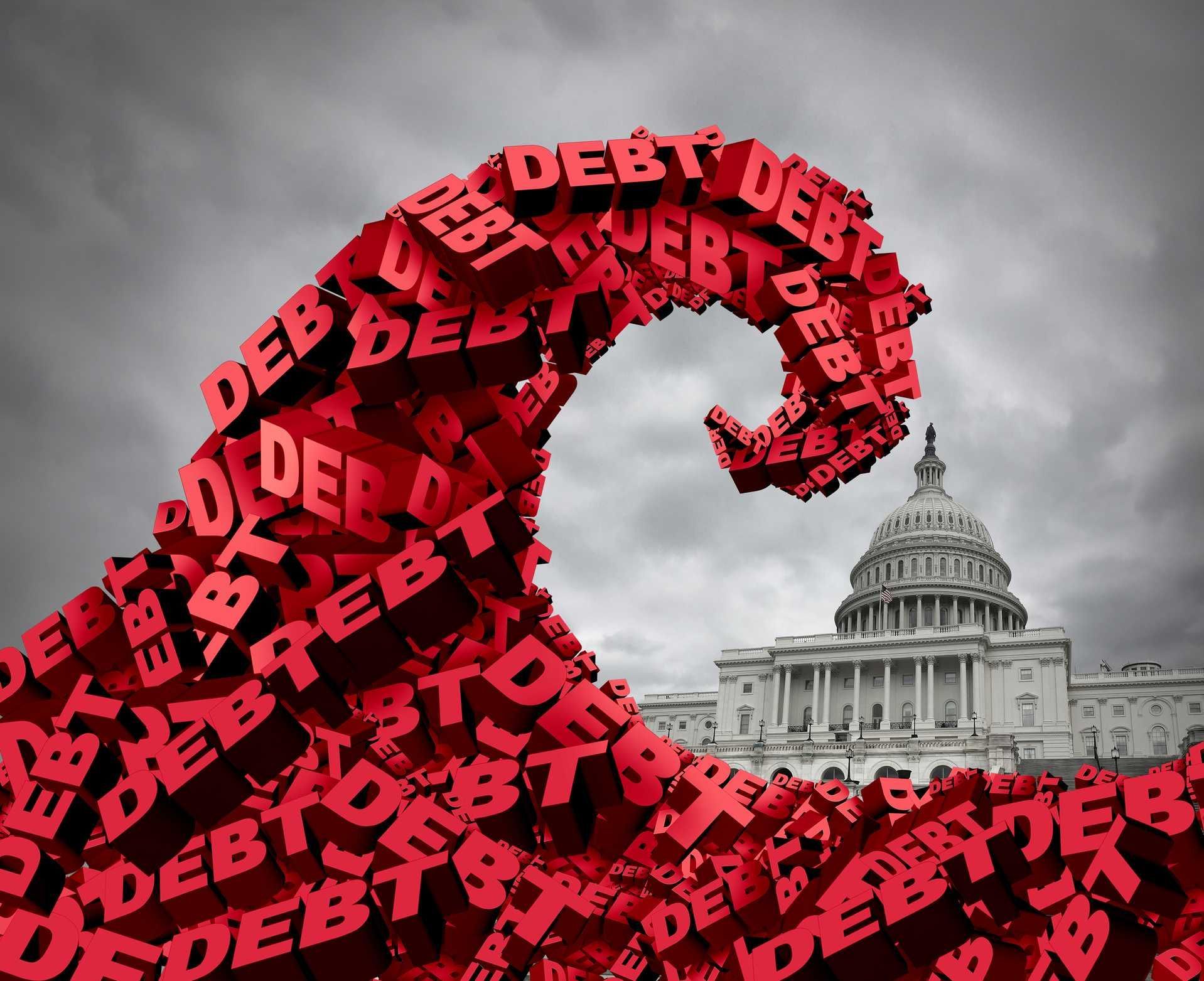
To err is human. To owe $40 trillion is Washington.


Caregiving has taught me to ask a simple question before making a consequential decision: “Is this healthy?” Will this solve today’s problem by consuming what we may need tomorrow? Does it respect the resources entrusted to me?

After 40 years as a caregiver, I have learned that money, time, strength, and even goodwill are finite. Wanting something does not make it wise, and good intentions do not eliminate consequences. A caregiver who confuses desire with capacity can hurt the very person he is trying to help.

We are financing today’s promises with tomorrow’s labor, then congratulating ourselves for our generosity.

Caring describes an intention. Stewardship requires an accounting. By that standard, Washington has failed spectacularly.

The United States has now crossed $40 trillion in national debt. The figure barely communicates anything. Forty trillion sounds like something a third-grader says when trying to name the biggest number in the world.

The national debt is what Washington has accumulated through borrowing. The annual deficit is how much more it spends than it collects each year. The debt is the hole. The deficit is how much deeper we dig it.

The Congressional Budget Office projects a $1.9 trillion federal deficit for fiscal year 2026. Congress has looked into a $40 trillion hole and concluded that what it needs is more digging.

Democrats invoke compassion to justify spending money the government does not have. Republicans campaign on fiscal restraint, win office, and then discover that their preferred spending somehow does not count. One party calls it caring. The other calls it necessary. Both send the bill to our children.

Each party points furiously at the other while passing the national credit card back and forth. Both help start the fire, then pass the collection plate while arguing over who bought the gasoline.

Now we enter election season, when, as Lloyd Christmas might say, the promises flow like the salmon of Capistrano. Candidates will tell us how deeply they care about families, seniors, veterans, national defense, and taxpayers. They will demonstrate their concern for one group by promising it money borrowed from all the others. A politician can always appear compassionate by promising benefits with other people’s money.

RELATED: It took 200 years to reach $1 trillion in national debt. 2026 said, ‘Hold my beer.’

Mandel NGAN/AFP/Getty Images

Stewardship asks harder questions: How much will this cost? Who will pay for it? What has the existing program accomplished? What happens if your projections are wrong? If this is worth doing, why must we borrow the money?

Those are not cruel questions. They are the responsible ones.

Government cannot create resources by attaching the word “federal” to them. There is no government money. Government either collects money from today’s citizens or borrows against tomorrow’s taxpayers.

We are financing today’s promises with tomorrow’s labor, then congratulating ourselves for our generosity. There is nothing generous about giving away the money of someone not yet born. That is taxation without representation on a generational scale.

Stewardship does not require government to spend nothing or never incur debt. Families and nations face genuine emergencies. Caregivers understand that. Medical catastrophes rarely consult the household budget before arriving.

But caregivers often do without. Congress seems far more comfortable assigning sacrifice than accepting any. I have also learned that an emergency cannot become a permanent governing philosophy.

At my kitchen table, I cannot promise everything, spend without limit, blame someone else when the bills arrive, and then congratulate myself for caring. Yet Washington does just that.

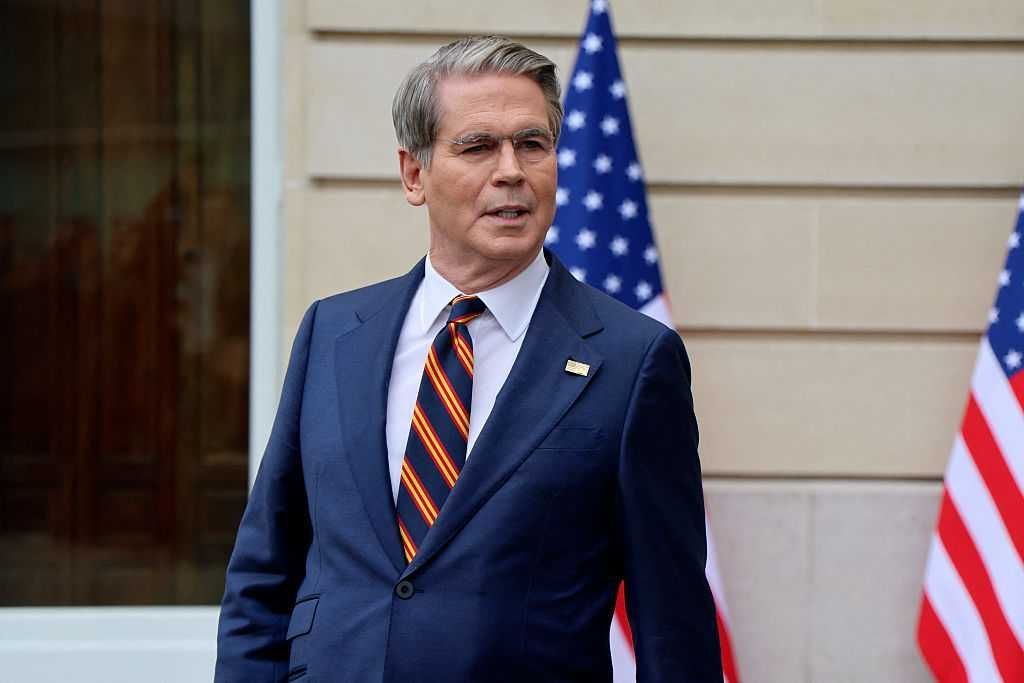
RELATED: Scott Bessent is the secret weapon for Trump’s economic plan

Ludovic MARIN/AFP/Getty Images

Over the next few months, commercials filled with flags, farms, hard hats, classrooms, and concerned expressions will flood the airwaves. Recorded voices will warn that civilization depends upon our response before midnight.

As the onslaught escalates, keep asking one question: Is this candidate a good steward? Not only of public money, but of public trust, constitutional authority, and the extraordinary inheritance of self-government.

To our national shame, we may not be able to answer yes about many of them. That does not excuse us from voting. It makes our responsibility more sobering.

Ronald Reagan popularized “trust, but verify” when dealing with the Soviet Union. Washington has now given us $40 trillion reasons to apply it to our own government. We must choose the better steward and then hold that person accountable.

Campaign season is when politicians sell. Election Day is when we buy. Tax Day reminds us what we paid. Better hang on to the receipt.

After April 15, we begin to learn whether they can manage what they were so eager to sell.

Around my kitchen table, math eventually gets the final vote. At $40 trillion in debt, one wonders whether math even applies in the halls of Congress.

It’s Past Time For USED To Pull Taxpayer Funds From Schools That Secretly Trans Kids

There are only so many warnings the Education Department can give before it starts taking action against noncompliant states.

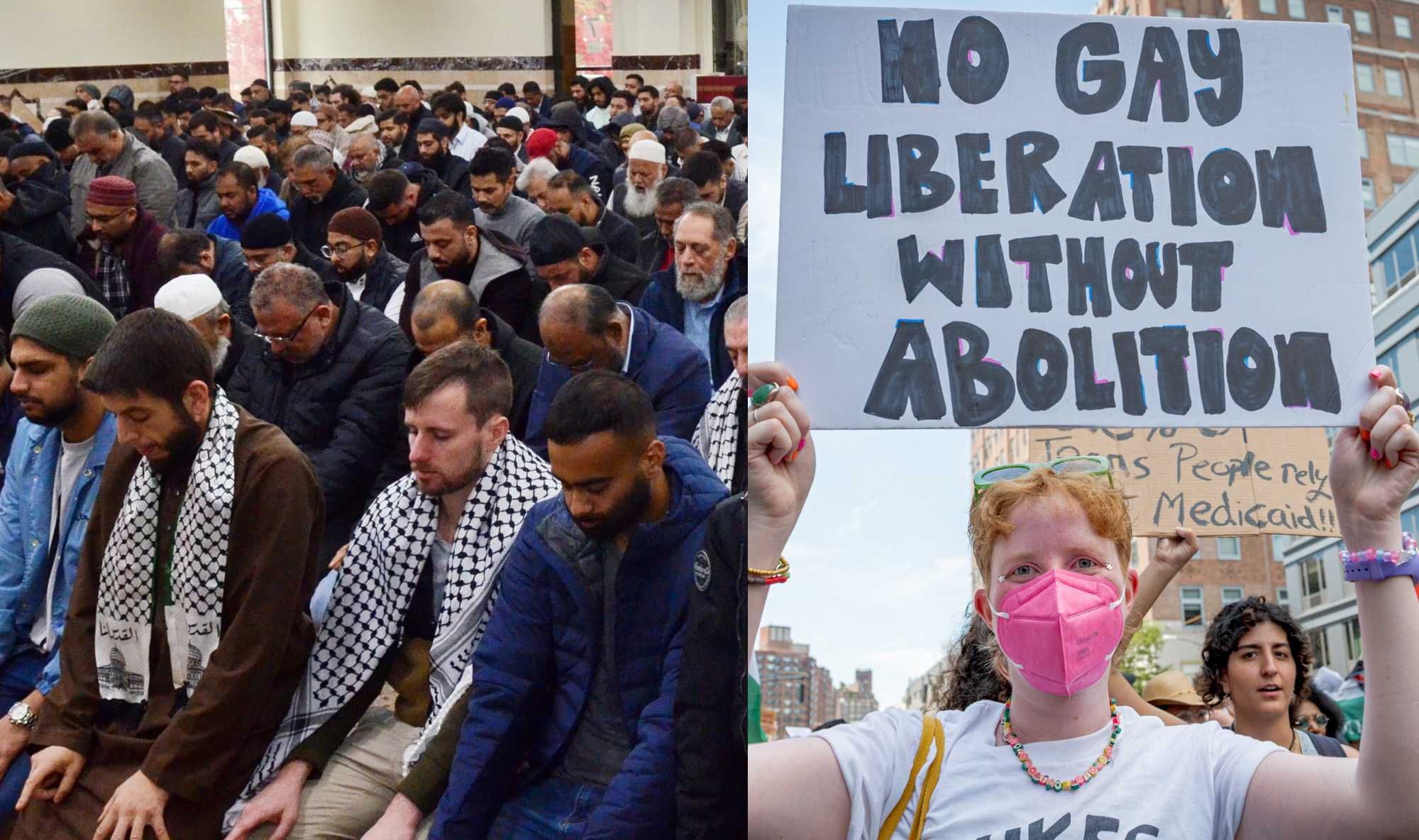
Activists RAGE against Democrat who admits hiding LGBTQ+ support to appease Muslims


A Muslim Democrat running for Washington’s 9th Congressional District has admitted to obscuring her support for LGBTQ+ to appease her Muslim supporters.

Melissa Chaudhry, 34, is facing the ire of the LGBTQ+ mob over the comments, which she made in an interview with the Stranger.

'LGBTQ+ rights are not optional. They are foundational to any candidate seeking Democratic support.'

She was asked why LGBTQ+ rights were not mentioned on her campaign website despite her claiming to support the issue.

"Because a lot of Muslims do not feel that way, unfortunately," she responded.

Among the LGBTQ+ activist groups excoriating Chaudhry was Washington Stonewall Democrats Chair Andrew Ashiofu.

"Our community is not expendable. LGBTQ+ rights are not optional. They are foundational to any candidate seeking Democratic support,” wrote Ashiofu.

His group followed up with its own scathing statement.

"She avoids talking about LGBTQIA+ issues so as not to offend her Muslim supporters," the group said. "What a privileged statement to make, creating misinformation to cause chaos between two oppressed demographics. One would think she would apologise and move on. Again, thinking rationally is not something all candidates possess, as proven by Melissa."

Chaudhry responded to Ashiofu in a lengthy statement on social media.

"If you are queer, and you are wondering if you and your rights are safe with me, I assure you from the bottom of my heart, you are, you have always been, and you always will be," she wrote.

RELATED: LGBTQ groups FURIOUS at CA county ending Pride Month display at library — over a bookmark

"I have supported full equality for LGBTQ+ people my entire life, not since this campaign started, my entire life," she added.

Her campaign appeared to add LGBTQ+ issues to her website after the outrage ensued.

In a post on YouTube, she accused the Washington Stonewall Democrats of being bigoted against her because she wears the hijab.

Chaudhry also caused consternation among Democrats after indicating that she planned to switch to the Green Party once she got into office.

"I don’t want you to publish this," she said during the explicitly on-the-record interview with the Stranger.

Like Blaze News? Bypass the censors, sign up for our newsletters, and get stories like this direct to your inbox. Sign up here!

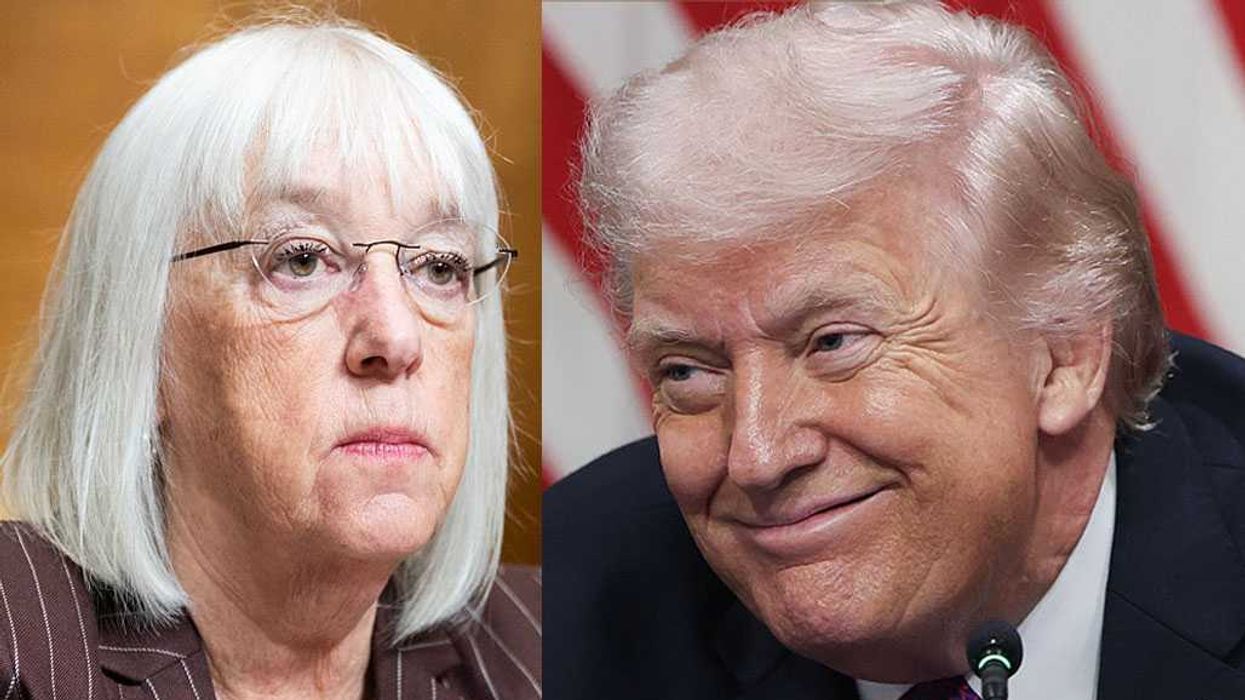
Trump fires US attorney minutes after activist judges installed him, leaving Patty Murray in tatters


A gang of federal judges installed a past appointee of former Democratic Gov. Jay Inslee in the role of U.S. attorney for the Western District of Washington state on Wednesday. President Donald Trump made sure, however, that the judges' pick didn't last long in the position.

"District court judges can appoint a temporary U.S. Attorney, and POTUS can fire them," acting Attorney General Todd Blanche said in a statement. "WDWA judges abandoned the time-honored process of consultation with the administration so that the selected U.S. Attorney is qualified to serve in the administration."

'Glad he was fired right away.'

Quick background

The Biden Department of Justice announced on March 1, 2021, that it had appointed Tessa Gorman as acting U.S. attorney for the Western District of Washington. Shortly after retaking office, President Donald Trump kicked Gorman to the curb.

In October, Trump named a notoriously tough immigration judge, Charles Neil Floyd, as the new attorney. U.S. attorneys are normally nominated by the president, then confirmed by the Senate. In the case of Floyd, Trump never forwarded the nomination to the Senate.

Interim U.S. attorneys are allowed to serve for only 120 days if not confirmed by the Senate or extended indefinitely by the district court for the district concerned. The Trump administration took steps, however, to ensure that Floyd would remain the top dog in the Western District by keeping the top post vacant, then having the DOJ appoint Floyd first assistant U.S. attorney on Feb. 2.

Federal judges in Seattle, who already announced that they would seek to fill the position of the Western District's U.S. attorney, began taking applications in March.

One-hour appointment

The U.S. District Court for the Western District of Washington — comprising 17 federal judges, 10 of whom were appointed by Democratic presidents — issued an unanimous order on Wednesday naming Roger Rogoff as the U.S. attorney for the district.

RELATED: Justice Amy Coney Barrett describes SWATTING attack against her family

First Assistant U.S. Attorney Charles Neil Floyd. U.S. Attorney's Office for the Western District of Washington.

The order — which was signed by David Estudillo, a U.S. district judge appointed by former President Joe Biden — claimed that the intent behind Rogoff's appointment was to "ensure the integrity and effective administration of justice in this district."

Rogoff was sworn in before 8 a.m. at the federal courthouse in downtown Seattle on Wednesday, then went to meet with Floyd, reported the Associated Press. Rogoff told KING-TV that by 8:34 a.m., he had received an email informing him that he had been removed from the post per the president's instruction.

Blanche announced at 5:11 p.m. ET that "Roger Rogoff has been fired by the President."

This turn of events ruffled the feathers of Sen. Patty Murray (D-Wash.).

Murray lashed out at the administration on X, writing, "Within an HOUR after being legally appointed by the federal judges as Western WA's top prosecutor, Trump fired Roger Rogoff. Not because he isn’t qualified (he is), but because the President wants a sock puppet who puts Trump above the rule of law."

Murray noted further in a release, "Roger Rogoff’s [sic] is eminently qualified — throughout his career, he has demonstrated an outstanding commitment to public service, and he was appointed legally by the federal judges in the Western District of Washington. He should have never been fired, but the president wants to appoint an out-of-touch extremist who will put Trump over the rule of law."

Keith Swank, the sheriff of Pierce County, Washington, took Murray's characterization of Rogoff as "qualified" as a clear indicator "he's a political hack."

"Glad he was fired right away after the stunt the leftist judges did," wrote the Republican sheriff.

Rogoff, who told the Associated Press he is considering suing over his termination, said, "The fact that the judges of this district — most of whom I’ve spent my career appearing in front of, or trying cases against, or working with — believed that I was the right person to do this work is just really humbling and amazing."

Like Blaze News? Bypass the censors, sign up for our newsletters, and get stories like this direct to your inbox. Sign up here!

Is Mitch McConnell still fit to serve? Glenn Beck investigates Washington's silence


Senator Mitch McConnell was confirmed to have been hospitalized on June 14 for an unknown condition — but that was now weeks ago, and the people of Kentucky have received no meaningful updates about his condition.

Now, Blaze Media co-founder Glenn Beck is asking questions that Washington refuses to answer.

“Here are the rumors. And they’re rumors. If they’re true, they’re tragic. If the rumors are false, then somebody needs to step up and tell the American people the truth. Either way, this is not how a constitutional republic is supposed to function,” Glenn says.


According to these rumors, it’s been three weeks since the people of Kentucky have heard about the condition of Senator Mitch McConnell.

“His office has issued really carefully worded statements. He’s recovering. He appreciates everyone’s support. They don’t say what happened. They don’t say when he’s going to return,” Glenn explains. “They don’t answer even the basic question every citizen has a right to: Can he still do the job?”

“Is he still thinking? And this is not a cruel question, but the guy is a sitting senator, and it’s a question that matters, because this is bigger than Mitch McConnell. We watched America do this with President Biden,” he continues.

“Republicans are now the mirror image of the people they criticized,” he says. “You know, if your party has spent years demanding honesty about the president’s health, you kind of have an obligation to demand honesty about your own leader in your own GOP.”

“This is not about left or right. This is about representation,” he adds.

Want more from Glenn Beck?

To enjoy more of Glenn’s masterful storytelling, thought-provoking analysis, and uncanny ability to make sense of the chaos, subscribe to BlazeTV — the largest multi-platform network of voices who love America, defend the Constitution, and live the American dream.

Inside the UK's under-16 social media ban: AI girlfriends, Bluesky, and a few open questions


Alongside the fact that the British government is now apparently in the business of regulating AI girlfriends, U.K. Prime Minister Keir Starmer just announced a sweeping ban on social media for anyone under 16 in the U.K.

Snapchat, TikTok, YouTube, Instagram, Facebook, and X are the platforms named so far in the U.K. government's official announcement. Modeled on Australia's ban, the list may not be final.

'Is this simply overt political censorship?'

Restrictions will also be enforced on gaming sites, including blocks on livestreaming and stranger communication with children under 16.

Starmer previously said he was personally opposed to a "blanket ban," but according to GB News, a government consultation closed in May with nearly 120,000 responses and over 90% of parents backing a ban.

The U.K. government also preloaded the announcement with a spending pledge.

A £132.5 million "Every Child Can" program was unveiled to fund "enriching activities" in sports, art, and nature — framed as alternatives to doomscrolling.

RELATED: New York schools banned smartphones a year ago — and it seems to be a smart idea

Isabel Infantes/POOL/AFP/Getty Images

But nobody can say for sure whether Bluesky, the left-leaning alternative to X, is even covered by the ban. GB News says it "looks set to escape a ban" entirely, but according to LBC, Technology Secretary Liz Kendall told a radio host on Monday, "In Australia, Bluesky is included in the ban, and we plan to use their model."

Reem Ibrahim of the Reason Foundation suggested the ban could be a form of "political censorship": "The UK is banning under-16s from social media, under the guise of 'protecting kids', but it will not include Bluesky. Is this simply overt political censorship?"

The U.K. government's definition is broad enough to cover almost any app "whose purpose is to enable social interaction and which allow users to post material" and therefore could include sites like Reddit, Pinterest, and Tumblr.

And buried in the same announcement is a ban on under-18s using "romantic companion chatbots," with all AI chatbots required to dial back "intimate functionalities" for minors.

Washington isn't thrilled either. In its formal response, the U.S. Embassy in London said it preferred "narrowly targeted requirements" over "broad social media bans," adding that "most content should remain accessible by default, including political speech."

Making any of this stick will likely require platforms to confirm who is underage, though the government has not said how that will work yet.

Like Blaze News? Bypass the censors, sign up for our newsletters, and get stories like this direct to your inbox. Sign up here!

America has culture — just ask the World Cup fans discovering Waffle House


Forget the final score. The real World Cup upset this summer is how many international fans are discovering that America is, against all odds, kind of great — especially in a "why does this gas station have 40 kinds of jerky and also a Wi-Fi password printed on the receipt" way — and they're documenting their delightful experiences on social media.

The breakout star of the bunch is a German fan known on X as Freddy who has been chronicling a six-week road trip across the U.S. and Canada, following Germany's national team, and has picked up hundreds of thousands of followers in his trek.

‘The European mind can't comprehend this.’

Freddy's Atlanta stop hit the respectable tourist beats — Stone Mountain, the MLK National Historical Park, some "Stranger Things" filming locations — and then immediately abandoned all dignity for Taco Bell, which he called "the holy land."

A 1 a.m. Waffle House visit got a perfect 10/10 — food, prices, and staff included.

His Wendy's stop in Tennessee produced the single best exchange of the whole tour. His order somehow came back under the name "John," and when he posted his haul of burgers and fries, the official Wendy's account replied with one demanding question: "WHERE IS THE FROSTY."

He also fit in a Walmart run for water, socks, and USA soccer merch and somehow found time to watch the NBA Finals at Chili's amid all this.

Before a single World Cup match had kicked off, Freddy watched the War Eagle fly over Auburn's Jordan-Hare Stadium and called it the most "the European mind can't comprehend this" moment of his life.

One of Freddy's posts got enough traction that Transportation Secretary Sean Duffy shared it on X, writing: "There's no better way to see our country than on a road trip! Because to LOVE AMERICA you have to SEE AMERICA."

Alabama Governor Kay Ivey (R) invited him back for football season. When he posted from the Gulf Coast, Republican Gov. Ron DeSantis welcomed him to Florida — but couldn't let it go that Freddy had called the Gulf "the sea."

RELATED: 'I had the right papers': Somali World Cup referee booted from US gets an answer from the White House

Robbie Jay Barratt - AMA/Getty Images

Freddy is not even the only German on this beat. Finn Agostinelli has been touring Chicago — the Riverwalk, "the Bean," and a visit to Portillo's so good that he posted a petition to get one opened back home in Hamburg.

His best moment came at Macy's, where he had ducked in to find a restroom and instead found himself staring up at an enormous American flag. "I respect how proud Americans are of their country," he wrote. "Unimaginable back home in Germany."

Texas, for its part, did not go unnoticed either. A group of Japanese fans told KDFW their assessment of the state in six words: "Texas is good — everything is big." Which checks out. Everything is bigger in Texas.

And in a tradition that has followed Japan's national team since its 1998 World Cup debut, Japanese fans were spotted picking up trash in the stands after a 2-2 game against the Netherlands in Dallas, a habit rooted in a saying that a bird leaves no trace when it flies. Stadium staff, presumably, were thrilled — and possibly a little confused.

Meanwhile, a young Swedish fan named Elsa Thora landed in Indianapolis and immediately discovered ranch dressing, which, by the tone of her posts on X, may have been a bigger moment for her than the actual soccer.

"Why did no one tell me ranch sauce is like crack? EUROPE WE NEED RANCH ASAP," she said.

Elsa screamed at a school bus in Indiana, posted a photo of Twinkies and Combos pretzels with the caption "I feel like I'm in a movie," and has been working her way through Trader Joe's ever since.

She also discovered that Amish people are, in fact, real.

Not every discovery has been a hit, though. Elsa also found shampoo locked behind anti-theft barriers at a store, a security measure uncommon in much of Europe, and called it her first negative experience of the trip.

She's not alone on the friction front. Scottish fan Shaun Cumming arrived in New York after flying from Edinburgh and was blunt about the cost of everything — especially after a $150 Uber ride into Brooklyn.

He also noted to Newsweek that Americans are noticeably more open than people back home.

"People here are very positive, enthusiastic, and they're not shy at all," he said. "They will tell you how they feel for good or for bad. And sometimes for British people, it can catch us off guard a little bit."

Cumming had no complaints about the food. He said American cooking is simply better seasoned than what he's used to: "Here, you get flavor, you get fed well, they put a lot spices, herbs and seasoning into their food in general, which just makes it really good" — and that the regional variety is what stuck with him most.

RELATED: Trump and Mamdani are on a collision course about ICE at the World Cup

Joe Lamberti/Bloomberg/Getty Images

Underneath all of it is something that keeps surprising people more than the food: the locals.

A tourism expert told Fox News that visitors driving nine hours across Texas are running into "overwhelming American kindness," often from small-town residents who have no idea why someone with hundreds of thousands of followers just pulled into their gas station.

A New Jersey deli owner gave a couple of British tourists a free lunch, and Alabama firefighters gave other British fans a station tour and sent them off with free gear.

Waffle House has been open at 1 a.m. for 50 years. Buc-ee's has always been enormous. Ranch dressing has been sitting in American refrigerators, unremarked upon, since the Reagan administration. Perhaps the deli owner who fed the British tourists wasn't doing anything he wouldn't do for a local who looked lost.

What's new is that someone finally pointed a camera at it.

For years, the conversation about America — at home and abroad — has been almost entirely about Washington: the politics, the division, the sense that the country is somehow failing itself. But that was never the whole country.

The actual texture of American life — the diners, the gas stations, the absurd portion sizes, the stranger who will drive you to a game because your Uber didn't show — was always there, underneath all of it, completely unaffected by whatever was happening in D.C.

This summer, a few hundred thousand people from somewhere else have seen the real America: big, weird, generous, a little much.

Like Blaze News? Bypass the censors, sign up for our newsletters, and get stories like this direct to your inbox. Sign up here!

Marie Gluesenkamp Perez Calls Herself a 'Business Owner in SW Washington.' Her Shop Is in Oregon, Where Employers Can Pay Much Lower Salaries.

Rep. Marie Gluesenkamp Perez (D., Wash.) suggested she owned a business in southwestern Washington earlier this year while trying to relate to her constituents' struggles. But the business the congresswoman co-owns with her husband, Dean's Car Care, is actually located across state lines in Portland, where the minimum salary requirement is much lower.

The post Marie Gluesenkamp Perez Calls Herself a 'Business Owner in SW Washington.' Her Shop Is in Oregon, Where Employers Can Pay Much Lower Salaries. appeared first on .