How Reforming Stock Market Rules Would Dramatically Boost America’s Middle Class
Just imagine how much it would help the middle class to enjoy access to America’s wealth engines again.It’s known as the Easterlin paradox.
Though rising wealth at early stages in the lives of individuals and countries fosters greater happiness, perpetually rising wealth does not make individuals or countries perpetually happier. At some point, economics Professor Richard Easterlin of the University of Pennsylvania and USC discovered, more wealth engenders less happiness.
Private capital mindfully allocated can both do well and do good.
This paradox may be best illustrated with U.S. data. Total U.S. household wealth exceeded $182 trillion at the end of 2025, up 466% from an inflation-adjusted $39 trillion in 1980. Yet in 1980, 82% of Americans described themselves as satisfied versus only 44% of Americans today — a decline of nearly half. Similarly, in 1980, only 20% of Americans described themselves as lonely. Today, it’s 40%.
Paradoxically, more American wealth has made Americans less happy and fostered an epidemic of loneliness. Why is this, and what can be done about it?
According to the Human Flourishing Program at Harvard University, happiness and life satisfaction are only partly material in nature. Work and basic housing, health care, and material attributes are important, of course — but no more so than family relationships and friendships, community engagement, and religious affiliations.
These factors are best promoted through nurturing homes, quality education, and supportive work environments. Character formation is essential for personal meaning and purpose.
Harvard scholars clearly derived much of their insight from Aristotle. In his “Nicomachean Ethics,” Aristotle observed that multiple civic virtues were essential for eudaimonia (his term for flourishing or happiness). These include temperance, magnanimity, courage, generosity, modesty, proper ambition, sincerity, and justice.
Inculcating these virtues throughout society requires commonality of purpose, excellent education, strong families, and enlightened leadership.
One way wealthier people could foster greater happiness — their own and that of others — is to use a portion of their wealth to promote greater human flourishing.. The best way to do this is to invest in companies and funds that authentically support and multiply greater inclusivity, wholesome products and services, and higher civic virtue.
RELATED: Right-wing billionaires are barking up the wrong tree

In short, private capital mindfully allocated can both do well and do good — that is to say, earn reasonable risk-adjusted returns while simultaneously resolving humanity’s material, educational, environmental, social, and inclusivity challenges.
Fortunately, a lot could be accomplished with relatively little. My research shows that all of the United Nations Sustainable Development Goals could be achieved in under a decade if ultra-high-net-worth investors allocated no more than 1.6% of their total investable assets a year to verified impact investment strategies; the other 98.4% could continue to be spent or invested however they wish.
Replacing material-driven misery with abundant happiness is an idea whose time has come. If wealthy investors spent a little more effort understanding what their investments could do as opposed to only what financial returns they make, they would help co-create a world of optimal wealth, purpose, and fulfillment. And instead of being a partial cause of their growing discontent, successful investing could become an integral part of the cure.
Material abundance can directly foster rather than undermine human flourishing.
Editor's note: This article was originally published by RealClearPolitics and made available via RealClearWire.
In “Politics,” Aristotle explains that political rule comes in three basic forms: rule of one, rule of the few, and rule of the many. Each form has a healthy and a degenerate expression. Monarchy and tyranny describe rule by one. Aristocracy and oligarchy describe rule by the few. Polity and democracy describe rule by the many.
What separates the good from the bad in each category is not structure but motive. A king governs for the common good. A tyrant governs for himself.
Despite the millennia that separate us from Aristotle, the philosopher’s portrait of tyranny feels uncomfortably contemporary.
Aristotle does more than classify regimes. He explains, in cold and unsentimental terms, how tyrants preserve power once they seize it. His warnings, written more than 2,000 years ago, read less like ancient theory and more like a field manual.
The tyrant begins by eliminating rivals. He fears competition, especially from men of spirit and competence. Anyone admired for virtue, courage, or leadership poses a danger because excellence inspires imitation. Such men are removed through exile, execution, or disgrace.
Next the tyrant attacks institutions that allow citizens to form bonds. Aristotle lists common meals, clubs, educational gatherings, literary societies, and discussion groups. Any shared practice that fosters trust, loyalty, or independent thought threatens despotic rule. Organization creates solidarity, and solidarity creates resistance.
The tyrant also forces citizens to live publicly. Privacy breeds conspiracy. Public life enables surveillance. Aristotle describes rulers who compel their subjects to remain visible so that dissent never escapes notice. Long before Bentham’s panopticon, Aristotle understood that constant observation disciplines behavior.
Surveillance alone does not suffice. Tyrants cultivate networks of informers to uncover thoughts that cannot be seen. Citizens learn to treat one another as potential threats. Suspicion replaces trust. Speech becomes guarded. Silence becomes safety.
Aristotle could not have imagined digital surveillance, but he would have recognized its function. Technology merely perfects a strategy the ancients already understood.
Social bonds must then be weakened. The tyrant sows discord between neighbors, friends, and families. These relationships form the first line of resistance to centralized power. When trust dissolves at the most intimate level, organized opposition becomes nearly impossible.
Poverty also serves the tyrant. Aristotle observes that despots deliberately exhaust their populations with endless labor. The goal is not productivity but distraction. Citizens too busy to rest or reflect lack the energy to conspire.
He cites the construction of the Egyptian pyramids as an example of forced labor designed less to achieve a purpose than to consume a people’s strength. The task glorifies the ruler while leaving the population depleted.
War further strengthens despotism. Constant external threat convinces citizens that they need a strong ruler to survive. Crisis suspends normal limits. Emergency justifies control. Under perpetual conflict, organization becomes treason.
Aristotle claims that tyranny, the degenerated rule of one, borrows from the worst features of democracy. Despots empower groups unlikely to organize independently against them. He mentions women and slaves not as moral judgments but as political calculations within the ancient world.
The logic remains familiar. Tyrants elevate those dependent on the regime and hostile to existing social hierarchies. Dependence fosters loyalty. Resentment supplies enforcement.
Flattery plays a crucial role. Tyrants surround themselves with sycophants who inflate their ego and confirm their righteousness. Men willing to abase themselves rise quickly. Men of honor refuse to flatter and therefore remain dangerous.
Flattery becomes a sorting mechanism. Those who value dignity exclude themselves. Those who crave favor advance.
Aristotle adds that tyrants prefer foreigners to citizens. Citizens possess memory, tradition, and moral expectation. They know how things once were and how they ought to be. Foreigners lack these attachments, and they are happy to flatter the ruler who elevated them.
This arrangement benefits both sides. The tyrant gains enforcers without local allegiance. The foreigner gains status, wealth, and protection. Without the ruler, he has nothing.
RELATED: Do you want Caesar? Because this is how you get Caesar.

Despite the millennia that separate us from Aristotle, his description of tyranny feels uncomfortably contemporary. Surveillance now operates through algorithms and cellphone cameras rather than forcing everyone to live at the city gates, but the purpose remains unchanged. Security replaces liberty. Total observation replaces trust.
Our institutions remove ambitious and virtuous individuals while elevating compliant managerial drones. Debt binds the population to endless labor. Work consumes life without building independence. Citizens remain busy, anxious, poor, and isolated.
Cultural and political authorities weaken family, denigrate religion, and discourage independent association. Community dissolves into administration. Loyalty transfers from neighbors to systems.
Ruling classes increasingly rely on populations with little connection to national history or tradition. These groups have no reason to defend inherited norms and every incentive to please those who grant them status.
Some details differ but the formula for tyranny does not. Aristotle understood tyranny because he understood human nature. His analysis endures because the same impulses govern power in every age.
There is nothing new under the sun.
Popular culture loves its image of Norsemen shivering in fur pelts, raiding British monasteries, and braving the icy North Atlantic. Yet while Vikings struggled to survive on the thawing margins of Greenland, a far richer and more formidable maritime power flourished thousands of miles away in the tropical warmth of southern India.
That power was the Chola Empire.
A modern golden age remains within reach — provided we do not cripple ourselves with fear of the very conditions that have so often underwritten human prosperity.
At its height between 985 and 1044 A.D., the Cholas projected force on a scale that made Viking longships look like backyard skirmishers. Their ships were technological marvels — floating fortresses capable of transporting cavalry, infantry, and weeks of provisions across vast distances.
The Cholas mounted a major naval expedition against the Srivijaya Empire, a dominant maritime power based in what is now Indonesia and the Malay Peninsula. This was an amphibious assault conducted thousands of miles from home ports, a logistical achievement comparable to modern naval operations. The Cholas toppled rulers, secured the vital Malacca Strait, and guaranteed safe passage for merchant guilds trading from the Middle East to China.
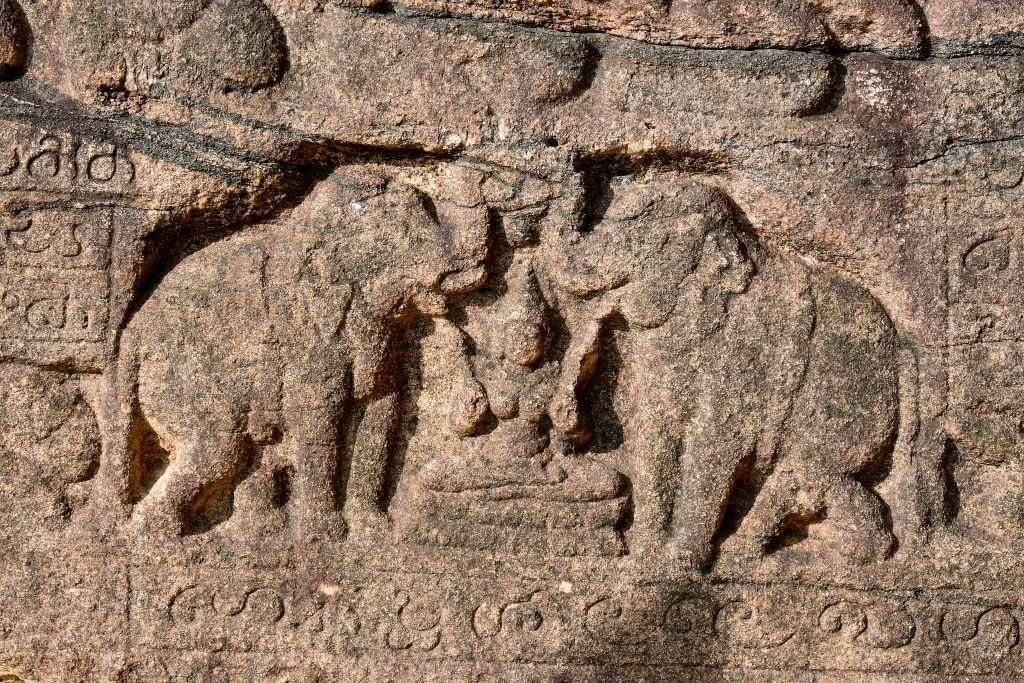
On land, they maintained a standing army that included thousands of war elephants.
Their wealth also found expression in stone. The Great Living Chola Temples — now recognized as UNESCO World Heritage sites — stretch across southern India and neighboring islands. Built without modern machinery, these monumental structures relied on elephants to haul massive stones from distances of up to 60 miles.
Chola society possessed abundant labor, food, and wealth. The question is why.
What enabled a civilization to generate the immense caloric and economic surplus required to build stone monuments and launch armadas across the Indian Ocean? A large part of the answer lies in climate — specifically, global warming.
The rise of the Chola Empire coincided with the Medieval Warm Period, which lasted roughly from 900 to 1300 A.D. This relationship between warmth and human flourishing is inconvenient for the modern climate-industrial narrative, which treats rising temperatures as an unqualified catastrophe.
Warmth strengthens tropical monsoons, the lifeblood of agrarian economies like the Cholas’. Recent scientific research confirms that fluctuations in the Indian summer monsoon shaped agricultural output and the rise and fall of major dynasties. Indian civilization flourished during the Roman Warm Period, fractured during the Dark Ages Cold Period, and reached new heights under the Cholas during the Medieval Warm Period.
The Chola Empire was sustained by the very kind of warming modern activists describe as an “existential threat.”
RELATED: ‘Green Antoinettes’ live large, preach small

In the Cauvery Delta — the empire’s heartland — this favorable climate transformed the region into the “Rice Bowl of the South.” Three harvests a year became common. Granaries overflowed. Revenues surged.
That surplus freed labor from subsistence farming and redirected it toward imperial ambition. Chola trade guilds thrived, exporting textiles, spices, and grain to the Chinese Song Dynasty — another civilization that prospered during this warm epoch.
Today, we find ourselves in another warming phase, emerging from the depths of the Little Ice Age that ended in the mid-19th century. Global crop yields have repeatedly reached record highs. India has re-emerged as a major grain exporter. The planet is experiencing a measurable “greening” effect as higher atmospheric carbon dioxide levels fertilize plants and warmer temperatures expand cultivable land.
Yet, we are told to feel guilty.
Coal, oil, and natural gas — fuels that protect humanity from the elements and power modern economies — are vilified. Environmental extremists implicitly argue for a colder world, despite the historical record showing that colder periods brought famine, disease, and social collapse.
The Chola Empire stands as a reminder of what human ingenuity can achieve when the climate cooperates. Its ships sailed on prosperity sustained by warmth. Its temples rose from a society rich in calories and confidence. Its civilization commanded respect across continents.
We face a similar opportunity today. A modern golden age remains within reach — provided we do not cripple ourselves with fear of the very conditions that have so often underwritten human prosperity.
Political solutions feel increasingly out of reach in the United States. Congress cannot pass a budget and has offloaded most of its legislative duties to lobbyists and the permanent bureaucracy. The judiciary spends more time blocking lawful presidential action than interpreting law. Executive agencies drag their feet under activist judges and rebellious career staff. Inflation continues to punish households, the health care system teeters, and American workers watch themselves replaced by imported labor.
In moments like these, people look for someone who can simply make the system function again. That is how you get a Caesar.
Caesar does not appear because the existing powers pushed too far, but because they refused to act decisively when action was needed.
Though “dictator” carries a purely negative meaning today, the term originally described a legitimate emergency office in the Roman Republic. Rome elected two consuls who shared executive authority, but when a true crisis struck — invasion, rebellion, famine — Roman law allowed the temporary selection of a dictator who ruled alone for six months. The point was efficiency during existential danger.
Rome famously revered figures like Cincinnatus, elected dictator twice, who relinquished power immediately when the crisis ended. His restraint, not his authority, made him a civic hero. Tradition demanded this behavior; violating it meant disgrace and, often enough, assassination. George Washington consciously modeled his own two-term limit on this Roman example.
The end of the Roman Republic is often associated with Julius Caesar being named dictator for life. The underlying crisis, however, predated him. Rome’s elites consolidated land, squeezed citizens out of ownership, imported a large slave class that drove down wages, and ignored the growing unrest. The Senate refused to act and violence broke out. Does any of this sound familiar?
Caesar marched on Rome, won a civil war, and took power. He reformed the calendar, overhauled the justice system, cut welfare, and enacted land reforms. He was popular with the public but enraged the ruling class by destroying their privileges. His assassination ended his rule, but not the transformation he initiated. The republic was finished.
In “The Decline of the West,” Oswald Spengler argued that civilizations follow a life-cycle: birth, growth, decline, and death. In the late stage, societies fall under the control of bureaucratic oligarchies powered by money. Rules remain on paper, but decisions always serve wealthy interests. Economic mobility collapses. The public is effectively locked out.
These eras are marked by deep cultural divides. A decadent, urban elite begins to live in ways utterly foreign to the people they rule. Wealth concentrates in cities. Cosmopolitan values take hold. Citizens no longer recognize their own country.
When legislative bodies fail, bureaucracies grow unchallengeable, and moneyed elites block ordinary people from their own society, Spengler argued that a Caesar figure reliably emerges — a leader who sweeps aside gridlock and imposes order. Not necessarily a tyrant in the cartoonish sense, but a figure who commands enough power to break the stalemate.
The danger is obvious: Once such a leader accumulates that power, nothing guarantees he gives it back. Caesar may save the nation, transform it, or accelerate its decline. What is certain is that once he arrives, the political order changes rapidly.
RELATED: Evil unchecked always spreads — and Democrats are proof

It is hard not to look at today’s United States and see a similar pattern emerging. Donald Trump is not Caesar, but he has been forced to govern through executive orders because Congress refuses to act and the bureaucracy works to undermine him. Activists hold No Kings rallies while Steve Bannon urges Trump to return in 2028. Passionate positions create momentum, and what begins as rhetoric can become a real possibility.
Once an idea becomes a constant point of reference — even in opposition — it gains a form of inevitability. That is the nature of political hyperstition.
If Americans want to avoid a real Caesar, the only solution is to fix the problems that make one appealing. Caesar does not appear because the existing powers pushed too far, but because they refused to act decisively when action was needed.
The borders must close. Replacement labor through expanded visa programs must end. Inflation must be crushed. Foreign adventurism must stop. Policy must shift away from elite wealth extraction and toward enabling young Americans to buy homes and start families. The cultural divide must narrow, and shared values must be restored.
None of this is easy. All of it is essential. If these challenges remain unanswered, no one should be surprised when Caesar finally arrives.
The United States faces an existential threat from the accelerating military power of communist China — a buildup fueled by decades of massive economic expansion. If America intends to counter Beijing’s ambitions, it must grow faster, leaner, and more efficient. Economic strength is national security.
The ongoing government shutdown may not be popular, but it gives President Trump a rare opportunity to make good on his campaign pledge to drain — and redesign — “the swamp.” Streamlining the federal government isn’t just good politics. It’s a matter of survival.
A government that builds wealth rather than expands debt can out-produce China, sustain deterrence, and restore the American ideal of self-government.
George Washington ran the nation with four Cabinet departments: war, treasury, state, and the attorney general. The Department of the Interior came later, followed by the Department of Agriculture, added by Abraham Lincoln in 1862 when America was an agrarian power.
The modern Cabinet, by contrast, is a bureaucratic junkyard built more in reaction to political problems than by design. The Labor Department was carved from the Commerce Department to appease the unions. Lyndon Johnson invented the Department of Transportation. Jimmy Carter established the Department of Energy in response to the Arab oil embargo. The Department of Homeland Security and the Office of the Director of National Intelligence emerged after 9/11.
The result is a patchwork of agencies wired together with duct tape, overlap, and patronage. A government designed for crisis management has become a permanent crisis unto itself.
A return to first principles starts with a single question: How can we accelerate American productivity?
The answer: consolidate. Merge the Departments of Commerce, Labor, Agriculture, Transportation, and Energy into a Department of National Economy. One Cabinet secretary, five undersecretaries, one mission: to expand the flow of goods and services that generate national wealth.
The new department’s motto should be a straightforward question: What did your enterprise do today to increase the wealth of the United States?
Fewer bureaucracies mean fewer fiefdoms, less redundancy, and enormous cost savings. Synergy replaces stovepipes. The government’s economic engine becomes a single machine instead of six competing engines running on taxpayer fuel.
Homeland Security should be absorbed by the U.S. Coast Guard, which already functions as a paramilitary force with both military and police authority, much like Italy’s Carabinieri. Under the Uniform Code of Military Justice, DHS personnel would share discipline, training, and accountability.
FEMA would cease to be a dumping ground for political hacks. Any discrimination in disaster aid — such as punishing Trump voters — would trigger a court-martial.
The Secret Service would focus solely on protective duties, handing its financial-crime work to the FBI. The secretary of the Coast Guard would gain a seat in the Cabinet.
The Office of Director of National Intelligence should be re-established as the Office of Strategic Services, commanded by a figure in the tradition of Major General “Wild Bill” Donovan. Elements of U.S. Special Operations Command would be seconded to the new OSS, reviving its World War II lineage.
All intelligence agencies — CIA, DIA, FBI, the State Department, DEA, and the service branches — should share common foundational training. The current decline in discipline and capability at the National Intelligence University, worsened by the DEI policies of its leadership, demands urgent correction. Diversity cannot come at the expense of competence.
RELATED: Memo to Hegseth: Our military’s problem isn’t only fitness. It’s bad education.

At the Department of Justice, dissolve the Bureau of Alcohol, Tobacco, Firearms and Explosives. Shift alcohol and tobacco oversight to the DEA, firearms and explosives to the U.S. Marshals.
Let the DEA also absorb the Food and Drug Administration, which would become its research and standards division.
Return the FBI to pure investigation — armed but without arrest powers. Enforcement should rest with the U.S. Marshals. Counterintelligence would move to the Defense Counterintelligence and Security Agency, reinforced by the Naval Criminal Investigative Service.
The IRS should be dismantled and replaced with a small agency built around a flat-tax model such as the Hall-Rabushka plan.
Move the Department of Health and Human Services’ Administration for Strategic Preparedness and Response to Homeland Security. Send its Office of Climate Change and Health Equity to NOAA — or eliminate it entirely.
At the Department of Housing and Urban Development, expand the inspector general’s office tenfold and pay bonuses for rooting out fraud.
The Pentagon needs its own overhaul. Because of China’s rapid military buildup, the Air Force’s Global Strike Command should be separated from U.S. Strategic Command and report directly to the secretary of war and the president under its historic name — Strategic Air Command.
Submarines and silos are invisible; bombers are not. Deterrence depends on visibility. A line of B-1s, B-2s, B-52s, and 100 new B-21 Raider stealth bombers, all bearing the mailed-fist insignia of the old SAC, would send an unmistakable message to Beijing.

With Trump back in the White House, this moment is ripe for radical efficiency. A government that builds wealth rather than expands debt can out-produce China, sustain deterrence, and restore the American ideal of self-government.
George Washington’s government fit inside a single carriage. We won’t return to that scale — but we can rediscover that spirit. A lean, unified, strategically organized government would make wealth creation easier, limit bureaucratic overreach, and preserve the republic for the long fight ahead.