What the Claremont Institute is for



Conservative blogger Erick Erickson published an essay last week on Substack, “The Midwestern Führerbunker Driving the Right Off a Cliff,” maligning the Claremont Institute, one of our donors, and a few of our fellows and alumni.

Claremont Institute senior fellow Steve Hayward published the first in a promised series (“Is Conservatism in Crisis?”) on his Political Questions Substack, criticizing the tone, rhetorical tactics, and substance of Erickson’s essay. As Hayward shows, Erickson relies on guilt-by-association smears and innuendo that let the juxtaposition do the arguing.

It’s clear that Erickson wants merely to cherry-pick the document to stoke outrage with his readers.

Many of his citations come from untrustworthy and hostile sources, like the Guardian, which has published numerous hit pieces against Claremont. Erickson’s essay is a mile-wide, inch-deep bit of motivated reasoning.

At the top of his essay, a headnote by Erickson explains that he “worked on this for weeks.” We could have cleared up a lot of Erickson’s errors during those weeks had he followed the standard journalistic practice of reaching out to any of the parties or organizations he named for comment. He did not.

By his own account, Erickson let AI find the sources for his claims: “I wrote the piece and Claude found the links relevant to my claims. When Claude thought I was making weak claims or arguments, it challenged me to improve and clarify my writing and claims to match information in provided linked [sic].” That may explain why so many of his sources come from hostile outlets.

As a result, some friends of Claremont who are not close students of the internecine social media wars on the right are confused. I write to offer some clarity. The short version: Claremont’s mission remains, as it was when we were founded in 1979, “to restore the principles of the American founding to their rightful, preeminent place in our national life.”

The core of that work remains what Harry Jaffa called “the scholarship of the politics of freedom.” Many of our critics mistake the application of that scholarship to present circumstances for abandoning our principles.

Answering every insinuation in Erickson’s essay would be tedious; correcting the most serious is not. Consider four of his claims: about a donor, about a fraternal organization, about an essay in the American Mind, and about Nick Fuentes.

Erickson’s first target is Charles Haywood, a retired industrialist and philanthropist who runs the Worthy House website, where he routinely reviews, in spirited fashion, books on all manner of topics. Readers of Haywood know that he has a dim view of the prospects for the medium-term survival of the current American regime. He has constructed his city in speech, what he hopes will be a successor regime, in his “Foundationalist Manifesto.”

Erickson regards Haywood’s "Manifesto" as too statist. He wants us to gasp with him at Haywood’s deprecation of democracy. What Haywood favors, however, would not have been foreign to thinkers and statesmen from the American founding up through the turn of the 20th century: a republicanism with aristocratic elements, like elections and representatives rather than direct popular involvement in decision-making.

RELATED: Trump picked the wrong way to fight fake news

Justin Sullivan/Getty Images

Erickson objects that Haywood assigns to the central government “unlimited means,” but fails to include the rest of the sentence, which reads in full, “In pursuit of its limited ends, it will have unlimited means.” Claremont has always thought that the political philosophy of the founding, properly understood, should guide our constitutional analysis and reform. Haywood’s assessment is not the same as Claremont’s position, and reasonable people can dispute it.

But it’s clear that Erickson wants merely to cherry-pick the document to stoke outrage with his readers.

This outrage is a setup to suggest that because Haywood donates low six figures annually to Claremont and has an honorific “advisory” title common in the think tank philanthropic world, Claremont’s mission is now being subverted in favor of Haywood’s foundationalism.

No donor sets our agenda, and Haywood has never tried. He supports institutions on the right for the work they’re doing, in line with their own missions, to recover constitutionalism and defend the American way of life.

Erickson’s second target is closer to home: me. He indicts my involvement in the founding of a Christian fraternal organization, the Society for American Civic Renewal, and in so doing makes a serious charge that demands correction. One of SACR’s founding documents, writes Erickson, “describes the members as ‘un-hyphenated Americans.’ ... The hyphen is there to screen for lineage, and it tells you the racial mindset of the organization.” This is false. The membership requirement for “unhyphenated Americans” is a reference to Theodore Roosevelt’s 1915 call for immigrants to assimilate and embrace American citizenship without qualification. SACR welcomes trinitarian Christian men of any race or ethnicity.

Fittingly, Roosevelt gave that speech to the Knights of Columbus, itself a Christian fraternal order. Few things are more American than Christian fraternal organizations, which have been around since our country’s founding.

The founding board of SACR in 2020 agreed with the theme of Yuval Levin’s book "A Time to Build." We thought a decentralized fraternal organization for values-aligned men would be a useful institution in an ideologically divided and institutionally corrupt America. It has been gratifying to see lodges founded in several states, centered on friendship, shared love of country, and the many benefits such networks provide for local collaboration and mutual aid.

Erickson’s charge against the American Mind is more serious still. He claims that “Claremont’s American Mind has published the argument that conservatives must now be willing to commit violence of their own.” The essay in question, Hillsdale College professor Kevin Slack’s 2023 article “The Constitution, Citizenship, and the New Right,” does no such thing. The passage Erickson appears to be describing reads:

Many conservatives have now become convinced that, unless they are willing to allow their churches to be desecrated, their sacred services canceled, their property and liberty taken away, and their children indoctrinated or chemically castrated, they must be willing to engage in violence of their own.

Slack ends with a warning, not a call to arms:

Finally, the use of actual violence, which underlies the enforcement of all laws, including the natural law, has quickly become part of our machinations. And while I sympathize with any defense of natural right, I also fear it. Our first civil war was between states, but this new terrible war would be city against country, neighbor against neighbor, in the aisles of grocery stores, restaurants, and churches. I would not choose to live in this world, but America is fast becoming no country for old men. I still hope that we can appeal to genuine nationalism, celebrating America’s principles and its remarkable achievements, rejecting a false patriotism and tribalism.

In other words, Slack is describing what many conservatives have come to believe, not arguing that they are right. Erickson turns a description into a prescription.

Erickson throws Nick Fuentes and his “groypers” into the mix for good measure in the final third of the piece. He is careful to state that he doesn’t think anyone named so far is “coordinating with Fuentes.” (Quite right! I suspect Fuentes would object to any coordination with Claremont, as he has said publicly that we are untrustworthy because our chairman is Jewish.) But Erickson’s presentation is meant to leave the reader with the impression that this constellation of projects, writings, tweets, and people represents different flanks of a movement to overthrow the American Constitution.

While Erickson’s essay was making the rounds, I was on my way to Mount Vernon with Claremont colleagues to celebrate Constitution Day and honor Charles Kesler with the Salvatori Prize in the American Founding.

The evening featured short speeches from our Washington fellow Matthew Peterson, praising George Washington’s magnanimity and prudence; from our Salvatori Research Fellow in the American Founding, Glenn Ellmers, on the meaning of the Declaration at 250 after a century of progressivism; and from me, on the significant scholarly, editorial, and teaching achievements across Kesler’s five decades (and counting) of work.

It was an evening celebrating the work of the Claremont Institute and its scholars, surrounded by the Claremont family of alumni, supporters, and friends. That work, not the caricature in Erickson’s essay, is what Claremont is about.

We look forward to a good-faith debate with serious and honest interlocutors — let iron sharpen iron. The stakes are nothing less than the fate of America and the West.

Editor’s note: This article was originally published in the American Mind.

‘They don’t have to kill us’: Pat Gray warns the West could demographically defeat itself


What happens when American women stop having children while Muslim families continue to grow?

In a conversation with BlazeTV host Pat Gray, a caller from Michigan warns that the answer is not good.

“Ever since I started studying Islam and Sharia law, I look at everything through an Islamic point of view. And here, they’re procreating us by leaps and bounds. And in the meantime, we’re killing our own children. They don’t have to kill us. They can just let us do this. Go through the abortions,” Rob from Michigan tells Gray.

“They’re going to defeat us if this keeps up,” he adds.


“You’re absolutely right,” Gray says.

“It might not take any effort. They just let us peter out and not procreate ourselves into extinction,” he continues.

“Look how it's spread already. We all knew about Dearborn ... we’ve known about that for a long time. Now, it’s spread to Minnesota ... then we hear about Patterson, New Jersey, which is one of their holiest cities all of a sudden,” he explains, adding, “Then we get it in Texas.”

“It’s almost like a cancer,” executive producer Keith Malinak chimes in, before noting that the Muslim population of Birmingham, U.K., almost exploded overnight.

Birmingham’s 2021 census found that 29.9% of residents identified as Muslim, up from 21.8% in 2011.

While Gray finds it concerning, he has hope.

“I think there’s time to stop it,” he says.

Want more from Pat Gray?

To enjoy more of Pat's biting analysis and signature wit as he restores common sense to a senseless world, subscribe to BlazeTV — the largest multi-platform network of voices who love America, defend the Constitution, and live the American dream.

What 'fur babies,' 2D boyfriends, and 'sharenting' tell us about the West's future


Discussions about demographic decline in the West tend to focus on mass immigration, with good reason. Debates over borders, assimilation, and the so-called “Great Replacement” dominate political discourse across Europe and America, often framed as a demographic transformation imposed by elites.

But there is another kind of "replacement" under way — one that appears far less imposed and more self-managed. Across much of the developed world, societies are suppressing the primal biological imperative to reproduce, turning instead toward technological, emotional, and economic substitutes for children and family life.

Playgrounds grow quiet as kindergartens are repurposed into elderly care homes.

Birth rates are falling off a cliff, and the debate has long since outgrown dry statistics, morphing instead into a full-blown dystopian spectacle. As biological motherhood retreats, a new era of artificial and symbolic surrogacy is emerging. From robotic companions to the vicarious consumption of mommy blogs, the traditional cradle is being replaced by market-driven alternatives.

Fur-baby boom

While I often praise South Korea for its socially conservative traditions, its penchant for great zombie movies, and its willingness to lock up annoying American YouTubers in labor prisons, the country also faces an unfortunate distinction: It now has the world’s lowest fertility rate. At 0.8, this figure is far below the 2.1 replacement level needed for population stability without immigration.

As a result, unusual trends have emerged among Korean women. For example, 2023 marked the first time that pet strollers outsold baby carriages. This is more than a passing trend — last year the number of South Korean households with "fur babies" hit 15 million — or one in three.

The country’s infrastructure is visibly transforming to reflect its shrinking youth population. This March, at the start of the academic year, more than 200 elementary schools admitted no new pupils. The result is the rise of ghost schools across rural provinces — empty buildings that once housed children but now stand silent.

With nearly half of South Korea’s population expected to be senior citizens within 30 years, the government has taken drastic measures. Playgrounds grow quiet as kindergartens are repurposed into elderly care homes. What was once celebrated as the miracle on the Han River has evolved into a cautionary tale of a society that has optimized itself for productivity at the expense of its continuity.

RELATED: Meet the 'femosphere': Angry young women who love to hate men

Francis G. Mayer/Getty Images

Cartoon courtship

While South Korea replaces children with pets, Japan has pioneered replacing human intimacy with a Wi-Fi connection. Some young woman have adopted a new sexual identity — 2D exclusive. A product of otaku (geek) culture gone mainstream, 2D aficionados — including Japanese Minister of State for Economic Security Kimi Onoda — prefer anime characters over living, breathing men, who tend to be less compliant and far more demanding.

Across the West, the refusal to reproduce is commonly framed as a personal choice. Scratch the surface, however, and you often find a reaction to powerful external forces. Chief among these is eco-anxiety about climate change, a sentiment especially pronounced among Western women.

Much like postcolonial studies, green ideology has inculcated a sense of guilt and victimhood, convincing many that bringing children into the world is reckless because of the Earth’s inevitable heat death. A major survey published in the Lancet revealed that 52% of Americans under 25 hesitate to have children, specifically due to concerns about the climate. The prevailing belief is that the worst thing a woman can do is increase her carbon footprint by bringing a baby into a doomed world.

The sharent trap

The vacuum left by declining birth rates has also allowed a strange new form of parasocial parenting to emerge. In the United States, the rise of a kind of "digital godmother" culture enables millions of childless followers to experience motherhood vicariously. Influencers like Savannah LaBrant carefully curate a highly scripted version of domestic life, offering their vast audiences an illusion of participation in parenthood.

LaBrant engages in "sharenting" — because everything fashionable now needs a stupid portmanteau — where parents share intimate details of their children’s lives online. Her followers develop deep one-sided emotional bonds with her three children, Rosie, Zealand, and Sunday, witnessing their lives from ultrasound images to toddler — yes, even their births were documented. Strangers offer advice, believing they are actively participating in raising the children.

The constant stream of photos and videos drives engagement and enhances the most important thing — brand value. Sponsorships range from HelloFresh to mobile gaming apps. (Nothing quite says "home and hearth" like an ad for RAID: Shadow Legends.)

Unbirth of a nation

In the United Kingdom, mass immigration goes hand in hand with reproductive policy. The number of abortions performed since 1968 — 10.9 million — almost equals the number of immigrants currently residing in the U.K. Immigration has replaced a generation of unborn children and sustained the workforce. Rather than incentivizing native births, state policy has increasingly adopted a neoliberal model that treats people as fungible units — importing adults to fill labor needs, instead of nurturing local family growth.

This global trend is more than a simple decline in birth rates — it marks a paradigm shift in our assumptions about what gives life meaning. For many, it used to be the simple yet profound drive to leave a legacy for the next generation. The free market has proven itself quite adept at selling quick-fix alternatives to this rewarding, yet often thankless, pursuit. Immigration reform is badly needed, but no amount of border security will sustain a culture that cares so little about its future.

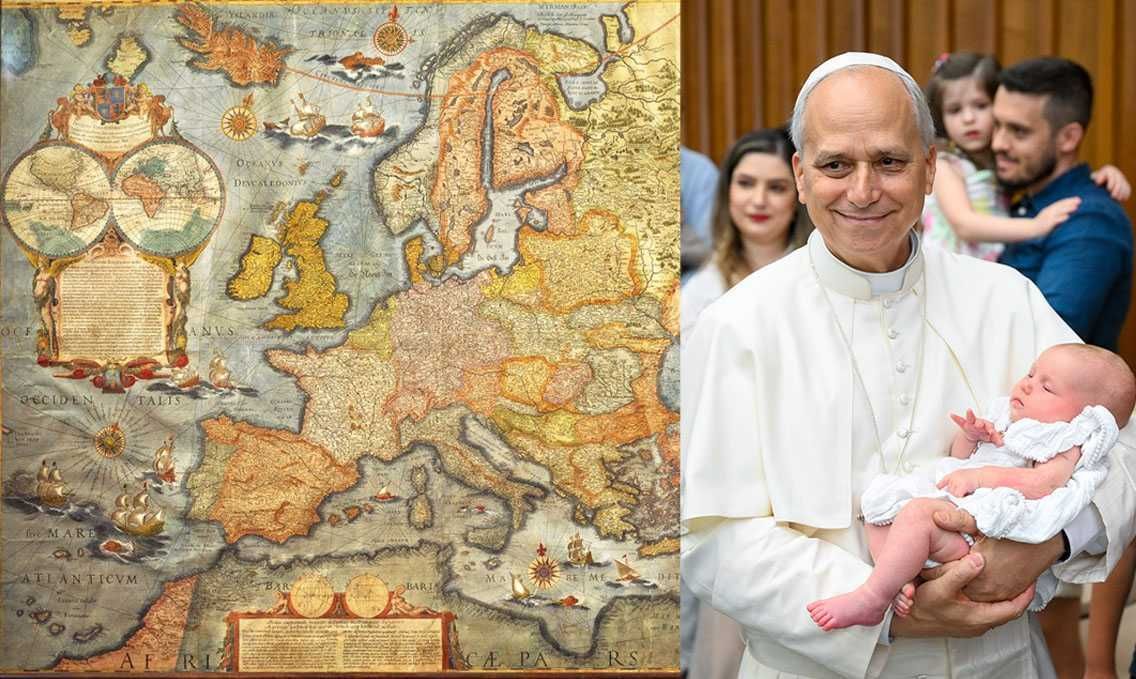
Pope offers tried-and-true solution to Europe's population crisis


Pope Leo XIV urged European leaders on Monday to get in gear and address the continent's demographic crisis by reinforcing the family and affirming the dignity of human life.

The pope's call to action comes amid a severe demographic collapse that threatens not only Europe's social and economic stability but the cultural identities and destinies of various nations.

'A rejection of the Christian inspiration of the founding fathers of the EU institutions has led to a time of drastic sterility.'

The number of live births in Europe per 1,000 persons in 1970 was 16.4. By 2024, the crude birth rate had fallen to 7.9.

According to Eurostat, the European Union's total fertility rate — the average number of kids born to a woman over her lifetime — stood at 1.34 live births in 2024. Of the children born that year, nearly one in four have a foreign-born mother.

The fertility rate necessary for a population to maintain stability and replenish itself without requiring replacement by foreign nationals — what is referred to as replacement-level fertility — is 2.1.

Even when factoring in Europeans' replacement by foreigners, statisticians project the EU's population will fall by 11.7% between now and 2100 — from roughly 452 million to 399 million. Among the countries expected to thin out are Portugal, Italy, Greece, and Poland, projected to suffer population declines of 19.3%, 24%, 30.1%, and 31.6%, respectively.

RELATED: Conservatives are afraid to talk about the real marriage problem

Sean Gallup/Getty Images

In his address this week to European officials, including members of the European Parliament's Intergroup on Demography, Pope Leo stressed that the continent's demographic crisis "stands as a crucial juncture for the anthropological, social, and economic future of Europe."

Echoing his predecessor, Pope Francis, Pope Leo said that Europe is not becoming the "old continent" because "of its glorious history, but because of its advancing age."

After emphasizing that "children are the future," Pope Leo noted that "a rejection of the Christian inspiration of the founding fathers of the EU institutions has led to a time of drastic sterility, not only because too many have been deprived of the right to be born, but also because there has been a failure to pass on the material and cultural tools that young people need to face the future."

In addition to faulting the Europeans for increasingly abandoning their Christian roots, the pope reprimanded them for Trojan-horsing the means of their demographic demise into policies advertised as "family-friendly" — policies that he said "simultaneously promote discrimination against motherhood, exalt abortion as a right, and undermine the very foundation of the desire to start a family."

To both address the demographic challenge at hand and counter the "two extremes of excessive state intervention and individualism," the Roman pontiff noted that Europeans must respect and promote the central place of the family — which "is founded on marriage between a man and a woman" — and apply the principle of subsidiarity.

"Only a fresh springtide for the family can transform the winter chill of our aging populations," said the pope.

Like Blaze News? Bypass the censors, sign up for our newsletters, and get stories like this direct to your inbox. Sign up here!

Hillary Clinton fumes as Czech politician calls out her Trump derangement syndrome


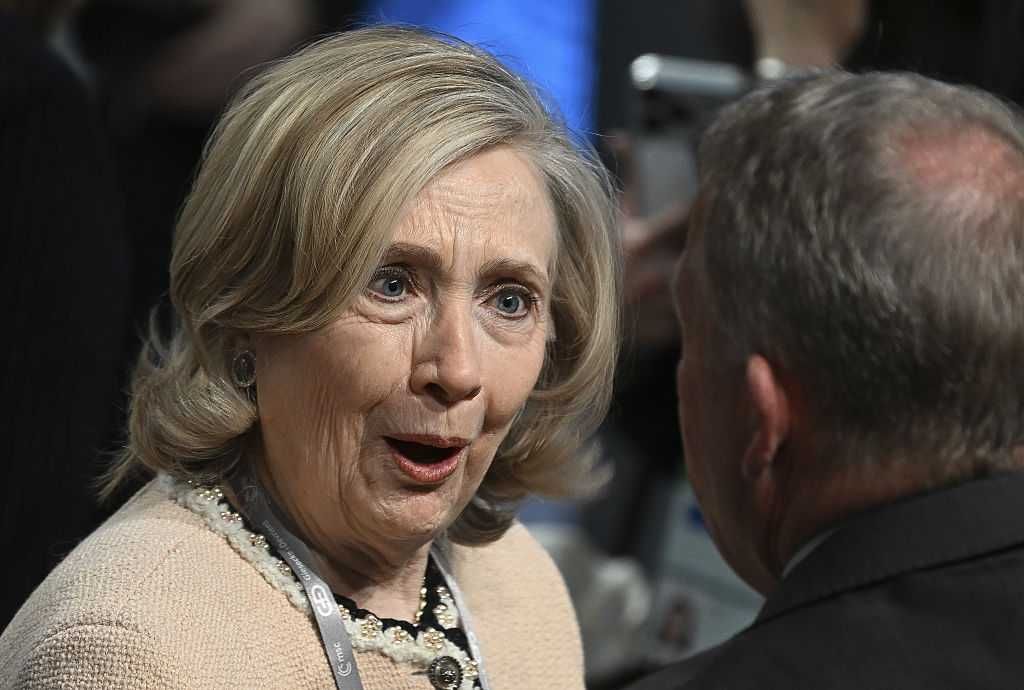
Former presidential candidate Hillary Clinton continued her failed campaign against President Donald Trump during a Munich Security Conference discussion on Saturday, characterizing him as a betrayer and destroyer.

After one of Clinton's more loveless Valentine's Day rants, an official from the Czech Republic highlighted her Trump derangement syndrome and defended the president, stressing that the man whom Clinton so despises is a "reaction" to the extremism and failures that preceded his rise to power.

'Can I please finish my points?'

When asked whether America's shifting relationship with international law "brings a new rift within the West," Clinton — a champion of the Iraq War and other foreign entanglements that proved ruinous — attacked Trump's efforts to broker an end to the Ukraine-Russia war, calling his position toward Kyiv "disgraceful" and claiming the embattled nation, which hasn't had presidential elections for nearly seven years, is "fighting for our democracy and our values of freedom and civilization on the front lines."

The moderator of the Rockefeller Foundation-backed panel discussion, Bronwen Maddox, director of Chatham House, pressed Clinton further on whether she thinks Trump "has destroyed the West."

Clinton — the point woman on the Obama administration's "reset" policy with Russia — enthusiastically responded, "He has betrayed the West. He's betrayed human values. He's betrayed the NATO Charter, the Atlantic Charter, the Universal Declaration of Human Rights."

RELATED: How Hillary Clinton turned empathy into a political cudgel

Photo by Johannes Simon/Getty Images

Asked by Maddox whether he agreed with Clinton's assessment, Czech Republic Deputy Prime Minister Petr Macinka made clear that his outlook isn't colored by the same personal animus.

Macinka, a right-wing populist, turned to Clinton and said, "First, I think you really don't like him."

"You know that is absolutely true!" Clinton responded. "Not only do I not like him, I don't like him because of what he's doing to the United States and the world, and I think you should take a hard look at it if you think that there is something good that will come out of that."

'Too far from reality.'

Macinka proceeded to note that Trump and his actions in America are a "reaction" to "policies that really went too far — too far from the regular people, too far from reality."

Despite multiple interruptions from Clinton, the Czech suggested Trump rose in reaction to cancel culture, the "woke revolution," the "gender revolution," and climate alarmism.

"Which gender [revolution]?" Clinton interrupted. "Women having their rights?"

After clarifying that he was referring to the incursion of radical gender ideology into the mainstream and anticipating another interruption, Macinka said, "Can I please finish my points? I'm sorry that it makes you nervous. I'm really sorry for that."

While audience members booed, Clinton said, "Doesn't make me nervous. It makes me very, very unhappy."

Macinka proceeded to point out that Ukraine is not fighting for a collective freedom and future but its own, then cast doubt on the supposed beneficence of those in the West trying to help out Kyiv.

While Clinton was attacking him in Germany on Saturday, Trump reshared a Feb. 5 message from Steve Witkoff, his special envoy for peace missions, which noted that "delegations from the United States, Ukraine, and Russia agreed to exchange 314 prisoners — the first such exchange in five months. This outcome was achieved from peace talks that have been detailed and productive."

Like Blaze News? Bypass the censors, sign up for our newsletters, and get stories like this direct to your inbox. Sign up here!

'Stupid people': Trump gives European allies tough love during Davos speech


President Donald Trump addressed the annual World Economic Forum meeting in Davos, Switzerland, on Wednesday and had a tough message for a rapidly transforming Europe.

Trump began his message by lamenting the direction Europe is going. Trump pointed out that by most metrics, Europe is shrinking where it should be growing.

'That's why issues like energy, trade, immigration, and economic growth must be central concerns to anyone who wants to see a strong and united West.'

"The consequences of such destructive policies have been stark, including lower economic growth, lower standards of living, lower birth rates, more socially disruptive migration, more vulnerability to hostile foreign adversaries, and much, much smaller militaries," Trump said.

He also referred to European leaders as "stupid people" for buying Chinese-made windmills and other "Green New Scam" materials instead of investing in more efficient means of energy.

"You're supposed to make money with energy, not lose money," he quipped.

RELATED: 'Have some godd**n balls': Newsom posts bizarre meltdown video about Trump from Davos

Photo by Chip Somodevilla/Getty Images
Despite the jab, President Trump reminded these European leaders that the United States is deeply vested in the future and well-being of their countries.

"The United States cares greatly about the people of Europe. We really do. I mean, look, I am derived from Europe. Scotland and Germany. ... We believe deeply in the bonds we share with Europe."

"As a civilization, I want to see it do great. That's why issues like energy, trade, immigration, and economic growth must be central concerns to anyone who wants to see a strong and united West."

Trump called for a stark reversal of European decline: "Europe and those counties have to do their thing. They have to get out of the culture that they've created over the last 10 years. It's horrible what they're doing to themselves. They're destroying themselves ... these beautiful, beautiful places."

"We want strong allies, not seriously weakened ones. We want Europe to be strong," Trump concluded.

Like Blaze News? Bypass the censors, sign up for our newsletters, and get stories like this direct to your inbox. Sign up here!

Ben Shapiro And Anyone Else Telling Young People To ‘Just Move’ Are Missing The Point

If we continue to fail to address fundamental economic problems, eventually it won't matter where you move to.
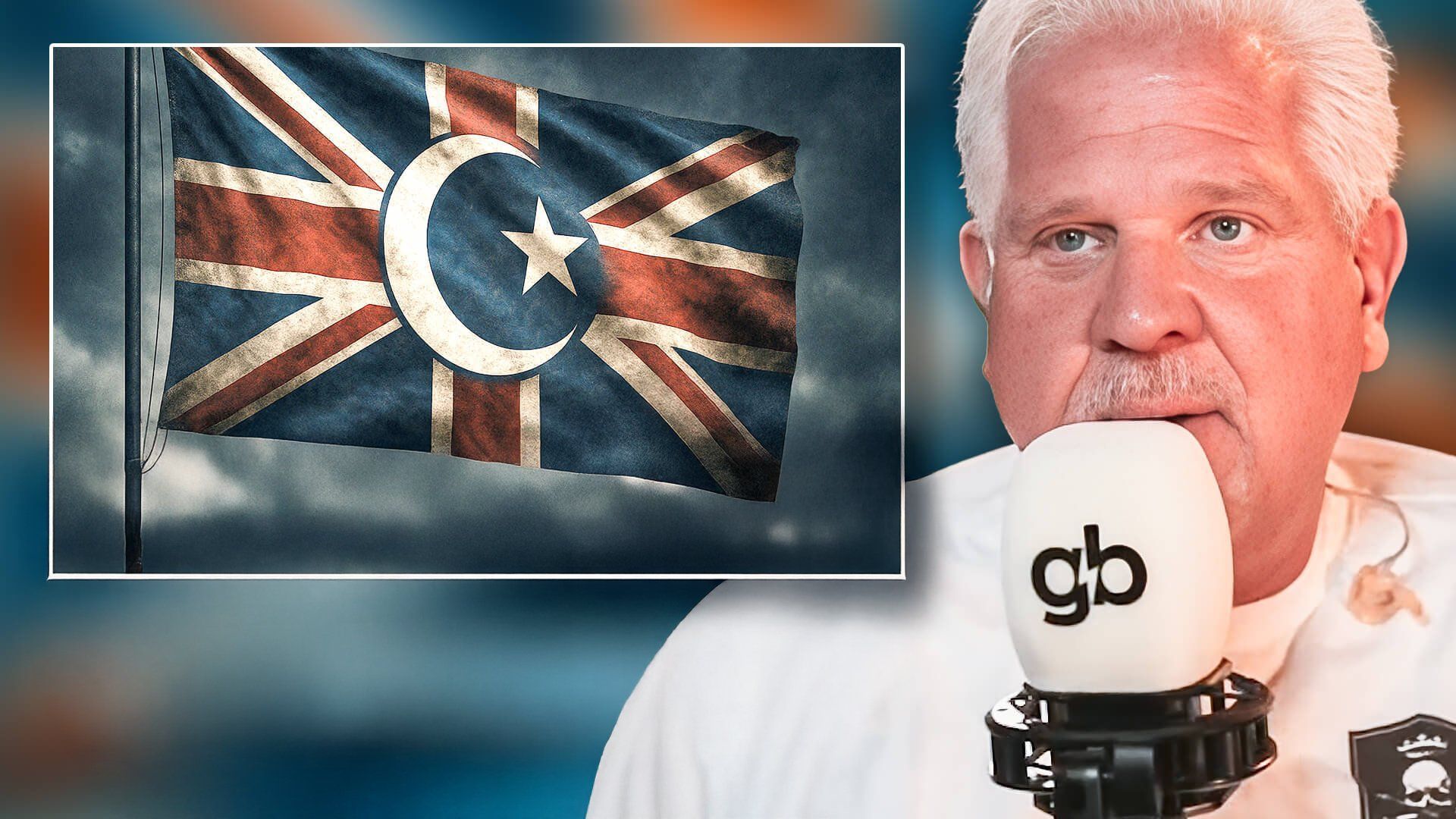
The rise of Islamism: Is Britain nearing a tipping point?


Contrary to some beliefs, Muslim and Islamist are not synonymous terms.

Muslims, as it relates to those living in Europe and America, says Times of London columnist and author Melanie Phillips, are peaceful and “absolutely fine” to live among because they “have completely signed up to Western values” in that they “appreciate the freedoms of democracy and equality of women.”

“That's indeed why they have chosen to live in the West,” says Phillips. Islamists, on the other hand, are “people who are of the view that Islam is a political project” that aims to “impose Islam on the non-Islamic and not-Islamic-enough.” Theirs “is a doctrine of religious fanaticism; they believe they have a literally sacred duty — a god-imposed duty — to convert the entire world to Islam.”

“I would compare [an Islamist] to a communist or a fascist Nazi” in that “it is their way or the highway,” says Glenn Beck.

It is Islamists, not peaceful Muslims, who have become one of the biggest obstacles currently facing the West — especially in Britain, where progressive immigration policies have drastically altered the demographics.

On a recent episode of “The Glenn Beck Program,” Glenn and Melanie candidly discussed Britain’s not-so-gradual edging towards an Islamic takeover.

“One of the problems of the West,” says Phillips, “has been that it views [Islamists] like everybody else in the world.” But this is a faulty view because they’re not like everyone else, hence why Islamist “suicide bombers blow themselves to smithereens” — “ecstatic that they are doing the work of God.”

“These are people with whom you cannot negotiate,” she says.

Further, “the dominant religious authorities in the world of Islam are all committed to this jihadi outlook — this belief that the non-Islamic world has to be converted to Islam,” which is another way of saying that they’re “out to destroy the free world,” Phillips explains.

But the West has turned a blind eye to this reality — and worse, British governments, including the current Labor Party, but also the Conservative Party that preceded it, have pushed the dogmatic idea that “the West cannot assert its superiority over any other culture [because] to do so is racist, and therefore, you cannot criticize the world of Islam” because it’s “Islamophobic.”

Even when Islamist-perpetrated terrorist attacks and hate crimes occur, these governments will push the narrative that “there's nothing Islamic about [them]”; they’re just generic “extremism.”

Similar to the the United States, which sees left-wing administrations and advocacy groups partnering with the suspected terrorist organization Council on American-Islamic Relations, Britain, says Phillips, allows for “Muslim Brotherhood-funded groups” and “charities,” in which the people involved “adhere to the teachings of the foundational characters of modern-day Islamism — political Islam, jihadi Islam.” Despite pleas for the government to declare the Muslim Brotherhood a terrorist organization, the British government has been firm in keeping it off the list of designated terrorist organizations.

Glenn is fearful that if something isn’t done to stop the growing Islamism in the West, countries like England and America could very well end up like Iran after the 1979 Islamic Revolution, when the country went from “Western and open and educated” to “putting their women in burkas.”

“How close to the edge is, let’s just say England, to real civil unrest?” he asks Phillips.

“Europe in general is extremely close to being submerged by all this, and so is Britain,” she answers candidly, noting that this isn’t her opinion but what demographic projections are showing.

Hope, however, has come in the form of populist parties that have emerged in Europe as a response to the Islamic cultural takeover.

“Although the elites — the political and cultural elites — have their heads firmly turned the other direction, nevertheless we've seen the rise of so-called populist parties in Britain and Europe,” many of which represent “millions of ordinary, decent people who want to live in a place that they feel is their homeland,” Phillips says.

“They want to feel pride in their nation; they want to feel that their nation's historic values are being upheld,” she tells Glenn. These “people have felt completely abandoned and betrayed by the entire political establishment,” and that’s why “we're seeing the rise of populists.”

“I think, therefore, through the democratic process, we're going to see the election of people who are going to be much more robust,” she predicts.

To hear more of the conversation, watch the video above.

Want more from Glenn Beck?

To enjoy more of Glenn’s masterful storytelling, thought-provoking analysis, and uncanny ability to make sense of the chaos, subscribe to BlazeTV — the largest multi-platform network of voices who love America, defend the Constitution, and live the American dream.

Mass Migration Destroys The West Like Crowd Controls Destroy The Mona Lisa

The goal of allowing ever more people in, while egalitarian, actually diminishes the experience for everyone.

The West Is Finally Realizing The Ancient Truth That Open Borders Kill Nations

Immigrant integration and multiculturalism have failed and produced rampant crime, conflict, and cultural loss.