Blue State Dems Pull Resolution Honoring March As National Women’s Month After GOP Lawmaker Defines What A Woman Is
'This amendment is very straightforward and clear'
Uber has launched a new feature that allows both women riders and drivers across the U.S. to be matched with other women for trips, ensuring they don’t end up with a potentially dangerous male customer or rider.
While there is an ongoing class action lawsuit against the policy in California, which has been filed by Uber drivers who claim it discriminates against men, they’re rolling out the feature nationwide anyway.
“I think they say something called, like, ‘women-preferred, female-preferred driver,’ because it’s very questionable legal ground here, right? Like, typically you can’t discriminate. Like, you can’t say, ‘Oh, well, ... only women can come into my store, or only men can come into my store.’ It’s usually something that’s a bit frowned upon,” BlazeTV host Stu Burguiere says on “Stu Does America.”
“It’s usually mostly frowned upon when it’s men saying it. When women say it, it’s, generally speaking, OK, if we can even determine what a woman is,” he continues. “Like, can you imagine the extravaganza there’s going to be when a guy who says he’s a woman tries to pick up a woman and that woman is upset about it?”
“It’s going to be lots of controversy. Lots of good material coming our way here,” he adds.
And while sexual assaults have reportedly decreased over the years, Uber is standing firm in its decision. According to reports from Uber, 5,981 incidents of sexual assault were reported between 2017 and 2018 in the U.S., which decreased to 2,717 between 2021 and 2022.
“So, everything’s fine,” Stu adds.
To enjoy more of Stu's lethal wit, wisdom, and mockery, subscribe to BlazeTV — the largest multi-platform network of voices who love America, defend the Constitution, and live the American dream.
Marriages rarely end over one argument. They fall apart through a long breakdown in communication, a growing inability to resolve disagreements, and the slow realization that two people no longer walk toward the same future.
Healthy marriages don’t require full agreement on every subject. They require compromise on the decisions that shape daily life: money, children, priorities, responsibilities. They also require shared goals.
No tidy divorce court exists for a nation-state. We share one flag, one legal framework, and one public square.
When those goals diverge — and neither side will realign — the relationship becomes unsustainable. The law calls the condition “irreconcilable differences.”
America now lives in that condition.
We remain bound under one nation, one Constitution, and one civic home. But we no longer share a common purpose. We no longer share a common story about what the country is, why it exists, or whether it deserves to endure.
This conflict no longer turns on tax rates or regulatory policy. It turns on the legitimacy and direction of the American experiment itself.
The modern left no longer argues about how to preserve the American system. It treats the system as the problem. Democratic leaders and activists call for “fundamental transformation,” flirt with socialism, and talk about the founding less as a flawed but noble legacy than as a moral failure that demands replacement. In that worldview, America doesn’t need reform. America needs erasure.
The right still believes the country can be repaired and preserved. The left increasingly treats the country as something to dismantle.
This rupture shows up in concrete ways. In 2021, the National Archives placed a “harmful language” warning on the Constitution and the Declaration of Independence — the documents that define the nation. That doesn’t signal ordinary partisan dispute. It signals contempt for the country’s moral foundation.
Socialism sits at the center of this divide. It contradicts the American system at its roots. America rests on the premise that rights come from God, not government. Socialism elevates the state over the individual and makes rights conditional on political approval. It centralizes power in the name of enforced equality — “equity.”
RELATED: Americans aren’t arguing any more — we’re speaking different languages
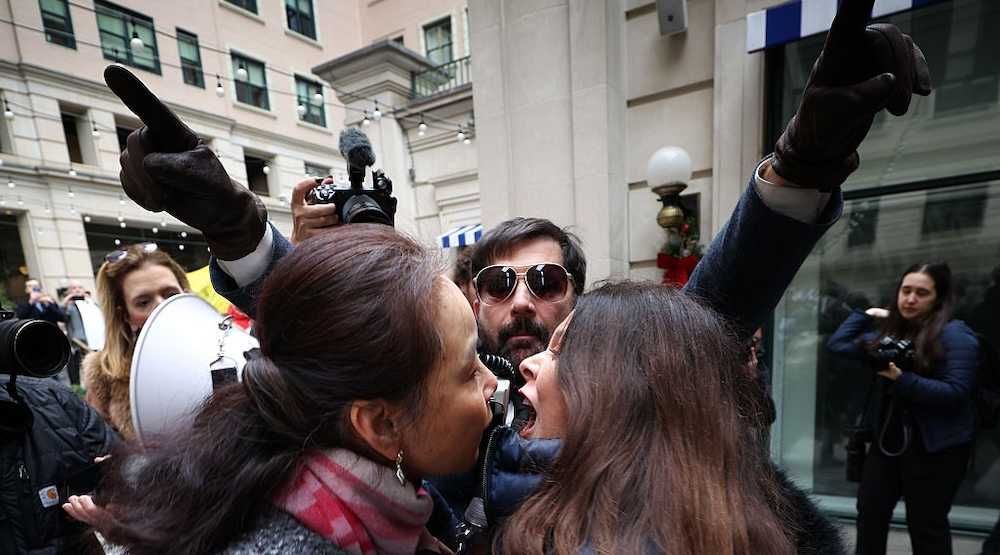
America protects private property as an extension of liberty. It channels ambition into innovation and prosperity. Socialism treats success as a social offense and demands equality of outcome. When people refuse to surrender the fruits of their labor, socialism turns to coercion. Coercion requires centralized authority. Centralized authority punishes dissent.
The pattern repeats: less freedom, greater dependency, and a governing model incompatible with constitutional self-rule.
The irony remains hard to miss. The left calls Donald Trump “Hitler” while cheering figures like New York City Mayor Zohran Mamdani, an avowed socialist. Yet the Nazi Party sold itself as the National Socialist German Workers’ Party — a collectivist project built on centralized power and state control.
The same left often excuses Antifa, a movement built on intimidation, street violence, and political enforcement designed to silence opposition. Those tactics don’t belong to liberal democracy. They belong to regimes that fear debate.
Even basic reality has become contested. The left and right can’t agree on something as elemental as what a man or a woman is. The Supreme Court recently showcased the collapse when ACLU attorneys arguing sex-based discrimination refused to define “woman.” When a society refuses to name biological facts that every civilization once treated as obvious, compromise collapses with it.
This crisis goes deeper than polarization. It reaches the level of knowledge itself. The left increasingly treats biology, history, and moral limits as malleable social constructs. The right still believes objective reality binds us all.
These aren’t normal disagreements. They describe incompatible worldviews. And incompatibility carries consequences.
During the COVID era, polls found majorities of Democrats willing to endorse coercive measures against the unvaccinated, including house arrest. Nearly half supported imprisoning people who questioned vaccine efficacy. Those numbers didn’t represent a fringe. They revealed a growing comfort with state force in service of ideological conformity.
After Trump’s 2016 election, many friendships survived political conflict. By 2020, after years of dehumanization — after constant accusations of “Nazism” aimed at ordinary voters — many of those relationships broke. The political battle stopped sounding like disagreement and started sounding like moral extermination.
RELATED: Washington, DC, has become a hostile city-state
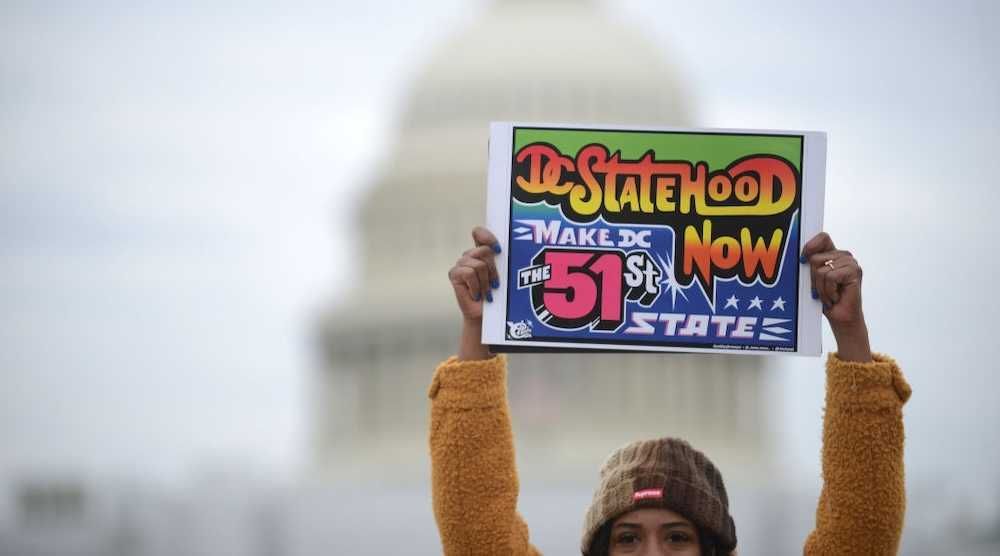
In September 2025, someone assassinated Charlie Kirk. Large segments of the left didn’t just rationalize the killing. Many celebrated it.
After Scott Adams died following a long fight with cancer, prominent voices responded with mockery instead of decency. People magazine ran a headline labeling him “disgraced.” Even death became a political verdict.
This is what irreconcilable differences look like at a national scale.
A country cannot endure when one side believes the nation stands as fundamentally good — worthy of preservation and reform — while the other believes it stands as irredeemably evil and must be dismantled. Marriages end when partners stop seeing each other as allies and start treating each other as enemies.
Nations fracture for the same reason.
America cannot solve this the way a couple dissolves a marriage. The Constitution binds us to one civic order. No clean separation awaits. No tidy divorce court exists for a nation-state. We share one flag, one legal framework, and one public square.
When irreconcilable differences exist but separation remains impossible, the danger grows.
Only three paths remain: recommitment to constitutional principles, enforced coexistence through expanding coercion, or escalation into open conflict as dehumanization becomes normal.
Pretending this amounts to another election cycle, another policy dispute, or another cable-news food fight invites catastrophe. A nation cannot survive when its people no longer agree on what it is, why it exists, or whether it deserves to continue.
Unlike a failed marriage, America can’t walk away.
It's a great time to release a conservative documentary.
Since Dinesh D’Souza’s "2016: Obama’s America," the left wing's grip on the genre has weakened, making way for a proliferation of right-leaning films like "The Plot Against the President," "Alex's War," and "Hoaxed."
The movie presents a vivid example of the ugliness and abuse that virtue signaling can draw out of normal people seeking approval.
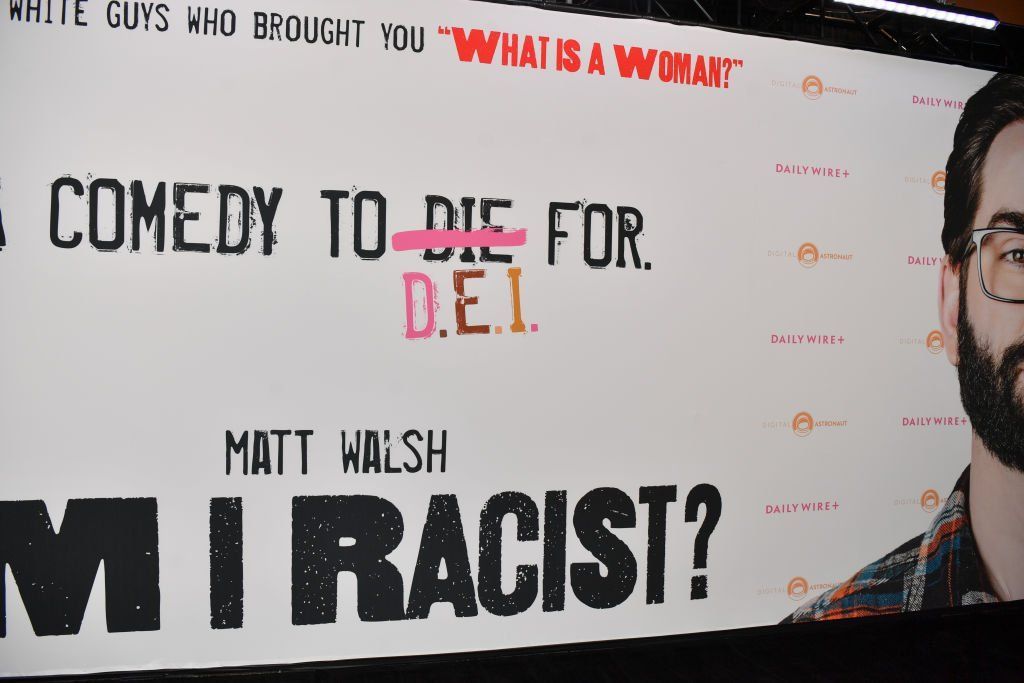
Now comes Matt Walsh with "Am I Racist?" Can it attain the kind of mainstream theatrical success formerly reserved for blatantly liberal fare like "An Inconvenient Truth" and "Bowling for Columbine"?
I have two questions I always ask when evaluating conservative documentaries. First: Does the filmmaker actually have something to say, or is he just using the film to promote his personal brand? Second: Has the filmmaker worked to present a genuinely persuasive argument, or has he settled for preaching to the choir?
As with his previous documentary, "What Is a Woman?" Walsh has picked a promising subject. And like its predecessor, "Am I Racist?" features Walsh blindly stumbling around the modern world, asking basic questions while pretending to be baffled. He's just a confused innocent earnestly trying to understand the latest bizarre concepts mainstreamed by obscurantist left-wing intellectuals.
In "What Is a Woman?" it was trans and gender ideology. In "Am I Racist?" it's DEI policies and anti-racist activism.
Walsh definitely has something to say, even if his characteristic acerbic personality often upstages his message. That just leaves the question of whether he can convince anyone not already fed up with the totalizing view of racial identity permeating every aspect of American life.
To that end, it is worth looking at the film’s approach. As my colleague Christian Toto puts it, Walsh is effectively trying to reinvent the Borat strategy of goading people into revealing their worst beliefs and prejudices by pretending to be an ally.
The film introduces Walsh as a bumbling white man grappling with the challenges of the post-2020 world, going on a journey of self-discovery to become a certified DEI expert and interviewing leading progressive voices like Saira Rao and Robin DiAngelo.
For the film to be truly persuasive, it needs to take the logic of modern critical race theory to it's inevitable conclusion. It needs to get the core of what “anti-racism” means in a modern context and why it’s bad on principle: its tendency to answer inequality with illiberal, easily exploitable social engineering, the way its relentless targeting of whites for their "privilege" and alleged sense of "supremacy" emboldens actual white nationalist groups to use the same arguments.
It needs to expose the cynical, self-perpetuating grift of professional anti-racists like Ibram X. Kendi, who argues, “The only remedy to past discrimination is present discrimination. The only remedy to present discrimination is future discrimination.”
Walsh comes remarkably close to accomplishing this. "Am I Racist?" is comprised of several hidden camera group sessions with Walsh in attendance, asking questions and nudging the dialogue in the direction he wants.
However, in its relentless desire to be a comedy, the film frequently stumbles.Throughout these hidden camera meetings, Walsh interjects and asks questions that derail the conversations, which proves detrimental from a journalistic perspective. He’s interrupting his enemies while they’re making mistakes.
"Am I Racist?" works best toward the end, when Walsh hosts a DEI group discussion. He rolls out an old man in a wheelchair, identifying him as his uncle who told a racist joke. Walsh proceeds to castigate the man (actually an actor), leading two women in the crowd to join in, yelling obscenities at their target and bragging that they've cut off their entire families for being racist. Here, the movie presents a vivid example of the ugliness and abuse that virtue signaling can draw out of normal people seeking approval.
Unlike "What Is a Woman?" "Am I Racist?" explicitly hopes to appeal to mainstream moviegoers. It's done fairly well with them so far, grossing $4.75 million in its opening weekend and landing in fourth place at the box office.
Conservatives are largely turning out to support the film, with Lutheran Satire creator Hans Fiene praising the film as “genuinely hilarious” and “very well done.”
The most notable, and surprising, nonpartisan review of the film has come from YouTuber Jeremy Jahns, who generally approved of the film as funny, thought-provoking, and “a good time, no alcohol required,” while highlighting the disconnect between activists and the desire of regular people not to have to think about race every second of their lives.
More positive reviews coming from nonpartisan or centrist content creators would help assuage my fear that "Am I Racist?" won't have much reach beyond the conservative media-sphere.As "Podcast of the Lotus Eaters" points out, the film's unabashed mockery of DEI — its steadfast refusal to take it seriously or consider it worthy of reverent attention — may be persuasion enough.
And yet the fact that progressives are brigading "Am I Racist?" so effectively is a sobering reminder of the vast propaganda machine at their disposal. Winning the hearts and minds of open-minded non-conservatives will take all of the creative and commercial power the right can muster.
“Very seldom do I recommend things to watch,” says Jase Robertson, who isn’t much of a media guy.
However, last weekend, Jase’s wife happened to bring up Matt Walsh’s 2022 documentary “What Is a Woman?”
Jase was shocked to discover that a film with such a title existed, and so, intrigued, he watched it.
His conclusion is that “What Is a Woman?” “needs to be watched by society.”
“All this guy did, to his credit, was simply ask a question,” he says, pointing to the “global controversy” that gender has become.
“When [Walsh] asked that question,” says Jase, he discovered that “the belief has become popular among those who attack the gender God-defined roles that it's impossible for them to answer.”
Jase shares his bewilderment that the socially acceptable answer when it comes to someone’s gender is basically “let the kid decide what they want to be.”
“They'll say your gender is whatever you want to be, including any kind of animal. I mean you can be a cat, you know, you can be a wolf,” he says.
“That’s nonsense,” is all Phil Robertson has to say about it.
To hear more of the conversation, watch the episode above.
To enjoy more on God, guns, ducks, and inspiring stories of faith and family, subscribe to BlazeTV — the largest multi-platform network of voices who love America, defend the Constitution, and live the American dream.
In 2022, Daily Wire host Matt Walsh produced a documentary called “What Is a Woman?” The film explored that very question — what does it mean to be a woman? — since society has decided to make that a controversial issue.
Now, Walsh has moved on to a new subject — white racism. In his latest documentary, “Am I Racist?” he explores the progressive agenda to push the narrative of systemic racism as a means of control.
Now, he joins James Poulos on “Zero Hour” to discuss the film.
- YouTubewww.youtube.com
“Are you a racist?” James asks sarcastically.
“Well, I’m white, aren’t I?” says Walsh, adding that “the answer is automatically yes.”
“As you continue along the journey [of discovering your inherent racism], you just feel worse and worse about yourself,” he says. “That's really the goal. You just have to keep hating yourself more and more with each passing day.”
“The actual program is to get millions and millions of people to feel incredibly depressed and despairing and self-loathing, and then it’s much easier to control people when you have them in that state, right?” James asks.
“Exactly,” says Walsh, noting that the documentary, while technically a comedy, reveals a tragedy about society: “[Progressives’] goal is to build up resentment, self-loathing, suspicion, [and] guilt,” because “all of these things are very profitable to them.”
“Their core message is a simple one, which is that if you're a white person, then you are the villain of the story; you are history's great villain, and you have much to be ashamed of and much to atone for; although you can never really atone for it. ... If you're anywhere in the non-white category, which of course is a vast category, then you're automatically the victim; you're oppressed; you have no control over your life; you have no agency, no real autonomy. ... It's a very demoralizing and dehumanizing message to everybody.”
Unfortunately, “They've been very effective in pursuing that goal especially over the last decade,” Walsh laments.
“What’s it gonna take to roll it back?” James asks.
“I think what it ultimately takes is at this point, basically, just leaving people alone. I don't know that we need a competing message about racism. ... We don't need to talk about it all the time,” says Walsh, pointing to the famous “60 Minutes” interview with Morgan Freeman, during which he advised that we stop talking about racism.
To hear more of the conversation, watch the episode above.
To enjoy more of James's visionary commentary on politics, tech, ideas, and culture, subscribe to BlazeTV — the largest multi-platform network of voices who love America, defend the Constitution, and live the American dream.
Leftists captive to radical gender ideology routinely engage in mental gymnastics in order to reference the very immutable realities they seek to undermine.
The Biden administration replaced the term "mother" with "birthing person" in a public health section of a 2022 budget. Rather than use the word "woman," Rep. Alexandria Ocasio-Cortez (D-N.Y.) opted instead for "menstruating people."
It appears social constructivism has had a similar impact north of the border.
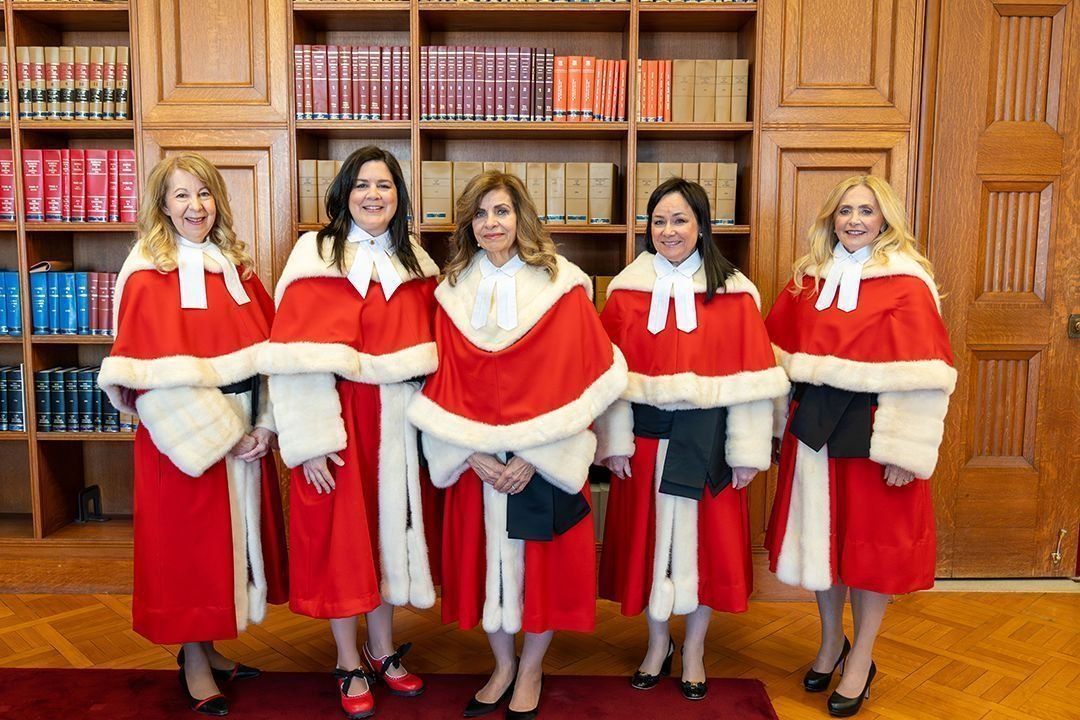
A Trudeau appointee on the Supreme Court of Canada recently took issue with a lower court's use of the word "woman." According to Justice Sheilah Martin, it would have been less confusing for an officer of the court to refer to a female rape victim — in a case that was not involving transvestites or non-straights — as a "person with a vagina."
Critics have roundly ridiculed the Canadian high court over its embrace of woke language conventions, especially when dealing with a case as serious as rape.
The court took up two separate and unrelated rape cases linked only because the "Court of Appeals overturned the convictions on the basis of alleged errors of law in the trial judges' credibility and reliability assessments."
According to the Court of Appeals, the "trial judges erred in law by making assumptions about human behavior not grounded in the evidence."
One of the cases concerned Christopher James Kruk's rape conviction. Kruk reportedly found a woman "intoxicated, lost, and distressed one night in downtown Vancouver." He took her to his house where he claimed she spilled water on herself then passed out with her pants around her ankles. The victim testified that she woke up to find herself in a state of undress with Kruk actively violating her.
The trial judge stated, "[The complainant's] evidence is devoid of detail, yet she claims to be certain that she was not mistaken. She said she felt [Mr. Kruk's] penis inside her and she knew what she was feeling. In short, her tactile sense was engaged. It is extremely unlikely that a woman would be mistaken about that feeling."
The Court of Appeals indicated that the trial judge in Kruk's case erred in concluding that it would be unlikely a woman would be mistaken about the feeling of being raped.
The Canadian Supreme Court overrode the Court of Appeals and upheld the original conviction at trial in its Friday ruling.
While Justice Martin agreed the trial judge's "conclusion was grounded in his assessment of the complainant's testimony," she took issue with his language.
Martin wrote that the trial judge's choice "to use the words 'a woman' may have been unfortunate and engendered confusion."
The judge, a former recipient of the YWCA's Advancement of Women Award, made sure to use her preferred turn of phrase in the same section, writing, "Where a person with a vagina testifies credibly and with certainty that they felt penile‑vaginal penetration, a trial judge must be entitled to conclude that they are unlikely to be mistaken."
The female justice did not appear to provide any explanation for why the word "woman" might create confusion in a case concerning a man's alleged rape of a woman. However, it has been suggested she may have been attempting to address what she called "an improper generalization" between women in general and the victim.
Nevertheless, the Trudeau appointee's use of the term "person with a vagina" is the first such usage in a Canadian judicial decision, reported the National Post.
Following the Friday decision, the high court and Martin, a "person with a vagina," were roundly ridiculed.
Conservative parliamentarian Melissa Lantsman responded to the ruling, writing, "No, there is nothing confusing about the word 'woman,' it's common sense. It's not hateful, bigoted, wrong or unfair in anyway. This is just complete nonsense that moves nothing forward. It's not 'progress.'"
The X user Wall Street Silver wrote, "Everything ok up there Canada? We are sort of worried about you guys."
Libs of TikTok tweeted, "RIP Canada."
The Toronto Sun highlighted that two days after the ruling, the Supreme Court of Canada posted a possibly confusing message to social media honoring female judges.
"March 10, we celebrate International Day of Women Judges, which recognized the importance of the full and equal participation of women at all levels of the judiciary," said the post, which featured an image of Martin.
March 10, we celebrate International Day of Women Judges, which recognized the importance of the full and equal participation of women at all levels of the judiciary.\n\n\ud83d\udcf8 Justices Moreau, O\u2019Bonsawin, Karakatsanis, C\u00f4t\u00e9 and Martin— (@)
Like Blaze News? Bypass the censors, sign up for our newsletters, and get stories like this direct to your inbox. Sign up here!
People have been anxiously awaiting Donald Trump’s VP candidate list, and now they finally have their wish.
“Donald Trump discussed a short list of potential VP candidates during [a recent] town hall meeting,” says Sara Gonzales.
“So it's, of course, Governor Ron DeSantis from Florida, Vivek Ramaswamy, South Carolina Senator Tim Scott, South Dakota Governor Kristi Noem, Florida Republican Byron Donalds … and Congresswoman Tulsi Gabbard.”
To gauge her followers’ feelings regarding the list of potential candidates, Sara posted the following poll on her Twitter page:
Unfortunately, “they only allow you to pick four choices, so I couldn't include all of them,” she says.
“Vivek’s running away with it at 50%, but Tulsi Gabbard at 20%, more than DeSantis?” she asks in disbelief.
“We are in such a cult-of-personality era in politics, where policy doesn't really matter,” says Glenn Beck chief researcher Jason Buttrill, adding that “Tulsi Gabbard [getting] 20% over an actual conservative with a proven track record like Ron DeSantis is terrifying.”
If you’re voting based on “the ability to destroy the left and track record, you vote 100% for Ron DeSantis; if you're voting for the smartest man in the room who’s got amazing ideas … you would vote for Vivek,” he continues, noting that Tulsi Gabbard may work well in a Trump administration as a member of the “State Department” or the “[Department of Defense]” but as far as policy goes, she’d be a terrible choice.
“She was a Bernie bro,” says Sara in agreement.
To hear more of the conversation, watch the video below.
To enjoy more of Sara's no-holds-barred take to news and culture, subscribe to BlazeTV — the largest multi-platform network of voices who love America, defend the Constitution, and live the American dream.
With everything going on in the world today, it’s become increasingly hard to be funny.
The amount of humorous content generated unwittingly by Democrats makes it hard to one-up them. Thankfully, Babylon Bee CEO Seth Dillon is here to take on that challenge.
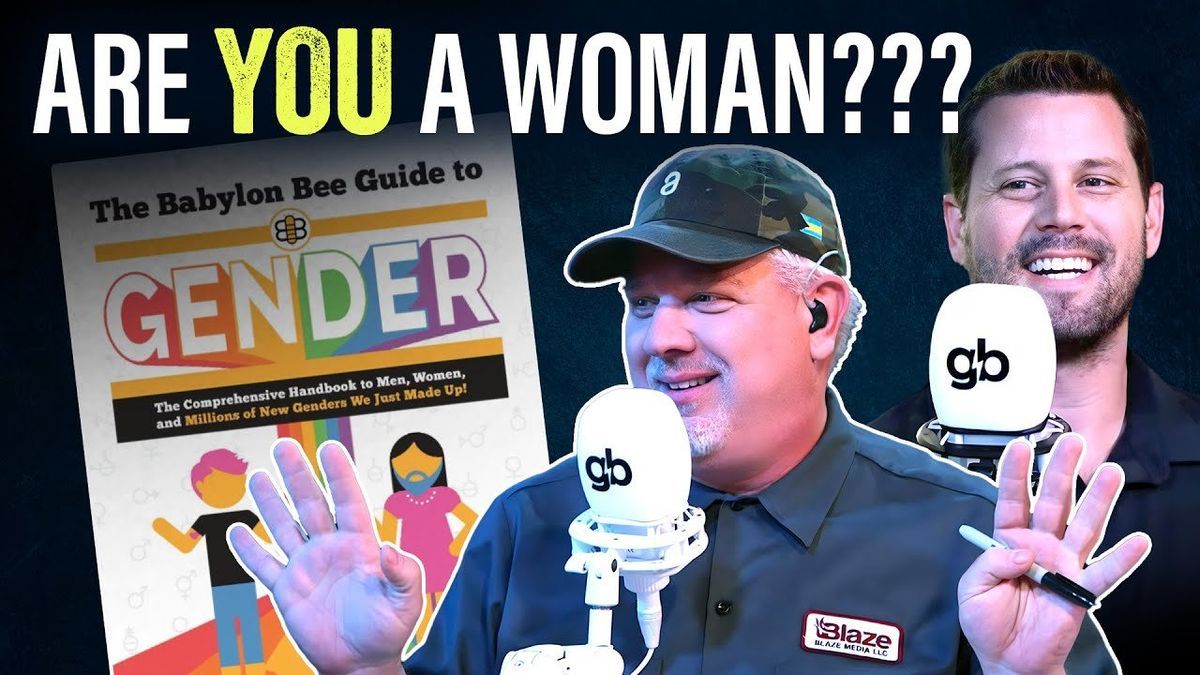
One of the latest ventures undertaken by Dillon and his team at the Babylon Bee is a book that does just that: “The Babylon Bee Guide to Gender.”
The book answers serious questions Americans might have, like how many genders are there, really? How do you find out if you’re, in fact, a woman? And should Nikki Haley have become a biologist before declaring her womanhood every five seconds during Fox News’ first GOP presidential primary debate?
Glenn Beck sits down with Dillon to review these questions, and their conversation is every bit as hilarious as one might hope.
Part of the book is dedicated to a timely and important test that begins with the question: “Still not sure if you’re a woman?”
“Are you always cold?” Glenn reads, laughing. “Has a human popped out of you?”
“Have you ever decorated a bed with six or more pillows?” he continues, adding, “I refuse to answer.”
“This just allows us to draw general inferences though,” Dillon interjects, adding, “but because we’re not biologists we can’t say definitely. This quiz will give you a good idea.”
“We had this problem,” he continues, “for most of human history. We didn’t have science, we were all a bunch of bigots, and we thought that there were just men and women. And then science was invented very recently, and they determined that men can get pregnant and that women can suffer testicle injuries.”
Dillon is proud of his creation but owes a lot of credit to hilarious Democrats who have made it possible.
“You really don’t have to satirize this stuff. You really just have to hold it up there and say, ‘Look how absurd this is,’ and that’s kind of what that book does.”
To enjoy more of Glenn’s masterful storytelling, thought-provoking analysis and uncanny ability to make sense of the chaos, subscribe to BlazeTV — the largest multi-platform network of voices who love America, defend the Constitution and live the American dream.






 www.theblaze.com