‘It poisons the soul’: Jason Whitlock blames 6-year-old shooting teacher on rap culture


A 6-year-old boy shot his teacher, and newly released bodycam footage captures him cursing at authorities — as if he were proud of what he’d done.

BlazeTV host Jason Whitlock doesn’t just blame the parents but also the pedestal that rappers are placed on in American culture.

“The bodycam footage is disturbing, of the police coming to the scene where a 6-year-old boy has shot his teacher. Just saying that is incredible and chilling,” Whitlock says.

“But when you hear the bodycam footage and the way the young boy, while sitting in his teacher or this teacher’s aide lap, the way that he’s talking, and it’s like holy cow. What is going on here,” he adds.


“I don’t care if you call back up, I don’t care if I go to jail, b***h,” the boy is captured saying.

“I stole that from my mom,” he said of the gun. “If you want a piece of me, come get it,” he added.

The boy continued yelling slurs at everyone around him.

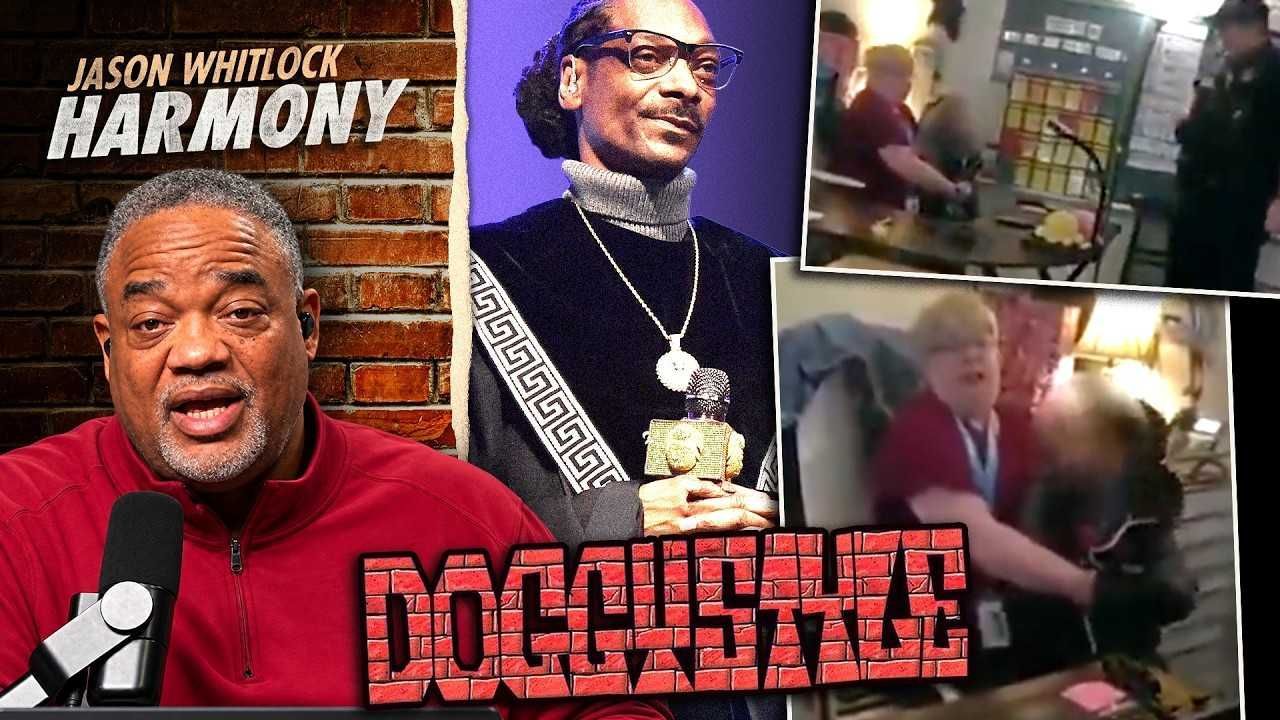
“This is a 6-year-old child that just shot his teacher. He sounds like a rapper. He sounds like a criminal, a thug. He sounds like what we have allowed to be created. He sounds like Snoop Dogg,” Whitlock says.

He explains that figures like Snoop Dogg have become the “mascot for America.”

“That’s what Snoop Dogg is,” he says. “You turn on your television and nine times out of 10 you’re going to see Snoop Dogg in some type of commercial, some type of TV show. We’ve turned Snoop Dogg into Santa Claus. We’ve turned Snoop Dogg into one of the most recognizable and allegedly lovable characters in American culture.”

“And you wonder why a 6-year-old boy in Virginia, or anywhere in America, would take a gun to school, shoot a teacher, and then curse and talk to authority in such a disrespectful manner,” he continues.

“The music that we’ve bathed ourselves in, it warps the soul. It poisons the soul. It reframes the mind. It makes a reprobate mind,” he adds.

But it’s not just rap music’s fault.

Whitlock explains that we’re all responsible as “the parents of American culture.”

“We have allowed this culture to become demonic and nihilistic,” he says. “And our heroes, the people that we are comfortable celebrating, they’re nihilistic and demonic, and they don’t hide it. They put out rap albums promoting their demonic and nihilistic worldview, their disrespect, their distrust, their rebellion against any and all authority.”

“And you wonder why a 6-year-old child would bring a gun to an elementary school?” he adds.

Want more from Jason Whitlock?

To enjoy more fearless conversations at the crossroads of culture, faith, sports, and comedy with Jason Whitlock, subscribe to BlazeTV — the largest multi-platform network of voices who love America, defend the Constitution, and live the American dream.

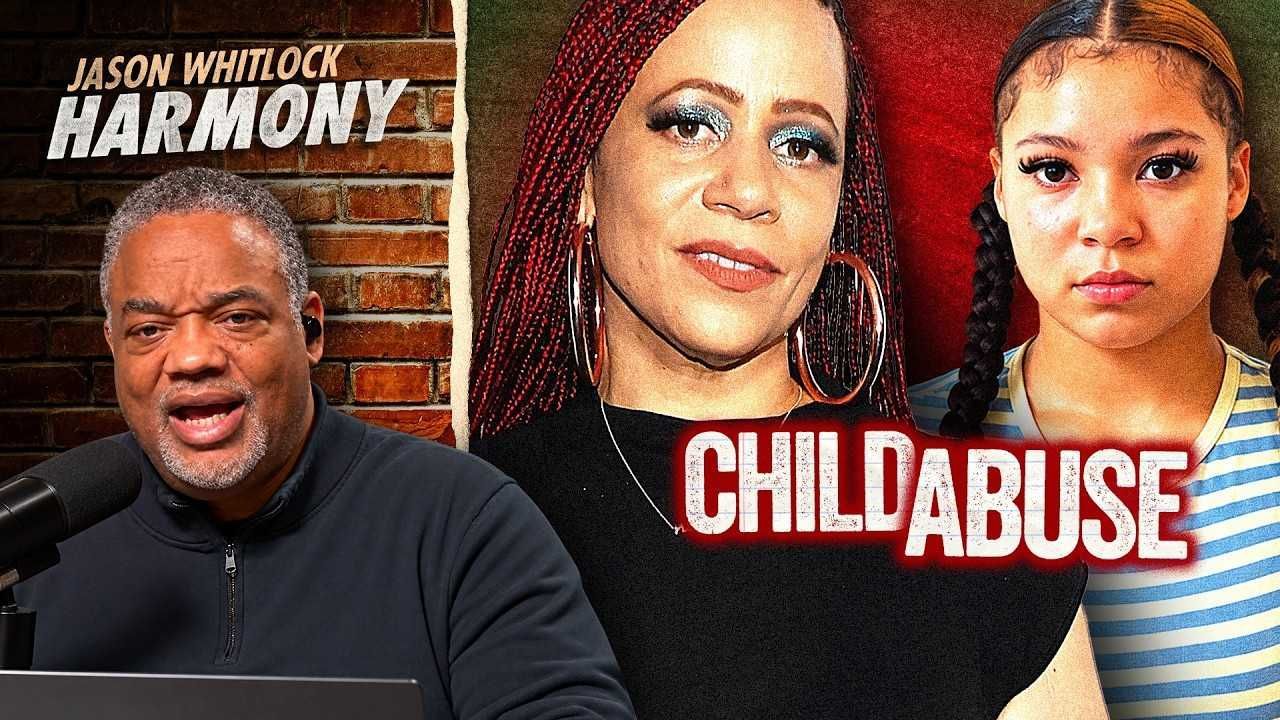
Jason Whitlock: Nikole Hannah-Jones sacrificed her daughter to racial idolatry


Nikole Hannah-Jones had a choice: send her daughter to one of New York's best schools or enroll her in a struggling school that aligned with her beliefs about race.

According to BlazeTV host Jason Whitlock, the decision she made says everything.

Despite having the means to give her daughter the best education, the "1619 Project" creator chose to send her daughter to a low-performing Brooklyn public school.

“Nikole Hannah-Jones had the money to send her daughter to one of the best schools in New York. She chose a failing one on purpose, and her daughter paid the price. That is the whole story,” Whitlock says.


“And her own long explanation in the New York Times Magazine only makes it clearer and worse. Nikole Hannah-Jones’ own parents made the opposite choice for her. They lived in Iowa. They put her on a bus in second grade out of a segregated neighborhood into a school where learning was expected,” he continues.

“That bus ride carried her to Notre Dame, to North Carolina, to the New York Times. They chose the best experience for their child. Nikole Hannah-Jones chose the black experience for hers,” he adds.

Her daughter, Najya, was enrolled at PS307 in Brooklyn, which Whitlock describes as a “low-income segregated school that matched her mother’s beliefs about justice.”

Her decision, he argues, reveals that Jones chose racial idolatry over her daughter.

“She turned her daughter into a sacrifice to a race war she built in her own mind. Send my child into dysfunction to prove integration can work if good families just believe. Help lift the collective even if my own child sinks,” he explains.

“Scripture never asks that of a parent. A parent protects the child in front of him, not the idea in his head,” he says. “She even admits she thought family privilege would protect Najya from what she calls dysfunction and malpractice. That is an admission she knew what the building was.”

“You do not send a child you love into malpractice and dysfunction and hope status saves her,” he continues. “Love picks a better room.”

Want more from Jason Whitlock?

To enjoy more fearless conversations at the crossroads of culture, faith, sports, and comedy with Jason Whitlock, subscribe to BlazeTV — the largest multi-platform network of voices who love America, defend the Constitution, and live the American dream.
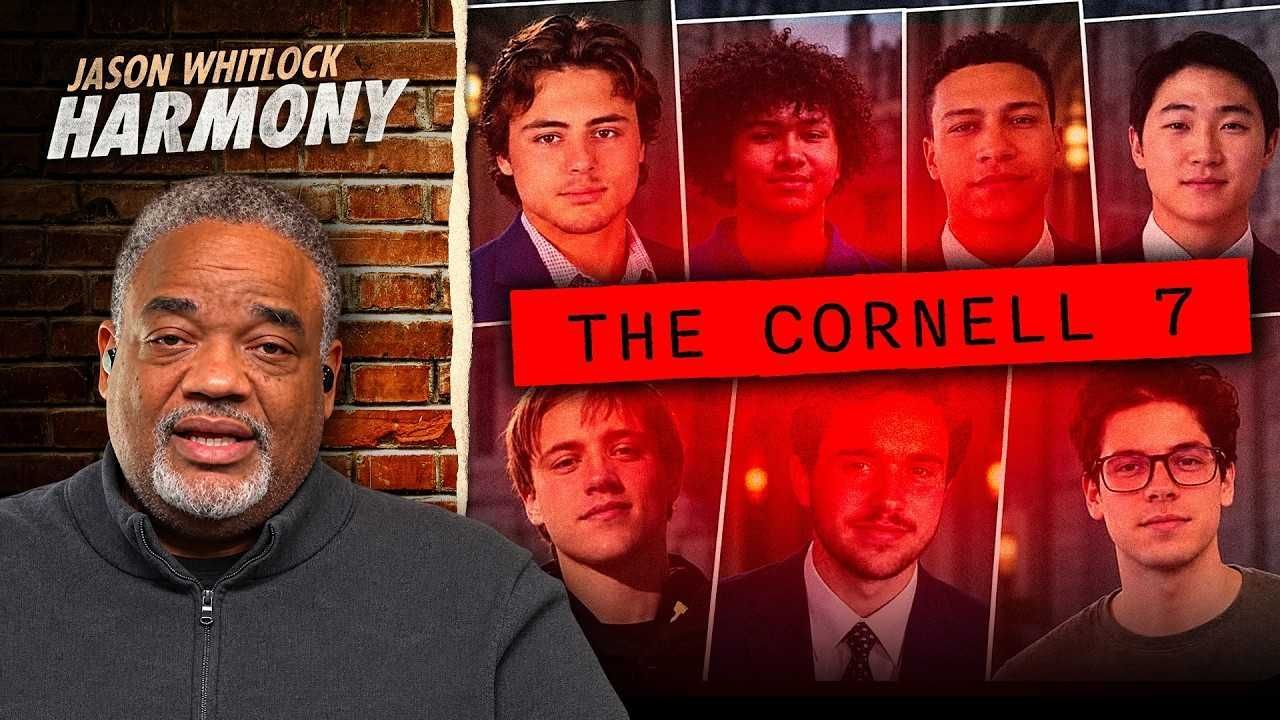
Jason Whitlock: Cornell 7 case exposes feminism's sexual freedom lie


The explosive allegations against seven members of Cornell University's Chi Phi fraternity have reignited a national debate over campus culture, consent, and accountability.

But BlazeTV host Jason Whitlock believes the story has taken over the news cycle for a deeper reason.

“Why did this all of a sudden become national news? ... I guess it’s intriguing or interesting, but ... see, it’s like they want us talking about this or it wouldn’t be getting the attention that it’s getting,” Whitlock says.

“The Cornell 7 wouldn’t be all over ... social media. Rape allegations go on all the time. Rape allegations on college campuses go on all the time. But clearly there seems to be something,” he continues.


“Maybe it’s conservatives. Maybe we’re pushing for this conversation. Maybe we want to expose the wrongs of feminism because the Lindsay Clancy case and this case seem to be putting those things in clear focus,” he adds.

“I think conservatives do want to show how wrong it is or how hurtful feminism has been,” Shemeka Michelle agrees, though she notes that “on the other side,” that’s not their motive.

“I think they believe they can show us just how terrible patriarchy is,” she says.

Meanwhile, Michelle points out that since the Clancy trial, she keeps seeing news stories about women harming their children.

“So it’s crazy because we’re seeing these cases, and so many people are just thinking, ‘Oh my God, women have to be protected. Look at what they’re going through. Look at what’s happening,’” she says.

“Conservatives are saying, ‘Hey wait a minute. This is not OK.’ But we keep seeing these stories because so many left-leaning lunatics want to actually prop up women like Barack Obama thinking that they can actually run the world and do it better,” she adds.

Want more from Jason Whitlock?

To enjoy more fearless conversations at the crossroads of culture, faith, sports, and comedy with Jason Whitlock, subscribe to BlazeTV — the largest multi-platform network of voices who love America, defend the Constitution, and live the American dream.
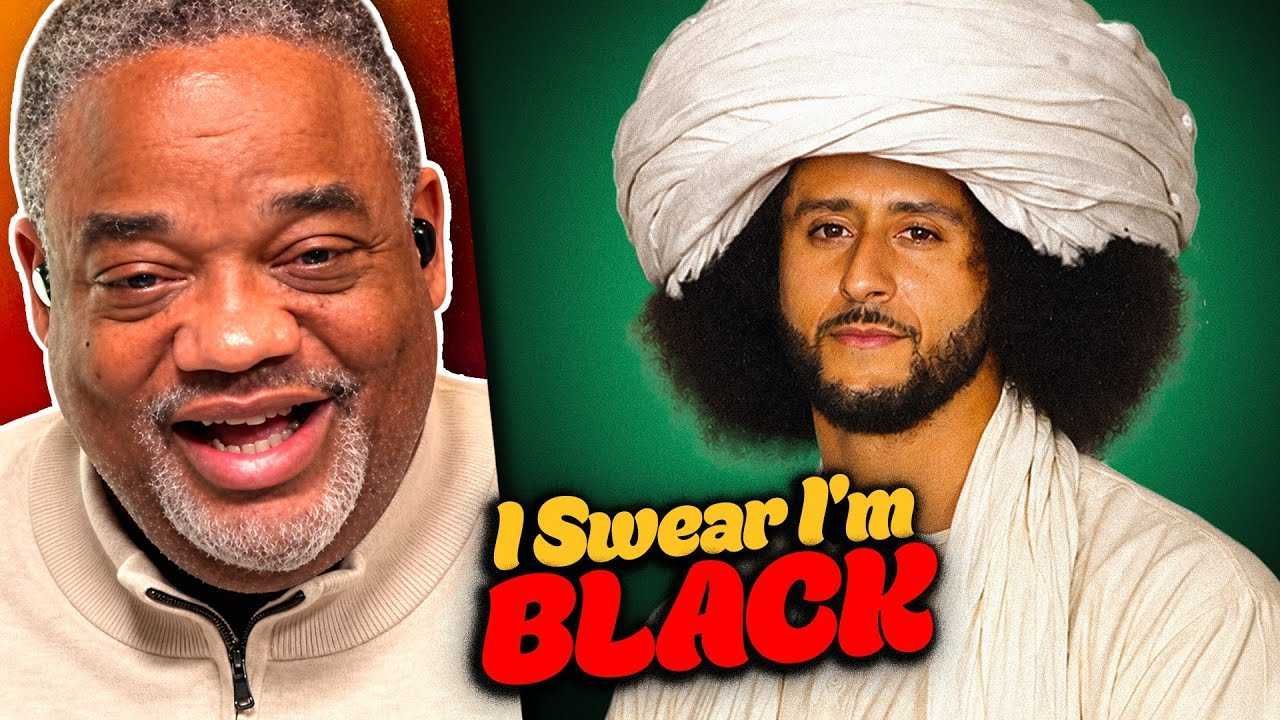
Jason Whitlock: Colin Kaepernick DISSES white parents for his black identity


Colin Kaepernick is openly complaining that his white adoptive parents couldn't prepare him for what it means to be black in America — but BlazeTV host Jason Whitlock says they're the reason he succeeded in the first place.

In an interview on "The Karen Hunter show," Hunter asked Kaepernick how he thought “about the term 'biracial' in relation to [his] black identity” and whether or not it resonated with him at all.

“I identify as a black man,” Kaepernick responded. “It’s how I show up in the world. It’s how I’m treated in the world. That’s politically how I approach the world. Biracial, my parents knew I was black and told me I was black at a young age.”

“But also how they operated was within a sense of color blindness. Like, hey, we’re all family, like, everybody’s going to be treated equal. And that’s what it is. But that’s not how the world is going to operate or treat me when I walk outside these doors,” he continued.


Kaepernick went on to explain that his white parents from Wisconsin never explained that to him.

“I think their exposure to blackness was also whatever was out in the media at a high level,” he said.

“He’s acting like, ‘Oh, what a disadvantage it was,’” Whitlock says, pointing out that statistically those raised in black families aren’t doing anywhere near as well as he is.

“Don’t you see how well these black parents are doing preparing their kids for success? Haven’t you looked at their SAT scores? Haven’t you looked at their graduation rates? Haven’t you looked at their marriage rates?” Whitlock asks.

“Now they treated him like they treated a kid that would have been their own. They wanted him to be colorblind. And he turned out, for the most part, for a good stretch, pretty successful. Stayed out of trouble, made it to college, made it to the NFL,” he continues.

“It almost feels like what they did worked,” he adds.

However, now that Kaepernick has turned his focus to his racial identity, he’s starting to fail.

“And then once Colin Kaepernick became obsessed with his blackness, that’s when all the trouble started and that’s where the career and everything started going a different direction,” Whitlock explains.

“This guy’s clueless,” he adds.

Want more from Jason Whitlock?

To enjoy more fearless conversations at the crossroads of culture, faith, sports, and comedy with Jason Whitlock, subscribe to BlazeTV — the largest multi-platform network of voices who love America, defend the Constitution, and live the American dream.
Jason Whitlock: Patrick Clancy faced the cameras — but not the tough questions


For months, America waited to hear directly from Patrick Clancy.

The father at the center of one of the nation's most heartbreaking and controversial criminal cases sat down with "60 Minutes" to discuss the deaths of his three children at the hands of his wife.

However, while the interview offered intimate details about Clancy’s grief and recovery, BlazeTV host Jason Whitlock doesn’t believe Ross Douthat pressed him hard enough — and thinks the answers seemed scripted.

“What we got was soft light and soft questions,” Whitlock says.


“Patrick said baby Callan died in his arms. He said he begged God for one kid to live. He said Lindsay told him the killings felt like a dream. He said he forgave her without being asked. He said he had a panic attack on the stand, refused the medications, and finished the testimony,” he continues.

“He said the TikTok mob is trash. He said he married a fertility doctor and they are starting a family. Every line carried weight on paper. Almost none of it hit like a man who had just buried three children and then watched a courtroom turn their deaths into a national argument,” he adds.

Whitlock points out that in the 14-minute interview that aired, Douthat never “pressed the hard scenes,” like Patrick leaving Lindsay alone after she told him she had thoughts of harming the kids.

“He never forced a straight answer on the mistrial, the holdout juror, or whether Patrick Clancy still wants a retrial,” he says.

“He treated forgiveness like a virtue signal and left the public with a quiet man reading from a prepared grief script,” he continues.

“Patrick came across careful, managed, and strangely flat for a father whose name is now welded to the biggest postpartum psychosis fight in the country. '60 Minutes' sold revelation,” he adds. “What aired felt like damage control with better lighting.”

Want more from Jason Whitlock?

To enjoy more fearless conversations at the crossroads of culture, faith, sports, and comedy with Jason Whitlock, subscribe to BlazeTV — the largest multi-platform network of voices who love America, defend the Constitution, and live the American dream.
Jason Whitlock: The Lindsay Clancy jury chose her over the children


The mistrial in the Lindsay Clancy case has kept the debate over her guilt as divisive as ever, with plenty of Americans siding with the 11 jurors who wanted her found not guilty by reason of insanity.

But unlike those 11 jurors, BlazeTV host Jason Whitlock believes that the lone juror who defied the others was the only one pursuing real justice — especially after seeing interviews of the women who sided with the defense.

“Not sure if rogue is the right word ... but every one of us in the hours of our frustration would get up and walk the room because you just couldn’t sit anymore,” one female juror told NBC News, speaking about the male juror who refused to fall in line.

“He would not interact with us and try to understand. We read to him on numerous occasions the definition of reasonable doubt from Judge Sullivan’s instruction. He actually said one day in the end, ‘Well, why don’t we have the judge come in and read it again?’ And we were like, ‘No, we have it in front of us. We don’t need that,’” she continued.


“And we would highlight it and you know, so and so, this is the definition of reasonable doubt. But he had the hardest time getting off the fact that Lindsay viciously killed her children,” she added.

“You just heard it,” Whitlock says. “Not a host, not a pundit, not a podcaster, a juror.”

He calls the “rogue” juror a “mighty good man.”

“That was not a flaw in the holdout. That was the assignment,” he says.

“The fight in that room was never ‘did she do it?’ The fight was whether a room full of adults would let ‘she snapped’ and ‘she loved them’ erase what she did. Nine women, three men, a majority that wanted a hall pass,” he continues.

“One man who would not sign it. And when the case deadlocked, the cameras did not hunt the truth. They hunted him. ‘Arrogant, wouldn’t interact, wouldn’t budge,’” he mocks, “‘Hardest time getting off the fact that she viciously killed her children.’”

“Of course he did. That fact is the case. Empathy can be holy. Empathy can also be toxic. In that jury room, it went toxic,” he says.

“The loudest empathy in those interviews did not land on three dead kids. It landed on the woman who killed them,” he adds, before playing a clip of a different juror.

“We weren’t trying to figure out if she murdered the children. She did, and she’s admitting that. We’re trying to figure out did she know right from wrong at that time? And with everybody saying she loved her children so much and everything proved she loved her children from her journals to her mother-in-law,” the female juror said.

“Everything proved that she loved her children, so she had to have snapped,” she added.

“Hey, lady, love is not a defense to strangulation. A mother’s tears do not untie a ligature. ‘She snapped’ is not a verdict. It is a slogan. And when a juror treats the bodies as the obstacle to her preferred ending, she has already chosen a side, and it is not the children’s,” Whitlock says.

“They mocked the holdout for staging with the bodies. They should have thanked him. He was the only adult in the room who refused to negotiate with a corpse count,” he adds.

Want more from Jason Whitlock?

To enjoy more fearless conversations at the crossroads of culture, faith, sports, and comedy with Jason Whitlock, subscribe to BlazeTV — the largest multi-platform network of voices who love America, defend the Constitution, and live the American dream.
Jason Whitlock: Lindsay Clancy has become the OJ Simpson of angry housewives


The debate surrounding Lindsay Clancy has become about far more than one criminal case. While prosecutors argue that Clancy intentionally killed her three children, many supporters have rallied around the Massachusetts mother as a victim of mental illness, postpartum struggles, and impossible expectations placed on women.

While the supportive response from such a large number of women has confused Americans, Dre Baldwin believes he has the answer as to why it’s happening.

“Lindsay Clancy is to overwhelmed mothers what O.J. Simpson was to the angry black person in 1995,” Baldwin tells BlazeTV host Jason Whitlock on "Fearless."

“People didn’t identify with O.J. Simpson because they thought O.J. didn’t kill Nicole and Ron Goldman,” he explains. “They identified with O.J. Simpson because they were angry black people who felt like America as an institution and the police as an institution had been terrorizing black people.”


Like Clancy has become a symbol for postpartum mothers, “O.J. was a symbol for some get-back for black Americans.”

“That’s why people celebrated when he got found not guilty,” Baldwin says.

“It’s the same thing that a lot of women, mothers who see themselves as overwhelmed housewives who are doing too much, and this is not the role that was supposed to be for them,” he continues. “And they just feel themselves being overwhelmed through all the challenges of motherhood and being a wife and taking care of a home.”

While Baldwin doesn’t believe these moms would ever actually murder someone, let alone their children, he does believe that Clancy is being propped up as a “symbol of ‘somebody is finally seeing this.’”

“And if it means a woman beating a murder charge, then so be it. The same way that people looked at people celebrating O.J. with incredulity back then, 30 years ago, is the same way that many people are looking at this Lindsay Clancy case and her supporters today,” he adds.

Whitlock couldn’t agree more, commenting, “That’s a brilliant take.”

Want more from Jason Whitlock?

To enjoy more fearless conversations at the crossroads of culture, faith, sports, and comedy with Jason Whitlock, subscribe to BlazeTV — the largest multi-platform network of voices who love America, defend the Constitution, and live the American dream.

10 years later, we're still talking about Colin Kaepernick — because he conquered the NFL


Ten years after Colin Kaepernick's national anthem protest ignited one of the biggest cultural battles in sports history, the former NFL quarterback says he still believes the league has blackballed him.

But according to BlazeTV host Jason Whitlock, that claim misses the bigger story.

“Ten years later, Colin Kaepernick just told the country he won,” Whitlock says.

“He sat with NBC News and said he no longer watches the NFL because the league is actively blackballing him and the men who knelt with him. He watches college football now. That is not a quarterback begging for a clipboard; that is a man who knows the institution already belongs to him,” he explains.

“A three-minute kneel during the national anthem has been stretched into game-long signs in every NFL stadium. ‘End racism,’ ‘stop hate,’” he continues, noting that it’s not going away any time soon.


“For the 2026 season, the seventh straight year of the stencil, the league will paint those slogans in the grass and on the helmets again. Marxist liturgy as field decoration. [Kaepernick] never needed another snap. He needed the building to preach after he left the huddle,” he says.

And the “diversity score cards" within the league — like the male cheerleaders who went viral not too long ago — still “sit in the front office as if they were defensive schemes.”

“The NFL did not stumble into this; it was discipled into it. [Kaepernick] watches college football and accuses the NFL of blackballing him,” Whitlock says.

“He can afford the sneer. He is one of America’s greatest Trojan horses. He never recaptured the quarterback job. He captured the institution,” he continues. “The NFL thought it was containing a protest. It was being converted by one.”

“What began as a sideline gesture now owns the grass, the hiring, and the moral vocabulary of Sunday. The loudest league in the country is still kneeling. The quietest quarterback already cashed the cultural check,” he adds.

And while Kaepernick is often treated as a “failed activist,” that couldn’t be farther from the truth.

“Ten years later, we are still talking about Colin Kaepernick. … That is a cultural victory that never required a comeback, a tryout, or another down. He sacrificed a fading quarterback career and got a league to carry his flag,” Whitlock says.

Want more from Jason Whitlock?

To enjoy more fearless conversations at the crossroads of culture, faith, sports, and comedy with Jason Whitlock, subscribe to BlazeTV — the largest multi-platform network of voices who love America, defend the Constitution, and live the American dream.

Jason Whitlock: Washington Post columnist FIRED, then REHIRED after disturbing Charlie Kirk death post


Washington Post columnist Karen Attiah was rehired after her termination over social media posts about Charlie Kirk's assassination after taking the publication to court — and BlazeTV host Jason Whitlock is disappointed to hear it.

“This is a woman that had tweeted out some really negative things about the death of Charlie Kirk, and the Washington Post said, ‘Hey, we don’t need any of that.’ She was a columnist there covering race and culture,” Whitlock explains.

“She sued to get her job back, and this week, she won that lawsuit and has been reinstated,” he adds.

An article from the New York Times reported that “the Washington Post said in its termination letter that Ms. Attiah’s posts about Mr. Kirk had harmed ‘the integrity’ of the organization and violated standards requiring employees to use social media with civility and respect.”


“Ms. Attiah’s remarks about Mr. Kirk’s assassination, which she posted to the social network Bluesky on Sept. 10, the day he was shot, responded to the outpouring of grief after the shooting,” The Times continued.

"Refusing to tear my clothes and smear ashes on my face in performative mourning for a white man that espoused violence is … not the same as violence," she wrote in a post.

“She wrote this on a post on the day he was shot,” BlazeTV host Jason Whitlock says in disbelief.

“I can’t blame the Washington Post for not wanting to be associated with Ms. Attiah. I’m not surprised that she sued, and I’m not surprised that some liberal judge, or some liberal court, reinstated her,” he continues.

And in a recent podcast episode, conservative commentator April Chapman made her case for why things like this happen.

“Y’all not gonna like this, but it is risky and full of hidden liabilities to hire a black woman. They tend to be difficult. Okay? They tend to be less compliant. They are more likely to file a lawsuit and cry racism or sexism or some other ‘ism’ as a way to extort money from a company,” Chapman said on her podcast "Unshakable."

“She will get the company embroiled in some lawsuit that never ends. And so you don’t have to take my word for it, but because of the lack of the accountability and the ethnic narcissism of most liberal black females, like you don’t really have this problem in conservative spaces with black women,” she continued.

“But since 92% of all black women are progressive and liberal and Marxist in their worldview, what I’m saying holds to be true,” she added.

“That’s amazing,” Whitlock says, adding, “particularly coming from a black woman.”

Want more from Jason Whitlock?

To enjoy more fearless conversations at the crossroads of culture, faith, sports, and comedy with Jason Whitlock, subscribe to BlazeTV — the largest multi-platform network of voices who love America, defend the Constitution, and live the American dream.

Jason Whitlock: NFL player snaps after Druski's CTE skit goes too far


Comedian Druski has NFL players fuming after a viral sketch portrayed a concussion-riddled football star spiraling.

In the skit, he plays an NFL player named Ray Price who gets a horrific concussion on the field, becomes violent, and even evades the cop in a O.J. Simpson-inspired chase — but this time it's in a gold Ferrari.

“First off, people try to say Druski is not funny, and I find that ridiculous,” BlazeTV host Jason Whitlock comments. “Druski is hilarious.”

“I also find it uncomfortable that I find this so funny and I’m laughing at really inappropriate jokes, but the thing is hilarious,” he adds.


“He kind of nailed it,” Steve Kim agrees. “I think a lot of these comedic skits, if you’re really good at it, it’s a commentary on reality. Like parody is a lot to do with reality and you overblow it just to make an overall point.”

However, ex-NFL player T.J. Ward was among those who did not find it funny.

“In that skit ... it was a couple funny moments, but overall, I’m going to put my sensitivity cap on like everyone else seems to do when it’s affecting them,” Ward said in response to the skit.

“These are life and death situations. And at the end of the day, it’s a life-taking disease. And I think CTE universally is the only disease that’s allowed to be made fun of, which is crazy. You wouldn’t make fun of somebody with cancer. You wouldn’t make fun of somebody with dementia. You wouldn’t make fun of somebody with AIDS,” he continued.

“You wouldn’t make fun of anyone with these diseases that are taking lives,” he added.

“I’m going to put my insensitivity cap on and just call that cap,” Whitlock comments.

“It’s a programming that he has accepted and that many people have accepted that everybody’s looking to be a victim,” he adds.

Want more from Jason Whitlock?

To enjoy more fearless conversations at the crossroads of culture, faith, sports, and comedy with Jason Whitlock, subscribe to BlazeTV — the largest multi-platform network of voices who love America, defend the Constitution, and live the American dream.