​Young men are being left behind



From a young age, we ask kids what they want to be when they grow up. Firefighter, doctor, president, mechanic, astronaut, teacher, actor — the list goes on.

Dreams shift as children discover their gifts, what they enjoy, and where the two overlap. The kid who wanted to be a doctor might change his mind after finding out he can design spaceships and likes math better than anatomy.

What discoveries, studies, and breakthroughs are missing from academia simply because the men who would have made them were unfairly denied the opportunity?

Allowing people to follow their dreams has always been an American aspiration and part of what makes our country exceptional. Yet today, one group of Americans — young men — is at risk of being shut out from their dreams, largely through no fault of their own.

Mountains of evidence show that our education system and economy are increasingly leaving boys and men behind. This is a national crisis our political leaders must urgently acknowledge and address.

For Exhibit A, simply look at the last 50 years of wage trends. Although earnings for women have steadily increased, nearly doubling in the last half-century, men’s wages have remained largely stagnant. Indeed, while the inflation-adjusted median full-time wage for women has grown by $21,750 since 1976, it has increased for men by only $7,570.

But it gets worse. In August, 98% of U.S. job growth went to women according to government statistics. While female employment has grown by 870,000 since last year, male employment has contracted by 1.5 million. Roughly one-third of men are not participating in the labor force, including over half of young men ages 16-24.

The same trend is happening in college participation. In the mid-1990s, American men and women ages 25-34 were equally likely to have completed college, but the gap has ballooned since then. Today, about 47% of young women have a bachelor’s degree compared to 37% of young men. Women make up about 55% of U.S. undergraduate enrollment, while men account for 40% (with the remaining 5% being unknown or unreported).

Male education and workforce success directly impact family formation. Women are more likely to marry a man with a steady income, and men are more likely to want to work if they have something to work toward. But couples are told to wait until they have financial stability before having kids, a goal that is increasingly difficult to reach, leading them to have fewer children.

And while feminists may cheer the number of women in the 9-to-5 work world, it has not come without a cost. As many observers (including Elizabeth Warren before she entered politics) have pointed out, more mothers entering the workforce has made households increasingly reliant on both parents working to stay afloat, creating a “two-income trap.” It is financially unfeasible for many women to stay home with their children, even when they want to.

Many factors have led us to the current status quo. American industrial and trade policy over the last half-century has shipped many blue-collar jobs overseas while driving down wages for those who remain. Economic policy influenced by feminism has convinced many women to invest in careers rather than family. But we should not overlook another important driver of young men’s present disadvantage: the rapid proliferation of DEI across society.

RELATED: The global meritocracy myth sells Americans’ inheritance cheap
Blaze Media Illustration

Jacob Savage’s essay in Compact magazine last December highlighted the devastating impact of the DEI regime on young men. Fittingly titled “The Lost Generation,” Savage chronicled how Millennial and Gen Z men over the last 10 to 15 years have found themselves chained to the same job, or without one entirely, while less qualified but more “diverse” employees rise in the ranks. This practice has run rampant across numerous industries — entertainment, academia, the medical field — with untold casualties.

What film masterpieces did we miss by passing over a promising writer for a more diverse candidate? What medical breakthroughs did we forgo to reach a quota? What discoveries, studies, and breakthroughs are missing from academia simply because the men who would have made them were unfairly denied the opportunity?

Fortunately, DEI has been in retreat lately, thanks in large part to the Trump administration’s crackdown. DEI has also declined in popularity in the workforce, though it still boasts majority support amid widespread ignorance about its true consequences. Even so, DEI remains a powerful force that could regain greater influence if political conditions become more favorable.

Meanwhile, young men continue to suffer. A recent Institute for Family Studies survey found that about half of men ages 18-29 now see the American dream as out of reach. Many have retreated into destructive pastimes such as pornography and gambling, while suicide rates have risen to record highs. The statistics are grim in every direction.

So where does this leave us?

Our young men are still dreaming as they did when they were little boys, but they are being forced to acknowledge that hard work may not be enough to achieve those dreams. In America especially — the country founded on the ability to get ahead and create something spectacular — this is a reality we should not tolerate.

The situation young men face is an issue lawmakers can no longer afford to ignore. We need an economy where men’s skills and contributions are valued and appropriately compensated. We also need to make it possible for a family to raise children on one income. There is no easy fix for these problems. It will necessarily involve a myriad of approaches, from fully eliminating DEI to bringing back blue-collar work and stabilizing our broken dollar, whose debasement undergirds so much of Americans’ current struggles.

To save the American dream from today’s threats, we must tackle this challenge. We owe it to the next generation of boys who still dare to dream.

Editor’s note: This article was originally published in the American Mind.

Being Male Won’t Get You Kicked Out Of The DAR, But Defending Women Will

The chapter at the forefront of the fight to keep the Daughters of the American Revolution female is the Martha Laird chapter.

The strange masculinization of American women


The United States is a wonderfully strange place that has entered a remarkably bizarre era.

The Wall Street Journal recently noted the growing appeal of big, muscular arms among women. On its own, it sounds like a harmless, somewhat ridiculous trend. But the veiny flexes are only the most visible part of a broader cultural shift.

The female body becomes another declaration of independence: stronger, harder, more imposing, less vulnerable.

Look around any busy gym in America, or spend five minutes scrolling Instagram, and the directives handed down to young women seem to have completely flipped. Women were once told they should no longer have to conform to male expectations to achieve genuine success. Internet culture somehow turned that promise inside out. Now the fashionable ideal increasingly resembles a female version of masculinity: bigger muscles, more tattoos, even the deliberate rejection of conventional beauty rituals through shaved heads.

The ideal is no longer merely to be desirable. It is to look completely untouchable.

'Resistance' training

This transformation has acquired an unmistakably political dimension. Writing in the Washington Post last year, columnist Karen Attiah described gaining 20 pounds of muscle through powerlifting. Attiah argues that muscles and femininity are perfectly compatible and reports receiving plenty of admiring attention from men. But her conception of femininity is heavily politicized. Connecting women's growing enthusiasm for muscularity to abortion restrictions, male violence, and the revival of traditional gender roles, she wrote, "At a time when the rights of women, particularly Black women, are under attack, we need to return to the basics — to be grounded in our agency, physical power, and transformational energy."

Attiah is hardly alone. Writing in Women's Health last year, personal trainer Lacee Lazoff declared that lifting weights is a feminist act of rebellion. She described grunting, developing calloused hands, and lifting heavy weights as ways of defying traditional expectations of femininity. Even a trip to the gym, apparently, can become another skirmish in the war against the patriarchy.

There is a curious irony here. For decades, feminists argued that a woman's worth should not be determined by her appearance. Now, in certain feminist circles, appearance has become a political statement in its own right. A muscular back is an act of resistance. A shaved head is a declaration of independence. Even the size of a woman's biceps can apparently tell us something about her commitment to dismantling the patriarchy.

Women were supposed to be liberated from having their bodies scrutinized. Instead, they are being invited to turn those bodies into ideological billboards.

Trying on toxicity

Fitness culture is especially enthusiastic about this transformation. Building a wide back, heavy upper trapezius muscles, a thick neck, and bulging biceps is sold not simply as exercise but as empowerment. The female body becomes another declaration of independence: stronger, harder, more imposing, less vulnerable.

The disconnect becomes even stranger when you consider the way masculinity itself is discussed. Traditional male behavior is endlessly scrutinized for signs of toxicity, aggression, dominance, and emotional repression. Yet many of the same outward qualities — toughness, physical intimidation, extreme independence, indifference to approval — are celebrated when women cultivate them.

Somehow, masculinity becomes problematic in men and empowering in women. Female strength once meant endurance, patience, wisdom, competence, fortitude. A mother could be extraordinarily strong without feeling compelled to acquire the neck of an Olympic weightlifter. Increasingly, however, strength must be visible before it counts -- and preferably visible on Instagram.

RELATED: Stallone’s ‘Steps’ looks back on the long, brutal road to ‘Rocky’

United Archives/Getty Images

Muscle mates

Women spend hundreds of hours dragging heavy sleds, curling dumbbells, counting grams of protein, and sculpting bodies designed to project an aura of absolute self-sufficiency. Add the sleeve tattoos, buzz cuts, and permanent don't-talk-to-me expression, and the aesthetic communicates something before a word has been spoken: I require nothing from anyone.

Perhaps that feels liberating. But it leaves remarkably little room for femininity. And then comes the sales pitch that may be hardest to swallow: that men are supposed to find the whole package irresistible.

Human attraction is obviously more complicated than a checklist, and plenty of men like athletic women. But cross-cultural research on mate preferences has consistently found that men place greater importance on physical attractiveness in a long-term partner than women do. Both sexes, meanwhile, value qualities such as dependability and emotional compatibility. There is little reason to believe that a new fashion for bulging biceps has fundamentally rewritten these preferences.

None of this means women should organize their lives around pleasing men. It does mean we should stop pretending male attraction has been culturally reprogrammed because an influencer said "strong is sexy."

If you're a female reader skeptical of the point, consider the inverse. Would you feel genuinely attraction to a man who deliberately adopted every traditionally feminine aesthetic he could find? Imagine him stepping out in floral sundresses and pearl anklets. Picture him borrowing your crop tops, straightening his hair, spending two hours applying liquid eyeliner before heading to a sports bar, then asking whether he should start carrying a tiny micro-purse for his perfume and lip oil.

Perhaps somebody is into it; most women probably aren't.

Sexual difference has proven remarkably stubborn despite decades of attempts to explain it away. Men and women can obviously borrow from one another, and nobody is suggesting that women should avoid barbells or men should avoid moisturizer. But a culture supposedly devoted to freeing women from male standards has arrived at a curious destination: It increasingly congratulates women for looking and behaving more like men.

To be clear, fitness is attractive. A strong, sculpted female body can be beautiful. But there's a considerable difference between looking fit and looking as though you could throw your boyfriend through drywall.

Mary Kay’s Complete Makeover

In the 20th century, certain corporate brands became so well-known as to be immediately recognizable: McDonald's golden arches, the Nike swoosh, and, for a certain segment of the population, the Mary Kay pink Cadillac.

The post Mary Kay’s Complete Makeover appeared first on .

From Girlbosses To Tradwives, The Internet Keeps Getting Femininity Wrong

The internet has given women endless ways to look feminine. What women need is a clearer vision of how to become truly feminine.

Dear Women: Your Bad Life Choices At Cornell Frat Parties Shouldn’t Be National News

Women have a choice to make. They can no longer evade the responsibility for it.
Obama goes viral for saying he 'fantasized' about women ruling all governments


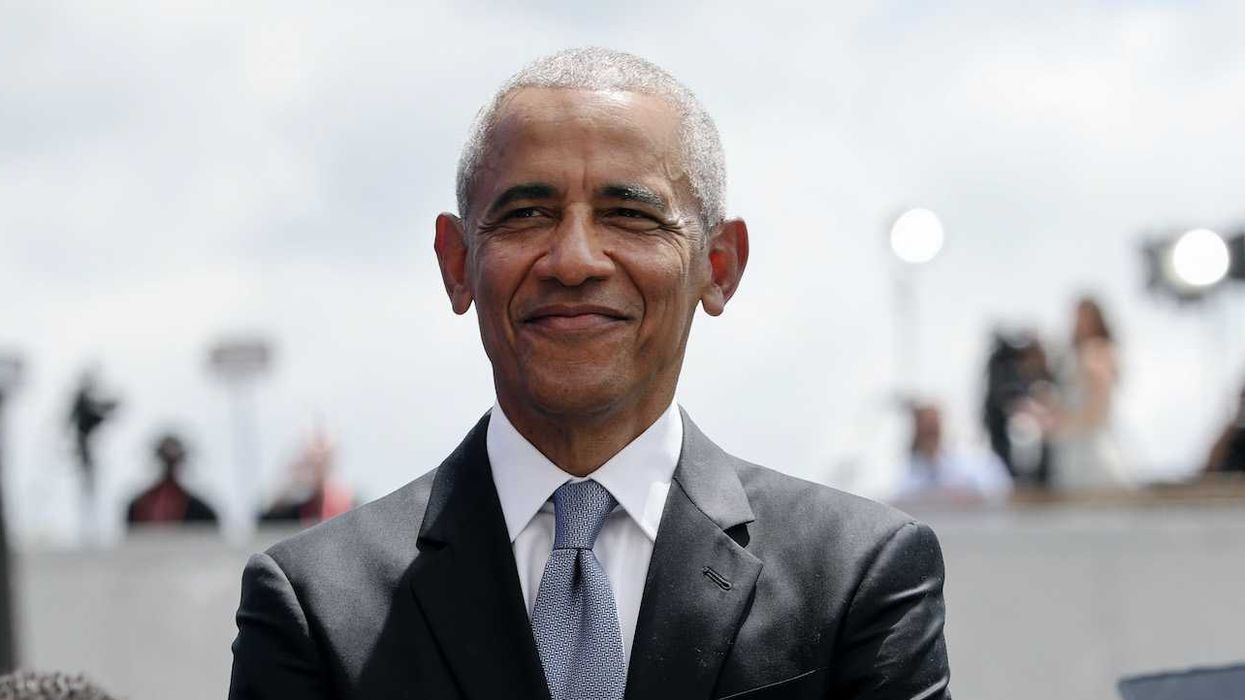
Former President Barack Obama set off a minor online conflagration after opining about what would happen if women were in control of all governments.

The 60-year-old made the comments during an interview Monday with historian Doris Kearns Goodwin at Salem State University.

'They'd be better. I'm confident about that. I really do!'

"Even when I was president I sometimes fantasized about if you put women in charge of every government for like two years and then just kind of saw, all right, how are things going?" said Obama to some laughter in the audience.

"I have a strong belief that things would — they wouldn't be perfect," he added.

"But they'd be better!" interrupted Kearns, a woman.

"But they'd be better. I'm confident about that. I really do!" Obama added.

Footage of the comments was posted to social media, where they went viral after many ridiculed his sentiment.

"Ignore both the traditional teachings of [virtually] every religion, as well as all of the lessons from thousands of years of human experience," responded Jeremy Carl, a fellow at the Claremont Institute.

"He took away the Presidential nomination from a woman," said one detractor.

"Brother, do you not remember knocking Hillary Clinton out of the primary & thus lay-up Presidential Run of 2008? You prevented America having the first female President. It's the only thing you & Trump have in common," read another reply.

"It’s like he was in a cave for the entire [Lindsay] Clancy trial," responded Republican Lisa Cusack.

Elsewhere in the interview, Obama encouraged the attendees that the country was divided but could come together.

"Today, we are rife with divisions, and our democracy seems broken in so many ways — and the tenor and tone of the times feel mean-spirited," he said.

RELATED:Obama issues rare comment after Trump accuses him of treason: 'Weak attempt at distraction'

Obama: "If you put women in charge of every government for two years... I have a strong belief that things would be better. I'm confident about that." pic.twitter.com/H6hs5ZjZFV
— TheBlaze (@theblaze) September 24, 2026

"We’ve gone through times like this before. I believe we can get out of them. And when I travel around the country today, or I work with the young people I work with," he added, "what you discover is we aren’t as divided as we seem at the ground level."

He also said the progress on women's rights, LGBTQ rights, and civil rights has not been reversed and most people support them.

"We’re not as divided as our politics or our media would indicate," he concluded.

Like Blaze News? Bypass the censors, sign up for our newsletters, and get stories like this direct to your inbox. Sign up here!

Twice As Many Men Are Single Than Married Today. Are Women To Blame?

Young men look at dating culture and see women who are prepared to choose husbands but less prepared to become wives.

Sydney Sweeney Ad Backlash Exposes The Naked Hypocrisy Of Modern Feminists

The media storm surrounding a raunchy sports betting ad reveals selective outrage and deep ideological hypocrisy.

Women Getting 98% Of New Jobs Is Bad News For Everyone, Including Women

Men want and need to shoulder a greater burden of today’s labor while women want and need to shoulder less of that burden.