My 1990 World Cup sticker book — and a glimpse of football's simpler past


It was 1990, and I was in my final year of middle school. The Ultimate Warrior had just defeated Hulk Hogan at WrestleMania VI, Bon Jovi was poisoning the airwaves, and bubblegum still held its flavor.

The law of the jungle was merciless. The concrete schoolyard was just a warm-up for the clique wars to come — if you weren’t smoking Marlboro Reds or rocking Nike Air Max 90s, you didn’t stand a chance. If your parents picked you up in the "wrong" car, it was reputational suicide.

Back then, footballers looked like real blokes — sweaty, scruffy, and rough. Take Peter Beardsley: magic on the pitch, but no one was swapping stickers for his smile.

Summer break was just a few weeks away. While everyone else seemed ready to spend six weeks climbing trees, aimlessly riding their bikes from dawn till dusk, staring awkwardly at girls they liked, or searching for dead bodies in the woods, I had other plans.

Fever pitch

That summer, my true obsession was the Italia 90 World Cup sticker album — a glossy shrine to footballing glory, celebrating a tournament set in Italy and far more engrossing than my favorite comics. To top it off, England had an all-star lineup and, for once, stood a good chance of reliving the glory days of ’66, when we routed the Germans. I set myself a a mission worthy of Pelé himself: to fill every page with those adhesive, elusive footballers. Forget superheroes and cliff-hangers — completing that album was the only epic saga that mattered to this 11-year-old boy.

Mark Leech/Offside/Getty Images

Everyone wanted Maradona or one of the coveted shiny stickers. We devised what I can only describe as a unique system of exchange. Forget Wall Street; this was playground economics at its rawest. We would huddle around while each of us cycled through our spares, chanting “got, got, got,” until someone finally shouted, “NEED!”

The true value of a sticker seemed to rise in direct proportion to the volume of that shout — sometimes it seemed like it could be heard in the next city. The whole system was rooted in supply and demand, but deals were sweetened with chocolate, soda, or the promise of a date with someone’s older sister.

Mullet over

The Soviet Union was in its death throes. This was the era before German reunification. Although the Berlin Wall had technically fallen — famously serenaded by "Knight Rider’s" very own power balladeer, David Hasselhoff — Germany still played as West Germany in the World Cup.

For all the horror associated with the communist regime, the most haunting images in my young mind were those notorious mullets — that and the East German female athletes, so heavily doped on steroids that they looked more like men than women.

March Leech/Offside/Getty Images

Flicking through my album, the West German squad looked less like a football team and more like a group of metalheads heading to a Mötley Crüe concert. Still, some of our own lads were sporting that same achy-breaky hair — most famously Chris Waddle, who blasted the ball over the bar in England’s semifinal defeat against West Germany. Proof, if ever it was needed, that mullets make you miss penalties.

RELATED: The best pub in England might be this Norwich backstreet boozer

The Fat Cat pub

Blokes at work

This tournament’s sticker book hit the shelves at the end of April, ahead of the World Cup kicking off in North America — a whopping 980 stickers for obsessives to collect. The game has changed since those halcyon days — both financially and, perhaps most bizarrely, aesthetically.

Today, pampered millionaire footballers seem to look perma-tanned and Botoxed, more suited to the red carpet than the muddy touchline. Back then, footballers looked like real blokes — sweaty, scruffy, and rough. Take Peter Beardsley: magic on the pitch, but no one was swapping stickers for his smile. For Americans, imagine pulling a Don Mossi Topps card — bags of talent, but not much glamor.

L-R: Peter Beardsley, Don Mossi. Shaun Botterill/Betmann/Getty Images

Patience and hope

Of course, my mission failed spectacularly. I didn’t complete the album in a month. In fact, I never completed it. But maybe that was the point. I belonged to the last generation to grow up without the internet, when patience and hope were virtues and instant gratification had yet to rear its head. Now we’re kept constantly distracted, our attention fought over by algorithms, notifications, and endless scrolling.

Our sticker quests were slow-burn adventures, each new pack a lesson in anticipation, disappointment, and the long game. Trading and collecting weren't just a playground pastime; they were a rite of passage, a physical reminder of a slower world where you couldn’t always have it all, all at once.

I am giving some serious thought to picking up the 2026 album. But this time round, the sticking point isn’t patience; it’s money. With 48 teams and nearly 1,000 stickers to collect, completing the book is now estimated to cost at least £1,000, ($1,400) to complete. As tempting as it is to rekindle my childhood love affair, I may have to sit this one out. Still, I did get the Maradona sticker — maybe not a complete album, but a complete memory.

FIFA president reveals why World Cup tickets are so expensive — because they can be


FIFA President Gianni Infantino responded to concerns about high ticket prices for the upcoming 2026 FIFA World Cup and said that he believes tickets have to be at least somewhat expensive.

Infantino spoke at the Milken Institute Global Conference in Los Angeles on May 5 and commented on news stories that have shown massive ticket resale prices, sometimes reaching millions of dollars.

World Cup tickets have quickly spiraled out of control and reached heights of more than $2 million.

With around 500 million ticket requests for the tournament in the United States, Canada, and Mexico, Infantino boasted that 25% of the tickets available for the World Cup group stage can be bought for less than $300. However, when it comes to the massive average price — around $1,600, according to YNet — Infantino said it isn't wise to sell tickets at low prices.

"I think there are certain elements that we need to understand," he said at the conference.

"We are in a market which — in which entertainment is the most developed in the world. So we have to apply market rates."

The FIFA boss further justified the prices by saying that if ticket prices are too low, they will be resold for even more than they are currently.

"In the U.S., it is permitted to resell tickets as well," Infantino explained. "So if you were to sell tickets at a price which is too low, these tickets would be resold at a much higher price."

RELATED: 85-year-old hockey scout compliments female reporter — so team gets fined $5,000

- YouTube

Infantino's claims have been tested to at least some degree, and while common sense suggests that a lower initial price results in a lower resale price, higher ticket prices arguably give less incentive for resellers to scoop up tickets if the cost is already near market value. In that regard, the effort to resell would not be worth a slimmer profit margin.

Lower prices, whether they be for hype or for fan appreciation, tend to result in resales that more accurately represent market value. However, higher initial prices definitely allow vendors to take a larger cut of the profits that they would not otherwise get.

The logic gets very complex, and even a massive study by the FTC, which looked at concert ticket sales for 18 top artists, still wrote, "None yet," as their conclusion.

Whatever the right formula is, World Cup tickets have quickly spiraled out of control and reached heights of more than $2 million.

According to Forbes, tickets for the July 19 final at MetLife Stadium in East Rutherford, N.J., are being resold for up to $2,299,998.85 per ticket. These prices exist on FIFA's own resale website, on which the organization takes a 15% fee from both buyers and sellers.

"It doesn't mean that the tickets cost $2 million," Infantino explained.

"It doesn't mean that somebody will buy these tickets. Actually, if somebody buys a ticket for the final for $2 million, I will personally bring him a hot dog and a Coke," he joked.

RELATED: Americans likely to outnumber foreigners at World Cup despite record ticket sales

CHARLY TRIBALLEAU/AFP/Getty Images

Tickets to matches like Iraq vs. Norway in Foxborough, Mass., on June 16 are still selling for more than $9,844 at the time of this writing, while resellers for United States vs. Australia in Seattle on June 19 are asking for up to $25,000.

The executive said his tickets were still priced better than the average U.S. college sports event.

"You cannot go to watch, in the U.S., a college game — not even speaking about a top professional game of a certain level — for less than $300. And this is the World Cup," he added.

Like Blaze News? Bypass the censors, sign up for our newsletters, and get stories like this direct to your inbox. Sign up here!

Americans likely to outnumber foreigners at World Cup despite record ticket sales


Tickets for the 2026 World Cup are almost sold out, but some U.S. venues are worried there may not be enough visitors to meet their economic forecast.

FIFA dropped its prices in late April at its predetermined "50 days away" mark, having already sold more than 5 million tickets.

Nearly 80% of bookers said hotels are tracking below their initial forecasts.

The cumulative attendance record of 3.5 million set at the 1994 World Cup is projected to be broken, FIFA reported. At the same time, Reuters noted that there were just over 6 million tickets available for the tournament in total, meaning around 80% of seats have already been purchased.

However, one sector is worried that there may not be enough travelers to the United States for the tournament, which could result in a lower-than-expected return on investment.

The American Hotel & Lodging Association said in its recent World Cup outlook report that after years of preparing for the tournament and making "significant investments" to "welcome a global audience," bookings are likely to fall short of expectations.

In fact, nearly 80% of bookers who responded to the survey said hotels are tracking below their initial forecasts, with international demand being the largest culprit.

RELATED: Faith, 'divine journey,' and Trump will ensure unforgettable World Cup, island nation's soccer president says

Jamie Squire/Getty Images

The group pinpointed several factors that are preventing hotel chains from hitting their marks.

First, international travelers may believe they will face lengthy visa wait times, increased fees, and increased airport security screening and check-in times.

The organization is seemingly blaming current federal policy for compounding the issue, claiming that a strong American dollar, airfare costs, and gas prices are all affecting the willingness of fans to travel.

The AHLA also blamed FIFA for creating an artificial demand by booking large blocks of hotel rooms but picking up only 15% of what it booked in the end.

The report noted that international travelers spend more money than domestic travelers, $5,048 per person versus roughly $4,794. World Cup international travelers also spend about 1.7 times more than the average international visitor.

RELATED: Who's to blame for the un-American ban on tailgating at the World Cup?

Andrew J. Clark/ISI Photos/ISI Photos/Getty Images

At just under 90%, business owners from Kansas City, Missouri, reported the highest projection that they will perform below expectations for the World Cup, with Atlanta being the only host city with a projection under 50%.

The hotel organization warned that a temporary tax increase in New Jersey on prepared food and lodging could further derail expectations, as could a 2% increase in Philadelphia's hotel tax.

The White House previously told Blaze News that it expects the tournament to be "one of the greatest and most spectacular events in the history of mankind."

White House spokesman Davis Ingle also said that it will be the safest and most secure tournament in history.

Like Blaze News? Bypass the censors, sign up for our newsletters, and get stories like this direct to your inbox. Sign up here!

NYC is falling apart — but Mamdani is busy making soccer cheap


Mayor Zohran Mamdani may not care to save New York City residents from himself, but he does apparently care about making soccer tickets more affordable.

And BlazeTV host Sara Gonzales is not having it.

“We’re teaming up with the nation’s two-time champions to make soccer more affordable for everyone. And that's why we just made 1,000 $5 tickets for the May 9 home game available, starting now,” Mamdani announced in a promotional video.

“The city of New York is crumbling at his feet, and he’s obsessing about possibly the worst sport in the world — soccer. That’s what you get. That’s what you get for electing a Muslim commie — 90 minutes of disappointment,” Gonzales comments.


“When you look into his history, it’s not the first time he’s talked about trying to make soccer cheaper,” she adds, playing a clip of Mamdani talking about the sport yet again.

“I had a New Yorker the other day come up to me and ask me if there was any way I could help him get World Cup tickets because he was saying that the cost that he saw for a game was $600. Right? This is increasingly out of reach,” Mamdani said.

“We have made what used to be a working-class game into a luxury experience. And there are too many for whom it doesn’t matter where the World Cup is being played in the world. They know where they’re going to watch it. It’s TV,” he continued.

“And we want to ensure that there are more experiences available,” he added.

“Who cares?” Gonzales asks, confused. “Why soccer? Why? Why are you so obsessed with soccer?”

Mamdani also brought up the cost of World Cup tickets on a podcast appearance, telling the interviewers that tickets can get up to $6,000.

“It is absurd,” he said.

“Why not pick an American sport? Football? No, he’s got to do the soccer thing,” Gonzales says, noting he even boasted about holding a meeting with the FIFA president on his social media.

“Just an idea, OK? Focus on the things the people of New York City actually care about,” she continues. “He is about to bankrupt the entire city.”

Want more from Sara Gonzales?

To enjoy more of Sara's no-holds-barred takes on news and culture, subscribe to BlazeTV — the largest multi-platform network of voices who love America, defend the Constitution, and live the American dream.
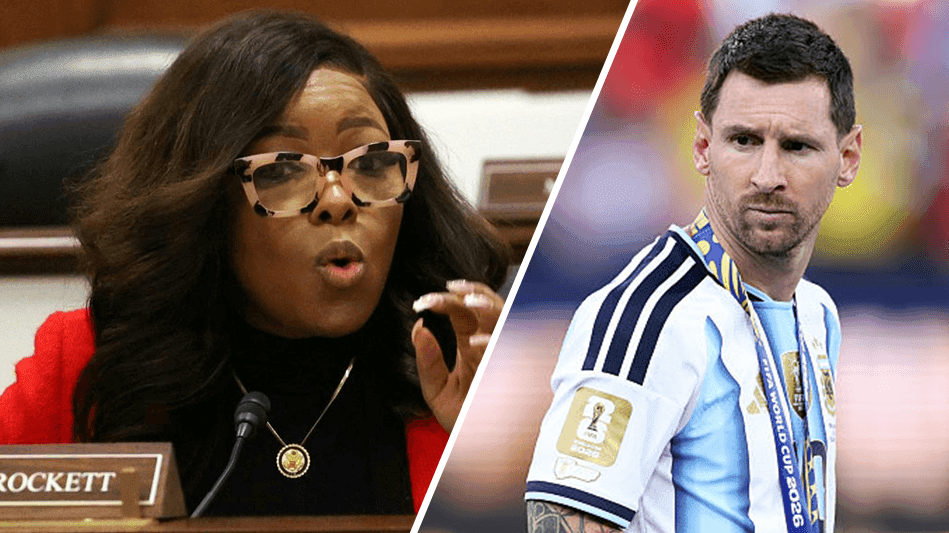
Who's to blame for the un-American ban on tailgating at the World Cup?


Parking lots may be a no-go zone for fans in World Cup host cities in the U.S. this summer.

The FIFA 2026 World Cup will see 11 U.S. cities host games, utilizing the plethora of professional-tier stadiums across the country. Several of these stadiums, however, will have a ban on the American tradition of tailgating.

'Site-specific restrictions may be imposed.'

Of the 11 cities, four are reportedly banning the pregame festivities that often enhance the fan experience ahead of events. Boston's host city committee has announced a ban at Gillette Stadium in Foxborough, Massachusetts, and a ban at New Jersey's MetLife Stadium was confirmed by local outlets.

Philadelphia's Lincoln Financial Field and Arrowhead Stadium in Kansas City, Missouri, will enforce bans, too, according to Bleacher Report and the Big Lead.

In response to the bans, a FIFA spokesman told Blaze News that the soccer organization has no formal prohibition on tailgating.

"FIFA does not have a formal policy that restricts tailgating (eating and drinking around parked cars in stadium areas)," the spokesman said.

"However, site-specific restrictions may be imposed in alignment with host city public safety authorities in certain venues based on local regulations," he added. "Additional fan information for all FIFA World Cup 2026 matches will be communicated in advance of the tournament."

RELATED: Faith, 'divine journey,' and Trump will ensure unforgettable World Cup, island nation's soccer president says

Jim McIsaac/Getty Images

With seven other U.S. venues up in the air, FIFA did not respond to requests for an exhaustive list of which stadiums are enforcing a tailgate ban.

At the same time, the White House provided the following response when asked about the bans on the American tradition:

"The FIFA 2026 World Cup will no doubt be one of the greatest and most spectacular events in the history of mankind, attracting millions of fans from around the world to 11 host cities across America," White House spokesman Davis Ingle told Blaze News.

"This will be a monumental event that requires close coordination between the Trump administration, FIFA, and all of our great federal, state, and local partners. President Trump is focused on ensuring that this is not only an incredible experience for all fans and visitors, but also the safest and most secure in history."

Parking restrictions

Not only has tailgating been banned at Gillette Stadium, dubbed "Boston Stadium" for the purpose of the tournament, but parking will be severely limited. Radio station WRKO reported that stadium parking will be reduced to just 25% capacity at 5,000, while WBZ radio noted that round-trip train tickets to Foxborough will be $80, four times the typical $20 for NFL games.

The story is the same for MetLife Stadium, where the New Jersey hosting committee says parking will be prohibited. According to NJ.com, nearby parking is already sold out at $225 per space.

Understanding the parking restrictions appears to be a case of reading between the lines.

When asked about tailgating and parking enforcement around BC Place in Vancouver, Canada — one of two Canadian World Cup venues — a committee spokesman revealed that typical stadium parking will be taken up by FIFA.

"Many parking lots immediately adjacent to BC Place Vancouver will be occupied by FIFA for stadium-specific activities for the duration of the tournament," communications manager David Harrison told Blaze News.

Similarly, a New Jersey host committee spokeswoman told NJ.com that parking would be limited at MetLife because the lots will be in use for other functions, like enhanced security and portions "dedicated to fan engagement."

RELATED: Unpaid bill has Foxboro refusing to grant license for World Cup games at Gillette Stadium

Barry Chin/The Boston Globe/Getty Images

Tailgating policy remains up in the air for the following U.S. venues: Mercedes-Benz Stadium in Atlanta; AT&T Stadium in Arlington, Texas; NRG Stadium in Houston; SoFi Stadium in Los Angeles; Hard Rock Stadium in Miami; Levi's Stadium in Santa Clara, California; and Lumen Field in Seattle.

Vancouver police told Blaze News that tailgating is not typical for their stadium, as it exists in their downtown area, but there is no designated place for fans to do so either.

Estadio Azteca, a host venue in Mexico City, did not respond to requests for comment.

Like Blaze News? Bypass the censors, sign up for our newsletters, and get stories like this direct to your inbox. Sign up here!

Faith, 'divine journey,' and Trump will ensure unforgettable World Cup, island nation's soccer president says


The soccer president from the tiny island nation of Curaçao says divine intervention has brought his team to the World Cup and, in turn, to the United States and in front of President Trump.

The executive's faith is also what has him confidently saying that everyone involved will lead with love, including the president.

'President Trump will make sure that this will be a World Cup that will not be [forgotten].'

Gilbert Martina, president of the Curaçao Football Federation, humbly avoided bragging about his hard work that turned his nation's soccer program around. Instead, he credited a long but fruitful "divine journey."

In an interview with Blaze News, Martina spoke in detail about his many run-ins with divine intervention, including his trip to the John F. Kennedy Center for the Performing Arts in Washington, D.C., in December.

There, at the World Cup draw, he sat just a few yards away from Trump and came to believe that Trump will act with love and grace to make it the biggest World Cup in history.

"We are all spiritual beings, and we have to take care of each other, and we have to globalize love," Martina passionately decreed. "And football unites. That's the slogan of FIFA. So I'm sure all stakeholders and even President Trump will make sure that this will be a World Cup that will not be [forgotten], ever, because it's the biggest on this planet."

RELATED: Unpaid bill has Foxboro refusing to grant license for World Cup games at Gillette Stadium

Your browser does not support the video tag.

Divine intervention

The former insurance director and CEO of a medical center attributed most of his accomplishments to his divine journey with spirituality and faith. This starts with daily gratefulness, prayer, and meditation before preparing for what is ahead, Martina said.

Persistently pointing to this divine journey, he said he always believed his country would qualify for the World Cup. He offered no other explanation as to how such a small nation could unite in under a year for "a greater purpose."

"With the universe, with God, with the cosmos, whatever name we want to give it," his team started "co-creating beauty," he explained. "Then the magic happens."

Martina also said there were too many instances and overlapping themes to ignore. On the very day he got the job as president of Curaçao Football Federation in April 2025, he predicted to his wife that his team would make the World Cup.

"There is no coincidence," Martina declared.

RELATED: Seattle plans World Cup 'Pride match' — and two countries that prosecute gays will play in it

ANGEL BATTA/AFP/Getty Images

Putting in the work

What the executive also explained — without giving himself the proper credit — was how he brought his country out of the Stone Age in terms of organization and formalities.

Before his election as president of Curaçao's soccer federation, the tiny country of about 150,000 had a program that was in shambles. Hotels and travel were not organized, players were not paid on time, and soccer teams within the country were at odds.

"Too much distraction," Martina said, expressing the stress of the job. "There's so much things that we had to professionalize, and so that was the focus."

He continued, "Because if they're not focused [on qualifying] ... you will have too much distraction."

After Martina became president, Curaçao went undefeated in eight matches (five wins, three ties) and qualified for the World Cup. There, the team will share Group E with Germany, the Ivory Coast, and Ecuador, with its first game against Germany on June 14.

Message for others

Martina compared his approach to life, and to a successful nation, with a hummingbird.

"A hummingbird isn't going to a garbage nest at KFC or Pizza Hut. A hummingbird always goes for the best nectar, the best flowers, because that's the best of the best," he said, mirroring advice he gives in his book, "Healthy Minds, Healthy Nation."

Martina insisted that people should strive for the best, whether it is in performance, organization, or even nutrition.

"That's a powerful message. ... When we are able to convert that into our daily life, purpose, and intention, beautiful things happen."

Like Blaze News? Bypass the censors, sign up for our newsletters, and get stories like this direct to your inbox. Sign up here!

Seattle plans World Cup 'Pride match' — then schedules two countries that prosecute gays to play in it


The city of Seattle's progressive ideology is set to clash with Islam during the FIFA World Cup next June.

Lumen Field in Seattle is scheduled to host six World Cup games in 2026, and the city's organizing committee is planning a special gay-pride game for June 26.

'The match-up of two countries where it is illegal to be gay is actually a "good thing" for the Pride Match.'

Announced in October, the committee is dubbing the game the "Seattle Pride Match" and has even procured gay art from fans through a contest meant to be used in Seattle's "citywide celebration."

However, after the World Cup draw finally happened on Friday to determine the tournament groups, the gay game is likely to run into ethical problems after it was decided who the two combatants will be.

The June 26 game will showcase a Group G matchup between two Muslim nations where homosexuality is prosecuted: The Islamic Republic of Iran and Egypt.

RELATED: 'Equality' in pay and 'everything' bar for women's sports opens in Seattle

Photograph by Fred Kfoury III/Icon Sportswire via Getty Images

In Iran, same-sex relations are criminalized, with punishments ranging from flogging to the death penalty, according to Amnesty International.

Egypt is known to use its "debauchery" laws to prosecute gay acts, and while homosexuality is not explicitly illegal, the country used anti-prostitution laws to convict a man for sending nude photos to another man on the gay-dating app Grindr in 2017, according to the Guardian.

The Seattle organizers, who are not affiliated with FIFA, said they are already preparing the area's gay businesses to prepare for the influx of fans.

"We're working with small businesses so the region's LGBTQ+-owned enterprises are ready to benefit from the tournament's unprecedented visitor surge," said Hedda McLendon, the committee's senior vice president of legacy, according to Newsweek.

Seattle also organized a committee specifically for the Pride match, calling it the Seattle Pride Match Advisory Committee. A member of that of that group, Eric Wahl, reportedly stated on social media that "the match-up of two countries where it is illegal to be gay is actually a 'good thing' for the Pride Match."

RELATED: Major League Soccer lifts ban, allows fans to display Antifa-adopted 'Iron Front' flag during games

Photo by Majid Saeedi/Getty images

The activism does not stop at gay pride for the Seattle group. It will also celebrate Juneteenth for one of the games. Juneteenth was first recognized by President Biden to celebrate the end of slavery annually on June 19.

A Group D match between the United States and Australia will take place in Seattle that day.

"Having the U.S. Team playing in Seattle on Juneteenth creates a high-visibility, high-responsibility moment to introduce hundreds of millions of viewers worldwide to Juneteenth and to create benefit for local Black-owned businesses and arts and cultural organizations," the organizers said on their website.

For that match, the group created another committee called the Juneteenth Advisory Committee.

Like Blaze News? Bypass the censors, sign up for our newsletters, and get stories like this direct to your inbox. Sign up here!

Homeland Security plays games while deportations fall flat


The Department of Homeland Security hasn’t deported nearly enough illegal aliens to justify the massive distraction and cost of providing security for the 2026 World Cup. In Secretary Kristi Noem’s own words, “the 2026 FIFA World Cup is anticipated to be the largest, most complex sporting event in the world — equivalent to a dozen Super Bowls over a single summer.”

Congress already allocated $625 million for World Cup security in Democrat-run cities, many of which fight Trump’s immigration agenda at every turn — including his effort to make those cities safer. That sum doesn’t even touch the other operational costs the administration will pick up, diverting substantial law enforcement bandwidth away from deportations.

In the absence of a serious mass deportation drive, hosting a summer-long soccer spectacle is an insult to Americans who want their country back.

Why shower these hostile jurisdictions with taxpayer dollars to celebrate a recreational export from the third world? It makes no sense. The DHS fills its feeds with memes invoking legacy America, then turns its focus from mass deportations to futbol. Add to that the wave of tourist visas that will be handed out to international fans, swelling an already absurd total of 55 million visa-holders inside the United States.

The numbers don’t add up

The Trump administration’s deportation progress remains anemic. Reliable statistics don’t exist because they aren’t being published, which runs directly against Trump’s own promises of transparency. It also mirrors the very failure senior Trump officials once blasted Biden for — refusing to release numbers.

What little we do know is piecemeal. The DHS told CNN that ICE deported nearly 200,000 people in the first seven months of Trump’s term. A senior official even boasted that put ICE “on track for its highest rate of removals in at least a decade.” But that still fell short of the administration’s stated target.

Even taking the 200,000 figure at face value, we’re still talking sub-Obama-level numbers. When Americans voted for Trump, they voted for the largest mass deportation in U.S. history. The second item on his 20 campaign promises spelled it out: millions removed from the interior, more than at any time in history.

Trump himself often invoked Dwight Eisenhower’s “Operation Wetback” as the benchmark. By most estimates, that meant removing about half of the illegal aliens in the country. Applied today, that’s roughly 10 million people — half of the often-cited 20 million total. Nothing we’ve seen so far comes close. The math just doesn’t math.

Self-deportation is a mirage

In the absence of solid deportation numbers, the administration has leaned on funky “self-deportation” estimates instead — survey-based economic studies that supposedly suggest that millions have left. The methodology is flimsy.

Worse, the DHS already has a direct way to measure: the CBP One app, which offers illegal aliens $1,000 to sign in and self-deport. Hundreds of millions have been spent promoting it. So how many have taken the payout? The DHS won’t say. And are we really to believe that “millions” of aliens supposedly self-deported while leaving free money on the table? Of course not.

The silence here tells the truth: The numbers don’t exist, which is why they aren’t public.

RELATED: Mass deportation or bust: Trump’s one shot to get it right

Photo by Emilio Flores/Anadolu via Getty Images

The wrong priorities

In the absence of a serious mass deportation drive, hosting a summer-long soccer spectacle is an insult to Americans who want their country back. Soccer remains the least American major sport, beloved mainly among non-English-speaking immigrant populations. Its popularity reflects our feckless, America-last immigration policy, not cultural confidence.

It would be both a political and operational mistake to stage a massive security mission for futbol while mass deportations continue to lag. For a DHS that has prioritized slick communications above execution, one can only imagine the hollow theatrics that will accompany this event.

If the administration starts putting commas into deportation numbers, maybe the World Cup can be tolerated. Until then, it is the wrong priority at the wrong time.

Trump: Participation in World Cup could be 'good incentive' for Russia to end war with Ukraine


President Trump thinks that allowing Russia to compete in the FIFA World Cup could work as an incentive to help bring peace with Ukraine.

Trump and FIFA President Gianni Infantino hosted the first meeting of the World Cup task force with the two fielding questions from reporters.

With the 2026 World Cup being hosted in Canada, Mexico, and the United States, each country will automatically be given a spot in the group stage.

However, apart from teams that do not qualify, Russia is banned from international soccer competitions in both Europe and the world. In fact, the Union of European Football Associations and FIFA have banned Russian teams at the club level from such international competitions, as well.

'We hope that something happens and peace will happen so that Russia can be readmitted.'

At the press conference, Trump was asked about the possible participation of Russia in the next tournament, given its ban.

"I didn't know that, is that right?" Trump said regarding the ban, as he turned toward Infantino.

"That is right. They are banned for the time being from playing," the FIFA president replied.

Trump then joked, "He is the boss, I am not the boss on that."

Infantino remarked, however, that he thought if peace could be achieved, perhaps Russia could be reinstated.

"We hope that something happens and peace will happen so that Russia can be readmitted," the Swiss executive stated in a video posted to X.

Trump added that it was a "possible" scenario that "could be a good incentive" to get Russia closer to peace talks.

"'We want to get them to stop. We want them to stop," Trump continued. "Five thousand young people a week are being killed, it's not even believable, the Russian soldiers and Ukrainian soldiers mostly, also people in towns."

"Horrible things going on over there, we are going to get that war stopped," Trump remarked.

Russia has been banned by most international sporting bodies over the war with Ukraine. Perhaps most notably, the recent 4 Nations Face-Off in hockey that featured Canada, Finland, the United States, and Sweden was a tournament that likely would have included Russia, which is widely considered the second-strongest nation in ice hockey after Canada.

Russia has also been banned from the Olympics and Paralympics, although athletes can compete under a neutral flag.

Governing bodies in volleyball, rowing, rugby, and more have levied sanctions against the country for sports.

Like Blaze News? Bypass the censors, sign up for our newsletters, and get stories like this direct to your inbox. Sign up here!