Two Americas, under Fauci, with liberty and justice for none
“Two Americas” may be the most exhausted phrase in American political discourse. We have had two Americas divided by race, class, geography, religion, education, television network, and presidential preference.
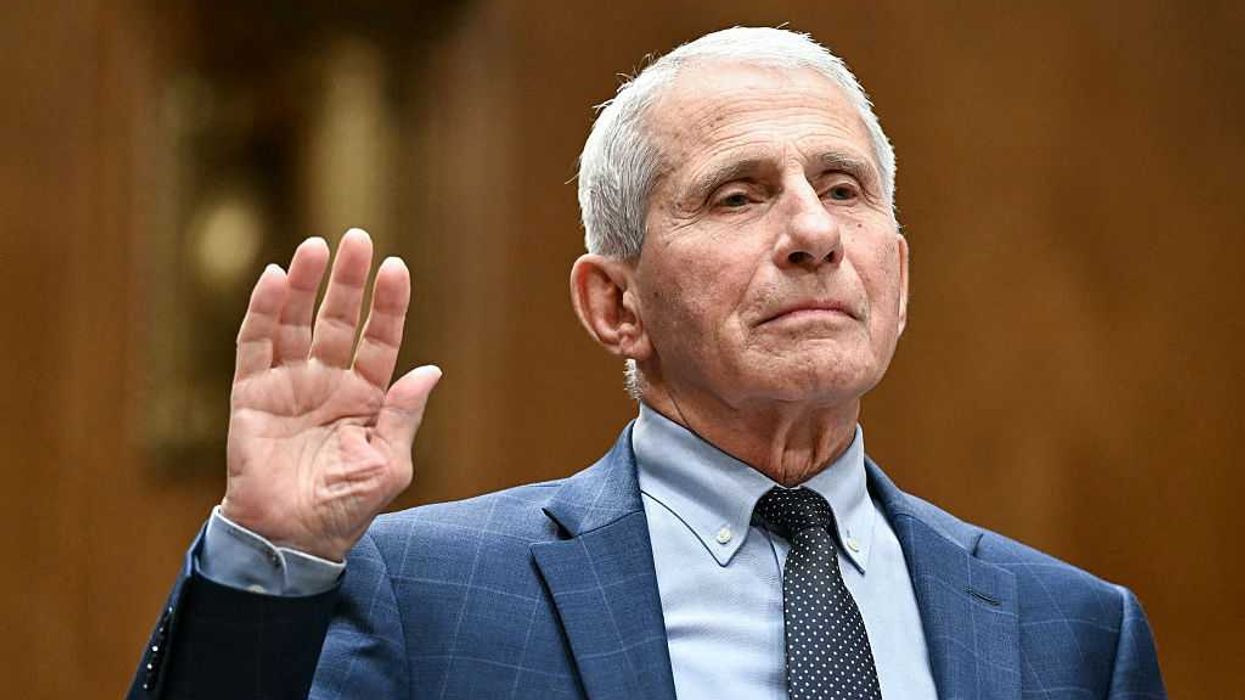
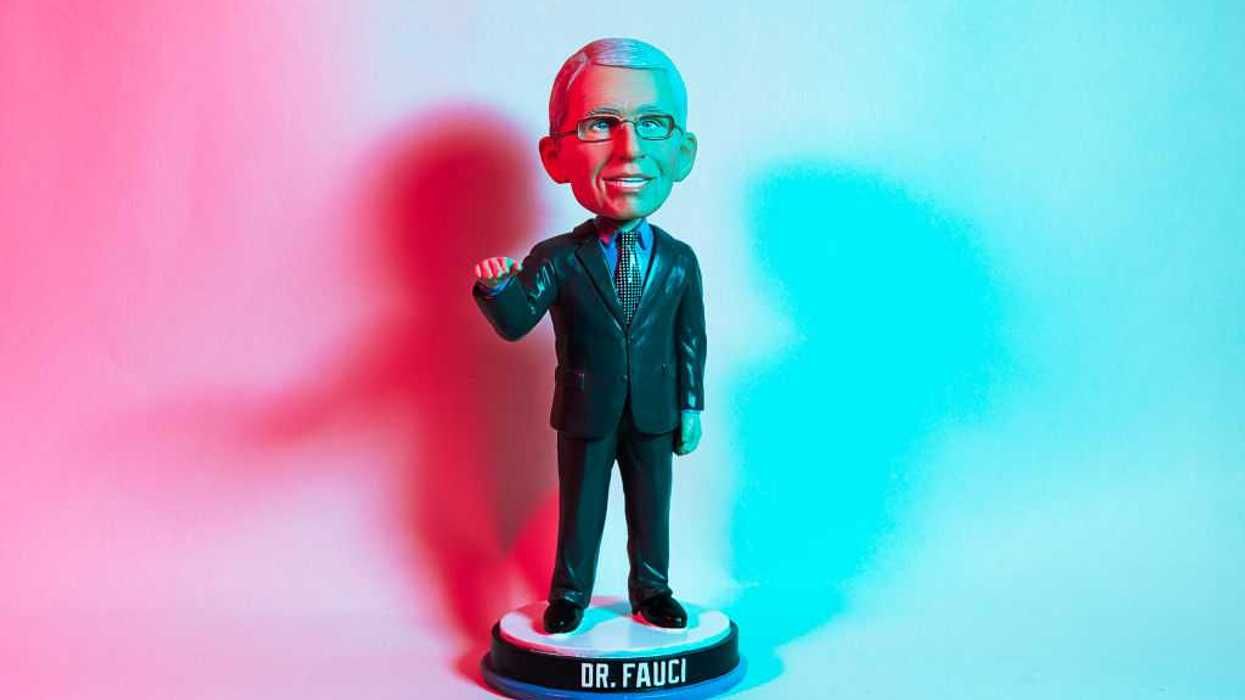
Now we have two Americas divided by Anthony Fauci.
Six years after the pandemic began, America still cannot agree on what happened, who failed, or what accountability would require.
In one, Fauci is a criminal who helped finance dangerous research, concealed what he knew about the origins of COVID-19, misled Congress, and used the authority of science to protect himself and the institutions he led from public scrutiny. That’s my America. I suspect it’s yours, too.
In the other, Fauci is a secular saint: a brave physician who guided the nation through catastrophe while enduring abuse from Donald Trump, Senator Rand Paul (R-Ky.), vaccine skeptics, and assorted right-wing maniacs like us.
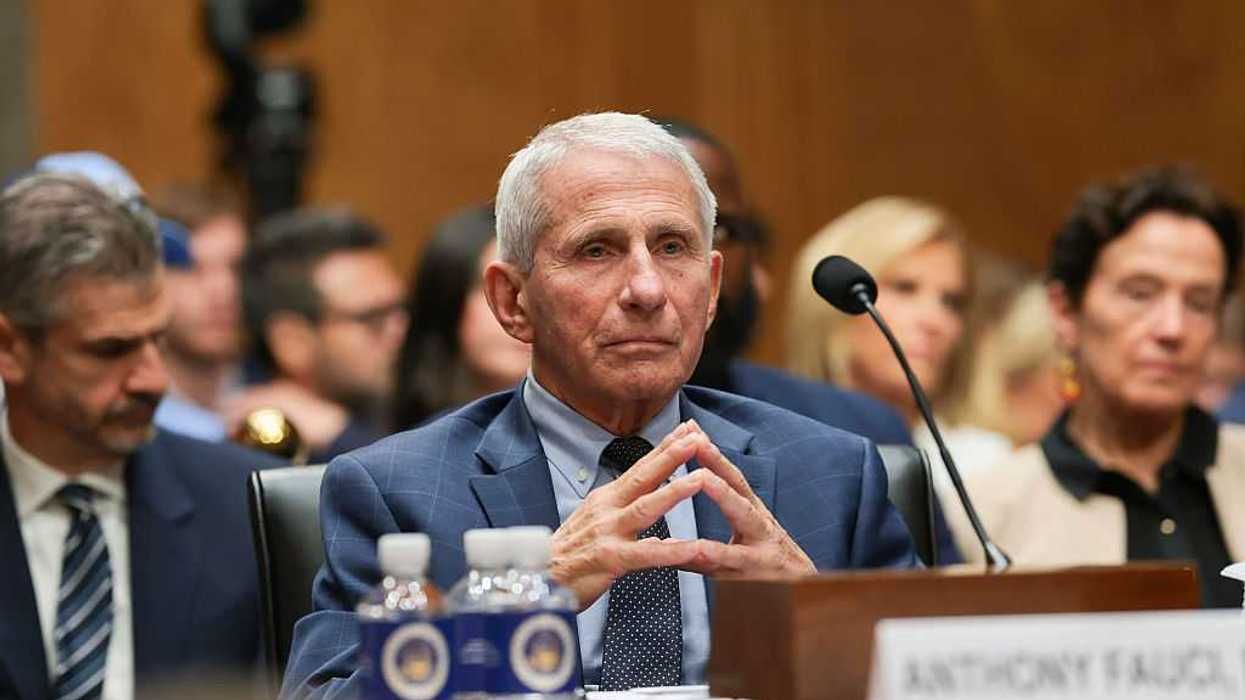
Fauci’s appearance before the Senate Homeland Security Committee on Wednesday did nothing to bridge the divide. Fauci invoked the Fifth Amendment over 100 times rather than answer questions about the pandemic and its origins. Paul responded by announcing plans to seek a contempt resolution.
One America heard a confession. The other witnessed a show trial.
Nobody changed his mind. I doubt anyone could.
Six years after the pandemic began, America still cannot agree on what happened, who failed, or what accountability would require. Some people would rather forget about the whole thing and move on. A proper reckoning would demand some agreement about which questions may be asked, what evidence would count, and what findings might alter anyone’s judgment.
We don’t even have that much.
Was the pandemic a natural disaster, a laboratory accident, a bioweapon test, or the product of scientific ambition compounded by bureaucratic negligence and ineptitude? Were school closures ever justified? How much did masks help? Which restrictions saved lives? Which merely demonstrated official power? When did caution become coercion? When did uncertainty become dogma?
RELATED: Saint Anthony Fauci’s index of forbidden questions
Even asking some of those questions still sounds incriminating to one America and deranged to the other.
I know something about the private cost of that division.
An old friend from college — my first real editor, in fact — essentially ended our friendship during the first year of the pandemic. The dispute was not over anything I had written. It was over work I had published at another publication.
One of our senior contributors was among the first writers I knew to challenge the official COVID narrative in a smart, sustained way. She questioned social distancing, masking, and the categorical dismissal of treatments such as ivermectin. My friend believed I was terribly irresponsible for continuing to publish her.
I have no regrets about doing so.
Publishing an argument is not the same as certifying every claim in it, much less demanding that readers accept it. Editors are supposed to permit serious challenges to official consensus, especially during an emergency when government claims carry extraordinary consequences.
I have spent most of my adult life in the commentary business. I make an argument. The reader judges it. If it persuades, fine. If it doesn’t, so it goes. I do not lose sleep because somebody disagrees with me. A great many people do.
That arrangement collapsed during COVID. Disagreement became evidence of moral defect. Publishing skepticism was treated not as an editorial judgment but as complicity in harm.
My friend also insisted that Trump was “100% responsible” for the disease spreading to the United States because he had failed to quarantine airline passengers arriving from China in early 2020.
His certainty struck me more than the accusation itself. One hundred percent left no room for the Chinese government, international travel, public health agencies, state officials, ordinary human behavior, or plain bad luck, let alone malice aforethought.
I tried to extend an olive branch. I suggested that we discuss it over a meal, as we had talked politics, books, ideas, and life many times during a friendship spanning more than 30 years.
He said that wouldn’t be possible because of the prevailing restrictions on social gatherings.
The policy dispute had cracked the friendship. The rule supplied the reason we could not repair the rift.
Several months later, I wrote in an email:
I have been thinking a lot about the stressors of this year and of the past few years and of the past several months especially. What I wanted to tell you is how much I value our friendship of more than 30 years. My hope is that when everything settles down, whenever that may be, you and I can sit down and have a proper conversation. I hope that history matters and I hope that goodwill prevails. And I hope you know how grateful I am to you.
He never replied.
We’ve exchanged perfunctory birthday wishes since then. That’s about all. I don’t dwell on it. But I thought of him this week now that Fauci is once again a hot topic.
I miss my friend as I miss my father, who died in 2017.
The losses are not identical, obviously. Dad can’t return. My friend could. But both men belonged to the architecture of my life. My friend knew earlier versions of me that few living people remember. He helped form the writer and editor I became.
RELATED: Reactions pour in after Fauci pleads the 5th over 100 times
COVID reportedly killed more than a million Americans (though I’m well aware that number is disputed). It also damaged and destroyed things nobody considered at the time: friendships, marriages, churches, businesses, childhoods, trust in physicians, trust in institutions, and what was left of the habit of regarding political opponents as fellow citizens capable of error rather than enemies guilty of unspeakable crimes.
No Senate committee could possibly tally those losses.
A couple of weeks ago, I had dinner with a prominent historian at the University of California. I lamented how difficult it will be for anyone to write a proper history of COVID.
“We won’t write it,” he told me. “Our kids will.”
Thirty years from now, the central figures won’t be around to defend themselves, polish their reputations, withhold documents, or dominate television. The pandemic may finally cease to function as a referendum on Trump, Biden, Fauci, vaccines, masks, and the moral worth of one’s neighbors.
The historians of 2056 may possess evidence we do not have and distance we cannot manufacture. They may uncover crimes. They may vindicate some officials now despised and condemn others now celebrated.
More likely, I suspect, they will describe institutions operating under fear and uncertainty, staffed by fallible people who confused authority with knowledge, consensus with truth, and self-protection with the public good.
A proper history will resist the comforting simplicity of saints and criminals. It will distinguish honest mistakes from deception, emergency measures from deliberate bureaucratic overreach, useful medicine from extravagant promises, and legitimate skepticism from opportunistic horse hockey.
It will also have to account for us.
Why did so many Americans become so certain? Why did we turn temporary policies into permanent judgments of character? Why did we allow disagreements over a virus to decide whom we would trust, whom we would shun, and which friendships we were willing to sacrifice?
Our children may answer those questions better than we can.
By then, maybe the two Americas will have become one country again — or at least two Americas capable of sitting down together for a meal. I’m not optimistic, but I’m hopeful.
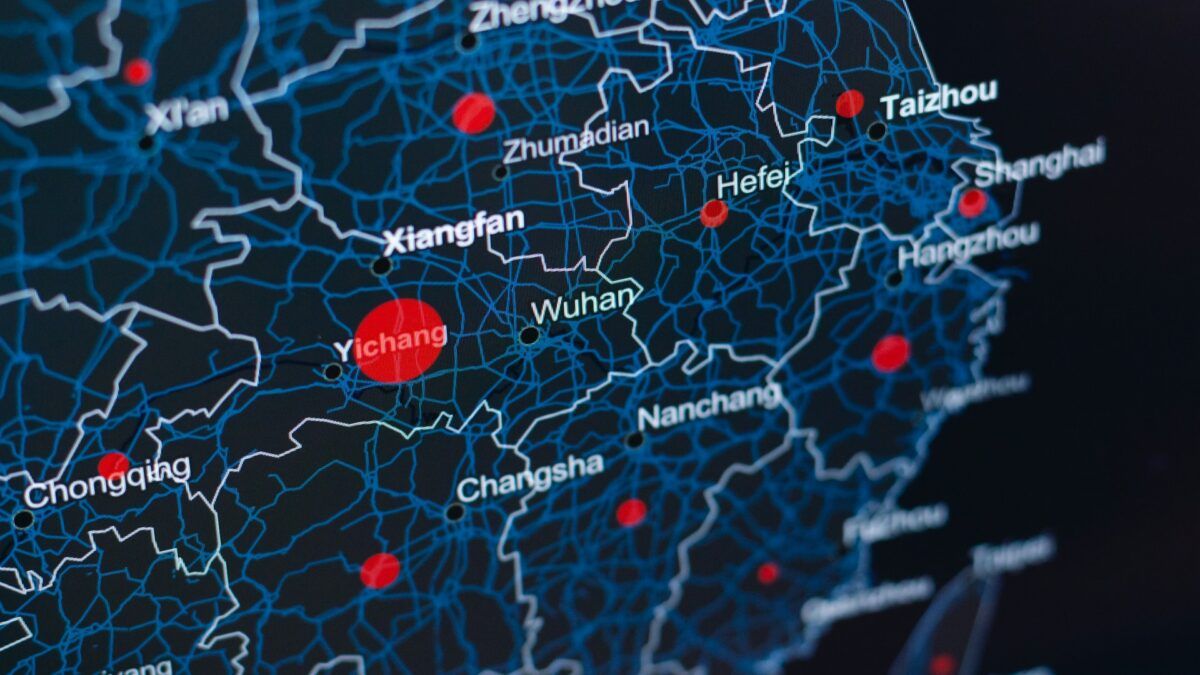 The closest point of access that we have to the Wuhan lab is Dr. Peter Daszak. DOJ needs to start asking him questions.
 Sen. Joni Ernst, R-Iowa, filed a letter Tuesday asking the DoD to release the unredacted version of the report and explain the tax-payer money that was sent to China to fund these experiments.
 www.theblaze.com
 www.theblaze.com
 www.theblaze.com
 www.theblaze.com
Rand Paul claims '15 US agencies' knew about Wuhan’s development of COVID-19 and did NOTHING
Apparently, Sen. Rand Paul (R-Ky.) did a little digging into the COVID-19 pandemic and what he found was that “15 U.S. agencies knew full well that the Wuhan lab was trying to create a virus like COVID-19 in 2018, and they did nothing,” reports Pat Gray.
“If that’s true — and certainly it is — somebody’s head needs to roll, somebody needs to go to prison over this,” he tells Jeffy, adding that “that someone is Anthony Fauci.”
“How many millions of people died because nobody said anything, nobody did anything about it?” Pat asks.
Of course, the left is “trying to blame those deaths on Donald Trump because he didn’t act supposedly the way they wanted him to,” and yet “these people did nothing” even though “they knew about [the virus’ development] the whole time.”
“These officials, according to Rand Paul, knew that the Chinese lab was proposing to create a COVID-19 like virus, and not one of them revealed that scheme to the public,” reads Pat. “In fact, 15 agencies with the knowledge of that project have continuously refused to release any information concerning this alarming and dangerous research.”
Further, “Government officials representing at least 15 federal agencies were briefed on a project proposed by Peter Daszak — Ecohealth Alliance head and the Wuhan Institute of Virology,” which “proposed to insert furin cleavage sites into a coronavirus to create a novel chimeric virus that would’ve been shockingly similar to the COVID-19 virus.”
“All technical stuff aside,” says Pat, “they knew about it, they did nothing, and nothing is going to happen to anyone — and we all know it.”
To learn more about Fauci’s likely role in the scandal, watch the clip below.
Want more from Pat Gray?
To enjoy more of Pat's biting analysis and signature wit as he restores common sense to a senseless world, subscribe to BlazeTV — the largest multi-platform network of voices who love America, defend the Constitution, and live the American dream.