At D-Day Event, Hegseth Warns Of European Beaches ‘Stormed’ By Third-World Migrants
 Hegseth said many countries in Europe 'grew comfortable' after World War II and 'forgot that peace is not wished into being.'
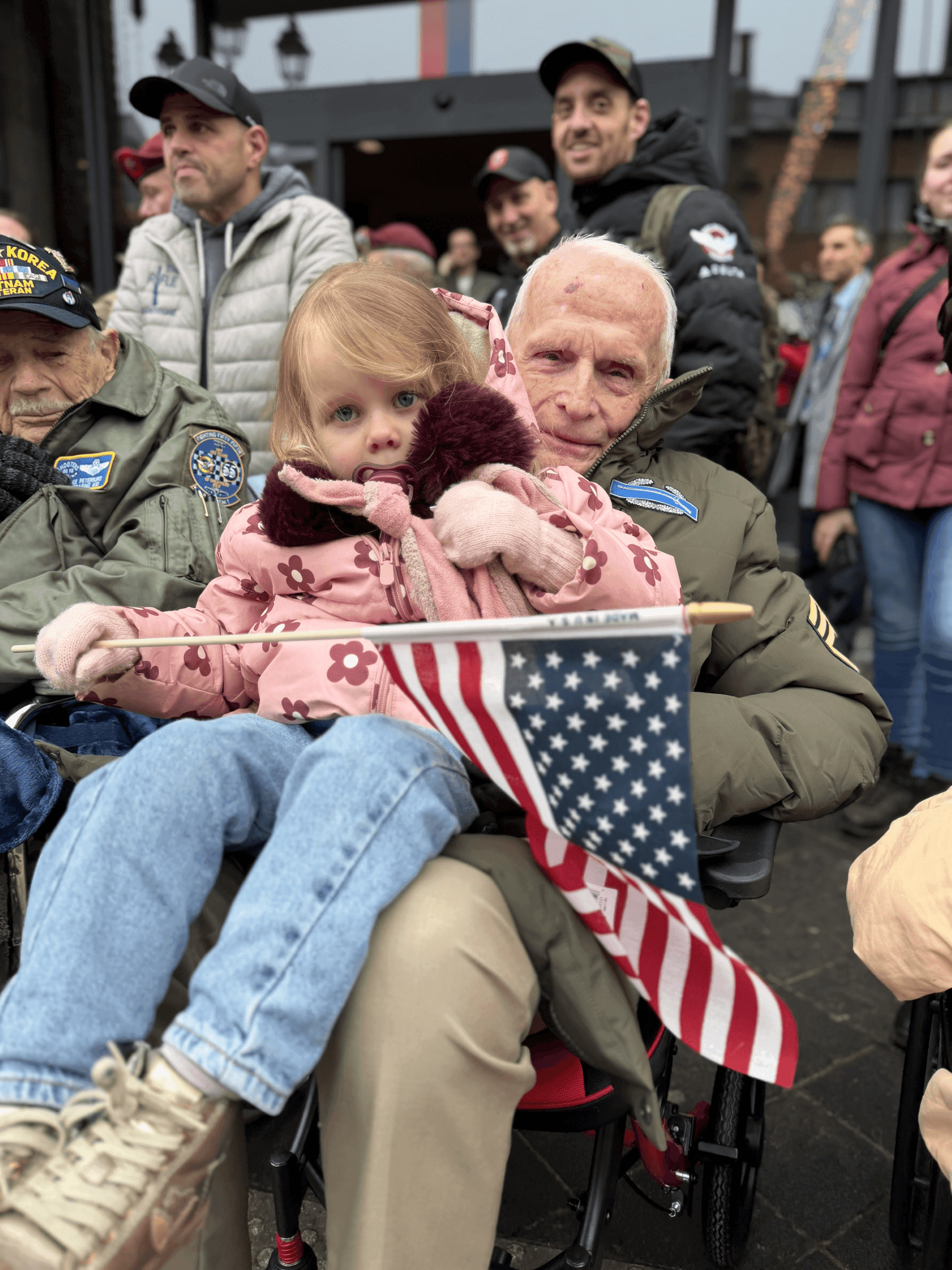
Dennis Boldt was a 19-year-old private in the Army when he landed on the shores of Normandy on June 6, 1944.
On the 80th anniversary of D-Day in 2024, the San Antonio-based organization Walk Among Heroes arranged for Boldt and several fellow World War II veterans to return to the battlefields where they had served with valor decades earlier.
'You are carrying the torch of the fallen.'
“Dennis met the president [or] leader of nearly every democratic nation, and he met Tom Hanks, Steven Spielberg, and many other celebrities," Walk Among Heroes president and founder Jeff Wells told Blaze News. "What continuously took me by surprise was the humbleness and gratefulness Dennis expressed to everyone he met. Dennis 100% could not understand why he was being treated like ‘royalty,’ in his words. They call his generation the ‘Greatest Generation’ for a reason. They are humble and truly believe they were just ‘doing their job.’”
During last year's trip, Boldt had the opportunity to visit the grave of General George S. Patton Jr. in Luxembourg American Cemetery for the first time. Boldt, who served in the Third Army under Patton, was accompanied by the late general's granddaughter Helen Patton.
“This is something I had never expected in my life,” Boldt said as he rested his hand on Patton’s gravestone, which was surrounded by flowers and American and French flags.
“I knew that I had served under him, but to be at his gravesite, with ... his granddaughter, how is this possible for me?” he stated.
RELATED: What we owe our veterans this D-Day
Boldt expressed his deep appreciation for Patton’s leadership.
“Greatest honor that ever could have been presented to me and all my other comrades — that we ... served under General Patton,” Boldt stated. “He was our leader. If it had not been for his thrust with the saber forward, we could not have made it.”
“It was our leader that led us to victory,” Boldt added.
Boldt also visited the Normandy American Cemetery for the first time, where he met with a young active-duty soldier and shared a powerful message with him.
“I thank you,” Boldt told him. “You are carrying the torch of the fallen.”
At the conclusion of his trip, he shared some warm words with Walk Among Heroes.
“I’d like to say this: I feel like an old prospector that’s out in the field looking for a fortune. And I have found it,” he said as he pointed to those around him. “You people are my second family. I want you to know that. I think of you as my brothers and sisters. What you have all done for me here has made my time here valuable beyond all words."
Boldt celebrated his 101st birthday in December.
When asked what fuels Walk Among Heroes, Wells shared that it is “our debt of gratitude for these heroes who paved the way for all us.”
“Their service and sacrifices allow us to enjoy the greatest privilege in the world — freedom. We must take advantage of every opportunity to honor them and thank them,” Wells added.
Like Blaze News? Bypass the censors, sign up for our newsletters, and get stories like this direct to your inbox. Sign up here!
After the Allied forces successfully stormed Normandy, France, on D-Day, the German army launched a 200,000-strong counteroffensive on December 18, 1944, in the Ardennes region in Eastern Belgium. The attack marked the beginning of World War II's Battle of the Bulge.
Over 700,000 Allied troops, including Lt. Gen. George S. Patton Jr.'s Third Army, were involved in the combat that lasted 41 days.
This December, Walk Among Heroes brought U.S. Army veteran John "Jack" Moran to Bastogne, Belgium, for the 81st anniversary of the start of the battle.
'To me, just seeing the reactions of the Belgian people, thanking Jack over and over again, makes it all worthwhile.'
Moran, a former Army staff sergeant and member of Patton's Third Army, joined the military at the age of 18 and fought in the Battle of the Bulge in Bastogne.
Moran shared his firsthand account with Walk Among Heroes about crossing the Rhine River, the final major natural barrier for Allied forces advancing into Nazi Germany. The effort to cross the river, known as Operation Plunder, began in March 1945.
"There's no way in the world that 142 men can do anything and keep quiet," Moran explained. "They can't. It's an impossible possibility."
"So we slowly slip our paddles into the water, start paddling out into the middle of the … river. All of the sudden, the Germans light it up, just like this room — even brighter than this room," he continued. "And here we are, sitting right there."
"They opened up on us with five heavy machine guns," Moran said. "Chopping us up badly. We lost half our men."
During the trip, Moran met Bill White, the U.S. ambassador to Belgium, who presented the WWII veteran with the Victory in Europe Medal at the 101st Airborne Museum. Walk Among Heroes reported that the crowd was “very emotional” when Moran received the medal.
RELATED: What we owe our veterans this D-Day
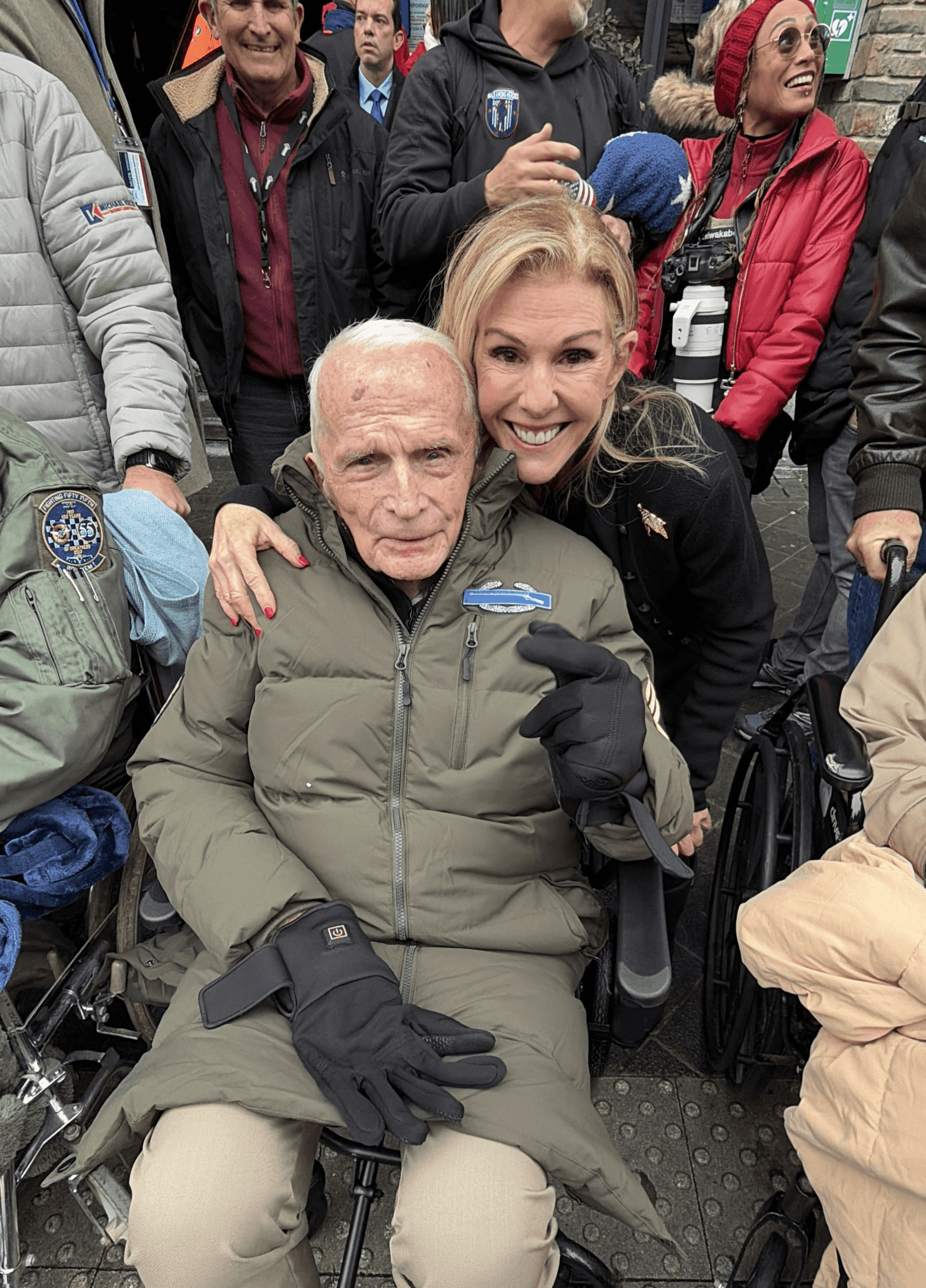
"In recognition of your military service during the Second World War, this is to certify the award of the Victory in Europe Medal to Staff Sergeant John Moran," the announcer stated.
"Your fight for freedom and democracy is in keeping with the finest traditions of military service and reflects great credit upon yourself, the 87th Infantry Division, and the United States Army."
“To me, just seeing the reactions of the Belgian people, thanking Jack over and over again, makes it all worthwhile,” Walk Among Heroes president and founder Jeff Wells told Blaze News.
Wells explained that Moran had plans to visit Patton’s grave at the Luxembourg American Cemetery. He noted that Moran would be accompanied by Patton’s granddaughter, Helen Patton.
“General Patton was Jack’s commander, so we are very excited to visit with him,” Wells said.
Like Blaze News? Bypass the censors, sign up for our newsletters, and get stories like this direct to your inbox. Sign up here!
A 101-year-old World War II veteran delivered a passionate speech about his love for America and President Donald Trump’s leadership during an event at Mar-a-Lago this week.
On Tuesday, America’s Future hosted the Second Annual Champions for America Celebration Gala to honor and recognize individuals “whose lives reflect courage, sacrifice, and unwavering commitment to faith, freedom, and service.”
'This was a reminder of who we are.'
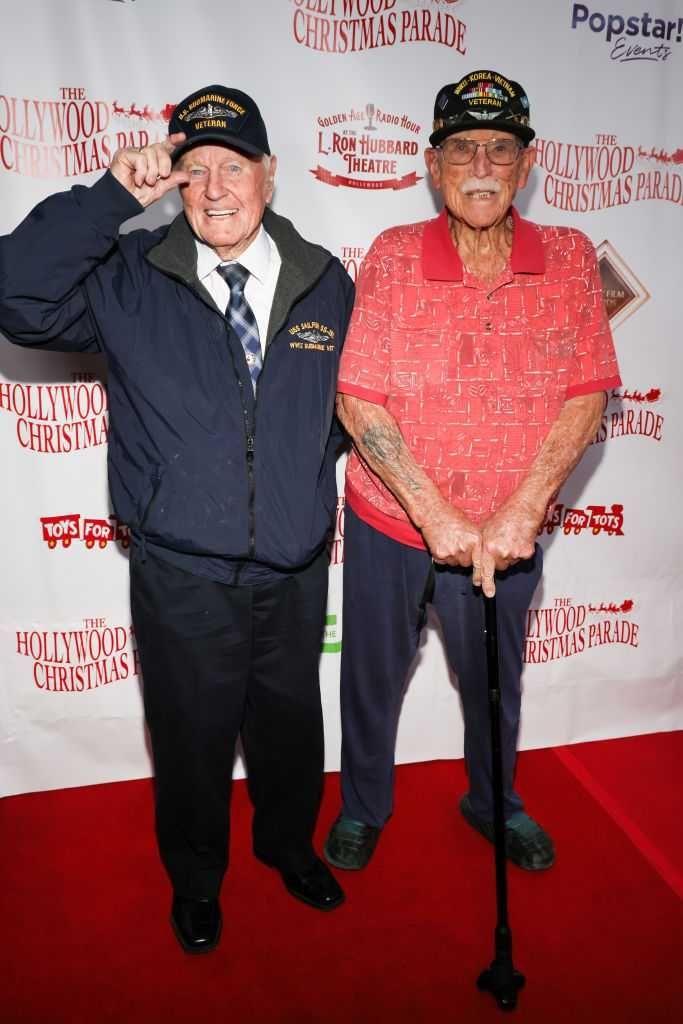
Navy veteran and Bronze Star of Valor recipient William “Bill” Dillon, who served from 1942 to 1947, shared powerful remarks with the audience.
“There’s nobody in the godd**n world who cares more for this nation than this guy that you’re looking at,” Dillon stated. “And I think Trump is not only the president of the United States; he is the president of the world.”
Dillon complimented Trump for his “fantastic job” negotiating on behalf of the country.
“I’m 101, going on 102. Godd**mit, put a uniform on me — I’ll go tomorrow!” Dillon declared.
RELATED: The families behind our veterans deserve more than once-a-year thanks

Matt Van Swol, a former nuclear scientist at the Department of Energy, stated that he had the honor of meeting Dillon at the event.
“Bill said that he has lived under 22 American presidents and that President Trump is his favorite. ... Truly a special person,” Van Swol said.
“A World War II veteran, Bronze Star of Valor recipient, submariner, and aerospace pioneer, Bill delivered an energetic, passionate speech that reminded everyone what real courage looks like. From serving aboard the USS Sailfish to helping build America’s early space program, his life reflects sacrifice, resolve, and love of country,” America’s Future said, referring to Dillon. “This was a reminder of who we are.”
RELATED: Stories Behind the Stars: On a mission to honor every American who died in WWII
America’s Future highlighted remarks from actor Isaiah Washington, human biologist Gary Brecka, author Angela Stanton-King, and General Charlie Flynn.
The organization referred to the event as an “unforgettable evening.”
“Tonight, America’s Future gathered to honor courage, faith, and conviction. Bringing together voices and leaders who refuse to stay silent when the stakes are high. From powerful remarks to heartfelt moments of recognition, this was a night that reminded us what America stands for and why the fight for her future matters," the organization wrote.
Like Blaze News? Bypass the censors, sign up for our newsletters, and get stories like this direct to your inbox. Sign up here!
The idea that Adolf Hitler was some misunderstood or even "good" figure while Winston Churchill was the real WWII villain was once confined to the extreme fringes and unknown to almost everyone else. Today, however, the idea has resurfaced with disturbing visibility — no longer limited to neo-Nazi forums but now defended or entertained on major podcasts, viral social-media threads, and platforms with tens of millions of listeners and viewers.
Glenn Beck, a lover of history and collector of historical artifacts, is appalled that this revisionist narrative is being taken seriously.
“I really don't get it. History, real history, is not a choose-your-own-adventure kind of thing. It's ink on paper, orders in filing cabinets, telegrams, diaries, bodies. It's what actually happened, not what we hope happened,” he says.
On this episode of “The Glenn Beck Program,” Glenn sets the record straight about Hitler, Churchill, and WWII.
“Let me just say this calmly, factually, and finally: Germany's plans for Poland were not reactive. They were premeditated,” he asserts.
The faulty idea pushed by Hitler rehabilitators that Britain conned the West into going to war by promising to defend Poland is easily debunked with an artifact Glenn has in his possession. “It’s called Fall Weiss,” he says. “It's Hitler's operational blueprint for the invasion of Poland, drafted in 1938, a year before [British Prime Minister Neville] Chamberlain said, ‘We're going to guarantee [Poland’s] safety."’
“Hitler's explicitly stated road map [targeted] Austria, Czechoslovakia, Poland, then the East,” he explains. “Britain didn't pull Germany into war. Germany was already marching toward war — global war.”
The second WWII fallacy that demands debunking, he says, is the idea that Hitler had “no Western ambitions” and actually wanted peace with Britain.
“Really? Because we have the paper trail again,” Glenn retorts.
“How do you explain Operation Sea Lion — Hitler's detailed plan to invade and occupy Great Britain?” he asks. “You don't draw up amphibious landing schedules across the English Channel just in case.”
But before this plot was even fathomed, Hitler had already tried to tee himself up to dominant Britain. In May 1941, Hitler’s second in command, Rudolf Hess, secretly flew a plane to Scotland with a mission of trying to make a “peace deal” with Britain. The offer, Glenn says, was this: “Let Hitler dominate Europe, and Germany would leave Britain alone.”
He had Nazi sympathizers in high British society — including the ex-King Edward VIII, who had openly praised Hitler and was willing to be put back on the throne as a Nazi puppet if Germany invaded.
“The Nazi files recovered after the war show explicit German plans to reinstall him after an occupation,” says Glenn. “Hitler was not avoiding conflict with Britain; he was planning its subversion.”
The idea that Hitler admired America and never wanted to go to war with her is another idea that easily crumbles under the weight of basic logic.
Hitler’s ideology stands in contrast in every way possible to that of the United States.
“Hitler believed the state was supreme, that the German people existed for the Reich. In America, the Constitution is supreme, and it exists to limit the states. Rights come from the furor and the government in [Nazi] Germany; in America, rights come from God, and the government is the servant, not the master,” Glenn differentiates.
“The individual in Germany: expendable. The West is built on the sanctity of the individual. Racial hierarchy is destiny in [Nazi] Germany. The West, at its best, rejects racial supremacy. The Declaration starts with ‘all men are created equal’ — not ‘some races are destined to rule.’ Nowhere in our documents does it say the state must expand endlessly,”’ he continues.
“People are arguing now that the Allies should have sided with Hitler instead of Stalin. No rational reading of history supports any of that,” says Glenn.
While “Hitler and Stalin were both monstrous,” the U.S. was forced to choose “survival.”
“The question for us was no longer, ‘Hey, which dictator is better?’ The question was, ‘Which outcome prevents Hitler from ruling all of Europe?’ Because if Hitler defeated the Soviet Union, the resources of the East — all the oil, all the grain, all the industry, all the manpower — would have made the Third Reich unstoppable,” Glenn corrects.
But even still, “We knew at the time Stalin was just as bad. We knew we were going to be in war with Stalin at some point.”
Nobody could see Stalin’s wickedness more than Winston Churchill, says Glenn. “He was the one saying, ‘We can't have this guy as an ally."’
Even still, it’s “not about defending Churchill, who I think is a hero; but it's about defending the record, the truth, so in our moment of confusion and upheaval and ideological extremism, we don't lose our footing on the bedrock of fact.”
“When we begin to question whether the West should have resisted Hitler, where are we going? When we entertain the idea that freedom and tyranny could have co-existed, you're not just rearranging interpretations; you're reopening a door millions died to close,” Glenn warns.
“Be very careful when someone tells you the villain wasn't really the villain. Woe unto him who makes evil good and good evil.”
To hear more of Glenn’s commentary, watch the video above.
To enjoy more of Glenn’s masterful storytelling, thought-provoking analysis, and uncanny ability to make sense of the chaos, subscribe to BlazeTV — the largest multi-platform network of voices who love America, defend the Constitution, and live the American dream.
Say what you will about Russell Crowe, but he has never been a run-of-the-mill actor.
At his best, he surrenders to the role. This is an artist capable of channeling the full range of human contradictions. From the haunted integrity of "The Insider" to the brute nobility of "Gladiator," Crowe once seemed to contain both sinner and saint, pugilist and philosopher.
In a time when truly commanding leading men are all but extinct, Crowe remains — carrying the weight, the wit, and the weathered grace of a bygone breed.
Then, sometime after "A Beautiful Mind," the light dimmed. The roles got smaller, the scandals bigger.
There were still flashes of brilliance — "American Gangster" with Denzel Washington, "The Nice Guys" with Ryan Gosling — proof that Crowe could still command attention when the script was worth it. But for every film that landed, two missed the mark: clumsy thrillers, lazy comedies, and a string of forgettable parts that left him without anchor or aim. His career drifted between prestige and paycheck, part self-sabotage, part Hollywood forgetting its own.
But now the grizzled sexagenarian returns with "Nuremberg" — not as a comeback cliché, but as a reminder that the finest actors are explorers of the human abyss. And Crowe, to his credit, has never been afraid to go deep.
In James Vanderbilt’s new film, the combative Kiwi plays Hermann Goering, the Nazi Reichsmarschall standing trial for his part in history’s darkest chapter. The movie centers on Goering’s psychological chess match with U.S. Army psychiatrist Douglas Kelley, who becomes both fascinated and repulsed by the man before him. Goering, with his vanity, intelligence, and theatrical self-pity, is a criminal rehearsing for immortality.
The film unfolds as a dark study of guilt and self-deception. Kelley, played with that familiar, hollow-eyed tension of Rami Malek, sets out to dissect the anatomy of evil through Goering’s mind. Yet the deeper he digs, the more he feels the ground give way beneath him — the line between witness and accomplice blurring with every exchange.
Crowe’s Goering is not the slobbering villain of old war films. He’s disturbingly human, even likeable. He jokes, he reasons, he charms. He’s a man who knows how to disarm his enemy by appearing civil — and therein lies the horror. It’s a performance steeped in Hannah Arendt’s famous concept of the “banality of evil”: the idea that great atrocities are rarely committed by psychopathic monsters but by ordinary people made monstrous — individuals who justify cruelty through bureaucracy, obedience, or ideology.
Arendt wrote those words after watching Adolf Eichmann, another Nazi functionary, defend his role in the Holocaust. She was struck not by his madness but his mildness — his desire to be seen as merely following orders. Crowe’s Goering embodies that same terrifying normalcy. He doesn’t see himself as a villain at all, but as a patriot — wronged, misunderstood, and unfairly judged. It’s his charm, not his cruelty, that unsettles.
The brilliance of Crowe’s performance is that he resists caricature. He reminds us that evil doesn’t always wear jackboots. Sometimes it smiles, smokes, and quotes Shakespeare. It’s the kind of role only a mature actor can pull off — one who has met his own demons and understands that evil seldom announces itself.
It is also, perhaps, the perfect role for a man who has spent decades wrestling with his own legend. Crowe was once Hollywood’s golden boy — rugged, brooding, every inch the leading man — but the climb was steep and the fall steeper. Fame, like empire, demands endless victories, and Crowe, ever restless, grew weary of the war.
RELATED: Father-Son Movie Bucket List
With "Nuremberg," he hasn’t returned to chase stardom but to confront something larger — the unease that hides beneath every civilized surface. Goering, after all, was no brute. He was cultured, eloquent, even magnetic — proof that wisdom offers no wall against wickedness. And in a time when truly commanding leading men are all but extinct, Crowe remains — carrying the weight, the wit, and the weathered grace of a bygone breed.
At one point in the film, Goering throws America’s own hypocrisies back at Kelley: the atomic bomb, the internment of Japanese-Americans, the collective punishment of nations. It’s a rhetorical trick, but it lands. Crowe delivers those lines with the oily confidence of a man who knows that moral purity is a myth and that self-righteousness is often evil’s most convenient disguise.
The film may not be perfect. Its pacing lags at times, and its historical framing flirts with melodrama. But Crowe’s performance cuts through the pretense like a scalpel. There’s even a dark humor in how he toys with his captors — the court jester of genocide, smirking as the world tries to comprehend him.
Crowe’s Goering is, in the end, a mirror. Not just for the psychiatrist across the table, but for us all. The machinery of horror is rarely built by fanatics, but by functionaries convinced they’re simply doing their jobs.
Crowe’s performance reminds us why acting, when done with conviction, can still rattle the soul. His Goering is maddening and mesmeric. He captures the human talent for self-delusion, the ease with which conscience can be out-argued by ambition or fear. "Nuremberg" refuses to let the audience look away. It reminds us that every civilization carries the seed of its own undoing and every human heart holds a shadow it would rather not confront.
Russell Crowe is back, tipped for another Oscar — and in an age when Hollywood produces so few films worthy of our time or our money, I, for one, hope he gets it.
September 2, 1945. The mighty battleship USS Missouri and an armada of hundreds of ships waited patiently for the end of the biggest, most destructive conflict the world had ever seen.
The American forces had been anchored in Tokyo Bay for a few days. They were surrounded by naval mines, having been carefully escorted into the port of the enemy they'd devastated with two nuclear bombs just weeks before. Many suspected it was a trap.
'This is a permanent memorial so that anybody walking up to that grave site can read their story for decades to come on their phones.'
But just after 9 a.m. local time, Japanese and American delegations met on the ship's deck to sign documents formalizing the unconditional surrender of the Empire of the Sun. The war was over.
As part of the surrender ceremony, 1,500 Allied aircraft flew in formation over Tokyo Bay as a massive show of force mere minutes after the signing. The weight of the moment was obvious to everybody involved, so much so that many Americans went out of their way to see it firsthand.
Meanwhile, the business of war continued. The 16th Bombardment Group in Guam was scheduled to participate in the flyover, but American prisoners of war were still in need of supplies. Lt. George R. Hutchison’s B-29B bomber had been grounded due to mechanical issues, and so he volunteered for a mercy mission aboard another bomber to drop goods on Osaka.
Hutchison would not live to celebrate with his fellow soldiers. Two hours into the mission, a low-speed runway crash shredded and burnt the plane, taking his life and the lives of eight others. Only three men survived.
Lt. Hutchison was one of 30 servicemen to give their lives on the day World War II ended. He would be buried in Honolulu, Hawaii, and leave behind a widow, Eleanor.
The tragic fate of Lt. Hutchison is one of nearly 78,000 stories that have been carefully preserved by Stories Behind the Stars, a volunteer group that has spent nearly a decade researching and cataloging the life stories of the hundreds of thousands of Americans who died in World War II.
Since 2016, hundreds of volunteers from across the United States and several international volunteers have collaborated to document stories like this to honor the fallen.
Drawing upon military records from Ancestry.com, headstone applications, census records, and newspaper archives, project volunteers have contributed obituary-length short essays on thousands of profiles in a publicly available database. These trained volunteers are usually able to pull together a profile in two or three hours, and many contribute hundreds per year.
Among the project’s greatest feats has been a complete catalogue of all WWII veterans at Arlington National Cemetery and Pearl Harbor’s USS Arizona Memorial, two of America’s largest memorial sites. Users can find the history of every serviceman listed at both memorials.
“When you look at flowers on a grave, they disappear after a week,” Stories Behind the Stars founder Don Milne tells Align. “This is a permanent memorial so that anybody walking up to that grave site can read their story for decades to come on their phones.”
RELATED: John J. Pinder Jr.: Baseball hero who chose greater sacrifice
Milne, a Kentucky-based bank examiner and member of the Church of Latter-day Saints, never expected the project to gain as much traction as it did; it began in 2016 as something to do on his lunch break, he tells Align.
The father of six and grandfather of 15 launched Stories Behind the Stars on the 75th anniversary of Pearl Harbor and planned to end the project with the 75th anniversary of VJ Day in 2020.
But as Milne continued at a consistent pace, writing one story per day, what began as a humble, personal blog was soon attracting millions of views. Dozens of volunteers contacted Milne, wanting to help. It quickly grew into a much larger project, one that Milne ultimately handed off to other leaders. (He remains a part-time contributor.)
“It really took off during COVID, when a lot of people were stuck in their houses,” he says. “They heard about this project and thought it was something to do while stuck in their home. And year after year, we’ve done more and more projects. We’re not professionals. We’re not getting paid to do this.”
Milne and the other volunteers soon realized they needed more help to do the project justice:
We did the math and said if we did one story per day, it would take us 1,000 years to write this many stories, but said, why one per day? Why not get more volunteers? We brainstormed and thought that if we put everything into this blogspot, nobody would know it's there, so we need to save it in a database. We reached out to Ancestry.com, which has billions of records and military records, and asked them if they would host this database for us. They agreed and put it outside their firewall, so nobody has to pay to look at these records.
The need to gather and document firsthand accounts of World War II grows more urgent with each passing day. Of the 16 million Americans who served in the global conflict, fewer than 50,000 are still alive. Most of them are in their late 90s or 100s, and it is expected that they will all be gone by 2035.
The need to memorialize those who never grew old is no less urgent — and no less daunting. Stories Behind the Stars intends to record all of the nearly half a million service members who died between 1941 and 1946 — a massive undertaking that could take decades. At its current pace, the organization anticipates having 25% of the project complete by the end of 2026.
Grassroots efforts such as Stories Behind the Stars are doubly important considering the gaps in government recordkeeping, says Milne:
There isn’t an official tally of how many people died in World War II. Our organization is probably going to find it eventually when we add up all the names by the time we’re done. But even the organization that runs the national WWII memorial in DC doesn’t know what the total is. They didn’t have computers in 1946 when they put the records together. They did their best with index cards, but they didn’t get everyone.
The project’s stable of regular volunteers includes a group of devoted veterans, retirees, and researchers, and they are always looking for more help! Even if it's just a single article, they appreciate the contributions of people who step up to tell their family’s stories as much as devotees who make a hobby out of regularly assisting.
“Visit our website, and we’ll send you information on how to volunteer!” says Milne. “We provide free training and free access to tools. There’s never any financial obligation to participate. We’re lean and mean! We just need bodies to sit at a computer.”
Stories Behind the Stars can be reached through its website and Facebook page. Check out its YouTube and completed projects pages to learn more.
 President Donald Trump called for Iran’s “unconditional surrender” on March 6. But can he do that with U.S. air power alone? The answer is likely yes — if the Iranian people themselves are also the “boots on the ground.” Air power advocates have promised decisive results since the Italian general Giulio Douhet authored “The Command […]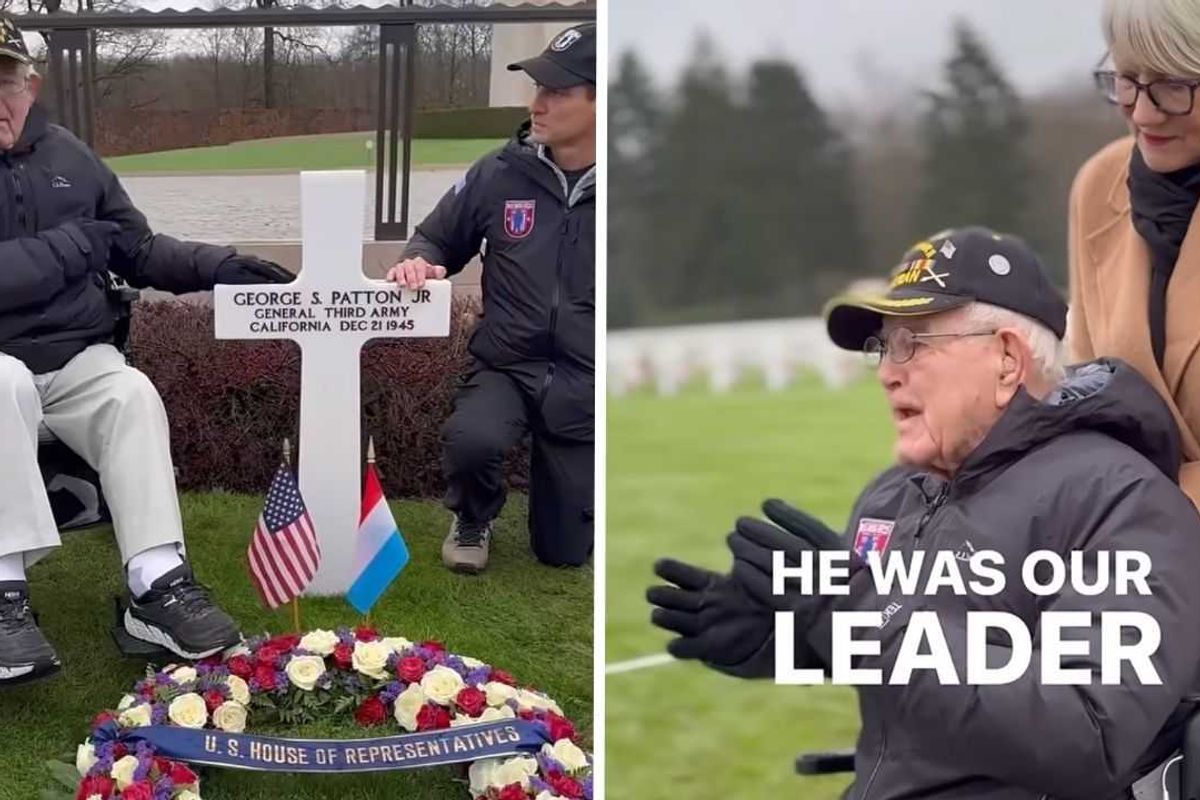





 www.theblaze.com
 www.theblaze.com