The 'red-pilled' youth: The most important issue to college-age men


BlazeTV host Liz Wheeler spent her fall season speaking at college campuses and private events across the country — and she recalls one question on the tip of every young man’s tongue.

“I started to notice this fall that there’s a pattern in the questions that I was getting asked off the record. They were questions that were very different from the questions that I was asked on the record,” Wheeler explains.

“Their question to me was asking if I knew why the Trump administration’s mass deportations were off to what appears to feel like a slow start,” she says.

And it’s not because they’re “racist,” as many on the left would accuse them of being.


“The reason why they care is because of the implications that — it's not just illegal immigration, but mass migration has had on their lives. A lot of these young men … are more conservative than the men of my generation, the Millennial generation,” she says, noting that a common label placed on these young men is “red-pilled.”

“They’re embracing traditional values a little bit more. They want to get married. They want to have children. They are more religious. They want to buy a home. They want the stability of, you know, what maybe our parents would have sought after,” she continues.

“And yet, these young men on these college campuses are facing a problem as they get their college degree thinking that they’re going to be prepared for the workforce. They’re going to be able to get a good job, have a paycheck, be able to support a wife, and provide for a family,” she adds.

These men are instead finding that they’re not able to get jobs, buy homes, or support families.

“Even if they have a decent-paying job, they’re not able to afford a down payment on a home because 25 years ago they could have bought, you know, a split-level starter home in a suburban neighborhood somewhere in the Midwest for $150,000 or $175,000, and they could afford a down payment on that,” Wheeler explains.

“But today, that same house is like $375,000, and $375,000, even if they could maybe afford the monthly payment of a mortgage for a house of that price, they cannot afford the down payment. And so they feel very helpless,” she says, pointing out that this is where immigration comes in.

“They look at these millions upon millions, tens of millions of illegals who are taking up these homes, and they realize that the demand for these homes from these illegals is part of what drives the price so high, so high that it’s unaffordable to these young men,” she continues.

And these concerns remind Wheeler of someone else.

“This is what Charlie Kirk used to do. He used to speak to these young men on college campuses and not just — he wasn’t just lecturing them. Charlie wasn’t just there to shake his finger and wag his finger and tell them why they’re wrong,” she explains.

“Charlie listened. He listened to their grievances. He listened to what these young men were experiencing. And he didn’t just listen to set himself up for, like, you know, an own-the-lib type of response,” she continues. “He listened so that he could help solve the problem.”

Want more from Liz Wheeler?

To enjoy more of Liz’s based commentary, subscribe to BlazeTV — the largest multi-platform network of voices who love America, defend the Constitution, and live the American dream.

Young, broke, and voting blue: 2025’s harsh lesson for the right


In 1992, a young Democratic strategist on the Clinton campaign named James Carville coined the now-famous phrase “it’s the economy, stupid.” He directed it to the campaign workers to ensure that they remained laser-focused on kitchen-table issues. In November's elections, voters delivered that same message, loud and clear, in New York City, Virginia, and New Jersey. The results were not surprising — even the margins were roughly in line with 2017, the last off-year elections in those localities when Trump was president.

The message was clear: Many young voters are hurting economically. Of course, the Trump administration is well aware of this. The government has been digging out of the economic disaster Joe Biden left behind. Compared to Europe and much of Asia, the U.S. is doing better, but the global macro environment is still challenging — especially for young people.

Once again and as ever: 'It’s the economy, stupid.'

This is why almost immediately after the election, the administration focused on ramping up its communication efforts on the economy. President Trump indicated an urgent need to blow up the filibuster and enact a legislative agenda commensurate with the issues young voters are facing. Trump’s approach was echoed by Vice President JD Vance, who noted, “We’re going to keep working to make a decent life affordable in this country, and that’s the metric by which we’ll ultimately be judged in 2026 and beyond.”

It is useful to do a deep dive into the 2025 election data so that we can learn what happened and how we can be ready with the right political and policy prescriptions to win the much more important midterm elections in 2026.

A coalition of the ‘falling behind’

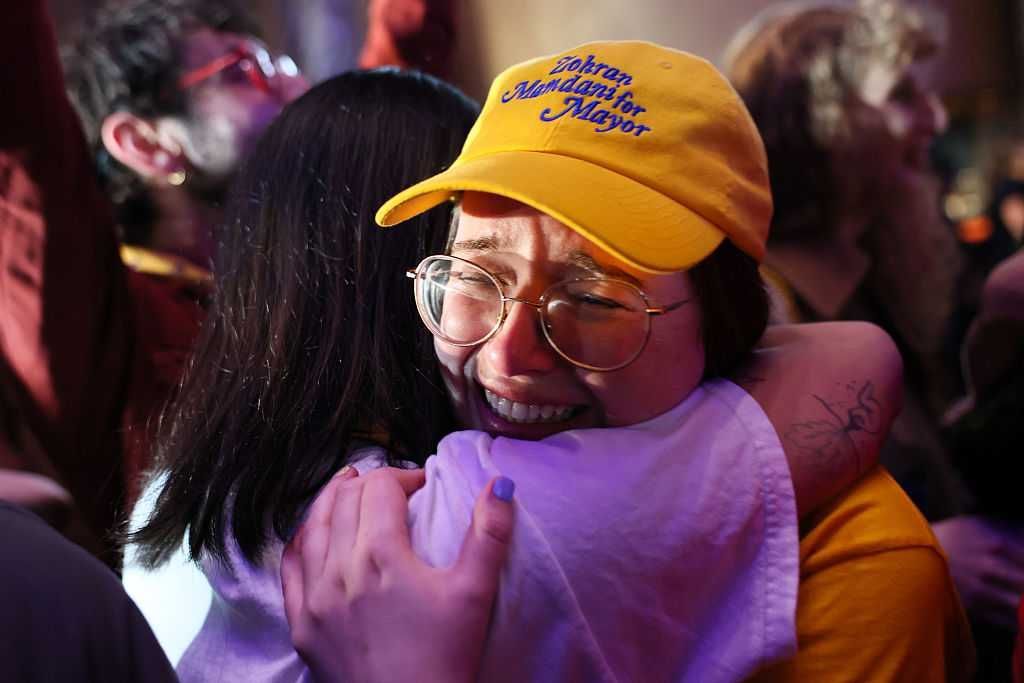
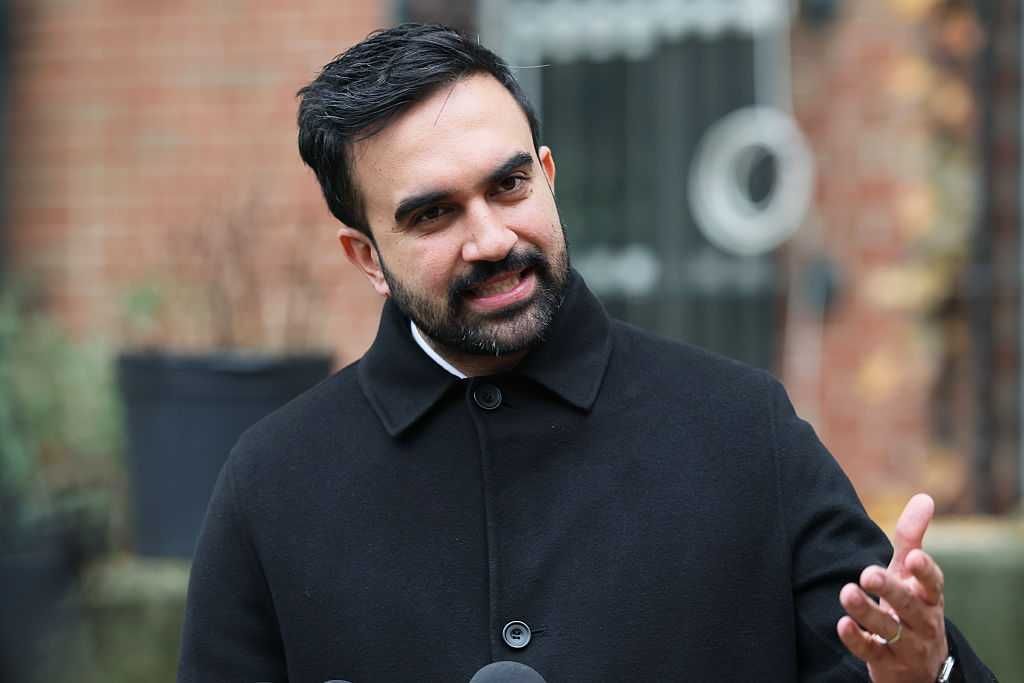
Contrary to the thinking of most political commentators, Zohran Mamdani’s win in the New York City mayoral race wasn’t about racial identity politics. I’m not saying he doesn’t believe in racial identity politics. It’s quite central to his worldview. After all, this is the guy who tweeted in 2020 that “Black + brown solidarity will overcome white supremacy.” Mamdani’s anti-Israel activities have also been well known and much remarked upon. But that’s not what led his coalition to victory on Nov. 4.

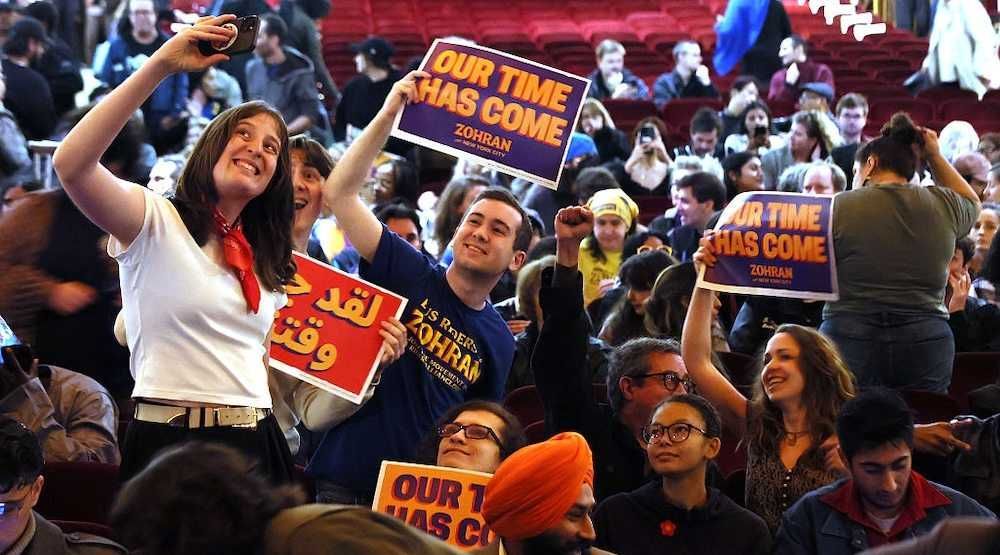
First, Mamdani’s campaign was fundamentally a youth movement. Young women ages 18-29, while a relatively small part of the electorate, gave him 81% of their support. These are staggering numbers. Overall, Mamdani won younger voters under 45 by an incredible 69%-25%, while former New York Gov. Andrew Cuomo (D) won voters over 45 by 51%-39%. Just as importantly, Mamdani actually won white voters by one point. He certainly did well with Muslims and in the South Asian community.

It’s possible that Mamdani may in fact be a Third-Worldist or Muslim supremacist, as some have alleged — but these were peripheral issues in electing him, and a look at his coalition suggests that focusing on them would fracture it.

Likewise, feelings about Israel were overblown. While it was a “major factor” in 38% of voters’ minds, it was essentially a political wash, with Mamdani losing 47%-46% among those who felt passionately about the issue. While Israel may be personally important for him, it was not a driving issue for most of his voters.

Mamdani’s coalition is spiritually and geographically rootless. While he did strongly among Muslims (presumably a significant chunk of the 14% of voters of “other religions” that he took 70% of), far more powerful was the 75% he took among the 24% of voters who claimed no religion. For those who have made politics their god, Mamdani is a comforting idol and socialism a powerful liturgy.

RELATED: Mao tried this first — New Yorkers will not like the ending

Photo by Michael M. Santiago/Getty Images

His is also a coalition of the mobile, anchored by those with shallow roots in New York — and, one might suspect, America. Mamdani dominated among newer arrivals, winning a staggering 82% among those who have lived in New York City for less than 10 years. Cuomo, meanwhile, carried the NYC-born 50%-38%, but that group comprised just 45% of the electorate. Likewise, Mamdani racked up a 59%-34% margin among renters.

The fundamental point that anchored Mamdani’s coalition was the economy: 25% of voters described themselves as democratic socialists, and he won 86% of them. And many appear to have been motivated by jealousy or frustration. He actually won 59% among those who thought the NYC economy was good, but also 59%-34% among those who felt they were personally falling behind. If you were among the one-third of voters who looked around and saw everyone else getting ahead but you, Mamdani was your candidate.

Fifty-six percent of voters said the cost of living was the most critical issue, and Mamdani won 66% of them. If he had only won these voters, Mamdani still would have come within a few percentage points of beating Cuomo (41%-37%). This is an essential message for the GOP to internalize if it wants to win back these voters at the 2026 midterms.

Of the 34% of voters who supported raising taxes, an incredible 86% were for Mamdani. But his coalition is not a working-class coalition. White voters with a degree supported Mamdani 57%-40%, while he took just 26% of white voters without a degree — a group that would have comprised eight out of ten voters in 1950 but just 14% today. Nor was it truly a coalition of the financial elite: Cuomo won 62%-33% among families earning over $300,000 per year.

Kitchen-table issues, again

While the circumstances in New York City were somewhat unique, the story in Virginia was more typical. There was a huge gender gap — which is really a marriage gap — though unfortunately, we have only the gender breakdown since pollsters, for whatever reason, didn’t ask about marital status, despite its enormous effect on women’s votes in particular. Republican Winsome Earle-Sears actually won men 51%-38%, but Abigail Spanberger crushed her among women, 65%-35%. If gender gap patterns here are similar to 2024, Spanberger took approximately 72% of single women’s votes.

Also notable is the incredible failure of tokenistic identity politics to appeal to left-wing identity groups. Earle-Sears, a black woman, took just 7% of the black vote — and, incredibly, just 3% of black women’s votes. Meanwhile, she took 61% of white men’s votes, even while losing by 14.5 points overall.

The lesson for the GOP is simple: Voters want tangible results on immigration, jobs, and affordability.

Spanberger was similarly dominant among youth, winning the under-45 vote 65%-34%, as opposed to a much narrower 53%-47% margin among the 45-and-over crowd. Similarly, we see how much the Democrats have become the party of the elite, with Spanberger winning 68%-32% among those with advanced degrees. Earle-Sears, meanwhile, won 2-1 among the one-third of Virginia voters who are white and do not have college degrees and 80% of white born-again Christians, who made up 28% of the voters.

Earle-Sears won 61%-37% among the 37% who are not affected financially by the shutdowns, while the 20% who are affected went for Spanberger 82%-18%. If you look at those Virginia voters who are only a little or not at all financially affected by federal cuts, Spanberger eked out only the narrowest victory over Earle-Sears. Almost her entire positive margin came from those 20% of voters who are substantially financially affected by federal job cuts. This illustrates in dramatic fashion how much Virginia has become a company town for the federal government, with politics that reflect that fact.

By a 58%-40% margin, Virginians said that the economy was good, but Spanberger won among the 23% who felt they were falling behind, by a 76%-24% margin. Again, we see that those who are unhappy with their place in the current economy went overwhelmingly for the Democrats.

Spanberger also won on kitchen-table issues. Among the 48% who felt the economy was the most important issue, she won 63% to 36%. And among the 21% who said health care was the most important issue, she won an incredible 81% to 18%.

By contrast, Earle-Sears had only a narrow advantage (50%-47%) on the transgender issue despite having made men in women’s or girls’ bathrooms and similar matters a centerpiece of her campaign. While it’s very likely that particular issue had a larger gap when related to men in women’s locker rooms than transgenderism as a whole, as insane as transgenderism is to most Republicans, it does not trump the economy for most swing voters.

RELATED: Accountability or bust: Trump’s second term test

Photo by Anna Moneymaker/Getty Images

Carville’s maxim

In New Jersey, once again, we saw economic anxieties come to the fore. Like New York, most people in the Garden State said the economy was not good. But they did not blame the extended period of Democrat governance, including a two-term Democrat governor. Instead, they blamed the Republicans who have been in power for less than a year. Indeed, among the 24% of voters who felt they were economically falling behind, they went 69%-31% for Democrat Mikie Sherrill.

GOP candidate Jack Ciattarelli barely won white voters, 52%-47%, while 68% of Latinos and 82% of Asian Americans voted for Sherrill. For both Spanberger and Sherrill, the Democrats were gifted with almost ideal candidates — experienced, elected congresswomen — given their potential coalition: relatively moderate, affluent white women who could deliver enough red meat to their minority base to turn out most of them while feeling very safe for moderate white suburbanites. Notably, both Sherrill, a Naval Academy graduate and veteran, and Spanberger, a former CIA officer, are married suburban moms, which makes it hard for your average independent voter to portray them as unpatriotic.

One encouraging point was that these results may say less about Republicans and Democrats than one might think. Among a much more Democrat-skewed electorate than in 2024, party favorability for the GOP in New Jersey was only five points under water (46%-51%), while the Democrats (49%-48%) were barely viewed favorably. But a staggering 23% of those with a somewhat favorable view of the Republican Party voted for Sherrill, speaking to her ability to win independent voters.

The GOP retained some gains it made among Hispanic voters in 2024, but overall, 18% of Hispanic voters who voted GOP in 2024 switched to the Democrats in this election. This still represented a significant gain in Hispanic votes for the GOP compared to the last governor’s race in 2021, but it was not enough to keep the race close.

A silver lining

One bright spot from the exit polls after a tough evening for the GOP is that immigration remains a solid issue for Republicans, even with Democrat intransigence. The Trump administration’s aggressive actions haven’t soured voters. Winsome Earle-Sears won 88% among those who considered immigration the most critical issue in Virginia (unfortunately, only 11% of the electorate). Jack Ciattarelli won 72% among voters who cared most about immigration (but again, just 7%).

The economy is the dominant issue, which is why it’s essential to spend more time talking about deporting illegal aliens as a kitchen-table issue that frees up jobs and housing for citizens, while reducing the tax burden on social services.

In each of these constituencies — New York City, Virginia, and New Jersey — Trump’s immigration policies were more opposed than supported. But these are all liberal constituencies in a Democrat wave election. If Trump’s policies polled this well among these constituencies during this election, they still retain solid popular support nationwide.

In New Jersey, 47% said the next governor should cooperate with the president on immigration, versus 49% who said she should not, a virtual tie in a state where the GOP gubernatorial candidate lost by 13 points. By a 15-point margin, Virginians opposed Trump’s immigration policies, identical to the gap in the governor’s race. Even in NYC, 34% of voters wanted the city to cooperate with the Trump administration on immigration enforcement, versus 61% opposed. That 34% number is several points higher than the 30% Trump won in the city in 2024, which represented the highest vote total for a GOP candidate in NYC since 1988.

The lesson for the GOP is simple: Voters want tangible results on immigration, jobs, and affordability. Recent polling suggests that these are the top three issues for 60% of low-propensity voters. If the GOP delivers on these points, it can have a great 2026 midterm election. If not, 2026 will look a lot like 2025.

Once again and as ever: “It’s the economy, stupid.”

Editor’s note: A version of this article appeared originally at the American Mind.

Mamdani’s Vast Support Among The College-Educated Tells Us All We Need to Know About Higher Ed

New York City’s election suggests that higher education must undergo significant changes to prevent socialism from taking over America.

Explaining Mamdani’s appeal to the young, with polling


It’s a sad week for the de facto capital of the world, New York City. The epicenter of American finance, media, and dynamism now enters a self-imposed trajectory of decline.

But those of us on the populist right should not merely shake our heads and bemoan the extremism of Zohran Mamdani, frightening though it is. Instead, we must understand his appeal, so that we might effectively counter his un-American ideas and continue to build on our 2024 triumph by earning further big gains nationally among young voters.

We have much to learn from Mamdani, even though he is a dangerous Marxist. Establishment Republicans have no effective answer to this kind of populism.

Polling shows the pathway to that success.

First, the great news. Young voters have swung massively to the right over the last three presidential election cycles. President Trump won young men in 2024, and overall, voters 35 and under shifted materially from a +37% preference for the Democrats in 2016 to only a +13% preference in 2024, cutting the young adult margin by two-thirds in just over eight years. It represents a massive macro shift.

In addition, a new national poll of 2,100 voters ages 18-25 shows a substantial rejection of Democrats’ radicalism on key social issues, especially transgenderism and free speech. Simultaneously, young voters express extreme frustration with the current economy, creating a clear opening that Mamdani drove a campaign truck right through.

So, backed by data, here are the three lanes of success that Mamdani exploited.

‘Affordability’ is key

Even though all of his Marxist answers are wrong and immoral, Zohran is laser-focused on the issue that matters most to voters, especially younger ones. Most young citizens have not benefited from the massive run-up in asset prices in recent years. Without substantial holdings of equities or real estate, they struggle to afford the staples of life amid sky-high costs. Even worse, the job market got substantially tougher for young adults, adding even more angst.

These voters correctly blamed the Democrats for the pain of Bidenomics, but that anger has now shifted over to Republicans, fair or not.

Right now, per TIPP Insights polling, only 24% of young adults rate Trump’s performance on the economy as “good” or “excellent,” while 54% rate it as “poor” or “unacceptable.” On inflation, using letter grades, only 6% of young independents give the president an A, while 44% deliver an F.

Mamdani smartly dove into this issue. All his proposed solutions will only make inflation worse, of course, from “free” public transit to lavish benefits for illegal aliens. But regardless, he fixated on what matters to voters, especially young ones.

Media skills

After watching Mamdani throughout the campaign, it’s clear he hates the founding principles and history of the United States. He exemplifies how America’s immigration system — even its lawful pathways — too often imports people who reject the nation’s heritage rather than embrace it.

That said, as a media professional, I can only respect his acumen in front of the cameras.

In this new digital age, which President Trump helped create, successful politicians must be able to perform effectively. Mamdani exudes charisma and likeability. His youth and enthusiasm captivated voters, especially those in the streaming/TikTok spaces.

Media savvy combined with lots of ludicrous promises of freebies is a pretty powerful approach in this populist age. Young people are especially receptive to the heavy use of new/alternative media. TIPP Insights shows that only 31% of independent young adults have positive sentiment for legacy media, and only 34% of young women.

Focus on home

Perhaps the most compelling moment of the campaign for Mamdani was during the July debate, when all candidates were asked where their first foreign visit would be as mayor of New York. All of them said Israel, with Ukraine thrown in as well. But Mamdani gave a truly “New York First” answer instead, one that might well have been uttered by a MAGA partisan. He said, “I would stay in New York City.”

That answer clearly appeals to young voters, who are decidedly non-interventionist abroad. For example, a whopping 69% of young men think we “intervene too much in foreign conflicts.” Only 26% of young adults think the United States should remain involved in Ukraine if Putin and Zelenskyy cannot reach a settlement soon.

RELATED: The kids aren’t all right — they’re being seduced by socialism

Photo by Michael M. Santiago/Getty Images

That non-interventionism seeps over into a very negative view of Israel among young voters. Survey results found that only 25% of them have a positive view of Israel, versus 52% negative. Among young independents, only 18% have a positive view of Israel.

Therefore, Mamdani probably did not generate the blowback he deserved for extremist postures, such as embracing a pro-terror jihadi who was implicated, but unindicted, in the 1993 World Trade Center bombings.

We have much to learn from Mamdani, even though he is a dangerous Marxist. Establishment Republicans have no effective answer to this kind of populism, because their default is always “cut taxes for the wealthy and go to war.”

The MAGA movement has a very different vision — one that can appeal to reasonable young people in increasing numbers — to continue this patriotic, populist surge for decades to come.

Editor’s note: This article was originally published by RealClearPolitics and made available via RealClearWire.

Democrats Have Become The Party Of Grumpy Elderly People

No kings? More like no young people. On Saturday, several so-called “No Kings” protests took place across the country. The protests looked more like an AARP meeting, with NBC Boston perhaps encapsulating the state of the protests best: “This is an older crowd … A lot of white hair. You see Q-Tips as we used […]
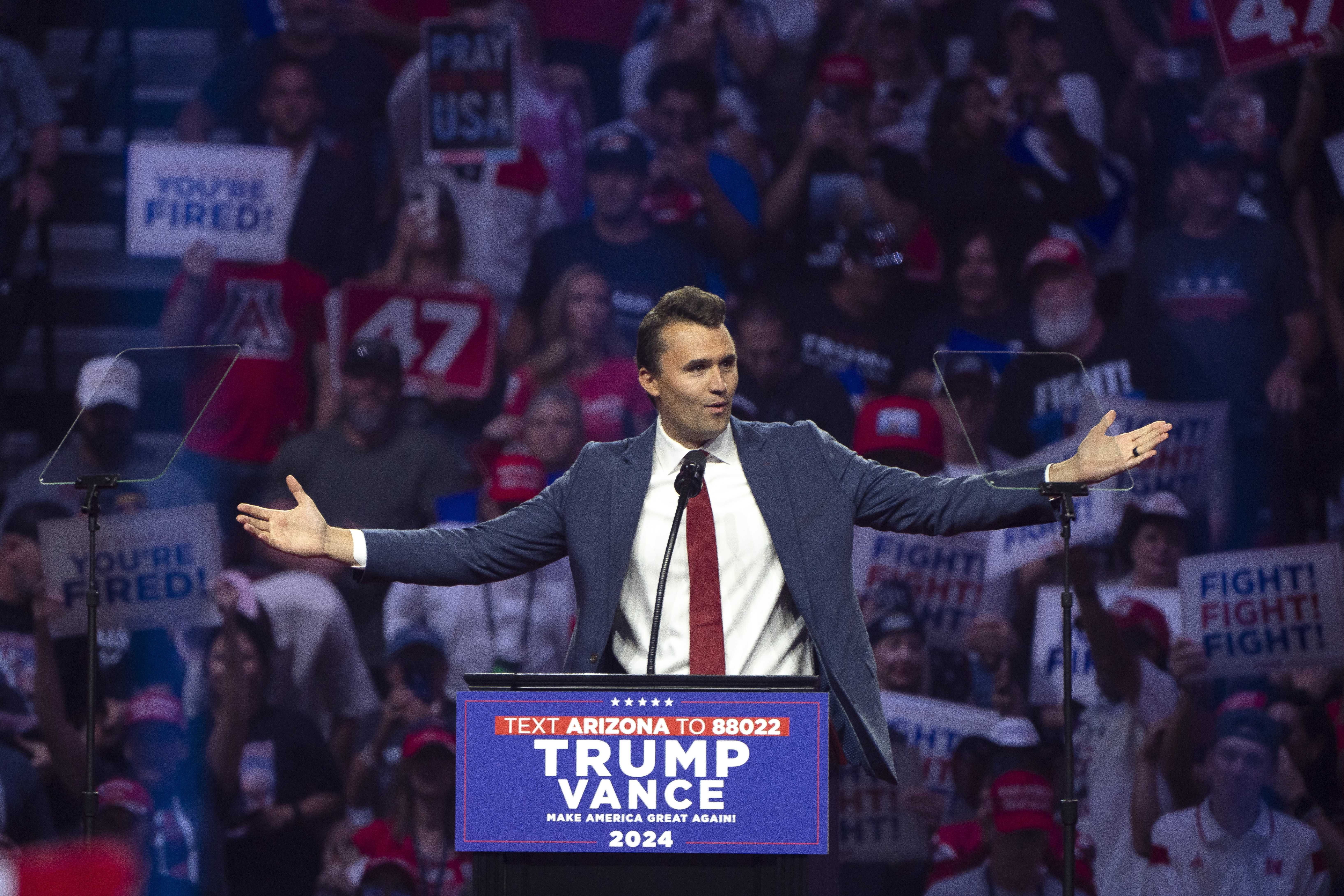
Trump honors Charlie Kirk with highest civilian honor: 'You have given him the best birthday gift'


President Donald Trump posthumously awarded Charlie Kirk the highest civilian honor following his horrific assassination on a college campus in September.

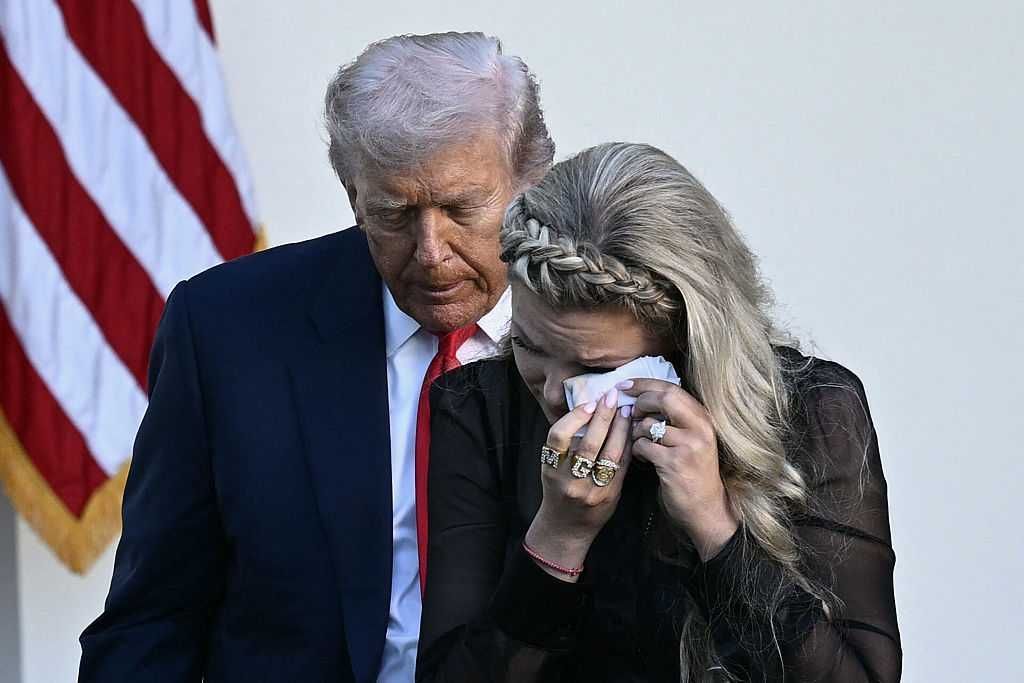
Trump honored Kirk with the Presidential Medal of Freedom on Tuesday, the day that would have been the conservative activist's 32nd birthday. Erika Kirk, Charlie's widow, accepted the award at the White House Tuesday afternoon on his behalf.

'You have given him the best birthday gift he could ever have.'

"Five weeks ago, our nation was robbed of this extraordinary champion," Trump said during the address.

"It was a horrible, heinous, demonic act of murder," Trump added. "He was assassinated in the prime of his life for boldly speaking the truth. ... He loved this country. And that's why, this afternoon, it's my privilege to posthumously award Charles James Kirk our nation's highest civilian honor, the Presidential Medal of Freedom."

RELATED: Dozens of 'morally bankrupt' Democrats vote against condemning Charlie Kirk's assassination

Photo by Rebecca Noble/Getty Images

Erika also addressed the crowd, which was packed with friends and former colleagues of Kirk's, including Blaze Media's own Glenn Beck. Through tears, Erika remembered her late husband and expressed gratitude to the president and his administration.

"I have spent seven and a half years trying to find the perfect birthday gift for Charlie. ... But now I can say with confidence, Mr. President, that you have given him the best birthday gift he could ever have," Erika said.

Erika also shared her optimistic vision for the future, encouraging younger generations to carry on Kirk's legacy.

"You are the heartbeat of this future and this movement. ... You’re living proof that his mission did not die with him," Erika said.

RELATED: Democrats feign outrage as Trump administration shutdown layoffs hit: 'They seem to be enjoying it'

Photo by BRENDAN SMIALOWSKI/AFP via Getty Images

Kirk was horrifically assassinated on the Utah Valley University campus on September 10 on the first stop of his highly anticipated college campus tour. Kirk, who founded Turning Point USA, has frequently been credited with swaying the election in Trump's favor in 2024 because of his gift of coalition-building with demographics that don't traditionally vote red, particularly with young voters.

"We won more young people than any Republican candidate in the history of our country, including, for the first time, a majority of males under 30. Can you believe it?" Trump said during Kirk's memorial service.

"We did unbelievably with young people, and he was a big, big factor," Trump said of Kirk. "Unbelievable. But he made me work for it. ... But we did it, and we won."

Like Blaze News? Bypass the censors, sign up for our newsletters, and get stories like this direct to your inbox. Sign up here!

Young adults have shifted dramatically toward Republicans in just 2 years, Pew polling shows


The Republican Party has enjoyed massive gains among young Americans over the span of about 21 months, according to recent polling conducted by Pew Research.

According to surveys of registered voters in August 2023, men and women in categories ranging from 18 years old all the way up to 49 years old favored Democrats.

In fact, the only two categories that leaned Republican at that time were 50-to-64-year-old males (57%) and over-65-year-old males (59%).

As of June 2025, however, young American adults have swung in the other direction en masse.

'Interesting to see the "you get more conservative as you get older" trope dying.'

The 2025 polling by Pew Research of U.S. adults, which cited the 2023 data directly below it, showed massive gains for the Republican Party, specifically among younger demographics.

For example, males ages 18-29 went from 62% in favor of Democrats to 52% in favor of Republicans.

For women of that same age group, seven more percentage points went to the Republicans, whose support rose from 30% in 2023 to 37% in 2025.

Democrats did widen a gap when it comes to women ages 30-49, though, but not through their own doing. Support for Republicans in that category dropped from 42% in 2023 to 39% in 2025.

RELATED: Democrat offers bizarre spin on imploding support for his party — and he's getting amazing backlash

An interesting figure included in the polling is the percentage of respondents who said they had no political leanings or refused to answer.

For the youngest demographic, that number was 13%. The other demographics averaged between 7% and 8%.

Looking at party affiliation categorized by the decade in which Americans were born, those born between 1940 and 1980 have remained in a near 50-50 split of support for Democrats and Republicans from 2021 to 2025.

For those born after 1980, the changes have been significant.

In 2021, while 57% of those born in the 1980s identified as Democrats, that number is now 47% in 2025.

For those born in the 1990s, 59% identified as Democrat in 2021, but that number is now down to 46%.

RELATED: No country for angry young men

Photo by Probal Rashid/LightRocket via Getty Images

In response to the data, users on X shared interesting perspectives, like, "Interesting to see the 'you get more conservative as you get older' trope dying."

Another account posted, "18-29 year old men are more right wing than male Boomers[.] Did NOT expect to see that."

A tech and financial account with over 40,000 followers added that he felt it was "sad" that a younger generation is being relied on to "clean things up" after the Boomer generation "completely destroyed their birthright."

Popular conservative commentator John Doyle offered a unique explanation as to why young Americans have shifted away from Democratic politics.

Doyle told Blaze News, "We just wanted to play our video games. This is for raping the Joker and killing Hulk Hogan."

Like Blaze News? Bypass the censors, sign up for our newsletters, and get stories like this direct to your inbox. Sign up here!

College-Aged Americans Now Favor GOP Over Dems, Yale Youth Poll Shows

'Politicians often promise things to young voters'