Gen Z isn't soft — and older generations need to cut Zoomers a break


Gen Z gets a bad rap. Various members of older generations have painted them as weak, neurotic, helpless, and fragile. This is as simplistic as it is insulting. While these negative characteristics appear in most generations, Zoomers are not especially prone to them, and they are certainly not the wilting flowers that most of their critics insist they are.

Take, for instance, a news story that will not die.

Zoomers are honest, far more stable than we older generations will admit, and have a unique tenderness of spirit, which is astonishing, considering the timeline they’ve grown up in.

In October 2022, the Daily Mail ran “Gen-Zers say they feel attacked whenever they see a 'passive aggressive' thumbs-up emoji” and the New York Post: “Gen Z canceled the 'hostile' thumbs-up emoji and wants to ban these 9 others.”

Psychology Today even hopped onto the pile, with an overly thoughtful examination of the question, “What's So Wrong About Using the Thumbs-Up Emoji?”

Last month, the story reappeared. It mostly rattled around the buzzier spaces of the internet, but the Independent published an editorial titled “The thumbs-up emoji isn’t passive-aggressive – Gen Z need to get over it.”

“Get over it” can be such an ironic phrase. In this case, the people who need to get over it are the ones using the words “get over it,” where “it” denotes a weird, accusatory obsession with an entire generation being accused of obsessive weirdness.

I would guess that a fresh batch of “thumb emoji Gen Z” articles will appear two years from now.

Of course, there have also been plenty of more considerate takes, mostly from the highbrow outlets that are otherwise intolerable. This editorial by the Washington Post, “Gen Z’s new punctuation,” looks at the “major transformation in which emojis young people use to communicate humor.”

Maybe emojis are only for us old people, a kind of modern hieroglyphs. There are generational differentiations in the realm of emojis.

Other sources — myself included — prefer to see emojis as an advancement in the power of words. The thumbs-up emoji is, after all, now a legally binding signature in Canada. Now, admittedly, I’m often unsure what they’re saying. But it’s because I avoid learning their slang, as a kind of respect. Which also means that I could fundamentally misunderstand the character of the generation. What if they really don’t like the thumbs-up emoji? How would their movement affect the world?

The burden of proof would rest on them. They would have to convince greater society to abandon the thumbs-up emoji for the sake of a more peaceful society. Or they would swallow the annoyance and make a joke about it.

We've all experienced a strange and nagging habit unique to a previous generation. A few of these rankle us, even if it’s unclear why. Maybe something about the specific mannerisms or customs seems rude to us.

By the way, these annoyances can lead to positive change in society. Minutiae of this sort can become the glue that fortifies a generation, even an entire zeitgeist. But it can also become the giant clown shoes on the generation’s state fair caricature. So even if Gen Z were outraged by the sight of emoji thumbs, Zoomers would be no different from us and our own eccentric dislikes and hang-ups. But that’s not even the case. So I’ll take them at their word that the “Gen Z triggered by thumbs-up emoji” narrative is contrived.

Zoomers are honest, far more stable than we older generations will admit, and have a unique tenderness of spirit, which is astonishing, considering the timeline they’ve grown up in. Because of COVID-19 restrictions, they missed proms, graduations, freshman parties, and classrooms; they were forced into isolation instead. They have a warped sense of normalcy.

They’ve handled it well.

What I see in them is the next generation of Americans following roughly the same path as the wild young folks who preceded them. This revelation ought to transform cacti into daisies. It should fall on Millennials, Gen Xers, and Boomers like a cartoon anvil. Zoomers are working hard right now. And they won’t comply with some of the social assumptions we mistook for mandates. We haven’t even gotten to see their unique inventions yet, only glimpses. Now, if you’ll excuse me, I’ve got some participation trophies to polish.
Want to know the reality of Gen Z entering the workforce? These viral videos tell all


Generation Z, or “Zoomers,” are all grown up now.

Well, they’re grown up in the literal sense; as far as maturity goes, many of them are lagging far behind.

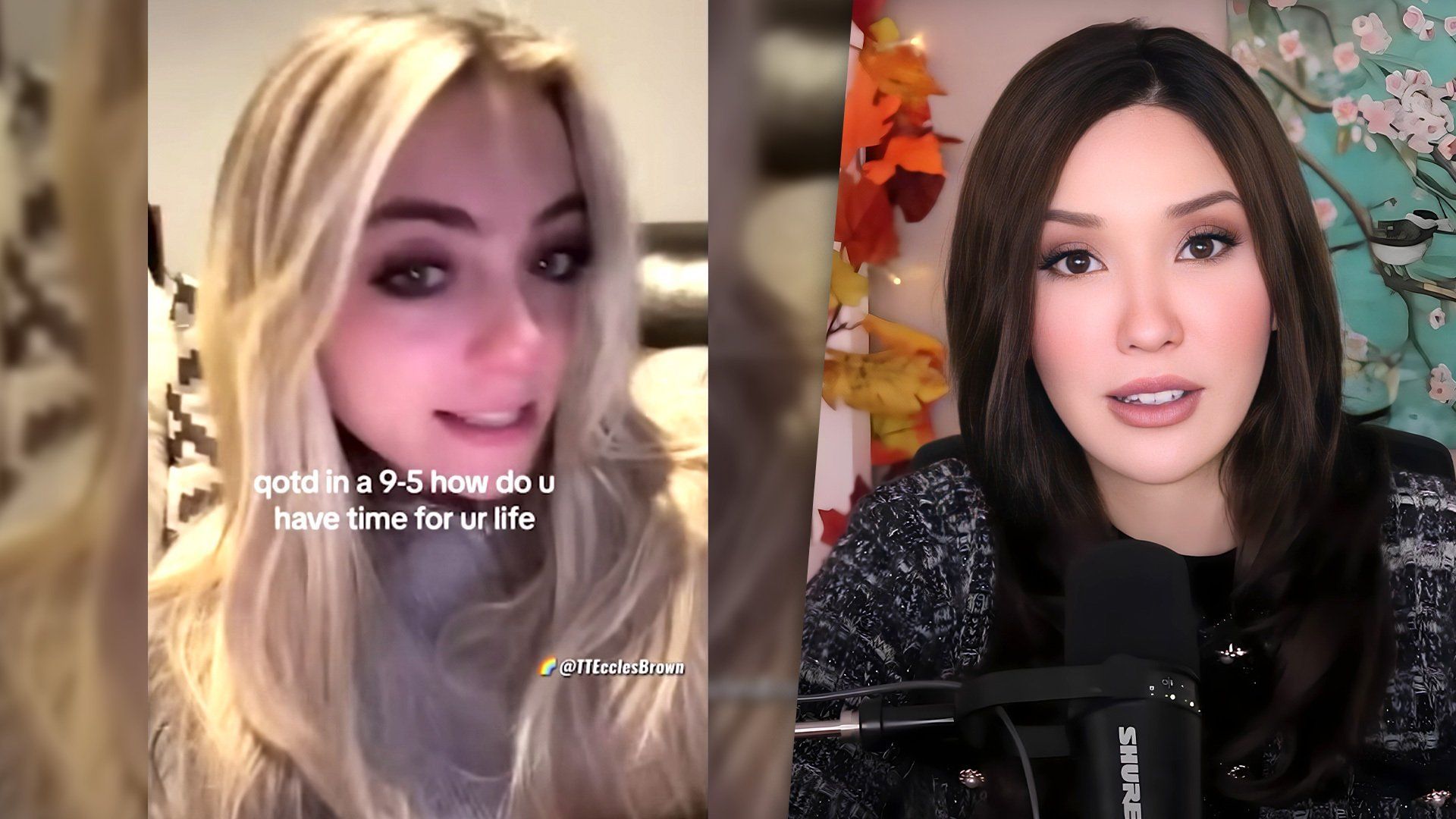
Lauren Chen examines several videos that have gone viral of Zoomers in the workforce, and let’s just say that some will make you cringe while others will make you sad.

The first video captures a Gen Z employee meeting with a superior over the issue of “wearing [her] earphones or airpods repeatedly after several coaching conversations.”

“I'm just not going to say anything or sign anything without a lawyer, and I'm very, very, very, very appalled that you're attacking me again because of my race. … This is all because I'm black, and it's really, really sad that you guys are doing this to me,” the employee says, before she starts wailing uncontrollably.

The manager, exercising admirable restraint, responds with, “I’m so sorry that you feel that way. That’s not our intention.”

“I can't work the rest of today; I need to go home,” she sobs.

Lauren calls the situation one of the “most entitled and sensitive workplace Zoomer reactions" she's ever seen.

“This woman wastes no time in playing the race card while simultaneously just deflecting throughout the whole thing, and it's like, oh my goodness, you are why older generations make fun of Gen Z,” she sighs.

The second video features another Gen Z woman who Lauren says “reeks of entitlement” explaining her frustrations with her serving job.

“I have my literal business marketing degree that put me in a cute $80,000 in debt,” she complains, before explaining that she makes “more money serving sushi rolls” than what she could earn in an entry-level marketing position.

“The jobs that are like a cute $150-$200,000 a year – I'm not getting those,” she rants. “I'm … going against, you know, corporate a** America people with so much experience, [and] all I got is my degree. You know people say, ‘Get your degree,’ but then they don't talk about how you need experience – the degree was the experience!”

“I don't think it's wrong for young people to complain about the high costs of tuition because that is a problem,” says Lauren.

“But also it sounds like this woman does have the opportunity to get experience – to get an entry-level job in her field – but she simply doesn't want to.”

“The idea is you get experience, you get training, you work your way up, and eventually, you are eligible for those jobs that pay $150-$200,000,” she explains, but that concept is clearly lost on this Zoomer.

The last video features another young Gen Z woman airing her grievances about her job, but this time, Lauren thinks her complaints are “pretty reasonable” and perhaps shine a light on the toxicity of the traditional workplace.

“This is my first job, like my first 9-to-5 job after college, and I'm in person, and I'm commuting in the city, and it takes me forever to get there” because “there's no way I'm going to be able to afford living in the city right now,” she cries, admitting that her complaints have “nothing to do with [her] job” but are solely tied to the “9-to-5 schedule.”

“I don’t have time to do anything … I don’t have time or energy to cook dinner, I don’t have energy to work out,” she explains. “How do you have friends? … How do you have time for, like, dating? I don't have time for anything.”

“I don't think it makes someone a sheltered snowflake to like their job, to want their job, to enjoy their field, but to also simultaneously say that ‘Hey, these aren't very good working conditions,'" says Lauren.

“I think there's also a toxic element to the attitude that some older generations had for work, where it's like, you literally have to live to work [and] you are loyal to your company, who at the same time would probably be more than happy to throw you under the bus or outsource you to India,” she continues.

“What older generations need to understand is that the world is different than when they were younger, the workplace is different, the economy is different.”

Regardless of how you feel about these specific Gen Z reactions to the workforce, the videos are well worth watching. Check them out for yourself below.


Want more from Lauren Chen?

To enjoy more of Lauren’s pro-liberty, pro-logic, and pro-market commentary on social and political issues, subscribe to BlazeTV — the largest multi-platform network of voices who love America, defend the Constitution, and live the American dream.

Gender-neutral 'theyby' turns 5 — as mom now says child is a boy


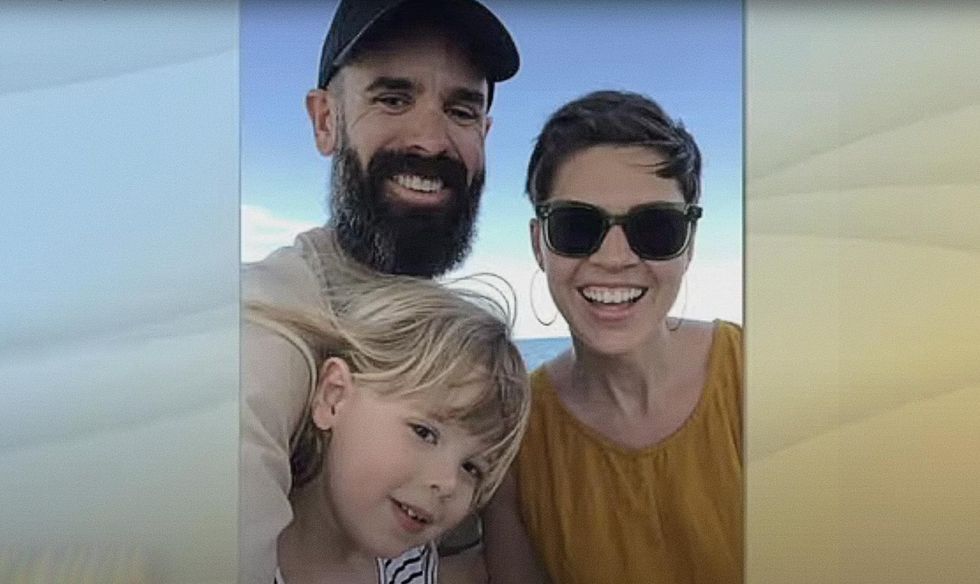
Author and sociologist Kyl Myers — who made headlines over the last few years for announcing the birth of her gender-neutral "theyby" — has announced that her child, Zoomer, is a boy.

Myers and her husband Brent Courtney did not announce the child's gender when it was born, stating in 2018, "We don't disclose Zoomer's genitals to people who don't need to know."

What are the details?

Zoomer, who turned 5 in May, has reportedly decided that he is a boy and has asked his parents to use he/him pronouns.

According to the Salt Lake Tribune, Myers — who has also detailed her family's "gender creative" parenting in a book, "Raising Them" — detailed the gender reveal in a May 25 Instagram post.

She wrote, "My family does regular pronoun checks with one another. As we're putting shoes on to head out to run errands, Zoomer asks, 'Hey mom. What pronouns do you want me to use for you today?' Some days I say, 'I'm very they/them this morning.' Other days I say, 'she/her feels good right now, thanks for asking.'"

Myers' post continued, "We had a pronoun check back in March 2020, around Z's 4th birthday, that was quite special. I asked, 'What pronouns are you into for yourself these days, Zoomer?' And Zoomer responded, 'I love he/him!'"

Myers said that she commended the child for choosing pronouns that he loves and began sharing the news.

"Since then, we let family, friends, & Zoomer's teachers know that Z uses he/him pronouns & everyone got on board & made the pronoun switch," she continued. "We caught ourselves using they/them & quickly corrected to he/him. Z told me once, 'It's okay. I like they/them, too.' I smiled at Zoomer's grace, 'But if you LOVE he/him then it's really important to me to use the pronouns you love.' Zoomer smiled back, 'Yeah, I love he/him.'"

Myers added that her child has used the term "boy" to describe himself, but continue to prefer "kid" and "person" in addition to simply using his name.

She also explained that she decided to hold off on announcing Zoomer's gender because it had been a "wild year."

"I didn't have the bandwidth to discuss it in all the press interviews about Raising Them, which was written when Z was antegender (before gender) & hadn't claimed pronouns yet," Myers noted, and pointed out that the announcement does nothing to identify "his reproductive anatomy."

She concluded, "I knew Zoomer would find pronouns that fit. As a gender creative parent, I made sure Z had all the pronouns to try on, to hear being used, to put in piles — Not for me; Maybe; I like; I love. Z knows he can use he/him pronouns for the rest of his life, alternate pronouns like I do, forego pronouns, or invent new ones. The gender creative adventure doesn't stop here."

What else?

In a September op-ed for Time, Myers pointed out that when she was pregnant with her child, both she and her husband were in agreement that they would allow their unborn child to choose its gender when the right time came.

"We weren't going to assign a gender or disclose their reproductive anatomy to people who didn't need to know, and we were going to use the gender-neutral personal pronouns they, them, and their," Myers wrote. "We imagined it could be years before our child would tell us, in their own way, if they were a boy or a girl, nonbinary, or if another gender identity fit them best."

"Until then," she added, "we were committed to raising our child without the expectations or restrictions of the gender binary."

Myers added that the goal of "gender-creative parenting" is not to "eliminate gender," but to "eliminate gender-based oppression, disparities, and violence.

"The aim isn't to create a genderless world; it's to contribute to a genderfull one," she added. "We as a society have an opportunity to shake up childhood gender socialization in a way that creates more healthy and equitable adulthoods for everyone."

Myers noted that she and her husband worked diligently to educate their child on sex and gender, prompting Zoomer to have a "more nuanced understanding" of such concepts even at the tender young ages of 2, 3, and 4 years old.

"We teach them to use gender-neutral words until a person tells us about themself," Myers continued. "We call kids friends. We have taught Zoomer about their own body without using boy-girl labels. Zoomer understands that some girls have penises and some boys have vulvas, and some intersex kids have vulvas and testes. Zoomer knows some daddies get pregnant and some nonbinary parents are called Zazas."

Myers concluded her essay, "I'm witnessing my child create their own gender — and who Zoomer has become is greater than anything I could have imagined or assigned. Instead of us telling the children who they should be, maybe it's the children who will teach us how to be. We just have to get out of their way."

This Mom Isn't Making Assumptions About Her Child's Genderwww.youtube.com