Trump’s Use Of National Defense Resources To Protect The Border Is Legal And Brilliant
 Securing 60 feet of federal dirt with the same trespassing law that protects Fort Bliss is not martial law.
For years, Americans have been told not to worry about the explosion of AI surveillance cameras. They're only looking for stolen cars. They're only helping solve crimes. If you're not doing anything wrong, you have nothing to fear.
Then the CEO of one of the country's largest AI surveillance companies, Flock Safety, said something that should make every American stop and think.
Americans can support law enforcement while also believing there must be limits on mass surveillance.
In an interview with Forbes last year, Flock Safety CEO Garrett Langley called DeFlock — a volunteer group that maps the locations of Flock's automated license plate reader cameras — a "terroristic organization." He contrasted the group with the ACLU and the Electronic Frontier Foundation, saying those groups use the courts, while DeFlock's "primary motivation is chaos."
Think about that for a moment.
DeFlock's primary activity is mapping the locations of publicly visible cameras installed throughout American communities. Flock argues that publishing those locations could help criminals avoid detection. DeFlock argues that citizens have a right to know where government-connected surveillance technology is being deployed. Reasonable people can disagree about that. But calling transparency activists "terroristic" is something else entirely.
Words matter, especially when they come from the CEO of a company whose business depends on collecting, analyzing, and sharing vast amounts of location data. He didn't call the group irresponsible or reckless; he chose language normally associated with violent extremism. That choice tells us how criticism of surveillance is increasingly viewed by the industry building it.
Then there was another statement from that interview that deserves just as much attention. Langley said, "We're not forcing Flock on anyone."
Really?
Americans never voted to install AI-powered camera networks throughout their communities. They didn't vote for systems capable of tracking vehicle movements across cities. They didn't vote for technology that has evolved far beyond simply reading license plates. Today's systems can identify vehicles by make, model, color, aftermarket wheels, roof racks, bumper stickers, damage, window tint, and countless other characteristics — even when a license plate isn't visible. Every generation of this technology becomes more sophisticated than the last.
This isn't simply about solving crime anymore. It's about building an increasingly comprehensive picture of where vehicles travel, when they travel, and how artificial intelligence can connect those movements. That is why transparency matters. If these cameras are installed in public places with taxpayer dollars, why shouldn't the public know where they are? That's the question DeFlock is asking. And asking it, apparently, makes them terrorists.
It's also a question the surveillance industry appears increasingly uncomfortable answering. Perhaps the most revealing part of this controversy isn't the quote itself. It's what it says about the mindset behind the technology.
When someone maps surveillance cameras, the cameras aren't questioned. The person documenting them is. That's an extraordinary shift. The debate moves away from whether expanding surveillance deserves public scrutiny and toward whether the people asking questions are somehow the threat. That inversion should concern anyone who values accountability.
RELATED: California wants to decide what tires you can buy — what could possibly go wrong?

The frustration is building. People across the country are vandalizing or removing Flock surveillance cameras. While Flock doesn't operate in Europe, activists have targeted similar surveillance cameras in London, France, and Italy.
To be clear: Destroying public or private property is illegal, and I don't support it. But those incidents reflect something policymakers and technology companies shouldn't ignore — a growing segment of the public feels these systems are being imposed without meaningful public debate or consent. Ignoring that frustration won't make it disappear. Calling critics "terroristic" certainly won't either.
The irony is hard to miss. The surveillance industry frequently tells Americans these systems are about building trust and making communities safer. But trust isn't built by dismissing or demonizing people who ask legitimate questions about privacy, accountability, and the limits of government surveillance. Trust is earned through transparency — and right now, that transparency is disappearing fast.
Americans can support law enforcement while also believing there must be limits on mass surveillance. They can believe violent criminals should be caught while also asking who owns the data, who can search it, how long it is retained, and whether artificial intelligence should be allowed to follow their daily movements without their knowledge. Those aren't extremist questions. They're the kinds of questions citizens in a free society are supposed to ask.
Garrett Langley's comments may have been intended to defend his company. Instead, they revealed something far more important. They exposed an attitude many Americans have long suspected exists beneath the rapid expansion of AI surveillance: that questioning the system is becoming more objectionable than expanding it. He said the quiet part out loud. And that matters, because once a society accepts ubiquitous surveillance as normal, history suggests it rarely moves in the opposite direction.
So let me get this straight: We did not vote to add these surveillance cameras, and letting people know where they are located makes us the bad guys. This is not a joke.
I guess I'm "terroristic" for discussing this and telling everyone about it.
The U.S. Supreme Court will let the Trump administration make the case this fall that a pair of Obama judges erred in their 2024 ruling regarding the detention of criminal noncitizens.
Carol Williams Black is a Jamaican male who entered the United States in 1983 and subsequently obtained legal permanent residency.
'No substantive-due-process right to a bond hearing.'
Black was captured in 2019 by U.S. Immigration and Customs Enforcement, which determined both that the Jamaican was removable under federal immigration law due to his criminal conviction for sexual abuse and endangerment of a child and that he should remain in detention until his removal.
Keisy G.M. is a man in his late 30s from the Dominican Republican who entered the U.S. in 2011, obtained permanent residency, and has since lived in New York. In light of G.M.'s 2015 guilty plea to second-degree assault, ICE arrested G.M. in 2020 and got the ball rolling on his deportation.
Both foreigners — Black, who was detained for seven months, and G.M., who was detained for 21 months — filed legal complaints alleging that their detentions without bond hearings amounted to violations of their due process rights.
A panel consisting of a pair of Obama-appointed circuit court judges — Hong Kong-born Denny Chin and Susan Carney — reviewed the criminal noncitizens' cases and held in 2024 that "the constitutional guarantee of due process precludes a noncitizen's unreasonably prolonged detention under [8 U.S.C. § 1226(c)] without a bond hearing."
The Trump administration urged the U.S. Supreme Court in January to review whether the court of appeals erred in holding that due process requires bond hearings for criminal aliens detained under Section 1226(c) like Black and G.M., and whether there is a point at which such detention becomes "unreasonably prolonged."
RELATED: A real nation knows who is in and who is out
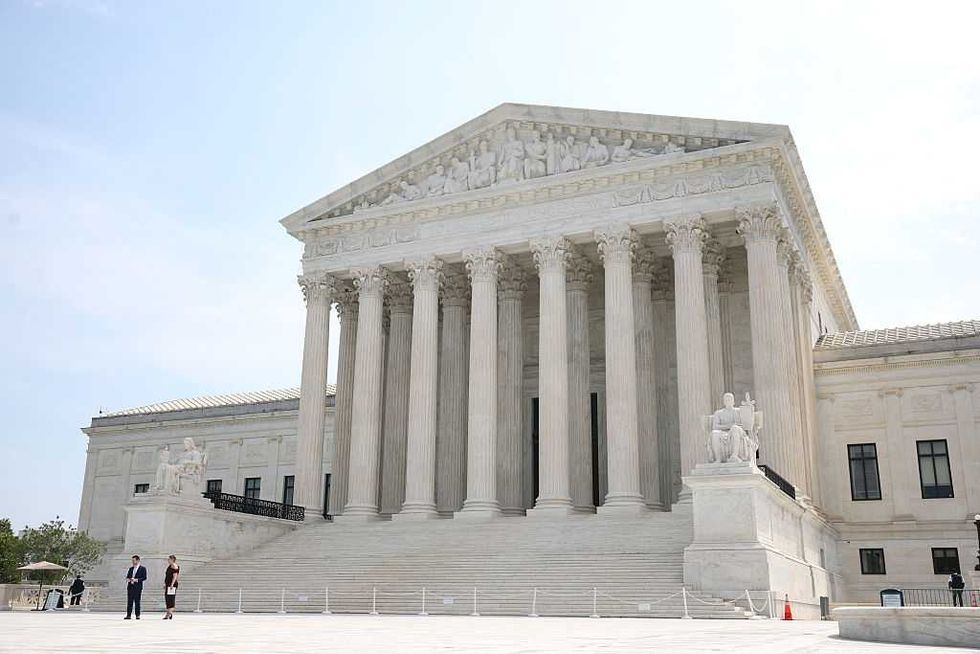
The administration also asked the high court to review the appellate court's holding that due process requires placing the burden on the government to justify continued detention by a heightened standard.
"Section 1226(c) detainees have no procedural-due-process right to a bond hearing on matters that are 'not material' to the 'statutory scheme,'" attorneys for the government noted in their petition. "And where, as here, detention bears a reasonable relation to legitimate immigration purposes — such as 'preventing deportable criminal aliens from fleeing' or 'continu[ing] to engage in crime' while their removal proceedings are pending ... — Section 1226(c) detainees have no substantive-due-process right to a bond hearing either."
The government's attorneys noted further that the U.S. Supreme Court must provide clarity on the matter, especially since the Eighth Circuit Court "disagrees with the Second and Third Circuits about whether a Section 1226(c) detainee has a due-process right to a bond hearing when his detention becomes 'unreasonable,'" and the Second and Third Circuit courts disagree about "how to determine when Section 1226(c) detention has reached that point."
The American Civil Liberties Union lawyers who are representing the criminal noncitizens unsuccessfully begged the high court not to grant review.
The ACLU lawyers claimed in an April brief that the Trump administration was advancing "an extreme theory"; that the disagreement between the lower courts was little more than a "shallow split"; and that "these cases are strikingly poor vehicles" because Black has left the country and G.M. was released from detention in 2022.
Cecillia Wang, an ACLU lawyer who represents both criminal foreigners, said in a statement obtained by Reuters, "The court of appeals got it right, and we will defend our fundamental due process principles at the Supreme Court."
"The Constitution protects all of us, regardless of immigration status, from being locked away without due process," Wang continued. "[U.S. Immigration and Customs Enforcement] cannot detain immigrants — separating families and cutting people off from their communities — for months or even years on end without a bond hearing."
The U.S. Supreme Court agreed on Monday to take up the case but could ultimately dismiss it as moot.
The court is reportedly expected to hear arguments in the case in its next term.
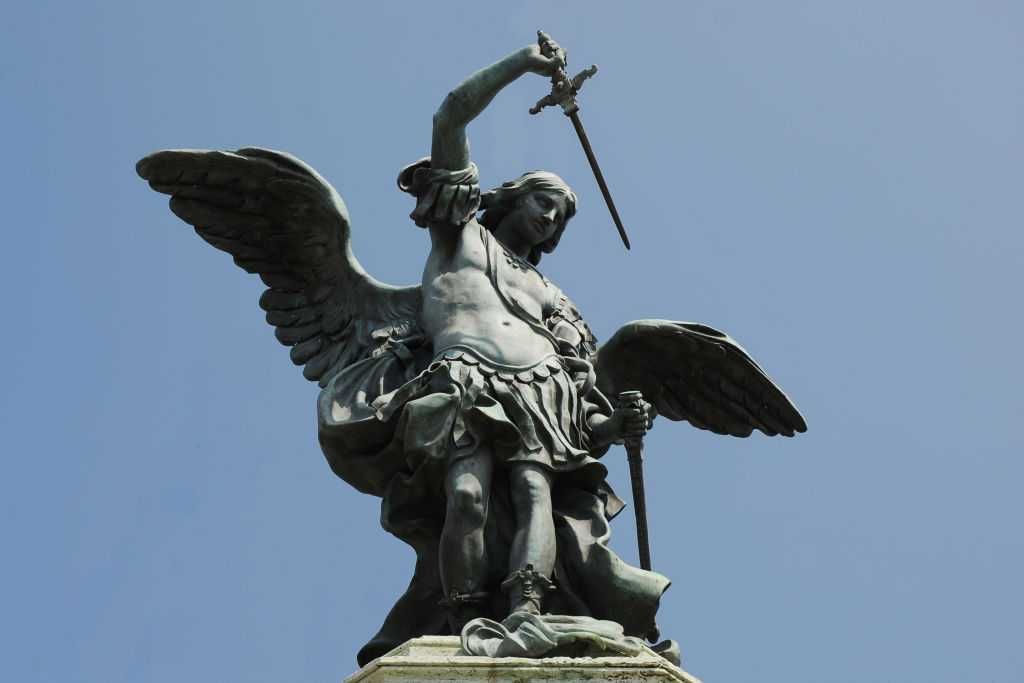
Like Blaze News? Bypass the censors, sign up for our newsletters, and get stories like this direct to your inbox. Sign up here!A Massachusetts city in the Greater Boston area commissioned a pair of 10-foot-tall bronze statues heavy with cultural and historical significance to honor police and firefighters outside its new public safety headquarters.
Since the statues also carry religious significance — one depicts the winged archangel Michael stepping on the head of a demon, and the other depicts Florian, a third-century firefighting Roman Christian — the American Civil Liberties Union and a handful of secularizing activist groups joined local thin-skinned critics in suing to block the installation last May.
According to the ACLU, having the two statues as the sole adornments on the building's facade "would undermine religious pluralism in Quincy and violate the Massachusetts Constitution’s long-standing requirement that the government remain neutral in matters of religion."
'Let Quincy pay tribute to its firefighters and police.'
The ensuing legal battle has reached the Massachusetts Supreme Judicial Court, which heard oral arguments on Wednesday in the case Fitzmaurice v. City of Quincy.
The defendants' thesis, as outlined in their opening brief to the court, is that symbolism on government property should not become "illegal simply because some citizens perceive it to have religious meaning."
Some of the court's justices, Democrat-appointee Gabrielle Wolohojian in particular, did not appear to be entirely buying what the attorney for the city from the Becket Fund for Religious Liberty was selling at the outset despite considering his arguments in a city already replete with public art evoking persons, symbols, and themes of religious significance, including multiple statues of Moses.
RELATED: Young men flocking to Christianity in record numbers

The court proved particularly fixated on whether Florian and Michael's special recognition as saints by the Catholic Church was actually an issue in this case and raised as possibly relevant in a lower court's insinuation that the statues' primary champion, Quincy Mayor Thomas Koch, was untrustworthy and had worked clandestinely to get the statues funded and installed.
The court was not, however, overly receptive to the ACLU's arguments in favor of denying Quincy first responders their statues, which have been defended in recent months by a plethora of organizations, including the nation’s largest firefighter and police unions, various faith groups, and esteemed constitutional scholars.
One justice questioned whether:
Tom Bowes, president of Quincy's Firefighters Local 792, said in a statement, "For generations, Florian’s legacy has inspired the brave men and women who run toward danger when others need help. We hope the court allows Quincy to honor that tradition and the first responders who live it every day."
Joseph Davis, senior counsel at Becket and an attorney for the city, said, "In this country, public art doesn't become off-limits just because it may make some people think about religion. We’re confident the justices will apply that commonsense rule here and let Quincy pay tribute to its firefighters and police."
Eric Rassbach, another attorney at Becket, said in the wake of the hearing on Wednesday that the ACLU's argument largely "relied on the supposedly dead legal standard known as the Lemon test, which SCOTUS abrogated."
"For decades, the unusuable Lemon test produced confusion and split decisions in cases involving religious symbols," continued Rassbach. "That changed in 2019, when SCOTUS ruled 7-2 in [American Legion v. American Humanist Association] that the First Amendment does not require removing a WWI memorial cross and made clear that Lemon no longer applies."
While the Supreme Court rejected the relevance of the test articulated by SCOTUS in its 1971 Lemon v. Kurtzman ruling as a way of guiding the court in identifying Establishment Clause violations, Norfolk Superior Court Judge William Sullivan previously leaned heavily on it in the Quincy case.
"It would be a bizarre move for Massachusetts to revive a test that failed so badly at the federal level, especially since Lemon has no grounding in the Commonwealth’s Constitution," wrote Rassbach. "That document takes a different approach: It recognizes the vital role of religion in public life while guaranteeing equal protection for all religious denominations. That’s a far cry from forcing cities to scrub anything that smacks of the religious from all public property."
The court is expected to deliver its decision sometime this fall.
Like Blaze News? Bypass the censors, sign up for our newsletters, and get stories like this direct to your inbox. Sign up here!
The Supreme Court recently heard more than two hours of argument in Trump v. Barbara, the case testing the constitutionality of President Donald Trump’s executive order on birthright citizenship.
Trump himself sat in the courtroom for part of the session, the first time a sitting president has done so. The moment was striking not for its symbolism alone but for what it revealed: a fundamental challenge to a 150-year-old interpretation of American identity.
The American 'exception' was built on a conscious break from notions of blood and soil.
The executive order, issued on Trump’s first day back in office in January 2025, directs federal agencies not to recognize automatic citizenship for children born in the United States to parents who are undocumented or present on temporary visas. It turns on the opening words of the 14th Amendment: “All persons born or naturalized in the United States, and subject to the jurisdiction thereof, are citizens of the United States.”
The administration’s core argument — one rooted in a "consensualist" theory of citizenship — is that "subject to the jurisdiction" requires more than mere presence on the soil. They argue it requires full and exclusive political allegiance, a condition that undocumented immigrants and short-term visa holders, who remain subjects of their home countries, cannot meet.
The challengers, led by the American Civil Liberties Union on behalf of a plaintiff identified as Barbara, insist the clause was meant to be a simple, sweeping geographical rule. They point to the common-law tradition of jus soli — citizenship by place of birth — that they argue the framers of the amendment endorsed.
Constitutional history, however, is rarely so settled. While the 14th Amendment was ratified in 1868 — to overturn the Dred Scott decision — scholars on the right point to the intent of the amendment’s authors, like Sen. Jacob Howard, who suggested the clause excluded those who owed allegiance to a foreign power.
While the Court applied the clause to children of legal residents in United States v. Wong Kim Ark (1898), the administration argues that case never explicitly addressed the children of those present in violation of federal law.
Lower courts have struck down the executive order, but the justices’ questions on Wednesday showed they are wrestling with the modern reality of mass migration. Several asked how a "narrow" jurisdiction rule would work in a hospital delivery room. Chief Justice John Roberts reminded the solicitor general that the Constitution is not a "living" document that changes with the wind, but conservative justices also pressed the government on whether this executive action bypasses the legislative role of Congress.
The skepticism was notable because the case arrives after the Court’s 2025 ruling that limited the scope of nationwide injunctions, ensuring the policy reached the high court on its merits.
This debate is not abstract. Birthright citizenship has long set the United States apart from the "Old World." Most countries grant citizenship primarily by descent — jus sanguinis. In Pakistan, as in India and much of Europe, a child acquires citizenship through a parent’s nationality.
The American "exception" was built on a conscious break from notions of blood and soil, but critics argue that the exception has become an unintended magnet for illegal entry and birth tourism.
RELATED: A birthright citizenship fix is more important than the SAVE Act
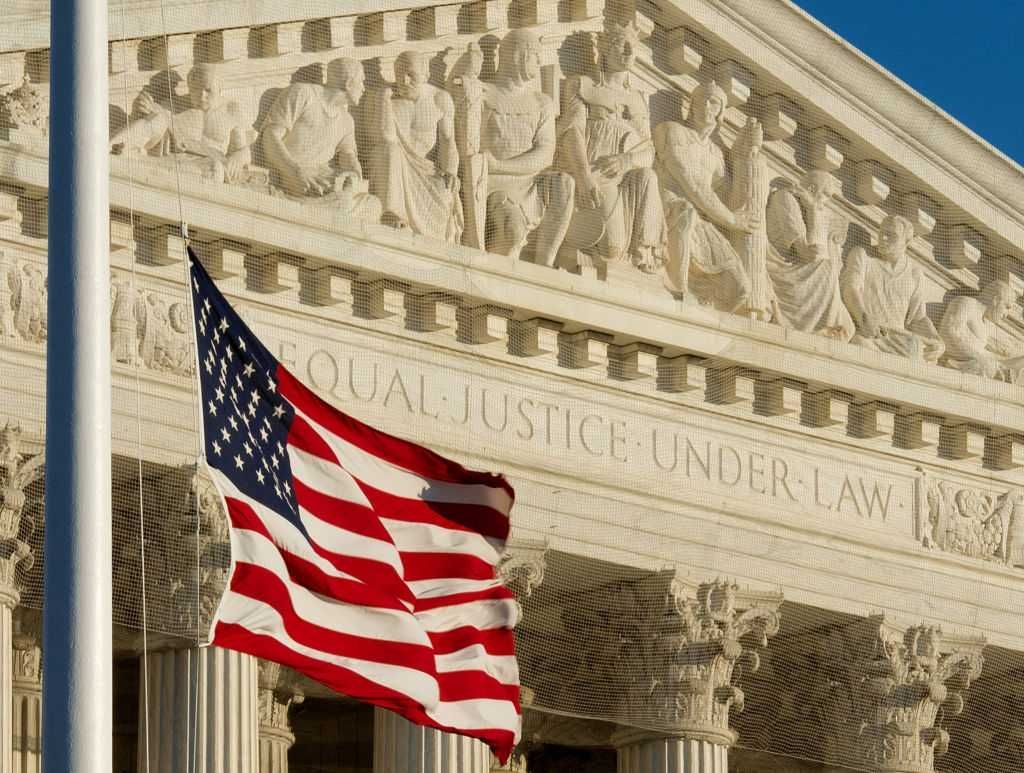
The executive order does not seek to formally amend the Constitution, but rather to correct what its supporters see as a century of judicial and administrative drift. It would not strip citizenship from anyone already born; it applies prospectively.
Still a decision to uphold it would effectively align the United States with the legislative models of Britain, Australia, and Ireland, all of which moved away from pure jus soli to better manage migration pressures.
The Court’s eventual ruling — expected by early summer — matters profoundly. If the justices narrow the clause, they will have restored what originalists believe was the 14th Amendment’s true meaning: that citizenship is a mutual contract between a sovereign and a subject.
If they preserve the status quo, they will affirm that the 14th Amendment’s promise remains a geographical absolute.
The hearing did not settle the question, but it forced a reckoning. In an age of porous borders, the United States must decide whether its rule of soil remains a pillar of strength or an outdated incentive that undermines the very concept of national sovereignty.
The Court’s answer will help determine the terms on which future generations enter the American story.
The Supreme Court heard oral arguments on Wednesday in the case challenging President Donald Trump's executive order to end birthright citizenship.
Trump made history by being the first sitting president to attend a SCOTUS hearing. He attended for over an hour, departing shortly after the solicitor general, John Sauer, concluded his arguments.
'Why put it in if it's irrelevant?'
Shortly after noon on Wednesday, Trump wrote in a post on social media, "We are the only Country in the World STUPID enough to allow 'Birthright' Citizenship!"
Sauer previously claimed that lower-court rulings finding Trump's executive order unconstitutional were overly broad and incorrectly held that "birth on U.S. territory confers citizenship on anyone subject to the regulatory reach of U.S. law."
During Wednesday's arguments, Sauer contended that the 14th Amendment phrase "subject to the jurisdiction thereof" requires parents of a child to be domiciled in the U.S. and have allegiance to it.
He explained that the citizenship clause was enacted after the Civil War to grant citizenship to freed slaves and their children whose allegiance to the U.S. "had been established by generations of domicile here."
RELATED: Trump makes history at SCOTUS birthright citizenship hearing
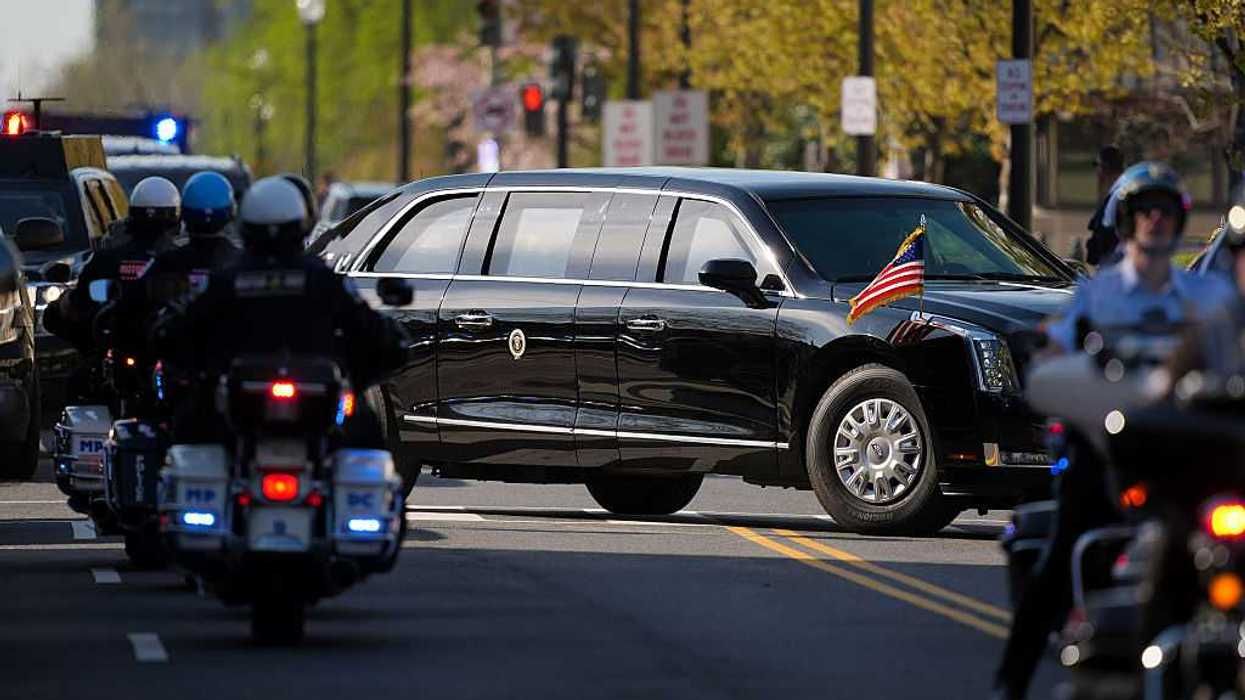
"It did not grant citizenship to the children of temporary visitors or illegal aliens who have no such allegiance. This conclusion reflects the original public meaning of the clause," he stated.
Supreme Court Chief Justice John Roberts called Sauer’s argument “very quirky.”
"Well, starting with that theory, you obviously put a lot of weight on 'subject to the jurisdiction thereof,'" Roberts stated. "But the examples you give to support that strike me as very quirky."
"Children of ambassadors, children of enemies during a hostile invasion, children on warships," Roberts continued. "And then you expand it to a whole class of, illegal aliens are here in the country. I'm not quite sure how you can get to that big group from such tiny and sort of idiosyncratic examples."
Sauer argued that birthright citizenship has generated "a sprawling industry of birth tourism," adding that "uncounted thousands of foreigners from potentially hostile nations have flocked to give birth in the United States."
American Civil Liberties Union legal director Cecillia Wang argued before SCOTUS against Trump's executive order.
Wang was pressed about U.S. v. Wong Kim Ark, an 1898 Supreme Court case in which the court ruled that a child born in the U.S. to Chinese citizen parents was an American citizen. While the ruling set the precedent for anyone born in the U.S., Ark's parents were both legally domiciled in the U.S.
"Thirty years after ratification, this court held that the 14th Amendment embodies the English common law rule," Wang stated during Wednesday's hearing. "Virtually everyone born on U.S. soil is subject to its jurisdiction and is a citizen."
"The majority tells us six times in the opinion that domicile is irrelevant under common law," Wang added.
RELATED: SCOTUS gives Trump a unanimous victory on persecution claims in asylum cases
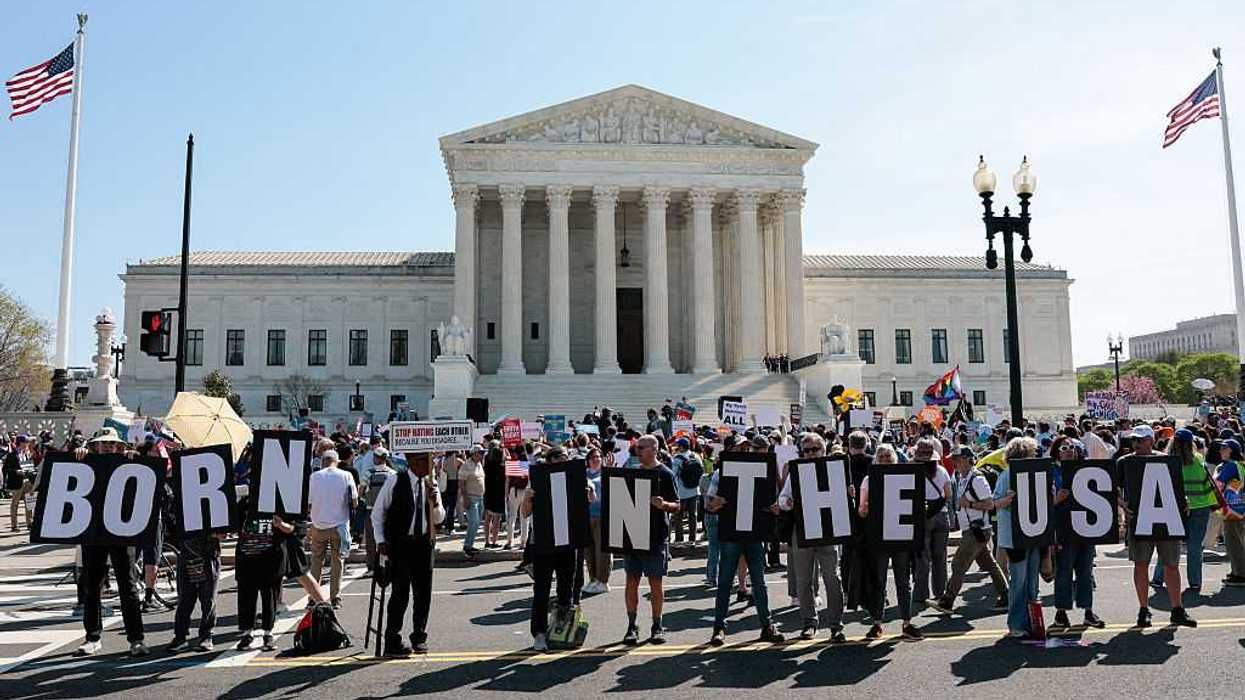
Justice Samuel Alito pushed back on Wang's arguments, stating that he "might agree" with her "if 'domicile' had simply been sprinkled in the opinion," though it appeared 20 times.
"Why put it in if it's irrelevant?" Alito asked Wang.
"The first is that, again, it was a stipulated fact," Wang responded. "The second is that regardless of what the judgment in the case was … the rule of decision in Wong Kim Ark has binding precedential effect. Even if you think that Wong Kim Ark decided the case based on the stipulated facts, you have to follow that controlling rule of decision. And if you follow that rule, you get to the same result."
Justice Elena Kagan appeared to share Alito's concern, stating, "What are those 20 'domicile' words doing there? You can take some of them and say, 'I don't know; they were just summarizing the facts of the case,' but not all of them."
Like Blaze News? Bypass the censors, sign up for our newsletters, and get stories like this direct to your inbox. Sign up here!
A pair of trans-identifying women enjoying the support of the American Civil Liberties Union filed a lawsuit last month in hopes of forcing Kansas to indulge their delusions by letting them use men's restrooms and false sex markers on state-issued IDs.
'This bill protects girls and women.'
Rather than oblige the plaintiffs in thwarting the will of voters as expressed by supermajorities in both chambers of the Kansas legislature, a state judge denied the women's most pressing request on Tuesday.
Kansas Republicans passed a bill earlier this year requiring the designation of restrooms and locker rooms in public buildings for use by only one sex and mandating certain official state-issued documents to reflect the ID-holder's actual sex.
This, of course, enraged radical LGBT activists such as Kansas state Rep. Abi Boatman (D), a man pretending to be a woman, who suggested that the reality-affirming bill was dehumanizing; Human Rights Campaign president Kelley Robinson, who called the bill an act of "cruelty"; and Democratic Gov. Laura Kelly, who vetoed the bill last month.
Kelly's veto proved fruitless as the state Senate overrode it in a 31-9 vote on Feb. 17. Their Republican colleagues in the state House followed suit the next day in a decisive 87-37 vote.
The governor bemoaned the override, claiming that "this is a poorly drafted bill with significant, far-reaching consequences."
State Rep. Carolyn Caiharr (R), among those who voted to override the veto, stated, "Our young women deserve to have restrooms and locker rooms where they can undress without men in the room. This bill protects girls and women, the ones feminists used to claim to stand for," reported the Kansas Reflector.
Kansas House Speaker Dan Hawkins (R) stated, "This isn’t about scoring political points, but doing what’s right for women and girls across our communities."
The new law took effect once it was published in the register on Feb. 26, resulting in the invalidation of roughly 1,700 driver's licenses and 1,800 birth certificates.
A pair of trans-identifying women represented by attorneys from the American Civil Liberties Union filed a lawsuit on Feb. 26, alleging that the law "violates the Kansas Constitution’s guarantees of personal autonomy, privacy, equality under the law, due process, and free expression. It also violates the Kansas Constitution’s single-subject and clear title requirements."
The lawsuit claimed that the two biological women, identified by the pseudonyms Daniel Doe and Matthew Moe, would suffer harm "because they will not be able to utilize a driver’s license with their correct gender marker or access public restrooms that accord with their gender identity."
The trans-identifying ladies requested that Douglas County District Judge James McCabria block and declare the new law both unconstitutional and unenforceable.
Judge McCabria refused on Tuesday to grant the women a temporary restraining order against the law while their case proceeds, writing, "A court that is too quick to assume too much about the facts or possible impacts of a law risks the appearance of either political bias or a lack of appreciation for the value and importance of the full, fair deliberative process in such circumstances."
The judge apparently didn't buy the plaintiffs' claim that they may face "reprisal by employers and acquaintances that may not know their biological gender but learn of it by forced use of assigned restrooms or incidental disclosure by use of their identification documents."
McCabria declined "the invitation to presume" that every employer or acquaintance would in every instance respond to the discovery of the women's true sex with harassment or disfavor. He also rejected the assumption that "every restroom visit is fraught with the potential for violence or embarrassment if this law is not immediately suspended."
The judge directed the parties involved in the case to appear in court later this month.
Harper Seldin, an attorney for the ACLU's LGBTQ & HIV Project, stated, "This is a devastating, but hopefully temporary, setback for our clients and transgender people across the state of Kansas."
Although the law merely prevents individuals from carrying untruthful driver's licenses and invading private spaces intended for members of the opposite sex, Seldin claimed it threatens trans-identifying individuals' "ability to hold a job, go to school, or go about their daily lives."
Like Blaze News? Bypass the censors, sign up for our newsletters, and get stories like this direct to your inbox. Sign up here!
 The 5th Circuit Court of Appeals found in April that the Texas law 'does not violate either the Establishment Clause or the Free Exercise Clause.'
 Leftist donors and insiders control the Kansas Supreme Court. A 'yes' vote on the state constitutional amendment could change that.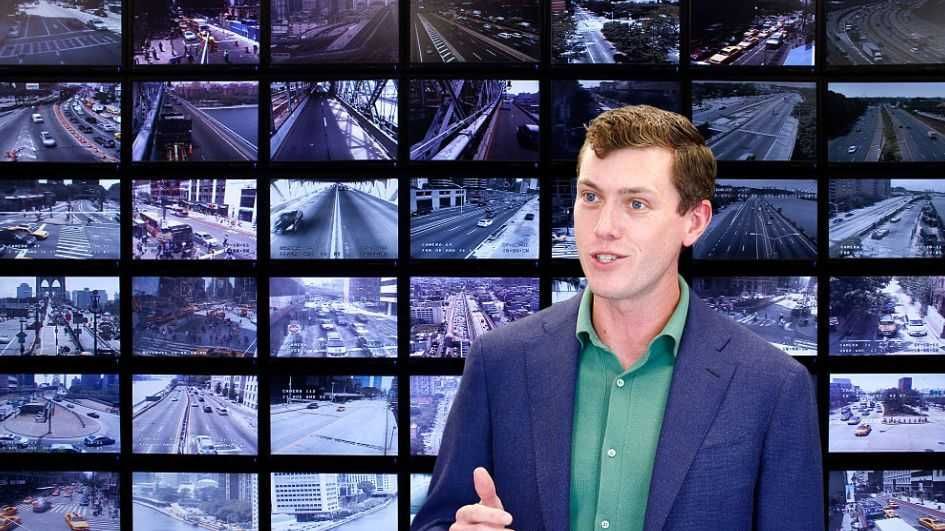
 'If words retain their factual meaning, there is no discrimination at all,' the dissent noted.
 thefederalist.com
 www.theblaze.com