Trump Admin Launches Probe Into H-1B Visa Fraudsters Stealing Jobs From Americans
 The invesitgation aims to further President Trump's goal to end foreign violence on American soil and return jobs to the American people.
Roxanne Brown, the head of the United Steelworkers, must recognize the reality of her members and consider the recent history of the steel industry. If she remembers what happened when steel mills closed and factory towns devolved into ghost towns, she must distinguish herself from her predecessor, David McCall, whose intransigence during his tenure was neither shrewd nor productive. To set her union on a renewed path forward, Brown must distance herself from McCall’s troubling legacy and avoid jeopardizing the very workers she claims to represent.
Brown has reportedly rejected U.S. Steel’s initial contract offer, setting the stage for the next round of negotiations beginning July. If talks go south again this summer, workers could face lost wages, disrupted health benefits, and uncertainty over retirement security. Their families would feel the pressure through tighter household budgets, delayed bills, strained child care and health care decisions, and the emotional toll that comes with prolonged economic uncertainty.
Steelworkers deserve leadership focused on jobs, wages, benefits, and retirement security — not reputation management or corporate alliances.
In steel towns and surrounding communities, the impact would ripple through local businesses, schools, churches, charities, and public services that depend on steady paychecks and a stable industrial base. A lockout would not just pause production; it would threaten livelihoods, family stability, and the economic backbone of communities built around American steel.
McCall's reckless efforts to tank the Nippon-U.S. Steel merger led to a revolt among steelworkers, and his alliance with competitor Cleveland-Cliffs’ CEO Lourenco Goncalves showed he prioritizes his own reputation and corporate alliances over his members. In the next round of contract talks, McCall should not be allowed anywhere near the negotiating table from the union side.
For decades, steelworkers have been heavily affected by market swings and fluctuating steel production demands. 2026 has been a welcome relief of slow but steady growth, aided by investments like those from Nippon, shifts toward modernization, and economic tailwinds, but history shows this tide can turn anytime.
When the steel industry turns down, it faces facility idling, facility closures, layoffs, and industry upheaval. Despite recent upturn, this volatility has contributed to a public perception that blue-collar jobs like those of steelworkers are unstable, making the upcoming contract negotiations in July that much more significant.
The past tells us quite a bit about what could be ahead for steelworkers. Last year’s high-profile Nippon-U.S. Steel merger carried major consequences for American steel production and steelworkers’ jobs. Yet as the deal progressed through the approval process, McCall chose to advance his own interests rather than champion union members’ security and prosperity, revealing deeply troubling behavior.
In 2023, when the merger was proposed, U.S. mills produced about 89.7 million net tons of raw steel, supporting 70,000 workers in iron and steel manufacturing. The deal promised substantial benefits to American steelworkers, including: $2.7 billion in capital investments exclusively dedicated to USW facilities; a 10-year commitment to maintain steel production levels at existing facilities, protecting union jobs; a $5,000 signing bonus for union workers and eligible nonunion employees below the senior-manager level upon deal closure; and written, enforceable commitments to honor existing union contracts and labor agreements.
RELATED: The AI bubble is about to pop. Here’s how to prepare yourself.

Despite clear support among many rank-and-file members for the merger’s approval, McCall staked out firm personal opposition that did not reflect union workers’ input. In a February 2024 phone interview, McCall stated bluntly: “I want to kill this deal.”
McCall also took advantage of the Biden administration’s likely politically partisan, election-driven opposition to the merger. A lawsuit alleged that Biden sought to kill the deal to “curry favor with the USW leadership in [Pennsylvania] in his bid for re-election ... motivated by ‘purely political reasons.’”
Perhaps most damning is that McCall’s opposition clashed with the interests of steelworkers.
This is a pivotal time for the future of the American steel industry. The industry can only thrive if USW and the companies that employ its members can reach a commonsense agreement that both protects workers and allows companies to continue operating.
Brown must capitalize on this unique opportunity to move the union past the destructiveness of McCall’s leadership by participating in good faith in the upcoming negotiations and avoiding prolonging the contract talks at the expense of her members’ well-being. America’s steelworkers deserve better than their fate still being in the shadows of David McCall.
Mary, a veteran Silicon Valley marketer who can’t find a job, considers herself a victim of an H-1B visa program run amok.
Her story, a U.S. native replaced by a foreign-born employee who is willing to work at a significantly lower wage, has become commonplace, particularly in the tech industry. Adding insult to injury, she says, her CEO, who hails from India, told her to train the man he selected to replace her before laying her off.
Despite stints at Google and Cisco and two years of job-hunting, Mary can no longer compete in a job market saturated with foreign-born H-1B visa holders. “I had experience. I should have walked right into these corporate jobs, but I didn't. Why? Because Silicon Valley is flooded with people who work for two-thirds of the price, or even half price,” said Mary, who asked to be identified only by her first name.
Companies, on average, save nearly $100,000 per worker over six years by hiring an H-1B worker rather than an American.
U.S. tech workers like Mary are at the center of a battle brewing in Washington, D.C., over reforming the troubled H-1B visa program, which is designed to fill highly skilled positions when qualified American workers can’t be found. The controversy pits tough-on-immigration Republicans and some Democrats against the most formidable of opponents — Big Tech, the primary beneficiary of a program considered by critics to be little more than a pipeline of cheap labor.
In the last few decades, the California dream has gone global, as U.S. tech firms have filled their ranks and C-suites with employees born abroad. Intel is no longer the company of its founders, Robert Noyce and Gordon Moore, but of Malaysian-born Lip-Bu Tan, its CEO since March 2025. Microsoft is led by Satya Nadella; Alphabet Inc. by Sundar Pichai; Adobe by Shantanu Narayen; IBM by Arvind Krishna; and T-Mobile US by Srinivas Gopalan — all of whom were born in India.
All told, a remarkable two-thirds of the Valley’s nearly 400,000 tech jobs are now held by those born abroad, according to a 2025 report from the think tank Joint Venture Silicon Valley. Today, more tech workers were born in India (23%) and China (18%) combined than in the U.S. (34%).
The influx of low-cost Asian talent has clearly helped fuel profits in one of America’s most influential sectors. But there is a downside to this tech boom — the sidelining of U.S. workers thanks to the H-1B visa program. Created in 1990, the federal program has morphed into a vehicle for employers, particularly in the nation’s tech centers, to recruit much cheaper foreign labor at the expense of U.S. tech workers, according to Harvard economist George J. Borjas.
While the H-1B program spans multiple industries, it is overwhelmingly concentrated in tech. Last year, Amazon, Meta, Microsoft, Tata Consultancy, and Google were the biggest visa users, with Amazon alone recording more than 13,000 applications. These companies find the savings from hiring foreign workers hard to resist. The job of software developer, for instance, accounts for 38% of all H-1B visa workers, according to a 2026 paper by Borjas. And these foreign software developers earn about 30% less than their U.S. counterparts, the economist estimates.
Since many of these tech jobs pay six figures, the savings quickly add up. Borjas estimates that companies, on average, save nearly $100,000 per worker over six years by hiring an H-1B worker rather than an American. The arrangement “redistributes wealth from those who compete with immigrants to those who use immigrants,” Borjas wrote in 2016. That, in turn, helps account for the soaring stock prices of Big Tech since the 2008 financial crash.
RELATED: America should eliminate the H-1B and replace it with THIS
The vaguely written H-1B law has been easy for companies to exploit. Hassan Abdullah, an immigration attorney and H-1B advocate, said the supposed congressional basis of the law — to fill highly skilled jobs with foreigners if Americans aren’t available — has always been a fiction. “The actual regulations don’t necessarily say that's required,” said Abdullah, who helps companies get the visas. “Throughout all my years, I’ve never had to even consider that as a factor.”
One of the most glaring weaknesses of the law, critics say, is that most companies applying for these visas are not required to demonstrate that they were unable to find qualified American workers. Only companies with more than 15% of their workforce on H-1Bs must make small efforts to recruit U.S. citizens.
Companies are required to pay foreign workers at least the “prevailing wage” for the occupation and region, a provision that should theoretically reduce the incentive to hire employees from Asia. But the process relies on self-reporting and has been easy to manipulate because salaries are calculated using broad regional averages that often fail to reflect real market wages in the technology sector.
As a result, the number of H-1B visa workers has skyrocketed. 2025 was a banner year, with 406,348 approved visas, according to U.S. Citizenship and Immigration Services. Seventy percent of those visas were issued to Indians. That compares with a total of 275,317 visa approvals in 2015.
Missouri Sen. Eric Schmitt, who is part of the MAGA wing of the GOP, reacted to these numbers on X, calling the program “a national security nightmare. Enough. No more flooding the market with 400k+ H-1B visas while our people and our sovereignty gets screwed."
After foreign-born employees take on leadership roles, including CEO, they attract and hire more foreigners by tapping their own professional and social networks.
With criticism of the visas dovetailing with broader anti-immigration sentiments, the Trump administration has made the most serious move yet to restrict the program. Six months ago, USCIS announced a new $100,000 fee that companies must pay per new H-1B worker living outside the U.S. While official figures have not yet been released, some immigration experts estimate that the fee may lead to a 30% to 50% decline in new visa applications.
“This is the first year we have not filed any H-1B visas for people outside the U.S. because tech companies don’t want to pay the $100,000 fee,” said immigration attorney Navdeep Meamber, who is based in Silicon Valley.
But companies have found a work-around. Meamber said she has seen an increase in the number of clients filing for the visas for workers already in the U.S., particularly those such as students who transferred from other visa types to H-1Bs.
“The $100,000 fee is discouraging some employers from bringing in brand-new H-1B workers, but it is not reducing the numbers, because foreign students, especially those who get on the Optional Practical Training program, can move into the H-1B pipeline without paying that fee,” said attorney Rosemary Jenks, a campaigner for immigration reform with the Immigration Accountability Project. “So there are still plenty of H-1B visas being issued every year.”
Silicon Valley wasn’t always dominated by foreigners. Some claim the true birthplace of Silicon Valley can be found in a garage at 367 Addison Avenue in Palo Alto. It was there that David Packard, a native of Colorado, and Bill Hewlett of Michigan founded Hewlett-Packard in 1939. Robert Noyce, a native son of Iowa and co-inventor of the integrated circuit, critically made from silicon, gave name to the valley after the substance. With his colleague, Gordon Moore of San Francisco, they founded Intel in 1968.
Throughout the postwar years, America’s booming tech industry was largely pioneered by natives. By the 1980s, however, concerns were raised about the dwindling number of young people available to fill STEM jobs in the future. Erich Bloch, director of the National Science Foundation, told the American Council on Education in 1985: “The pool of potential students from U.S. schools will become smaller. Demographic projections, of which you are all aware, show the number of 18- to 24-year-olds declining by about 20% over the next decade.”
The 1990 Immigration Act created the H-1B visa, a temporary work visa lasting a few years aimed at filling the labor shortages Bloch had warned about. Since then, tech firms have sometimes struggled to find employees, particularly specialized engineers, during times of rapid growth. But whether the industry faces a persistent shortage of American workers is a matter of debate among economists and labor analysts.
Major technology companies reject the criticism that the H-1B system is primarily a source of cheap labor. Executives stress that the program allows American firms to recruit engineers and researchers with advanced technical expertise in areas where qualified talent can be scarce.
They also contend that many H-1B workers are paid high salaries and that access to global talent helps keep American companies competitive against rivals.
Critics of the visas point to waves of layoffs accompanied by the growth in H-1Bs as evidence that a labor shortage is nothing more than a fig leaf. Michael Capuano of the Federation for American Immigration Reform wrote in a blog post last year,
Google laid off 951 U.S. employees in 2024, but found room for 1,058 new H-1B workers. Apple laid off 735 people in 2024, but signed on 864 new H-1B employees. Microsoft laid off 3,426 workers from 2022 to 2024 and hired 3,259 new H-1Bs during that same period.
A 2023 analysis by the Economic Policy Institute similarly found that the top 30 H-1B employers hired more than 34,000 new H-1B workers in 2022 while laying off at least 85,000 employees during the same period.
In addition to cheaper talent, critics say H-1B visas also provide a captive workforce. Because employers can sponsor visa holders for permanent residency, many workers become heavily reliant on keeping their jobs in order to remain in the United States. Critics argue that this dynamic discourages employees from changing companies or demanding higher wages, with some likening the system to a form of indentured servitude.
Critics say favoritism has also contributed to foreign dominance of the tech sector. After foreign-born employees take on leadership roles, including CEO, they attract and hire more foreigners by tapping their own professional and social networks.
Kevin Lynn, executive director of the Institute for Sound Public Policy, argues that “professionalism doesn’t exist in these IT departments any more,” adding that “when you look at the hiring, it gets very tribal. It’s really India versus the rest of the world.”
Microsoft saw the number of decisions on H-1B applications rise from 2,983 in 2014, when Nadella became CEO, to 6,258 in 2025. Google’s numbers jumped from 2,309 in 2015, when Pichai took the top job, to 7,868 in 2025. During these years, these companies also grew, making it hard to know if the percentage of foreign workers increased. At IBM, H-1B decisions have remained consistent since Arvind Krishna was named the leader.
Meamber, the immigration lawyer, disputes the idea that companies run by foreign-born leaders are more likely to rely on labor from their home countries. “The CEO doesn’t even know who is being hired. ... These decisions are being taken at a lower level by the HR team and by the recruiters,” she said.
Stephen Vivien, an engineer, said he witnessed Indian employees helping each other get hired by sharing interview questions when he worked at Google. “There were a lot of H-1B workers ... there's a network.” he said.
“When one Indian guy would be coming up for his interview; the other Indian guys who had [already] gotten hired would call and share the questions.”
RELATED: America didn’t lose its tech edge — globalist CEOs gave it away
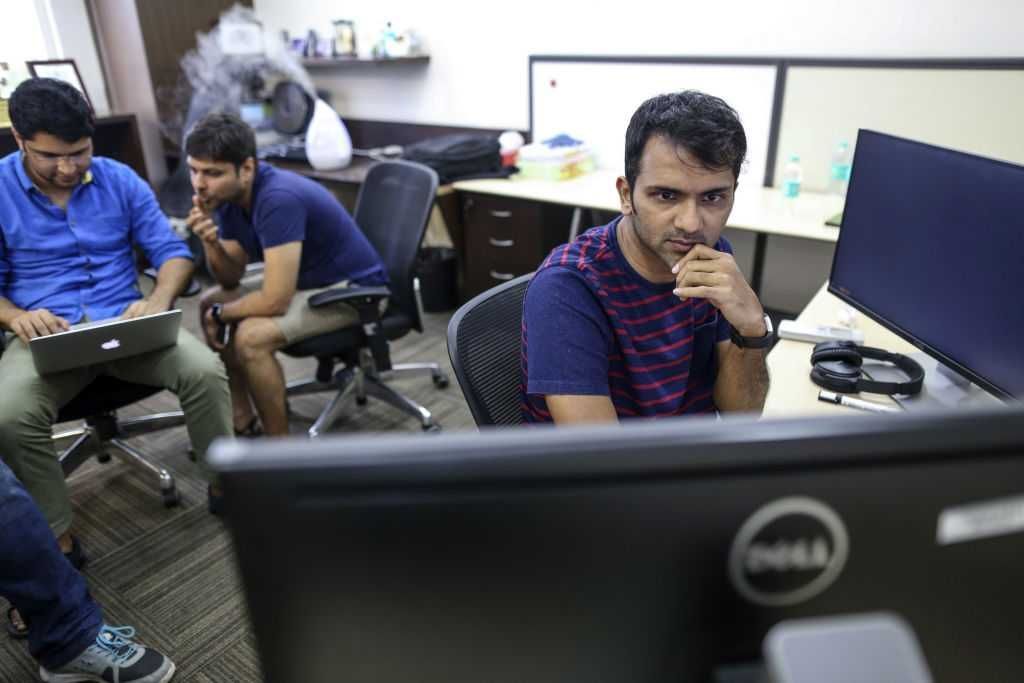
In April, a New York jury found New Jersey-based Cognizant Technology Solutions liable for $8.4 million after a former executive sued the company, which was founded in India, for discrimination against non-Indian and non-South Asian workers. The executive argued he was passed over for a promotion and was later fired for raising concerns about bias against non-Indian employees.
The decision follows a separate successful lawsuit brought by three other employees against Cognizant in 2017, all similarly claiming discrimination against non-Indian workers, though the company is appealing and denies all allegations. In both lawsuits, juries found in favor of claims that Cognizant had used the H-1B program as a tool to discriminate against American workers. Since 2009, the company has received tens of thousands of H-1B visa approvals.
While restrictions to the program have yet to meaningfully slow its growth, some Republicans have called to abolish it. In February, Florida Rep. Greg Steube (R) introduced the EXILE Act, which would end the H-1B visa program entirely.
A proposed reform that might gain more bipartisan support targets the ineffective prevailing wage requirement that allows firms to underpay foreign workers. One idea floated by Republicans would create a minimum salary requirement for H-1B workers that is much higher than the current pay scale, thus removing the financial incentive to replace U.S.-born workers.
Ro Khanna, the Democrat congressman representing much of Silicon Valley, said on the "All-In" podcast last year that “there’s definitely abuse. ... It needs to be corrected” in the H-1B program. Khanna said a new prevailing wage standard would be a reform he could support.
But legislation that would raise labor costs would be opposed by Big Tech, armed with its war chest of money and influence in Washington. Jenks, the lawyer, said H-1B reformers face a tough fight. “The donors on this issue include all of the high-tech companies, whether it’s Microsoft, Facebook, all of them,” she said. “They put millions and millions of dollars every year into lobbying.”
Editor’s note: This article was originally published by RealClearInvestigations and made available via RealClearWire. The article was reported in conjunction with a GB News documentary, which can be viewed here.
Oracle employees have been laid off as part of a "broader organizational change," with data revealing that the company has looked to hire thousands of foreign workers.
The software company, headquartered in Austin, Texas, is going through a huge transition as it prepares to back its infrastructural push toward artificial intelligence — reportedly at the cost of thousands of jobs.
'We are grateful for your dedication.'
Oracle cut thousands of jobs this week, a number that has not been narrowed since CNBC confirmed with insiders on Tuesday. The company may have already been looking ahead, however, as U.S. Citizenship and Immigration Services data shows that Oracle has already filed thousands of petitions for H-1B visas in the past two years.
According to immigration services, the H-1B program allows employers to "temporarily employ foreign workers" for specialized skills. The federal data hub shows that Oracle America Inc. filed for 2,690 visas for fiscal year 2025, which covers Oct. 1, 2024 to Sep. 30, 2025.
At the same time, for fiscal year 2026, the company appears to have made 436 requests. If that number holds, the total through September 2026 will be 3,126.
Immigration services says petitioners can file for H-1B visas "no more than six months before the employment start date."
RELATED: Texas first: Gov. Abbott freezes H-1B visas after damning report from BlazeTV's Sara Gonzales
Oracle reportedly began layoffs on Tuesday, sending out a letter that stated the company was eliminating roles as part of a broader company shift.
"As a result, today is your last working day," the letter read, per Business Insider. "We are grateful for your dedication, hard work, and the impact you have made during your time with us," it added.
Employees were also offered a severance package in line with their "severance plan."
RELATED: When the AI bubble bursts, guess who pays
Reports from March suggested that the company was allegedly preparing to lay off between 20,000 and 30,000 employees, which would have represented upwards of 18% of its workforce, Yahoo reported.
Blaze News did not receive an immediate response from Oracle regarding its H-1B numbers, the jobs the visas are to replace, and how many would replace American workers.
Oracle has not provided public comment on the matter either.
Like Blaze News? Bypass the censors, sign up for our newsletters, and get stories like this direct to your inbox. Sign up here!
As immigration detention centers sprout up over the country and deportations continue, the Trump administration is setting its sights on another important immigration issue: H-1B visas.
According to a Bloomberg report, Trump plans to sign a proclamation as early as Friday that would overhaul the H-1B visa program, one of the most heavily exploited visa programs in the government.
155,205 out of 189,404 H-1B cases originated from India.
Citing a White House official, the report details that the proclamation would add a $100,000 fee to H-1B visa applications. The official added that the proclamation would restrict entry under the H-1B program unless accompanied by the payment.
The H-1B visa program has famously been known to pull heavily from India and is exploited disproportionately in the technology sector of the economy. The official stated that the proclamation would be in place in order to stop the flow of H-1B workers, who have undercut the American worker.

According to available government data from roughly the past five years, 155,205 out of 189,404 H-1B cases originated from India. China came in second place at 28,969 visas.
White House press secretary Karoline Leavitt confirmed the report on X, posting a link to the Bloomberg article with its headline, "Trump to Add New $100,000 Fee for H-1B Visas in Latest Crackdown," as the caption.
Fees directly tied to the H-1B visa application are, per Bloomberg, rather "modest." The fee to register for the lottery is just $215, and while other fees can sometimes bring the total to as much as $10,000, those costs are almost always borne by the employer.
In tandem with the proclamation, Trump is expected to order Labor Secretary Lori Chavez-DeRemer to further overhaul the visa program to root out fraud and abuse in the current system.
Like Blaze News? Bypass the censors, sign up for our newsletters, and get stories like this direct to your inbox. Sign up here!
Reports indicate that the American tech job market is slowing down significantly, making it increasingly more difficult for qualified individuals to find employment. However, a team of technology professionals contends that jobs are out there; they are just not being advertised to American talent.
The Economic Policy Institute found that the top 30 H-1B employers hired 34,000 new foreign workers in 2022, yet laid off at least 85,000 between 2022 and early 2023, further fueling concerns that companies are booting Americans for foreign nationals to keep wages lower.
'We were shocked to discover these discriminatory practices are still widespread across major American companies today, keeping Americans out of jobs in their own country.'
Indian nationals accounted for roughly 71% of H-1B workers in 2024, while Chinese nationals ranked second, with 12%. Indian and Chinese nationals also represent the largest groups of foreign-born STEM workers, according to the American Immigration Council.
Reports like this sparked action from fed-up tech workers who decided to establish Jobs.Now, an online job board featuring a list of positions sourced from "legally mandated PERM labor market test locations" in newspaper classified advertisements.
PERM is a permanent labor certification issued by the Department of Labor, allowing employers to hire foreign talent to work in the United States. This certification sets workers on a path to receive a green card. Many of these candidates are already working for the employer on temporary visas, such as the H-1B or the Optional Practical Training programs.
The tech workers were driven to start the online job board after Apple and Facebook settled worker discrimination lawsuits with the Department of Justice.
In 2021, Facebook agreed to pay $4.75 million in civil penalties and up to $9.5 million to eligible victims after it was accused of “routinely” refusing to “recruit, consider, or hire U.S. workers” for positions it had reserved for temporary visa holders.
Similarly, in 2023, Apple agreed to pay $6.75 million in civil penalties and establish an $18.25 million back pay fund for victims after the DOJ claimed the company “illegally discriminated in hiring and recruitment against U.S. citizens and certain non-U.S. citizens.”
RELATED: The real labor crisis? Too many visas, not too few workers
“We were shocked to discover these discriminatory practices are still widespread across major American companies today, keeping Americans out of jobs in their own country,” Jobs.Now told Blaze News. “We started Jobs.Now to fight against these illegal practices and help Americans find good jobs.”
Jobs.Now warned that some companies — particularly those seeking to fill engineering, data science, finance, accounting, and biotechnology positions — will try to hide opportunities from American workers to favor their existing H-1B employee and provide lower wages.
Under PERM laws, a company seeking to hire a foreign national must demonstrate "that there are not sufficient U.S. workers able, willing, qualified, and available to accept the job opportunity in the area of intended employment and that employment of the foreign worker will not adversely affect the wages and working conditions of similarly employed U.S. workers."
To demonstrate this, the employer must advertise the position in two Sunday newspapers and select three additional recruitment steps, which can include advertising the position at job fairs, the employer's website, an online job board, and on radio and television, among other options.
'Jobs.Now highlights those ads, but that doesn't mean the company is running a new search. It's just about meeting the compliance rules.’
The employer can hire a foreign national via the PERM process only if there are no other minimally qualified U.S. citizens or existing green card holders available.
"As a result, they put ads in newspapers with obscure application methods aiming to hide the listing from Americans, so they will not receive applications and will be able to sponsor their preferred immigrant candidate for a green card to fill the job," Jobs.Now told Blaze News.
Jobs.Now explained that it has found some job postings that feature "hidden" characteristics — including "not being posted on the company website, not being posted on mainstream job boards, and requiring email or paper mail applications" — that could result in fewer American applicants.
Jobs.Now has also highlighted postings that refer individuals to send their applications to immigration professionals and law firms, rather than human resources workers.
"To maintain business continuity, or the wage arbitrage of hiring lower-paid immigrant workers, companies prefer to keep these existing employees rather than seek American citizens as required for permanent roles," Jobs.Now stated. "They commonly treat PERM labor market tests as compliance exercises where they fill out paperwork, rather than actual hiring processes. As a result, they often direct applications to immigration professionals or law firms rather than ordinary recruiters."
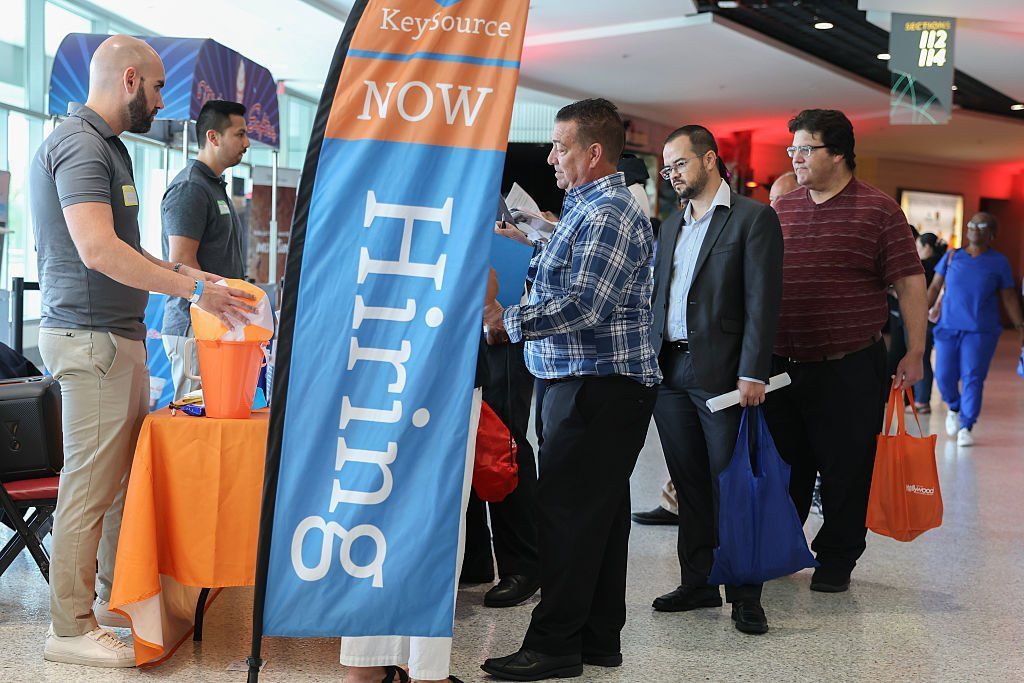
While Jobs.Now highlights the labor market tests as being treated as mere formalities rather than genuine efforts to recruit American workers, recruiter Mark Fabela affirmed that these postings are meant to satisfy regulatory requirements and are "not about launching a broad hiring campaign." Though, perspectives differ on whether this complies with the law.
"Instead, it's about documenting for the Department of Labor that no qualified U.S. workers stepped forward during the recruitment phase. That's why you see the mandated postings in newspapers and other outlets," Fabela told Blaze News. "Jobs.Now highlights those ads, but that doesn't mean the company is running a new search. It's just about meeting the compliance rules."
"By the time these ads appear, the role is often already filled by someone, usually an H-1B worker the company is already employing," he said, dismissing Jobs.Now's claim that the posts aimed to hide jobs from Americans.
‘Only after no US worker can be found will the PERM application be approved. Whether the foreign worker is already performing the job is immaterial.’
However, other experts challenge Fabela's perspective, asserting that the law requires genuine efforts to hire Americans, even through the labor market tests posted in the newspaper.
“Employers must conduct good-faith recruitment of U.S. workers and offer that position to any qualified and willing U.S. applicant,” Dr. Ron Hira, an associate professor in the Department of Political Science at Howard University, told Blaze News. “Only after no U.S. worker can be found will the PERM application be approved. Whether the foreign worker is already performing the job is immaterial.”
Hira called the law “crystal clear” but noted that even the DOL “has been guilty of administrative malpractice in enforcing PERM regulations.”
RELATED: AI, global power, and the end of human jobs — are we ready?
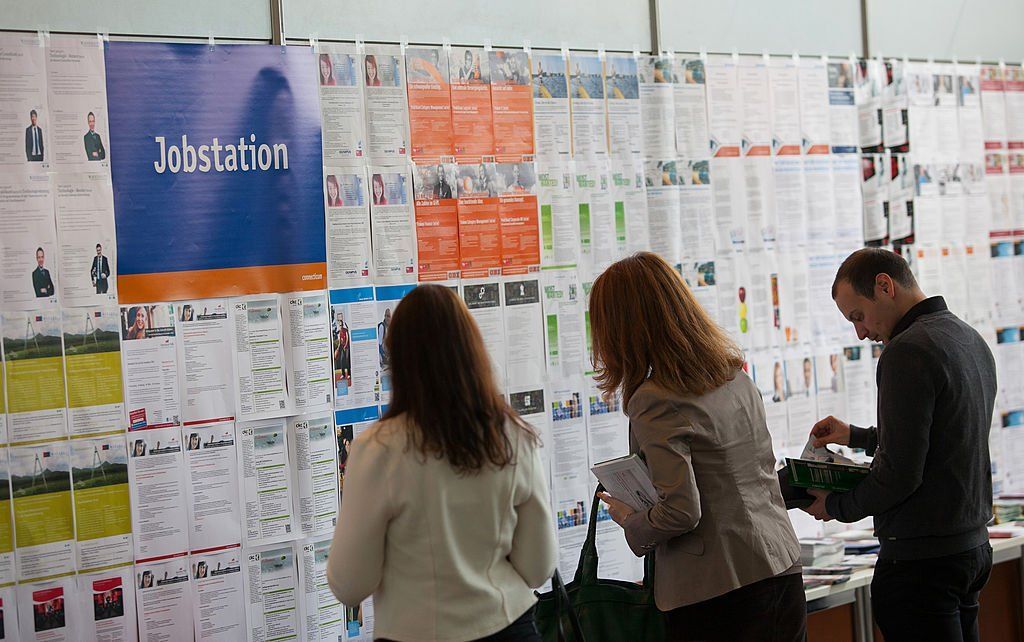
“For the past few decades, DOL has turned a blind eye to rampant employer discrimination against U.S. workers in the PERM recruitment process,” he explained. “Everyone, including DOL, knows that discrimination is more common than not in PERM applications.”
The DOL admitted in a 2020 report that the PERM program “relentlessly has employers not complying with the qualifying criteria.” It also stated that it has “limited authority over the H-1B program as it can only deny incomplete and obviously inaccurate applications and conduct complaint-based investigations, challenges in protecting the welfare of the nation’s workforce.”
“Therefore, the PERM and H-1B programs remain highly susceptible to fraud,” the DOL concluded.
Hira called for Americans to petition the Trump administration “to start enforcing the plain language of the law.”
‘Americans don't have a real shot at these jobs; they were already displaced long ago when the employer hired the worker on a temporary visa.’
Jessica Vaughan, the director of policy studies for the Center for Immigration Studies, echoed Hira's concerns about enforcement failures, calling the PERM process “a charade.”
“The reality is that nearly all of these employers already have a foreign worker in the job and are just seeking to check off the boxes that the law requires,” Vaughan told Blaze News. “Americans don't have a real shot at these jobs; they were already displaced long ago when the employer hired the worker on a temporary visa.”
Congress fueled some of these issues by adjusting the eligibility criteria for green cards to more closely align with those for temporary visas, Vaughan explained.
“That means there are more temporary workers now seeking to get green cards to stay permanently, and they are willing to work for less money on that promise. However, they have a long wait for the green cards, and the employers don't want to have to consider Americans for these jobs, since they promised them to the foreign workers, and they can get away with paying them less,” Vaughan stated.
Concerning any “good faith” efforts to find Americans to fill these positions, Vaughan reasoned that there is “little enforcement of the requirement” because employers have found ways to circumvent rules.
Fabela acknowledges that issues exist within the current process, including a lack of modernization with the print newspaper ad requirement. He also noted that some job requirements are so "overly narrow" that they "effectively match one candidate's resume." The most concerning issue is "wage-level manipulation," according to Fabela.
"Bad actors will write dumbed-down job descriptions in a way that understates the role's actual skill level. That allows them to pay experienced candidates significantly less while still clearing the prevailing wage test," Fabela told Blaze News.
Jobs.Now also highlighted issues with the manipulation of the "overly broad" prevailing wage standard, which "allows companies to slot jobs into categories that could include far less advanced roles, which have lower wage standards."
Amid an uncertain tech job market and ongoing criticisms of the PERM process, advocates like Jobs.Now are pushing for reforms to address the root problems and restore priority to American workers.
Jobs.Now is calling for changes to H-1B and PERM regulations, as well as the cancellation of the OPT visa program, to open more job opportunities to American workers, including entry-level recent college graduates.
‘We think the regulations must be changed so that labor market tests give American citizens the right they deserve to be considered first for jobs in America, rather than the formality they are currently treated as.’
Companies should also be required to prove that there are no qualified American candidates available for a position before issuing an H-1B visa, Jobs.Now stated.
The tech workers behind the job board website are advocating for companies to be required to post all labor market tests on their website’s career page, accept digital applications, and post on high-traffic job boards like LinkedIn or Indeed, rather than newspaper classifieds.
RELATED: America last? Foreign workers fill jobs while Americans are left out
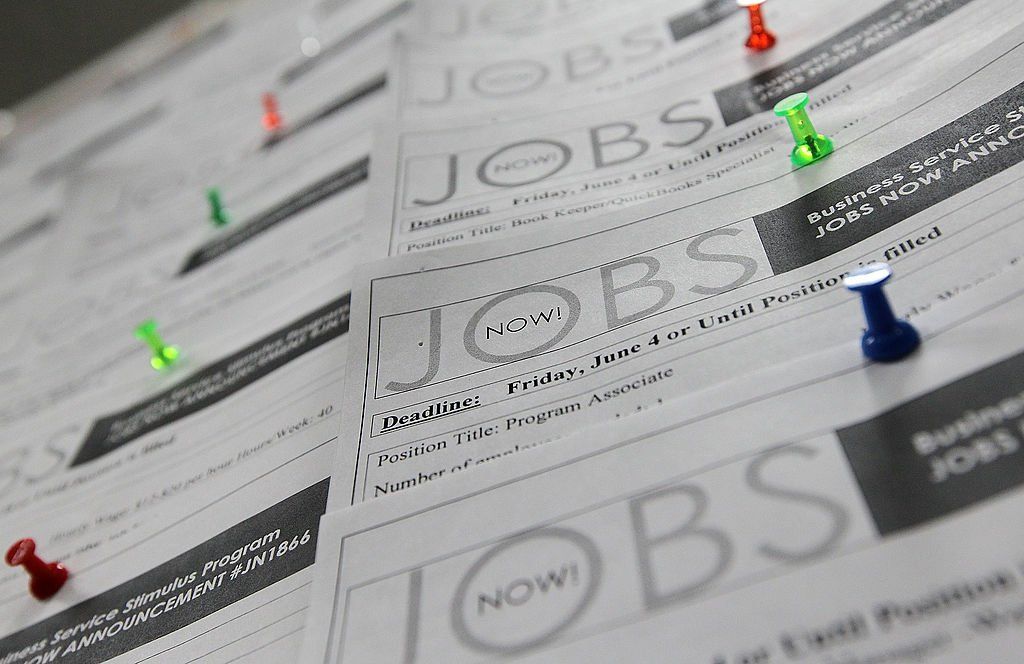
“In short, we think the regulations must be changed so that labor market tests give American citizens the right they deserve to be considered first for jobs in America, rather than the formality they are currently treated as,” Jobs.Now told Blaze News.
Fabela agrees that the H-1B program is flawed and in need of reform to prevent abuse. However, he noted that he is “unapologetically pro-H-1B," expressing concern that China would win the tech race “without firing a shot” if the U.S. closes the door on foreign talent.
The U.S. Equal Employment Opportunity Commission has vowed to clamp down on employment bias by increasing investigations, compliance checks, and litigation.
“The EEOC is putting employers and other covered entities on notice: If you are part of the pipeline contributing to our immigration crisis or abusing our legal immigration system via illegal preferences against American workers, you must stop,” EEOC Acting Chair Andrea Lucas stated in March.
“The EEOC is here to protect all workers from unlawful national origin discrimination, including American workers,” Lucas remarked.
The DOL did not respond to a request for comment.
Like Blaze News? Bypass the censors, sign up for our newsletters, and get stories like this direct to your inbox. Sign up here!
California Governor Gavin Newsom (D) continued to defend illegal immigration and called for a pathway to citizenship amid the Trump administration's mass deportation efforts.
The "Shawn Ryan Show" released an interview on Monday with the Democratic governor, during which he claimed that illegal immigration has not negatively impacted Americans' ability to find work.
'As one of California's most vital industries, Gov. Newsom should be incentivizing this sort of modernization rather than justifying outdated and exploitative labor practices.'
Newsom stated that roughly half of the agricultural workers and 41% of construction workers in California are illegal immigrants, noting that the state collects $8.5 billion in tax dollars from illegal immigrants each year.
"Not insignificant," Newsom stated. "It's half of our agricultural work. You care about farmers and ranchers — if that's your number-one, go-to commitment — then you sure as hell should care about their workers. Forty-one percent of our construction workers, Texas and California have the highest percentage of their construction workers that would fall into that category."
He questioned how the state would ever rebuild after the devastating wildfire earlier this year if President Donald Trump's deportation agenda is allowed to persist.
"Without that workforce, ain't gonna happen," he continued.
"I think there needs to be a pathway for those folks as we secure the border. And we own that issue."
RELATED: 'We're not talking amnesty': Trump touts work program to provide labor for farmers

While advocating for illegal aliens already in the U.S., he simultaneously claimed that he "believe[s] in border security," adding that his administration has handed 11,000 criminals to Immigration and Customs Enforcement.
When asked whether illegal immigrants are taking jobs away from Americans, Newsom responded, "Not in Tulare County, not in Ventura County. I don't know many people that want a job out there in those packing facilities. I don't see many people that look like me jumping at those jobs. I just don't. Maybe there's some exceptions; I haven't seen the evidence of that."
Newsom also stated that he would be "happy to advocate for eliminating sanctuary policy."
"The reason it exists is because of the total abject failure of the federal government to do its f**king job. It exists because they persist in politicizing this," he said.

Ira Mehlman with the Federation for American Immigration Reform told Blaze News that California's illegal immigration crisis costs taxpayers $30 billion a year to provide related services, such as public education and health care.
Mehlman argued that Newsom "is essentially endorsing exploitative labor practices that allow employers to provide poor wages and working conditions."
"Construction has traditionally been a solid, unionized middle-class trade. These were prized jobs that allowed blue-collar workers to earn comfortable wages with benefits to support their families. The influx of illegal aliens has pushed many American workers out of these trades entirely or forced them to accept lower wages and less favorable working conditions," Mehlman explained.
Furthermore, he argued that access to low-wage, illegal labor has hindered technological advancements within these industries, which could ultimately lead to increased productivity and reduced costs.
"As one of California's most vital industries, Gov. Newsom should be incentivizing this sort of modernization rather than justifying outdated and exploitative labor practices," Mehlman told Blaze News.
Like Blaze News? Bypass the censors, sign up for our newsletters, and get stories like this direct to your inbox. Sign up here!

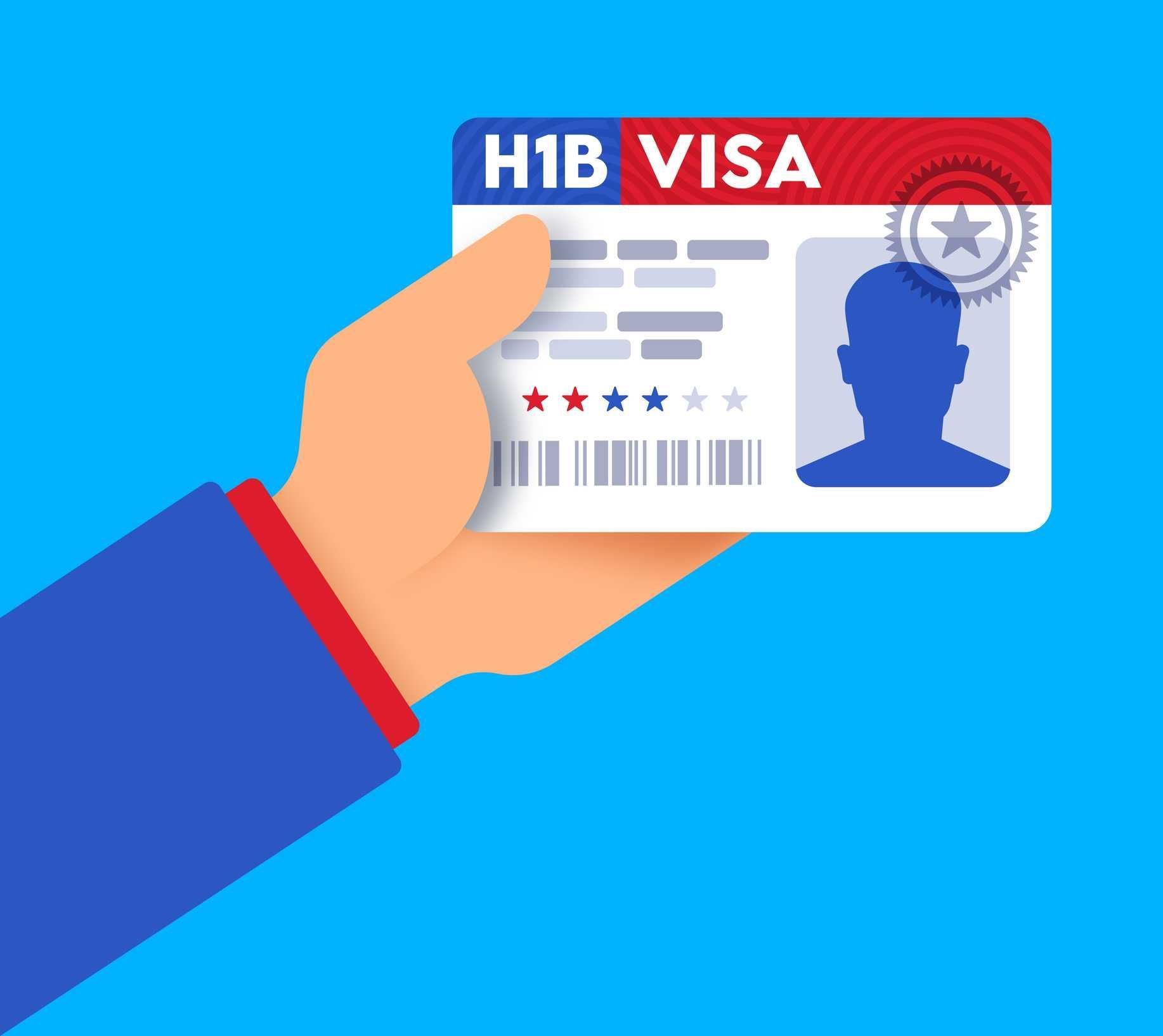

 You cannot put America first by putting Americans last.


 www.theblaze.com
 www.theblaze.com
Are Iowans Too Stupid for the Jobs?