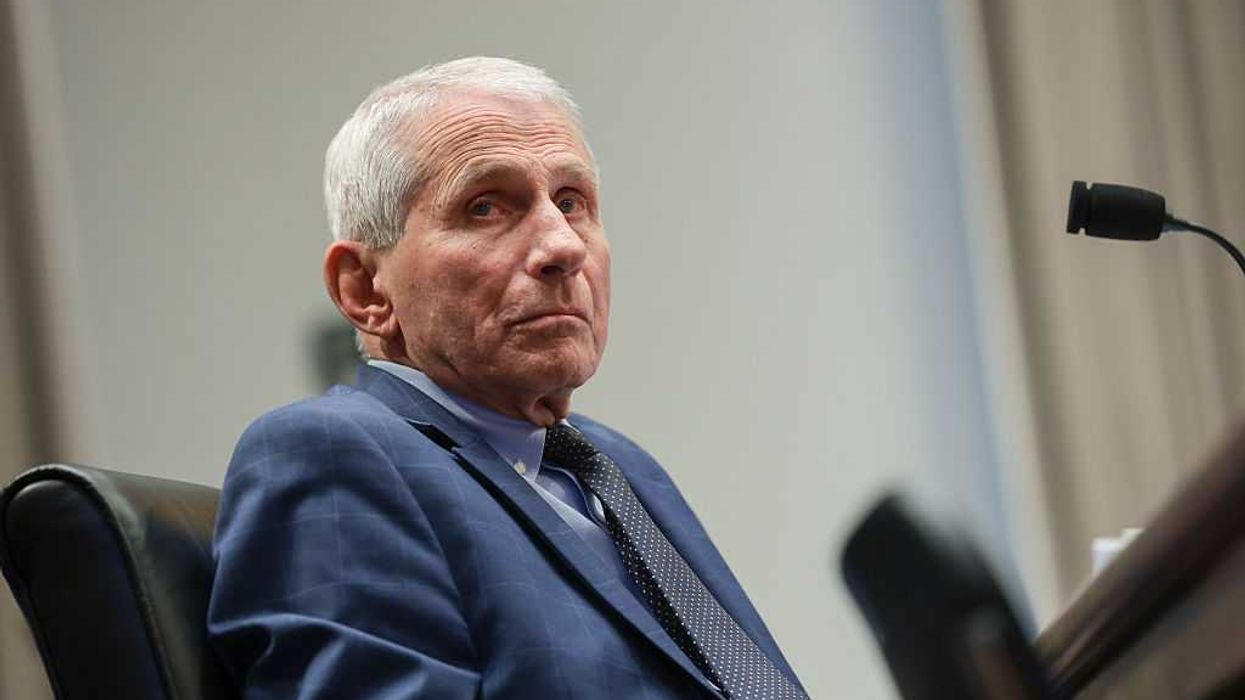
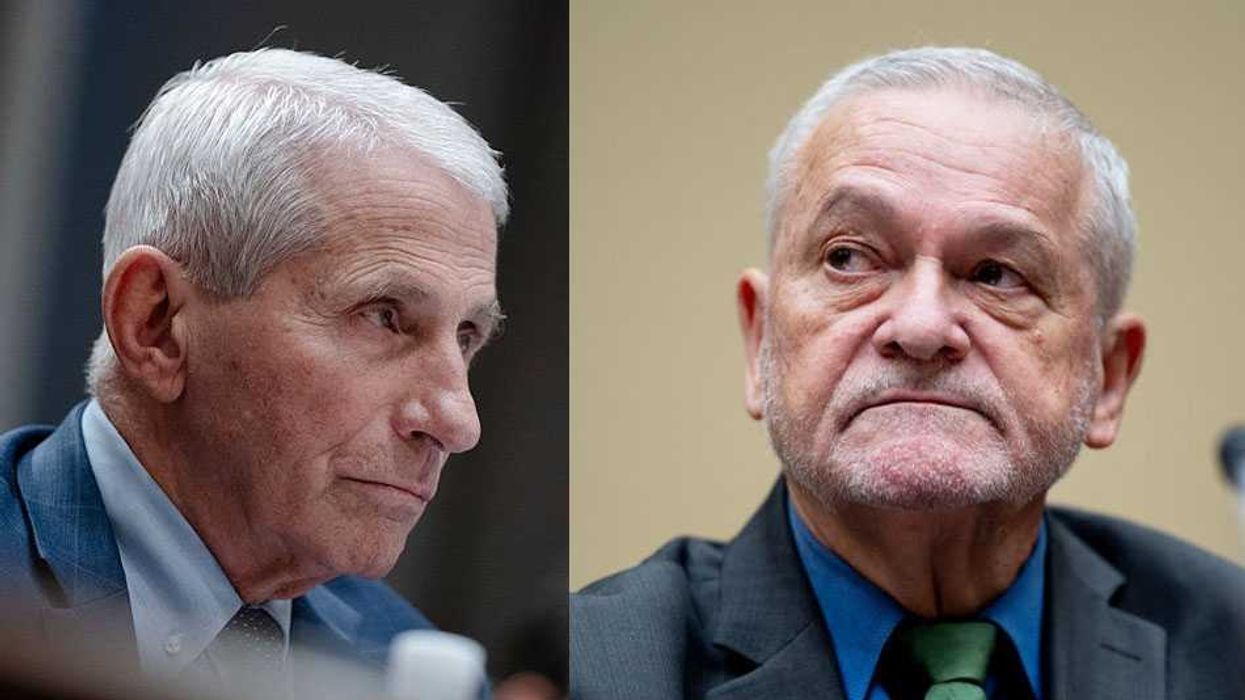
DOJ Indicts Fauci’s Right-Hand Man For Allegedly ‘Circumventing’ Open Records Requests

'As alleged in the indictment, Dr. Morens and his co-conspirators deliberately concealed information and falsified records in an effort to suppress alternative theories regarding the origins of COVID-19.'

‘Stu and Dave Do America’ premiere: Trump’s most annoying employees ranked and ROASTED


In the premiere episode of “Stu and Dave Do America,” Stu Burguiere and Dave Landau lived up to the show’s name by diving straight into the issues Americans actually care about: the decline in spanking kids, the weirder side of foot fetishes, and — of course — a savage ranking of Donald Trump’s most annoying former employees.

The nerdy-funny duo created a hilarious list of the president’s worst hires, complete with dishonorable mentions that will have you cackling.

The dishonorable mentions kicked things off with a parade of Trump alumni who earned a special place in the “thanks but no thanks” hall of fame: John Bolton, Alyssa Farah Griffin, Pam Bondi, Kristi Noem, and plenty more. Stu and Dave didn’t hold back on the roasts — from Bolton’s “serial killer” vibe to some truly unhinged Noem-related tangents involving puppies and questionable plastic surgery.

But the real contenders for most annoying Trump employee of all time were these five:

  1. Anthony Fauci
  2. Corey Lewandowski
  3. Steve Bannon
  4. Michael Cohen
  5. Anthony Scaramucci

Dave cast his vote firmly for Fauci, declaring: “It’s been six years of a destroyed world because of Fauci. ... Literally anyone else would have done a better job.”

Stu followed up by joking that even the teacher who created Airborne would’ve been better suited for the role.

The whole segment is packed with the kind of rapid-fire banter and absurd tangents that make Stu and Dave such a great pairing — equal parts conserva-nerd precision and comedian chaos. If you need a good laugh at politics gone wrong, this episode delivers.

Check it out above.

Want more from Stu and Dave?

To enjoy more of Stu and Dave's lethal blend of wit, humor, and insightful commentary subscribe to BlazeTV — the largest multi-platform network of voices who love America, defend the Constitution, and live the American dream.

Epstein files shine light on power networks: Revisit BlazeTV's 'The Coverup' on the same corruption web


On January 30, the U.S. Department of Justice dropped over 3 million pages of Epstein-related documents, as mandated by the Epstein Files Transparency Act, signed into law by President Trump in November 2025. This massive data dump includes roughly 2,000 videos and 180,000 images.

These revelations seem to confirm what independent voices like Glenn Beck and Matt Kibbe have warned about for years: a shadowy cabal of insiders wield tremendous power to shape how we think.

As the dust settles around this 2026 bombshell, it's the perfect time to revisit BlazeTV’s docuseries "The Coverup” — Matt Kibbe’s deep dive into a similar web of corruption: the COVID-19 pandemic.

Months before this latest Epstein file dump, Glenn Beck sat down with Kibbe to dissect the insidious links between COVID mandates, Russiagate hoaxes, and censorship to pinpoint the very same shadowy forces now spotlighted in the Epstein files.

“The same people and the same machine that weaponized the Russiagate story and covered up the Hunter Biden laptop story are the same people in the [COVID-19] apparatus,” Kibbe told Glenn.

With the Epstein files shining new light on long-hidden networks of power and influence, now is the time to watch BlazeTV’s "The Coverup" series. Go to faucicoverup.com to access the full series.

Want more from Glenn Beck?

To enjoy more of Glenn’s masterful storytelling, thought-provoking analysis, and uncanny ability to make sense of the chaos, subscribe to BlazeTV — the largest multi-platform network of voices who love America, defend the Constitution, and live the American dream.

Confirming Covid Jabs Killed Kids Reinforces Gen Z’s Distrust Of Government

American teenagers have a fractured relationship with the federal government, one that may never be healed.

The Last Time New York Hit Rock Bottom

Jonathan Mahler’s first book, the 2005 Ladies and Gentlemen, the Bronx Is Burning, was a work of historical journalism that re-created the summer and fall of 1977. Mahler interweaved the story of the New York Yankees World Series-winning season with the chaotic events in the city that year, including the Son of Sam murders, the massive city-wide blackout that summer, and the free-for-all mayoral election that featured Ed Koch, Mario Cuomo, and Bella Abzug.

The post The Last Time New York Hit Rock Bottom appeared first on .

Biden Autopen Investigator: Playtime Is Over; It’s Time To Prosecute

'Whoever controlled the autopen controlled the presidency,' Mike Howell, of the government watchdog Oversight Project, said.

Researchers tied to Fauci’s COVID cover-up still scoring big NIH grants


The Trump administration's National Institutes of Health is still funding some medical researchers who suppressed debate about the possibility of a lab leak as the origin of COVID-19.

Following the outbreak, then-National Institute of Allergy and Infectious Diseases Director Anthony Fauci and then-NIH Director Francis Collins strongly condemned allegations that the virus was the result of a lab leak, primarily citing a March 2020 peer-reviewed article from National Medicine titled "The proximal origin of SARS-CoV-2."

'How do you put all this together, whether you believe in this series of coincidences, what you know of the lab in Wuhan, how much could be in nature — accidental release or natural event?'

However, released emails revealed that the scientists involved in drafting the Proximal Origin initially had concerns that the virus had leaked from a lab.

Kristian G. Andersen, who would go on to be listed as the primary author of the article, wrote in an email to Fauci on January 31, "The unusual features of the virus make up a really small part of the genome (<0.1%) so one has to look really closely at all the sequences to see that some of the features (potentially) look engineered."

Andersen further noted that he, Edward Holmes, Robert Garry, and Michael Farzan "all find the genome inconsistent with expectations from evolutionary theory."

"But we have to look at this much more closely and there are still further analyses to be done, so those opinions could still change," he added.

Holmes and Garry also helped draft the Proximal Origin.

RELATED: BlazeTV's 'The Coverup' exposes how the censorship industrial complex silenced Americans during COVID

Photo by Jane Barlow - WPA Pool/Getty Images

In an email to Fauci and Collins on February 2, 2020, Farzan was quoted as saying, "Nothing seems to specifically suggest whether this virus was most likely to be 'adapted,' 'evolved,' or maybe even 'engineered.' So I think it becomes a question of how do you put all this together, whether you believe in this series of coincidences, what you know of the lab in Wuhan, how much could be in nature — accidental release or natural event?"

"I am 70:30 or 60:40," he concluded. Farzan later backtracked, claiming those numbers were "inverted."

A House subcommittee found that the report was created after Fauci and Collins held a conference call in February with roughly a dozen scientists, four of whom drafted the paper days later. That draft was reportedly sent to Fauci and Collins "for editing and approval" before it was published.

During a 2023 congressional hearing, Andersen denied allegations that Fauci prompted researchers to write the Proximal Origin report and rejected claims that grants were used to persuade scientists to dismiss the lab-leak theory.

Despite early suspicions about the virus' origins, the final published version of the paper stated that the scientists' "analyses clearly show that SARS-CoV-2 is not a laboratory construct or a purposefully manipulated virus."

The report sparked allegations that the once-skeptical authors were now complicit in the cover-up of the virus' origins.

Yet grant records show that Andersen, Garry, and Ian Lipkin are still receiving taxpayer-funded grants, several of which are being used to conduct COVID-related research.

Andersen is receiving a few grants from the NIAID: one worth over $2.5 million, another for $319,000, and a third for $602,000.

The first grant provides funding to the Center for Viral Systems Biology. Andersen is the director and principal investigator of CViSB, while Garry is the co-director.

The project's summary states, "The COVID-19 pandemic is a stark reminder of the threat posed by infectious diseases, but other priority pathogens, such as Lassa and Ebola viruses, continue to pose significant challenges in endemic areas."

"Our central hypothesis remains that complex networks of viral and human factors, including distinct clinical, immunological, genetic, virological, and physiological attributes play key roles in determining the outcome and spread of Lassa, Ebola, and COVID-19," it continues. "Our overall goal is to identify these molecular networks and provide a deep system-level understanding of the virus, host, and environmental drivers of disease severity and spread to discover predictive markers of human disease."

RELATED: Despite Biden's pardon, Anthony Fauci still faces legal perils. Here they are.

Anthony Fauci. Photo by J. Scott Applewhite-Pool/Getty Images

The second grant provides funding for the CViSB's Administrative Core, led by Andersen, which includes support for all of the center's research projects to ensure its goals are successfully met.

The third grant funds "Project 2," which aims to "investigate the complex interplay of virus genetics and host immunity in determining epidemiology and outcome of infection with Lassa virus, Ebola virus, and SARS-CoV-2."

Garry was listed as the project leader on a separate grant for "Project 1," totaling nearly $515,000. The project's goal is "to generate an integrated, systems-level dataset that will enable development of models that predict disease severity or long-term sequelae in individuals infected with Lassa virus, Ebola virus or SARS-CoV-2, and protective responses to vaccines."

Another separate grant, totaling over $1.9 million, went to Columbia University's Center for Infection and Immunity for a project to study "gene-environment interactions between the immune system and infectious agents." The project lead and investigator was listed as Ian W. Lipkin, another co-author of the Proximal Origin.

Lipkin informed Blaze News that he is not pursuing SARS-CoV-2 research.

"Unless new data are uncovered that unequivocally demonstrate a point source, I don’t see how there will be resolution of this contentious and destructive debate," Lipkin said. "What is unequivocal is that wild animal markets and unregulated research with known or potential pandemic pathogens pose unacceptable risks to public health."

According to the NIH RePORTER, Holmes and Andrew Rambaut, also a Proximal Origin co-author, do not appear to have any active projects that are receiving grants at this time.

Dr. Richard H. Ebright of Rutgers University told Blaze News that there is "compelling evidence" that the authors of the Proximal Origin knew the paper's conclusions were "invalid at the time it was submitted for publication, at the time it was accepted for publication, and at the time it was published."

He accused the authors of committing "science fraud by publishing conclusions they knew to be invalid" and then "compound[ing] that science fraud by publishing patently unsound follow-up papers purporting to support the invalid conclusions."

Ebright called for the NIH Office of Research Integrity and the Department of Health and Human Services to investigate and "pursue retraction of their fraudulent paper and unsound follow-up papers, termination and clawback of their federal funding, and debarment from eligibility for future federal funding."

An NIH spokesperson told Blaze News, "NIH does not discuss grants compliance reviews on specific funded awards, recipient institutions, or supported investigators, whether or not such reviews occurred or are under way."

Andersen and Garry did not immediately respond to a request for comment.

RELATED: Inside Trump’s White House during the early pandemic: ‘The Coverup’ Episode 3 available NOW

Like Blaze News? Bypass the censors, sign up for our newsletters, and get stories like this direct to your inbox. Sign up here!

COVID lab leak denial lingers on NIH’s website: 'Misleading and false'


Allegations that COVID-19 was the result of a lab leak were strongly and swiftly denied by the former Biden administration and some prominent health officials, despite dissenting opinions within the medical field, including from Jay Bhattacharya, who now serves as President Donald Trump's National Institutes of Health director.

'I'm convinced that research agenda led to this pandemic through a lab leak in China, in Wuhan.'

A page on the NIH's website, last reviewed by the agency on March 16, 2022, has not yet been updated by the new administration, still claiming that the leak theory is "misleading and false."

The NIH webpage reads:

Unfortunately, because the origins of the SARS-CoV-2 have not yet been identified, misleading and false allegations have been made about NIAID-supported research on naturally occurring bat coronaviruses. Specifically, these allegations have targeted research conducted at the Wuhan Institute of Virology in Wuhan, China, funded through a subaward from NIAID grantee EcoHealth Alliance. The naturally occurring bat coronaviruses studied through this subaward were significantly, genetically different from SARS-CoV-2 and, therefore, could not have caused the COVID-19 pandemic.

Bhattacharya was one of the voices amid the COVID-era insisting that there was a cover-up of the virus' origins.

In a May interview with Politico, Bhattacharya stated that he believes the U.S. should do more to reveal the origins of the virus, but noted that China has not been cooperating with those investigations.

"There's enough evidence that I've seen from the outside that suggests that there was at the very least a cover-up of dangerous experiments that were done in China with — by the way — the help of the U.S. and also Germany and the U.K.," Bhattacharya told the news outlet.

RELATED: NIH staffers storm out as Bhattacharya delivers reality bombshell about COVID origin

Photo by STR/AFP via Getty Images

He referred to the experiments as "a very, very dangerous kind of utopian research agenda."

"I'm convinced that research agenda led to this pandemic through a lab leak in China, in Wuhan," Bhattacharya continued. "But that was a global effort."

RELATED: How a ‘lovers' spat’ nearly sparked a second pandemic in Biden-era high-security virus lab

Photo by ALLISON BAILEY/Middle East Images/AFP via Getty Images

He called it "absolutely striking" that then-Director of the National Institute of Allergy and Infectious Diseases Anthony Fauci and other leaders would invest so much effort into suppressing the theory and "denigrating scientists who very legitimately raised this possibility."

Blaze News contacted the NIH to determine whether it is aware of the webpage dismissing lab leak claims and if it plans to update its website. The agency did not immediately respond to a request for comment.

Like Blaze News? Bypass the censors, sign up for our newsletters, and get stories like this direct to your inbox. Sign up here!

The Russia hoax and COVID lies share the same deep-state fingerprints


“Conspiracy theory” is the go-to smear against those of us who questioned any aspect of the government’s authoritarian response to the COVID-19 pandemic. But as the great Austrian economist Murray Rothbard once observed, the smear serves one purpose: to divert the public’s attention away from the truth.

“An attack on ‘conspiracy theories,’” Rothbard writes in “The Anatomy of the State,” means that the subjects of a regime “will become more gullible in believing the ‘general welfare’ reasons that are always put forth by the State for engaging in any of its despotic actions.”

The democratization of information means that censorship just doesn’t work as well as it used to.

“A ‘conspiracy theory,’” he continues, “can unsettle the system by causing the public to doubt the state’s ideological propaganda.”

The more I dig into the origins of the COVID pandemic, the more “despotic” our state seems to become — and the more “conspiratorial” I get.

Unsettling the system

I am trying to put together the final pieces of the puzzle of what I consider among the greatest public policy scandals of my lifetime — not only who did it, but more importantly, why would they do it?

A few months ago, I spent a day with Matt Taibbi, the iconoclastic muckraker and “Twitter Files” reporter, for the latest episode of my BlazeTV investigative series, “The Coverup.

As he dug through the trove of emails and texts, Taibbi discovered the conspiracy to blacklist and silence Dr. Jay Bhattacharya, the subject of the first episode of “The Coverup” and now the head of the National Institutes of Health. Taibbi soon learned that the same tactics and tools — and even many of the very same deep-state actors — have their fingerprints all over both the Russia collusion hoax and the COVID cover-up.

A precedent for censorship

Recently released documents from Director of National Security Tulsi Gabbard reveal that the so-called Russia collusion hoax wasn’t just wrong — it was deliberate. The Obama administration orchestrated the fabrication, pushing U.S. intelligence agencies to leak a report suggesting Vladimir Putin had helped Donald Trump steal the 2016 election.

That leak, repeated endlessly by the press, fueled a national narrative branding Trump’s presidency as illegitimate — despite those same agencies having already dismissed the claim.

This kind of manipulation would be outrageous if it weren’t so familiar.

Five years after the COVID lockdowns stripped millions of Americans of basic liberties, we’re still uncovering how the deep state used propaganda to silence dissent. Throughout the pandemic, scientists and doctors raised alarms about the damage lockdowns would cause — and did cause. Some of the world’s most respected experts signed the Great Barrington Declaration to oppose the government’s heavy-handed response.

But the public never heard from them. Bureaucrats and media allies moved swiftly to smear, suppress, and sideline these voices using one of the oldest authoritarian tactics: control of information.

In fairness, public health agencies didn’t have to twist many arms. The legacy media followed their lead willingly — even when the guidance contradicted itself or defied basic logic.

But unlike the days of Project Mockingbird, when the CIA could shape coverage by nudging the New York Times or CBS, controlling the old guard wasn’t enough. The rise of social media — decentralized, fast-moving, and open to anyone with a computer or phone — posed a new challenge. The administration needed a more aggressive strategy to dominate the narrative.

Strong-arming social media

In episode 5 of “The Coverup,” I ask Taibbi how they pulled it off. As one of the first journalists to dig into the Twitter Files, Taibbi exposed the machinery behind the censorship regime. Americans suspected that platforms like Twitter, Facebook, and YouTube were suppressing dissent during COVID. But the Twitter Files confirmed what many feared: They weren’t acting alone. They took orders from the FBI directly.

And these weren’t polite requests, either. When the government “suggested” something, tech companies treated it as a command.

It all traces back to — surprise, surprise — the Russia hoax.

In 2017, Congress hauled tech executives into hearings and accused them of letting Russian disinformation run wild. Essentially, they were given an offer they couldn’t refuse: Allow the government to play a role in content moderation or prepare to be regulated into submission.

RELATED: On the 9th anniversary of Russiagate, the hoax is finally crumbling

Photo by Alex Wong/Getty Images

Their surrender gave U.S. intelligence agencies de facto control over what Americans could say online. The feds told platforms which posts to delete, which users to silence, and how to suppress the rest. You could post your opinion — as long as no one could see it. “Shadow bans” became the preferred method of censorship: clean, quiet, and deniable.

The silver lining

Thanks to Taibbi — and a handful of journalists who still value truth over access — we now see how the government sold Americans on fiction. Russia hacked the election. COVID came from a bowl of bat soup. Question either and you’d vanish from the digital public square.

Millions believed these lies. And under their influence, they did real damage — locking down schools, closing businesses, and sowing doubt about fair elections.

But truth has a way of leaking out.

It’s taken time, but the lies are unraveling. And that’s the silver lining. In a world where information moves faster than censors can keep up, suppression doesn’t work like it used to. So long as we have truth-tellers willing to dig and defy — like Taibbi — the regime won’t have the last word.

We won’t get fooled again.

Episode 5 of “The Coverup” premieres Thursday, July 31.