Sports broadcasting blackouts are killing American culture
Monoculture is a concept describing a society in which everyone — or at least a large plurality — shares common interests. America once had one in spades. People stopped on the street to watch the "Seinfeld" finale being broadcast in Times Square. Over half of the entire country watched the final episode of "M.A.S.H."
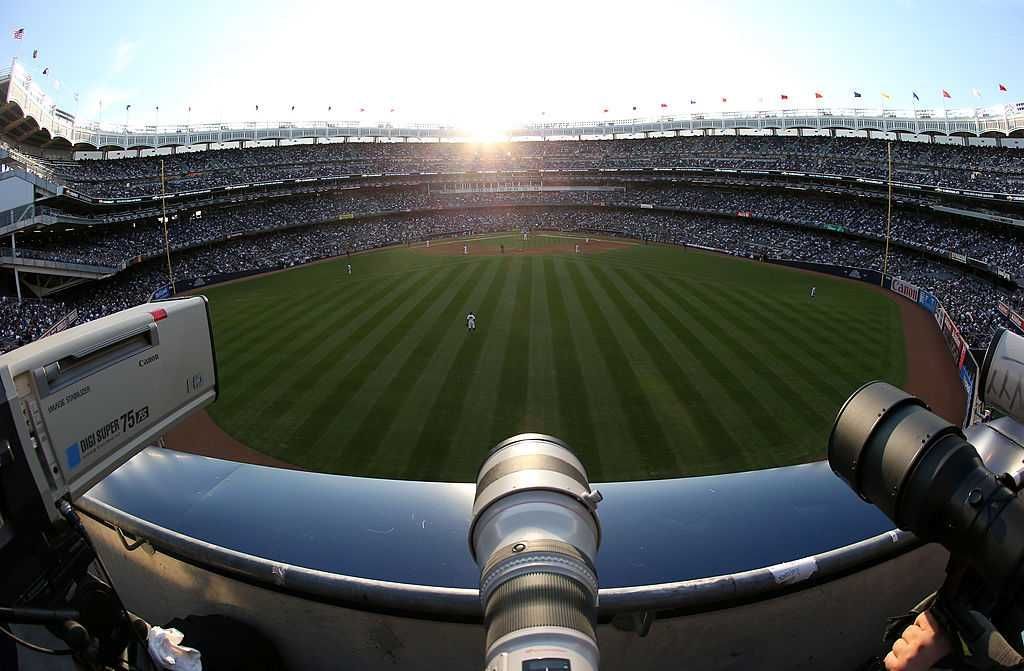
And, of course, there were sports. America’s two most popular sporting leagues, Major League Baseball and the National Football League, once dominated their respective halves of the year. At one time, almost 60% of American households watched World Series games.
But now that’s changing. And while determinists may argue that it was an inevitability that some sports may wax or wane in popularity, they did not have to. They are being killed.
It is difficult — even borderline impossible — to watch some teams’ games.
In the late 1950s, football teams had a problem. The NFL instituted a blackout policy, banning games from being broadcast if they did not sell enough stadium tickets ahead of time. This was done to aid teams from smaller cities, which depended upon revenue from ticket sales and could have potentially failed without that income.
But the Supreme Court ruled that the NFL — in determining which teams’ games could be broadcast — was running afoul of the law. So the league turned to Congress and President John F. Kennedy, who in 1961 passed and signed the Sports Broadcasting Act.
The SBA gave antitrust exemptions to the four major American sporting leagues — the NFL, MLB, the National Hockey League, and the National Basketball Association — when it came to the pooling of telecasting rights of their games
With their exemptions secured, the leagues proceeded to enforce strict exclusivity policies, giving the rights to the games to certain stations in certain circumstances. This system worked for a while, but it began to break down in the age of cable television, when certain games were essentially placed behind paywalls, a practice that has intensified in the streaming era.
This development has been a boon to the major leagues, which have made billions in sales of exclusive games. Amazon paid about $1 billion per year for "Thursday Night Football," and MLB makes at least $800 million from its exclusives.
For the fans, however, it has been a disaster.
RELATED: Trump’s antitrust policy is working for everyday Americans
Now, "Thursday Night Football" belongs to Amazon Prime when outside a local region. The same situation occurs with key Christmas Day games, which can be found on Netflix. ESPN likewise has exclusive rights, some of which are broadcast on YouTube and others on Netflix. Certain nationally broadcast games are not available on local TV.
MLB’s blackout policies have produced even more confusion for viewers. It is difficult — even borderline impossible — to watch some teams’ games. Atlanta Braves fans, for example, were in recent years instructed on how to watch their team's games on Gray-owned broadcast stations, but Gray only hosted 15 games out of MLB’s 162-game season. Watching all 162 could cost hundreds of dollars.
Some MLB fans are even worse off. The state of Iowa, for example, is “blacked out” from viewership of six different nearby teams, leaving fans unable to watch a given game unless they have access to a specific package.
Obviously, viewers hate this. Polling has found that over 70% of sports fans want games to be broadcast for free locally, and the National Association of Broadcasters has called for Congress to consider changing the Sports Broadcasting Act.
While changes to the Kennedy-era law are overdue, there is reason to believe that the law as written does not allow the leagues to act as they have. The text of the law covers professional sporting leagues that engage in “sponsored telecasting of the games.” Telecasting is a specific form of transmission and arguably does not include broadcasts over the internet.
Some may point out that laws written in an older time can apply to newer technologies, but that’s not at issue here. The First Amendment, for example, covers speech said over television or the phone — but that is because it is still speech. If the SBA had covered only broadcasting, the leagues would potentially have an out. But it doesn’t.
The Trump administration is already taking action on this front. The Federal Communications Commission asked for comments on the state of sports broadcasting earlier this year, and the Department of Justice has opened an antitrust probe into both the NFL and MLB.
These investigations could end up being long-running and likely will require both Congress and the courts to act. Americans should urge all three branches of government to take action and cut through the broadcasting web to save the last element of America’s monoculture.
 There is hope for major reductions in energy prices — if American politicians will repent of their support for renewable energy.
 When your lights flicker and your heat fails this winter, remember to thank a climate czar.
 People don't like wind farms. That gut feeling points toward the truth: Wind turbines are not only wasteful and dangerous, but ugly as sin.
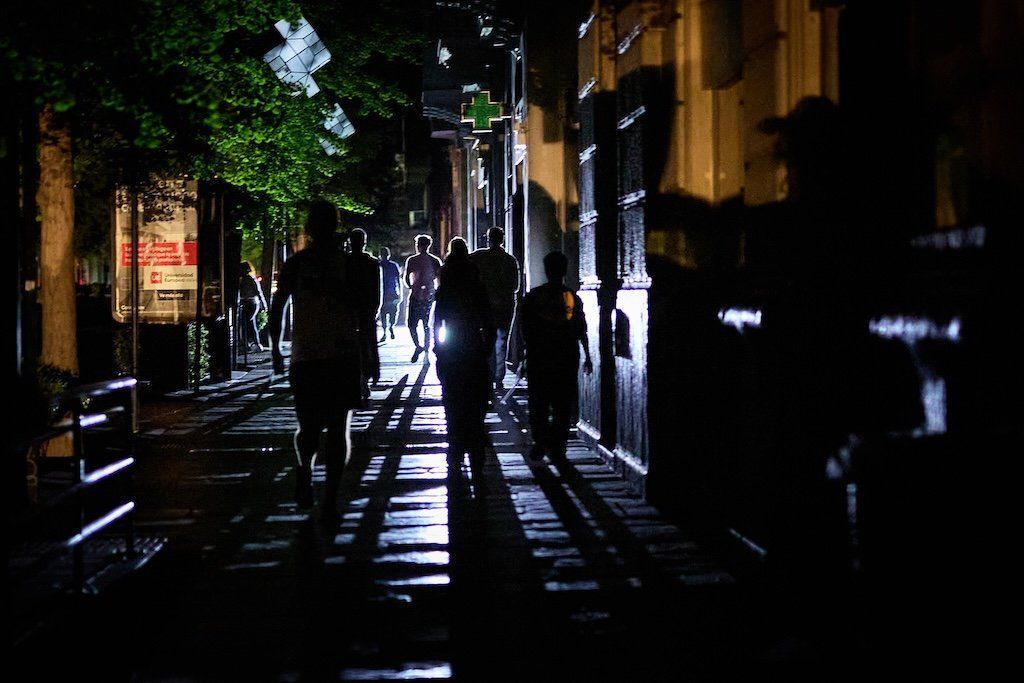
 California residents are still braced for rolling blackouts this week as a late-summer heat wave grips the western United States.
 Destructive policies and rhetoric have caused producers and investors to approach new oil and gas projects with extreme caution.
 www.theblaze.com
 www.theblaze.com
LIGHTS OUT: How Democrats are creating an American energy CRISIS
The European energy crisis is coming to America. Progressives have always had an unhealthy infatuation with Europe. Nowhere is that more evident than in the insane obsession with the green transformation of energy. Glenn details that when major EU nations decided to transition suddenly away from fossil fuels, it caused them to rely even more on Russian oil, coal, and natural gas to provide their backup when the sun doesn’t shine enough or the wind stops blowing. That arrangement worked fine while Vladimir Putin played his long con. But now that Russia has turned off the gas tap, European energy prices are skyrocketing, governments are scrambling and hemorrhaging money, and citizens are starting to protest. California is imitating and even trying to one-up Europe with its green initiatives under Gavin Newsom, and the Biden administration has handed California an outsized leadership role in directing energy policy for the whole U.S. If environmental zealots in the Democratic Party get their way, it is LIGHTS OUT for the American way of life as we know it.
Want more from Glenn Beck?
To enjoy more of Glenn’s masterful storytelling, thought-provoking analysis, and uncanny ability to make sense of the chaos, subscribe to BlazeTV — the largest multi-platform network of voices who love America, defend the Constitution, and live the American dream.