Wild horses ripped from Nevada’s plains — and into US beef
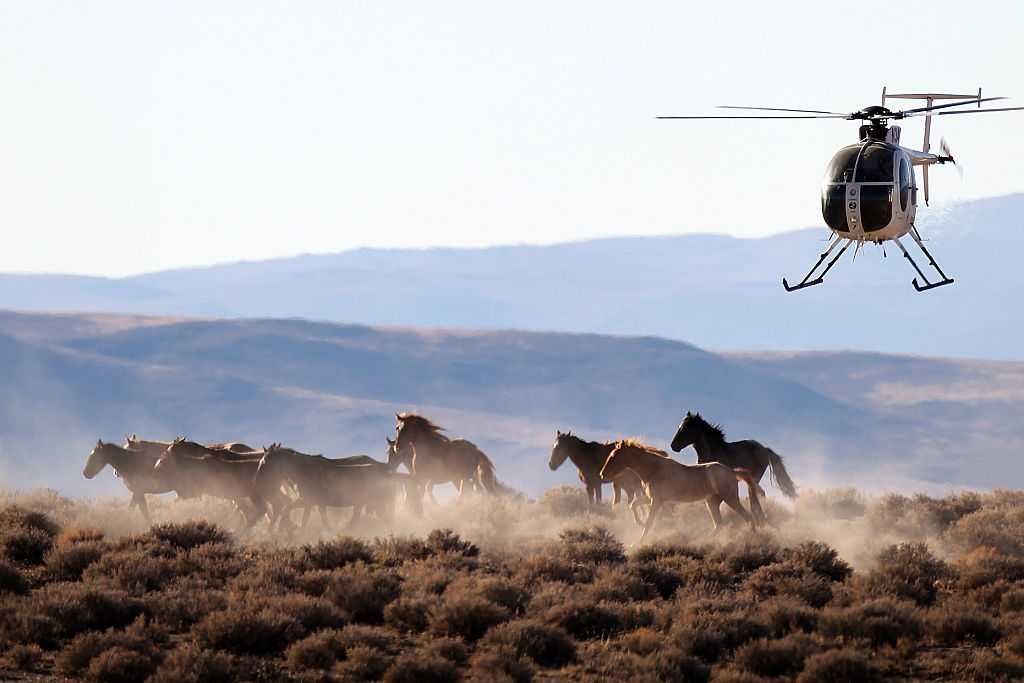


Imagine dawn breaking over Nevada’s badlands. A herd of wild horses charges across the sagebrush, manes whipping in the wind — living emblems of American freedom, the soul of the West. Then the silence breaks. Helicopter blades thunder overhead, driving the animals into traps. Foals stumble. Mares collapse. Families scatter in terror.

This isn’t a scene from frontier history. It’s happening now — a government-funded assault on one of the most enduring symbols of the American spirit. The Bureau of Land Management’s wild horse roundups have become routine cruelty disguised as “management.” And with the agency preparing its most aggressive operations yet, the time to act is now.

No more federal helicopters terrorizing symbols of liberty while criminals flood our markets with cheap ‘beef.’

Congress once recognized the value of these animals. The 1971 Wild Free-Roaming Horses and Burros Act promised protection and stewardship, not slaughter and imprisonment. But decades of mismanagement have turned that promise into a taxpayer-funded nightmare.

The Bureau’s Wild Horse and Burro Program devours $142 million a year to chase, capture, and confine herds that should roam free. The agency calls it conservation. It looks more like erasure — the slow extermination of the very wildness that once defined the West.

From Nevada into your ground beef

More than 64,000 wild horses and burros now languish in government holding pens — taxpayer-funded cages that solve nothing. The Bureau of Land Management calls it “management,” but it’s warehousing life. Meanwhile, the agency ignores real issues like overgrazing, water misallocation, and habitat loss.

In Nevada, the carnage is especially stark. Last fiscal year, federal contractors ripped 2,196 horses from the Triple B Complex. Twenty-seven died on-site, collapsing under the stress of helicopter chases. The rest face grim odds in confinement, where mortality rates hover around 12%. Videos from inside these facilities show workers kicking panicked horses — proof that “humane management” has devolved into cruelty.

The story doesn’t end in captivity. Many of these captured horses end up in the slaughter pipeline. Sold at auction for as little as $5 to $25 a head, they cross borders into Mexico and Canada, where their meat re-enters U.S. markets illegally — blended into ground beef at a time of soaring prices.

This scandal isn’t just about animal welfare; it’s about corruption and public health. The same pipeline that traffics horse meat often intersects with drug and human smuggling networks, all subsidized by American taxpayers.

Actress and horse rescuer Dawn Olivieri, known for her roles in “Yellowstone” and “Homestead,” has called out the hypocrisy: With beef prices at record highs, why is the government allowing wild horse meat to undercut the market — and endanger consumers?

Call for accountability

The federal response has been a blueprint for more misery. The fiscal year 2026 presidential budget proposal guts the program by over 25%, slashing funding from $142 million to $100 million, all while dangling lethal options like euthanasia for healthy herds.

Nevada's herds are ground zero. The Bureau of Land Management’s latest bombshell is a plan to yank nearly 5,000 wild horses from the Callaghan Complex using those same inhumane helicopter drives, ignoring fresh data and science on fertility controls or habitat restoration.

This isn't land management. It's a war on wildlife, propping up special interests while ranchers and communities bear the brunt of unbalanced ecosystems and federal overreach.

Demand action now

Fixing this problem requires more than outrage — it demands bold, commonsense conservatism. Cut the waste, restore the range, and honor the law’s original intent.

Start by releasing healthy captives into the designated herd areas envisioned by Congress in 1971. Doing so would ease the $142 million burden now falling on taxpayers and return the animals to the land they’re meant to roam.

Replace helicopter roundups with proven, humane population control. PZP vaccines work. They prevent overbreeding without cruelty and cost a fraction of constant captures.

Then empower local communities. Offer tax credits to ranchers who adopt sustainable grazing practices. Build revenue through eco-tourism — guided mustang trails, for instance — and expand adoption programs that put horses to work without the whip.

Finally, shut down the slaughter pipeline for good. Enforce the Save America’s Forgotten Equines Act to ban horse meat exports nationwide and close the kill-buyer loopholes that make butchery profitable.

RELATED: ASPCA, Humane Society live large on your donations, warns watchdog
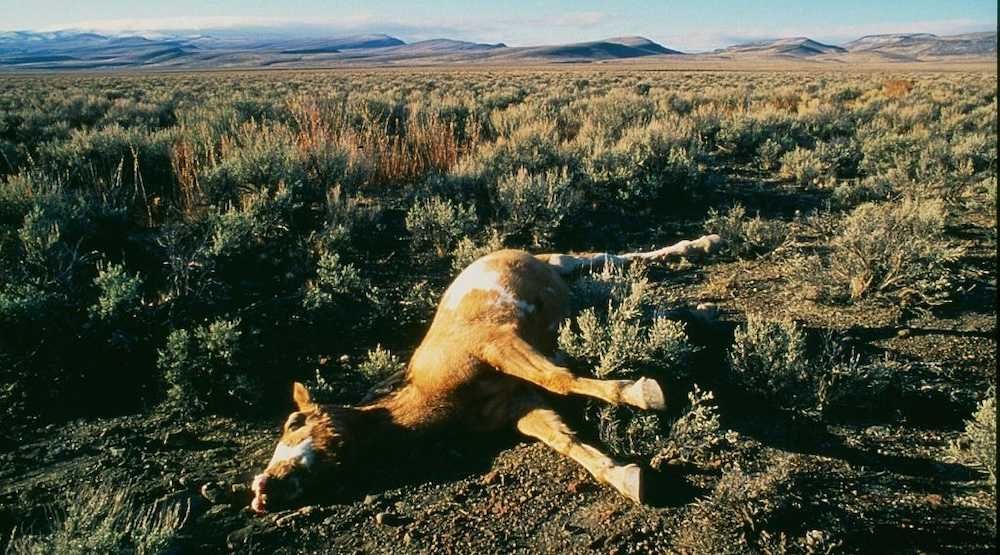
Photo Paul Harris/Getty Images

This battle echoes larger fights against government bloat. Just as we decry asset forfeiture abuses that seize property without due process, we must end the Bureau of Land Management’s unchecked grabs of Nevada's heritage. Fiscal hawks know the math: $142 million squandered yearly could fund tax relief for veterans or bolster border security.

No more federal helicopters terrorizing living symbols of liberty while criminals flood our markets with cheap “beef.”

The establishment thrives on apathy, but Nevadans, from ranchers to rescuers, aren't buying it. Nevada's wild horses aren't Washington's playthings — they're our legacy. Let's reclaim the range before the dust settles for good.
Anonymous, Gun-Themed Website Targeting Rep. Hageman Referred To The FEC

The website's cookies can see you, but you can’t communicate with it or know anything about the humans behind it.

Biden Illegally Snatched Up Public Land, But SCOTUS Can Give It Back

Either this is an abuse of the Antiquities Act, or the Antiquities Act is itself an unconstitutional delegation of Congress’s power to the executive branch.

Good Riddance, Deb Haaland

As the nation's public land chief, Haaland's top priority at the Interior Department seemed to be closing public property for development.

Doug Burgum Pledges To Restore Responsible Land Management To Interior Department

Trump's pick for Interior secretary also responded to queries about the myriad public lands issues that have frustrated Republicans for years.

Biden Locks Up Oil And Throws Away The Key With Lame-Duck Restrictions

Trump says that he has "the right to unban it immediately," but an attempt at a swift annulment might be more complicated than a mere executive order.

Cities can turn blue; homesteads will keep America red


Americans are now familiar with the iconic red-blue political map. In the 2024 election results, a bird’s-eye view shows much of the country’s landmass as blood red, while blue dominates the large urban centers. This city vs. country divide remains the most significant factor in America’s political polarization. Every policy we pursue should encourage rural growth, not urban expansion. Donald Trump’s supporters should be cautious about the direction some are taking his “freedom cities” idea.

The right broadly agrees that the federal government owns too much land in the West and should sell it to states or individuals. However, the goal should be to strengthen rural life in Western states, not urbanize the land with “15-minute city” concepts. These constructs would likely attract liberal voters who support that mindset, undermining the goal of fostering rural empowerment.

The issue isn’t a lack of new construction. It’s the soaring cost of building, driven by general, debt-fueled inflation.

Trump announced his plan in March as part of “Agenda 47” to build 10 “freedom cities” on 3.2 million acres of federal land. The cities would be selected through a contest, with the best development proposals winning. Trump has suggested that the housing crisis stems from a lack of supply rather than inflation or monetary policy and that building cities in rural, red America could help solve it.

However, with urbanist Doug Burgum likely leading this project and “tech bro” billionaires influencing its direction, the plan risks backfiring. It could introduce venture socialist ideas that act like a “nuclear bomb” on red America, turning red states into blue ones. Instead of fostering rural growth, it could advance the World Economic Forum’s dream of “15-minute cities” — but with a MAGA stamp of approval.

Bringing tech bro liberalism to red America

Wealthy tech entrepreneurs played a key role in funding Trump’s election victory, driven by their disenchantment with the radical direction of the Democratic Party. However, they are not full allies of the movement. Many remain socially liberal, support increased legal immigration, and prioritize high-tech public-private partnerships over cultural and political concerns.

“When new cities are built in the U.S., new industries can form, and a new middle class can emerge,” said Nick Allen, a tech entrepreneur close to Trump, in an interview with the Epoch Times. Allen, a member of the Frontier Foundation, a group pushing for these cities, added, “The outsized role that the tech community is probably going to play in this administration has generally made me more optimistic about the potential for doing some version of Freedom Cities.”

Well, that is exactly why I’m not optimistic. Incoming Interior Secretary Doug Burgum would likely oversee this plan. Burgum, a known urbanist and supporter of the “carbon neutral” agenda, has criticized America for being “built for automobiles and not designed for people.” He has lamented the lack of “investment into building the infrastructure for multimodal transportation” and blamed cars for rising housing prices.

As governor of North Dakota, Burgum established the North Dakota Housing Initiative Advisory Committee to focus on “improving housing availability, affordability, and stability” — phrases often used by planners pushing for 15-minute cities and car-free urban bubbles. Burgum also founded the Kilbourne Group, an organization dedicated to creating vibrant urban centers and revitalizing downtowns.

Do we really want this “yuppie” mindset shaping the development of states like Wyoming, Montana, Utah, and Idaho?

Economically, this plan echoes China’s “ghost cities” and could worsen the very factors driving housing scarcity and high prices. Pumping borrowed and printed cash into these projects would inflate the money supply, funneling loan guarantees and crony contracts to tech developers. The result? Attracting liberal yuppies to red states while enriching venture socialists.

Defenders of this idea argue they want to create autonomous, low-regulation economic opportunity zones. However, if these cities are not structured like rural homesteads, they will attract liberal voters who could eventually flip these red areas blue. Under their quasi-autonomous proposal, these cities would also remain somewhat immune to directives from Republican-controlled legislatures.

The truth about the housing crisis

The rush for new housing construction rests on a false premise. Supporters claim there is a massive housing shortage, while others argue that zoning laws are stifling the housing market.

In reality, even with the freest zoning laws imaginable, homes would remain unaffordable. General inflation and Federal Reserve interest rate policies have created a generational gap in mortgage rates, locking up the resale market and driving housing prices higher.

Housing construction remains strong, according to the National Association of Home Builders. Over the past 10 months, builders issued 846,446 single-family home permits nationwide — a 9.4% increase from 2023. The number of homes under construction or already completed has reached its highest level since the 2007 housing bubble. Overall, the supply of new homes has risen by 70% over the past three years.

The issue isn’t a lack of new construction. It’s the soaring cost of building, driven by general, debt-fueled inflation. The housing market also suffers from the Federal Reserve’s policies, which created an asset bubble by purchasing $2.5 trillion in mortgage-backed securities. By keeping interest rates artificially low for a generation, the Fed incentivized cheap borrowing.

When inflation spiked, the Fed rapidly raised rates, triggering a “death trap” for homeowners who now refuse to sell and face significantly higher mortgage payments.

Today, deficits and inflation remain so high that even recent Fed rate cuts have failed to lower mortgage rates. The yield on the 10-year Treasury note — which heavily influences mortgage rates — has climbed 85 basis points since the Fed cut rates by 50 basis points on September 19.

Simply put, the housing crisis stems from debt-driven inflation, not a lack of supply.

The cost of new homes is now nearly the same as existing homes for the first time in modern history. This isn’t a supply issue; it’s an unnatural housing bubble and an interest rate cliff that has frozen the existing inventory market. While other minor factors contribute, this remains the clear culprit.

Spending massive amounts to create red-state cities would ironically worsen inflation — the very factor driving the housing crisis. The solution isn’t building more homes. We need to tackle inflation. If federal land must be repurposed, it should prioritize quality of living over quantity. A better alternative to “freedom cities” is “freedom homesteads.”

A new Homestead Act

Rather than urbanizing red-state America, a better plan would encourage conservatives nationwide to move to red states organically by re-ruralizing the country. The federal government should sell parcels of land — between 10 and 50 acres — to individuals, allowing them to live and farm as they see fit. This would create the ultimate version of freedom: a rural-based economic freedom zone.

Promoting rural land use would counteract the harmful effects of farm bills, which distort markets in favor of specific crops. This approach would attract people aligned with rugged individualism, not urbanization, making red states even redder.

By incentivizing privacy and self-reliance, we would avoid high-tech surveillance schemes that threaten to transform America into a version of China. True freedom lies in wide-open spaces, not congested cities.

Homesteading ended in 1979 with the Federal Land Policy and Management Act, which created the Bureau of Land Management. The Bureau of Land Management leviathan has since restricted the rights of farmers and ranchers, including the Bundy family, by closing access to private lands or historically public-use lands.

Today, much of America’s land is being bought up by foreign actors, converted for green energy projects, or used for subsidized government crops. In some cases, landowners are paid not to farm, artificially supporting agricultural prices for Big Agriculture.

If Trump wants to usher in a new era of American prosperity, he should look to the past for inspiration — not into the technocratic abyss.

Utah Files Lawsuit To Reclaim State Control Over Public Lands Locked Up By Federal Government

State officials announced their request for the Supreme Court to review the federal government's authority to hold unappropriated lands.

Western Republicans Ramp Up Urgency To Reform Antiquities Act And Block Invasive Federal Land Grabs

Many fear the retiring president will rope off millions more acres of public lands with monument protections on his way out of office.

Biden Admin Plans To Kill Hundreds Of Thousands Of Owls In The Name Of ‘Conservation’

Federal officials are preparing to deploy hunters to kill nearly half a million owls across the Pacific Northwest.