Universities treated free speech as expendable in 2025


The fight over free expression in American higher education reached a troubling milestone in 2025. According to data from the Foundation for Individual Rights and Expression, efforts to censor speech on college campuses hit record highs across multiple fronts — and most succeeded.

Let’s start with the raw numbers. In 2025, FIRE’s Scholars Under Fire, Students Under Fire, and Campus Deplatforming databases collectively tracked:

  • 525 attempts to sanction scholars for their speech, more than one a day, with 460 of them resulting in punishment.
  • 273 attempts to punish students for expression, more than five a week, with 176 of these attempts succeeding.
  • 160 attempts to deplatform speakers, about three each week, with 99 of them succeeding.

That’s 958 censorship attempts in total, nearly three per day on campuses across the country. For comparison, FIRE’s next-highest total was 477 two years ago.

The 525 scholar sanction attempts are the highest ever recorded in FIRE’s database, which spans 2000 to the present. Even when a large-scale incident at the U.S. Naval Academy is treated as just a single entry, the 2025 total still breaks records.

The common denominator across these censorship campaigns is not ideology — it’s intolerance.

Twenty-nine scholars were fired, including 18 who were terminated since September for social media comments about Charlie Kirk’s assassination.

Student sanction attempts also hit a new high, and deplatforming efforts — our records date back to 1998 — rank third all-time, behind 2023 and 2024.

The problem is actually worse because FIRE’s data undercounts the true scale of campus censorship. Why? The data relies on publicly available information, and an unknown number of incidents, especially those that may involve quiet administrative pressure, never make the public record.

Then there’s the chilling effect.

Scholars are self-censoring. Students are staying silent. Speakers are being disinvited or shouted down. And administrators, eager to appease the loudest voices, are launching investigations and handing out suspensions and dismissals with questionable regard for academic freedom, due process, or free speech.

RELATED: Liberals’ twisted views on Charlie Kirk assassination, censorship captured by a damning poll

Deagreez via iStock/Getty Images

Some critics argue that the total number of incidents is small compared to the roughly 4,000 colleges in the country. But this argument collapses under scrutiny.

While there are technically thousands of institutions labeled as “colleges” or “universities,” roughly 600 of them educate about 80% of undergraduates enrolled at not-for-profit four-year schools. Many of the rest of these “colleges” and “universities” are highly specialized or vocational programs. This includes a number of beauty academies, truck-driving schools, and similar institutions — in other words, campuses that aren’t at the heart of the free-speech debate.

These censorship campaigns aren’t coming from only one side of the political spectrum. FIRE’s data shows, for instance, that liberal students are punished for pro-Palestinian activism, conservative faculty are targeted for controversial opinions on gender or race, and speaking events featuring all points of view are targeted for cancellation.

The two most targeted student groups on campus? Students for Justice in Palestine and Turning Point USA. If that doesn’t make this point clear, nothing will.

The common denominator across these censorship campaigns is not ideology — it’s intolerance.

RELATED: Teenager sues high school after tribute to Charlie Kirk was called vandalism

rudall30 via iStock/Getty Images

So where do we go from here?

We need courage: from faculty, from students, and especially from administrators. It’s easy to defend speech when it’s popular. It’s harder when the ideas are offensive or inconvenient. But that’s when it matters most.

Even more urgently, higher education needs a cultural reset. Universities must recommit to the idea that exposure to ideas and speech that one dislikes or finds offensive is not “violence.” That principle is essential for democracy, not just for universities.

This year’s record number of campus censorship attempts should be a wake-up call for campus administrators. For decades, many allowed a culture of censorship to fester, dismissing concerns as overblown, isolated, or a politically motivated myth. Now, with governors, state legislatures, members of Congress, and even the White House moving aggressively to police campus expression, some administrators are finally pushing back. But this pushback from administrators doesn’t seem principled. Instead, it seems more like an attempt to shield their institutions from outside political interference.

That’s not leadership. It’s damage control. And it’s what got higher education into this mess in the first place.

If university leaders want to reclaim their role as stewards of free inquiry, they cannot act just when governmental pressure threatens their autonomy. They also need to be steadfast when internal intolerance threatens their mission. A true commitment to academic freedom means defending expression even when it is unpopular or offensive. That is the price of intellectual integrity in a free society.

Editor’s note: This article was originally published by RealClearPolitics and made available via RealClearWire.

Honor Charlie and put America first at the ballot box in 2026


As debates over America First, Islam’s compatibility with the West, and the future of the conservative movement continue to intensify, Jack Posobiec tells BlazeTV host Sara Gonzales that Republicans need to step up across the board.

“It’s America first,” Posobiec tells Gonzales. “It’s literally America first. ... Any policy that America should have going forward should be a policy that says what is the best way forward in the best interest of the American people, right here, right now.”

And Posobiec explains that there’s one way to ensure Americans are put first — and the late Charlie Kirk knew it well.

“Charlie was totally committed to victory, and that obviously meant victory at the ballot box,” he tells Gonzales.


“We’re up against a lot of headwinds in 2026. And to put my analyst hat on, you know, if I were to sit here and say that everything’s hunky-dory and that we’re, you know, we’re wading into safe waters, I wouldn’t be a good sailor if I did that,” he says.

“I was in the Navy, and so, look, you’ve got to tell the captain that the ship is headed toward some rocky waters. And that’s just the truth of the matter,” he continues, pointing out that the Republican House is currently “hanging by a thread.”

“You see people resigning, you see people walking away, quitters, and that only reduces the majority from four to three to, it might even be two by the time we’re done with this conversation. That’s not a large majority,” he says.

“So, you’re defending all of that territory, and all they have to do is pick up a couple,” he adds.

And despite the left’s claims that President Trump is a dictator, he’s not even close — which means that the left does stand a chance.

“He is not Mussolini. He is not General Franco. He can’t just pass these edicts and they immediately become law. ... And so, that’s why you need the Republicans in Congress to step up,” Posobiec tells Gonzales.

“You have a majority right now, Republicans, and it is incumbent upon you to use it while you have it,” he adds.

Want more from Sara Gonzales?

To enjoy more of Sara's no-holds-barred takes on news and culture, subscribe to BlazeTV — the largest multi-platform network of voices who love America, defend the Constitution, and live the American dream.

2025: Triumphs, tragedies, and lasting legacies — Allie Beth Stuckey’s year in review


Without question, 2025 was anything but dull. Trump made a historic return to the White House. Biden regime policies were thankfully booted out the door. Left-wing violence reached astonishing heights. Natural disasters ravaged parts of the country. Infighting in conservatism burned bridges and fractured the MAGA base.

It’s been a wild year full of ups and downs. On this episode of “Relatable,” Allie Beth Stuckey revisits four defining moments of 2025.

1. Trump’s inauguration

On January 20, 2025, Donald Trump was sworn into the presidency for his second term.

It was quite an eventful occasion. The sound system failed just as Carrie Underwood began “America the Beautiful.” But the blonde country icon didn’t skip a beat, launching into an a cappella performance and hitting every note with her usual precision and cadence.

“That was beautiful,” Allie says.

However, controversy erupted when Trump took his oath. Unlike the majority of presidents before him, he did not put his hand on the Bible, leading many to brand it a scandal. But Allie says there was nothing significant or covert about it. The fact that the Trump family provided their own family Bible for the ceremony is proof that he wasn’t making any sort of anti-Bible statement.

2. Vatican elects the first American pope

On May 8, 2025, following the death of Pope Francis, white smoke billowed from the Sistine Chapel, announcing that the successor had been named. It was Cardinal Robert Francis Prevost, who selected the name Pope Leo XIV. Born and raised in Chicago, Illinois, he is the first-ever American pope.

“It’s a really important historical moment — not just in the Catholic Church, but really in the West in general,” Allie says.

“Unfortunately, Pope Leo has some progressive views on some things that I would call unbiblical views on some things that I don’t love,” she adds.

3. Loss of four prominent Protestant leaders

The year 2025 sadly saw four courageous evangelicals pass away.

On May 26, Duck Dynasty patriarch, BlazeTV host, and devout Christ-follower Phil Robertson passed away at the age of 79 after a long battle with Alzheimer’s disease.

John MacArthur, an 86-year-old evangelical pastor and theologian, then died on July 14. He died from pneumonia after being hospitalized.

The following month on August 21, James Dobson — psychologist, author, and founder of the conservative Christian ministry Focus on the Family — passed away at age 89 from undisclosed causes.

And finally, reformed Baptist preacher and speaker Voddie Baucham Jr. passed away from an undisclosed emergency medical incident on September 25, 2025. He was only 56 years old.

“I mean, this is, like, just a generation of faithful evangelical Protestant pastors and leaders that we lost,” Allie says.

“Their legacy lives on, and God ordained all of their days, knew exactly when they were going to pass, but it’s still sad for all of us, but especially their families.”

4. Murder of Charlie Kirk

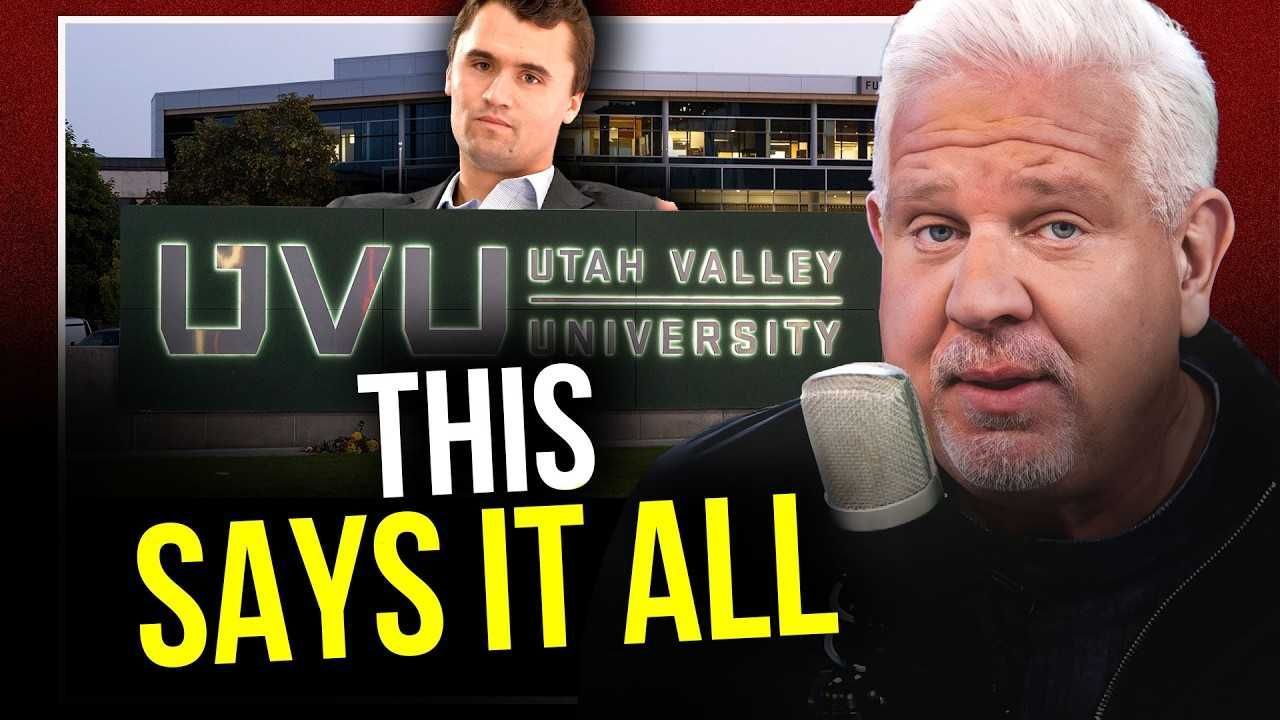
Lastly, 2025 will go down in history as the year when our beloved Charlie Kirk was murdered while speaking at a Turning Point USA event. On September 10, the TPUSA founder was struck in the neck by an assassin’s bullet on the Utah Valley University campus where he was launching his TPUSA 2025 tour. He left behind his wife, Erika, and their two children, as well as the TPUSA empire that has only exploded in growth since his death.

“I will never forget that day,” says Allie, who was friends with Charlie.

“This renewed interest in [God] that we all saw at Charlie’s memorial, that we all saw on college campuses, it is happening,” she encourages.

“It seems like the love of many has grown cold really fast — like we so quickly went from this unified moment at the memorial to conspiracies, to accusations, to slander, to gossip, to division.”

But revival is still happening. Maybe it’s not as loud and bold as it appeared in the beginning, but it’s happening nonetheless. “When we get to the other side of eternity, we are going to see this incredible, complex, interwoven tapestry of all of these little unseen and unsung moments in the lives of believers that culminated in someone’s salvation, and angels rejoicing because of that,” Allie says.

To hear more of Allie’s 2025 recap, watch the episode above.

Want more from Allie Beth Stuckey?

To enjoy more of Allie’s upbeat and in-depth coverage of culture, news, and theology from a Christian, conservative perspective, subscribe to BlazeTV — the largest multi-platform network of voices who love America, defend the Constitution, and live the American dream.

The Federalist Staff’s 2025 Winners And Losers Of The Year

From winners like J.D. Vance and DOGE to losers like Jake Tapper and (also) DOGE, here are The Federalist Staff's picks for 2025.

Here Are The 10 Biggest Media Hoaxes Of 2025

In no particular order, here are the biggest hoaxes run by our truth-deprived media throughout the past year.

‘We need to stand up for what’s right’: Why Kyle Rittenhouse is getting back in the fight


Second Amendment rights advocate Kyle Rittenhouse disappeared from the limelight for a bit to make incredible strides in his own life — but he’s back and more motivated than ever to keep up the good fight.

“I was just done with the media. I was done with the hate. I was done with the lies being pushed against me. It was a lot that I was dealing with. And then I moved to Florida. I took that hiatus. I met my beautiful wife, Bella. And we moved to Colorado,” Rittenhouse tells BlazeTV host Sara Gonzales at AmFest.

However, after the events of September 10, Rittenhouse knew it was time “to get back into the fight.”


“I need to pick up the mic because what happened on September 10 is not okay. We need more conservative voices out here. We need more than ever. And that is why I’m here,” he explains, pointing out that he’s back to “advocating for the Second Amendment.”

But it hasn’t been a warm reception from the left.

“I’ve had countless death threats since I’ve gotten back into the fight. I’ve had people saying they’re going to assassinate me, kill me, they’re going to do terrible, terrible things because that’s the left,” Rittenhouse tells Gonzales.

“We’ve seen an increase in left-wing violence since August 25, 2020, when they tried to kill me in the streets of Kenosha to now. It’s only gotten worse. And our job as conservatives, and our job as Americans and Christians, to be frank, is to stand up and fight,” he continues.

And while Rittenhouse believes in his fellow conservatives' ability to do this with him, he does worry that too many fear being too “controversial.”

“We need to say, ‘Screw being controversial,’” Rittenhouse says. “We need to stand up for what’s right, because if we’re not, they’re going to take us over and we’re going to lose."

Want more from Sara Gonzales?

To enjoy more of Sara's no-holds-barred takes on news and culture, subscribe to BlazeTV — the largest multi-platform network of voices who love America, defend the Constitution, and live the American dream.

WILD RIDE: Here a​re the top 10 stories of 2025


2025 was a year for the history books, and BlazeTV host Steve Deace and executive producer Aaron McIntire have the top 10 stories that made this year so unforgettable.

Story number 10, McIntire announces, was the Democrats' 43-day government shutdown that lasted over a month and kept Americans across the country terrified of losing their SNAP benefits.

“The media was happy to act as if a shutdown wasn’t actually happening for well over a month from October 1 till its conclusion in the middle of November, with a deal Democrats had previously turned down on numerous occasions in the process,” McIntire says. “Which begs the question: If a government shuts down and nobody noticed it, is it really a shutdown at all?”


Next on the list at Number 9 is the “Department of Crashout Efficiency.”

“Much had been made, probably rightfully so, about the role tech magnate Elon Musk played in the election of President Trump back in 2024. With the inauguration of Trump came the ceremonial creation of the Department of Government Efficiency,” McIntire explains, pointing out that this new entity discovered “reams upon reams of nearly unfathomable graft, corruption, and abuse.”

“But the Department of Government Efficiency, DOGE, went from being a fixture in the news for much of the spring to now being relegated to ghost or legend status depending on whom you ask,” he continues.

Number 8, McIntire says, is the “election of Zohran Mamdani as mayor of the nation's largest city.”

“New York City, in less than a generation after the largest Islamic terror attack of the 21st century struck it to its core ... turned around and elected an Islamist to lead it,” McIntire says.

Number 7 is Trump’s hard stance on immigration, with deportations not appearing to be slowing down any time soon.

“The official numbers of how many foreigners have left the country is generally up for debate. But one thing that’s not is that the deportations must continue until morale improves,” McIntire says.

Number 6 is "Operation Midnight Hammer."

“On June 22, and in conjunction with Israel’s Operation Rising Lion against Iran, the United States carried out what is likely the most technologically and logistically sophisticated air operation in the history of warfare,” McIntire says.

“The stunning operation not only sent a message to Iran, but every would-be enemy of the United States,” he adds.

Number 5 centers around the passing of Pope Francis, which led to the selection of a new pope on May 8.

“They shocked the world by selecting the first pope born in the United States,” McIntire says. Deace chimes in that the new Pope, Pope Leo, is “already worse than Francis.”

Number 4 is Liberation Day.

“On April 2, the Trump administration declared Liberation Day and enacted a series of tariffs on basically every continent, every land mass, every tiny little island in the middle of nowhere under the sun,” McIntire explains.

“The administration sold those sweeping tariffs as a way to grow government revenue and/or leverage for better trade deals,” he adds.

Number 3 is what McIntire calls “Trump 2.0,” which is the beginning of Trump’s second term, and Number 2 is the “future of the right” — which McIntire and Deace believe has fractured after major conservatives like Tucker Carlson have platformed, and essentially celebrated, voices they see as destructive to the right.

“What’s left to be determined is whether this is a movement going through growing pains, or a stillbirth,” McIntire says, before reading Number 1.

“Number one story of the year is Charlie Kirk, the American martyr,” McIntire says. “His murder that everyone saw prompted a number of moving tributes, including one of the best, I thought, from the White House.”

Want more from Steve Deace?

To enjoy more of Steve's take on national politics, Christian worldview, and principled conservatism with a snarky twist, subscribe to BlazeTV — the largest multi-platform network of voices who love America, defend the Constitution, and live the American dream.

Trump broke decorum. The media broke the truth — again.


Recently, Paul du Quenoy published a necessary piece at Chronicles putting President Trump’s remark after the murder of Rob and Michele Reiner in proper context. In a Truth Social post that went viral, Trump quipped that Rob Reiner had died of “Trump derangement syndrome,” while also offering condolences and praying that the deceased would “rest in peace.”

The media response was instant and hysterical. As du Quenoy notes, legacy outlets erupted in moral outrage, eager to condemn Trump as uniquely depraved. He highlights one of the ugliest examples: a sermon from David Remnick in the thoroughly politicized New Yorker, denouncing Trump as a “degraded” human being.

Trump’s remark was ill judged. The media’s response was dishonest. Only one of those failures is being treated as a permanent moral indictment.

Du Quenoy asks: Where was this moral sensitivity when figures on the left trafficked in venom — or worse — after the assassination of Charlie Kirk?

The answer, of course, is nowhere.

This double standard defines our media culture. When rhetorical excess comes from the left, it is ignored, excused, or rationalized. When it comes from the right — especially from Trump — it is proof of moral disqualification. Etiquette is enforced selectively, always against the same targets. From the BBC to the Los Angeles Times, outlets had no difficulty canonizing Reiner while casting Trump as a cartoon villain.

A fair point must be made: Trump should not have said what he did. A president should observe certain proprieties, and Trump violates them all too often. I supported his policies and voted for him repeatedly, but that does not require defending every avoidable verbal misfire. This one was a mistake.

What deserves closer scrutiny, however, is the media’s attempt to weaponize that mistake. In outlets like People magazine, Trump’s comment was contrasted with Reiner’s allegedly noble reaction to the murder of Charlie Kirk. Reiner, we are told, expressed “horror.” Trump, by contrast, showed cruelty.

This framing collapses under minimal honesty.

After seeing this contrast repeated again and again, I searched for Reiner’s public statements — not about Kirk, but about Trump. What emerges is not a portrait of an angelic figure suddenly besmirched. For years, Reiner unleashed a steady stream of invective against Trump: “mentally unfit,” “con man,” “fascist,” “lying buffoon,” along with a great many four-letter flourishes unprintable here. He pushed the Trump-Russia hoax long after it had been exposed as fantasy. His political obsession was not subtle, incidental, or private.

RELATED: Glenn Beck addresses Trump’s controversial Rob Reiner message

Photo by ANDREW CABALLERO-REYNOLDS/AFP via Getty Images

Yet this entire record has been scrubbed from the story. Media profiles dwell on Reiner’s filmmaking career and his role as a loving father while erasing his lifelong activism and venom toward Trump. The reason is simple: The people telling the story agree with Reiner’s politics and share his hatred of Trump. Presenting Trump’s animus as unprovoked is not journalism. It is narrative laundering.

The comparison with Charlie Kirk’s murder is equally dishonest. Kirk, to my knowledge, never publicly attacked Reiner. There was no shared history, no prolonged feud. Sen. John Kennedy (R-La.) put it plainly: Trump should have said nothing after Reiner’s death, even if Reiner was obsessed with him. Still, pretending that Trump’s reaction should mirror Reiner’s response to Kirk ignores reality. The relationships were not the same.

Nor should Reiner be recast as a purely apolitical figure whose ideology can be set aside for the sake of a tidy morality play. He embraced his identity as a committed leftist as openly as he embraced his Hollywood career. The media’s erasure of that fact mirrors older myths, such as the claim that the “Hollywood Ten” were merely innocent artists with no communist affiliations. You can oppose blacklisting without lying about politics. The left never resists the temptation to lie.

So once again, we are presented with a familiar fable: a gentle, virtuous man smeared by a deranged tyrant for no reason at all. It is nonsense — but useful nonsense. It allows the media to posture as arbiters of decency while ignoring their own complicity in coarsening public life.

Trump’s remark was ill judged. The media’s response was dishonest. Only one of those failures is being treated as a permanent moral indictment — and that tells you everything you need to know.

'All in': TPUSA's Andrew Kolvet sets sights on 2028 presidential candidate after AmFest


With the first Turning Point USA AmFest convention since Charlie Kirk's death in September now concluded, TPUSA's Andrew Kolvet offered his insights on the convention and the political path ahead.

Earlier this week, Kolvet told Fox News in an interview that Turning Point is "all in" for one of Charlie Kirk's closest friends in politics.

'Charlie was very close to the vice president and had basically endorsed him already for months beforehand.'

"We're all in behind Vice President JD Vance. Charlie considered him a generational talent and somebody that could lead this nation forward," Kolvet, executive producer of "The Charlie Kirk Show," said.

Kolvet remarked that it was almost natural for the organization to support JD Vance given Charlie Kirk's relationship with him. "Charlie was very close to the vice president and had basically endorsed him already for months beforehand. It was no surprise for us. It was no surprise for those who were close to us."

RELATED: TPUSA straw poll shows dominant front-runner for 2028 nomination

Turning Point CEO Erika Kirk announced her endorsement of JD Vance during her speech at America Fest on the first day of the convention.

"We're gonna ensure that President Trump has Congress for all four years," she said. "We are going to get my husband's friend JD Vance, elected for 48 in the most resounding way possible!"

Andrew Kolvet reiterated the organization's support for the vice president while urging people to stay focused on the present: "We're very happy for the here and now, so we're going to let the next year play out, but heading into 2028, we're excited to get behind him. And the machine that Charlie built and that's still in place at Turning Point is going to be all in for the vice president."

Vice President JD Vance gave a speech on unity on the last day of the convention, refusing to condemn dissident voices despite loud demands within the conservative movement.

Like Blaze News? Bypass the censors, sign up for our newsletters, and get stories like this direct to your inbox. Sign up here!

Debate: Can JD Vance become the right’s great unifier — or does his VP role stand in the way?


The young conservative movement is experiencing a notable leadership gap amid ongoing chaos in the online right-wing space. Sure, there are passionate influencers and rising political voices, but no one has fully stepped up to unify and guide the broader coalition with a commanding presence.

One person investigative journalist and BlazeTV host Christopher Rufo thinks might be able to step into the role, however, is Vice President JD Vance. But Rufo’s co-host Jonathan Keeperman isn’t sure Vance is up for the job either.

In this episode of “Rufo & Lomez,” the hosts debate whether JD Vance can step up as the unifying leader the conservative movement needs amid escalating chaos.

“I've been so far a bit surprised that the vice president hasn't tried to step into this role,” says Rufo, arguing that Vance has both the “charisma” and the “authority” to effectively lead the movement.

“I’ve known JD over the years. ... It does feel like he has some hesitation or maybe even some fear,” he adds.

While Keeperman agrees that Vance “has all of the tools and charisma and ... the right talking points” to be an excellent leader, his role as the vice president would actually be a hindrance.

“I don't think JD Vance should actually do that in his vice presidential position. Not right now. I think it'd be a bit presumptuous. I think people might kind of see it as him stepping in to sort of correct a situation that I think needs to just happen organically,” he counters.

For one, Vance’s position prohibits him from “[speaking] candidly about the administration.”

“Whoever is going to step into this role has to feel credible to this audience, and part of that credibility is going to come from just speaking honestly about all of these different things happening in this ecosystem — whether it's the different personalities, the ideas, the sort of ideology that's animating Trump but also the specific actions that the Trump administration is taking,” Keeperman explains.

In other words, the kind of leader people will follow needs to be an outsider who can speak brutal truths about the current administration, and Vance, as Trump’s right-hand man, can’t be that person.

Secondly, President Trump is still the top dog, Keeperman explains. For his VP to assume the authority of this role as the leader of the conservative movement “might not sit well inside of this coalition.”

“Maybe you're right,” Rufo concedes. “We need some sort of native figure to step up in the same way that Charlie Kirk did, in the same way that Tucker had done.”

To hear more of the conversation, watch the episode above.

Want more from Rufo & Lomez?

To enjoy more of the news through the anthropological lens of Christopher Rufo and Lomez, subscribe to BlazeTV — the largest multi-platform network of voices who love America, defend the Constitution, and live the American dream.