USPS Voter Data Rule Puts Pressure On Courts To Lift Injunctions Before Election Day
 It is unclear how the appeal process will turn out, but the rule gives states 30 days prior to the Nov. 3 election to notify USPS if they plan to comply.
America remains deeply divided over whether the 2020 presidential election was stolen from Donald Trump. Millions believe the system failed them, while the media, intelligence bureaucracy, and the left have treated their doubts as something to suppress rather than investigate.
The documents released this week by the Trump administration do not close the case. They reopen it — and make the “nothing to see here” narrative indefensible.
Start with communist China.
The released intelligence reports that approximately 220 million American voter records are in Chinese hands. Tens of millions of records across 18 states were bought, stolen, or hacked and included names, addresses, phone numbers, party preferences, and other sensitive information.
A sovereign nation must know that the people selecting its government are its citizens.
That does not prove China changed a single ballot, but it does prove Beijing possessed a political targeting asset. When a strategic rival aggregates enormous datasets and applies modern analytics, it gains the ability to identify, target, and influence American voters at industrial scale.
The most disturbing disclosure involves the President’s Daily Brief — the president’s most sensitive and consequential intelligence product. In one released email, an official wrote: “We have deliberately massaged our one pending PDB to avoid any direct links to the election.”
In a separate internal chat, a counterintelligence official boasted: “I’m basically running a shadow government across the FBI at this point.”
The left has spent years ridiculing concerns about a “deep state” as conspiracy theory. These revelations make that ridicule look increasingly like camouflage.
Then comes the voting-system reveal.
A Cybersecurity and Infrastructure Security Agency report included in the administration’s document release identifies weak access controls, outdated operating systems, flat networks, inadequate monitoring, and legacy remote-access pathways across state and local election environments. During multiple penetration tests and red-team exercises, CISA assessors gained full control of election-office networks within hours or days.
Separately, the report cites research involving one ballot-marking system showing that barcode-encoded votes could be altered without changing the human-readable selections displayed to the voter.
The release also includes intelligence concerning methods allegedly developed by Venezuela’s Maduro regime to manipulate electronic totals while concealing the changes.
Precision matters. A Venezuelan capability is not proof of an American operation. A demonstrated vulnerability is not proof it was exploited. The documents do not establish that American vote totals were secretly changed in 2020.
But they demolish the claim that election technology is immune from manipulation. These are computer systems with software, databases, vendors, administrators, updates, and attack surfaces. Compromise must be anticipated and independently detectable.
RELATED: America needs an artificial intelligence coalition, not an AI fortress
A limited Department of Homeland Security review raises another alarm. The White House says it identified approximately 278,000 potential noncitizen registrations. DHS’ public follow-up described more than 250,000 preliminary potential matches in California, New Jersey, Nevada, and Pennsylvania — only four states.
No serious person should dismiss numbers of this magnitude. Biden’s certified Georgia margin in 2020 was 11,779 votes. In 2016, Trump carried Michigan and Wisconsin by a combined 33,452 votes — and Michigan, Wisconsin, and Pennsylvania by just 77,744.
The media formula — “the documents do not prove vote totals changed; therefore they prove nothing” — is analytical malpractice. Absence of final proof is not proof of institutional innocence.
The proper question is whether this new information raises the probability that foreign influence, intelligence suppression, ineligible registrations, or exploitable technology played a larger role in the 2020 election environment than Americans were told — and whether future elections remain at risk.
The answer to both questions is yes.
That is why Congress must pass the SAVE America Act before November. The House-passed legislation requires documentary proof of citizenship for federal voter registration and photo identification for federal voting.
These are basic risk controls. Pew found that 83% of Americans — including 71% of Democrats and 95% of Republicans — support government-issued photo identification.
A sovereign nation must know that the people selecting its government are its citizens. A constitutional republic must demonstrate — not merely assert — that its elections are accurate.
Congress should stop stalling and pass the SAVE America Act. As the president likes to say: Let’s go.
This article was originally published by RealClearPolitics and made available via RealClearWire.
Somewhere between Trenton and Washington, New Jersey's noncitizen voter count has become the political equivalent of Schrödinger's cat — both 6,600 and 35,152, both an accident and a scandal — until someone finally opens the box.
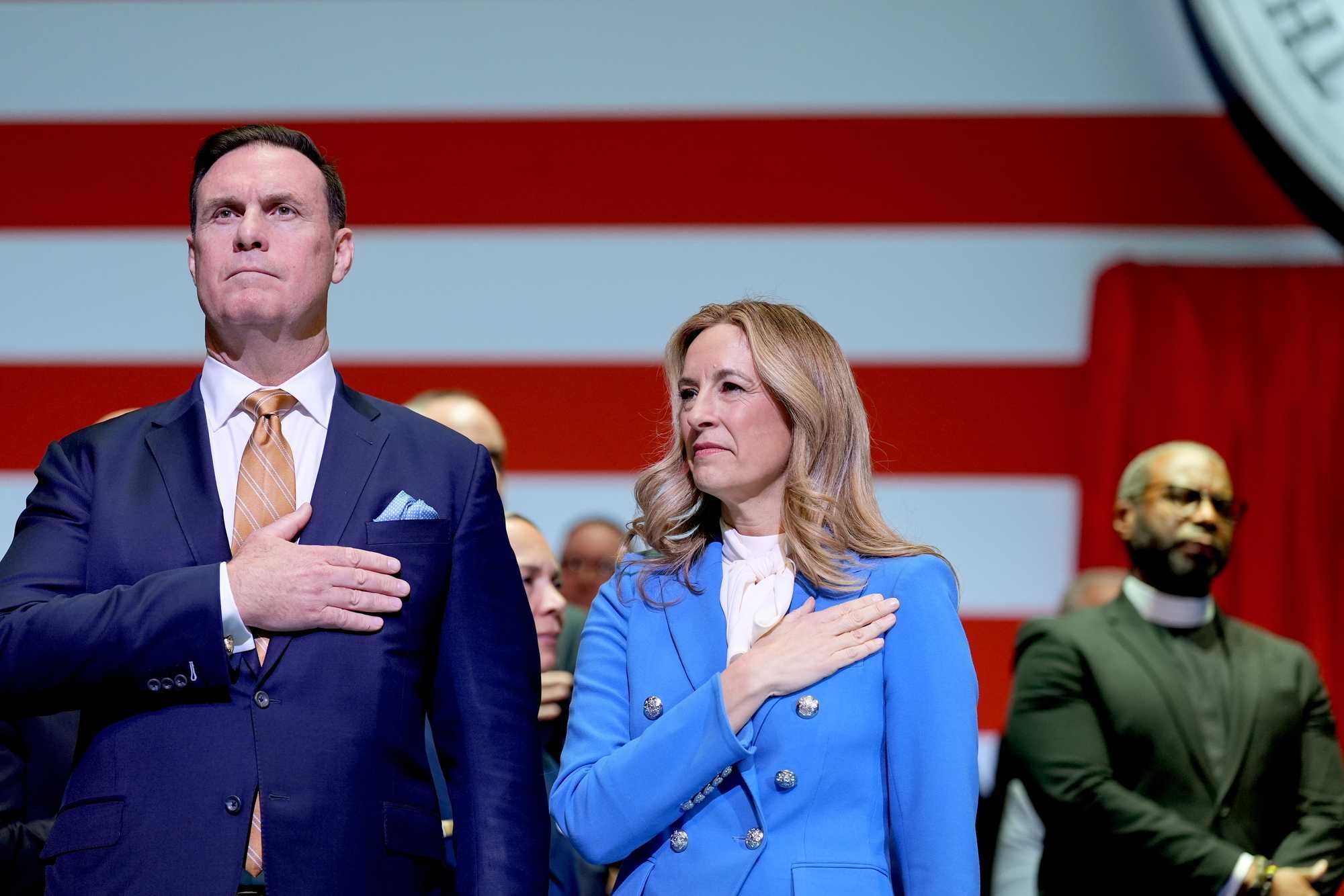
New Jersey Governor Mikie Sherrill (D) claimed Tuesday that roughly 6,600 people who indicated they were not U.S. citizens had been mistakenly added to the state's voter rolls and that fewer than 400 of them went on to cast ballots between June 2023 and June 2024.
'These are just the ones that got caught.'
According to Sherrill's own account, people were asked directly, on a keypad, whether they were U.S. citizens, and they answered "no." The system registered them to vote anyway.
Sherrill blamed a "serious software error" in the state's Motor Vehicle Commission system for this failure. Sherrill claimed the “error” dates back to the administration of her predecessor, Phil Murphy (D).
Since she learned of the problem last week, Sherrill has launched an investigation, has ordered the erroneous registrations to be removed, and is replacing the vendor that ran the system.
The Department of Justice said it is looking into the matter as well.
RELATED: Trump exposed the cracks in our elections. The media proved his point.
IDEMIA, the French multinational company that has supported New Jersey's Motor Vehicle Commission "for more than 40 years," pushed back on the state's framing. The company said its role is limited to transmitting registration data, noting that the information IDEMIA submits "must still be validated and adjudicated by the Division of Elections."
The 6,600 number is notably smaller than the 35,152 noncitizens the Department of Homeland Security flagged on New Jersey's voter rolls last Friday, a figure President Trump cited last week in a speech on election integrity, along with the claim that 250,000 noncitizens are registered across New Jersey, California, Nevada, and Pennsylvania combined.
Sherrill has yet to reconcile the gap between the DHS' number and her own and has accused Trump of trying to "weaponize elections for political gain." In her statement, she added, "Let me be clear: Donald Trump has zero credibility on the issue of election integrity."
Trump himself put the 35,152 figure front and center in a post on Truth Social, calling it the “new” DHS number of noncitizens registered to vote in New Jersey and insisting "these are just the ones that got caught" and that "real numbers will prove to be many times this amount."
He argued that all of those registrants are Democrats, urged Republicans to "get smart," and called for passage of the SAVE America Act to overhaul election rules.
On CNN's “The Lead,” Jake Tapper said in response to the whole debacle that the revelation is "not good for Democrats' argument that there's no such thing as undocumented immigrants voting."
Older Tapper remarks resurfaced in which he had dismissed election-security concerns, saying, "It happens, but at very, very miniscule numbers. It's not a serious threat when it comes to election security."
Sherrill says the 400 improper voters were "registered as Democrats, Republicans and unaffiliated voters and were scattered across the state" — though those figures, like the 6,600 number itself, come from her own account.
Like Blaze News? Bypass the censors, sign up for our newsletters, and get stories like this direct to your inbox. Sign up here!
 California has now told the country that it doesn’t know how many noncitizens have been removed from its voter rolls and that it has no formal policy for investigating illegal voting when it’s reported.
 If the new Gallup poll shows anything, it's that Senate Democrats (and a few RINOs) aren't listening to what the people actually want.
 Gov. Mikey Sherrill says she won't turn over to the DOJ records on the 6,600 noncitizens found on New Jersey's voter rolls.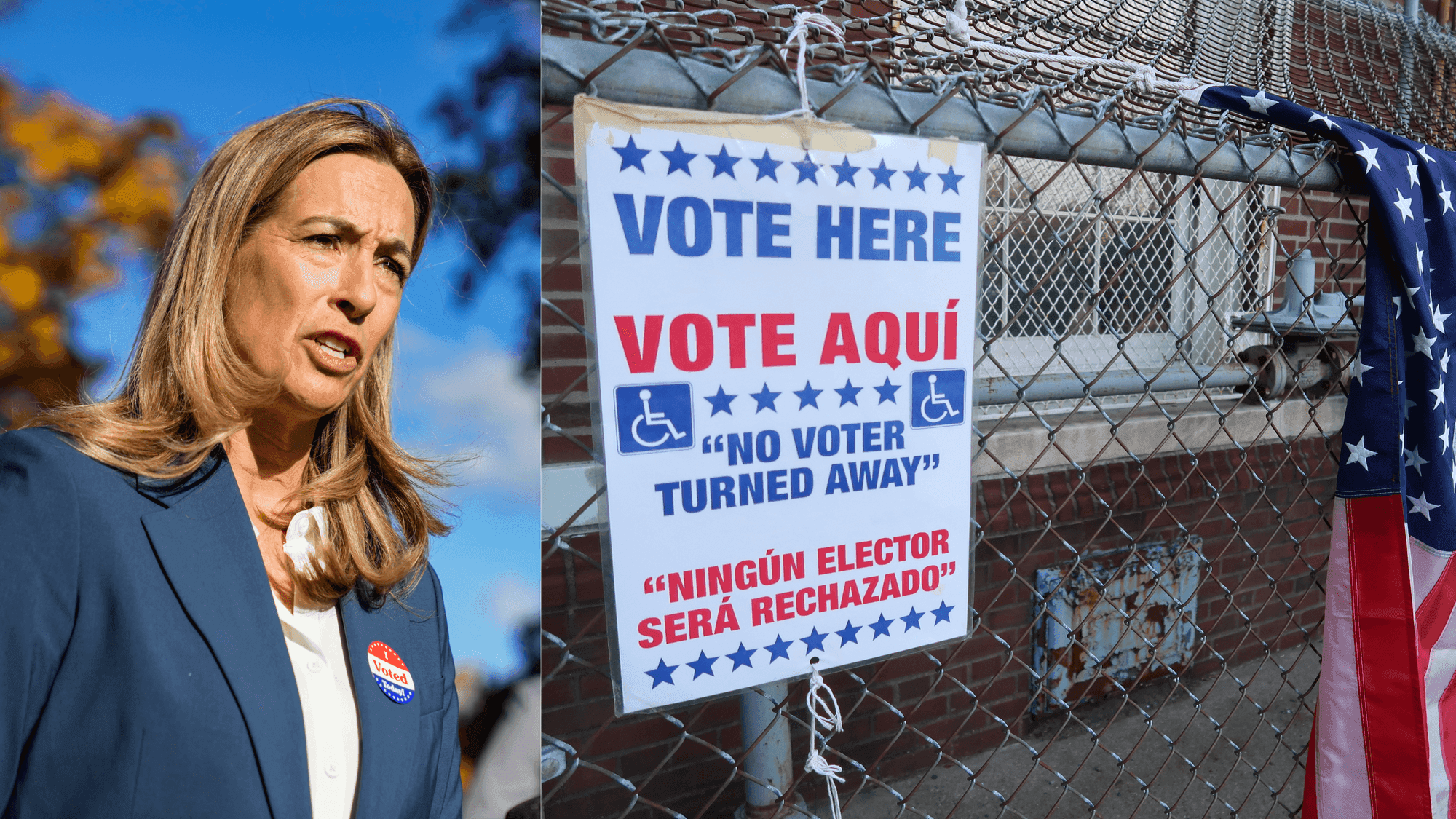

 We have a republic if we can keep it, and we will not keep it without the SAVE America Act.
 Imagine Democrats trying to justify -- hour after hour -- their opposition to photo ID and making sure voters are citizens before voting on the Senate floor?
 A newly declassified CIA report says the Venezuelan government “could have” used voting machines to rig elections. President Donald Trump declassified a series of documents and reports related to election integrity on July 16, including a “CIA Note” entitled, “Summary of Select Intelligence Reporting From 2004-2020 on Venezuela’s Electronic Voting Manipulation Capabilities.” The note says […]
 www.theblaze.com
 thefederalist.com
 www.theblaze.com
 www.theblaze.com