Is ASU going to fire a Christian professor for being too Christian?
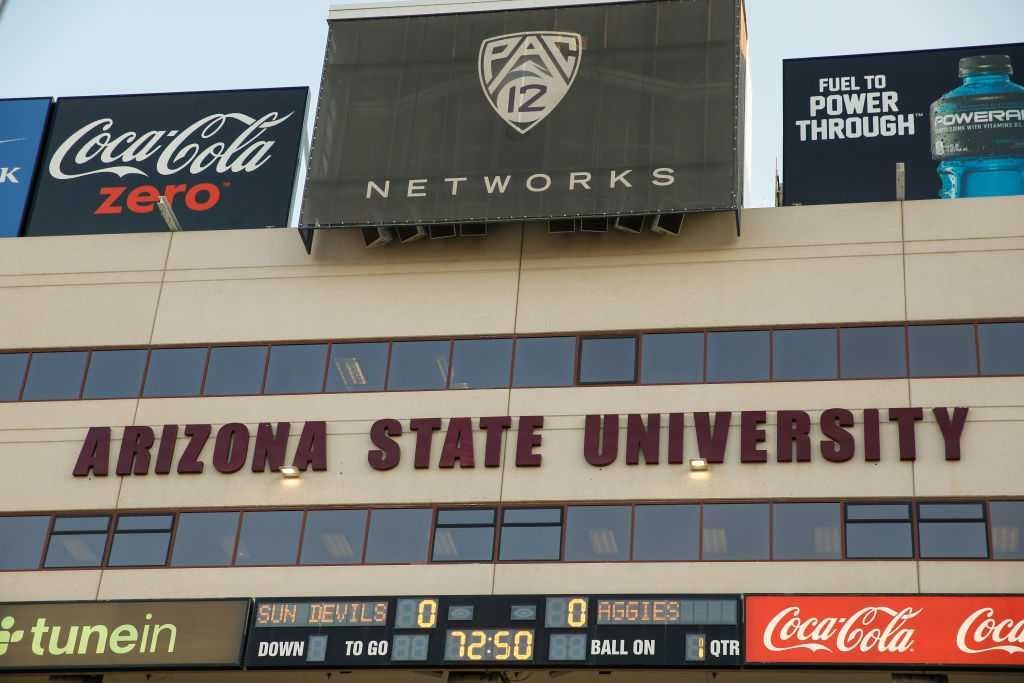
I believe Arizona State University has taken the first step toward terminating me, a tenured Christian professor, for being too Christian.
You might think tenure would protect a professor from religious discrimination by state university administrators. You would be mistaken. What I am experiencing at ASU demonstrates how university administrators can use the annual review process to punish professors for their beliefs and potentially build a case for terminating them.
This is harassment, and I believe it amounts to religious discrimination. It also sends a warning to every Christian professor at a public university.
Here is what is happening.
I am currently engaged in a lawsuit against ASU over its DEI training requirements. After more than two years of litigation, my attorneys argued before the Arizona Supreme Court on September 1. We are awaiting the court's decision.
This week, ASU’s provost has officially upheld a decision penalizing me for allegedly being too Christian in my classes.
In May, the dean of my college deducted points from my annual performance review and reduced merit pay because he claimed my teaching in 2025 was too Christian. What evidence did he offer for this remarkable accusation? Five quiz questions out of more than 80, along with two negative student evaluations.
That's it.
This is no longer merely one dean's judgment. ASU's senior administration has now endorsed the decision to penalize me for allegedly teaching classes that are too Christian. I have no further avenue of appeal within that process.
I have spent my career teaching students how to think. My administrators now seem determined to teach me what not to think. One wonders which of us has misunderstood the purpose of a university.
And the evidence? Let's examine it.
One question asks, "Why is knowing God the highest good?"
Is that uniquely Christian? Plato and Aristotle, neither of whom were Christians last I checked, explored the relationship between the divine, knowledge, and the highest good. Eastern philosophers have done the same. These questions have occupied philosophers for thousands of years.
Another asks, "What is the relationship between God and morality?"
Again, this is a foundational question in the history of philosophy. Plato raised it in the "Euthyphro." Aristotle connected ethics with his account of the highest good and the divine. Are we now supposed to eliminate questions about God and morality from philosophy courses?
RELATED: A Christian guide to trolling without sinning

A third question states, "True or False: Death should not make us think about the meaning of life." This is a question from my class on the philosophical aspects of death and dying. It is a course I developed with ASU’s online specialists as part of master teacher training. ASU signed off on the class and then penalized me for teaching it!
The relationship between death and life's meaning is central to existential philosophy, including the writings of Viktor Frankl (not a Christian). Surely students studying philosophy should be allowed to consider how death relates to meaning in life.
These are philosophical questions, not evidence that I am improperly promoting Christianity.
One student wrote: "If I were a Hindu or Buddhist, and truly believed in reincarnation, I would be offended if I were asked to denounce it."
But I never asked that student, or anyone else, to denounce reincarnation, and the student gave no evidence that I did. Notice the hypothetical nature of the complaint: If I were a Hindu or Buddhist, and if I were asked to denounce my beliefs, I would be offended.
The student did not report that this actually happened.
The second student wrote: "Although I agree with what Owen Anderson teaches, I completely understand if people feel offended after taking his class."
Read that again. The student agrees with what I teach but imagines that someone else might be offended.
Apparently, at ASU, hypothetical offense by hypothetical students is sufficient grounds to penalize an actual professor. And this brings us to the larger problem.
Annual performance reviews are recurring evaluations. Once administrators officially determine that a professor's teaching is deficient because it is too Christian, what happens at the next review? I will be asked what steps I took to stop being so Christian? If administrators decide I have not adequately corrected the alleged problem, they can penalize me again. Repeated negative evaluations could then become the foundation for escalating disciplinary action.
That is how ASU could build a case for terminating a tenured professor.
RELATED: Campus free speech is alive — barely

And consider the burden this imposes. Rather than spending my time exclusively on teaching, research, and serving students, I must defend myself against accusations supported by a handful of philosophical questions and speculative complaints. Are the non-Christian professors put through this same scrutiny and additional burden?
This is harassment, and I believe it amounts to religious discrimination. It also sends a warning to every Christian professor at a public university.
If you discuss God, morality, eternity, or the meaning of life, administrators can apparently decide your teaching is too Christian. Can they then deduct points from your annual review? Deny you merit pay? Can they begin documenting supposed deficiencies that might eventually threaten your employment?
The chilling effect is obvious. Christian professors may decide that silence is safer than risking administrative punishment.
I have spent more than two decades teaching philosophy at ASU. I believe students deserve to encounter the great questions of philosophy, including the questions about God that philosophers have discussed since antiquity.
A public university should encourage those questions, not punish professors for asking them. ASU receives public funding, including federal money. It should not be permitted to use its administrative power to discriminate against Christian faculty.
Today, the accusation is that my classes are too Christian. Tomorrow, the question may be whether I am allowed to remain a professor at all. And if ASU can do this to me, what prevents other public universities from doing the same to Christian professors across America?
 Paras Griffin/Getty Images
 Are humans meant to be begotten, not made?
 ASRM has a quiet but heavy influence and financial hand on assisted reproductive technology protocols in the United States.
 The commercial surrogacy industry asks us to believe that contracts can redefine motherhood, assign parenthood, and eliminate the bonds formed during pregnancy and infancy. Kyla's experience demonstrates the opposite.
 The flippancy IVF demonstrates toward a mother's DNA by encouraging the use of surrogates and donor eggs turns women into 'interchangable body bags.'
 Many pro-lifers support IVF, a procedure that discards embryos that don’t look like they’re developing properly based on visual inspection.
 www.theblaze.com