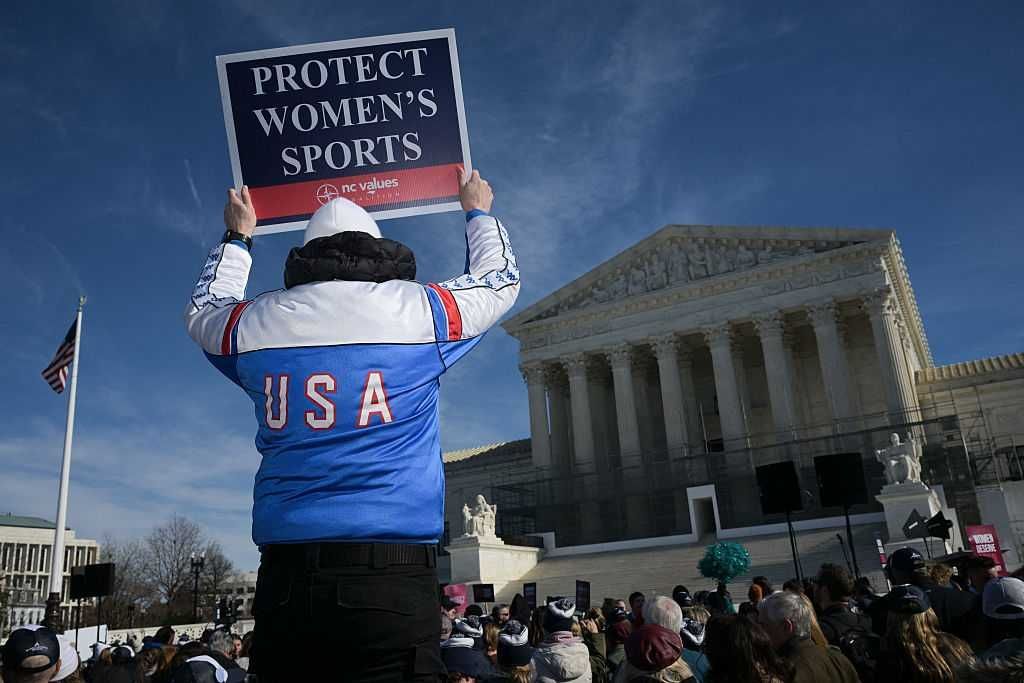
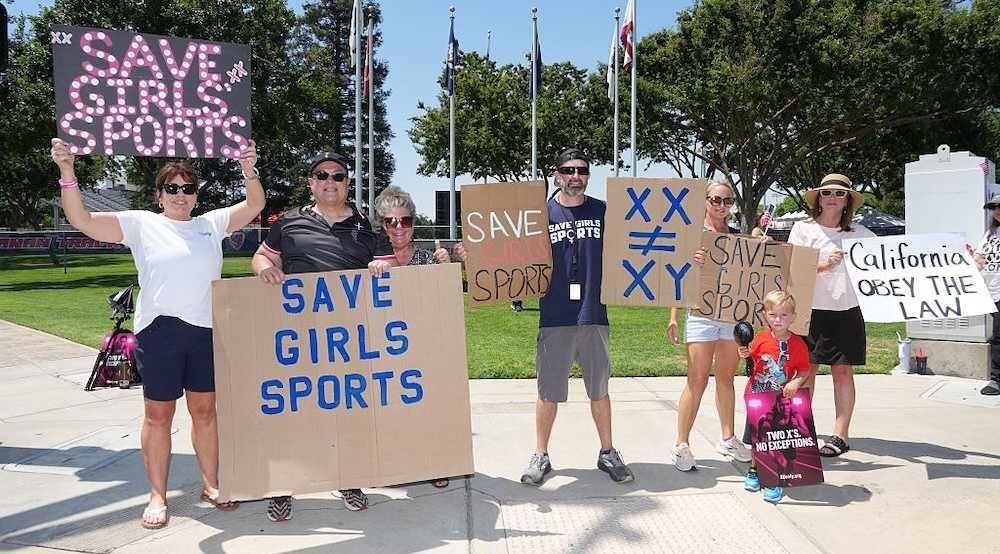
The VFW has wandered off mission
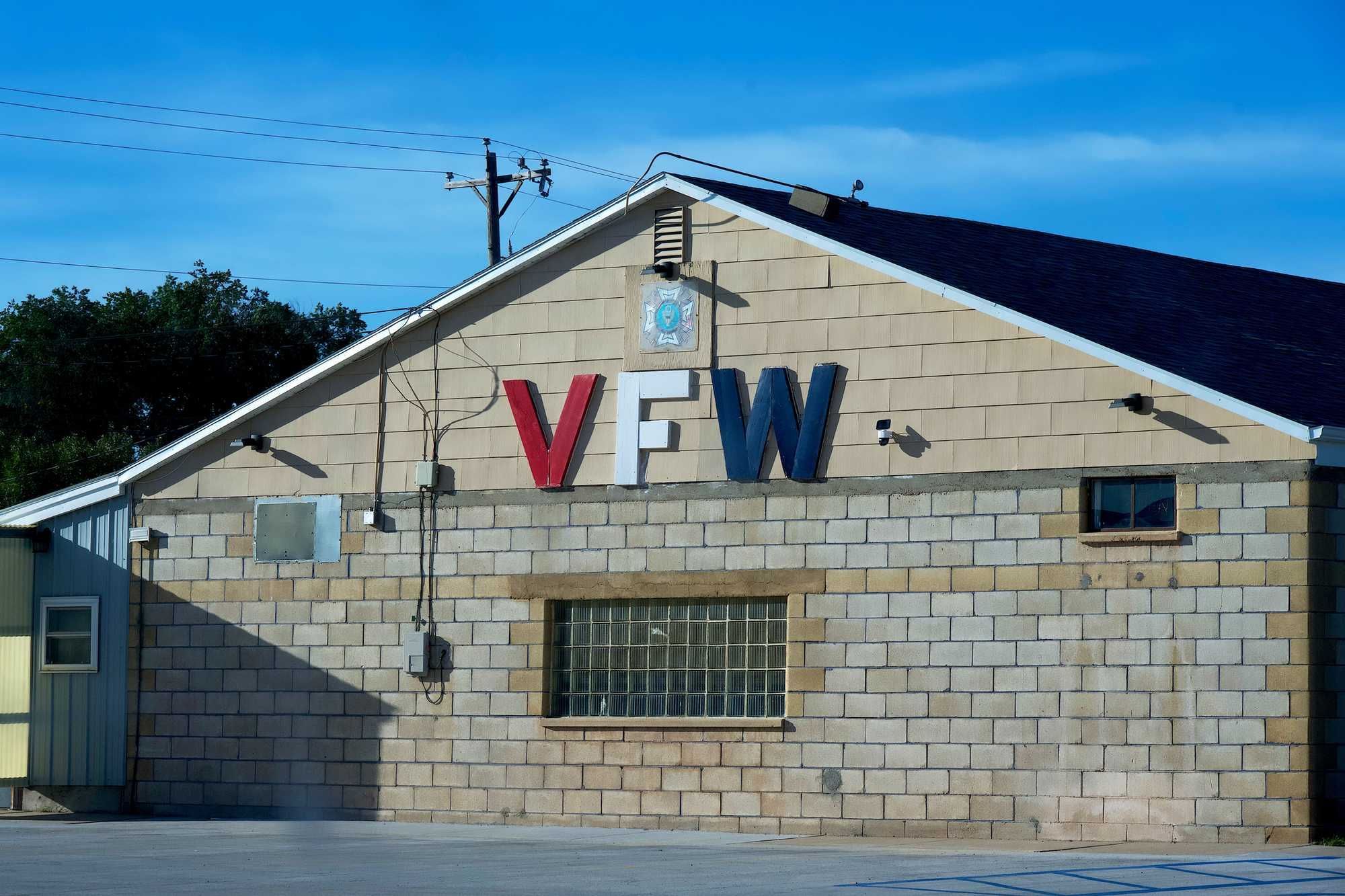


Democrat lawmakers recently demanded that the Department of Veterans Affairs restore dedicated LGBTQ+ veteran care coordinators and identity-based programs, putting the fight over gender policy at the VA back in the spotlight. The VA has instead redesignated those positions simply as “care coordinators” serving all veterans and restricted the use of VA resources to promote gender ideology.

As the VA moves away from identity-based programs, the Veterans of Foreign Wars organization has taken a different path.

The VFW’s principles are broad enough to unite veterans across the political spectrum. Abortion and gender ideology do not.

A veterans’ organization should support every veteran. That does not require endorsing every political or ideological position associated with a veteran’s identity. Yet this summer, the VFW again declared “Happy Pride Month” and celebrated veterans specifically on the basis of sexual orientation and “gender identity.”

The VFW has a long and distinguished history. It traces its roots to veterans of the Spanish-American War and helped shape the modern federal veterans system. But in recent years, the organization has also embraced positions on abortion and gender policy that go well beyond its core mission.

The VFW claims it has honored LGBTQ+ veterans during Pride Month since President Bill Clinton’s first proclamation in 1999. In 2019, then-National Commander B.J. Lawrence supported additional VA resources for LGBTQ+ veterans in congressional testimony.

The shift is also visible on abortion. In 2020, the VFW argued that the VA should provide certain abortion-related care. In 2022, it testified in support of H.R. 345, legislation that would have required the VA to provide information and counseling about abortion to veterans facing unwanted pregnancies.

On gender policy, the VFW has continued publishing Pride Month statements. One VFW leader learned how contentious that issue had become after criticizing Pride Month publicly.

The organization’s advocacy deserves scrutiny because policy requests framed simply as “health care” can include deeply contested medical interventions. In past testimony, the VFW demanded expanded resources for transgender veterans. The debate over those treatments has intensified as critics point to the risks of puberty blockers and cross-sex hormones and irreversible surgical interventions.

RELATED: The VFW’s political stunt backfired
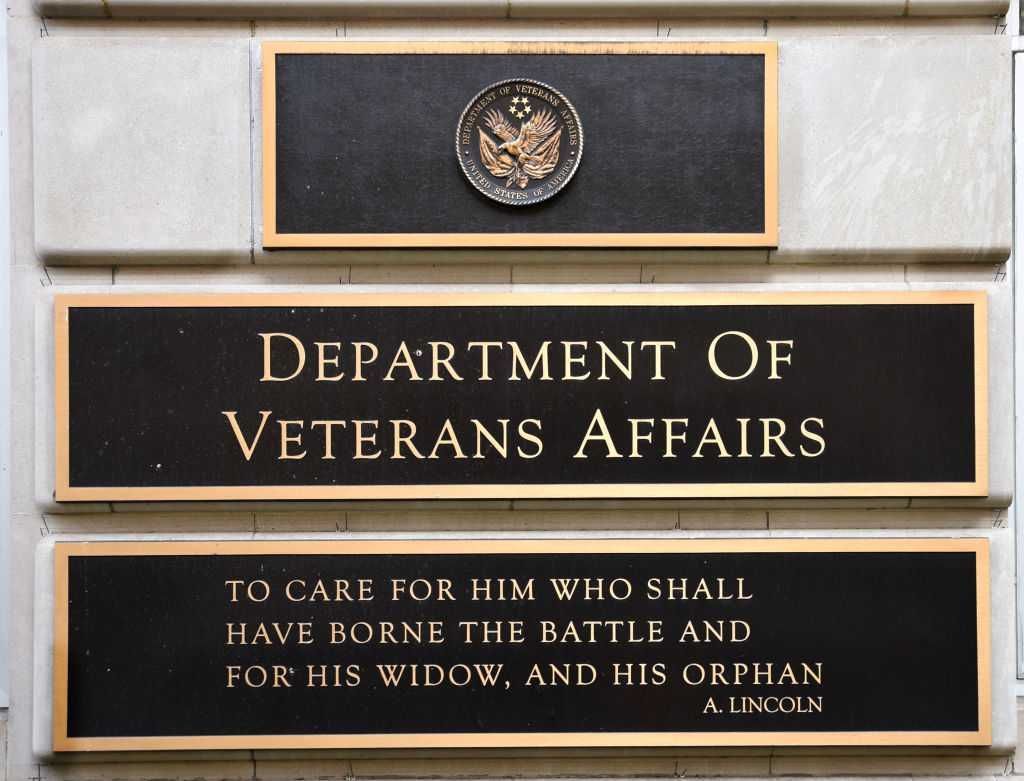
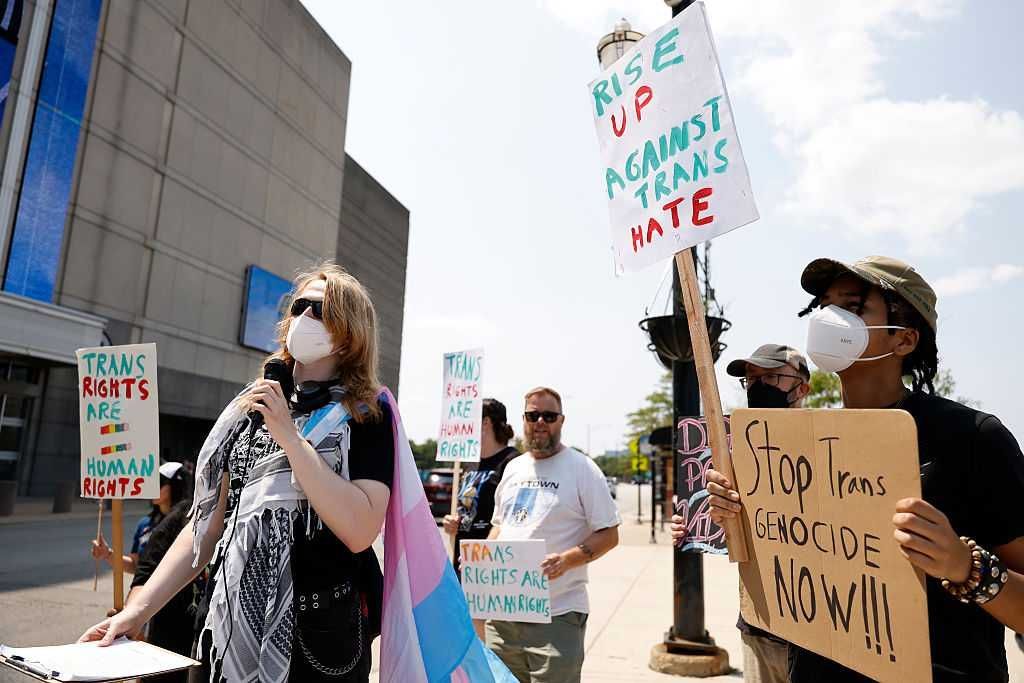
Robert Alexander/Getty Images

Detransitioners have also brought malpractice claims, including one case that reportedly ended in a $3.5 million settlement. Whatever one thinks of the broader policy debate, these developments make it harder to treat every disputed intervention as politically neutral veterans' care.

The VFW’s advocacy also now conflicts with the direction of federal policy. The VA has reinstated a ban on abortion and abortion counseling in its medical benefits package, while the Trump administration has issued executive orders directing federal agencies and the military to recognize biological sex.

That does not mean the VFW should exclude gay or transgender veterans, or deny that they served honorably. It means the organization should distinguish between serving veterans and endorsing contested ideological programs in their name.

The VFW’s own mission is to “advocate on behalf of all veterans.” Its core values include honoring military service, caring for veterans and their families, and respecting “the diversity of veteran opinions.” Those principles are broad enough to unite veterans across the political spectrum.

Abortion and gender ideology do not. When the VFW takes sides in some of the country’s most divisive moral and political disputes, it risks alienating veterans it is supposed to represent.

The better course is simpler: Fight for veterans’ benefits, health, dignity, and families. Leave woke social causes to the organizations created to fight those battles.

Veterans need a VFW that puts veterans first.
The WNBA’s identity crisis is bigger than basketball


With the “Women’s” NBA twisting itself into knots rather than plainly defining woman, gender ideology is back in the news.

The first problem is linguistic. Using “gender” when one means sex invites confusion. Jay Richards has explained gender ideology as the view that the sex binary does not fully describe human identity and that a person may possess an internal “gender identity” incongruent with sex.

‘The issue is never the issue. The issue is always the revolution.’

That framework helps explain a related question: Why can stating ordinary biological distinctions provoke such extraordinary hostility — even death threats — when the dispute concerns women’s sports and other sex-separated spaces?

One answer is that the argument is not only about biology. It also draws on an older revolutionary tradition that treats inherited institutions and categories as instruments of domination. Hence the old line: “The issue is never the issue. The issue is always the revolution.”

Start with Marx and Engels. In “The Communist Manifesto,” they called for “the most radical rupture with traditional relations” and “traditional ideas,” while attacking private property, religion, and the bourgeois family. Paul Kengor has written that later leftist movements continued this attack on traditional marriage and family.

The intellectual path from Marx to contemporary gender theory is not a straight line, however. Antonio Gramsci did not simply replace economics with culture; he broadened Marxist analysis by emphasizing culture, institutions, and “hegemony” as sources of social power. What is commonly called cultural Marxism grew from this shift in emphasis.

Herbert Marcuse likewise looked beyond the industrial working class to marginalized groups as possible agents of radical change. Rudi Dutschke popularized the idea of a “long march through the institutions,” while Mike Gonzalez has noted the Gramscian strategy of a long-term “war of position” aimed at reshaping culture before political victory.

Critical theory pushed the analysis further. Frankfurt School thinkers such as Marcuse and Max Horkheimer examined capitalism, authority, culture, and repression through a Marxist-Freudian lens. Other Frankfurt School theorists treated social structures — including family and sexuality — as possible mechanisms of domination.

Postmodern and deconstructionist thinkers such as Michel Foucault and Jacques Derrida came from different traditions, but their work converged with critical theory on one crucial point: suspicion toward claims of neutral, universal truth. In this intellectual climate, truth itself was dismissed by some theorists as inseparable from power.

RELATED: Enes Kanter Freedom said the quiet part out loud

Joseph Weiser/Icon Sportswire/Getty Images

As Bishop Robert Barron has written in a related discussion of deconstruction, “There is no final truth, no ultimate settling of a question. There is always something new.” Once inherited categories are treated principally as products of power, even apparently basic questions — “What is a woman?” — become open to endless renegotiation.

Judith Butler’s 1990 book “Gender Trouble” brought these currents directly into gender theory. Butler argued that gender is performative and challenged the stability of the sex/gender distinction and traditional sex roles.

This does not prove that every person who supports transgender rights is a Marxist, or that modern gender theory can be reduced to a single ideological source. It does show why the rhetoric so often sounds revolutionary rather than merely therapeutic.

When transgender discrimination is called the “civil rights issue of our time,” the claim places gender identity within a familiar oppressor-oppressed framework. Christopher Rufo has said that some trans activists explicitly describe their movement as a successor to Marxism, with transgender people cast as a new revolutionary vanguard.

That is the more defensible connection. Gender ideology did not simply fall out of “The Communist Manifesto.” It developed amid intellectual traditions that increasingly interpreted social categories through power, oppression, liberation, and the deconstruction of inherited norms.

Its political alliances reinforce the point. Gender politics routinely appears among the current things the activist left leverage as part of its war on capitalism and Western civilization generally. Jonathan Butcher has noted how intersectionality explicitly links “identity movements based on gender and racial liberation” through a common theory of social domination.

From Black Lives Matter co-founder Patrisse Cullors describing herself as a “trained Marxist” to the pro-Hamas red-green alliance that includes Queers for Palestine, the coalition repeatedly joins causes that appear unrelated on the surface but share a politics of oppression and liberation.

The issue is not always literally the issue. Increasingly, the issue is the revolution.

Little-Known Bureaucratic Procedure Pushed Medical Insurance To Be More Pro-Trans

The statistics provided to The Federalist by California regulators show a little-known process overturned a majority of denials for transgender procedures.

After SCOTUS Ruling, Michigan Agrees To End ‘Talk Therapy’ Ban For Gender-Confused Kids

The Democrat-run state of Michigan agreed on Thursday to end its prohibition on licensed therapists providing counseling to children struggling with issues related to sexual orientation and gender dysphoria. “This is a major victory for children, counselors, and common sense,” Luke Goodrich, senior counsel at Becket and lead attorney for the counselors, said in a statement. […]

Being Nice Instead Of Godly Is A Theology For Losers

If you’ve ever sat in a pew wondering why your church seems allergic to the culture war, that’s not your imagination. It’s loser theology.

The YMCA broke the first rule of summer camp


Since its founding in 1844, the YMCA has become a household name, earning a reputation for safety, reliability, and positive childhood experiences, such as youth sports, summer camps, and neighborhood gyms that offer something for everyone.

Recently, however, the YMCA has cashed in on its longstanding trust with families to quietly implement policies that are antithetical to this reputation.

The YMCA has made crystal clear that it has no interest in protecting girls — neither their innocence nor their safety.

Last summer, American Parents Coalition exposed YMCAs across the country for effectively eliminating separate boys’ and girls’ private spaces by allowing men and boys into girls’ locker rooms, bathrooms, and private spaces. In many locations, these policies even extended to sleeping accommodations at summer camps.

When the YMCA was confronted with questions about these policies, it deleted references to its values from its corporate website.

Since the attempt to hide these values and recommendations one year ago, APC has discovered that the policies extend not only to branch patrons and summer campers but also to counselors. Certain camps are allowing older teen and adult biological male counselors to sleep in girls’ cabins too, provided they “identify” as girls.

According to Michigan’s Sherman Lake YMCA’s 2026 camp policy, counselors may choose whichever gender-segregated cabins they feel “comfortable leading and sleeping in,” regardless of biological sex. The camp also offers “all-gender” cabins that can include children and counselors “of any gender.”

McGaw YMCA Camp Echo, also in Michigan, similarly promotes “all-gender cabins with multiple counselors who have different gender identities,” while admitting that counselors assigned to cabins separated by gender only “most often” share “the same gender identity as campers in that cabin.”

In Colorado, Camp Shady Brook’s May 2026 handbook states that both campers and staff are assigned to cabin groups based on “gender identity.”

Not only do Sherman Lake YMCA and McGaw Camp Echo allow children and counselors to choose cabin assignments based on gender identity, but staff are also instructed to withhold information from parents if a child identifies as LGBTQ+ unless the child gives “express consent.” Sherman Lake further states that staff are “trained” to “regularly” ask children to share their preferred names and pronouns.

In Minnesota, YMCA Camp Olson says, “Some of our campers don’t fit in the boxes of ‘boy’ or ‘girl,’” and offers special cabins for children who identify “outside the gender binary,” while allowing “trans individuals” to “select either restroom.” In New York, Camp Gorham claims its cabins are “gender specific” before immediately clarifying that “Girl+ cabins are a space for girls, trans, and nonbinary campers.”

Camp Hazen YMCA in Connecticut similarly lets families choose between “Girls+,” “Boys+,” and “all-gender” cabins, with the “+” specifically intended to include “cisgender, trans, and nonbinary youth.”

RELATED: The Supreme Court finally confirmed what I knew all along

Kirby Lee/Getty Images

If that were not enough, South Mountain YMCA in Pennsylvania now offers a “Pride Camp” for children as young as 7, described as a “safe-space, non-gendered village” complete with programming built around LGBTQ+ identity and “social justice conversations.”

How is this the same YMCA generations of Americans grew up trusting? The YMCA has made crystal clear that it has no interest in protecting girls — neither their innocence nor their safety. At countless YMCAs across the country, camps are still operating with policies that place gender ideology above biological reality and parental rights.

Sadly, the YMCA has become yet another activist institution obsessed with appeasing a radical fringe that demands everyone around them, including children, embrace the lie that biological sex is meaningless and that boundaries between men and women do not matter even in the most intimate spaces.

What many Americans do not realize, however, is that American families fund the YMCA. Nearly every one of the camps named above has received thousands, if not millions, of dollars in federal funding through various government grants and taxpayer-supported programs.

If the YMCA insists on functioning like an activist organization while ignoring Title IX requirements, then the federal government must stop treating it like a neutral public institution worthy of taxpayer support.

Enough is enough.

Women’s sports finally got a reality check


In a decisive ruling Tuesday, the Supreme Court has settled the most consequential legal question for women's sports in a generation — affirming what biology and fairness have always made clear: Women's sports must remain protected spaces for female athletes.

The court ruled 9-0 that Title IX — the federal law that ensures equal opportunities for women in education and sports — and 6-3 that the Equal Protection Clause allow states to protect female athletes with sex-based categories in sports.

Changing the culture means rejecting the lie that biology is bigotry.

The decisions in Little v. Hecox and West Virginia v. B.P.J. mark a watershed. The court recognized that sex is a biological fact, not a feeling, and that it shapes athletic performance in ways no paperwork or policy can undo.

Writing for the majority, Justice Brett Kavanaugh held that Title IX "cannot plausibly be interpreted to refer to anything other than biological sex."

By upholding the constitutionality of state laws safeguarding sex-based categories in athletics, the court has reinforced the rights of girls and women in the 27 states that have already passed protective legislation. This is a win worth celebrating.

No longer will biological males like B.P.J. dominate girls’ shot-put competitions in West Virginia next season. The ruling draws a firm line: Sex is not a feeling, and paperwork and lip gloss cannot rewrite reality.

Female athletes deserve fair competition, safe locker rooms, and equal opportunity — the principles Title IX was built to protect and that reflect simple scientific truth. The majority opinion emphasizes immutable biological differences in strength, speed, and physiology and rejects the claim that gender identity can override sex in the context of physical athletics.

Yet this victory, meaningful as it is, remains incomplete.

In the remaining 23 states — California chief among them — business as usual persists. Biological males can still claim girls’ and women’s titles, taking podium spots from female athletes they outperform.

The patchwork nature of this decision means fairness remains geographically contingent. But a girl’s right to compete on a level playing field should not depend on her zip code.

We have made progress. President Trump’s 2025 executive order provided critical momentum, functioning with the force of law and prompting the NCAA to reaffirm that women’s categories are for women. The International Olympic Committee has committed to protecting the female category starting with the 2028 Los Angeles Games. Ballot initiatives in blue states like Colorado and Washington this November will let voters decide directly whether girls deserve their own sports. In Maine, fathers have mobilized to put the Protect Girls’ Sports in Maine initiative on the ballot so their daughters can have the same opportunities their mothers did.

These developments are encouraging. But the challenges remain formidable.

The NWSL and the WNBA still operate without meaningful sex verification. Professional leagues, private events such as the Boston Marathon, and college athletics remain fractured. Birth certificates — the only proof of sex required by the NCAA — can be changed in 44 states. Given the fungible nature of paperwork and other IDs, documents cannot substitute for actual biological testing at the highest levels of sport.

Blue states continue to defy federal guidance, treating fairness as optional. Interstate competition creates impossible inconsistencies. A female athlete protected in Tennessee could still face unfair qualification scenarios against out-of-state males if she advances to national competition.

How is that fair?

The deeper truth is that a Supreme Court ruling can set a legal boundary, but it cannot change the culture by itself. That work falls to all of us — parents, athletes, coaches, journalists, and everyday citizens who refuse to stay silent.

RELATED: Democrats can’t escape their trans problem

Kirby Lee/Getty Images

For too long, institutions have prioritized feelings, optics, and activist pressure over the safety, dignity, and opportunity of girls and women. We saw a version of the same pattern in the gymnastics sex abuse scandals I helped expose decades ago: Adults in power looked the other way while vulnerable athletes paid the price.

The Safe Sport Act now exists to protect young athletes from abuse, but the coaching culture has not changed enough, and abuse still occurs. SafeSport faces a four-year backlog of abuse reports.

Changing the culture means rejecting the lie that biology is bigotry.

It means parents showing up at school board meetings, statehouses, and ballot initiatives with unrelenting clarity. It means athletes — female and male — finding the courage to speak the truth even when it costs them. It means sponsors, leagues, and media outlets facing real consequences for enabling unfairness.

And it means raising a generation that understands sex is real, fairness is not optional, and protecting female spaces is not hate. It is basic decency.

Legal wins are essential guardrails, but they are not the finish line. We must build a culture where courage defeats compliance, evidence defeats ideology, and the protection of girls takes precedence over performative virtue.

Only then will the promise of Title IX — and the promise of fair sports — be fully realized for every daughter, in every state.

The fight continues. But today, with the Supreme Court’s backing, we have firmer ground beneath our feet.

Now let’s use it to shift the culture for good.

Australia’s Trans Radicalism Crumbles Under The Weight Of Its Own Absurdity

The case of Tickle v. Giggle is the perfect demonstration of what happens when a government decides sex is whatever you say it is.

Montana’s Top Court Says It’s Unconstitutional For Driver’s Licenses To Say Men Are Men

'If words retain their factual meaning, there is no discrimination at all,' the dissent noted.