When government breaks the law, can you even sue?



On Tuesday, my lawyers from the Goldwater Institute and I will appear before the Arizona Supreme Court to argue a proposition that, until recently, I would have thought too obvious to require lawyers: When the government violates a law enacted to protect you, you ought to be able to ask a court to make it stop.

Apparently this is controversial.

The question before the Arizona Supreme Court is larger than one professor, one university, or even DEI.

My case began with Arizona State University’s mandatory “Inclusive Communities” training. ASU required employees, as a condition of employment, to complete instruction on such fashionable academic doctrines as “whiteness,” “heteronormativity,” and “transformative justice.” An early version included a quiz requiring employees to select approved answers, including that land acknowledgments are important tools of accountability and that DEI should permeate every aspect of the university.

The course included material on “white privilege,” “white supremacy,” and the claim that American institutions normalize racial oppression. One segment even included a Starbucks employee describing an “existential crisis” when Americans could not pronounce her name.

There was, however, an inconvenience. Arizona has a law.

And the law says the state and its agencies “may not require an employee” to participate in training that presents “any form of blame or judgment on the basis of race, ethnicity, or sex.” It separately bars the use of public money for such training.

This is not an especially cryptic statute. One need not summon a seminar on poststructuralist hermeneutics to decipher the words “may not.”

I’ve alleged that ASU violated the statute. The merits of that claim have never been tried. Before ASU can be required to defend the training in court, the Arizona Board of Regents has argued that I cannot bring the case at all.

The trial court said I could. The Arizona Court of Appeals said I could not. The state Supreme Court has now agreed to hear the case and framed the question in the language lawyers love: whether the court of appeals failed to apply Arizona precedent for determining when a statute contains an “implied private right of action.”

That phrase sounds calculated to make normal Americans suddenly remember they have lawns to mow. But the principle behind it is important.

The law does not expressly say, “An employee may sue his employer for violating this section.” The Board of Regents therefore argues that no private cause of action exists. The Court of Appeals accepted that reasoning.

My attorneys argue that Arizona law does not end the inquiry there. Under state precedent, statutory silence “begins, rather than ends” the inquiry. Courts may consider a law’s language, context, purpose, subject matter, and consequences to determine whether a private right is implied.

RELATED: Feds probe ASU for racial bias — will other universities be held accountable?

flags/iStock/Getty Images

And the law is expressly directed at protecting state employees from being forced into prohibited training.

So here is the elementary question: If the employee the legislature meant to protect cannot enforce the protection, what exactly has he been given?

The lawmakers who sponsored the statute filed an amicus brief supporting my case and arguing that employees like me are exactly whom the law was intended to protect. That does not decide the legal question. It does underscore the practical one: If the protected employee cannot sue, who can?

A legal protection that government may violate without anyone able to invoke it in court has been demoted from law to suggestion.

That is why this case is not merely about DEI and certainly not merely about me.

Imagine a future Arizona government dominated by people whose politics are the reverse of mine. Suppose it mandates ideological training that violates a statute protecting progressive state employees. Should those employees be told, “Yes, the legislature prohibited this, but you are not permitted to ask a court to stop it”?

Of course not.

Conservatives, liberals, Christians, atheists, Republicans, Democrats, and the politically exhausted all have the same interest here. A government constrained by law is safer than a government permitted to decide for itself whether the laws restraining it will actually be enforced.

The larger controversy over DEI only sharpens the point. For years, university administrators embraced an ideology that purported to fight racial discrimination while rehabilitating racial judgment under new terminology. The vocabulary changed. The moral error did not.

Now legislatures are acting, parents are objecting, faculty members are speaking, and DEI offices are being renamed or reorganized.

But changing the stationery is not accountability.

RELATED: Diversity, equity, inclusion, and belonging: A new name for the same game

johnwoodcock/iStock/Getty Images

Institutions regain public trust by telling the truth about what they did. Administrators who imposed unlawful training should answer for it if a court finds that the law was violated. Those who objected should be able to get through the courthouse door long enough to have that question decided.

When a government institution is accused of violating the law, its first instinct should not be to discover an ingenious reason the citizen cannot sue.

Let the case be heard.

If ASU’s training complied with Arizona law, let ASU prove it. If it did not, let the courts say so.

That is what courts are for.

The question before the Arizona Supreme Court is larger than one professor, one university, or even DEI. It is whether a law written to restrain government is something the people it protects may actually invoke against government.

Arizona has already told its agencies, “You may not.”

Now we find out whether an employee is allowed to answer, “Then prove it in court.”
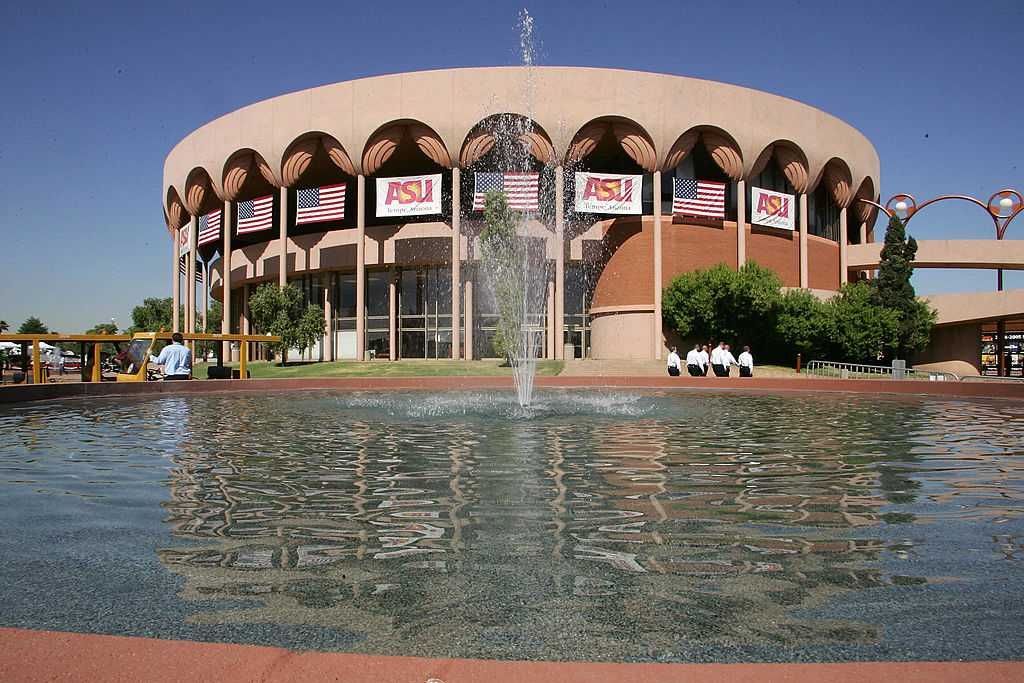
Universities won’t give back the land — but they will bury history


Anyone who has spent time on a university campus recently has likely been forced to sit through a Native American land acknowledgment.

At Arizona State University, one plays on repeat as guests wait for graduation ceremonies to begin. Faculty in my college must sit through the ritual before we can even start business meetings.

The proper response to historical injustice is not to destroy historical evidence. It is to preserve it, study it honestly, and allow future generations to learn from it.

As you might expect, no university is handing back its land. Neither are the professors who recite these acknowledgments with the solemnity of a Marxist prayer while continuing to live comfortably on the same “tribal lands” they claim were unjustly taken.

Instead, they join celebrities such as Billie Eilish in proclaiming that “no one is illegal on stolen land” while living, working, and drawing salaries on the very land they call stolen.

Universities have perfected the art of virtue signaling. These modern sophists repeat fashionable slogans without changing their own behavior.

Until now, land acknowledgments have mostly been harmless theater, something for the larger community to mock or ignore. But the ideology behind them is no longer satisfied with symbolic gestures. It is beginning to reshape museums, archaeology, and our understanding of American history.

A new report from the Goldwater Institute by anthropologist Elizabeth Weiss argues that a movement originally intended to promote respect for Native American remains has evolved into something very different.

Instead of balancing scientific inquiry with legitimate tribal concerns, museums and universities increasingly adopt interpretations of the Native American Graves Protection and Repatriation Act that close off research, empty museum collections, and place archaeological evidence beyond the reach of scholars.

Congress enacted NAGPRA in 1990 to address genuine abuses. Archaeologists had sometimes removed human remains and funerary objects without sufficient respect for tribal beliefs. The law sought to correct those wrongs while preserving legitimate scientific research.

Sacred objects, identifiable ancestral remains, and funerary items could be returned to affiliated tribes, while materials outside those categories would remain available for study and public education.

According to Weiss, that compromise is disappearing.

RELATED: Trump’s Justice Department is shining a light on woke universities — finally

Werner Forman/Universal Images Group/Getty Images
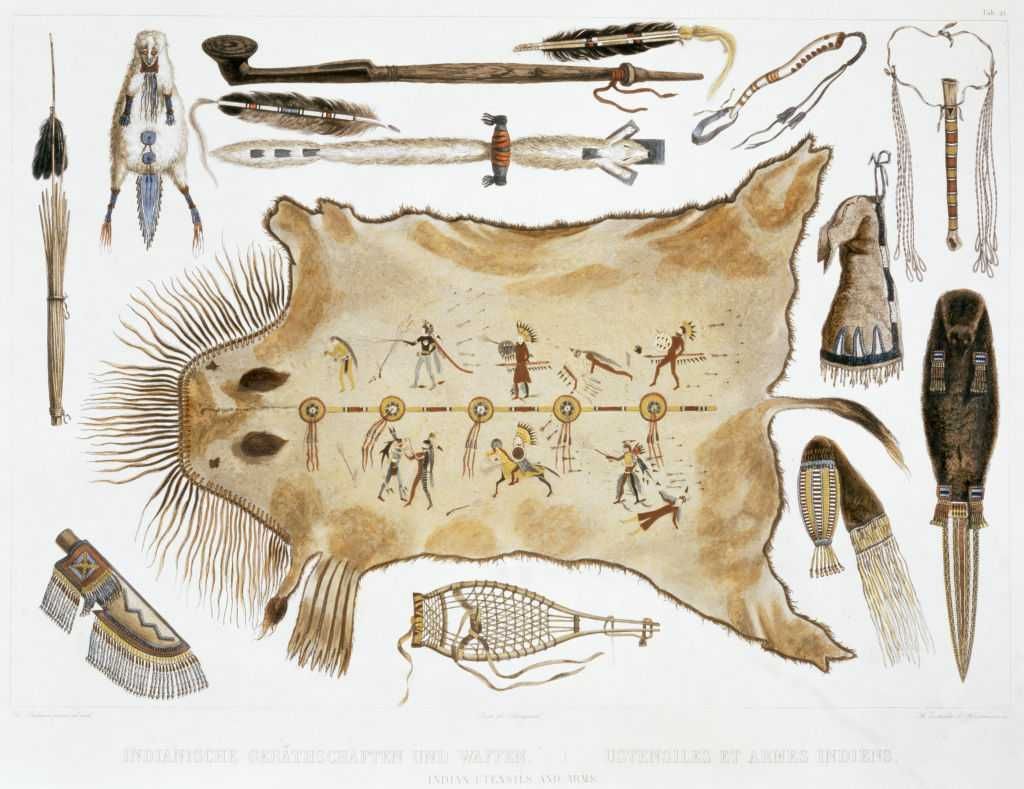
Today, institutions increasingly treat materials Congress never intended to repatriate as sacred tribal property. Weiss documents examples involving ordinary research samples, animal bones, pollen samples, carbon-dating materials, and other archaeological evidence being transferred out of scientific collections under expansive interpretations of federal regulations.

Once these materials are repatriated and reburied, many become effectively unavailable for future scientific study.

That should concern anyone who values historical inquiry.

Every generation develops better methods of studying the past. DNA sequencing, isotope analysis, and improved dating techniques have revolutionized archaeology over the past 30 years. Materials that seemed scientifically unremarkable in 1990 can yield new discoveries today.

Once those materials are permanently reburied or removed from research collections, future discoveries become impossible.

Imagine applying the same principle elsewhere.

Suppose medieval manuscripts could no longer be studied because descendants of their authors objected. Suppose Civil War artifacts disappeared into private collections because modern groups claimed a spiritual interest in them.

Historians would rightly protest that the past belongs to all humanity, not merely to those who claim the strongest emotional attachment to it.

Weiss also argues that some archaeological materials predate any historically identifiable modern tribe, making cultural affiliation itself a matter of dispute. In such cases, the objection is not merely to disrespectful handling. The objection is to the possession of artifacts at all.

Yet something very similar is happening in parts of American archaeology.

The irony is obvious. Universities constantly tell the public to “follow the science.” But here, scientific investigation increasingly yields to political pressure and ideological fashion.

Museums were once expected to preserve evidence, not remove it from public view. Archaeologists were trained to ask what the evidence reveals, not what contemporary activism permits them to say.

Weiss argues that Arizona provides an especially important case study because of its extraordinary archaeological heritage. For generations, Arizona museums and universities helped reconstruct thousands of years of Southwestern history through careful excavation, preservation, and analysis.

As more collections become inaccessible and more materials are removed from research, that work becomes increasingly difficult — and in some cases impossible.

The problem extends beyond archaeology.

Universities have increasingly adopted a philosophy that treats history primarily through oppression and colonization. Land acknowledgments are one visible expression of this worldview. They present contemporary Americans as perpetual beneficiaries of historical injustice while implying that present-day institutions possess diminished moral authority because of the past.

The White House has criticized Smithsonian leadership for teaching a politicized version of American history. It often feels as if America’s enemies hired professors and museum curators to spread anti-American propaganda at taxpayer expense.

RELATED: College professors want your child’s soul. Here’s how you can stop them.

More likely, they did not have to do a thing. They can simply sit back and watch as the radical left undermines what is beautiful in America and replaces it with the intersectionality grid.

This outlook changes how universities approach nearly everything they teach.

Rather than ask, “What happened?” they increasingly ask, “Whose narrative should prevail?” Rather than preserve evidence so future generations can investigate it, they prioritize symbolic acts of moral repair over continued inquiry.

That’s backward.

The proper response to historical injustice is not to destroy historical evidence. It is to preserve it, study it honestly, and allow future generations to learn from it.

Science and history are not enemies of respect. They are among the greatest tools we possess for understanding those who came before us.

Ironically, the universities that require faculty and students to affirm the importance of “decolonizing knowledge” often become less interested in knowledge itself.

Once political symbolism becomes more important than evidence, museums cease to function as museums. They become instruments of ideological education.

In 2020, faculty in my college were encouraged to begin “decolonizing” our curriculum. Yet this same college remains ever vigilant against any apparent Christian bias in my classes.

The solution is not to repeal NAGPRA or ignore legitimate tribal concerns. Congress intended a balance between respect for Native American communities and the preservation of scientific inquiry.

That balance should be restored.

As Weiss argues, current regulatory interpretations have moved well beyond the statute’s original purpose and placed important areas of archaeological research at risk.

Universities should be places where evidence is preserved, competing interpretations are debated, and history is pursued wherever the facts lead.

Instead, many have embraced a politics of symbolism that values moral performance over intellectual discovery.

Land acknowledgments are easy. Preserving the archaeological record for future generations is much harder.

One is an empty ritual to appease intersectional ideology.

The other is the actual work of a university.

A Federal School Choice Program Would Create More Problems Than It Solves

President Donald Trump’s wrecking ball has already smashed decades of corrupt educational bureaucracy, and he has boldly planted the flag for school choice in his second term. But if he is to succeed in sending education back to the states and away from the federal government, he should swap out the strategy of former Florida […]

Trump’s Executive Orders Are Only The First Step In Defeating DEI

Ending mandatory DEI indoctrination in the classroom will require deliberate action by state legislatures and university boards.

Improving High School AP Courses Starts With Destroying The College Board

The College Board’s monopoly on watered-down, leftist drivel needs to be broken up before reform can happen.



Diversity, equity, inclusion, and belonging: A new name for the same game


Is DEI really on its way out at American universities? Don’t be fooled. While many institutions claim to have abandoned diversity, equity, and inclusion programs, they have often rebranded them, continuing the same practices under new names. The values taught in these programs are so deeply ingrained among faculty and administrators that only a fundamental overhaul of American universities can offer an education free from Marxist conflict theory or John Money’s gender ideology.

The Republican landslide victory gave former President Donald Trump and Congress a mandate for change. Within two days, Trump released a video outlining his plan to reshape American universities. He aims to tackle student loans and tuition costs — which rise in direct proportion to the availability of student loans — and to threaten the accreditation of universities that teach “critical race theory, transgender insanity, and other inappropriate racial, sexual, or political content.” However, these universities will likely shuffle or rename that material instead of eliminating it.

Is DEI on its way out? Not without fundamental reform of American universities. Is that reform possible? Yes.

How do I know? I am a tenured professor of philosophy and religion at Arizona State University, and I am suing the university over its mandatory DEI employee training. The Goldwater Institute represents me. Arizona law prohibits using taxpayer funds for classes or training that promote racial blame, yet ASU’s “Inclusive Communities” training does precisely that. From inside the system, I have seen faculty use university time to denounce Trump, call his supporters evil, and plot ways to keep their favored curriculum alive despite legislative scrutiny. ASU’s employee training is just one example.

Hiding the truth

The university claims it no longer offers DEI training, now calling it “DEIB training,” where the “B” stands for “belonging.” This rebranding allows administrators to publicly assert that they have abandoned DEI training, expecting the public to believe it without further investigation. However, screenshots I have shared on my Substack reveal that DEIB covers the same material as DEI. Additionally, the Goldwater Institute has posted the transcripts from ASU’s “Inclusive Communities” training on its website as part of our court case.

How common is this practice across universities? A quick glance at their websites often reveals the answer. In some cases, DEI or DEIB training materials are hidden behind password-protected systems, requiring current employees to access and share them publicly. It’s unlikely there has been a widespread shift away from Marxist conflict theory and racial blame toward an emphasis on the American ideal that all people are created equal and endowed with the same rights.

Professors and administrators remain the same individuals, with the values they held before the second Trump election. Instead, these ideas are simply being taught under different names.

Take, for example, ASU’s sustainability course, a requirement for the university’s 180,000 students. At first glance, the course appears to focus on pollution and global warming. But its curriculum includes lessons on social justice and, unexpectedly, a section advising students on where to shop. It concludes with: “And now watch this video from Starbucks.” Yes, ASU’s students are required to watch a video from Starbucks. And where are the Marxist professors who claim to oppose big business? They remain silent because the corporation is promoting their ideological agenda.

Redoubling discrimination

In the latest development, ASU’s attorneys argued that because the required training begins with a statement advising participants not to feel blame, the university can say anything afterward.

Consider the logic: If someone says, “I don’t intend to drive drunk tonight, so do not construe any of my actions as drunk driving,” would that grant them a valid defense if they do drive drunk? Could a thief say, “I do not intend to make anyone feel as if I am stealing from them” and then take whatever he wants?

Simply declaring in advance that you do not intend to break the law does not grant immunity from legal consequences. Telling white people at ASU that the university does not intend to make them feel blame does not justify subsequent discrimination with a shrug of, “I told you not to feel that way.” Think of an abusive spouse who professes love before committing abuse. It’s a disturbing argument, and whoever made it should be ashamed. ASU risks becoming known as an anti-white, anti-heterosexual institution.

Yet this is the rationale a room full of Ph.D.s and J.D.s produced. Even a humble philosophy professor can see its flaws. Why not simply end the required training and stop discriminating based on skin color? The only plausible explanation is that ASU is so ideologically entrenched that this straightforward solution never occurred to the administration. Instead, the university escalates its DEI “inclusiveness” training rather than removing the modules that target whiteness and heteronormativity.

In the next stage of our case against Arizona State University, administrators will testify under oath. The university’s spokesman has denied the existence of required DEI training, questioned my standing to bring the lawsuit, and insisted we have no right to feel discriminated against. What will they say in court? Potential students are watching to see how ASU conducts itself.

Is DEI on its way out? Not without fundamental reform of American universities. Is that reform possible? Yes, I believe so. We are witnessing a shifting era, as more students reject DEI and openly demand changes on campus. Parents are also scrutinizing these curricula and exploring alternatives to DEI-heavy institutions. Meanwhile, enrollment in the humanities — where DEI often runs deepest — remains abysmal, suggesting that the current model is unsustainable, despite ASU’s talk of “sustainability.”

Universities’ persistent use of new labels like “DEIB” shows they have not truly embraced reform. Instead, they recycle the same divisive ideologies under different names, hoping the public will not notice. Real change requires sustained pressure from parents, students, accreditors, and lawmakers to hold universities accountable. We must demand transparency, champion an education based on equality and intellectual rigor, and end the misuse of taxpayer dollars to push ideologies that divide rather than unite. The era of unchecked DEI dominance is nearing its conclusion — if we stand firm and see reform through.

Walter Cronkite journalism school won't let prospective propagandists graduate without taking radical DEI course


A top journalism school has recently come under scrutiny over its requirement that prospective propagandists sit through a mandatory DEI course.

In order to graduate, journalism majors dumping over $13,000 a year into Arizona State University's Walter Cronkite School of Journalism will have to learn how to check their supposed straight privilege; how to conform to gender ideologues' current speech codes; how to avoid the sin of "microaggressions"; and why innocuous turns of phrase are racist.

According to the course listing, "Diversity and Civility at Cronkite" at the taxpayer-funded ASU emphasizes "the importance of diversity, inclusion, equity and civility to ensure all Cronkite students feel represented, valued and supported."

The course, which is presently taught by Venita Hawthorne James, apparently offers "training and awareness on cultural sensitivities, civil discourse, bias awareness and diversity initiatives at the Cronkite School and ASU" and "empowers students to approach reporting and communication projects with a multicultural perspective."

While the language employed in the listing is not particularly provocative, it is clear from documents obtained via public record requests by the Goldwater Institute, a libertarian think tank, that "Diversity and Civility" is indeed a radical DEI course intended to ideologically condition students.

The Goldwater Institute noted that an instructor noted in one syllabus that "Diversity and Civility is an entry level course to bring thoughtful, open minded discourse to issues of race, gender, sexual orientation, ability, income, geography, and age."

Another syllabus, more bold in its framing, noted that the course "sets the tone for your Crokite interactions. ... Think of this class as the first step in your DEI — diversity, equity, and inclusion — practice as a journalist or communications professional."

Among the course's seven units is one on race and ethnicity and another on sexuality and gender ideology.

Future talking heads and journalists will reportedly learn all about so-called microaggressions. This lesson entails reviewing examples of "racial microaggressions" detailed on a University of Minnesota webpage, such as:

  • "Denial of individual racism[:] A statement made when Whites deny their racial biases";
  • the "Myth of meritocracy" or saying the "most qualified person should get the job"; and
  • the "notion that the values and communication styles of the dominant / White culture are ideal."

Students will also learn that it is deeply problematic to suggest that "everyone can succeed in this society, if they work hard enough."

Besides learning about the dangers of extolling hard work and rejecting accusations of racism, the Goldwater Institute indicated that journalism majors compelled to take this course will also come to understand the "difference between sexuality and gender identity and why it matters" and "recognize privileges related to sexuality and gender identity."

To ensure ideological uniformity at the level of language use, the course reportedly refers students to an NPR guide created in concert with the radical activist group GLAAD — whose communication director recently attacked a gay reporter online for sharing scientific evidence that undercut gender ideologues' preferred narrative.

The guide, which is supposedly intended to "help people communicate accurately," claims that sex is "assigned at birth" and that a normal person free of gender dysphoria ought to be referred to as "cisgender." It also recommends providing one's pronouns when making introductions.

One instructor who has taught the course has reportedly introduced students to examples of "Hetrosexual [sic] Privileges," "Male Privileges," and "Cisgender Privileges."

The author of these lists is Sam Killermann, a radical LGBT activist who also created the "Genderbread Person" now circulated in some schools.

Killermann's lists make abundantly clear that he has an axe to grind.

"Raising, adopting, and teaching children without people believing that you will molest them or force them into your sexuality" is one straight privilege, according to Killerman. Another is "freely teaching about lesbians, gay men, and bisexuals without being seen has having a bias because of your sexuality or forcing your 'homosexual agenda' on students."

The Goldwater Institute underlined how in the third recommended reading, Killermann suggests that women's locker rooms, bathrooms, and prisons should be open to men who claim to be females.

At the end of the gender identity unit, future journalists are tasked with figuring out how to prepare journalists to speak with a theoretical "nonbinary" client who refers to herself as a plurality.

Faculty at the school voted in fall 2021 to add the mandatory course to "advance the understanding and practice of diversity and inclusion."

The college told the Epoch Times that the "goal of the course is to help students appreciate people's differences and to channel disagreements toward civil discussion."

A spokesman for the Cronkite School also indicated that students may opt out of specific discussions by reaching out to their professor with a request ahead of time.

Timothy Minella, senior constitutionalism fellow at the Goldwater Institute's Van Sittert Center for Constitutional Advocacy, told the Epoch Times, "Students who decide to major in these subjects are not necessarily signing up to be progressive activists."

"A public university that should be serving the entire public, not just the liberal slice of it, needs to return to its core mission of education, not indoctrination," added Minealla.

The Goldwater Institute noted in its report, "Indeed, it is difficult to reconcile such practices with the explicit directives of the Arizona state constitution, which declares in Article XI, Section 6: 'The university and all other state educational institutions shall be open to students of both sexes, and the instruction furnished shall be as nearly free as possible.'"

Like Blaze News? Bypass the censors, sign up for our newsletters, and get stories like this direct to your inbox. Sign up here!

Professor sues ASU over taxpayer-funded 'inclusive communities' training: 'Racism under the guise of DEI'


An Arizona State University professor filed a lawsuit Tuesday against the school over its "ASU Inclusive Communities" training.

The Goldwater Institute filed the complaint on behalf of Owen Anderson, who has taught philosophy and religious studies at Arizona State University for more than two decades. According to the legal firm, Anderson could face disciplinary action for his refusal to take the university's "discriminatory diversity, equity, and inclusion" training.

"I shouldn't be forced to take training and affirm ideas with which I disagree as a condition of employment,'" Owen stated. "This 'training' is simply racism under the guise of DEI. It goes against my conscience, and I want no part of it."

Goldwater Staff Attorney Stacy Skankey noted that state law bans taxpayer funds from being used to "teach doctrines that discriminate based on race, ethnicity, sex, and other characteristics."

"ASU is essentially forcing its employees to agree to a certain type of speech, which violates the Arizona Constitution's broad protections for free speech," Skankey said.

The lawsuit argues that the ASU Inclusive Communities training teaches the faculty DEI theories, "including things like 'how ... white supremacy [is] normalized in society,' how to 'critique whiteness'; 'white privilege'; 'white fragility'; and the need for 'transformative justice.'" It also addresses land acknowledgments and outlines differences between "equality" and "equity."

According to the complaint, faculty are required to take an online quiz on the concepts taught in the training. Staff who fail the test will "be reported to their supervising dean," the law firm claimed.

Anderson reportedly viewed the training but did not complete it.

Before filing the lawsuit, the Goldwater Institute sent a cease and desist letter to the Arizona Board of Regents demanding the school stop using taxpayer dollars to fund such training.

"ASU continues to spend taxpayer money on the ASU Inclusive Communities training and continues to require that public employees take this training, in violation of state law. ASU continues to mandate that employees take a quiz following the Inclusive Communities training and attest their allegiance to these principles by selecting 'correct' answers, thereby compelling ASU employees' speech, in violation of the Arizona Constitution," the legal firm stated.

Anderson wrote on X Tuesday, "When people see the content of this required training they are stunned. It is far beyond learning how to work in a diverse setting. Instead, it is about race blame, 'whiteness,' and silencing those who disagree."

ASU claims that the training allows the school to maintain a diverse student body, and it denies the lawsuit's allegations that the training violates the state's constitution, the Arizona Republic reported.

Veronica Sanchez, a spokesperson for ASU, told the Arizona Republic, "Arizona State University is committed to the success of each one of its students who come from all 50 states, 150 different countries and all socio-economic backgrounds."

"To help meet that goal, consistent with A.R.S [41-1494], ASU provides its employees Inclusive Communities training which promotes an environment of respect for all backgrounds, beliefs, and life experiences," she added.

Sanchez also argued that the quiz at the end of the training is not required.

ASU stated that it has yet to receive a copy of the lawsuit.

The Board of Regents did not respond to the Arizona Republic's request for comment.

Like Blaze News? Bypass the censors, sign up for our newsletters, and get stories like this direct to your inbox. Sign up here!

Flagstaff City Council Threatened With Lawsuit Over Ban On Arizona Shooting Range’s Airport Ads

Wilson tried to appeal the decision before a record-breaking number of tourists flooded the area, but his requests were repeatedly brushed off.

Conservative Group Applies Pressure To ASU Over Illegal DEI Trainings, ‘Just the tip of the Iceberg’

A recent report from the Goldwater Institute indicates DEI trainings at Arizona State University violate state law.