EPA ‘Considering’ Possible SCOTUS Appeal In Battle To Ax Billions In ‘Climate’ Grants

The Environmental Protection Agency (EPA) is “considering” whether to ask the Supreme Court to pause a lower court injunction blocking its bid to ax “climate” grants for nongovernmental groups. In a statement to The Federalist, an EPA representative said that the agency is “reviewing” a Tuesday decision by the en banc D.C. Circuit Court of […]

The Trump Administration’s Proposed Grant Reform May Lead To More Earmarks

The changes could lead to an increase in congressional earmarks, which are associated with higher spending and institutional corruption.

The housing bill from hell targets red America


Preserving the continuity, vitality, and quality of life of exurban and rural red America should be a top priority for conservative policymakers.

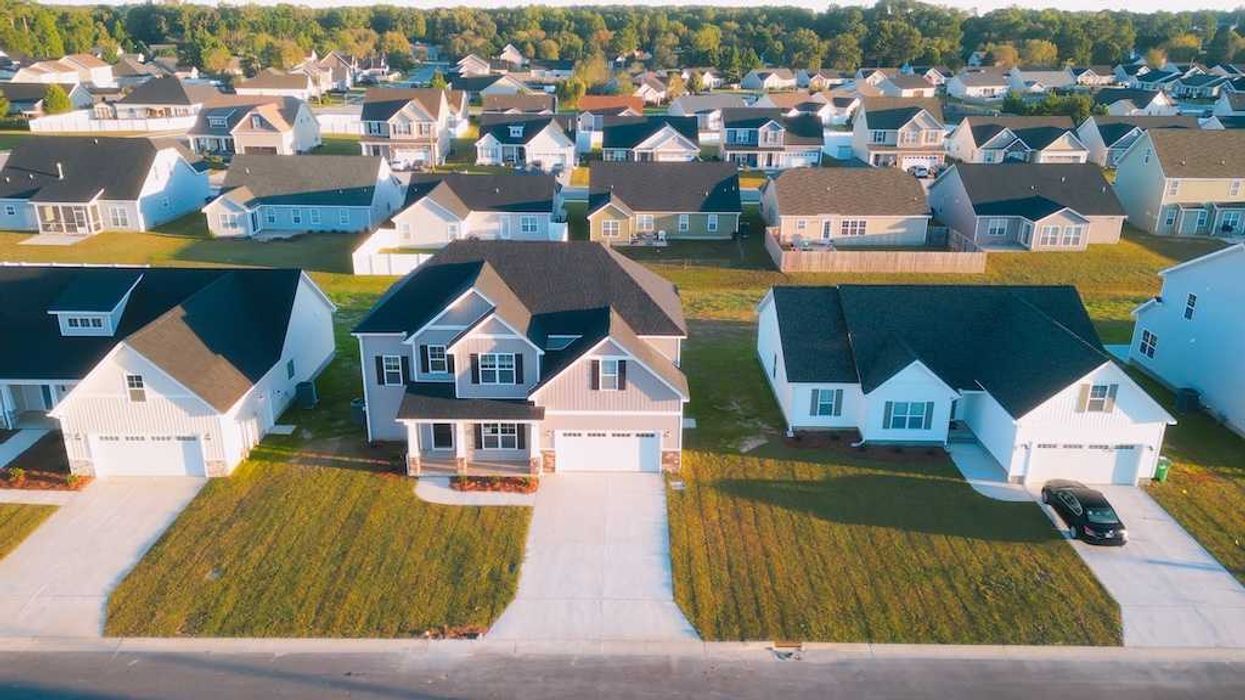
Instead, red America faces a multifront assault on land use and development. Corrupt local Republican politicians and their developer donors are pushing data centers, solar and wind farms, and Section 8 housing for foreign labor. Now, Congress has sent President Trump a uniparty housing bill — the Obamacare of housing — that will open the floodgates for the federal government, globalists, and special interests to force more of that transformation on red communities.

Conservatives need communities that remain intact, counties that can govern themselves, and neighborhoods that are not remade by federal bribes and developer schemes.

After years of negotiations, Sens. Elizabeth Warren (D-Mass.) and Tim Scott (R-S.C.) just sent the largest housing bill in recent memory to the president’s desk. Only five Senate Republicans voted against it. Every Democrat supported it. Trump had signaled he would sign the bill — but only after Congress passes the SAVE America Act.

The bill is being sold as a magic wand to lower housing prices. In reality, it expands the Housing and Urban Development and Federal Housing Administration programs that helped fuel the housing bubble through artificial subsidies.

Conservatives are being told the bill bars corporate ownership of residential homes. But that provision was tacked on at the 11th hour, accounts for only 19 of the bill’s 381 pages, and is riddled with loopholes. Worse, the bill’s main provisions incentivize overdevelopment and Section 8 expansion in red America, negating whatever limited utility the corporate ownership provision might have.

The result is more social transformation than the partial corporate ownership ban claims to prevent.

Obama-style zoning incentives

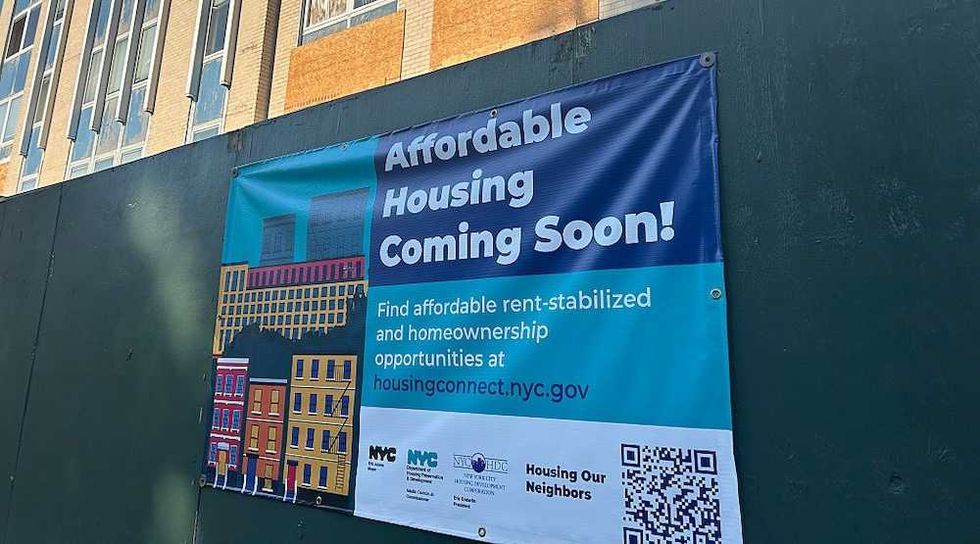
Section 107 sets the tone by creating a federal zoning standard for “directing local reforms,” including “mechanisms to encourage adoption” of loose zoning rules — all in the name of increasing housing inventory. It also creates a national standard for developers and builders to request special zoning and appeal denials of variances.

That may sound appealing when discussing onerous regulations in blue states. But in red America, already overbuilt since COVID, this bill will create a federal standard that pressures communities to drop one of their few remaining tools of self-defense against the transformation of their neighborhoods.

The rest of the bill offers incentives to communities that follow this national standard. Inevitably, that will encourage localities to rezone not just for housing but also for other uses, including data centers.

HUD should not exist. It certainly should not dictate zoning policy to rural America.

The zoning guidelines would push communities to “reduce minimum lot sizes and setbacks,” increase the number of “duplexes, triplexes, quadplexes,” and promote “transit-oriented development.” Nothing good will come from federal incentives that effectively impose Section 8-style housing and density mandates on suburbs, exurbs, and rural towns.

RELATED: Another tax credit won’t fix what Sunday schools used to teach

Alex Wong/Getty Images

Grant money as a weapon

Ask any conservative living in red America under RINO leadership — which describes much of America — and he will tell you that one of the greatest threats to the character of his county comes from developers working with corporatist GOP politicians, usually their donors, to transform the neighborhood through overdevelopment.

This bill does not directly mandate adoption of the zoning standards. It does something almost as dangerous: It offers local communities and developers incentives that will function like a mandate.

Section 207, written by pro-Hamas Rep. Rashida Tlaib (D-Mich.), creates new competitive HUD grants for states, localities, tribes, and other entities for planning, zoning reform, barrier reduction, and implementation to increase “affordable” housing supply.

Some grants will go toward reducing environmental barriers, which is how Warren got Republicans to support the bill. But much of the remaining criteria is rooted in urbanizing more of America.

The funds are contingent on adopting plans to rezone and “increase the availability of affordable housing and access to affordable housing.” In practice, this provision places a loaded gun to the head of communities that want to keep out Section 8. Nothing gets between local politicians and grant funds.

Section 208 goes further by granting funds to communities that have already demonstrated measurable progress in expanding housing supply at all costs. Eligibility criteria include localities that build more multiunit housing, reduce lot sizes, create “zoning overlays for mixed-income housing,” and use “local tax incentives or public financing for attainable housing.”

Want to densify your suburb and destroy single-family neighborhoods? This bill is for you.

Then comes the Community Development Block Grant program. Rather than following through on every Trump budget proposal’s promise to abolish this program, the bill expands it. Worse, it creates a zero-sum reallocation within the existing CDBG formula by shifting money from low-growth communities to high-growth communities.

Build more homes, and you get rewarded. Build fewer, and you get punished.

That will either shift more money to blue areas, which make up the lion’s share of places needing more inventory, or incentivize red areas to overdevelop.

Subsidizing the next bubble

No bad housing bill would be complete without provisions expanding the FHA’s authority to extend even more loans to people who cannot afford houses, thereby fueling the next housing bubble.

Section 213 allows the FHA to insure larger loans for apartment buildings, enabling more and bigger multifamily projects to be financed with FHA insurance.

Outside the Northeast, home prices are already beginning to tumble from COVID-era overbuilding, and builders are desperate to sell. In June, 35% of builders cut prices, while 62% used sales incentives to attract buyers. America does not need to expand HUD’s reach into local communities to incentivize what is already happening.

Ironically, this bill is being sold as a way to prevent corporations from transforming neighborhoods by purchasing too many homes. But almost every other provision accelerates an even greater transformation.

Section 1001 supposedly bans very large corporate investors from buying more single-family houses. But it carves out practical exceptions for new construction, build-to-rent developments, meaningful renovation programs, and certain pathways that help renters eventually buy homes.

In other words, the same corporations will enjoy even more subsidies to build Section 8 rentals in the suburbs under the bill’s extremely limited ban than they enjoyed before it.

RELATED: Home builders say immigration reform is essential to ease housing affordability crisis

Lindsey Nicholson/UCG/Universal Images Group/Getty Images

No one is home

This is why Congress should not rush through a bill of this magnitude on the suspension calendar without debate.

Then again, nobody is home in the so-called conservative movement to flag a bill this large. Obamacare could pass overnight, and the loudest voices on the right might not even notice.

The bill’s supporters claim they are solving a housing crisis. In reality, they are giving HUD, developers, corporate investors, and local Republican sellouts more tools to transform red America.

Conservatives do need homes. They need communities that remain intact, counties that can govern themselves, and neighborhoods that are not remade by federal bribes and developer schemes.

That is the home conservatives must ultimately construct. Where is the bill to expedite that construction?

OpenAI wants to make its losses public property


The only things certain in life are death, taxes, and the permanence of a government program. But what happens when a private company turns its agenda into a government program?

You cannot build a more financially secure business model than permanence. That helps explain why OpenAI is now reportedly in discussions with the Trump administration about a possible public equity stake in the company.

Unlike the dot-com bubble, whose infrastructure later supported real economic growth, rotting data centers will not leave behind comparable public value.

After all, what else is a company with $1.4 trillion in obligations and only $14 billion in revenue supposed to do?

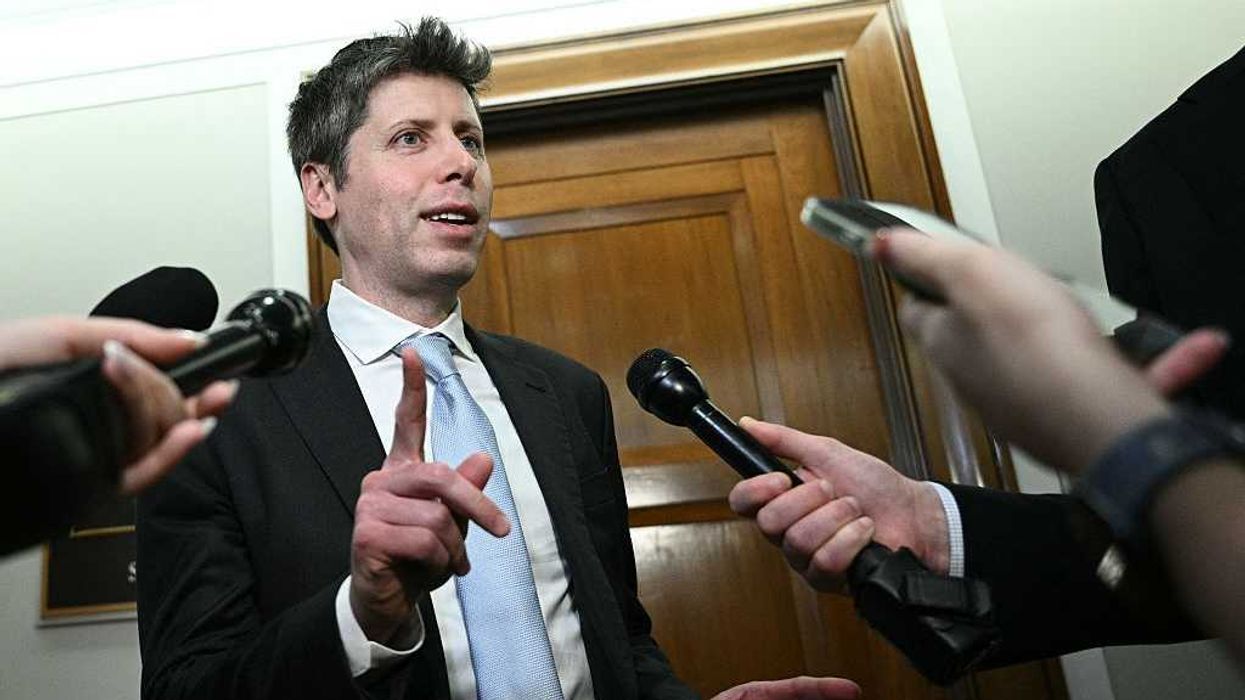
Why was OpenAI CEO Sam Altman on Capitol Hill last week? According to the Financial Times, he was effectively selling Americans the rope to hang themselves. The plan proposed by OpenAI and other companies would reportedly create a sovereign-wealth-style fund into which AI companies would contribute equity so that the public could share in the sector’s soaring valuations.

That sounds generous until one remembers that this is still a loss-making sector built on staggering capital demands.

What is the rationale? Asked about equity stakes on Air Force One, President Trump suggested that “pieces” of AI companies could be “given to the American public” to quell growing alarm over the rapid rollout of the technology.

In other words, Americans are being asked to surrender farmland, neighborhood continuity, and the reliability of the electric grid to cloud-based, surveillance-enabling chatslop. In return, they may receive the honor of owning the losses from an insolvent business model.

The president confirmed the idea at a press conference on Wednesday, saying he would soon meet with “the top 12 or 15 executives” about “giving back something to the public.” He promised that “the public will become very rich.”

That promise should terrify everyone.

Once generative AI becomes a public project, the industry will move beyond “too big to fail.” Whatever happens to the companies or the broader sector, their success will become artificially and inextricably tied to the economy. Every government favor, subsidy, guarantee, and bailout will then be justified as necessary to protect the public’s stake.

RELATED: The AI boom is turning public meetings into crime scenes

Natalie Behring/Getty Images

Last November, OpenAI’s chief financial officer let the cat out of the bag when she said the company would need the government as a “backstop” for its business model. Sarah Friar later denied seeking a bailout. But a leaked 11-page letter from OpenAI to the Office of Science and Technology Policy urged the government to provide “grants, cost-sharing agreements, loans, or loan guarantees” to build America’s AI industrial base — all, naturally, to “compete with China.”

Fast-forward six months, and “backstop” now appears to mean a public “stake” in the company.

Everyone knows OpenAI’s generative AI model is unsustainable. It is built on unfathomably expensive capital expenditures for every token of AI usage.

Companies such as JPMorgan are reportedly finding that employees, after being pushed to use generative AI platforms such as ChatGPT and Claude, are spending more on tokens than their individual salaries. Uber’s chief technology officer said last month that the company burned through its entire 2026 budget for Claude Code and Cursor in just four months. In the irony of ironies, Microsoft itself reportedly told engineers in a major division to stop using an AI coding tool because the cost-to-utility ratio was not there.

The reality is that AI would work better through localized edge computing with low latency than through cloud-based hyperscale data centers that require unsustainable amounts of land, capital, resources, and power while causing other harms. China is producing cheap open-source AI. America is pouring concrete.

But the scale of that concrete — and all the materials, inputs, and power needed to support it — is unsustainable. Everyone knows it. Google, Amazon, Meta, Microsoft, and Oracle issued 47% more debt in the first five months of this year than they did from 2020 through 2024 combined. Total spending per capita now exceeds spending on the railroads in 1859, which at least served a clear public need that could be monetized over time.

RELATED: After fierce debate, Trump opts for federal controls in AI development

ANDREW CABALLERO-REYNOLDS/AFP/Getty Images
There is no amount of monthly household or business subscription fees that will make this investment break even. The costs will only increase because the model depends on a resource-stripping industrial footprint and GPUs that have few other useful functions and depreciate within a few years.

Unlike the dot-com bubble, whose infrastructure later supported real economic growth, rotting data centers will not leave behind comparable public value.

The tech companies, land developers, and venture capital firms understand that this is a Ponzi scheme. They are racing to take these companies public so that they can be folded into indexes, ensuring that trillions in pension funds are funneled into an unsustainable business model. Once that happens, even if a more efficient approach to AI becomes obvious, the economy and government will already be too dependent on the data center model to let it fail.

That is why these companies are also seeking federal land for their projects, a favor not extended to ordinary industries. SoftBank, the Japanese investment company trying to underwrite much of OpenAI’s speculative build-out, is reportedly pushing for a federal land project in Ohio to reduce costs. But banks are already balking at these ventures after SoftBank failed to secure a $6 billion loan for OpenAI.

Green energy taught us a simple lesson: When the only path to profitability runs through government favors, we should not start down that path.

OpenAI does not need a public stake. It needs public skepticism.

Americans should not be asked to subsidize a speculative industry, sacrifice land and power, and then call the bailout wealth creation. If AI companies cannot survive without government backstops, loan guarantees, public land, and pension-fund capture, then they are not building the future.

They are building the next permanent government program.

Grants are a secret weapon for American communities


Most people think of grants as free money handed out at random or as something reserved for large nonprofits with powerful connections. In reality, however, grants are one of the most structured and intentional forms of funding in the American economy. They are designed to connect capital with specific outcomes, and both sides benefit when that connection is made.

Essentially, a grant is a non-repayable investment. A donor, whether an individual, foundation, or corporation, allocates capital toward a defined purpose. A recipient, whether a nonprofit, business, or project leader, applies for that funding with a plan to execute that purpose.

Unlike a loan, there is no repayment, and unlike a general donation, there are expectations.

That structure is what makes grants so effective.

Understanding how that system works is the difference between missing out and getting ahead.

For recipients, the benefit begins with access to capital without added risk. Organizations can fund new programs, hire staff, or invest in infrastructure without having to take on debt or divert limited funds. That security opens the door to growth.

Grants are often used as seed funding, supporting early-stage ideas that would otherwise struggle to attract financing. They allow organizations to think beyond short-term constraints and plan for the long term.

Just as importantly, grants create credibility. When an organization is awarded funding through a competitive or structured process, it signals validation. That recognition can attract additional donors, partners, and opportunities, creating momentum that extends far beyond the initial award.

But grants are not just one-sided. For donors, instead of broadly contributing to a cause, grantmakers can define exactly what they want to support. Grantmakers can also establish criteria, require reporting, and track outcomes over time. That creates accountability and ensures that funding is tied to results, not just good intentions.

Matching grants, for example, are designed to unlock additional funding by requiring others to contribute. This approach not only increases total dollars raised, but it also expands participation and engagement. According to data from the Bolger Foundation, these types of campaigns consistently drive higher donor involvement and overall contributions.

There are also practical advantages on the donor side. Contributions can offer tax benefits, and tools like donor-advised funds allow individuals and families to strategically manage their giving over time.

However, the grant system only works when the right capital meets the right opportunity. Too often, organizations struggle to identify funding sources that match their mission. At the same time, donors can find it difficult to connect with projects that align with their goals.

RELATED: No more free ride for federal grant hogs

Porcorex/Getty Images

That disconnect slows everything down.

That’s why more and more firms like mine have grown increasingly focused on grant matching as a way to close that gap.

By helping connect recipients with funding opportunities that align with their work and aligning donors with clearly defined outcomes, the process becomes more efficient for both sides. The alignment happens, and the results are tangible: Projects move forward faster, funding is deployed more strategically, and donors and recipients alike have greater confidence.

Grants are part of a system designed to direct resources where they can have the greatest impact. Understanding how that system works is the difference between missing out and getting ahead.

For organizations looking to grow, grants offer a path to funding without added burden. For donors looking to make a difference, they offer a way to turn intention into measurable results.

The opportunity is already there. The question is whether more people are ready to use it.

No more free ride for federal grant hogs


Washington has an old joke: Nothing is more permanent than a temporary government program.

Look past the quip and a pattern emerges. Programs created to address specific problems rarely disappear when those problems recede. They develop constituencies, build bureaucracies, and acquire defenders. Programs meant to die are kept alive through zombie funding long after their original purpose has faded.

Federal grants are not entitlements. Recipients should earn and re-earn them through demonstrated performance.

Milton Friedman spent decades explaining why. In “Free to Choose,” he distilled the point into a simple insight: When you spend your own money on yourself, you care about cost and value. When you spend someone else’s money on someone else — which is precisely what federal grantmaking entails — neither cost nor value receives the same scrutiny it would if the money were your own.

That is the system the Trump administration is now trying to change through a sweeping overhaul of federal grant regulations developed by the Office of Management and Budget. The core idea is simple enough that it should not require federal rulemaking to defend: Public money should produce public results. If it does not, the money should not continue automatically.

Washington has often operated on the opposite assumption. Grants get awarded. Organizations build staffs around them. Those staffs lobby to preserve them. Programs that fail rarely disappear cleanly; they are restructured, rebranded, and refunded. The constituency for any particular line of spending is loud and organized. The constituency for cutting it is diffuse and quiet. That is not a bug. It is a feature that benefits insiders and leaves taxpayers with the bill.

The proposed reforms rest on a simple principle: Federal funding should be earned continuously, not granted automatically. Stronger reporting requirements would force grantees to demonstrate results rather than document activity. Expanded use of the Treasury Department’s Do Not Pay system would help prevent improper payments before funds go out — a meaningful safeguard given that the OMB reported roughly $236 billion in improper payments government-wide in the 2023 fiscal year. Enhanced transparency rules would make it easier for taxpayers to see where federal dollars go and what they produce.

The goal is to shift federal grantmaking from routine renewal to ongoing performance review.

The proposal also takes on something Washington rarely discusses honestly: grantee capture. When a nonprofit receives most of its revenue from federal grants, it no longer operates as a purely independent civic institution. It functions as a publicly funded contractor with a development office. Taxpayers deserve to know when groups presenting themselves as independent advocates also depend heavily on federal money.

RELATED: ‘Pigs at the trough’: Spencer Pratt and Bill Maher come together to blast California ‘socialists’

Man_Half-tube/iStock/Getty Images

One provision deserves special support: ensuring that faith-based organizations can compete for grants on equal terms with secular ones. Charitable-choice provisions dating to the 1996 welfare reform law, executive-branch guidance under President Bush, and Executive Order 14332 signed by President Trump in 2025 already prohibit religious discrimination in many grant competitions.

But law on paper and law in practice often diverge. The federal government should judge applicants on their ability to deliver results — not on whether they pray before staff meetings.

Critics will argue that these reforms could be used to disadvantage political opponents. Some of that criticism will land. Implementation will matter enormously, and the effort’s credibility will depend on whether agencies apply performance metrics consistently and transparently across programs.

But the underlying principle should command broad support: Federal grants are not entitlements. Recipients should earn and re-earn them through demonstrated performance. Any serious steward of public resources should embrace that standard.

Friedman understood that bad incentive structures produce bad outcomes regardless of the intentions of the people operating within them. The federal grant system has tolerated weak incentives for too long. Large flows of public money require constant oversight. Without it, mistakes, waste, and fraud become predictable.

After decades of promises to eliminate waste, fraud, and abuse, the Trump administration’s reforms represent something Washington too rarely attempts: real change.

Every dollar the federal government spends was earned by someone outside Washington. Taxpayers deserve to know it was used well.

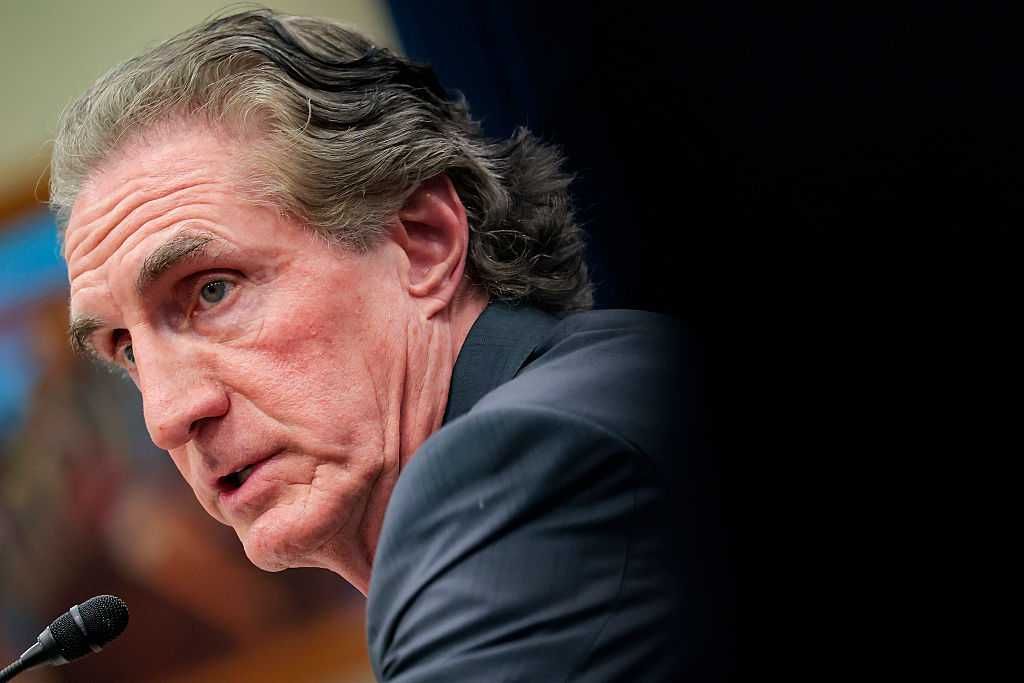
Democrat melts down after Secretary Doug Burgum drops bombshell about NGOs during committee hearing


Democrats had a meltdown during a committee hearing while grilling Secretary of the Interior Doug Burgum on all of the programs he is attempting to shut down.

And no one was ready for his answer.

'We found organizations that were receiving grants from Interior where 80 to 100% of the revenue of that NGO was a grant from the federal government.'

In a Monday House Committee Hearing, Rep. Rosa DeLauro (D-Conn.) asked for clarification on Burgum's proposed "complete elimination" of some programs in the Fish and Wildlife Service, including some state and tribal wildlife grants.

Burgum replied with a shocking statistic about where some "nongovernmental organizations" get their money.

RELATED: Revamped National Parks program prioritizes Americans and ensures foreigners 'contribute their fair share'

Heather Diehl/Getty Images

"There was a review done of the grants," he said.

"And that is an area where there's been substantial review. We found organizations that were receiving grants from Interior where 80 to 100% of the revenue of that NGO was a grant from the federal government."

"And yet those organizations, we were the sole source of their revenue, but they would have a CEO making $650,000 and four $400,000 lobbyists," Burgum continued.

DeLauro stammered in reply: "It would be very interesting because we can't get any information. We may agree with you. Give us the reasons why all of these grants are cut, the organizations are cut. ... We just can't take your word."

Like Blaze News? Bypass the censors, sign up for our newsletters, and get stories like this direct to your inbox. Sign up here!

From Alaskan Crab To Furniture, Here’s How The Pentagon Wasted Your Tax Dollars In One Month

'Unfortunately, the Pentagon's traditional year-end spending spree in 2025 was the worst ever on record at a staggering $93.4 billion.'

Islamist groups in Texas rake in $13M in taxpayer-funded grants amid Abbott’s battle against Sharia law


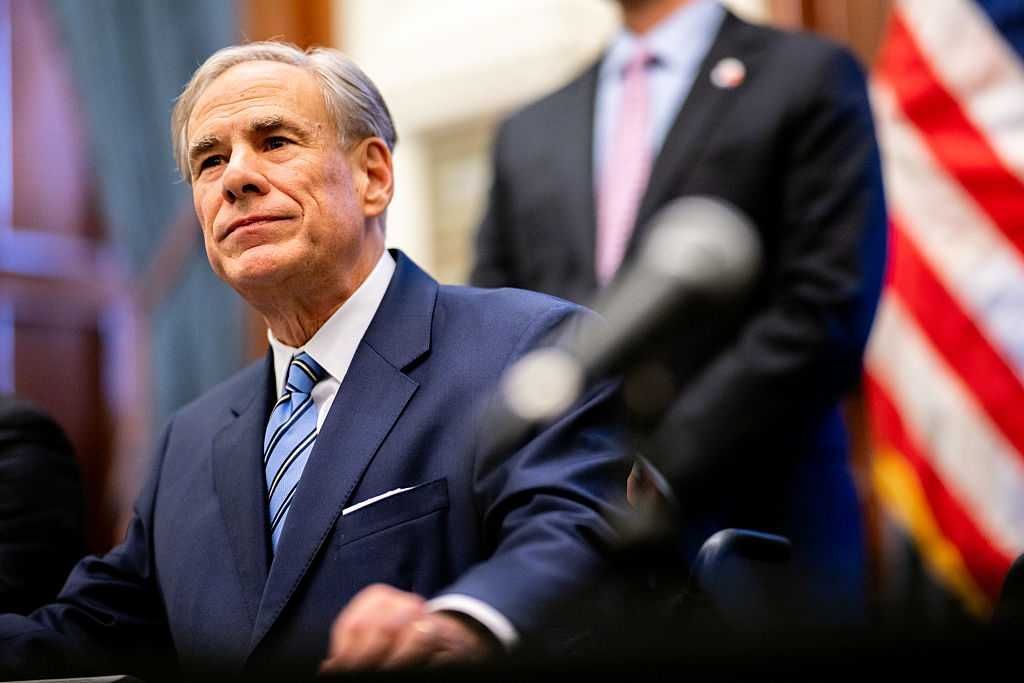
Texas Gov. Greg Abbott (R) has taken aggressive action this week against Sharia law, the Muslim Brotherhood, and the Council on American-Islamic Relations. Yet critics are demanding to know why, during his time in office, millions in taxpayer-funded grants have been allocated to alleged Islamist organizations based in Texas.

Abbott announced on Tuesday that he had designated the Muslim Brotherhood and CAIR as foreign terrorist and transnational criminal organizations. The following day, Abbott urged local district attorneys to investigate potential Sharia "courts" operating in Texas and defying state and federal laws to push Islamic codes.

'Unlike the previous administration, recipients of grants will no longer be permitted to use federal funds to ... empower radical organizations with unseemly ties that don't serve the interest of the American people.'

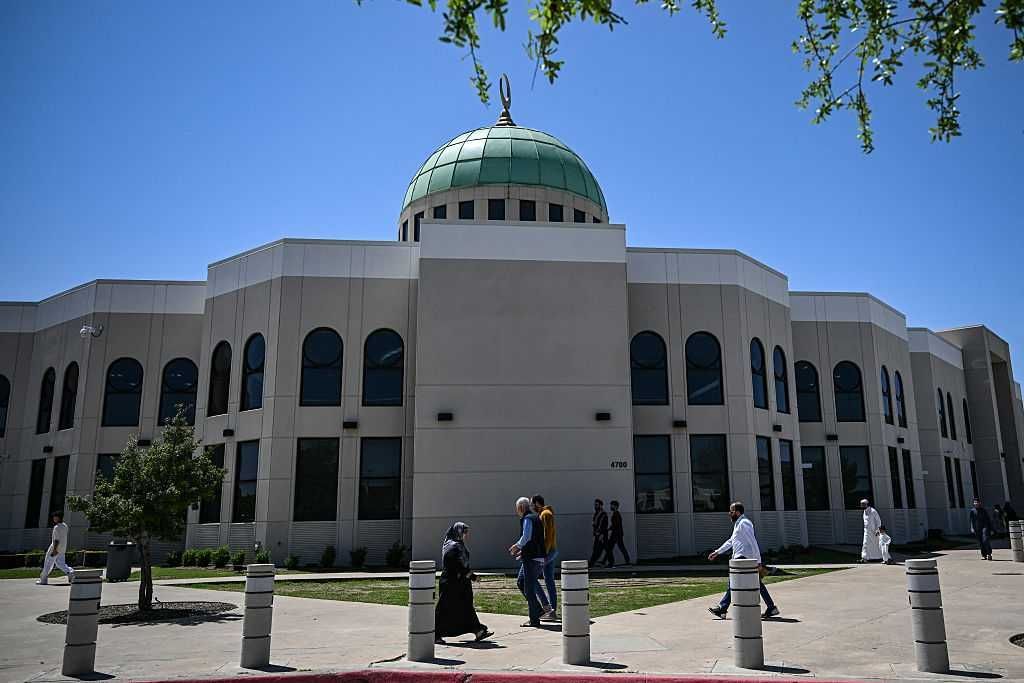
Despite Abbott's recent actions, some have faulted the governor for allowing taxpayer dollars to be used to fund the uptick in Islamic mosques in Texas, citing a June report from the Middle East Forum. The article claimed Texas gave "over $13 million of federal and state monies to mosques and community groups aligned with Islamist movements such as Hamas, the Muslim Brotherhood, and Jamaat-e-Islami, as well as hostile foreign regimes."

Of the 18 organizations that received funds, a dozen were said to have "extremist links."

"While a few thousand dollars in the state government's data consists of the return of escheated funds, the vast majority of the millions spent appear to be the result of direct state grants, subsidy programs, and federal sub-awards managed by the Texas state government," the Middle East Forum wrote.

The Texas governor's office told Blaze News that the funding referenced in the Middle East Forum's report was not state tax dollars but rather federal funds distributed by the Department of Homeland Security and the Federal Emergency Management Agency's Nonprofit Security Grant Program.

As part of that program, since 2016, roughly $63 million in federal funds have passed through Texas to nonprofit organizations, including $55 million to churches and synagogues, and a smaller portion went to mosques, according to Abbott's office.

RELATED: Secret Sharia ‘courts’ in Texas may be quietly overriding state law — Abbott calls for investigation

Photo by RONALDO SCHEMIDT/AFP via Getty Images

The governor's office contended that organization-vetting for this DHS and FEMA grant program is performed by these federal agencies, not by the state.

Sam Westrop, the director of Islamist Watch and the author of the Middle East Forum report, disputed this claim, arguing that the state was responsible for screening these grant applications and had the authority to exclude applicants.

Westrop told Blaze News that "only a small number" of the $13 million came from the DHS' Nonprofit Security Grant Program.

"However, many of the grants we identified, while not all from DHS, were in fact paid for from federal funds; and are thus subawards," Westrop stated. "But by serving as the primary grantee, the Texas state government is required by the federal government to vet and assess risk. Subawards are discretionary, and the primary grantee may exclude a subawardee."

"So these grants may be financed by federal dollars, but the monies are distributed through and at the discretion of the Texas state government, much by the governor's office itself," Westrop added.

The Nonprofit Security Grant Program seeks to provide financial support to nonprofit organizations that are considered "high risk" of a terrorist attack. These nonprofits can include places of worship, educational facilities, and medical facilities, among other 501(c)(3) organizations. The funds are intended to support security enhancements, such as installing cameras, alarms, and fences. The grant can also be used toward security planning and training, as well as cybersecurity.

RELATED: No Sharia law in Texas: Abbott draws a hard line against radical Islam

Photo by Ilana Panich-Linsman for The Washington Post via Getty Images

According to FEMA, the State Administrative Agency in each state is "the only eligible applicant" for this grant and "responsible for handling the federal award." Therefore, churches and other places of worship seeking funds through the Nonprofit Security Grant Program are "subapplicants that must apply through the SAA in the state or territory where the applying facility is physically located." The nonprofits cannot apply directly to FEMA.

The applications are first "scored by the SAA in coordination with its state." Then the SAA submits "a prioritized list of [investment justifications] with all scores to FEMA."

FEMA notes that a facility's local SAA may have its own requirements to apply for the grant. Texas' SAA contact is the Homeland Security Grants Division under the Texas Office of the Governor.

These now-archived grant opportunities from Texas' eGrants website state that the "Office of the Governor will screen all applications to ensure that they meet the requirements included in the funding announcement." However, it notes that FEMA "makes final funding decisions."

While it remains disputed whether Texas could have blocked these grants from going to alleged Islamist organizations, FEMA has made it clear that the DHS, under Secretary Kristi Noem, has significantly increased the vetting at the federal level.

"Under Secretary Noem's leadership, FEMA conducted a critical evaluation of all grant programs and recipients to root out waste, fraud, and abuse and deliver accountability for the American taxpayer," a FEMA spokesperson told Blaze News. "For Fiscal Year 2025 grant awards, DHS and FEMA worked together to vet grant recipients and ensure that every dollar spent strengthens the nation's resilience."

"Unlike the previous administration, recipients of grants will no longer be permitted to use federal funds to house illegal immigrants at luxury hotels, fund climate change pet projects, or empower radical organizations with unseemly ties that don't serve the interest of the American people," the spokesperson added.

Like Blaze News? Bypass the censors, sign up for our newsletters, and get stories like this direct to your inbox. Sign up here!