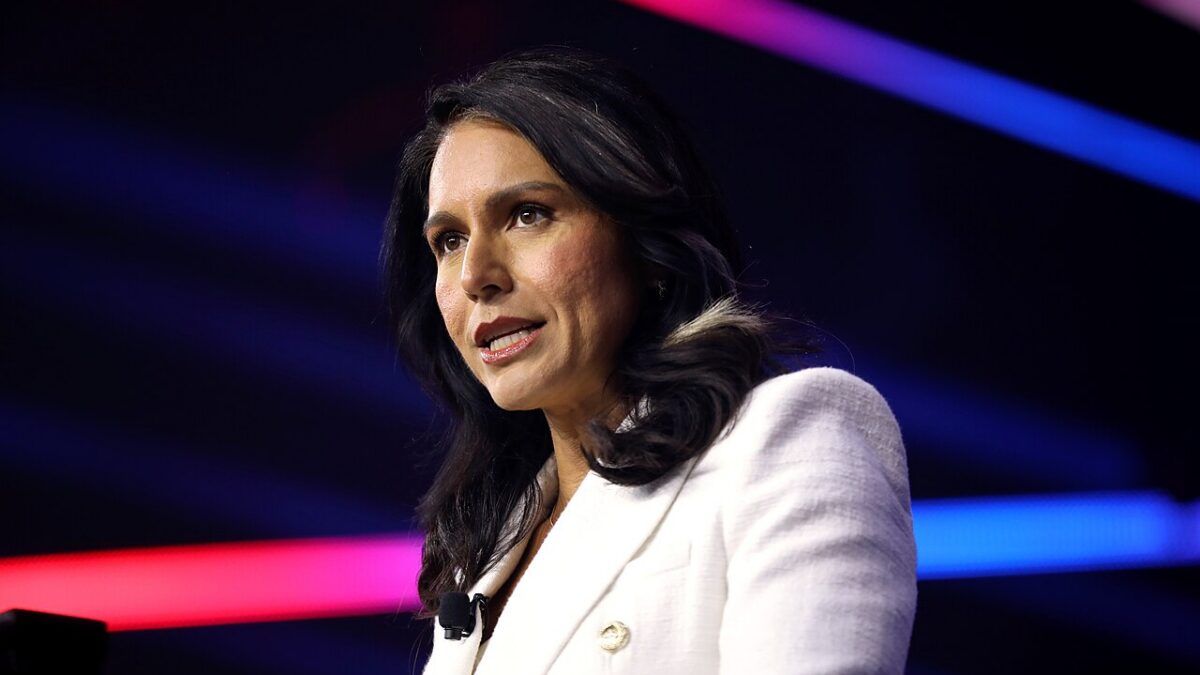
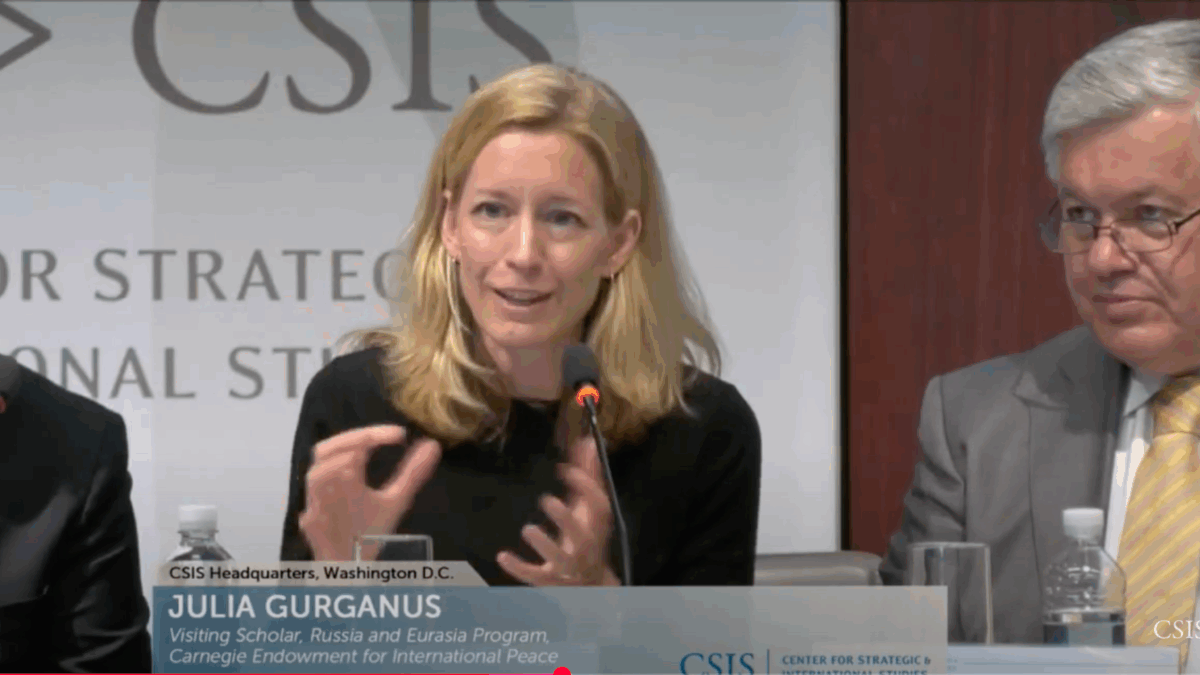
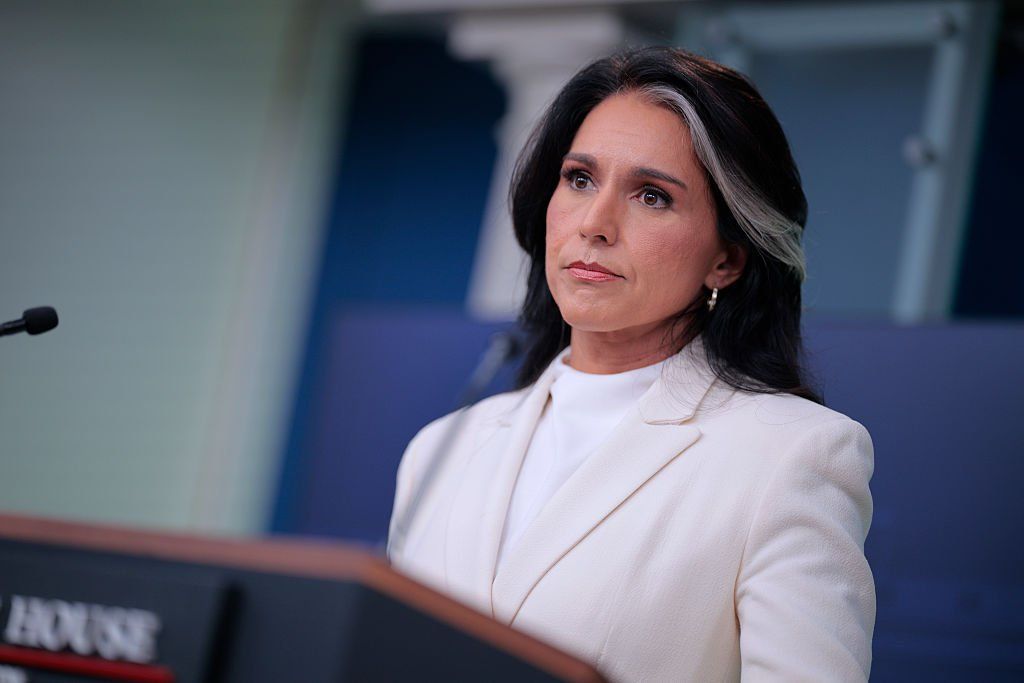
‘Undercover’ Spy At Center Of WSJ Sob Story Is Actually A Public CIA Russia Hoaxer
The hit piece blasting Intelligence Chief Tulsi Gabbard for outing omnipresent CIA agent Julia Gurganus is filled with falsities.The term “deep state” has long been dismissed as the province of cranks and conspiracists. But the recent declassification of two critical documents — the Durham annex, released by Sen. Chuck Grassley (R-Iowa), and a report publicized by Director of National Intelligence Tulsi Gabbard — has rendered further denial untenable.
These documents lay bare the structure and function of a bureaucratic, semi-autonomous network of agencies, contractors, nonprofits, and media entities that together constitute a parallel government operating alongside — and at times in opposition to — the duly elected one.
The ‘deep state’ is a self-reinforcing institutional machine — a decentralized, global bureaucracy whose members share ideological alignment.
The disclosures do not merely recount past abuses; they offer a schematic of how modern influence operations are conceived, coordinated, and deployed across domestic and international domains.
What they reveal is not a rogue element operating in secret, but a systematized apparatus capable of shaping elections, suppressing dissent, and laundering narratives through a transnational network of intelligence, academia, media, and philanthropic institutions.
According to Gabbard’s report, a pivotal moment occurred on December 9, 2016, when the Obama White House convened its national security leadership in the Situation Room. Attendees included CIA Director John Brennan, Director of National Intelligence James Clapper, National Security Agency Director Michael Rogers, FBI Deputy Director Andrew McCabe, Attorney General Loretta Lynch, Secretary of State John Kerry, and others.
During this meeting, the consensus view up to that point — that Russia had not manipulated the election outcome — was subordinated to new instructions.
The record states plainly: The intelligence community was directed to prepare an assessment “per the President’s request” that would frame Russia as the aggressor and then-presidential candidate Donald Trump as its preferred candidate. Notably absent was any claim that new intelligence had emerged. The motivation was political, not evidentiary.
This maneuver became the foundation for the now-discredited 2017 intelligence community assessment on Russian election interference. From that point on, U.S. intelligence agencies became not neutral evaluators of fact but active participants in constructing a public narrative designed to delegitimize the incoming administration.
The ODNI report and the Durham annex jointly describe a feedback loop in which intelligence is laundered through think tanks and nongovernmental organizations, then cited by media outlets as “independent verification.” At the center of this loop are agencies like the CIA, FBI, and ODNI; law firms such as Perkins Coie; and NGOs such as the Open Society Foundations.
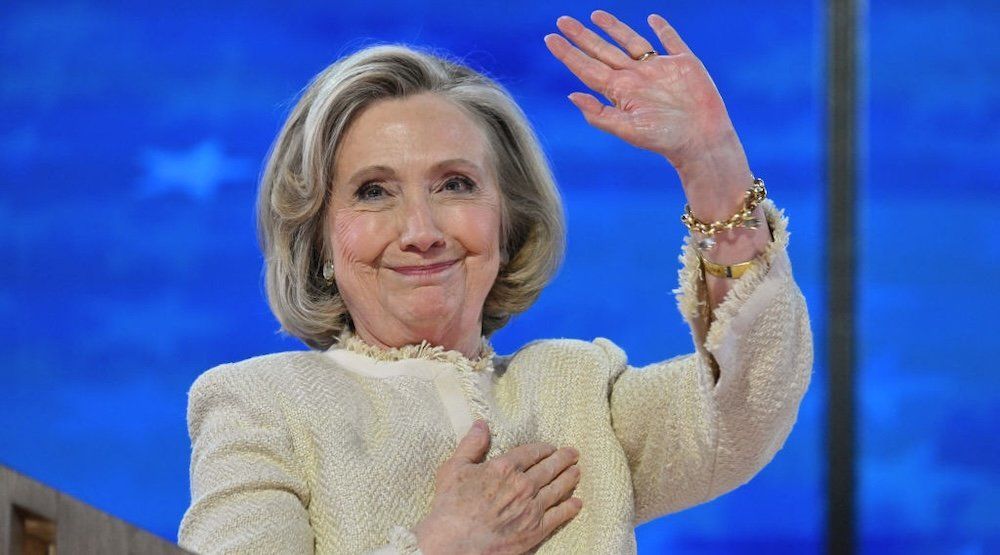
According to the Durham annex, think tanks including the Atlantic Council, the Carnegie Endowment, and the Center for a New American Security were allegedly informed of Clinton’s 2016 plan to link Trump to Russia. These institutions, operating under the veneer of academic independence, helped diffuse the narrative into public discourse.
Media coordination was not incidental. On the very day of the aforementioned White House meeting, the Washington Postpublished a front-page article headlined “Obama Orders Review of Russian Hacking During Presidential Campaign” — a story that mirrored the internal shift in official narrative. The article marked the beginning of a coordinated media campaign that would amplify the Trump-Russia collusion narrative throughout the transition period.
Surveillance, once limited to foreign intelligence operations, was turned inward through the abuse of FISA warrants. The Steele dossier — funded by the Clinton campaign via Perkins Coie and Fusion GPS — served as the basis for wiretaps on Trump affiliates, despite being unverified and partially discredited. The FBI even altered emails to facilitate the warrants.
RELATED: Durham annex proves Russiagate was a coordinated smear
This capacity for internal subversion reappeared in 2020, when 51 former intelligence officials signed a letter labeling the Hunter Biden laptop story as “Russian disinformation.” According to polling, 79% of Americans believed truthful coverage of the laptop could have altered the election. The suppression of that story — now confirmed as authentic — was election interference, pure and simple.
The deep state is a self-reinforcing institutional machine — a decentralized, global bureaucracy whose members share ideological alignment and strategic goals.
Each node — law firms, think tanks, newsrooms, federal agencies — operates with plausible deniability. But taken together, they form a matrix of influence capable of undermining electoral legitimacy and redirecting national policy without democratic input.
The ODNI report and the Durham annex mark the first crack in the firewall shielding this machine. They expose more than a political scandal buried in the past. They lay bare a living system of elite coordination — one that demands exposure, confrontation, and ultimately dismantling.
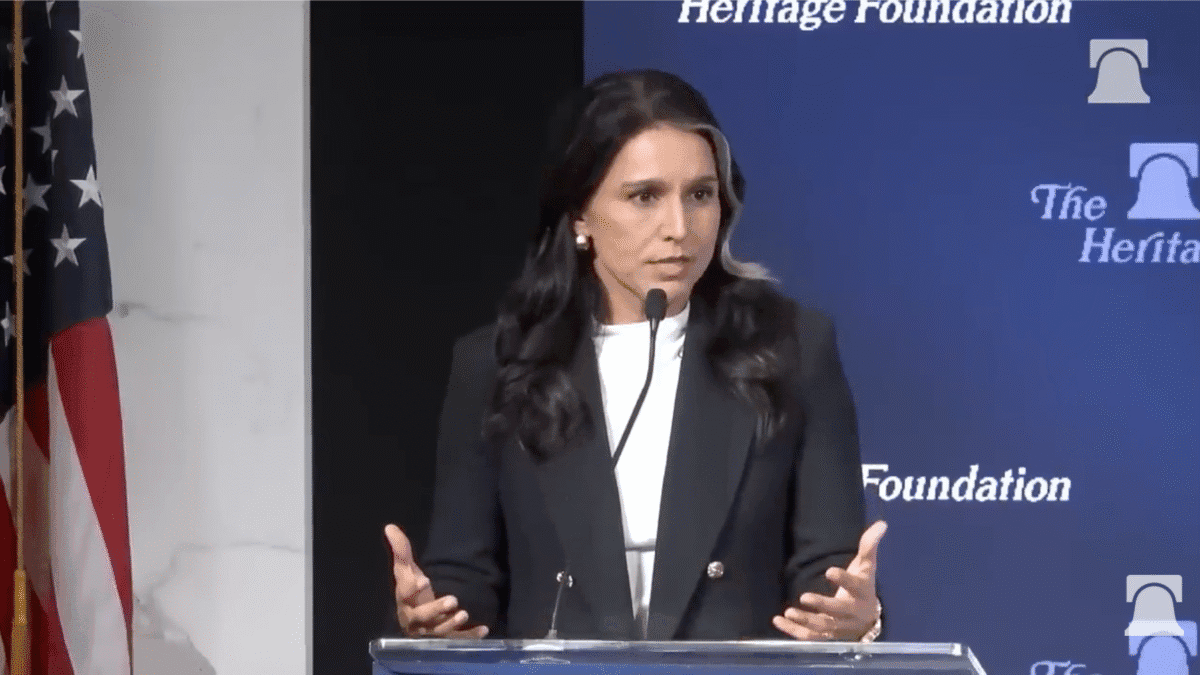
Director of National Intelligence Tulsi Gabbard was asked in a recent interview about joining the military in the wake of 9/11 and her 2004 deployment to Iraq.
After reflecting on her friend's slaying by an IED and on the terrible prices paid by some of her other fellow service members, Gabbard told Miranda Devine, host of "Pod Force One," that their "memories, their service, their sacrifice, the sacrifices of their families motivates the work that we do every day to make sure that the president has the best, most objective, relevant intelligence so that he can make the best-informed decisions."
The DNI noted that she knows firsthand from the Iraq War "what the implications are when you have intelligence weaponized and in that case manufactured ... to start a regime-change war that I served in and that so many of my friends served in and too many of my friends and too many Americans lost their lives in."
'James Clapper was on the team that created that manufactured intelligence assessment that led to the Iraq War — about the WMDs.'
Gabbard identified one of the individuals responsible for the deceit that greased America's way into Iraq: former Director of National Intelligence James Clapper.
Before Clapper settled into former President Barack Obama's inner circle, he served as former President George W. Bush's director of the National Geospatial-Intelligence Agency, the Pentagon unit responsible for analyzing spy-satellite photos as well as other technically gathered intelligence, including soil samples.
Bush established the Commission on the Intelligence Capabilities of the United States Regarding Weapons of Mass Destruction in 2004 to investigate the intelligence concerning weapons of mass destruction prior to the 2003 American invasion of Iraq.
The commission's March 2005 report to the former president stated:
On the brink of war, and in front of the whole world, the United States government asserted that Saddam Hussein had reconstituted his nuclear weapons program, had biological weapons and mobile biological weapon production facilities, and had stockpiled and was producing chemical weapons. All of this was based on the assessments of the U.S. Intelligence Community. And not one bit of it could be confirmed when the war was over.
When assigning blame, the report noted that it was partly a "failure on the part of those who collect intelligence — CIA's and the Defense Intelligence Agency's spies, the National Security Agency's eavesdroppers, and the National Geospatial-Intelligence Agency's imagery experts."
Clapper readily admitted in 2018, "My fingerprints are on the infamous national intelligence assessment of October 2002" that set the stage for the American invasion.
He told CNN's Dana Bash in 2018 that the intelligence community "built a case in our own minds, a house of cards, it turned out, that led us to the conclusion with pretty high confidence that they were there, and it turns out they weren’t."
RELATED: If no one goes to jail, the coup was a success

The commission's report noted that much of the intelligence that these agencies collected was "either worthless or misleading."
That misleading data set the stage for a 20-year conflict that claimed the lives of 4,599 American service members, over 3,650 American contractors, 15 Pentagon civilian personnel, 52,337 Iraqi national military and police, 324 allied troops, roughly 210,038 civilians, 282 journalists, and 64 humanitarian workers, according to the Watson School of International and Public Affairs.
'You see someone who has no problem whatsoever politicizing, and manufacturing, and weaponizing intelligence for a political outcome.'
"James Clapper was on the team that created that manufactured intelligence assessment that led to the Iraq War — about the WMDs," Gabbard told Devine. "He writes about it in his book, saying that he and his team of intelligence analysts created something that was not there."
"When you look at his actions then and you look at his actions in 2016 as Obama's director of national intelligence, you see someone who has no problem whatsoever politicizing, and manufacturing, and weaponizing intelligence for a political outcome," added Gabbard.
CIA Director John Ratcliffe recently declassified the appendix from the 2023 Durham report, which Senator Chuck Grassley (R-Iowa) promptly released to the public.
The appendix revealed that Clapper was one of a handful of top Obama officials briefed at the White House on Aug. 3, 2016, regarding credible intelligence that the Clinton campaign planned to smear Trump, falsely link him to Russia, then have law enforcement and the intelligence community carry the ball down the field.

Ratcliffe both named Clapper as one of the intelligence officials who "pushed the known fake Steele dossier into intelligence community assessments and as the basis for Crossfire Hurricane and all that," and accused the former DNI of manipulating intelligence "to get Trump."
Although cognizant of a possible Clinton plot to push the Russia hoax, Clapper published the 2017 Intelligence Community Assessment, which served to legitimize the false narrative.
According to the House Intelligence Committee majority staff report recently published by Gabbard, the ICA was a work of fiction comprising misquotes, unreliable reports, lies of omission, and straight-out falsehoods.
Clapper's fingerprints aren't just on the false pretext for a 20-year war and the Russia collusion hoax. He was one of the 51 signatories of the infamous Oct. 19, 2020, "intel" letter that suggested the news concerning the Hunter Biden laptop had "all the classic earmarks of a Russian information operation."
After it became clear in recent weeks that the Trump administration is serious about bringing those involved in what Gabbard characterized as an alleged "treasonous conspiracy" to account, Clapper indicated that he would "lawyer up."
Blaze News was unable to reach Clapper for comment
Like Blaze News? Bypass the censors, sign up for our newsletters, and get stories like this direct to your inbox. Sign up here!
Sen. Chuck Grassley (R-Iowa) last week declassified a 29-page document known as the Durham annex. Its publication has received remarkably little attention from major media outlets, despite containing one of the most significant intelligence disclosures since the origins of the Russiagate investigation.
The Durham annex is not conjecture, analysis, or political spin. It is a collection of sensitive intelligence reports, internal memos, and declassified emails compiled by the intelligence community and withheld from public view for years under the pretext of “source protection.”
The Durham annex reveals that the FBI ignored evidence in 2015 and 2016 suggesting that foreign governments were attempting to collude not with Trump, but with Clinton.
The declassified document offers a clearer view of what many Americans have long suspected: that the narrative surrounding Trump-Russia collusion was not only politically motivated but deliberately constructed by the Clinton campaign, facilitated by sympathetic actors within U.S. intelligence agencies, and ultimately endorsed by senior members of the Obama administration.
This trove of documents does not merely reinforce existing criticisms of the FBI’s conduct during the 2016 election. It provides evidence that the Clinton campaign approved a strategy to discredit Donald Trump by promoting a false association with Vladimir Putin. And it does so using intelligence collected from foreign surveillance of American political actors — surveillance that the CIA deemed credible enough to brief President Barack Obama directly.
Central to the Durham annex is a source codenamed “T1” — a foreign intelligence asset who intercepted Russian cyber-espionage activity targeting American entities, including George Soros’ Open Society Foundation, the Clinton campaign, and U.S. think tanks. The reports T1 relayed to U.S. intelligence included detailed assessments of internal American political strategy. In effect, T1 was watching Russian spies watch us — and reporting back.
T1’s identity remains classified, but strong circumstantial evidence points to a Dutch intelligence source. The Netherlands reportedly gained access to Russian cyber operations as early as 2014. Regardless of who provided it, U.S. agencies treated the intelligence from T1 as credible.
Then-CIA Director John Brennan quickly briefed President Obama, Vice President Biden, FBI Director James Comey, and Director of National Intelligence James Clapper. Those briefings included memos indicating Hillary Clinton had personally approved a plan to tie Donald Trump to Russian election interference.
One memo, dated 2016 and reportedly obtained through Russian surveillance of George Soros’ Open Society Foundations, outlined a Clinton campaign strategy: “Smear Donald Trump by magnifying the scandal” over Russia’s preference for Trump. That memo laid the groundwork for the Trump-Russia collusion hoax now known as Russiagate.
The CIA labeled the intelligence “sensitive” and credible. The FBI rejected it. Agents claimed it relied on hearsay, appeared exaggerated, and might have suffered from translation errors.
That kind of skepticism might seem reasonable — if the FBI had applied the same scrutiny to the Steele dossier. Instead, they accepted that now-debunked document without verification and used it to justify surveillance warrants.
The inconsistency runs deeper than analysis. The Durham annex reveals that the FBI ignored evidence from 2015 and 2016 showing that foreign governments weren’t courting Trump — they were cozying up to Clinton.
One memo, written before Trump even announced his candidacy, described a foreign intelligence operative preparing to meet with a Clinton associate to discuss a “plan.” The operative was acting on direct orders from a foreign head of state.
RELATED: The Russia hoax and COVID lies share the same deep-state fingerprints

The precise content of the plan is redacted, but the FBI’s field office viewed it as serious enough to request a FISA warrant. That request, however, was left to “languish in limbo” by senior FBI officials, who subsequently warned Clinton in a defensive briefing.
The documents suggest a coordinated operation — one in which political, bureaucratic, and media institutions aligned to discredit a political opponent using information they had strong reasons to believe was false. The CIA deemed the intelligence worth a presidential briefing. The FBI discarded it. The media ignored it. And Clinton operatives implemented it.
This is not merely a scandal of partisan excess. Nearly 10 years after the first Hillary Clinton email leaks, and eight years after Trump’s unexpected victory, we are only now beginning to see the scope of institutional complicity in the Russiagate deception. The political cost may never be fully calculated, but the institutional damage — to the FBI, to the intelligence community, and to the trust of the American people — is already done.
Want more from Glenn Beck? Get Glenn's FREE email newsletter with his latest insights, top stories, show prep, and more delivered to your inbox.