California Cops Are Using Flock Cameras To Spy On A Small Wisconsin Village
 Police departments with Flock camera fever are 'addicted' to the nationwide surveillance tool.
Four shootings near the University of Cincinnati in the first two weeks of the semester finally got City Hall’s attention.
Mayor Aftab Pureval (D) announced increased police patrols, street closures, additional lighting, and other emergency measures around campus. “This is not OK,” the mayor said.
Meanwhile, parents are left watching a multimillion-dollar administrative machine move with all the urgency of a DMV line at 4:55 p.m.
No kidding.
Every semester, thousands of parents hand over tuition checks to the University of Cincinnati under the naive assumption that municipal leaders and campus officials hold a basic interest in keeping their children safe.
Off campus, along Clifton and Short Vine, students have instead encountered shootings and persistent violence. Cincinnati has long carried the unflattering nickname “Cincinasty.” These days, the joke is getting a little too close to reality.
The problem is not that nobody knows violence exists. It’s that responsibility becomes considerably murkier once students step beyond the campus boundary.
UC itself notes that the Cincinnati Police Department "maintains primary jurisdiction and responsibility” for off-campus incidents, even though university police patrol some surrounding neighborhoods and the two departments work together. UC also describes safety as a “shared responsibility” and reminds students that “living in a vibrant urban city also requires personal accountability.”
Fair enough. But parents might reasonably ask how much accountability belongs to the institutions collecting their tuition and taxes.
Frustrated by the persistent violence near campus housing, Lisa Klancher, a communications veteran whose daughter attends UC, launched a petition demanding direct accountability from both local officials and university leadership.
“People need to wake up, but more importantly, this pressure has to be sustained,” Klancher tells me. “I know leaders are all sitting there saying, ‘Let them vent; parents will soon have a new distraction, and this will go away.’”
But Klancher remains focused on the public safety crisis surrounding the campus. For her, this is less a political debate than a quite literal matter of life and death.
Cincinnati hardly lacks anti-violence programs. In 2023, the city convened representatives from more than 20 organizations running youth violence-reduction programs, and its current ACT for Cincy strategy encompasses everything from mental health services and youth programs to gun access initiatives and policing reforms. The paperwork is impressive; the results less so.
As readers well beyond Cincinnati know, bureaucratic institutions possess an infinite capacity to substitute process for action.
Klancher agrees: “Institutional programs spend so much time and money, they feel they need to roll out one big solution. Those rarely satisfy everyone who has to approve it, and the program never gets launched.”
In other words, process has entirely replaced progress. Meanwhile, parents are left watching a multimillion-dollar administrative machine move with all the urgency of a DMV line at 4:55 p.m.
RELATED: This top school says AI has shredded college — and every university is next

The decay surrounding the campus is undeniable, yet entirely avoidable. It’s the predictable outcome of years of municipal neglect. In 2023, neighborhood leaders even proposed clearing homeless encampments from nearby Burnet Woods after residents complained they no longer felt safe there. Meanwhile, commercial real estate booms along the nearby I-71 corridor while the district surrounding the state’s flagship university continues to struggle.
Klancher points to nearby Columbus as an example of a different approach. Its Non-Fatal Shooting Team assigns an entire group of investigators to non-fatal shootings rather than just two detectives. According to Columbus Mayor Andrew Ginther (D), the program’s pilot ended in 2025 with a 94% solve rate, compared with 53% citywide.
“Columbus is using existing laws strategically to remove violent offenders without disrupting the broader community,” Klancher explains. “The city created a nimble, private-sector model that allows for quick assessment and pivoting. Bureaucracy must learn that it is OK to start small, analyze the data, and adapt quickly to what works.”
Cincinnati’s response has been more episodic. After a major shooting, barricades go up, cruiser lights flash, and additional patrols arrive. The question is whether that urgency will survive after the headlines fade.
For Klancher, families shouldn’t have to wait for the next shooting to find out.
“No one cares that you worked hard, sacrificed, took on debt,” Klancher says. “You only matter when you get hurt in the crossfire; then leadership and lawyers can create a law in your name.”
City officials and university leaders should step out of their offices and walk Short Vine at midnight on Friday — or on Monday or Tuesday. Frankly, any night of the week works. True public safety requires an honest acknowledgment of reality. It also requires administrative accountability.
As Klancher notes, “We teach young people to respect leadership and their community, but respect is earned through preparation, presence, and action. Students should want to love the community they chose, not count the days until they can leave it.”
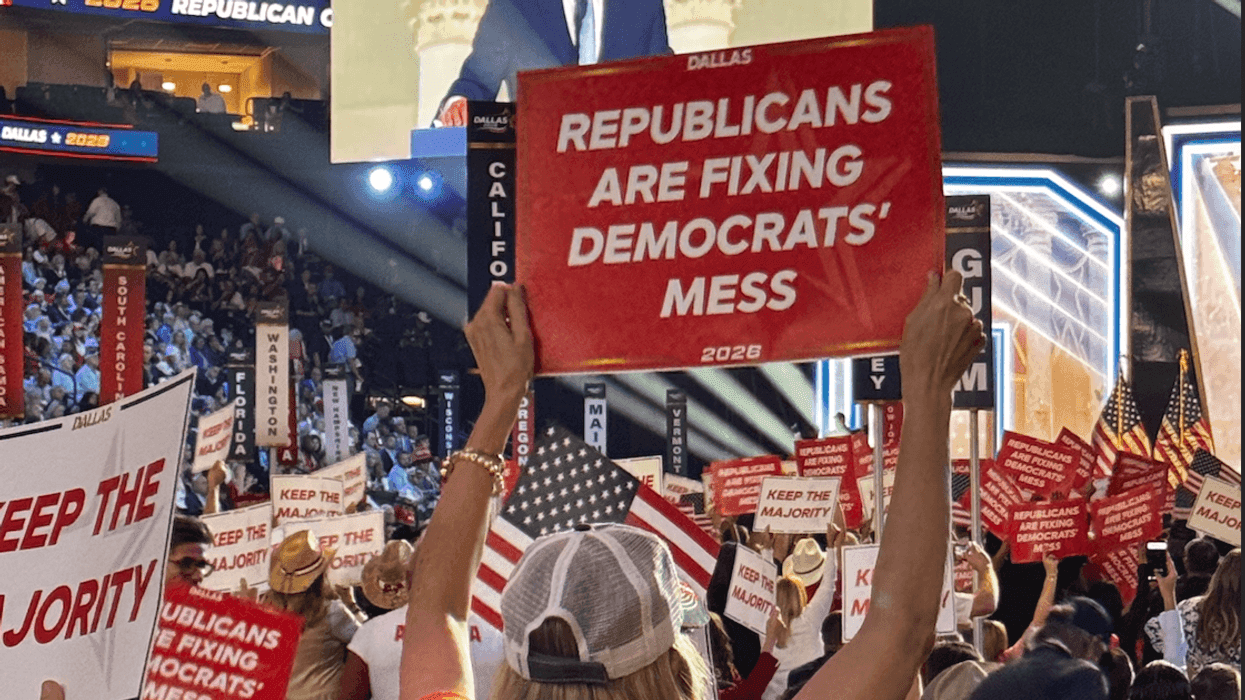
Energy is high in the American Airlines Center in downtown Dallas on Wednesday evening as the Republican Midterm Convention gets under way.
A near-constant stream of speakers, including candidates, politicians, and Trump administration officials have been highlighting GOP accomplishments and emphasizing the importance of turning out voters in November. Even though it is some time until President Donald Trump is scheduled to take the stage at 8 p.m. Central Time, the arena is already full.
'We absolutely will not go back to open borders, but we absolutely will go back to common sense.'
On the convention floor, delegates from across the country have expressed enthusiasm and loud cheers.
Jan Lowry, a delegate from Virginia, told Blaze News the experience has been great so far: “I’m excited. I’m fired up. It’s been great to be here.”
Her message to GOP leadership echoed the general atmosphere of the convention: “Keep it up. Don’t listen to the naysayers. Just keep doing what you’re doing.”
Congressman Brandon Gill (R-Texas) received some of the loudest applause for his speech highlighting the differences between Republicans and Democrats: "It's the mainstream vs. the extreme."
Gill emphasized the GOP's commitment to permanent results in electoral victories: "We absolutely will not go back to open borders, but we absolutely will go back to common sense."
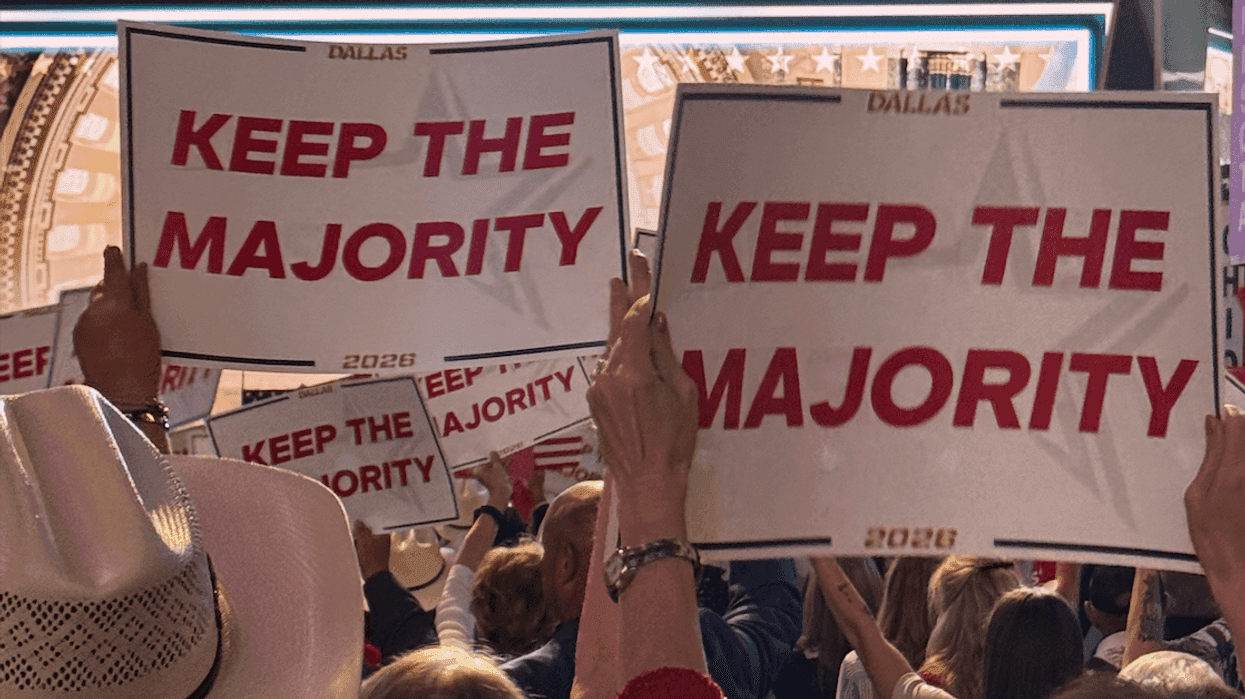
The midterm convention has the same upbeat, festive atmosphere of a regular national party convention traditionally held before presidential elections. The floor is loud as the different delegations try to outdo each other in enthusiasm.
In the halls outside the arena, food stalls, press tables, and a busy merch store vie for the attention of thousands of guests, media, and various staff members circulating throughout the building.
Law enforcement presence is high, as resources from ICE, HSI, and the Dallas Police Department have been surged to the area to assist the Secret Service. Entire blocks around the American Airlines Center have been cordoned off to ensure safety for the president and other high-profile guests who will address the convention.
Trump is scheduled to take the stage this evening and is also expected to speak tomorrow as well, along with Vice President JD Vance.
Like Blaze News? Bypass the censors, sign up for our newsletters, and get stories like this direct to your inbox. Sign up here!
For decades, American hiring and admissions have been distorted by a legal and bureaucratic regime that promised equal treatment while repeatedly rewarding institutions for sorting people by race and sex. The Civil Rights Act itself does not exclude white men; Title VII protects employees from discrimination because of race and sex regardless of which race or sex they are. But affirmative action rules, consent decrees, diversity mandates, contracting preferences, and institutional risk management created powerful incentives to treat demographic categories differently.
Incentives shape behavior. Universities, Fortune 500 companies, government agencies, and nonprofits learned to fear discrimination claims, bad publicity, activist campaigns, and regulatory scrutiny. Long before “wokeness” became a corporate religion, lawyers and compliance departments were already teaching institutions to think in terms of protected groups, disparate impact, representation targets, and litigation exposure.
The right does not need another conference panel lamenting DEI. It needs lawyers willing to make discrimination expensive. Equal protection will not enforce itself.
The practical question was never simply who had rights on paper. It was whose complaints institutions expected to carry consequences.
For years, conservative media documented the resulting discrimination against white men. DEI programs openly advertised preferences, scholarships excluded applicants by race or sex, and employers sometimes boasted about hiring goals that would have been scandalous if the preferred and disfavored groups were reversed.
Yet a nasty and stupid trend has emerged on the right: The same people who spent a decade describing the system now mock young white men who notice its effects.
They call them losers. They accuse them of victimhood. They insist that any man who works hard enough can simply transcend a system conservatives themselves spent years condemning.
That is politically and morally incoherent.
After Donald Trump’s compelling victory in 2024, Democrats discovered they had a serious problem with male voters, especially white men. It turns out that a political coalition saturated with rhetoric about “whiteness,” “male privilege,” and “toxic masculinity” will eventually alienate some of the people being described as social pathologies. Progressives produced endless postmortems about podcasts, masculinity, and how Democrats might win young men back.
RELATED: This is what existential politics looks like

Republicans should have recognized the opening immediately.
The Trump administration deserves credit for taking aggressive action against DEI. But much of the GOP still seems embarrassed by the idea of representing white men as a constituency with legitimate interests. This is bizarre. A party that promises equal protection should have no difficulty saying that discrimination against white men is wrong for exactly the same reason discrimination against anyone else is wrong.
The political failure is glaring because young white men are not asking for a patronage machine. Most want the same things politicians promise everyone else: decent work, affordable homes, marriage, children, and confidence that effort will be rewarded rather than filtered through a demographic spreadsheet.
Conservatives who spent years explaining how DEI distorted institutions cannot suddenly sneer at those consequences when the victims are inconvenient. If the system has been biased, fix it. If the law promises equal treatment, enforce it. And if Republicans refuse to defend a constituency increasingly voting for them, they should not be surprised when those voters conclude that the party likes their ballots more than it likes them. A coalition cannot survive forever on gratitude for being less hostile than the other side.
The law already says so.
In Students for Fair Admissions v. Harvard, the Supreme Court ruled in 2023 that the race-conscious admissions programs at Harvard and the University of North Carolina violated federal law or the Constitution. The ruling did not abolish every consideration touching race, and universities quickly looked for ways to preserve diversity goals through essays, recruitment, socioeconomic proxies, and other methods.
That is what institutions do when incentives remain unchanged: They adapt.
Corporations made similar adjustments as legal pressure against DEI increased. Some renamed programs, changed language, or removed explicit demographic preferences. But nobody should expect a half-century of institutional habit to vanish because the Supreme Court issued one opinion or because an executive order changed the mood in Washington.
Law changes behavior when violating it becomes expensive.
That is the lesson the left understood long ago. Civil rights organizations built durable legal institutions capable of finding plaintiffs, financing cases, generating publicity, and making discrimination costly. Lawyers could build careers bringing important cases. Universities and corporations knew that a bad decision could become a lawsuit, a settlement, a headline, or all three.
RELATED: Stop ‘owning the libs’ and start owning institutions

The right has built far less comparable infrastructure for people alleging discrimination because they are white or male.
Organizations such as America First Legal have begun bringing these cases, and other public-interest firms challenge race- and sex-based preferences. But the scale remains small compared with the institutional ecosystem that has enforced progressive civil rights priorities for decades. Many potential plaintiffs still assume nobody will take their case, that suing will destroy their career, or that publicly claiming discrimination against white men will make them objects of ridicule.
That social taboo is a powerful enforcement mechanism all by itself.
The answer is not to create special rights for white men. They do not need them. The answer is to enforce the rights they already possess with the same tenacity brought to every other discrimination claim.
That means sustained lawfare.
When a university uses a racial preference that violates the law, sue. When a corporation excludes applicants from a program because they are white or male, sue. When an employer retaliates against a worker for objecting to unlawful discrimination, sue. Find plaintiffs. Fund cases. Build precedent. Publicize victories. Thousands of cases, week after week. Make compliance departments understand that discriminating against white men carries real legal risk.
Not every angry employee has a case. Not every disappointing admission or promotion decision is discrimination. But where unlawful discrimination exists, conservatives should stop treating litigation as somehow beneath them.
Institutions respond to incentives. For decades, the incentives pushed them toward demographic engineering while telling white men that noticing was shameful. If equal protection means anything, those incentives must run in both directions.
The right does not need another conference panel lamenting DEI. It needs lawyers willing to make discrimination expensive. Equal protection will not enforce itself.
The police chief of Gainesville agreed to rescind a policy about transgender-identifying suspects after the Florida attorney general publicly challenged the rule.
The policy said that if an officer could not determine the gender of a suspect who was going to be searched, that the officer should ask the suspect to choose the gender of the officer to perform the search.
Two days before the deadline, Uthmeier reported that the police department complied.
Attorney General James Uthmeier said the rule fan afoul of the Florida Civil Rights Act.
"This policy serves no legitimate law enforcement purpose, endangers officers and detainees, and violates Florida law," wrote Uthmeier in a letter to city officials at the end of July.
He also accused the police department of prioritizing "gender ideology over officer and detainee safety."
Uthmeier said the policy was an unsafe and illogical requirement for female police officers.
"This is not a neutral accommodation; it imposes asymmetric burdens on females based on a mental state-gender identity-that has nothing todo with the biological considerations that must be addressed when officers search detainees," he added. "A search policy that subordinates biology to ideology jeopardizes the safety and wellbeing of officers and detainees."
Uthmeier gave the police chief until Aug. 15 to rescind the policy or face possible legal action from the attorney general's office.
Two days before the deadline, Uthmeier reported that the police department complied.
RELATED: VIDEO: Democrat CAVES to trans lobby after previously warning party about alienating voters
"The City of Gainesville confirmed today that the unlawful policy has been rescinded," he wrote in a post on social media Thursday.
He included a copy of the curt message from the city attorney he received.
Like Blaze News? Bypass the censors, sign up for our newsletters, and get stories like this direct to your inbox. Sign up here!
Every great action story begins the same way. Someone is in trouble. The clock is running. The police cannot — or will not — solve the problem.
Then comes the name.
This is not simply another detective recounting old war stories. It is a portrait of a disappearing breed: the independent lawman who covets justice and is willing to deliver it.
If Hollywood were casting the role, it might once have chosen Tom Selleck. Today, maybe Chris Pratt. The man walking through the door is not chasing glory. He is there because everyone else has run out of options.
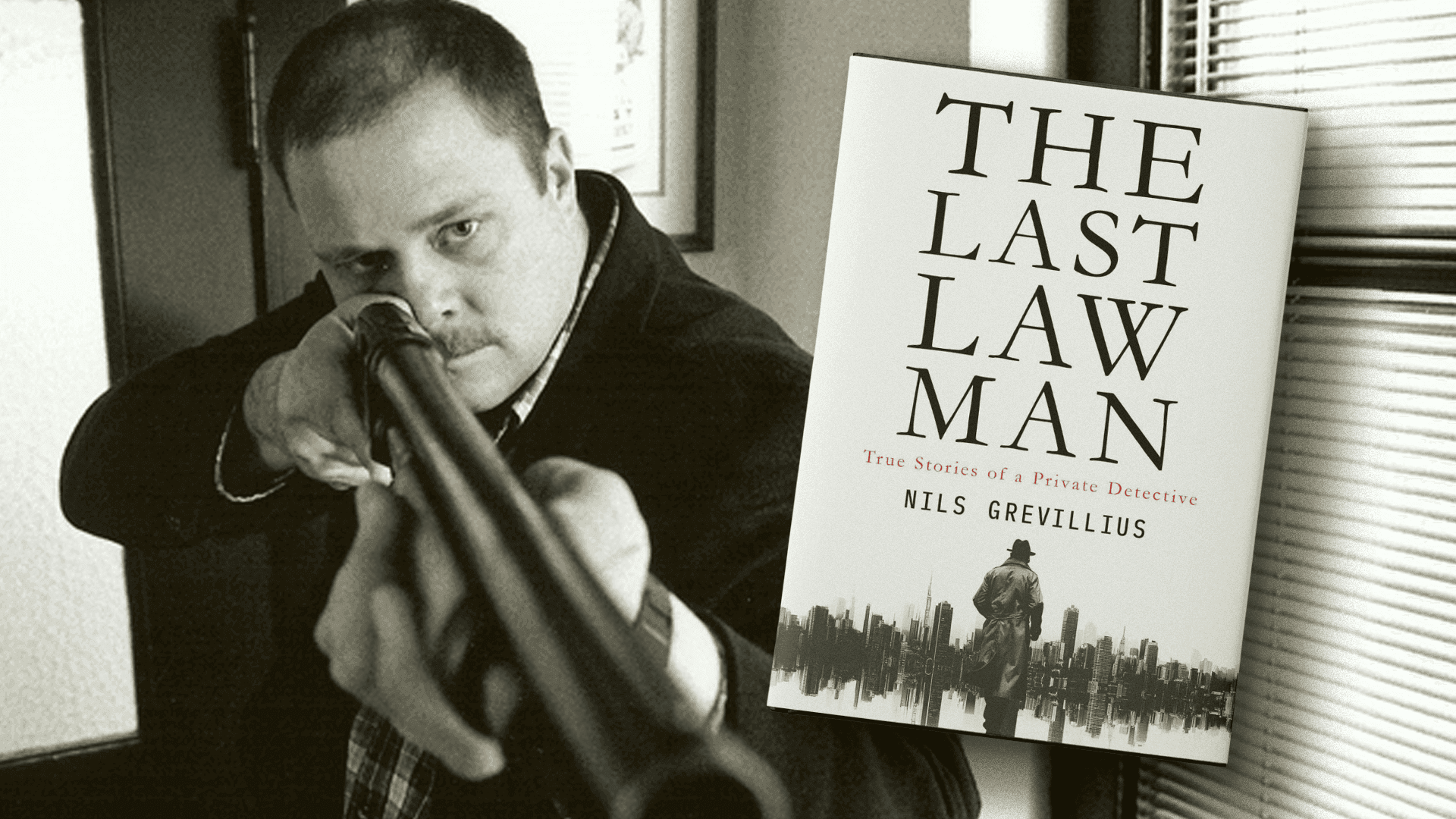
In real life, that man was Nils Grevillius.
“The Last Lawman” does not read like a memoir. It reads like the first season of a television series you cannot stop watching.
Imagine “The A-Team” without the wisecracks. Imagine “Bosch” without the bureaucracy. Imagine film noir stripped of romance and dropped into the unforgiving streets of Los Angeles, where every decision carries consequences and nobody gets to yell, “Cut.”
Before most memoirs have finished introducing the author, Grevillius is chasing an armed robbery suspect through Watts with eight rounds in his pistol and no backup coming.
The danger is not manufactured to hook the reader. It was simply another day on the job.
That authenticity separates “The Last Lawman” from nearly every private-investigator memoir on the shelf.
Josiah Thompson’s “Gumshoe” remains a respected classic, offering an intelligent account of investigative work and the detective’s craft. Grevillius takes the genre somewhere darker and more visceral.
His stories are not puzzles reconstructed from a safe distance. They are unfolding crises in which one mistake can cost a client everything — or cost the investigator his life.
For decades, Grevillius worked in places most people wisely avoid: organized crime, fugitive recovery, surveillance, missing-person cases, violent offenders, and the criminal world just beyond the edge of ordinary life.
His résumé includes military intelligence, Pinkerton investigations, and some of the toughest assignments Southern California could offer. The result is a memoir with an authority no novelist can manufacture.
RELATED: America needs heroes who do not apologize for being heroes

Yet the greatest surprise is not the danger. It’s the humanity.
Beneath the stakeouts, foot chases, interrogations, and close calls lies a thoughtful examination of what decades spent confronting evil do to a man.
Grevillius writes candidly about discipline, loyalty, courage, and the emotional cost of making a career out of walking toward situations everyone else is trying to escape. His reflections never seem imposed because he earned every one of them.
The early chapters reveal a man shaped by formidable influences: a father, decorated for service in the Korean War, who remained haunted by combat; a mother, a demanding attorney with an uncompromising sense of justice; Cold War military service; and years spent learning the patience required for surveillance before applying those skills as a private investigator in Los Angeles.
The path is not linear. That is precisely why it rings true. Life rarely follows a screenplay.
Grevillius also possesses what many memoirists lack: the ability to tell a story.
He introduces colorful characters without reducing them to caricatures, explains complex investigations without killing the pace, and adds dry humor at exactly the moment the reader needs relief.
His prose has the cadence of a man who has spent decades telling impossible stories to skeptical audiences — and winning them over.
Advance praise calls “The Last Lawman” “a blast of a book” and compares its pace to the great detective stories. It also describes Grevillius as the sort of lawman you want beside you when everything goes sideways.
All of that is true. It still does not quite capture what makes the book distinctive.
RELATED: 'BURN IT ALL DOWN': Firebrand feminist filmmaker calls for violent revolution

This is not simply another detective recounting old war stories. It is a portrait of a disappearing breed: the independent lawman who covets justice and is willing to deliver it.
Modern policing and investigation are increasingly constrained by bureaucracy, technology, institutional caution, and politics. The investigator who relies on instinct, observation, experience, and personal courage has become an endangered species.
Grevillius represents that tradition at its highest level. Reading his memoir feels like spending time with one of the last practitioners of a craft that once defined American crime-fighting.
Hollywood has spent decades trying to create believable action heroes. Most are invincible. Most are predictable. Most survive because the script requires it.
Nils Grevillius survived because he had to.
That is why “The Last Lawman” is so compelling. The stories are cinematic not because they were embellished, but because reality occasionally produces men no screenwriter would dare invent.
Truth can be more powerful than fiction.
When the credits finally roll, readers will not simply close the book. They will wonder why nobody has turned it into a television series — and they may find themselves longing for a time when Americans still believed men like Grevillius could bring bad actors to justice.
At least one sheriff in New York state is pushing back against a new law forcing law enforcement agencies to stop cooperating with U.S. Immigration and Customs Enforcement.
Democratic New York Governor Kathy Hochul and Attorney General Letitia James issued an order on July 24 requiring 12 local law enforcement agencies to terminate their agreements with ICE.
'All I can say about immigration-related issues is that if there is a very dangerous person in this jail, and the expectation is that I'm going to release that person back out into the community, I'm not doing that.'
Broome County Sheriff Fred Akshar excoriated the order in a media briefing where he called politicians in the state capital hypocrites.
“It is becoming increasingly ... frustrating, you know, to listen to the edicts and, you know, the white noise coming from, again, the political class in Albany,” Akshar said. “I would like to think that the vast majority of New Yorkers understand that the political class in Albany continues to destroy the great state of New York.”
Akshar said he would have to comply with the law ending 287(g) programs in the state by Aug. 25 but indicated that he would continue to cooperate with ICE in other ways.
"And you have policy after policy after policy as it pertains to public safety that continues to put criminals over law-abiding New Yorkers," he added. "And that is frustrating. So the reality is this: Whether or not I agree or disagree with a law that has been authored by the legislature and signed by the governor, my responsibility is to enforce the law."
"All I can say about immigration-related issues is that if there is a very dangerous person in this jail, and the expectation is that I'm going to release that person back out into the community, I'm not doing that," he added.
Broome County is located in the Southern Tier of the state and includes about 195,000 residents.
Like Blaze News? Bypass the censors, sign up for our newsletters, and get stories like this direct to your inbox. Sign up here!
 Congress responded to 9/11 with a domestic architecture of preventive surveillance that is why an AI-powered camera may be on your street.

 This move by the U.S. State and Treasury Departments is the first sign they understand how to address the unique challenge of far-left terrorism.
 When a shooter opened fire at an In-N-Out restaurant, an armed citizen took charge and helped drive the gunman off by firing rounds of his own.
 thefederalist.com
 www.theblaze.com
NASCAR suspends Mike Wallace indefinitely over social media post