‘That’s Annoying’: Incoming Dem Rep Pans ‘Terrible’ Obamacare Plans Offered to Members of Congress

North Carolina Democrat Jamie Ager, an incoming freshman congressman who campaigned on creating a public health insurance option, called the Obamacare insurance plans offered to members of Congress "terrible" during a Thursday evening panel, eliciting groans from the audience.

The post ‘That’s Annoying’: Incoming Dem Rep Pans ‘Terrible’ Obamacare Plans Offered to Members of Congress appeared first on .

Democrats miss complete takeover of North Carolina state government — by the smallest of margins


One race in North Carolina has prevented a complete takeover of the state's government by Democrats, if the final tally after a provisional-ballot count holds.

Democrats control the governor's office of North Carolina, and unofficial election counts indicate they will take over the state's House of Representatives.

Republicans may have avoided losing control of the state Senate by only 228 votes.

Control of the state's Senate depends on Republican state Sen. Danny Britt Jr. defeating a challenge from Democrat Catina Hamm in District 24.

The latest update of unofficial results from the North Carolina State Board of Elections shows Britt with 28,047 votes and the Democrat with 27,819 votes.

That means Republicans may have avoided losing control of the state Senate by only 228 votes in the pivotal contest.

The results will become official after canvassing and certification is completed.

Democrats across the country not only won both chambers of the U.S. Congress but won hundreds of state-level elections that flipped several states into the "trifecta" column for them.

In North Carolina, Republicans lost their veto-proof majority against Democratic Gov. Josh Stein. But if the results hold for Senate District 24, they will avoid handing Democrats another state trifecta.

RELATED: Democrats' state-level takeover is staggering

If Hamm is somehow able to defeat Britt, both Republicans and Democrats would hold 25 seats each in the state Senate. The deadlock would be decided by the lieutenant governor, who is a Democrat.

A recount is not automatic, but the losing candidate can request a recount if the margin is less than 1%, which is currently the case in the Britt-Hamm contest.

Like Blaze News? Bypass the censors, sign up for our newsletters, and get stories like this direct to your inbox. Sign up here!

House Race Separated By 99 Votes Shows Why ‘Rare’ Noncitizen Voting Does Matter

Approximately 99 votes separate the candidates in one North Carolina congressional race, showing exactly why noncitizen voting could potentially have a major impact on U.S. elections. The narrow North Carolina race is one of many too-close-to-call races coming out of Tuesday’s midterm elections. Democrat Chuck Hubbard leads incumbent Republican Rep. Virginia Foxx by 99 votes […]

Dem Congresswoman-Elect Heads to Court on Felony Charges for Failing To Return Rental Car

A week after Democrat LaKesha Womack pulled off a stunning upset in North Carolina's red-leaning 14th Congressional District, she's not headed to Washington, D.C.—she's headed to a local courthouse, where she's set to appear Tuesday on felony charges for failing to return a rental car.

The post Dem Congresswoman-Elect Heads to Court on Felony Charges for Failing To Return Rental Car appeared first on .

'Call the police, I'm gonna kill you': A bunch of Democrat alleged criminals have just been elected


Among the Democrats voted into office on Tuesday are a handful of radicals facing criminal charges and at least one convicted felon.

Lakesha Womack, a black identitarian who vowed to apply an "equity-focused lens to legislation," unseated Republican incumbent Rep. Tim Moore in North Carolina's 14th Congressional District on Tuesday, beating him 51.1%-48.9%.

'There are no plans to restore his committee assignments.'

Last month, the Polk County Sheriff's Office served the 49-year-old Democrat with a felony warrant regarding her alleged failure to return a rental vehicle.

According to a Charlotte-Mecklenburg Police Department incident report dated Nov. 26, 2019, "The listed suspect rented the vehicle from the listed business on 10/07/2019 at 11:31am and the vehicle was to be returned on 10/23/2019 at 12:00pm, but the suspect did not return the vehicle. Attempts to locate the suspect have been unsuccessful."

The missing vehicle was valued at $20,000.

While she has masqueraded as a victim, Womack said in an Oct. 12 video that she made a "mistake" and admitted, "I do owe them people some money."

Womack's court appearance regarding the felony car theft charge is scheduled for Tuesday, reported the New York Post.

RELATED: Democrats' state-level takeover is staggering

L/R: Brandon Bell/Getty Images; Hyoung Chang/The Denver Post

Ericka Lomick, a Texas Democrat who won a race for the Texas House of Representatives weeks after suspending her campaign, also has a checkered past that may actually preclude her from taking office.

According to federal court records reviewed by the Fort Worth Star-Telegram, Lomick — who in February denied having a criminal record — was convicted in 2011 of mortgage fraud, bank fraud, and conspiracy to commit money laundering. She was sentenced to 63 months in prison for her various crimes.

Texas law requires that to be eligible for public elective office, a candidate must not have been convicted of a felony.

Tarrant County Democratic Party Executive Director Reyne Telles said, "We are working closely with our Tarrant County Democratic Party legal counsel in step with the Texas Democratic Party lawyers, along with the candidate and her team, as well as Tarrant County elections and the secretary of state's office, to best interpret the law and determine the best path forward for voters," reported CBS News.

Alan Blaylock, the Republican whom Lomick ran against, has indicated his team is working to ensure that Texans in House District 93 will have an eligible representative in office.

LaMonica McIver is another prize whom voters awarded power on Tuesday.

In May 2025, McIver — who won re-election to Congress in New Jersey's 10th Congressional District on Tuesday — was charged with two counts of assaulting, resisting, and impeding certain officers or employees.

The criminal complaint alleges that McIver attempted to prevent a fellow radical's arrest during an anti-ICE protest outside a New Jersey detention center; slammed her forearm into the body of a Homeland Security Investigations agent and tried to restrain him; and pushed then struck an ICE officer.

McIver's case remains active.

Anthony Ealy won his re-election bid on Tuesday to the Missouri House of Representatives. The next day, the 32-year-old Democrat was arrested in Jefferson City and charged with assault in the fourth degree and a peace disturbance.

According to a probable cause statement, multiple witnesses alleged to police that:

the Defendant had been yelling outside a business while a family was making arrangements for a deceased family member. The Victim approached the Defendant in an attempt to deescalate the situation. During the encounter, the Defendant mentioned having a firearm, lunged toward the Victim, and repeatedly stated, "I'm gonna kill you. Call the police, I'm gonna kill you."

State Democrats urged Ealy not to run for re-election, but he did so anyway, reported NewsNation.

Marc Powers, chief of staff for the minority leader's office in the Missouri House, said in a statement obtained by KRCG-TV, "Rep. Ealy was removed from committees this spring so he could address his personal issues. There are no plans to restore his committee assignments for the upcoming session."

Like Blaze News? Bypass the censors, sign up for our newsletters, and get stories like this direct to your inbox. Sign up here!

Voter ID laws pass in FOUR states despite devastating blue wave


One bright spot among the midterm devastation for Republicans is that voter ID laws were approved by voters in four states.

Nevada, North Carolina, and Ohio all approved measures to ensure election integrity by requiring identification from voters, and they did it by a wide margin. Oklahoma also passed a voter ID measure back in August.

Similar proposals failed in California and Colorado.

Alaska, Arkansas, Kansas, South Dakota, and West Virginia voted on Tuesday to ban noncitizens from voting.

Democrats made the usual arguments about possible voter disenfranchisement to oppose the measures.

"It’s going to make it harder for marginalized communities to fight in the courts against proposed legislation," said Oklahoma state Rep. Andy Fugate, a Democrat. "Those in the legislature defending new changes or restrictions will be able to say hey, we’re just complying with the constitution."

Oklahomans passed their measure by 54.6% to 45.4%, and Ohioans approved Issue 3 by a whopping 65.3% to 34.7%. A voter ID measure passed by 59.6% in North Carolina, and Nevadans passed their proposition 63.3% to 36.7%.

Voter ID did not win everywhere, however. Similar proposals failed in California and Colorado, and a voter ID proposition is on track to fail in Arizona, according to the AP.

In California, the voter ID proposal failed by a large measure with 60% voting against it and only 40% voting in favor.

RELATED: Trump offers massive reward for tips on voter fraud

"This would advance Trump’s voter suppression agenda by adding costly, unnecessary barriers that could block eligible California voters, expose personal information to identity theft, and waste hundreds of millions in taxpayer dollars," read the opposition statement in the California voter guide.

President Donald Trump had tried to pass the SAVE America Act before the midterm elections, but that did not come to fruition.

Like Blaze News? Bypass the censors, sign up for our newsletters, and get stories like this direct to your inbox. Sign up here!

Democrat Roy Cooper sails to victory in North Carolina


Roy Cooper has never lost an election, and his winning streak continued Tuesday.

Cooper flipped the seat of outgoing Republican Sen. Thom Tillis, who declined to run for another term in office. Tillis frequently clashed with President Donald Trump and has struck a defiant tone in his last days in office.

'We have more in common than divides us.'

Cooper led Whatley 64.6% to 33.7% with roughly 62% of the vote in on Tuesday, according to NBC News.

Though most of the tabulated ballots so far come from early voting, Whatley won't be able to bridge the gap with the remaining Election Day ballots. So far, Cooper has secured 66% of the early in-person vote, while Whatley has received 59% of the Election Day vote.

It's the first time a Democrat has won a Senate seat in North Carolina since 2008, according to NBC News.

Cooper's Election Night watch party, held at a hotel in state capital Raleigh, was jubilant. Music is blaring and attendees are celebrating with CNN playing in the background, according to an AP description.

Republicans turned their attention elsewhere since polling began to indicate a wipeout in the Southern state.

RELATED: Last-minute dirty tricks: Michigan voters reportedly being told they can't split their ticket as Democrats defect for Rogers

Alex Wroblewski/Bloomberg via Getty Images

The national GOP began shifting North Carolina campaign cash elsewhere in October, signaling pessimism regarding Whatley's odds, according to the AP. A top Republican super PAC canceled its ad spending in the race to protect more viable seats elsewhere in the country, according to NBC News.

President Trump slammed Cooper in his North Carolina rallies.

“He’s going to become your senator,” Trump said of Cooper at an October rally in North Carolina. “And it’s crazy.”

Whatley was aligned with Trump’s agenda, campaigning on his tax cuts and the One Big Beautiful Bill Act. The Republican candidate also hit Cooper as soft on violent crime. Trump called North Carolina’s cities “blood-soaked killing fields."

Whatley, 58, is a former state GOP and RNC chairman but has never held elected office. He trailed Cooper in fundraising.

Cooper previously won four terms as attorney general and two as governor. He ran toward the middle, focusing on affordability and promising to “make stuff cost less.”

"North Carolina — I’m grateful for your trust," Cooper said in an X post after media outlets called his race. "We have more in common than divides us. Here’s to building better days ahead!"

Like Blaze News? Bypass the censors, sign up for our newsletters, and get stories like this direct to your inbox. Sign up here!

North Carolina extends voting hours in mostly liberal areas, denies extension to some pro-Trump counties


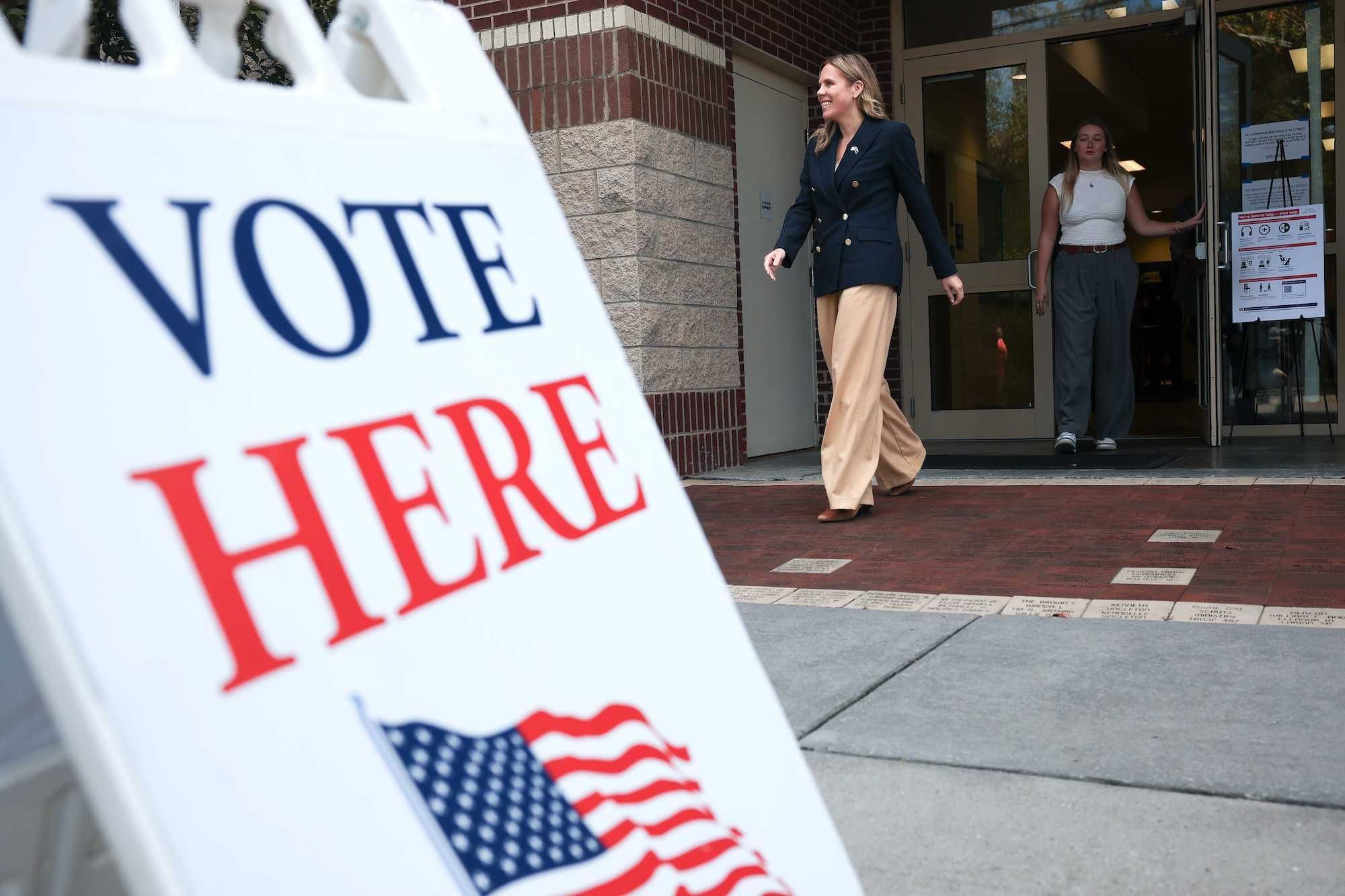
North Carolina’s State Board of Elections extended voting hours for three Democrat-heavy precincts and two that swung for President Donald Trump. The board also denied requests from three other counties, two of which swung hard for Trump in 2024.

The State Board of Elections voted Tuesday to extend voting at five precincts in Columbus, Hertford, Lenoir, and Wilson Counties after what Executive Director Sam Hayes called "technical glitches." No unofficial results will post anywhere in the state until the last site closes at 8:15 p.m., the board said.

'These are not indications of malicious activity, and the processes are in place to respond to each scenario.'

Three of those five precincts that got extra time Tuesday went for Kamala Harris by at least 68% in 2024, according to North Carolina State Board of Elections data.

Tabor City received the longest extension. The computer system at the South Williams precinct in the Tabor City Courthouse crashed temporarily, according to the Columbus County elections director. Workers switched to an emergency backup, and no voters were turned away, the director said. The precinct has been allowed to remain open for 45 extra minutes.

In Kinston, printer problems held up the opening of the K8 precinct at Holloway Recreation Center for "about 45 minutes," Lenoir County Elections Director Kristie Smith told the board, Neuse News reported.

The board of elections eventually gave Lenoir County's affected precinct an extra 30 minutes of voting time.

Hertford County received two extensions for 25 minutes at Como Fire and Rescue and 30 minutes at the Murfree Center in Murfreesboro. Wilson's city recreation building got 15.

RELATED: Scanners down, ballots 'already submitted': RNC plays whack-a-mole on Election Day to protect the vote

Peter Zay/Anadolu Agency/Getty Images
Anyone who arrives after 7:30 p.m. at the five sites will cast a provisional ballot, per state law.

Hertford is a left-leaning jurisdiction. The county broke 62.9% for Kamala Harris in 2024.

Harris also won Wilson, albeit by a much thinner margin. Columbus went for Donald Trump by 66.6%, and Lenoir broke for him by around 53%, according to NCSBE results.

At the precinct level, things swing a bit further in Democrats' direction, based on that same 2024 voting data.

Harris won Kinston's K8 precinct by a whopping 94.3% for Harris. The former vice president also won Como's and Murfreesboro's affected precincts by around 70% each.

Trump did win south Williams by 63.5%, however.

The State Board of Elections denied Gates, Watauga, and Wilkes Counties' requests for extended voting times, according to the News & Observer. Trump previously won Wilkes and Gates by 79.3% and 60.3% respectively, while Watauga broke 52% in Harris' favor.

In Gates County, the person with the building key showed up late and delayed the start of voting, according to the Carolina Journal. A computer problem also delayed voting by at least 20 minutes in Wilkes County, and a voter had to be escorted in Watauga, which caused a similar delay, according to the outlet.

Hayes told reporters the issues were routine and nothing to be concerned about.

"During every election, minor disruptions arise such as power outages, tabulator issues, printer jams, longer lines than previously anticipated," Hayes claimed, according to the News & Observer.

"These are not indications of malicious activity, and the processes are in place to respond to each scenario," Hayes said.

The North Carolina State Board of Elections did not immediately respond to Blaze News’ request for comment.

Like Blaze News? Bypass the censors, sign up for our newsletters, and get stories like this direct to your inbox. Sign up here!

North Carolina state Senate candidate makes disturbing threat online before hours-long standoff, police say


A Libertarian candidate for the North Carolina state Senate was arrested after he said online that he wanted to committed suicide.

Jonathan D. Miller suggested he wanted to get into a gun battle with police in posts beginning on Sunday evening.

'The whole police department is chasing me with guns drawn. This should be fun.'

"I have decided I no longer wish to live and I will be killing myself tonight," he wrote. "I know this will upset some of you, but I can no longer continue this suffering. I hate my life and every moment is painful. Tonight I end that pain. Do not contact me. I do not want to talk."

"The whole police department is chasing me with guns drawn. This should be fun," he posted on Monday.

"I f**ked up and talked to the negotiator on the phone long enough for them to box me in. They have dogs so I'm probably done for," his last post on Monday reads.

Hours later at about 3 p.m., the Cary Police Dept. indicated that he had been peacefully taken into custody.

They had performed a welfare check at his home on Glen Echo Lane at 8:26 a.m. after receiving numerous calls from concerned citizens who had read Miller's posts.

"He had a firearm and was ordered not to touch it, and he took off running," Cary Police Chief Terry Sult said during a media briefing.

That resulted in an hours-long standoff at his apartment complex, Sult said.

"He was in a dark place," he added. "Felt like he was on his last leg."

Miller also called in to WRAL-TV during the standoff.

"Last night I was pretty depressed and suicidal, and I sort of put a suicide note on X, and it has gone quite viral," Miller said on one of the calls. “Actually, millions of people have seen it. I usually get about 50 views on my post, but this one has gone super viral on me. I spent all night crying and angry and upset and depressed and all the emotions. And this morning I was tired, but I had things I needed to do. And I didn't kill myself."

RELATED: Police find Florida mom's 5-year-old twins dead at their home after she jumps off bridge to her death

He then explained why he was running from the police.

"Because I don't want them to take me into custody and then lock me up in a hospital," Miller said.

"If I go to the hospital, I'll spend approximately 15 to 30 seconds every day with a doctor, and that'll be my time to talk it out," he added. "He'll write me a [prescription] for a drug that doesn't help, and in a few days I'll be right back where I'm at now."

He also chided the police for not catching him.

"They have been chasing me since this morning," Miller said. "They're not very good at it. They really probably should get some more training on tracking somebody down."

Like Blaze News? Bypass the censors, sign up for our newsletters, and get stories like this direct to your inbox. Sign up here!

Conservatives demand competition — except in their own primaries


Conservatives say they believe in competition. So why on earth do we tolerate a political system in which one man effectively picks our candidates before voters have a chance to examine them?

Friedrich Hayek understood why monopoly is dangerous: “Our freedom of choice in a competitive society rests on the fact that, if one person refuses to satisfy our wishes, we can turn to another. But if we face a monopolist we are at his absolute mercy.” That principle applies to political candidates as surely as it does to products. Competition forces people to earn our support. Coronations teach them that our votes are theirs by right.

Trump’s terrible endorsements are not a minor blemish on an otherwise beloved political figure. They are a debilitating obstacle to rebuilding the right.

Instead, Republican voters have been handed one establishment dud after another, especially in states where the GOP should have the freedom to nominate a fighter. Then, when the general election arrives, we are ordered to fall in line because the Democrat is worse. That is a political monopoly, and it is killing the conservative movement.

Consider the 22 Senate contests this November in states Donald Trump carried in 2024. The incumbent Republicans include Dan Sullivan in Alaska, Tom Cotton in Arkansas, Jim Risch in Idaho, Roger Marshall in Kansas, Ashley Moody in Florida, Cindy Hyde-Smith in Mississippi, Pete Ricketts in Nebraska, Jon Husted in Ohio, Mike Rounds in South Dakota, Bill Hagerty in Tennessee, and Shelley Moore Capito in West Virginia. South Carolina has an appointed incumbent, Darline Graham, seeking a full term.

The other nominees include Barry Moore in Alabama, Mike Collins in Georgia, Ashley Hinson in Iowa, Andy Barr in Kentucky, Julia Letlow in Louisiana, Mike Rogers in Michigan, Kurt Alme in Montana, Michael Whatley in North Carolina, Ken Paxton in Texas, and Harriet Hageman in Wyoming.

How many of these 22 are Ron DeSantis-tier conservatives? How many would fight the interests that actually control Washington? How many would champion an immigration moratorium, end vaccine liability immunity, oppose government subsidies for Flock surveillance cameras and data centers, or take a machete to federal spending? How many would even answer those questions without consulting a donor?

My count is maybe four decent conservatives and no genuine superstars. Feel free to dispute my rankings. The larger scandal is that Republican voters rarely got a serious contest in which to test these candidates and force them to take positions on the issues that count.

The reason is Donald Trump’s primary endorsements and the Republican establishment that treats them like royal decrees.

No, the president has not canceled elections. He didn’t need to. His endorsements routinely settle them in practice. Ballotpedia reported a 97% primary success rate for his endorsed candidates as of July, with every endorsed congressional candidate who had faced a primary by then advancing. That is a remarkable record for a man who claims to oppose the swamp.

Sometimes a stronger conservative alternative ran and lost. Sometimes the endorsement deterred a challenge in the first place. Either way, candidates escaped the serious ideological cross-examination they should have faced. They learned to court Trump instead of courting conservative voters.

Montana supplies the most outrageous example. Sen. Steve Daines withdrew from his re-election bid minutes before the filing deadline, just after U.S. Attorney Kurt Alme filed for the seat. Trump endorsed Alme almost immediately. With no time for other Republicans to enter, the primary was effectively over before it began. Call that a coincidence if you like. To me it looks like a backroom succession plan that stripped Montana conservatives of a meaningful choice.

RELATED: Democrats may ride a blue wave on a red script

Id-work/Getty Images

Does Alme support an immigration pause? Would he end vaccine liability immunity or subsidies for data centers? Would he actually stand in the way of runaway spending? Those questions should have been contested in a primary, not left to be answered after a nominee was already installed.

The consequences extend beyond conservative principles. North Carolina Republicans rallied behind Michael Whatley, Trump’s choice for an open Senate seat, only to see him struggle badly against Roy Cooper in the general-election campaign. This is a state Republicans have carried in every presidential election since 1980 except 2008. An endorsement is no substitute for a candidate who can persuade voters.

Even where Republican nominees survive November, what then? Hinson, Sullivan, and the rest are supposed to lead the fights conservatives actually care about. On what evidence? Where were the primary debates on spending, immigration, government surveillance, and corporate welfare that might have forced their hands?

Trump’s terrible endorsements are not a minor blemish on an otherwise beloved political figure. They are a debilitating obstacle to rebuilding the right. We cannot claim to oppose a ruling class while allowing one man to decide which members of that class get another six years in power.

RELATED: Pray for the country. Then do your part.

Imagedepotpro/Getty Images

I am not writing this to relitigate every lost primary in 2026. I want to know what conservatives intend to do before the 2028 cycle begins.

Recruitment and organizing start well before Election Day. If prospective challengers assume Trump will automatically bless the incumbent RINO or an establishment favorite for an open seat, many will never bother running. And the people who claim to speak for the grassroots will shrug and tell us to vote Republican anyway.

That problem needs an answer on November 4, the morning after these midterms, not when the next slate of candidates has already been anointed. Find and recruit challengers. Demand debates. Make candidates state their positions. Stop treating the president’s endorsement like a substitute for the judgment of the voters who built this movement.

And yes, the same standard should apply to the 2028 Republican presidential primary. Even a candidate we like should have to sweat through hard questions about electability, the failures of GOP leadership, and why the next Republican trifecta would accomplish more than the last.

Thomas Sowell wrote that “competition does a much more effective job than government at protecting consumers.” Conservatives understand that when discussing monopolies in the marketplace. If we refuse to apply it to the politicians who govern us, we deserve every political dud we get.