5 Ways Working Moms Can Save Their Best Energy For Their Kids
 The choice is not between 'real work' and 'just staying home with the kids.' It's between work that pulls you away from family life and work that strengthens and flows from it.
Watching the real-time updates from Operation Epic Fury, one lesson kept flashing like a warning light: Don’t chase the rockets. Find the launcher.
For years, militaries have built sophisticated defenses. Rockets fly, interceptors rise, lives get saved. That matters. But every soldier knows intercepting rockets never counts as the long-term solution. Defense buys time. Strategy ends the threat.
Recall the maxim that the best defense is a good offense. Intercepting rockets protects you today. Disabling the launcher protects you tomorrow.
You trace the attack back to its source. You stop the launcher, and you stop the rockets that follow.
That principle applies to our culture.
Take the Oscars. Every year, a celebrity steps to the microphone and scolds half the country. Commentators repeat it the next morning. Clips hit social media within minutes. None of this happens by accident. The provocation is the point. The speech aims to trigger a predictable response, and for years it worked. Every clip pulled more people into the outrage cycle. Rocket after rocket.
But something changed. People have built defenses.
Many Americans now recognize the pattern. The provocation arrives. The clip goes viral. The outrage machine revs. And more people shrug. The rockets still fly. They just don’t land the way they once did.
I saw that recently in a clip of Ben Stiller promoting his new soda brand in a grocery store. For years, Stiller fired political rockets on social media at Donald Trump and his supporters. But there he was in the beverage aisle, hawking soda while shoppers pushed carts past him.
The moment felt revealing.
At some point, the rockets stopped landing.
That shouldn’t surprise anyone who remembers what Michael Jordan once said when asked why he stayed out of politics: “Republicans buy sneakers too.” Jordan understood something fundamental about celebrity influence. Star power works only if the audience still wants to watch.
Attention may be the currency of choice for some. But actual currency still runs the world.
Rebuking a president may generate applause and headlines. Selling soda still requires receipts. Filling theaters still requires paying customers. You can see it in the numbers: Award show ratings have fallen, and box office success increasingly depends on audiences tired of being lectured.
The rockets are still flying, but they’re losing range.
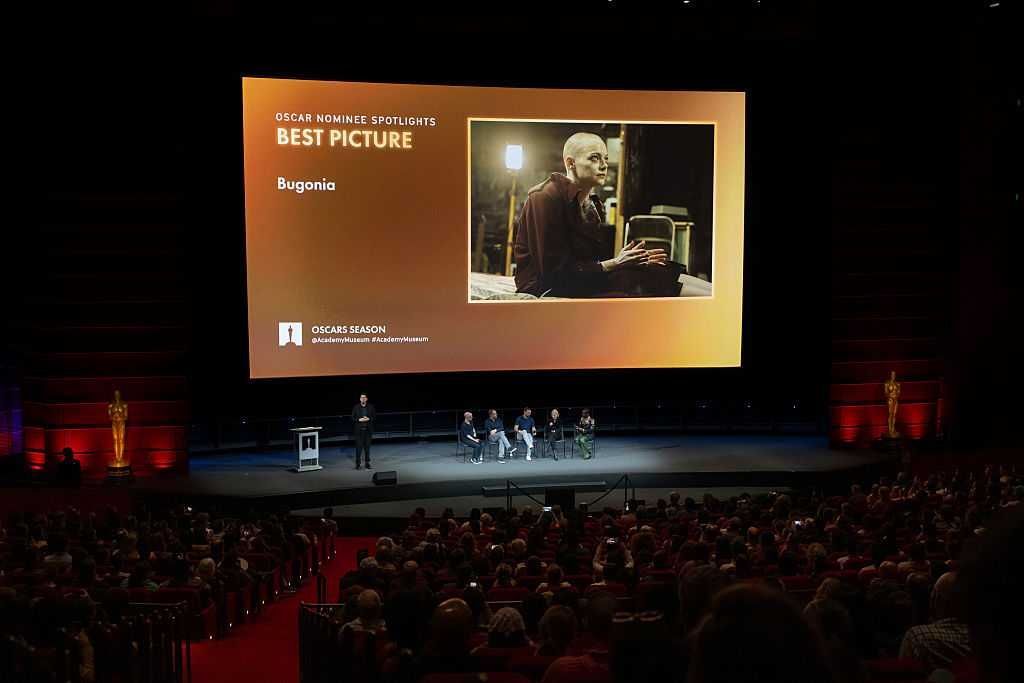
RELATED: ‘Bugonia’ and Hollywood's most post-Christian Academy Awards yet
Which raises the real question: Why do we keep arguing about the explosions instead of the launchers?
Most cultural flashpoints don’t originate on a stage or in a viral clip. They are symptoms of deeper forces already at work — ideas formed in classrooms, reinforced by institutions, and absorbed by the next generation.
Those are the launchers.
Some leaders figured this out and adjusted their strategy. Instead of reacting to every viral moment, they went to the places where the ideas get produced and packaged. That’s a big part of what made Charlie Kirk effective with young audiences. He didn’t spend his life chasing rockets. He went to campuses and challenged the ideas being launched there.
Recall the maxim that the best defense is a good offense. Intercepting rockets protects you today. Disabling the launcher protects you tomorrow. Once the launcher is gone, there’s far less you need to defend against.
That takes patience. Discipline. And the wisdom to ignore the latest explosion overhead.
Playing defense keeps you alive. Playing offense wins.
And there’s one more thing worth noticing.
God never plays defense. Throughout scripture, truth advances. Light pushes back darkness. The gates of hell aren’t advancing against the church. They are the ones being stormed.
The lesson is simple: Stop chasing rockets. Find the launchers.
Instead of accepting an Oscar on Sunday night, actor Sean Penn decided to visit a war zone.
Fellow actor Kieran Culkin told viewers that Penn probably "didn't want to" be at the Oscars, poking fun at him while accepting the Oscar for him.
'This year I'll be at the right place.'
Penn won Best Supporting Actor for his role in "One Battle After Another," his third Oscar in total.
After presenting the award, Culkin said, "Sean Penn couldn't be here this evening — or didn't want to, so I'll be accepting the award on his behalf."
It appeared that Penn preferred to spend his time in Ukraine with President Volodymyr Zelenskyy, with the president sharing a photo of his meeting with the 65-year-old.
"Sean, thanks to you, we know what a true friend of Ukraine is. You have stood with Ukraine since the first day of the full-scale war. This is still true today," Zelenskyy wrote on X. "And we know that you will continue to stand with our country and our people," he added, along with a photo of himself and Penn from inside the presidential office.
RELATED: Yes, there's an AI hive mind, and it's making us dumber
This year I’ll be at the right place
— Ben Stiller (@BenStiller) March 15, 2026
Penn's retreat to Ukraine is a stark contrast to Ben Stiller, who chose to skip Oscar night for much more relatable reasons.
On Sunday afternoon, Stiller responded to a picture from the 2025 Oscars that asked, "Does he know the knicks won," referring to the NBA's New York Knicks.
The noted basketball fan replied, "This year I'll be at the right place."
Lo and behold, Stiller was pictured courtside at Madison Square Garden in an official team photo that stated, "[Ben Stiller] knows where to be."
RELATED: Sam Altman tells BlackRock he wants AI on a meter 'like electricity or water'
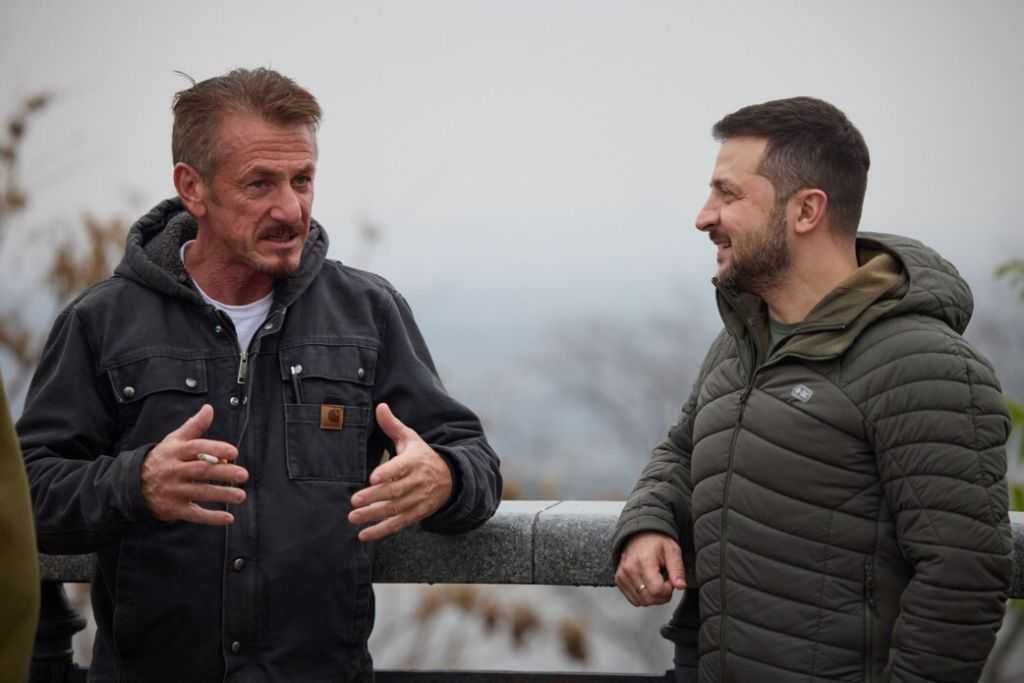
Both Stiller and Penn are outspoken liberals, making their absence from the Oscars stage — a dependable platform for leftist political messaging — all the more notable.
Recently, Stiller asked the Trump administration to remove a clip of his film "Tropic Thunder" from one of the White House's highly divisive hype videos, stating, "We never gave you permission and have no interest in being a part of your propaganda machine. War is not a movie."
Stiller has consistently posted jabs at the administration on X, such as suggesting it is not adhering to the Constitution, but he has not mentioned the president by name on the platform since 2021, when Trump was ending his first term.
Like Blaze News? Bypass the censors, sign up for our newsletters, and get stories like this direct to your inbox. Sign up here!
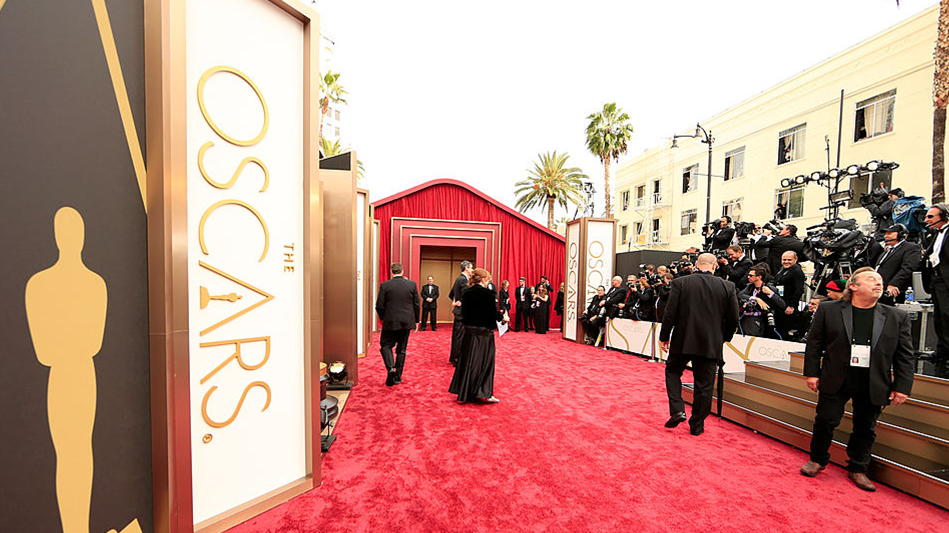
On Sunday, March 15, the 98th Academy Awards was held at the Dolby Theatre in Hollywood, honoring films released in 2025.
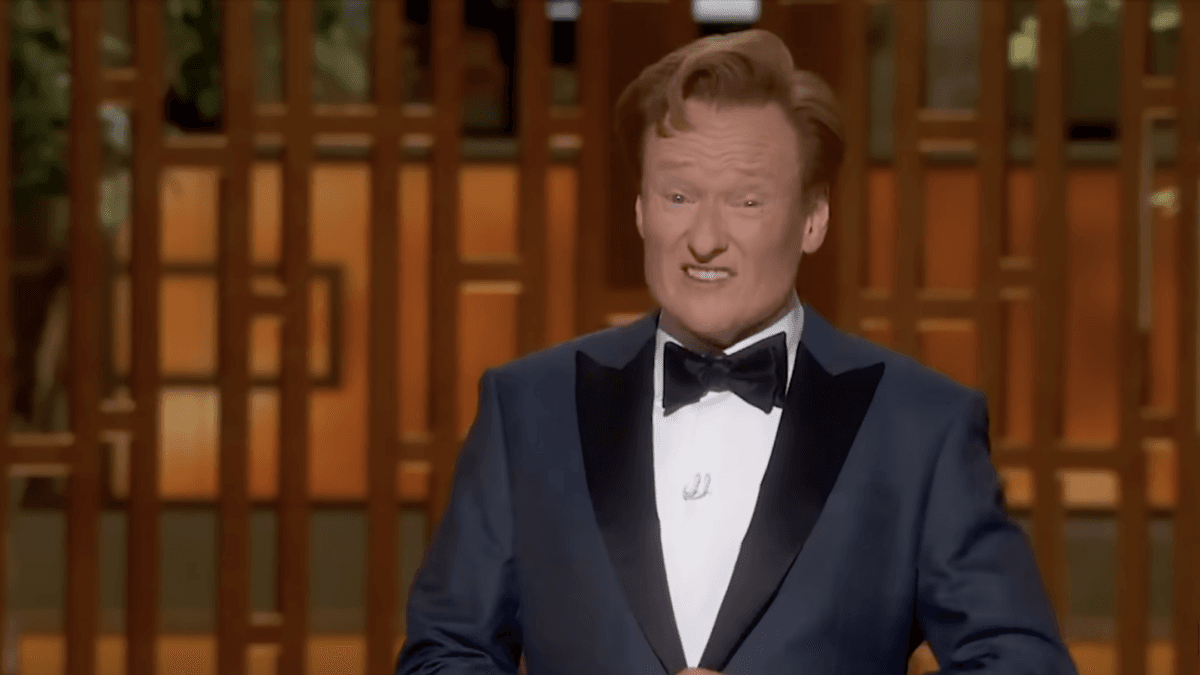
Acceptance speeches were a mixed bag: plenty of good-natured thanks and sweet moments, alongside the usual political remarks — including Javier Bardem’s “No to war, and free Palestine” statement, Jimmy Kimmel’s Trump and Melania digs, gun-violence references, and other commentary on wars and politicians.
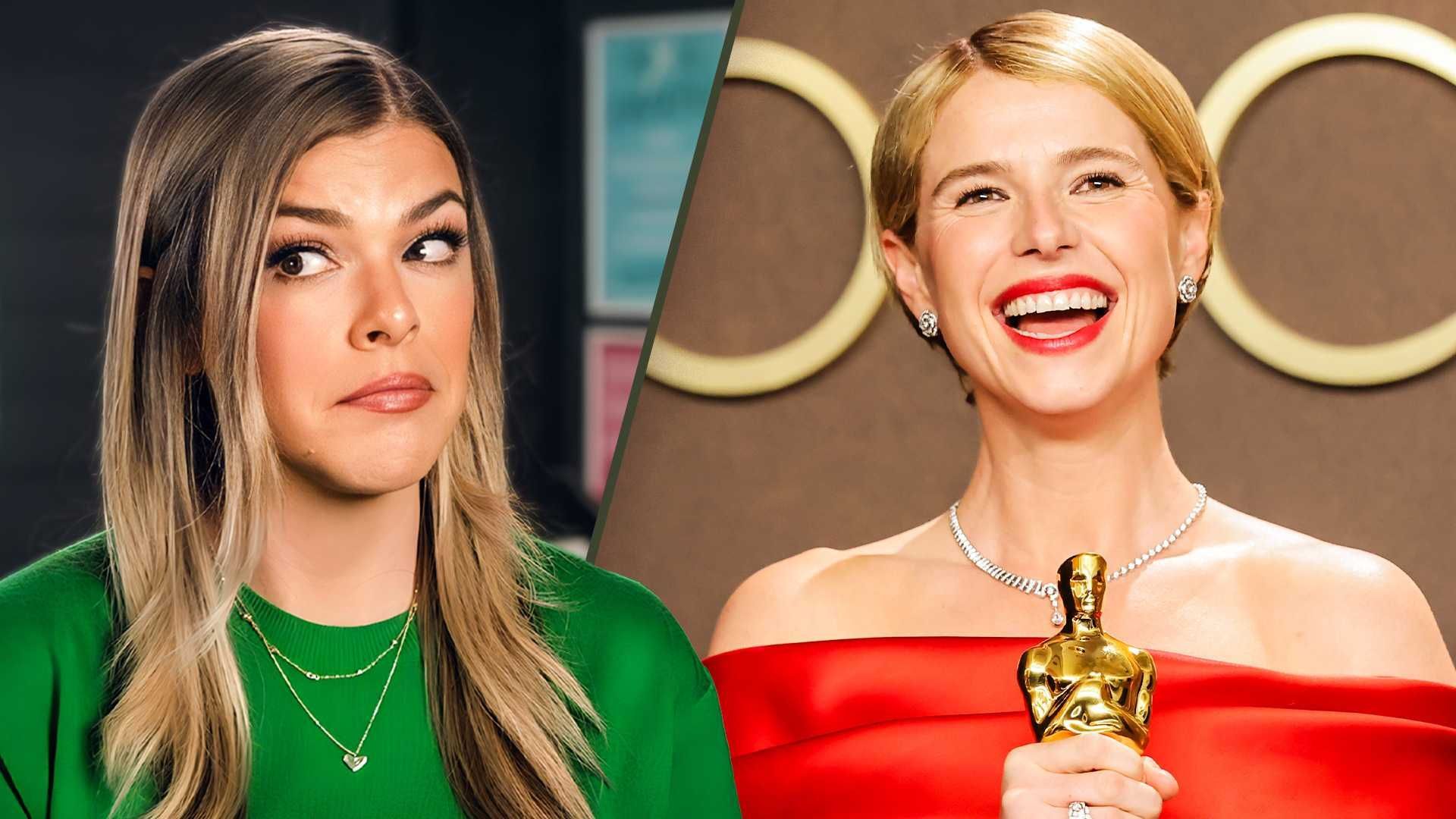
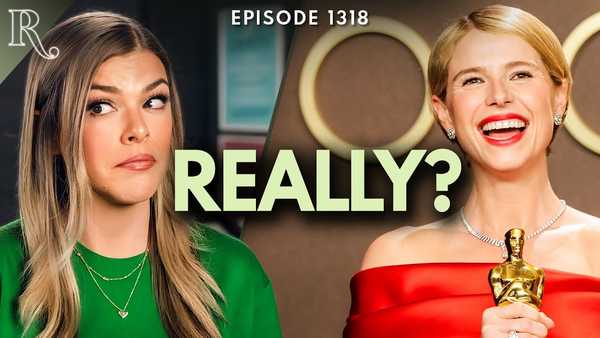
But there was one Oscar speech that stopped “Relatable” host Allie Beth Stuckey in her tracks: Jessie Buckley’s.
When the Irish actress took the stage to accept her Best Actress Oscar for her role as Agnes, William Shakespeare’s wife, in the film “Hamnet,” she chose to frame the moment not around her own talent, hard work, politics, or even her historic win as the first Irish woman in the category, but around the beauty of motherhood.
After thanking her fellow actresses and the producers of “Hamnet,” Buckley turned to her husband, Freddie Sorensen, with whom she welcomed their first child in 2025.
“You, Fred, I love you, man. I love you; you’re the most incredible dad. You’re my best friend, and I want to have 20,000 more babies with you. I do!” she tearfully exclaimed.
She then addressed their 8-month old daughter, Isla: “I love you, and I love being your mom, and I can't wait to discover life beside you.”
“It's Mother's Day in the U.K. today. So I would like to dedicate this to the beautiful chaos of a mother's heart,” Buckley added.
Allie was pleasantly shocked by Buckley’s heartfelt speech about motherhood.
“I don't know all Oscar speeches, but I've never heard a speech dedicated to motherhood,” she says.
“Dedicating it to motherhood as an institution and saying something to your husband — ‘I want to have 20,000 more babies with you’ — that's just not usually what you see,” she adds.
Allie recalls Michelle Williams' acceptance speech at the 2020 Golden Globe Awards, during which she said, “I’ve tried my very best to make a life of my own making … and I wouldn’t have been able to do this without employing a woman’s right to choose. To choose when to have children and with whom.”
“Well, obviously, being a mom and accomplishing these things is possible at the same time,” says Allie, “and even if it's not, motherhood is better.”
To enjoy more of Allie’s upbeat and in-depth coverage of culture, news, and theology from a Christian, conservative perspective, subscribe to BlazeTV — the largest multi-platform network of voices who love America, defend the Constitution, and live the American dream.
As Hollywood continues to embrace diversity mandates — which couldn’t have been more clear at the 96th Academy Awards — the film industry is sending the wrong message about merit and inspiration.
“The Academy Awards came up with new criteria for how to win or be eligible to even win the Best Picture nominee,” Whitlock says, noting that potential winners had to meet DEI requirements.
“At least one of the lead actors or significant supporting actors submitted for Oscar consideration is from an underrepresented racial or ethnic group in a specific country or territory of production,” read some of the Representation and Inclusion Standards of the Academy Awards.
“At least 30% of all actors not submitted for Oscar consideration are from at least two underrepresented groups which may include women, racial or ethnic group, LGBTQ+, people with cognitive or physical disabilities, or who are deaf or hard of hearing,” reads another guideline.
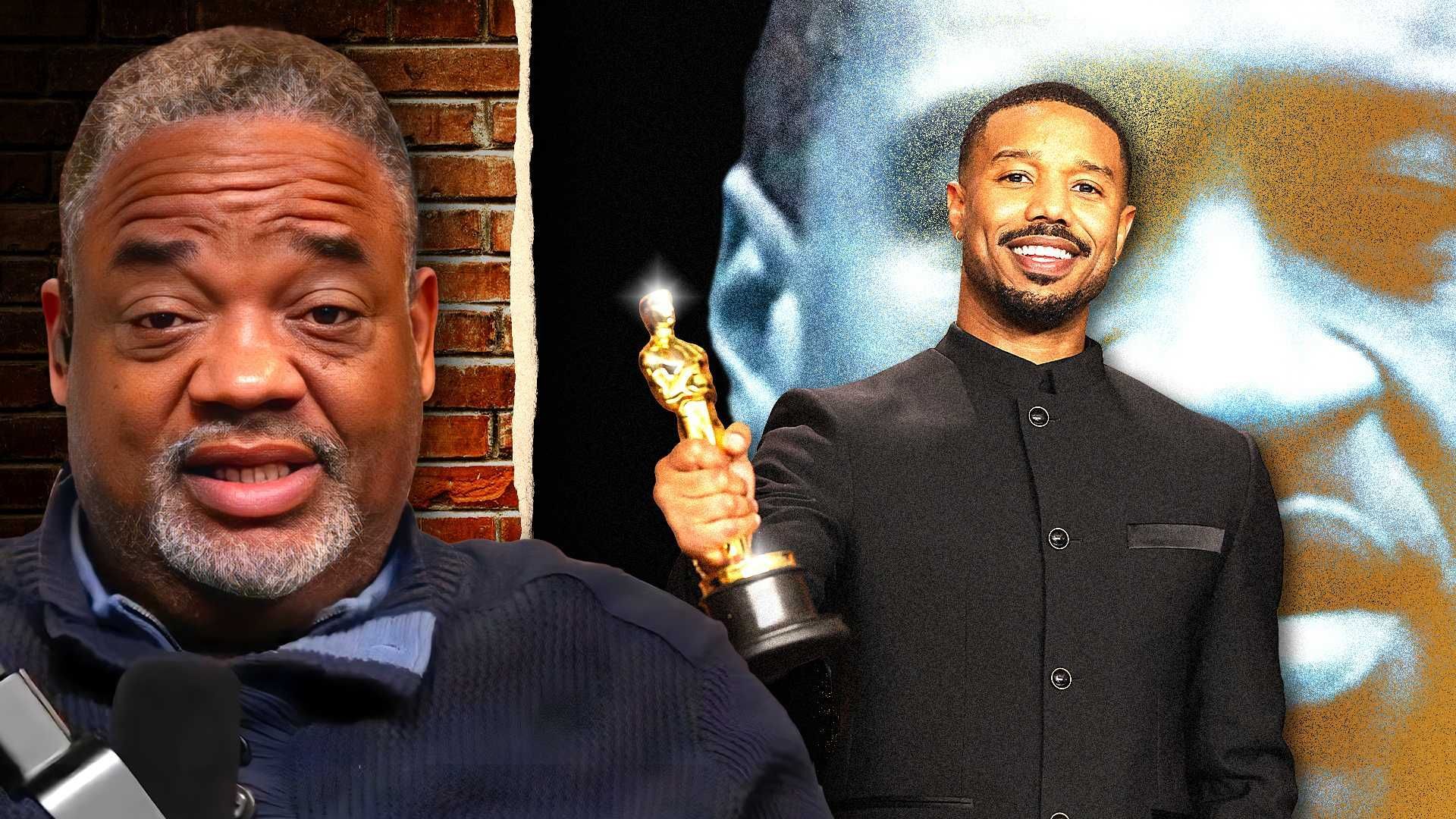
“This is all programming. This is all brainwashing. This is all a reflection of unreality,” Whitlock says, before playing a clip of Michael B. Jordan, who won the award for Best Actor.
“I stand here because of the people that came before me. Sidney Poitier, Denzel Washington, Halle Berry, Jamie Foxx, Forest Whitaker, Will Smith. And to be amongst those giants, amongst those greats, amongst my ancestors, amongst my guys,” Jordan said.
He then added, “I just want to say thank you for everybody in this room that has something to do with my success.”
“You know, he rattles off this group of black actors,” Whitlock comments, pointing out that when it was his dream to be a great sportswriter, he didn’t choose his heroes based on skin color.
“What — you’re telling me that in 2026, the only people that can inspire black kids are other black people? I just — I don’t get this. This is so limiting,” he continues. “White people get to be inspired by any and everybody. There's a white kid, right now, today, that’s sitting around saying, ‘Hey, I want to be like LeBron James.’”
“They get access to be inspired by whatever human being is on the planet. Their options for inspiration are limitless. We’re telling black kids, subtly and straightforwardly, that the only people that can inspire you are other black people,” he adds.
To enjoy more fearless conversations at the crossroads of culture, faith, sports, and comedy with Jason Whitlock, subscribe to BlazeTV — the largest multi-platform network of voices who love America, defend the Constitution, and live the American dream.
Last night’s Academy Awards brought the usual mix of celebration, surprises, and disappointment.
It also offered a revealing glimpse into how modern storytelling wrestles with the problem of human evil. Again and again, our stories invent new creators and judges — aliens, scientists, political systems — while avoiding the possibility that the answer might be the one Christianity has proposed all along.
Interestingly, the film’s bleak ending inadvertently highlights the beauty of the alternative.
We see this pattern clearly in this year’s Best Picture winner, "One Battle After Another." In that film, humanity’s problems are framed largely as political ones: injustice embedded in systems that must be overcome through struggle here on earth.
The year’s other nominees approach the same problem from different angles. "Frankenstein" warns about the dangers of human beings assuming the role of creator, while "Sinners" treats Christianity itself as a corrupting force rather than a remedy for human brokenness. The stories differ in tone and message, but they circle the same question: Why does humanity repeatedly descend into violence, cruelty, and exploitation?
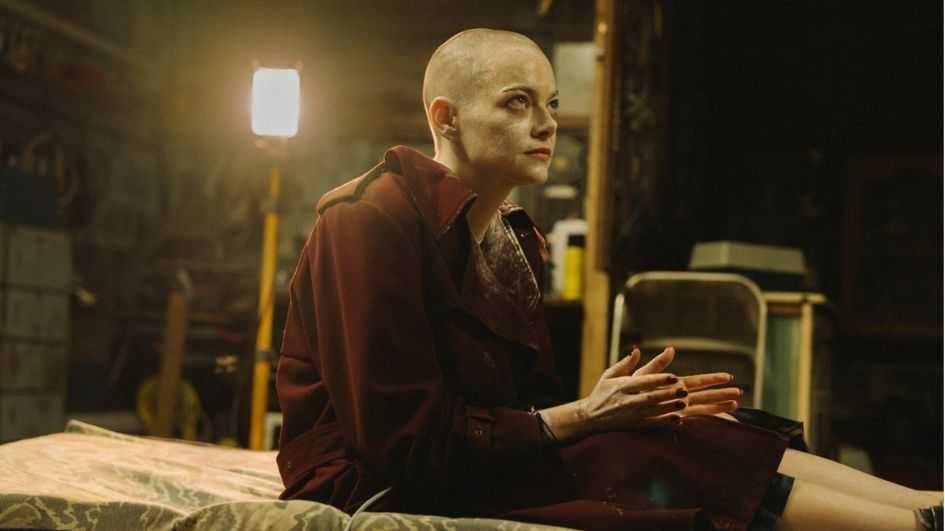
And then there's "Bugonia," Yorgos Lanthimos' ambitious science-fiction drama. Although the film failed to take home Best Picture or any of the four Oscars for which it was nominated, its unsettling message reveals much about our post-Christian frame of mind.
The film proposes a provocative premise: Humanity was seeded on Earth by extraterrestrial beings known as Andromedans. But when humanity fails to live up to their expectations — ravaging the planet, waging war, exploiting one another — the aliens decide to erase the experiment and reboot the world.
Spoiler alert: They succeed.
In the film’s closing act, the Andromedans judge humanity irredeemable. Our history of violence, greed, and environmental destruction becomes the evidence against us. Like scientists abandoning a failed experiment, they extinguish the human race in order to start again.
The premise is morally haunting because it contains a kernel of truth. Humanity has indeed fallen short of what we know to be right. Our history is filled with wars, cruelty, and exploitation of both people and planet. Watching the film, you can almost understand why an external observer might conclude that humanity is incapable of redemption.
But the film’s central idea contains a deeper philosophical problem that it never addresses.
In "Bugonia," aliens replace God.
Instead of an eternal Creator, we are told that advanced beings from another star system planted life on Earth. Humanity, in other words, is merely the product of a cosmic experiment. The idea echoes the pseudoscientific theories popularized decades ago by Swiss author Erich von Däniken, most famously in his 1968 best-seller "Chariots of the Gods?" He argued that ancient monuments and religious traditions were evidence that extraterrestrials had visited Earth and influenced — or even created — human civilization.
Despite the popularity of those claims, they have been widely rejected by scientists and historians as speculative at best and misleading at worst. Yet the underlying idea persists in popular culture, resurfacing in films, television shows, and speculative fiction like "Bugonia."
The problem is that such explanations never truly answer the deepest question. They merely move it one step back: If the Andromedans created humanity, who created them?
The difficulty with theories that attempt to explain existence without God is that they ultimately arrive at an illogical conclusion — that somehow the material universe emerged from nothing. Matter, life, and consciousness simply appeared. The universe, in effect, would have to create itself.
Every effect requires a cause. Every creation requires a creator. If alien life exists somewhere in the universe — and it very well may — those beings would still be part of the created order. They, too, would owe their existence to something greater and eternal.
"Bugonia" imagines alien overseers who judge humanity and wipe the slate clean when the experiment fails. But the story humanity actually lives in is far different.
According to Scripture, there was indeed a moment when God chose to “reset” the world. In the story of Noah, humanity had become so violent and corrupt that God sent a flood and preserved only Noah and his family to begin again. Humanity was, in a sense, rebooted.
But even after the flood, humanity fell short again. We continued to quarrel, exploit, and destroy. The human story remained one of brokenness mixed with moments of grace.
The difference between the God of Scripture and the Andromedans of "Bugonia" is not power. It is mercy.
The aliens in the film conclude that humanity’s failures justify annihilation. God reached a radically different conclusion. Rather than abandon His creation, He entered into it.
The eternal God sent His Son, Jesus Christ, into the world — not to condemn humanity but to redeem it. Where the Andromedans choose extermination, God chooses sacrifice.
This is the heart of the Christian story. Humanity fails again and again. Yet instead of discarding us as a failed experiment, God offers forgiveness and transformation.
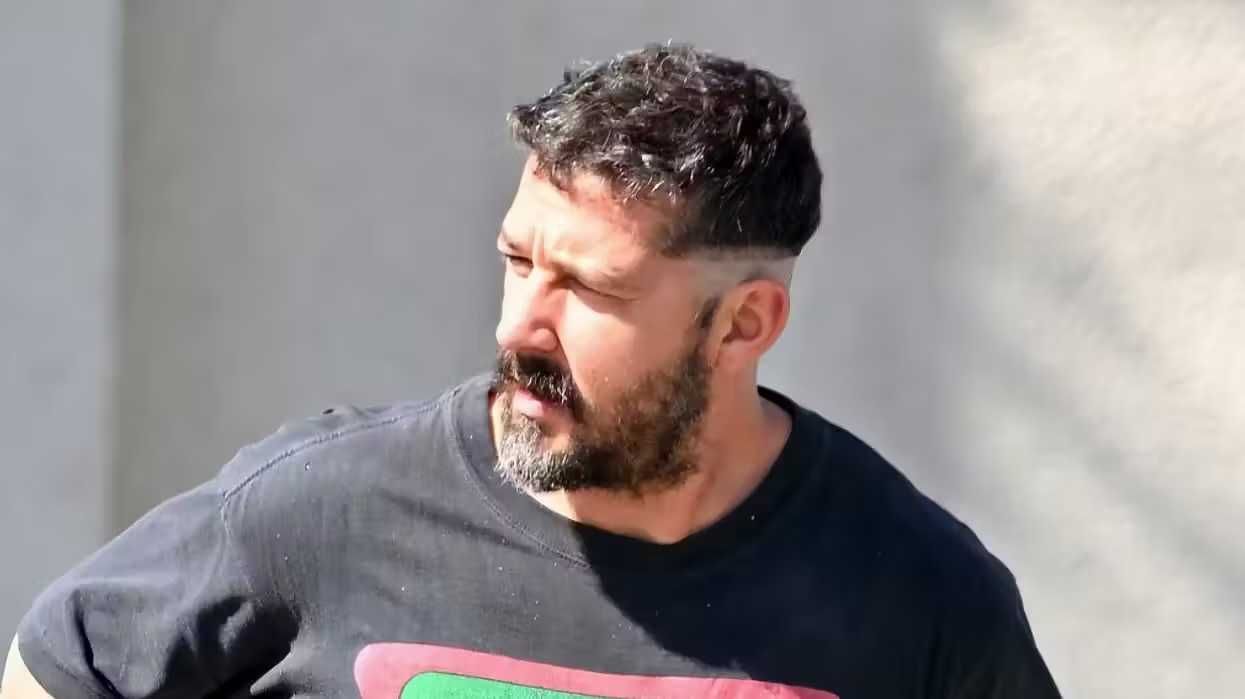
RELATED: What Shia LaBeouf's public struggle shows us about Christian redemption
Even then, the story does not become one of instant perfection. People who follow Christ still struggle. They still fall short. The difference is not that believers suddenly become flawless, but that they now have a path toward redemption.
One of the most profound summaries of that path comes from John the Baptist, who famously said of Christ: “He must increase; I must decrease” (John 3:30).
Those few words describe the quiet revolution at the heart of Christianity. The transformation of humanity does not come from our own power or moral superiority. It comes from learning humility — placing God at the center rather than ourselves.
And that humility has consequences. A world shaped by self-interest breeds the very problems "Bugonia" highlights — violence, greed, environmental destruction, and exploitation. A world shaped by love of neighbor and reverence for a Creator begins to look very different.
Interestingly, the film’s bleak ending inadvertently highlights the beauty of the alternative.
In "Bugonia," humanity is judged solely by its failures. There is no grace, no redemption, no possibility that flawed beings might grow into something better.
The Christian story, by contrast, insists that redemption is the point of the whole drama. God promised after the flood that He would not destroy the world again in such a way. The ultimate reset came not through annihilation but through Christ — through renewal.
For all its imaginative power, "Bugonia" ultimately imagines a universe governed by distant creators who abandon their creation when it disappoints them.
The Christian vision offers something far more radical: a Creator who loves His creation enough to save it.
A seismic shift is coming for Hollywood's biggest awards show.
Following a tough decade that has seen the program lose more than 40% of its audience, the Academy of Motion Picture Arts and Sciences has agreed to a multiyear deal that will take it off television airwaves.
In 2021, viewership sank to less than a third of the 2016 audience, with just 10.4 million viewers.
Starting in 2029, the 101st Oscars will air in an online format as part of an exclusive deal with YouTube for the global rights to the broadcast. The deal, which runs through 2033, includes the rights to cover the red carpet, behind the scenes, and the Governors Ball.
As reported by Variety, the awards show will leave ABC — where it has been for decades — and will become available on YouTube around the world and to YouTube subscribers in the United States.
Will the show leave extended commercial breaks behind as well? Unlikely. Inside sources revealed to Variety that ads will be a part of the broadcast, and the intent behind the shift was actually to capitalize on YouTube's captioning and audio translation features.
RELATED: Guillermo del Toro stops awards show music to drop 'F**k AI' bomb

While the awards telecast has gained some of its viewership back in the last few years, the numbers are still much smaller than they were when President Trump took office the first time.
In 2016, the Oscars saw approximately 34.4 million viewers. That number dropped steadily to 23.6 million by 2020, until a massive free fall in 2021. That year, viewership sank to less than a third of the 2016 audience, with just 10.4 million viewers.
Viewership has climbed back up since and showed decent growth through 2024, when it had 19.5 million viewers. However, the numbers largely stagnated for 2025 with 19.7 million, which is about 57% of what viewership was in 2016.
Still it seems the program will never again reach the peaks it had as recently as 2010, when it garnered over 41 million sets of eyeballs.
RELATED: Can conservatives reclaim pop culture?
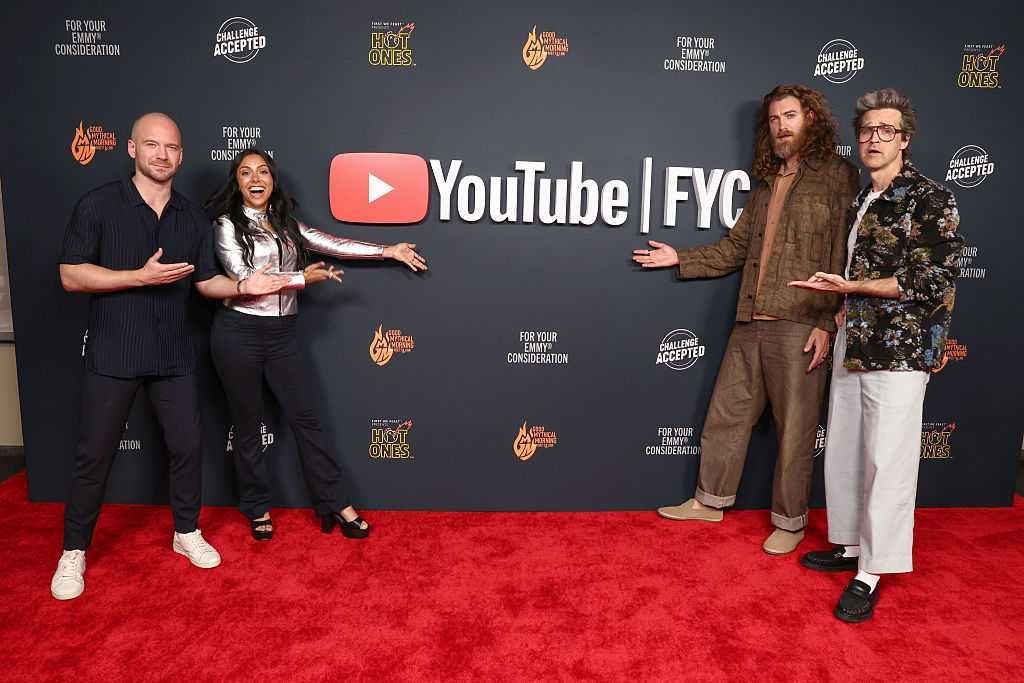
Academy CEO Bill Kramer and Academy President Lynette Howell Taylor released a joint statement calling the new deal a "multifaceted global partnership with YouTube" that will reach "the largest worldwide audience possible."
They added, "This collaboration will leverage YouTube's vast reach and infuse the Oscars and other Academy programming with innovative opportunities for engagement while honoring our legacy. We will be able to celebrate cinema, inspire new generations of filmmakers, and provide access to our film history on an unprecedented global scale."
YouTube CEO Neal Mohan labeled the Oscars "one of our essential cultural institutions, honoring excellence in storytelling and artistry."
 The sad result of a continuously fluctuating culture is a generation of young people who have no common cultural identity.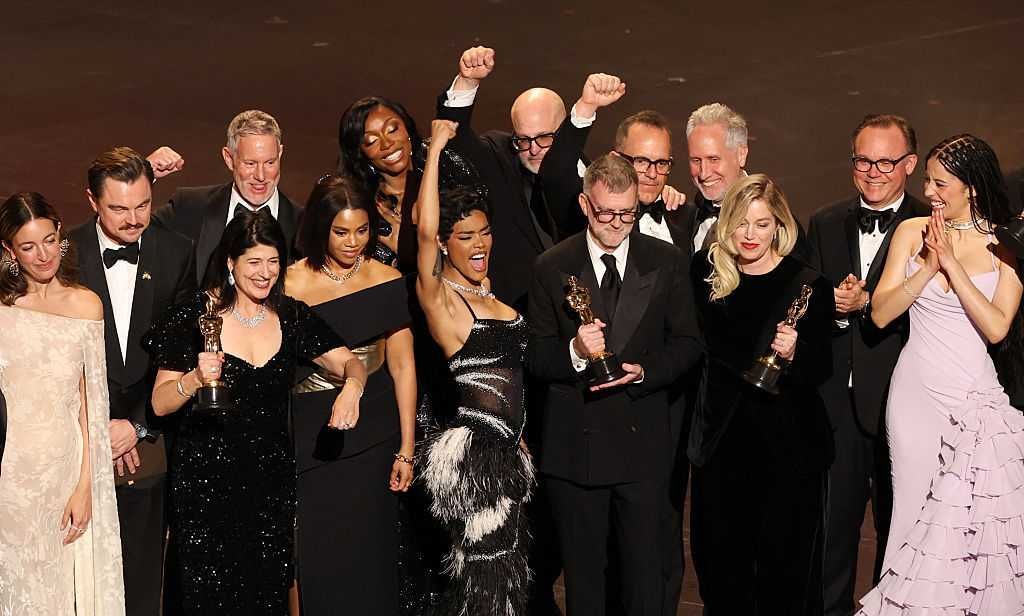
 O’Brien’s potshot about the All-American Halftime Show may have landed at the time, viewership data says TPUSA gets the last laugh.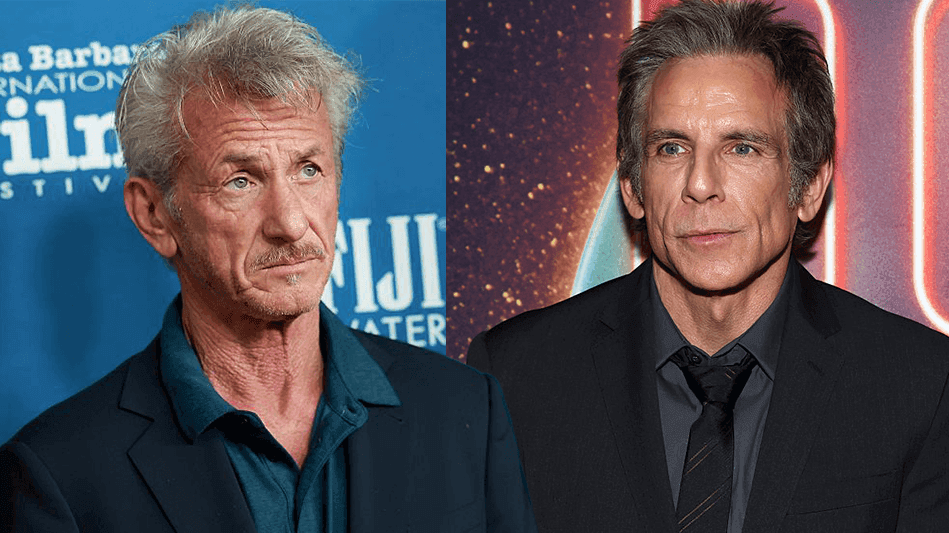
 www.theblaze.com
 thefederalist.com
 www.theblaze.com