Opportunity or surrender? Louisiana becomes flash point in battle over carbon storage initiatives.
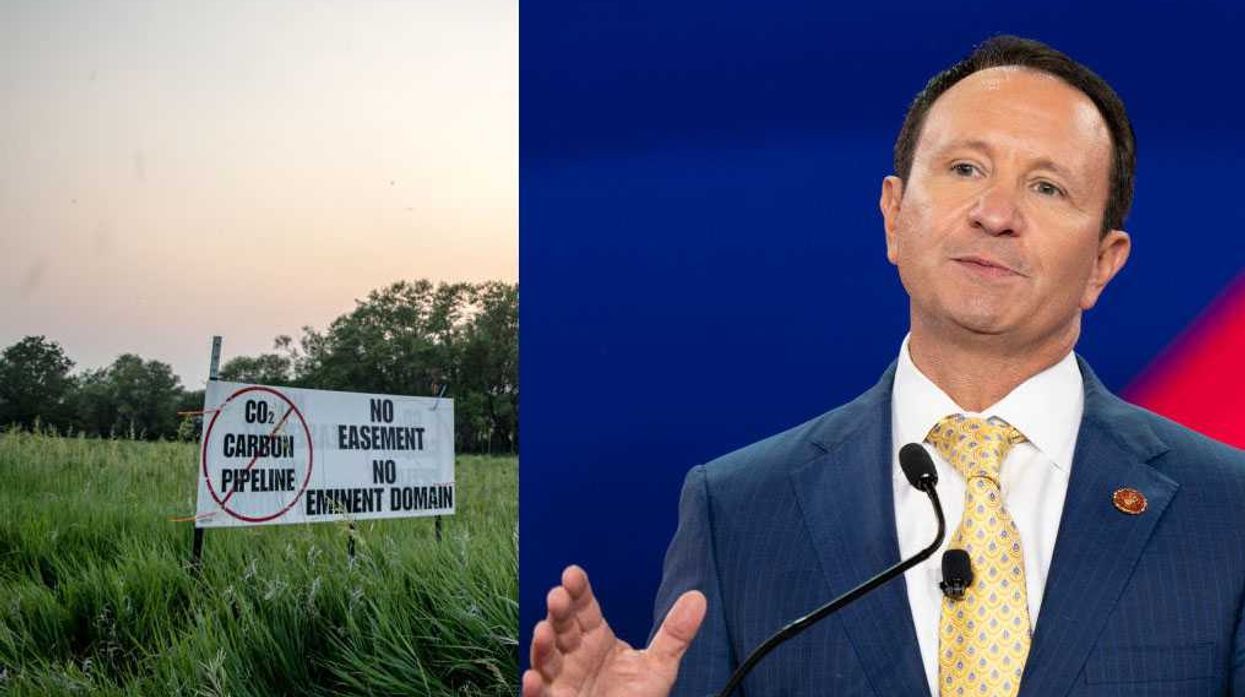


Louisiana has become a flash point in the battle over carbon capture and storage technology.

As its name suggests, CCS entails the capture, transportation, and storage of carbon dioxide produced by industrial activity or power generation.

'CO2 capture and storage will provide additional revenue sources.'

Long employed as a means of enhancing oil recovery, this technology has been embraced in various sectors as a way of simultaneously trapping greenhouse emissions and pacifying climate alarmists who regard carbon dioxide as an existential threat.

Just as liberals can be found on both sides of the issue, conservatives too are divided over whether to encourage CCS in Louisiana, one of only six American states approved to regulate all underground wells.

Republican supporters of the technology have touted it as a job-creating, industry-preserving means of fostering energy security, boosting the state's global competitiveness, and attracting business to Louisiana — claims echoed by ExxonMobil in its Feb. 16 announcement of expanded CCS operations in the state.

Some of the most outspoken opponents of CCS in the Bayou State are, however, MAGA-minded politicos and residents unwilling to accept the potential fallout of what they regard as a threat to private property rights and an act of surrender amid a decades-long climate alarmist campaign against American energy.

In defense

Gov. Jeff Landry (R), among the lawmakers who have encouraged CCS in the state, noted in an Oct. 15 executive order barring consideration of new applications for carbon dioxide injection projects — an order purportedly aimed at enabling the Louisiana Department of Conservation and Energy to catch up on previously received petitions — that:

  • Louisiana's industrial infrastructure "positions the State as a national leader in CO2 capture and storage, capable of seamlessly integrating CO2 capture in existing processes, enhancing America's energy competitiveness globally";
  • "CO2 capture and storage will extend Louisiana’s presence in energy by creating 17,000 potential new jobs, investing seventy-six billion dollars in potential capital for communities throughout Louisiana from announced projects alone, and driving economic growth on a scale unimaginable for Louisiana"; and
  • "CO2 capture and storage will provide additional revenue sources for local governments, has the potential to create a more diversified economy for Louisiana, and continue to serve as a catalyst for multiple industries, while sustaining and enhancing existing industries."

According to Louisiana's economic development agency, $23 billion in CCS-related capital investments in the state has been announced to date and 4,500 jobs are projected to result from CCS-related projects.

RELATED: Out of order: Courts shouldn’t rule based on ‘trust us’ science
Photo by F. Carter Smith/Bloomberg via Getty Images

Cameron Henry, the president of the Louisiana Senate who has expressed concern about recent legislation that would empower local communities to reject CCS projects, has similarly pitched carbon capture as the way toward greater prosperity.

'Another industrial experiment with serious risks.'

"It is something that is required for industry coming to Louisiana. Louisiana has to come to grips with that and find a happy medium to it," Henry said.

Liberal aversion

CCS has historically enjoyed a great deal of support from the American left.

The Biden administration, for instance, committed billions of taxpayer dollars to advance CCS initiatives, while the Democratic Party endorsed increasing taxes on fossil fuel power generation where the technology is employed.

While supported by powerful elements of the left and identified by the United Nations as a way of helping to limit so-called "global warming," some leftists who would apparently prefer to see the fossil fuel industry further humbled and America dependent on unreliable energy sources have exhausted a great deal of time and resources fighting the technology's implementation.

Antagonistic groups in the Bayou State, which reportedly leads the nation for proposed CCS projects, appear to have drawn funding from out-of-state liberal organizations such as the Rockefeller Family Fund, the Bloomberg Family Foundation, and a climate fund started by billionaire Jeff Bezos.

'The only people that want it are the ones who are trying to abscond with these federal tax credits.'

Form 990 tax returns indicate that Healthy Gulf, one of the New Orleans-based activist organizations that has criticized and campaigned against CCS initiatives in Louisiana, has received a fortune in recent years from the Rockefeller Family Fund and at least $1 million from the Bloomberg Family Foundation Inc.

Healthy Gulf has in turn dumped grant money into other Louisiana-based anti-CCS outfits including the Lake Maurepas Preservation Society, which campaigned against Air Products' proposed injection of trapped emissions a mile underneath the eponymous lake.

Healthy Gulf is hardly the only outfit opposing Louisiana CCS initiatives that has received money from out-of-state liberal groups.

Rise St. James touts itself as "a faith-based grassroots organization championing environmental justice and opposing the expansion of petrochemical industries in St. James Parish, Louisiana."

The group has characterized CCS as "another industrial experiment with serious risks" and advocated against it — not just in Lake Maurepas but across the whole of Louisiana.

This supposedly "grassroots organization" notes on its website that it is financially backed by the Earth Island Institute, a mammoth international organization based in Berkeley, California.

The Earth Island Institute, which has itself received funds from various climate alarmist groups such as the leftist Tides Foundation, has pushed anti-CCS literature, warning about possible leaks and a potential "pipeline-building frenzy" in the event that the technology becomes more common.

The Deep South Center for Environmental Justice, a New Orleans-based nonprofit, even appeared to imply that CCS initiatives are racist, claiming that the technology is "one of the biggest threats to communities of color being harmed by the polluting industries that exacerbate our climate crisis and by the regulatory agencies that are supposed to be protecting them."

The DSCEJ also joined Healthy Gulf and the Alliance for Affordable Energy in an unsuccessful legal challenge to the Environmental Protection Agency's decision to grant Louisiana primary enforcement authority over a class of underground carbon storage wells.

As with the other groups, the DSCEJ has received funds from deep-pocketed, out-of-state liberal organizations.

The Bezos Earth Fund — described as a "$10 billion commitment from Jeff Bezos to fight climate change" — reportedly gave the New Orleans-based activist group $4 million in September 2021. From 2020 to 2023, the DSCEJ received over $700,000 from the San Francisco-based Tides Center and Tides Foundation.

Healthy Gulf, Rise St. James, and the DSCEJ did not respond to a request for comment from Blaze News.

Conservative backlash

While some of those who oppose CCS appear to be liberals, both inside and outside Louisiana, there is substantial resistance among local conservatives — including Republican lawmakers.

State Rep. Chuck Owen (R), one of the more vocal critics of carbon sequestration initiatives, told Blaze News, "People who live in the country where they're trying to dump this stuff do not want it."

"I polled this twice. This is an 85% 'no' issue in my district," said Owen, whose district includes the cities of Anacoco, DeRidder, Leesville, and Rosepine. "The only people that want it are the ones who are trying to abscond with these federal tax credits, knowing that it's not going to do any good."

Owen emphasized that much of the resistance is about property rights — about Louisianans' aversion to having "private companies coming in and taking their land for money."

A group called Save My Louisiana, comprising mostly residents and elected officials in Owen's neck of the woods, filed a lawsuit in November over state laws enabling the expropriation of private property for pipelines transporting carbon dioxide.

The lawsuit, which was supported by Louisiana Treasurer John Fleming (R), alleges that laws permitting the use of eminent domain for CCS are unconstitutional and that such statutes turn Louisiana "into a national waste dump site."

"No one's against oil and gas. We want oil and gas to succeed here. But how do you equate the burial of carbon waste with energy?" Owen said.

Daniel Turner, founder of the American energy advocacy group Power the Future, told Blaze News, "The entire thing is just absolute bulls**t. The process, the money, the subsidies, the metrics, the goals, the technology — the entire thing is a farce."

"Once we start playing this game that carbon dioxide is bad and needs to be captured, you are playing the left's game," added Turner.

When asked about the burgeoning industry promise of generating thousands of jobs in Louisiana, Turner said, "We're going to create fake jobs for a fake problem and then wonder why we are further in debt."

The disagreement over the value of CCS appears to be coming to a head in Baton Rouge, where lawmakers have advanced numerous bills aimed at hamstringing CCS initiatives.

"These bills are not anti-industry," state Rep. Mike Johnson (R) said in January after filing a trio of bills targeting CCS. "They are pro-property rights, pro-local government, and pro-Louisiana families. Economic development should be built on voluntary agreements — not forced land seizures — and local communities deserve a seat at the table."

Landry's office did not respond to a request for comment.

Like Blaze News? Bypass the censors, sign up for our newsletters, and get stories like this direct to your inbox. Sign up here!
‘Seize private property’: NYC’s socialist mayor taps communist sympathizer to lead office to ‘Protect Tenants’


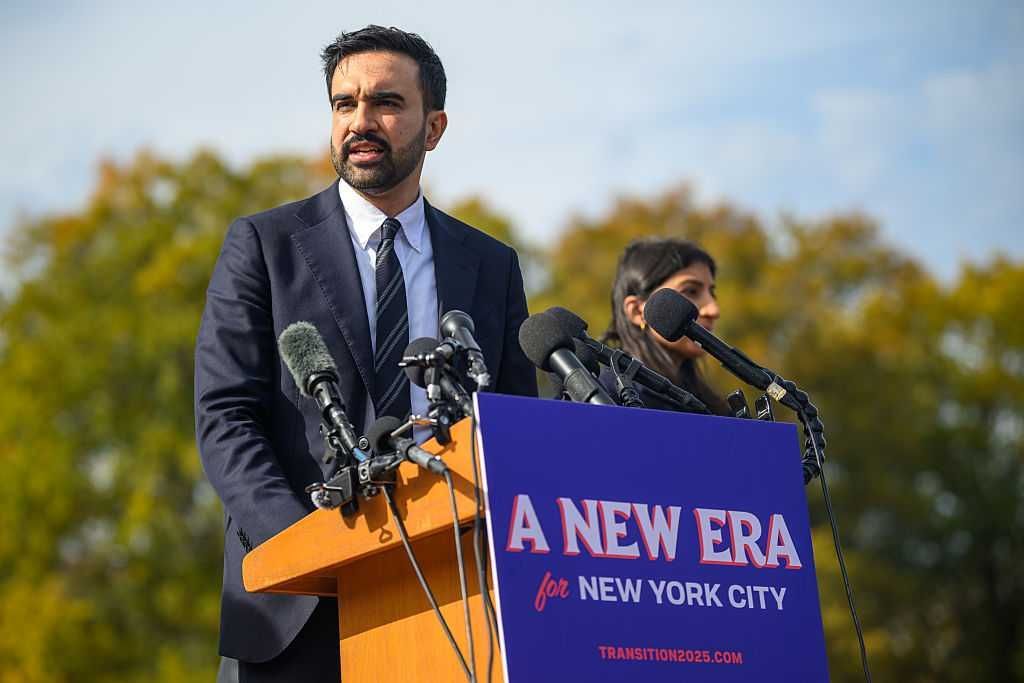
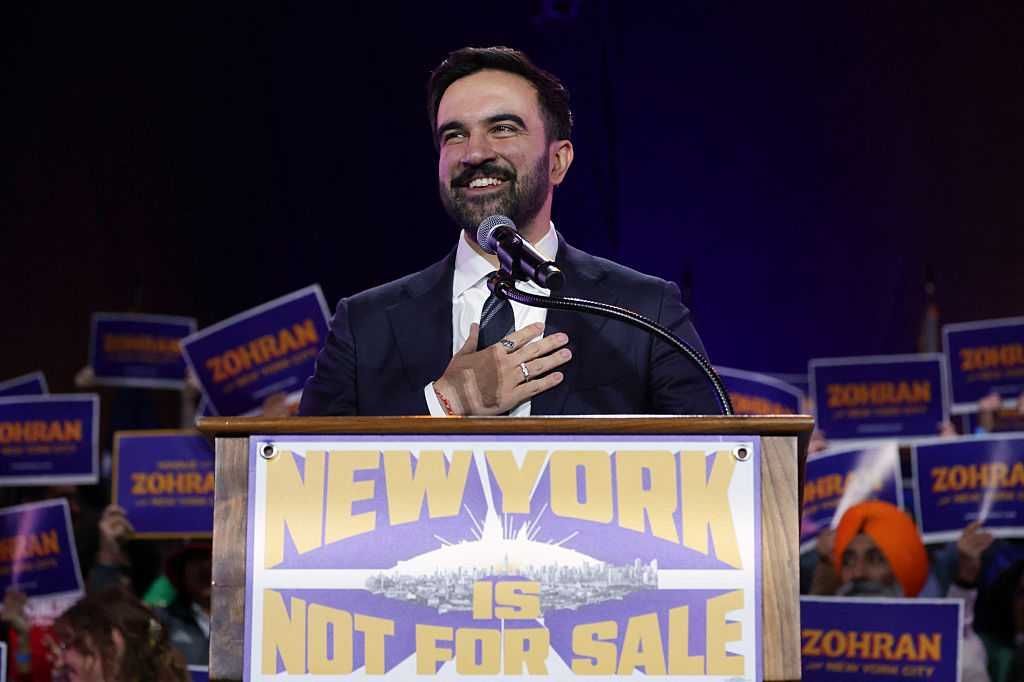
New York City's newly sworn-in Democratic Socialist mayor, Zohran Mamdani, has already started taking steps to advance his radical agenda by selecting an anti-private-property extremist to lead the Mayor's Office to Protect Tenants.

Mamdani announced on January 2 that Cea Weaver would join his team, noting that she had previously led Housing Justice for All, a coalition of groups representing tenants and homeless New Yorkers, and its sister organization, the New York State Tenant Bloc.

'Private property including any kind of ESPECIALLY homeownership is a weapon of white supremacy.'

Mamdani credited Weaver for helping to pass "landmark legislation that closed loopholes landlords used to raise rents and push apartments out of stabilization."

"Now she'll work with us to hold landlords accountable and ensure New York City tenants are living in safe, clean homes," Mamdani wrote.

Following Weaver's appointment, an undated video resurfaced on social media of the activist discussing her goal to eliminate private property ownership.

"I think the reality is, is that for centuries we've really treated property as an individualized good and not a collective good," Weaver stated in the video. "And transitioning to treating it as a collective good and towards a model of shared equity will require that we think about it differently. And it will mean that families, especially white families but some [people of color] families who are homeowners as well, are going to have a different relationship to property than the one that we currently have."

RELATED: 'Money hungry Jews': Mamdani appointee abruptly quits after her anti-Semitic online posts resurface

Photo by ANGELA WEISS/AFP via Getty Images
Assistant Attorney General for Civil Rights Harmeet Dhillon reacted to the resurfaced video of Weaver.

“I don’t think so,” Dhillon wrote. “We have federal housing laws that trump any collective Marxist fantasies.”

Weaver once urged Americans to "elect more communists" in a 2017 post on her now-deactivated X account, the New York Post reported.

She also called to "seize private property."

"Private property including any kind of ESPECIALLY homeownership is a weapon of white supremacy," Weaver reportedly wrote in 2019.

RELATED: Israel's Ministry of Foreign Affairs accuses NYC Mayor Mamdani of anti-Semitism after his first day in office

Zohran Mamdani. Photo by ANGELA WEISS/AFP via Getty Images

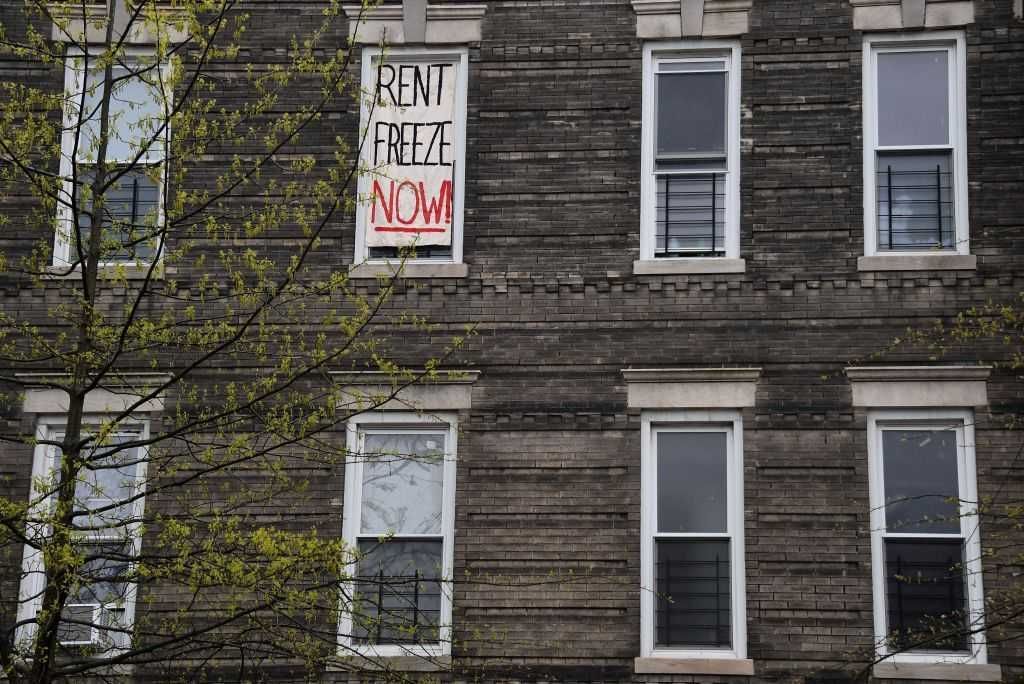
Weaver has previously expressed support for freezing rent, writing in a January 2025 post on Bluesky, "There are lots of things the mayor CANT [sic] do on housing, but freezing the rent is one of the only things they can unilaterally do for 2.4 million New York renters. Policy plans are great, so is a rent freeze."

According to New York City's Tenant Protection Cabinet, 65% of the city's residents are renters.

Democrat Governor Kathy Hochul's office did not respond to a request for comment.

Like Blaze News? Bypass the censors, sign up for our newsletters, and get stories like this direct to your inbox. Sign up here!

Homeowners' associations weren’t supposed to replace civilization


Homeowners’ associations exploded across America beginning in the 1960s. No one describes HOAs as “popular,” and the horror stories of petty rules and bureaucratic neighbors are legion. Yet more Americans fight for the privilege of buying into them every year. The reason is simple: The HOA is the last legal mechanism Americans have to artificially recreate something the country once produced organically — a high-trust society.

People want neighborhoods where streets feel safe, houses stay maintained, and neighbors behave predictably. We call these places “high trust” because people do not expect those around them to violate basic standards. Doors remain unlocked, kids play outside, and property values rise. Americans once assumed this was the natural condition of ordinary life. It never was.

Everyone complains about HOAs, but they remain the only defense against the chaos modern culture produces.

High-trust societies are not accidental. They emerge only under specific cultural conditions. Trust forms when people can understand and predict the behavior of those around them. That requires a shared standard — how to act, how to maintain property, how to handle conflict. When those standards come from a common way of life, enforcement becomes minimal. People feel free not because they reject limits, but because the limits match their instincts and expectations.

Every social order requires maintenance, but the amount varies. When most residents share the same assumptions, small gestures keep the peace. A disapproving look from Mrs. Smith over an unkempt lawn prompts action. A loud party until 1 a.m. results in lost invitations until the offender corrects the behavior. Police rarely if ever enter the picture. The community polices itself through mutual judgment.

Several preconditions make this coordination possible. Residents must share standards so violations appear obvious. They must feel comfortable addressing those violations without fear of disproportionate or hostile reactions. And they must value the esteem of their neighbors enough to respond to correction. When those conditions collapse, norms collapse with them. As New York learned during the era of broken windows, one act of disorder invites the next.

American culture and government spent the last 60 years destroying those preconditions.

Academics and media stigmatized culturally cohesive neighborhoods, and government policies made them nearly impossible to maintain. Accusations of racism, sexism, or homophobia discourage the subtle social pressure that once corrected behavior. The informal network of mothers supervising neighborhood kids vanished as more women entered the corporate workforce. And as Robert Putnam documented, social trust deteriorates as diversity increases. Residents retreat into isolation, not engagement.

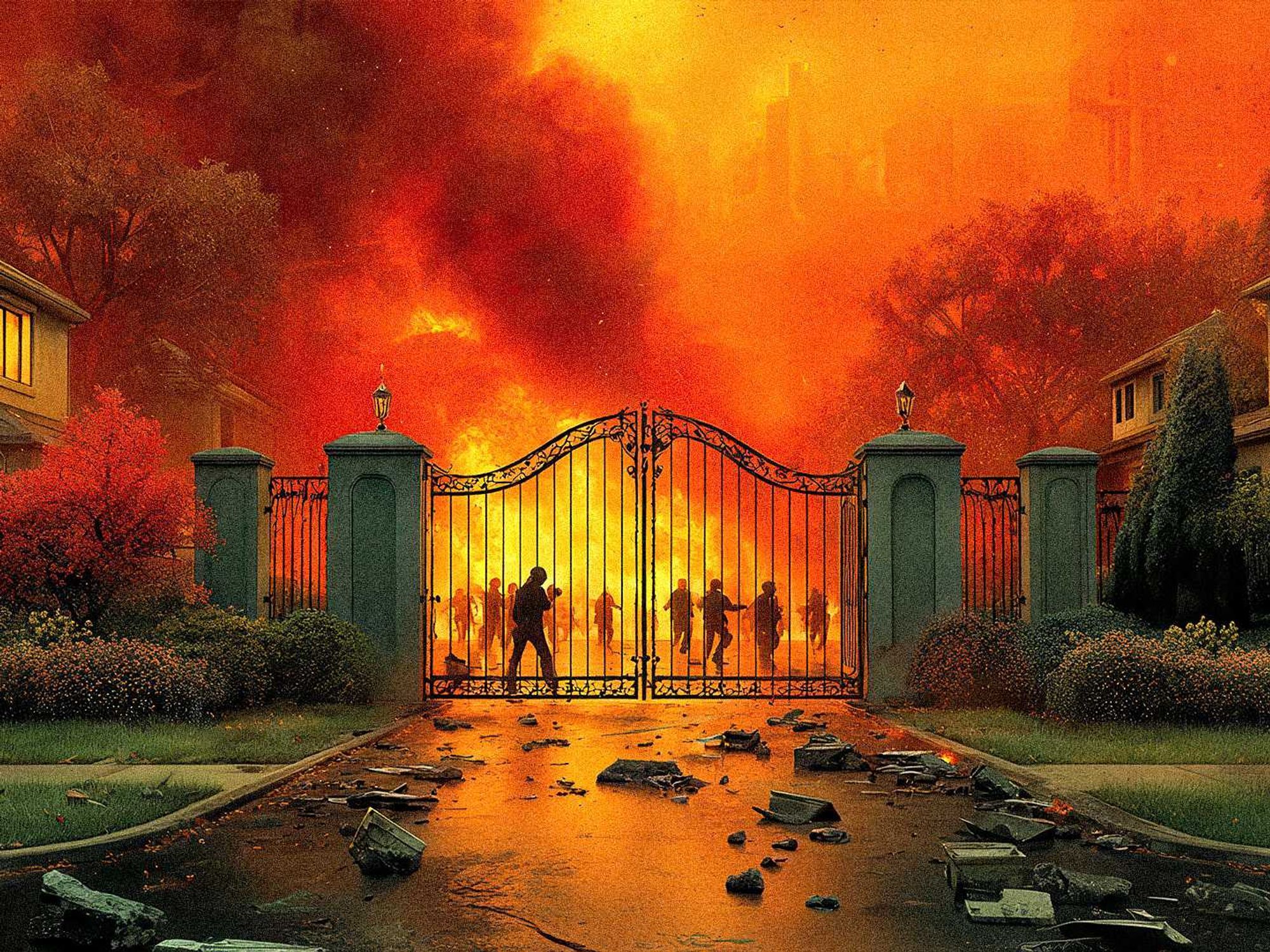
The HOA attempts to reconstruct a high-trust environment under conditions that no longer support it. Ownership, maintenance, and conduct move from cultural consensus to legal contract. Residents with widely different expectations sign binding agreements dictating noise levels, lawn care, parking, paint colors, and countless other micro-regulations. A formal board replaces Mrs. Smith’s frown. Fines replace gentle rebukes. Gates and walls replace the watchful eye of neighborhood moms.

What once came from community now comes from bureaucracy.

With home prices surging, families dedicate larger portions of their wealth to their houses. Few want to gamble on declining property values because their neighborhood slips into disorder. Everyone complains about HOAs, but they remain the only defense against the chaos modern culture produces. People enter hostile, artificial arrangements where neighbors behave like informants rather than partners — because the alternative threatens their largest investment.

RELATED: Do you want Caesar? Because this is how you get Caesar

Blaze Media Illustration

This analysis is not about suburban frustration. The HOA reveals a far broader truth: Modern America replaced a high-trust society with a trustless system enforced by administrative power.

As cultural diversity rises, the ability of a population to form democratic consensus declines. Without shared standards, people cannot coordinate behavior through social pressure. To replicate the order once produced organically by culture, society must formalize more and more interactions under the judgment of third parties — courts, bureaucracies, and regulatory bodies. The state becomes the referee for disputes communities once handled themselves.

Litigiousness rises, contracts proliferate, and coercion replaces custom. The virtue of the people declines as they lose the skills required to maintain trust with their neighbors. Instead of resolving conflict directly, they appeal to ever-expanding authorities. No one learns how to build trust; they only learn how to report violations.

The HOA problem is not really about homeowners or housing costs. It is a window into how America reorganized itself. A nation once shaped by shared norms and informal enforcement now relies on legalistic frameworks to manage daily life. Americans sense the artificiality, but they see no alternative. They know something fundamental has changed. They know the culture that sustained high-trust communities no longer exists.

The HOA simply makes the loss unavoidable.

Homeowner shoots backyard trespasser allegedly after he wouldn't show his hands. Cops say the stranger was on the run.


A Miami homeowner shot a backyard trespasser over the weekend allegedly after he wouldn't show the homeowner his hands — and police said the stranger was on the run.

Authorities said the shooting took place shortly after 34-year-old Whitney Liberal was involved in a rollover crash on Interstate 75 near Northwest 186th Street, WPLG-TV reported.

'It’s the first time in 30 years, and thankfully it wasn’t robbing — it was him escaping from something he did before.'

Miami-Dade police told the station that Liberal and two others fled the crash scene, and Liberal ran behind a barrier wall along the interstate, jumped a fence, and entered the back yard of a home in the 18000 block of Northwest 91st Court.

WTVJ-TV reported that arrest documents indicate the homeowner heard his dog barking, looked out his window, and saw his ladder had been moved to lean against a tall wall in his backyard that butts against I-75.

Police told WPLG the homeowner was armed with a gun while confronting Liberal around 6 a.m. and fired two shots after Liberal allegedly failed to show his hands. Investigators told the station one bullet struck Liberal in the leg.

“My neighbor was on the balcony with a gun and a lantern,” neighbor Alfonso Nieto told WPLG.

The homeowner spoke to WTVJ about the incident but did not show his face: “It’s the first time in 30 years, and thankfully it wasn’t robbing — it was him escaping from something he did before."

The arrest report indicates Liberal told investigators he fled the crash scene and entered the backyard while attempting to call his girlfriend to pick him up, WPLG said, adding that he said he injured his foot in the crash.

Police added to WPLG that they found marijuana and pills that appeared to be ecstasy when conducting a search on Liberal.

Liberal was being treated at a hospital for his injuries and was in the process of being booked into jail Monday afternoon, WPLG said, citing authorities.

Jail records show he's facing three counts of possession of a controlled substance, one count of trespassing on unenclosed curtilage, and one count of possession of cannabis, WPLG said.

“It was shocking because nothing like that ever happens in this community,” neighbor Ofelia Martinez noted to WPLG.

You can view video reports here and here about the incident.

Like Blaze News? Bypass the censors, sign up for our newsletters, and get stories like this direct to your inbox. Sign up here!

RED ALERT: The feds can use THIS shady new law to SEIZE private land


The SUSTAINS Act is a new law in the works that in classic tyrant fashion would drastically harm Americans’ ability to own land.

The law would give the USDA the power to monitor “natural processes” and decide who owns “environmental services.”

“The USDA now is monetizing natural processes under the SUSTAINS Act,” Glenn Beck says, disturbed. “It doesn’t look like it’s going to be stopped.”

“In other words, one environmental process is trees breathe in carbon dioxide, and they breathe out air. OK, so they take the pollution and breathe it in and then they give us what we need to live as they breathe out,” Glenn explains.

If the USDA has its way, it will try to control the natural processes that occur on your land.

“They are claiming the processes that are on your land. So you may not own the air, you may not own the tree, you may not own the water,” Glenn says. “What is your land worth without water?”

“Farmers, what is your land worth when you can’t till the soil yourself because the minerals and the soil is not really owned by you? You own the space, but you don’t own anything other than maybe your house, if it’s already built,” he continues, adding, “Our government is out of control.”

“This is a way for them to take control of the land through private public partnerships,” he says. “These things are actually happening.”


Want more from Glenn Beck?

To enjoy more of Glenn’s masterful storytelling, thought-provoking analysis, and uncanny ability to make sense of the chaos, subscribe to BlazeTV — the largest multi-platform network of voices who love America, defend the Constitution, and live the American dream.

Report: Secret Service Broke Into Private Business While Protecting A Harris Fundraiser To Use The Toilet

It'd have been nice if the Secret Service took the same level of action during Trump's July 13 rally.

Horowitz: Courts: No right to property, but yes, right to welfare


Two of the more indelible ways that the government has used COVID to create Venezuela-style Marxism are the CDC mandate prohibiting landlords from evicting residents and the massive unemployment welfare scheme that paid some people more to be unemployed than to work. Two court decisions governing the outcomes of each of these policies, when juxtaposed to one another, create a new paradigm in America: You have the right to welfare or to other people's property, but not a right to your own.

Last Tuesday, Justice Kavanaugh shockingly joined the four liberals on the Supreme Court in refusing to stay the CDC's moratorium on evictions. Kavanaugh indicated that the eviction moratorium is likely unlawful absent congressional approval, but noted that because it is set to expire on July 31, it wasn't worth placing an injunction on it, even though it's still in place and violating property rights.

The eviction moratorium was one of the most radical things done under the Trump administration, and it of course was continued by the Biden administration. And while this version of the order is set to expire next month, there is no guarantee they won't issue a new modified order.

Last September, the CDC decided that if it can control our breathing, it can control property rights as well and proceeded to bar landlords from evicting any family earning under $200,000 who didn't pay rent. So, despite handing out free money to everyone, including $600-$1,000 in unemployment benefits per week in some states, the government still put the onus on private landowners to eat the cost and retroactively shred their private contracts.

Thus, we have four or five justices who now believe that COVID allows the government to take away your property when the entire purpose of government is to protect private property from anarchy. You have no right to your property or to open a business, but someone else has a right to live on your property without paying.

Hold that thought for a moment, and now try to understand an order from an Indiana county judge attempting to force states to pay the exorbitantly high federal unemployment benefits, even though it's making it impossible for businesses to find workers willing to work. You see, while you don't have a right to own your rental, open a business, breathe freely, or decline an experimental injection, people have the right to unemployment welfare that stimulates unemployment.

Over the past few months, 26 states have ended one or all of the four federal pandemic unemployment programs established in the CARES Act. The programs add to the time and scope of who is eligible for the program, as well as adding an additional $300 a week to the base rate. On June 25, Marion County Superior Court Judge John Hanley placed a temporary injunction on Governor Eric Holcomb's order to pull out of the plan. Hanley states that the extra UI benefits were "instrumental in allowing Hoosiers to regain financial stability at an individual level while the state continues to face challenges presented by the COVID-19 pandemic during its return to normalcy."

How about the right to breathe normally? Isn't it interesting that the only injunctions the judges seem to issue are on policies that are well within the state's power, yet they are nowhere to be seen when plaintiffs need relief from the state assault on real inalienable rights.

Courts were supposed to serve as a shield for individual rights against actions taken against them by government, not as swords to secure entitlements from governments or even other individual landowners. "Mi casa es su casa" has now been enshrined as a legal theory!

What is truly astounding is that at a time when the courts are saying that a landlord with a single apartment doesn't have the freedom to deny service to someone who doesn't pay, a Florida judge ruled that the state can't punish monopolistic big tech companies that collude with government to deplatform anyone they disagree with. These companies have essentially taken over the equivalent of public roads for speech, yet they can, at the behest of government, deny anyone a platform who disagrees with the government line on masks and vaccines.

Also, last week, a federal judge in Indiana, appointed by Trump no less, placed a temporary injunction on Indiana's new law requiring abortion doctors to tell patients seeking an abortion about a new abortion reversal drug. Somehow it's not in state interest or power to disseminate information to save the unborn, but a state can not only spend taxpayer funding lying about the efficacy of masks and the safety of experimental vaccines, but downright mandating them on human bodies. And, of course, a mom-and-pop bakery or florist must serve an event that violates the owner's religious beliefs, and the state is somehow well within its powers to force that upon small business owners.

Taken as a whole, the courts have flipped fundamental rights and governmental powers upside down, inside out. As we celebrate the Declaration of Independence in this month of American pride and reflect upon the founding of this country, rooted in self-evident truths of inalienable rights, we must confront the jarring fact that we have competing views in this country that are irreconcilable with those self-evident truths. For how long can a house divided against itself stand?