Republicans speak out against 'kill switch' mandate for all new cars: 'The technology is unworkable'
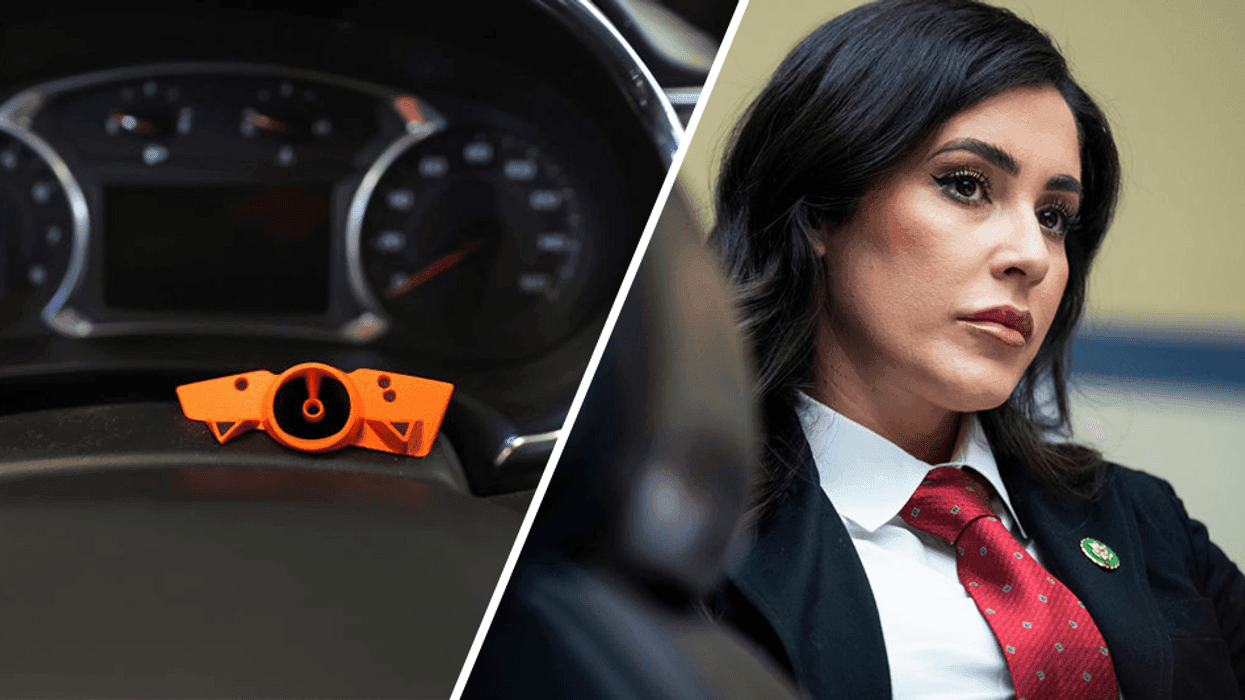


Republicans are raising alarms about new vehicle safety requirements that could introduce intrusive monitoring technology — including systems capable of disabling a car against a driver’s will.

The mandate stems from a provision in the 2021 Infrastructure Investment and Jobs Act, made law under President Biden, which requires automakers to install advanced impaired-driving prevention technology in new vehicles by 2027.

'The car dashboard becomes your judge, your jury, and your executioner.'

Critics argue that the implications go far beyond safety.

Judge, jury, and executioner

“The car dashboard becomes your judge, your jury, and your executioner,” said Rep. Thomas Massie (R-Ky.), who has been one of the most vocal opponents of the measure.

Section 24220 of the law — titled “Advanced Impaired Driving Technology” — directs regulators to require systems designed to prevent drunk-driving fatalities. As Blaze News has previously reported, the technology under consideration includes both passive and active monitoring tools, many powered by artificial intelligence.

These may include infrared cameras that track a driver’s eye movements and pupil dilation, as well as “cockpit-embedded sensors” capable of analyzing a driver’s breath to estimate blood alcohol levels. Other proposed methods include touch-based sensors that use tissue spectroscopy to detect alcohol through the skin of a finger or palm.

“I voted against this,” said Anna Paulina Luna (R-Fla.), criticizing the measure. “Unfortunately, too many Republicans sided with Democrats and it passed.”

RELATED: Creepy new laws will mean your car monitors you 24/7 — eyes, skin, even breath

I voted against this. Unfortunately, too many Republicans sided with Democrats and it passed. https://t.co/phZLQJAZ0d
— Anna Paulina Luna (@realannapaulina) April 27, 2026

Designated driver

Massie has warned that the technology could extend beyond detecting impairment to evaluating driving behavior more broadly.

“The car itself will monitor your driving. And if the car thinks that you're not doing a good job driving, it will disable itself,” he said in remarks to Congress.

“How do you appeal your sentence once your car ... has judged you to be incapable of driving? ... Do you press a button on the dashboard? Do you start talking to an AI?”

He also questioned how authorities would respond to false positives, asking whether law enforcement would be dispatched to assist drivers whose vehicles are mistakenly disabled.

“The technology is unworkable,” Massie said.

RELATED: FIRST LOOK New York International Auto Show: Cool cars, but drivers still face sticker shock

- YouTube

Kill bill

He later introduced legislation to block federal funding for the provision, including any requirements that could enable so-called “kill switch” capabilities in vehicles.

The bill failed in the House, with 57 Republicans joining Democrats in opposition. Four Democrats — Luis Correa (Calif.), Marcy Kaptur (Ohio), Valerie Hoyle (Ore.), and Marie Gluesenkamp Perez (Wash.) — voted in favor.

Like Blaze News? Bypass the censors, sign up for our newsletters, and get stories like this direct to your inbox. Sign up here!
Why Trump’s TikTok takeover won’t stop China’s digital Trojan horse


President Donald Trump and his team deserve considerable credit for the skillful way they gained control of TikTok, the video-sharing app that has become one of America’s main sources of news.

The deal could have gone down badly. Critics could have called it “proto-socialism,” especially after the government’s recent purchase of a 10% stake in Intel and its “golden share” of U.S. Steel. Moreover, the same bureaucrats who can’t run the IRS and the post office without getting egg on their faces probably aren’t equipped to run a $30 trillion annual economy either.

Every embedded Chinese system carries a national security risk. Each piece of foreign tech installed in American supply chains is another listening device, another lever of control.

However, most otherwise critical observers gave this deal a pass because the change in TikTok’s control wasn’t about market meddling; it was about national security.

Digital espionage

Despite the platform’s American majority of investors, TikTok still posed a significant national security threat. China’s tactic of using electronics for espionage purposes is well-documented. The targets of this espionage go beyond China’s enemies to friends, neighbors, and competitors alike — including the U.S. government. Technologists working on Beijing’s behalf have hacked their way through secure U.S. government systems for at least a decade, if not longer.

In that vein, TikTok’s role in Beijing’s espionage apparatus is clear. Its nearly ubiquitous presence on smartphones presents Beijing with tantalizing opportunities: a nearly endless network through which viruses can spread, or a means of obtaining private data from a global consumer base. But turning TikTok over to American management doesn’t solve the problem — not by a long shot.

The Chinese telecommunications industry is not like “Ma Bell.” It operates as an adjunct of state security forces, sometimes gathering and reporting requested data back to Beijing. The British press has reported extensively on how Huawei was doing just that: leaving secret back doors open in its equipment that the People’s Liberation Army could walk through anytime it wanted.

Spying through shopping

Huawei isn’t the only offender. A lesser-known firm called Hanshow supplies “smart electronic shelf labels” to supermarkets, a price and inventory control tool that provides Beijing with data about what Americans are buying and in real time, wherever it’s installed.

In the midst of a trade war — with America overly dependent on China for essential consumer goods and medical supplies — that information could be used against us. It’s not just marketplace ephemera; it’s a road map to identify choke points of a major competitor that could disrupt our daily patterns of life.

RELATED: TikTok is finally coming home

Photo by Nikolas Kokovlis/NurPhoto via Getty Images
That’s only one of the products Hanshow sells. It also offers AI-powered cameras, inventory robots, and smart shopping carts, which are all tied to a proprietary IT platform called All-Star. These products together provide the company and its associates in the Chinese security services with an entry point into supermarket IT networks, from point-of-sale systems to vendor portals.

Like Huawei, Hanshow is backed by investors tied to the regime and is legally bound to cooperate with the Chinese military. Its footprint is expanding, with its technology and systems used in some capacity by major customers in the American marketplace, including Instacart, Kroger, and Walmart. By some estimates, tens of millions of American shoppers have already transmitted critical financial and personal data through portals linked to Hanshow devices. By 2025, it could be more than 150 million.

The Chinese digital Cerberus

Every embedded Chinese system carries a national security risk. Each piece of foreign tech installed in American supply chains is another listening device, another lever of control. The Chinese Communist Party has a head start, and Washington cannot afford to keep looking the other way.

Trump’s TikTok deal was the right move. But the broader fight isn’t about one app. It’s about defending American data and protecting national security. The United States needs a comprehensive response to China’s technological infiltration — starting yesterday.

Apple, Google Refuse To Suspend ICE-Tracking Apps Used By Dallas Shooter

In a chilling social media post, FBI Director Kash Patel described how Wednesday’s sniper at a Dallas ICE facility gathered intelligence online for the ambush that left one ICE detainee dead and two seriously injured. Authorities say suspected killer Joshua Jahn, 29, committed suicide after the ambush. While retracing Jahn’s movements and writings, the FBI […]

FACT CHECK: Does Roblox Allow ‘Biometric Tracking’?

The claim is false, a Roblox spokesperson told Check Your Fact in an email.

Holding Some Students Back In The Name Of Equity Only Increases Injustice

We can fight wokeness by pushing excellence, an effort that is greatly advanced by tracking students through the use of advanced placement classes.