James Comey indictment goes beyond infamous '86 47' seashell post, covers full 'body of evidence,' Blanche says


The Trump administration’s indictment against former FBI Director James Comey is grounded in a “body of evidence” that goes beyond the infamous “86 47” social media post, according to acting Attorney General Todd Blanche.

Blanche spoke with NBC’s “Meet the Press” on Sunday about the grand jury charges against Comey, which claimed that in May 2025, the former FBI director “knowingly and willfully” made a “threat to take the life of, and to inflict bodily harm upon,” President Donald Trump.

'This is not just about a single Instagram post.'

The indictment referred to a since-deleted Instagram post from Comey that included a photograph of seashells arranged to read “86 47,” something “a reasonable recipient who is familiar with the circumstances would interpret as a serious expression of an intent to do harm to the President of the United States,” the indictment reads.

The phrase “86” is a slang term for getting rid of something, while “47” is assumed to be a reference to Trump, the 47th president.

The caption of Comey’s May 2025 post read, “Cool shell formation on my beach walk.” He later deleted the post and claimed that he “didn’t realize some folks associate those numbers with violence.”

“It never occurred to me but I oppose violence of any kind so I took the post down,” Comey stated.

NBC’s Kristen Welker questioned Blanche about the Department of Justice’s indictment, asking how the seashell image could “amount to a serious threat against the president’s life.”

Blanche highlighted the federal government’s 11-month investigation into Comey, which included a “body of evidence” beyond the Instagram post.

RELATED: Comey's legal troubles just got worse as DOJ pursues ANOTHER indictment

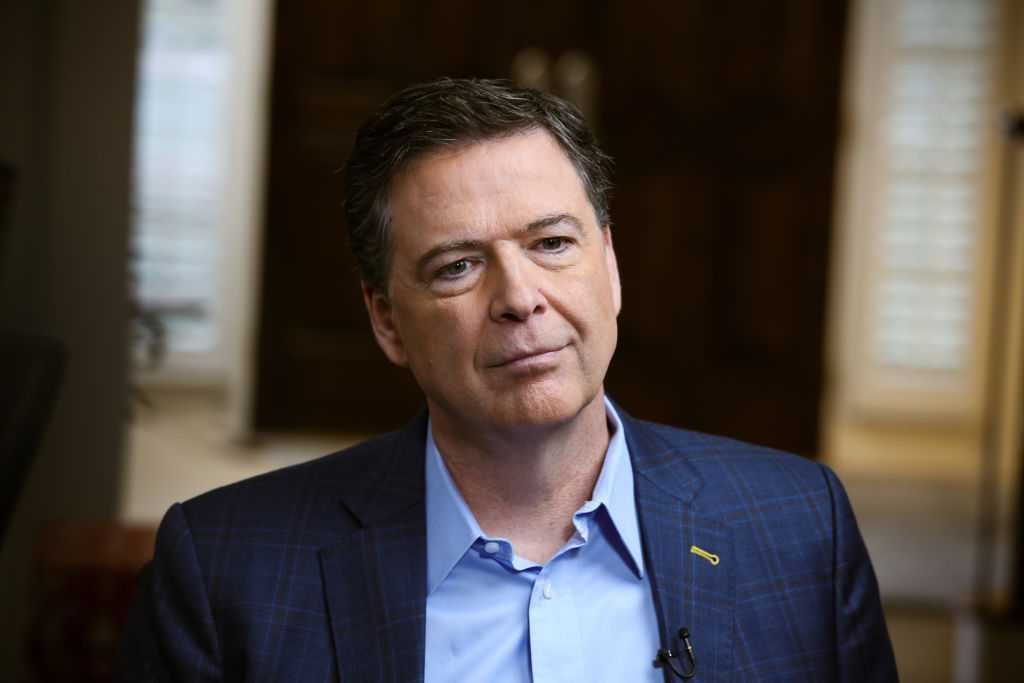
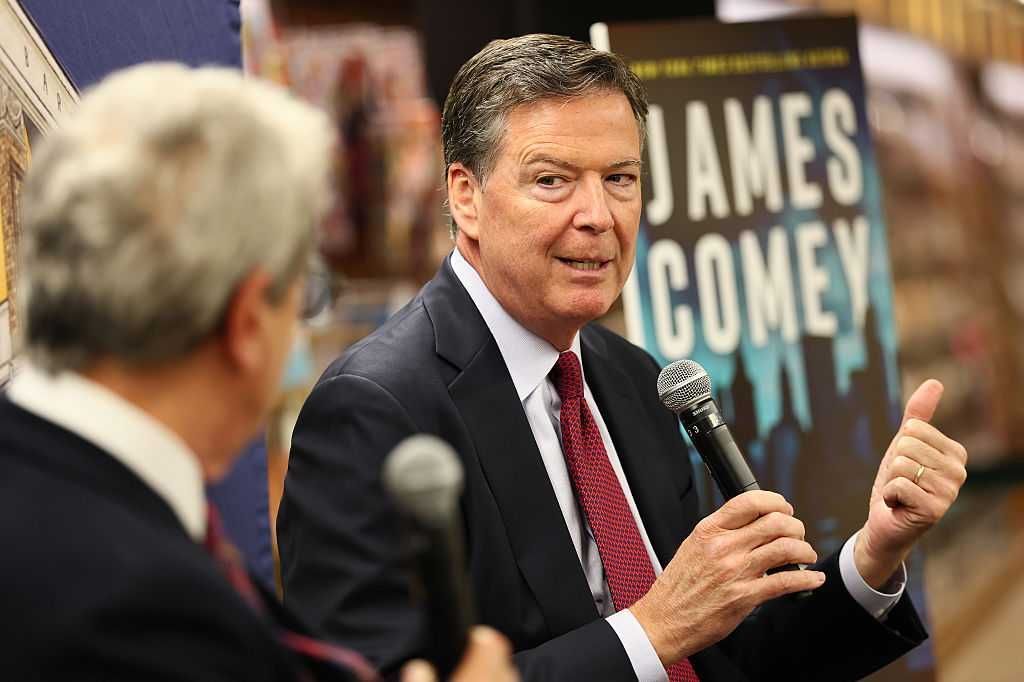
James Comey. Michael M. Santiago/Getty Images

“I am not permitted to get into the details of what the grand jury heard or found, as you know. But rest assured that it’s not just the Instagram post that leads somebody to get indicted,” Blanche told Welker.

Welker then asked how the DOJ will “prove intent” after Comey claimed he was unaware his post could be interpreted as a call for violence.

“You prove intent like you always prove intent. You prove intent with witnesses, you prove intent with documents, with materials. So again, this is not just about a single Instagram post,” Blanche replied.

He mentioned that the case will proceed with a public trial, during which the government’s evidence will be revealed.

“We are talking about evidence of all sorts. And that means documents, that means witnesses, and that means the whole array of what we did,” Blanche said.

RELATED: James Comey ARRESTED after alleged threat against Trump

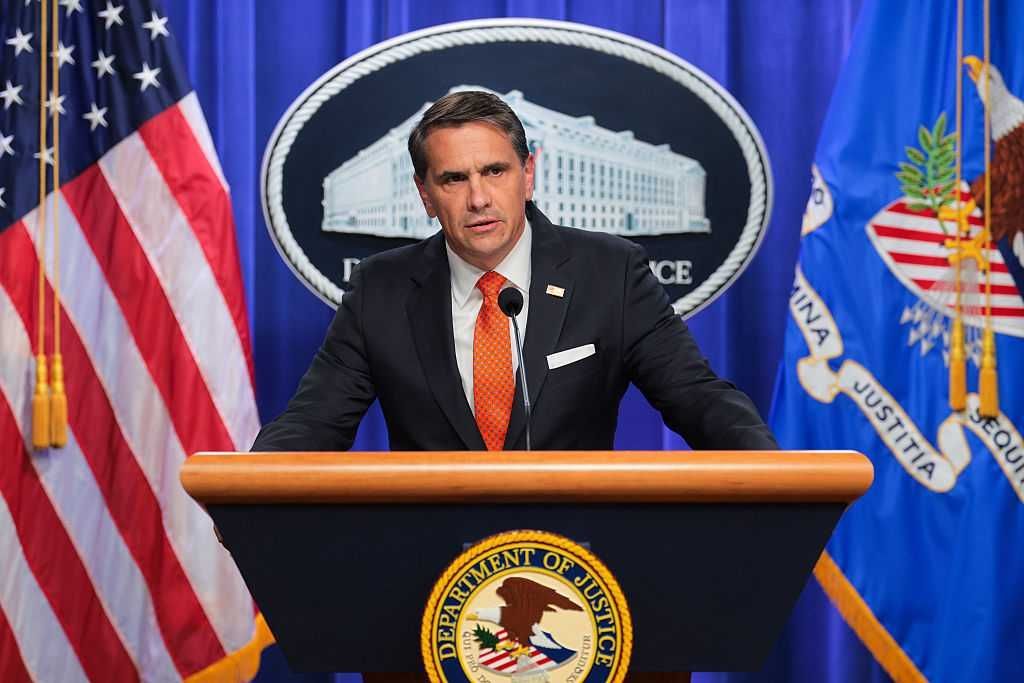
Todd Blanche. Chip Somodevilla/Getty Images

Welker asked Blanche whether online vendors who sell “87 46” merchandise and their customers should be “concerned that they’re going to be prosecuted by the DOJ.”

“Of course not,” Blanche replied. “That’s posted constantly. That phrase is used constantly. There are constantly men and women who choose to make threatening statements against President Trump. Every one of those statements do not result in indictments, of course. There are facts, there are circumstances, there are investigations that have to take place.”

Comey reacted to the DOJ’s indictment in late April, insisting that he was “still innocent.”

“I’m still not afraid. And I still believe in an independent federal judiciary, so let’s go,” he stated.

Like Blaze News? Bypass the censors, sign up for our newsletters, and get stories like this direct to your inbox. Sign up here!
DEI went into hiding — but remains as dangerous as ever


Between January 2023 and May 2025, Fortune 100 companies reduced their use of the term "DEI" by 98%, according to an analysis by Gravity Research.

Within weeks of President Trump's executive order targeting federal DEI initiatives, major corporations including McDonald's, Walmart, and Target announced they were ending DEI programs.

Conservatives celebrated as one company after another backed away from the acronym that had dominated (and in many cases terrified) corporate America for years.

That celebration was premature.

The goal is no longer to showcase diversity initiatives. The goal is to make those initiatives invisible and permanent.

DEI is far from dead. According to “inclusion consultant” Lily Zheng, its disguise is now called FAIR: Fairness, Access, Inclusion, and Representation. "It's not just a communications rebrand," Zheng recently told Time magazine. "It's not just that we're avoiding the letters DEI and trying to replace it with FAIR. It's that the work itself is evolving."

What Zheng calls "legacy DEI" focused on visible programs like heritage months, diversity training sessions, and demographic targets. These programs were public-facing, easy to identify, and therefore vulnerable to political pressure. The new approach abandons surface visibility in favor of work to change what Zheng calls "systems."

Instead of counting the number of women or people of color in leadership positions, FAIR focuses on changing institutional systems. Instead of heritage celebrations, FAIR embeds what it calls "inclusion" into hiring algorithms, promotion processes, and organizational structures.

The goal is no longer to showcase diversity initiatives. The goal is to make those initiatives invisible and permanent.

Progressives adapted after losing Virginia elections in 2021. Teachers' unions suffered a historic defeat. Rather than retreat, Data for Progress and similar groups spent millions analyzing voter habits and anxieties, then redesigned their campaign around different messaging. By 2023, Democrats won nearly every close Virginia race.

Progressives don't abandon goals when challenged. They simply adapt their methods. Similarly, when conservatives successfully challenged outrageously unconstitutional explicit DEI programs, the machinery wasn't dismantled. It burrowed deeper into institutional foundations, where it became harder to identify and harder to remove.

RELATED: How Republicans have failed to defund sanctuary cities for a generation

J. David Ake/Getty Images

Companies dropped "DEI" and adopted phrases like "universal fairness," "algorithmic bias mitigation," and "inclusion by design." The framing shifted from blatant identity-based preferences to much more subtle process-based interventions.

In my book, "The Political Vise," I describe group identity politics as organizing around grievance rather than achievement. This fact explains why DEI programs can never declare victory and dissolve. If equity were achieved, the machinery would become unnecessary. The system requires permanent grievance to justify permanent intervention.

Legacy DEI focused on representation metrics that could theoretically be satisfied. FAIR abandons those metrics in favor of systemic analysis that can never be completed.

There are always more systems to audit, more processes to redesign, more barriers to identify, and more marginalized people to uplift. A company can cancel a heritage month event, but it cannot skip the algorithmic audit hardwired into its hiring platform.

President Trump's executive order triggered the strategic retreat. The grievance lobby, however, wasn’t giving up without a fight. Its members demanded that companies and public institutions find other ways to keep DEI alive. By January 2026, when Zheng described the FAIR framework to Time magazine, the evolution was complete.

Trump’s March 2026 executive order requiring federal contractors to certify that they do not engage in discriminatory activities based on race or ethnicity suggests the Trump administration recognizes the evasion.

The order notes that "some entities continue to engage in DEI activities and often attempt to conceal their efforts." But just prohibiting "disparate treatment based on race or ethnicity" can't root out systems-based approaches that claim to focus on universal fairness while pursuing the same demographic outcomes through different methods.

RELATED: Trump’s antitrust policy is working for everyday Americans

Roberto Schmidt/Getty Images

DEI under any name serves the larger goal of institutionalizing learned helplessness. It teaches that your struggles result from discriminatory systems rather than personal choices, that flourishing depends more on institutional intervention than individual effort. Worst of all, it teaches dependence. And a lot of progressives are deeply invested in maintaining that dependence.

Eliminating DEI departments and scrubbing corporate websites of diversity language are satisfying, but not final a victory, not when the actual work of grievance culture continues under different names.

With the grievance machinery adopting ever more subtle disguises, the fight to defend merit requires more shrewdness and patience than ever before. We must ask direct questions.

When companies rebrand DEI programs as "universal fairness" initiatives, we must demand to see the metrics. When they tout "algorithmic bias audits," ask what disparities trigger intervention — and what outcomes those interventions produce.

The left hid the machinery underground because the surface became too costly to defend. It is critically important to drag DEI back into the light and destroy it once and for all.

This article was originally published by RealClearPolicy and made available via RealClearWire.

The ‘MOST disingenuous piece of reporting’ on latest Trump assassination attempt


When another alleged would-be assassin set his sights on President Donald Trump at the White House Correspondents’ Dinner, the room was full of journalists across the political spectrum.

And despite the threat on Trump’s life, BlazeTV host Sara Gonzales believes their coverage of the event has only continued to prove the media’s bias and hypocrisy.

“You would think that when he was almost assassinated again and they were there to witness it, that maybe they might be able to fairly and accurately cover the story, but no, actually, they can’t,” Gonzales says.

“That’s actually just how bad they are and how evil they are. They just, in true arrogant, narcissistic fashion, they just wanted to make it about them,” she continues, before playing a clip of CBS News’ Weijia Jiang.


“This is a room full of reporters. So, I know you’ve already seen the president’s tweet. My apologies, his post on Truth Social,” Jiang said at the WHCD after the attempted assassination. “And law enforcement has requested that we leave the premises consistent with protocol.”

“I said earlier tonight that journalism is a public service because when there is an emergency, we run to the crisis, not away from it. And on a night when we are thinking about the freedoms in the First Amendment, we must also think about how fragile they are,” she continued.

“I saw all of you reporting, and that’s what we do,” she added.

“‘Our job is so dangerous,’” Gonzales comments, mocking Jiang. “‘It’s all about us. ... Our freedoms are under attack. The right for us to do our jobs is under attack.’”

“Actually, lady, the reason that we are in the position that we are in, where people are after the president as much as they are, is because you guys continue to misrepresent and distort reality and stir up a bunch of little activists who go on to then try to murder Donald Trump,” she continues.

“So, I’m just not having it from you. I’m really not,” she adds, pointing out that just moments before the attempted assassination, a journalist on CNN said that Trump “figuratively” wants “journalism dead.”

However, the coverage only got worse as the week went on.

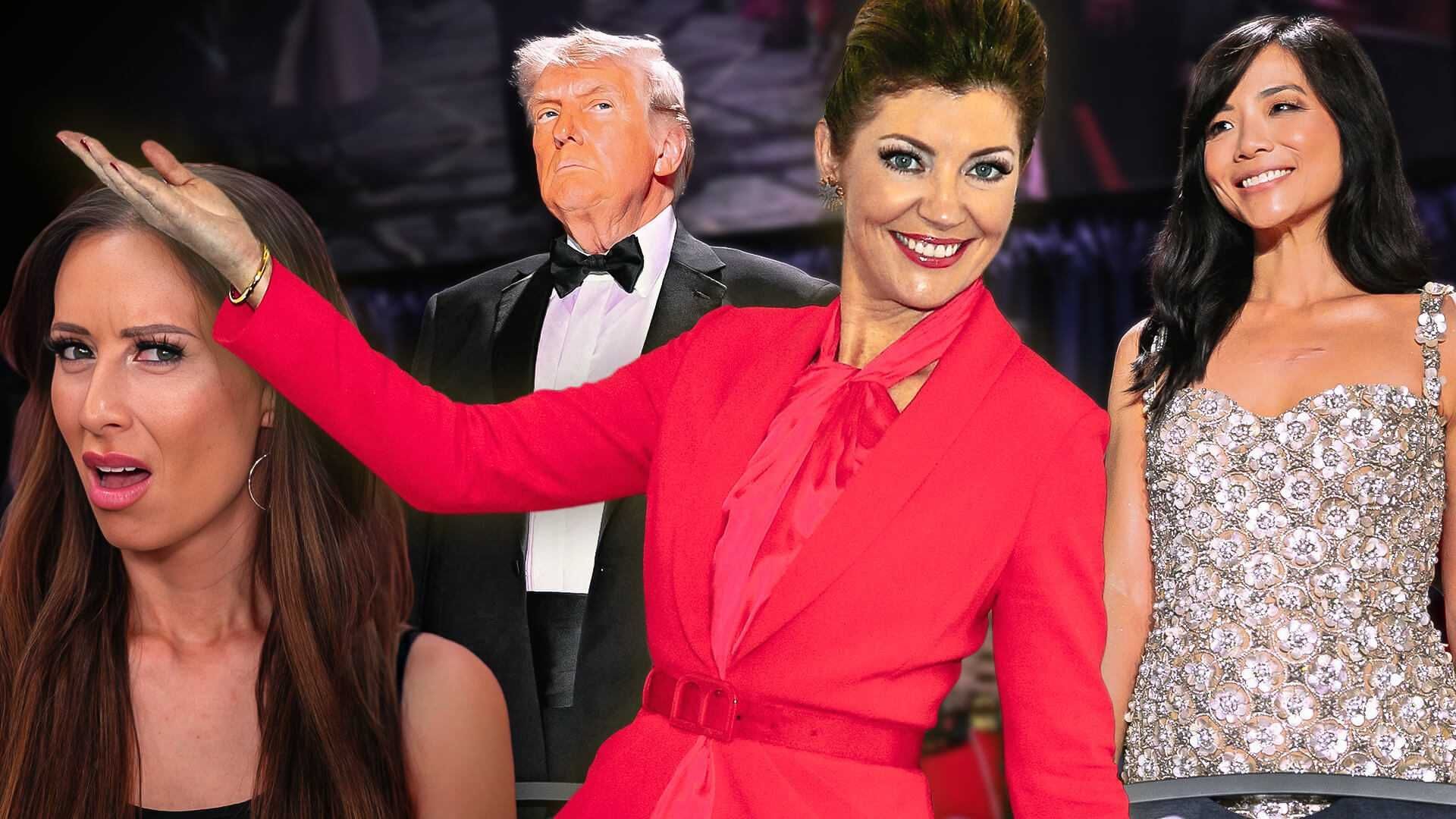
“This one is going to take the award for the most disingenuous piece of s**t reporting from the most insufferable and arrogant excuse for a news anchor there is: Norah O’Donnell from ‘60 Minutes,’” Gonzales says.

“The so-called manifesto is a stunning thing to read, Mr. President. He appears to reference a motive in it. He writes this quote, ‘Administration officials, they are targets.’ And he also wrote this, ‘I am no longer willing to permit a pedophile, rapist, and traitor to coat my hands with his crimes.’ What’s your reaction to that?” O’Donnell asked Trump in an interview.

“Well, I was waiting for you to read that, because I knew you would. Because you’re horrible people. Horrible people,” Trump responded. “Yeah, he did write that. I’m not a rapist. I didn’t rape anybody.”

“You should be ashamed of yourself reading that because I’m not any of those things,” he added.

“We all know what you’re doing,” Gonzales says, referencing O’Donnell. “He knows what you’re doing.”

“Stop embarrassing yourself,” she adds.

Want more from Sara Gonzales?

To enjoy more of Sara's no-holds-barred takes on news and culture, subscribe to BlazeTV — the largest multi-platform network of voices who love America, defend the Constitution, and live the American dream.

Once-favored Democrat suspends Senate campaign, opening door for extremist Graham Platner


The Senate race in Maine just got a surprise shakeup as election season draws near.

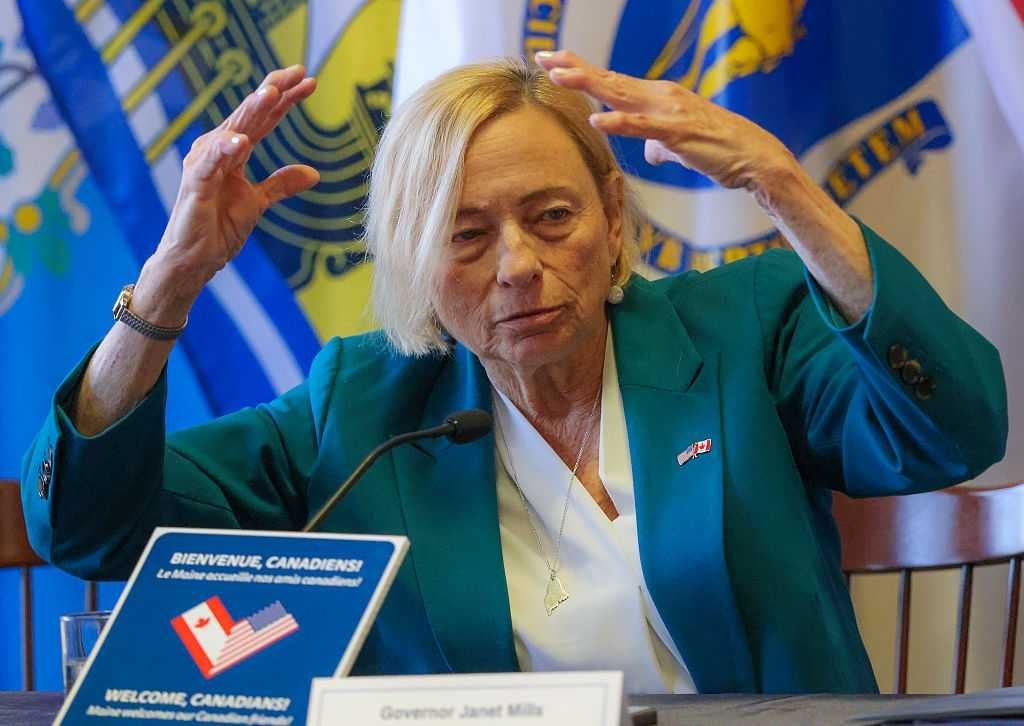
Incumbent Maine Democratic Gov. Janet Mills announced on Thursday that she will be dropping out of the Senate race.

'I very simply do not have the one thing that political campaigns unfortunately require today: the financial resources.'

Mills announced that she will be suspending her campaign while touting her achievements, which she said have ultimately been frustrated "by a Republican administration that is blind to science, deaf to the cries of those in need of medical care, and ignorant of the needs of regular families."

In her statement, she continued: "While I have the drive and passion, commitment and experience, and above all else — the fight — to continue on, I very simply do not have the one thing that political campaigns unfortunately require today: the financial resources. That is why today I have made the incredibly difficult decision to suspend my campaign for the United States Senate."

RELATED: 2 more staffers ditch Graham Platner's troubled Senate campaign amid Nazi, communism scandals

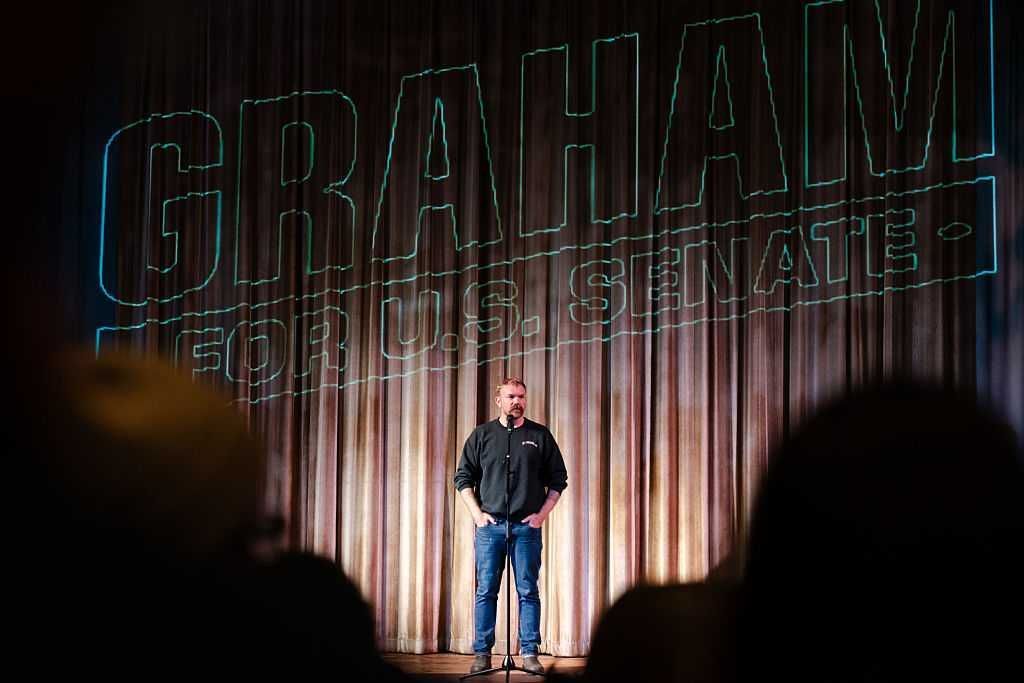
Graham PlatnerSophie Park/Getty Images

Janet Mills is currently 78 years old. Had she been elected, she would have been one of the oldest freshman senators in history.

Despite being a favorite at the beginning of the race, Mills fell behind in the polls and in fundraising compared to her Democratic primary opponent, far-left progressive candidate Graham Platner. The Maine primary election is scheduled for June 9.

Mills stepping away from the race likely sets up Platner to face Republican incumbent Sen. Susan Collins in the general election.

Like Blaze News? Bypass the censors, sign up for our newsletters, and get stories like this direct to your inbox. Sign up here!
Trump’s DOJ takes a side in high-stakes SCOTUS trucking dispute — and it may not be the one you expect


A battle over America's roads is unfolding in the Supreme Court, where demands for accountability clash with efforts to deregulate the industry, as the national spotlight remains on accidents caused by non-domiciled, non-English-speaking truck drivers.

The court's ruling could have major implications for the more than 150,000 Americans injured and the over 5,000 killed in large truck accidents each year, by potentially stripping or safeguarding the legal recourse available to victims and their families.

'Remove any legal accountability for brokers, and you remove the incentive for them to care.'

SCOTUS heard oral arguments on March 4 in the case of Shawn Montgomery v. Caribe Transport II, which involves a December 2017 collision between two semi-trucks: one operated by the plaintiff, Shawn Montgomery, and the other by an individual employed by Caribe Transport II, a small motor carrier hired by broker C.H. Robinson Worldwide.

The complaint explains that Montgomery was parked on the shoulder of Interstate Highway 70 in Cumberland County, Illinois, when another truck rear-ended his vehicle at high speed, resulting in severe and permanent injuries, including the amputation of Montgomery's leg.

Montgomery's lawsuit was filed against the driver, the carrier, and C.H. Robinson. He accused C.H. Robinson of "negligent hiring," citing Illinois common law. His case reached the Supreme Court after a lower court moved to dismiss it, arguing that the Federal Aviation Administration Authorization Act bars state-level negligence suits against brokers — third-party providers that connect shippers with carriers without owning trucks or hauling freight themselves — for their carrier selections.

The ongoing case has caught the attention of those in the trucking industry who are concerned that a SCOTUS ruling in favor of C.H. Robinson would set a precedent that prevents crash victims and their families from seeking legal recourse against brokers.

While President Donald Trump's administration has been receptive to concerns about reforming the nation's broken trucking industry, the U.S. position in the Montgomery v. Caribe case indicates a potential shift.

RELATED: DOT's Duffy earns high praise from American truckers for turning industry concerns into real policy wins

Luke Sharrett/Getty Images

Trump's Department of Justice submitted an amicus brief supporting C.H. Robinson, arguing that the FAAAA preempts any state law related to the "price, route, or service" of a broker. This, the DOJ claimed, includes how brokers select carriers. Although the rule carves out a safety exception allowing states to enforce such laws, the U.S. government contended that the exception does not apply to this case.

The U.S. argues that brokers are already required to select an authorized motor carrier, which means that the carrier has met the Federal Motor Carrier Safety Administration's "rigorous safety standards." Allowing such lawsuits against freight brokers would "require brokers to second-guess federal registration decisions and independently evaluate the safety history of the carriers they select."

"A judgment for petitioner on that claim would thus necessarily impugn Caribe's overall operations, thereby undermining FMCSA's determination that Caribe satisfies federal registration requirements, including rigorous safety requirements," the U.S. amicus brief reads.

American Truckers United, an advocacy group, warned that if SCOTUS agreed with the U.S. government's argument and ruled in favor of the respondent, it could allow freight brokers to have "blanket immunity" when selecting unsafe and high-risk carriers, leading to a "race to the bottom."

ATU filed its own amicus brief, urging SCOTUS to side with Montgomery.

"If brokers are immunized from tort liability, they will have an unrestrained incentive to hire the cheapest motor carriers available for every load, regardless of poor safety records, regulatory non-compliance, defective equipment, and other red flags. Low-cost, low-quality carriers will completely displace safe carriers in the market," ATU wrote.

ATU noted that many carriers maintain only the minimum required liability insurance, which covers just a small portion of the cost for crash victims and their families. The group also pointed out the FMCSA's lack of resources to keep up with the "chameleon carrier" crisis, explaining that when carriers lose their operating authority due to noncompliance, they "dissolve, reincarnate themselves under new identities, and reenter the market."

A separate amicus brief filed by the Institute for Safer Trucking on behalf of Montgomery wrote, "The reality of the compliance-review scheme is bleak. FMCSA is apparently unable to conduct compliance reviews of carriers within a reasonable time. More than ninety-four percent of all active interstate freight carriers remain 'unrated' as of 2023."

The FMCSA has previously admitted its limitations. In a 2023 Advance Notice of Proposed Rulemaking, the FMCSA stated that it "has resources to issue safety ratings to only a small percentage of motor carriers each year," adding that the agency's rating "does not necessarily reflect the current safety posture of a motor carrier."

FMCSA officials said that "they do not have the resources to vet all for-hire carriers that apply for new operating authority," according to a 2012 Government Accountability Office report.

The Truck Safety Coalition, a network of victim and survivor volunteers, also filed an amicus brief supporting Montgomery that referred to freight brokers as “gatekeepers in determining who hauls freight on the roadways and who doesn’t.” The TSC stated that the industry has exploded in recent decades, from just 70 brokers in 1975 to over 28,000 today.

Rena Leizerman, from the Law Firm for Truck Safety and co-counsel for Montgomery, told Blaze News in a statement, “Broker negligence lawsuits aren't filed in every crash. They get filed when there's evidence that a broker hired someone with a known, serious safety history and chose to look the other way.”

“C.H. Robinson argued to the court that it should be completely off the hook for negligence. No exceptions. Not even if it knowingly hires a carrier with no insurance. Not even if the carrier isn't legally registered to operate. Not even if it already knows the carrier has a dangerous record. Zero accountability, no matter what,” Leizerman’s statement continued.

“Brokers make money on the gap between what shippers pay them and what they pay the carrier. The wider the gap, the more profit. So they push carrier rates down, and carriers survive by cutting costs — driver screening, safety training, equipment upkeep, insurance — until the day everything goes wrong.

“Remove any legal accountability for brokers, and you remove the incentive for them to care. Safe carriers, the ones who invest in doing things right, end up getting underbid by carriers who skip basic safety. It's a race to the bottom, and it's the rest of us sharing the road who pay the price,” she added.

Dorothy Capers, chief legal officer at C.H. Robinson, also provided a statement to Blaze News.

"A single, uniform federal framework is essential to keeping interstate commerce safe, efficient, and consistent with Congress' design," Capers said. "Allowing a patchwork of state tort laws to regulate broker services would undermine that system, increase uncertainty, and disrupt the flow of goods Americans rely on every day."

RELATED: 'Use my daughter as an example': Trump DHS cheers as bill to stop illegal alien truck drivers crosses major hurdle

Al Drago/Bloomberg/Getty Images

Real-world impact

The stakes of the pending Montgomery case are already playing out in the nation’s courtrooms.

On May 24, 2024, a semi-truck driver allegedly blew through a stop sign on U.S. 84 in Texas, killing 28-year-old Tiana Moore and her mother, Tanya Maria King. Moore’s family sued the driver, the carrier, and the freight broker that had hired the carrier.

When the case was about to go to trial, the broker, citing the ongoing Montgomery case before the Supreme Court, requested and received a stay, leaving the family in limbo.

Moore's father, David Moore, spoke to Blaze News about the tragic accident. He expressed his goal of raising awareness to inspire policy changes and help the American public understand how regulations affecting the trucking industry impact lives nationwide.

"The impact that it's really had on our lives, and even this ongoing process, it's been, obviously, the most difficult thing that I've ever had to deal with — and not just me, but my family," David Moore said.

Ultimately, the Moore case was closed a short time later when the parties reached a confidential settlement. While in this instance the family was able to reach an agreement outside the courtroom, the Supreme Court’s decision in the Montgomery case will determine whether crash victims and their families retain or lose a major avenue for accountability in the future.

SCOTUS is expected to give a decision in the Montgomery case by June.

The Department of Transportation deferred comment to the Department of Justice, which stated it had no further remarks beyond its amicus brief.

Legal counsel for Caribe Transport II did not respond to requests for comment.

Like Blaze News? Bypass the censors, sign up for our newsletters, and get stories like this direct to your inbox. Sign up here!

Comedian defends Jimmy Kimmel from cancel culture: ‘It’s still a joke’


Jimmy Kimmel’s “widow” joke about first lady Melania Trump has sparked sharp criticism from the Trump administration — with President Donald Trump and Melania Trump going so far as to call for ABC to fire the comedian.

“Our first lady, Melania, is here. ... So beautiful. Mrs. Trump, you have a glow like an expectant widow,” Kimmel said in his monologue.

Not only did the president and the first lady not find the joke funny, but the timing made its reception even worse.

“As the first lady of the United States pointed out this morning, just two days prior to the shooting, ABC’s late-night host Jimmy Kimmel disgustingly called first lady Melania Trump an ‘expectant widow,’” White House press secretary Karoline Leavitt said after the most recent attempt on President Trump’s life.

“Who in their right mind says a wife would be glowing over the potential murder of her beloved husband?” Leavitt continued.


“And having experienced what I did with the first lady on Saturday night, I can tell you that she was anything but that. This kind of rhetoric about the president, the first lady, and his supporters is completely deranged,” she added.

While members of the Trump administration have made it clear they’re not happy with Kimmel, BlazeTV host and comedian Dave Landau has a controversial take.

“I’m going to go ahead and say that’s a funny joke,” he tells co-host Stu Burguiere.

“You like the joke,” Stu comments, surprised.

“It’s fine. You keep trying to kill him, so they’re saying you have a good look for an expectant widow. I understand that people don’t like the guy who’s saying it, but there’s logic and reason to the joke, and it’s a still a joke,” Landau says.

“You don’t have to like it, but I will never be on the side of throw somebody off of TV or cancel them based on something that was a joke,” he continues.

“We agree on that,” Burguiere says, adding, “I’m totally with you.”

Want more from Stu and Dave?

To enjoy more of Stu and Dave's lethal blend of wit, humor, and insightful commentary subscribe to BlazeTV — the largest multi-platform network of voices who love America, defend the Constitution, and live the American dream.

Trump’s antitrust policy is working for everyday Americans


Everything feels more expensive in 2026, and health care is no exception.

While gas prices and grocery costs tend to dominate the political conversation, health care affordability remains one of the biggest financial pressures on working families.

One major reason is a lack of real competition. More than 95% of health insurance markets in the United States are highly concentrated, dominated by one or two companies with the power to drive up costs and limit consumer choice.

That is exactly why the Trump administration’s antitrust policy is so important.

The Trump administration has not hesitated to confront corporate behavior that distorts markets or threatens American interests.

The Federal Trade Commission’s new health care task force signals that President Trump understands what Washington too often ignores: When markets stop working for everyday Americans, government needs to step in to restore competition, lower prices, and protect consumers.

Trump’s antitrust policy, which is pro-consumer, pro-competition, and grounded in common sense, is making real progress toward that restoration.

FTC Chairman Andrew Ferguson made that clear last year when he said the agency would stop “picking winners and losers” and focus instead on removing regulatory barriers that suppress innovation and hurt the American people.

That approach reflects a return to the traditional consumer welfare standard, the idea that antitrust enforcement should focus on whether consumers are actually being harmed by reduced competition. This ensures regulators are focused on results and not politics.

The results on this are clear. The Trump administration has not hesitated to confront corporate behavior that distorts markets or threatens American interests.

For example, the FTC has challenged the left’s toxic corporate practices like DEI and environmental, social, and governance investing. Earlier this year, Ferguson sent a letter to 42 big law firms, warning them that their use of DEI constituted an anticompetitive business practice and could bring legal consequences.

The FTC has tackled ESG too, threatening litigation against investors who attempt to block U.S. coal production in favor of a “net-zero” energy agenda, among other actions.

Meanwhile, the antitrust cases against Meta and Google are still moving forward because the concern is real: These companies have become so powerful they can choke off competition and influence what millions of Americans see online.

Last year, the Trump administration also secured a $2.5 billion settlement with Amazon over its unethical business practices.

RELATED: Hospital consolidations and ‘nonprofit’ tax breaks are driving up medical costs

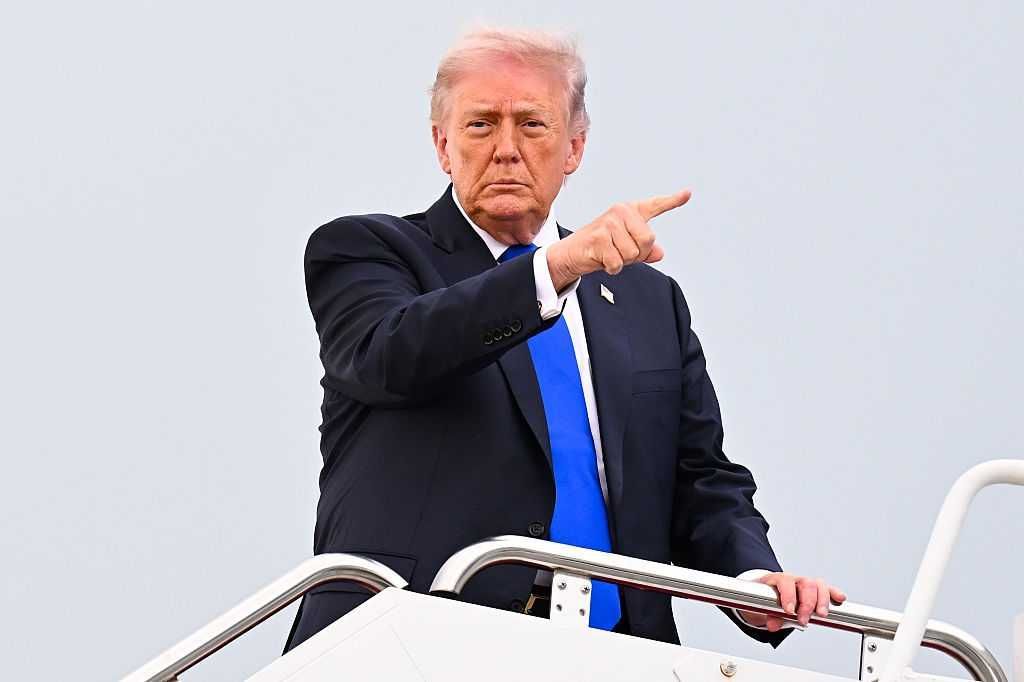
Carol Smiljan/NurPhoto/Getty Images

This is what Democrats fail to understand about Trump. He is willing to take on corporate power to ensure markets work for the people.

That is also why the administration made the right call in stepping away from absurd Biden-era enforcement like the case against Pepsi over discounts offered to large retailers. During inflation, the last thing Americans need is government attacking lower prices.

The same logic applies to strategic deals that strengthen America against foreign adversaries. The Trump administration allowed the Hewlett Packard Enterprise and Juniper Networks merger to move forward after Biden blocked it. A stronger American tech company would be better positioned to compete with Huawei, the Chinese giant tied to espionage and intellectual property theft.

Trump’s team understands what the last administration did not: Antitrust does not exist in a vacuum. Competition matters, but so does national security.

Trump’s antitrust agenda is revealing a broader shift away from ideology and back toward realism. By restoring the consumer welfare standard, his administration is focusing on protecting consumers, strengthening domestic industry, and defending American interests.

Trump and Ferguson understand that antitrust policy can push back on ideological coercion, protect America’s competitive edge, and make life more affordable for working families, all while keeping consumers and competition at the center of the analysis.

For families being squeezed by rising health care and grocery costs, this is real relief. The FTC may fly under the radar, but under Trump it has become an important part of a broader America First agenda built on common sense and affordability.

Trump Gold Card visa plan breakdown: Big promises vs. small reality


The controversial Trump-backed Gold Card visa program not only claimed to offer immigrants “residency in record time,” but promised up to $1 trillion toward reducing national debt.

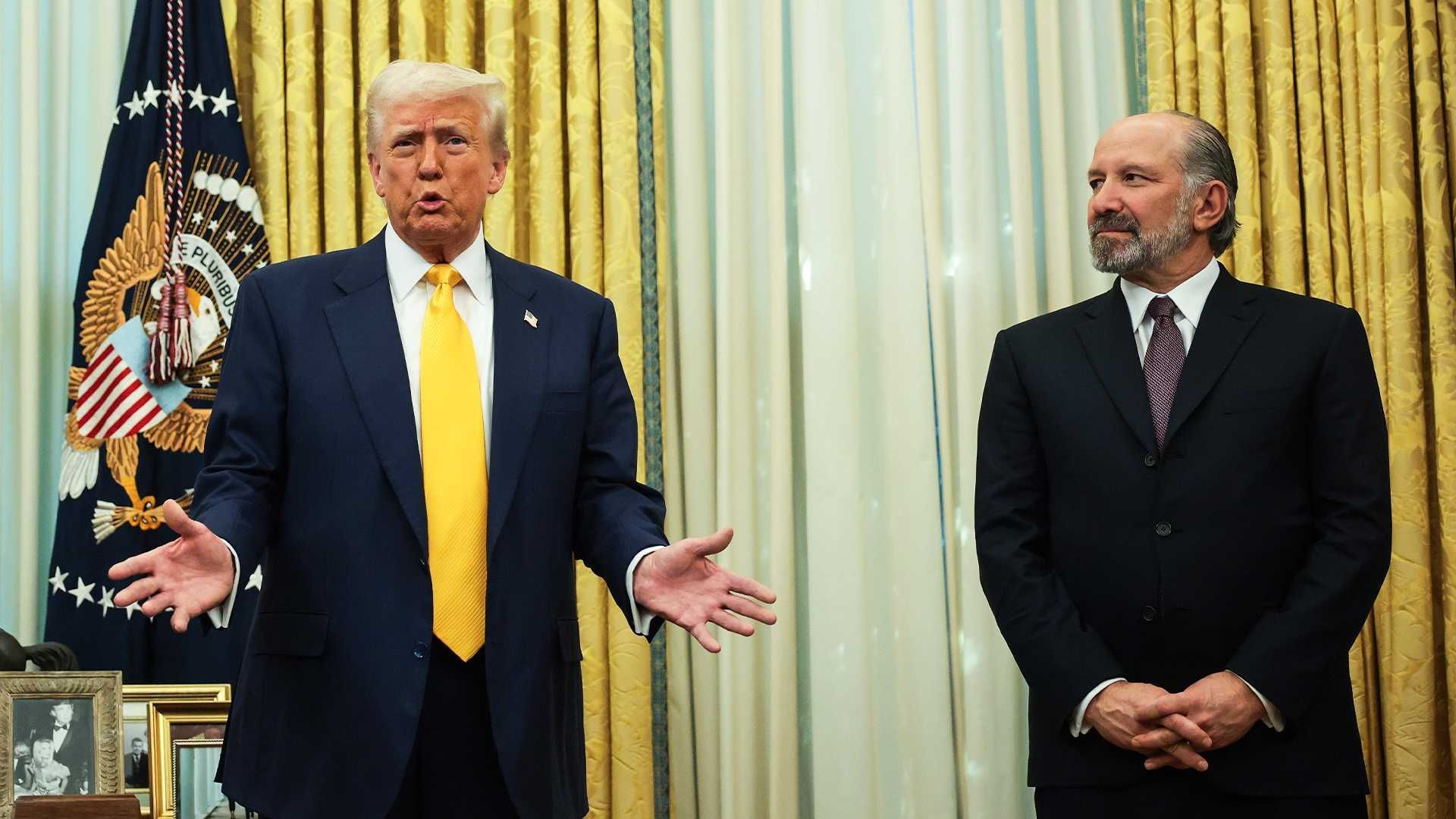
However, during a heated congressional hearing, Commerce Secretary Howard Lutnick has revealed that only one applicant has been approved so far.

“The process was recently resolved with DHS who runs the program, and they do a $15,000, the most serious vetting and analysis of any potential applicant in the history of the government. Usually it was $600. These pay $15,000 for an extraordinary vet,” Lutnick explained.


“So they have approved recently one person, and there are hundreds in the queue that are going through the process, but this is a new program, and they’ve just set it up, and they wanted to make sure they did it perfectly, and so we’ve worked through that,” he added.

“Sounds pretty rigorous if only one person has been OK'd for this,” BlazeTV host Pat Gray comments, shocked.

“I mean, no matter what you think of the program, that’s a failure, right?” he continues. “And I think the program would have been pretty good if we could have raised a trillion dollars.”

“Maybe it’s because DHS was closed and couldn’t do anything,” Jeff Fisher chimes in, adding, “But again, I’m OK with no one coming in.”

Want more from Pat Gray?

To enjoy more of Pat's biting analysis and signature wit as he restores common sense to a senseless world, subscribe to BlazeTV — the largest multi-platform network of voices who love America, defend the Constitution, and live the American dream.