Why organized labor hates innovation


In Onondaga County, New York, a union has gone to court to stop an artificial intelligence tool from answering nonemergency calls at the county’s 911 center. The system handles routine calls, roughly a third of the center’s volume, and transfers suspected emergencies to human operators. The county wants to use the technology. The union wants it stopped.

The union contends that the rollout violates its labor agreement. But its lawsuit puts a familiar priority on display: Protect work covered by the contract, even when new technology might improve a public service.

Americans should not have to sacrifice the benefits of invention to preserve yesterday’s job descriptions.

Labor unions exist to defend their members. They owe no comparable allegiance to consumers, employers, or workers who never join. That last group is enormous. Union members accounted for just 10% of U.S. wage and salary workers in 2025 and only 5.9% in the private sector. Yet a union can use its bargaining power to obstruct changes that would benefit everyone else.

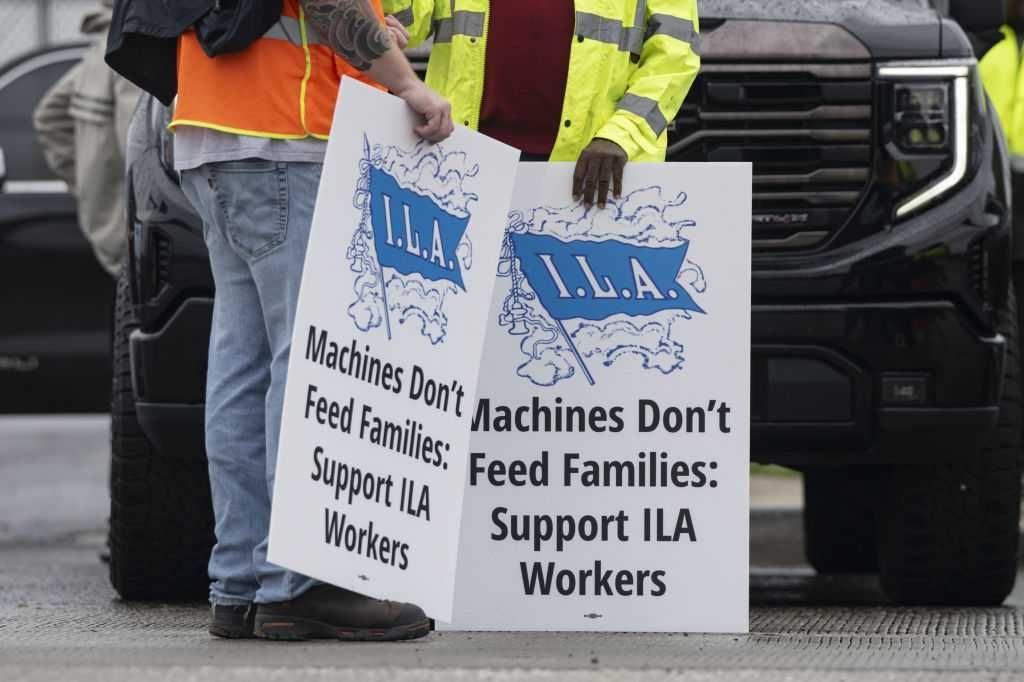
American ports offer a more expensive example. The 2025 Container Port Performance Index, which measures vessel turnaround efficiency, ranked only one U.S. port among the world’s top 50: Philadelphia, at No. 48. Meanwhile, the International Longshoremen’s Association has made opposition to automation a central demand.

The ILA’s 2025 agreement with employers at East and Gulf Coast ports delivered a 62% wage increase over six years. It also restricted automation. As Jordan McGillis reported in City Journal, employers must hire another longshoreman for every new semiautonomous crane they install, while fully autonomous cranes remain prohibited.

Better machines could move goods faster and reduce costs for businesses and consumers. The union secured limits on those machines instead. A Congressional Research Service report has also documented long-standing concerns about payroll fraud and organized crime influence involving the ILA on the New York-New Jersey waterfront.

RELATED: America doesn’t need Dario Amodei’s permission to build

Jason Henry/Bloomberg/Getty Images

This struggle predates computers, robots, and artificial intelligence. Some medieval craft guilds protected their privileges by limiting competition and resisting techniques that threatened established trades. American unions have repeatedly followed that example.

When diesel locomotives displaced steam engines, railroads no longer needed firemen to tend boilers. Unions nevertheless fought to preserve those jobs. H.E. Gilbert, president of the Brotherhood of Locomotive Firemen and Enginemen, defended that struggle in 1963: “You can always mint more money. But you can’t mint new lives.”

Gilbert cared about the livelihoods of his members. He ignored the workers and families who would gain from cheaper, more efficient rail service. Protecting a job made obsolete by technology does not preserve the wealth that makes employment possible.

In 1971, the International Longshore and Warehouse Union staged a 134-day strike as containerization transformed shipping. The fight centered on jobs, jurisdiction, and work rules as machines replaced much of the labor once required to load cargo. In 1986, Rupert Murdoch moved his British newspapers to computerized printing at Wapping, dismissed 5,500 workers, and faced union picketing for more than a year.

RELATED: The future belongs to people who believe in one

Cheng Xin/Getty Images

In each dispute, established workers fought to defend their position against technological change. The gains from new equipment, however, extended well beyond the employers who purchased it. Consumers gained faster service and lower costs; other workers benefited from a more productive economy.

Workers should remain free to join unions and bargain collectively. Voluntary labor organizations belong in a free society. But decades of government intervention have given organized labor legal privileges that can come at the expense of nonunion workers, employers, and customers. Those privileges deserve scrutiny, not automatic deference.

A union has every incentive to protect its members. The public has no obligation to make that protection the governing purpose of an industry or a taxpayer-funded service. The East India Company did not trade in a free market simply because it conducted commerce. Nor does a union bargain in a free labor market when government grants it advantages unavailable to everyone else.

Innovation raises living standards by allowing people to produce more with less. Organized labor can help workers adapt to that progress, or it can try to halt it. Americans should not have to sacrifice the benefits of invention to preserve yesterday’s job descriptions.
Labor Day rules and rituals: Nobody actually knows why we do any of this


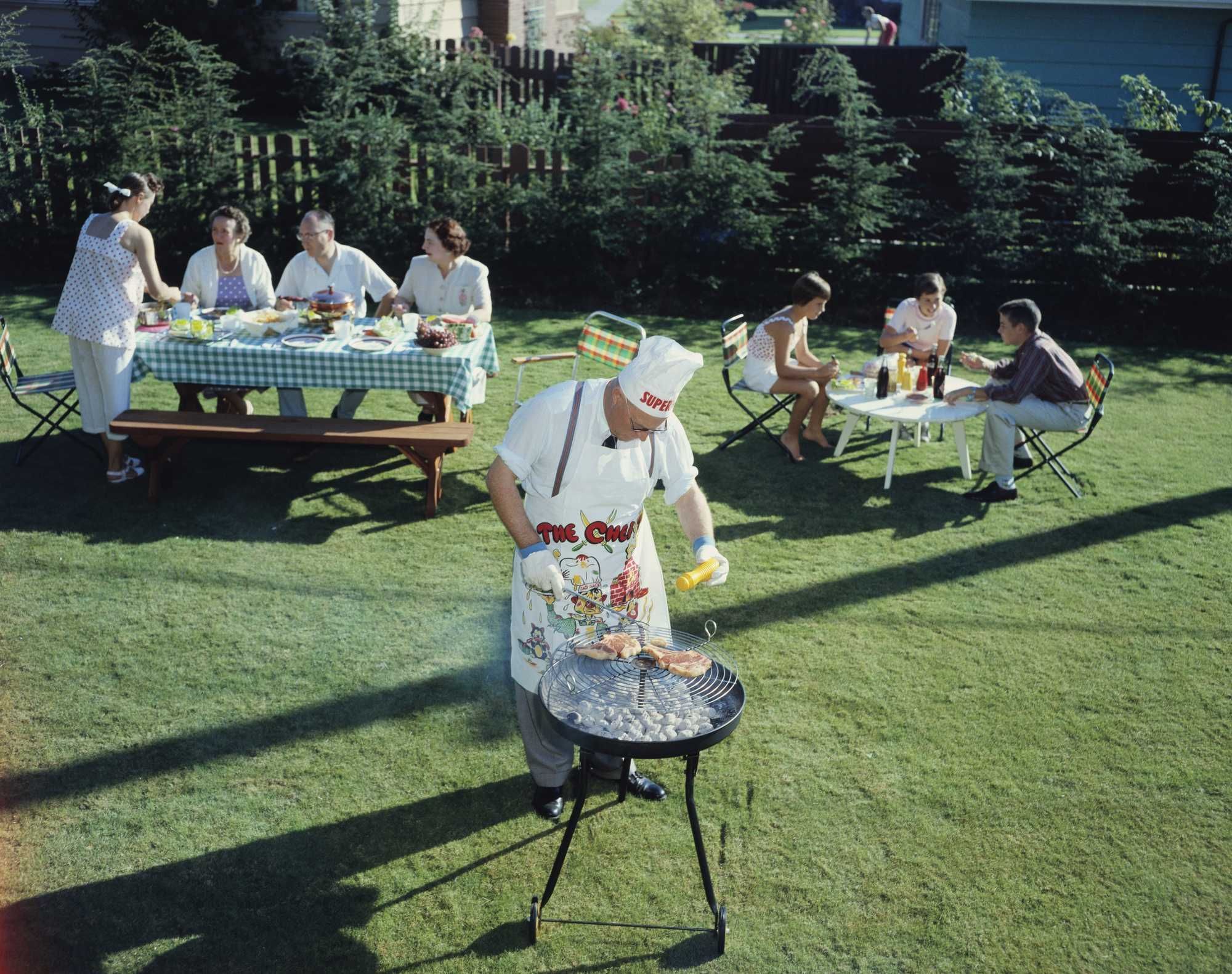
There is a certain kind of person, at a certain kind of barbecue, who announces, with the flat authority of Scripture, that white is not to be worn after Labor Day. No one has ever produced this law. It's enforced like a grudge: the offense long forgotten, the point being the enforcement.

That, it turns out, is the whole personality of the holiday: a house built on a foundation nobody can locate, in honor of a man history can no longer confidently name.

Labor Day has spent a century accumulating quirky social rules no legislature passed but nearly everyone obeys anyway.

The first Labor Day — not yet official, just an idea a union decided to act on — took place on September 5, 1882, in New York City. Someone willed it into being. Who, exactly, that person was is where the record gives out.

Credit for organizing it sits between Peter McGuire, a carpenter and the co-founder of the American Federation of Labor, and Matthew Maguire, a machinist and secretary of the Central Labor Union. While their unions were rivals, their surnames were just one letter apart, as if fate couldn't be bothered to keep them straight.

A former U.S. Department of Labor historian admitted in 2011 that she still couldn't say which one deserved the credit.

What is known is that it cost something. Workers reportedly forfeited about $75,000 in lost wages to march that day — the Central Labor Union even fined anyone who skipped it. Roughly 10,000 walked from City Hall to Union Square.

Even while most of the world marks the labor holiday on May 1, the U.S. wanted no part of it. A Haymarket Square rally in Chicago that began on May 1, 1886, ended in a deadly bombing three days later, turning May Day into a symbol of radicalism.

In 1894, President Grover Cleveland specifically pushed September into law instead so the holiday wouldn't become a memorial to the Haymarket radicals.

From that origin — sacrifice, spectacle, and a little deliberate amnesia — Labor Day has spent a century accumulating quirky social rules no legislature passed but nearly everyone obeys anyway.

RELATED: The 'tradition' behind Nathan's hot-dog eating contest is a fake news PR stunt

Aladdin Color Inc./Getty Images

For one, the white clothes were never really a rule so much as a gatekeeping test, likely invented by old-money New Yorkers of the Gilded Age terrified of being confused with the flanks of the industrial nouveau riche nipping at their heels.

Fashion historians trace it to Newport summers, where white linen signaled you had servants to launder it and no hard labor to dirty it.

After Labor Day, pools close with the solemnity of a curfew, though the reason behind that practice — the school calendar — is rather dull. Roughly a third of the country's 309,000 public pools face shortages each year since so many lifeguards are teenagers who vanish the moment the school bell rings.

Mattresses also tend to go on sale at this time, but mostly because someone once noticed a day off is a day to shop — 30% to 50% across major brands.

And repetition, given enough years, effectively becomes law.

Like Blaze News? Bypass the censors, sign up for our newsletters, and get stories like this direct to your inbox. Sign up here!

Why Juneteenth Proves The ‘1619 Project’ Crowd Wrong

America’s hard-fought triumph over the forces of disunion and degradation, the revival of America’s founding promise, is a victory to which we are all heirs.
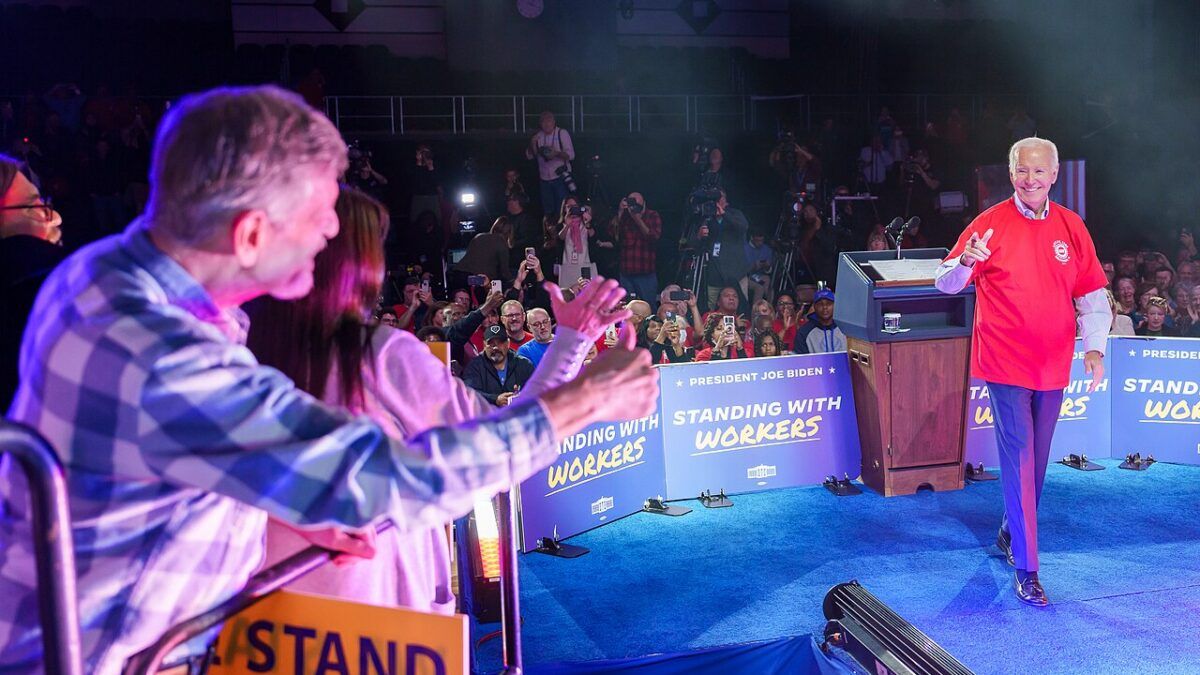
Exclusive: New Report Shows The Extent Of UAW’s Influence In Promoting Leftist Agenda

Two things can be true at once: Republicans like Vance and Hawley can support American workers and promote American manufacturing dominance, but they do not have to prop up a union that has dedicated itself to promoting leftist policies and politicians.
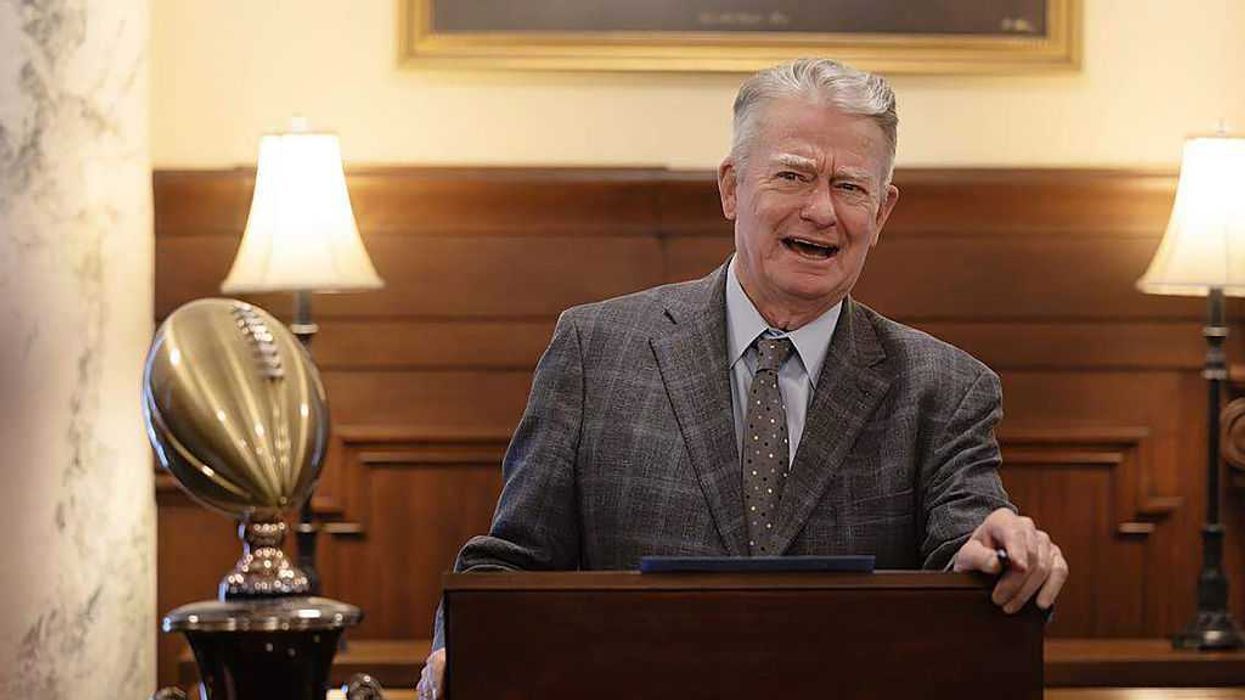
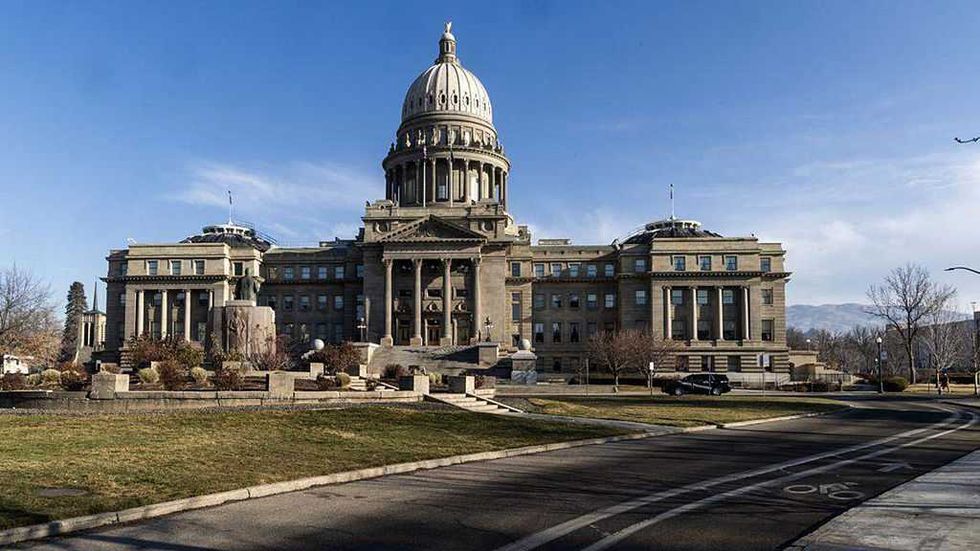
Idaho derails teachers' unions' taxpayer-funded gravy train


American teachers' unions are notorious for political meddling, holding schools hostage, and transforming children into leftist foot soldiers.

Idaho decided that not one more dollar of taxpayer funds should go toward supporting such radical organizations — then on April 10, it made that prohibition law.

'That's just restoring neutrality.'

House Bill 516a, which was introduced in January, prohibits school districts — including specially chartered districts — or their agents or representatives from using or authorizing the use of taxpayer funds to support teachers' unions.

They may not, for instance,

  • deduct dues, fees, fines, or contributions from the pay of a professional employee on behalf of a union;
  • increase a teacher's compensation in order that the difference or some part of it could be used to pay toward teachers' union or affiliate dues;
  • provide more personal or contact information of a teacher to a teachers' union than permitted under state law;
  • require an employee to meet, communicate, or listen to a teachers' union or its affiliate;
  • distribute union communications or membership solicitations;
  • contribute funds or blow money on behalf of a union or its affiliate; and
  • provide, except in certain cases, any form of compensation or paid leave to a public employee so they can partake in union activities.

RELATED: Radicals train for massive May Day protests at public schools, thanks to America's largest teachers' union

Darin Oswald/Idaho Statesman/Tribune News Service/Getty Images

Individuals who knowingly violate this law can be fined up to $1,500, unless he or she is a re-offender, in which case the fine is increased to $2,500.

The bill was passed in a 59-10 vote in the state House, passed by the state Senate on April 1 in a 20-14 vote, and ratified by Idaho Gov. Brad Little (R) on April 10. The law takes effect on July 1.

Little noted, "While local and state teachers' associations do important work, they remain private organizations that currently receive taxpayer-funded support not extended to other private entities. House Bill 516a addresses that imbalance."

The governor did, however, express some concern that the new law contains language that may "lead to increased scrutiny of a teacher's actions purely based on their affiliation with their local association" and have a "chilling effect on school districts' ability to collaborate with their local association on professional development and charitable work in the community."

Layne McInelly, president of the Idaho Education Association, which endorsed Little ahead of the 2018 election, is less than thrilled about the new law.

McInelly claimed that the governor "ignored his better angels, signed this terrible bill into law," and somehow left students and teachers "worse off."

Maxford Nelsen, director of research at the Freedom Foundation, told Center Square, "By getting school districts out of this business of using taxpayer funds, collect union dues and prop up teachers' union activity — that's just restoring neutrality."

Like Blaze News? Bypass the censors, sign up for our newsletters, and get stories like this direct to your inbox. Sign up here!

Masked men open fire after storming into Chick-fil-A; 1 dead, 6 injured; manhunt underway


One person is dead and six others were injured after masked men stormed into a New Jersey Chick-fil-A on Saturday night and opened fire, WNYW-TV reported.

Police said the shooting began around 9 p.m. at the restaurant on Route 22 in Union Township, the station said.

Democrat New Jersey Gov. Mikie Sherrill said in a statement posted to X that 'our hearts go out to the victim’s loved ones, and we are hoping for the full recovery of those who were injured.'

Responding officers found seven victims at the scene, WNYW reported, citing the Union County Prosecutor’s Office.

The six surviving victims all suffered non-life-threatening injuries and are expected to recover, the station added.

Investigators told WNYW the masked men went behind the restaurant's counter before opening fire.

Dashcam video recorded what appeared to be a masked individual running from the restaurant with a gun.

RELATED: 4 dead, at least 20 injured after shooting at South Carolina coastal bar: 'Screaming and panic and fear'

Authorities believe the shooting was targeted and not a random act of violence, the station said, adding that officials have not released the identity of the person who was killed, and it remains unclear whether the victims were employees or customers.

The suspects remain at large, and a manhunt is underway, WNYW said.

One worker’s father described the scene as a “war zone," the New York Post reported.

Democrat New Jersey Gov. Mikie Sherrill said in a statement posted to X that "our hearts go out to the victim’s loved ones, and we are hoping for the full recovery of those who were injured," WNYW noted.

The Union County Prosecutor’s Office is asking the public to submit tips by phone at 908-654-TIPS (8477) or online at www.uctip.org — noting that tips resulting in an indictment and conviction can be eligible for a reward of up to $10,000 via Union County Crime Stoppers, the Post reported.

Like Blaze News? Bypass the censors, sign up for our newsletters, and get stories like this direct to your inbox. Sign up here!

Federalism cannot be a shield for sanctuary defiance


If Friedrich Hayek taught us to inquire about who should decide and Abraham Lincoln taught us to ask to what end, then the question of immigration compels us toward a third and inescapable question: Where is the line drawn?

The principles of subsidiarity and federalism demand that matters should be resolved at the lowest level of authority competent to manage them. Much of what the national government has usurped would be more wisely and justly managed by the states, local communities, families, and institutions of civil society.

A nation that treats its laws as optional, its borders as permeable, and its citizenship as devoid of meaning invites the very chaos that destroys liberty.

The Constitution itself was framed to embody this division of powers, preserving the vitality of local self-government against the dangers of centralized tyranny.

Yet subsidiarity is not an absolute doctrine, nor is federalism morally sovereign. America’s founders never regarded federalism as an end in itself, but as an instrument ordered toward justice, liberty, and the common good.

When the claims of federalism or local autonomy come into conflict with the equal dignity of the human person, federalism must yield. This is the profound teaching of the Civil War. That great conflict established beyond doubt that there are moral limits that no level of government — federal, state, or local — may transgress, even under the guise of divided sovereignty. The principle of human equality proclaimed in the Declaration of Independence sets a boundary that no appeal to states’ rights or local preference can override.

Before 1861, the defenders of slavery advanced an argument we hear echoing in our own day: that each state must be free to decide for itself the very foundations of republican government. The Supreme Court in Dred Scott v. Sandford lent its sanction to this view regarding slavery. But Lincoln repudiated it utterly.

He understood that the rights of man do not vary according to geography or popular vote. The self-evident truth that all men are created equal declares that no majority, no state legislature, no municipal council may lawfully decree some men unfit for liberty on grounds that deny their humanity. To enslave a man is to violate his natural rights; to nullify federal authority in matters essential to national existence is to dissolve the Union that secures those rights.

Lincoln did not abolish federalism — he preserved it by subordinating it to the higher law of nature. Federalism endures insofar as it is grounded in moral truth and serves to perpetuate a regime dedicated to equal natural rights.

This distinction becomes decisive when we turn to immigration. It concerns not merely internal policy but the very nature of the American political community: who may enter, under what conditions, and by whose authority.

The power over naturalization and the regulation of foreign entry are among the essential attributes of sovereignty, which the Constitution (Article I, Section 8) has expressly delegated to the federal government. Borders define the “We the People” whose consent forms the government. A people that cannot control its own borders or decide who can become a citizen cannot long govern itself justly or preserve equality under law, our regime’s moral foundation.

The federal government exists not to confer human dignity (which is inherent in every person) but to secure it among the specific members of the polity. Human dignity demands that no one be enslaved or deprived of life and liberty without due process; it does not entail an unqualified right to enter any political community or claim automatic citizenship.

The right to migrate is not the same as the right to enter any country of one’s choosing. Conflating the two dissolves the distinction between universal natural rights and the particular rights of citizens, a distinction the founders carefully preserved.

RELATED: Civil war chatter rises when Democrats fear losing power for good

Photo by Sean Bascom/Anadolu via Getty Images
The real question for us is not merely whether authority is federal or local, but whether policy is directed toward justice, human dignity, and the nation’s common good. Lincoln saw that democracy unbounded by moral limits becomes incoherent and self-destructive. A nation that treats its laws as optional, its borders as permeable, and its citizenship as devoid of meaning invites the very chaos that destroys liberty.

Federalism is a means to the end of justice; it is not a refuge from moral duty. Local communities may not, under color of autonomy (sanctuary cities), nullify the Union’s authority over matters essential to its preservation — any more than Southern states could nullify the Fugitive Slave Clause or obstruct the enforcement of laws necessary to national integrity.

These acts of interposition — driven by radical professional activists and their followers in cities like Minneapolis — echo the nullification and secession doctrines Lincoln condemned as fatal to the republic. In his 1861 Annual Message to Congress, he accurately described the true nature of such “principles”: “rebellion thus sugarcoated” that has “been drugging the public mind.”

The lesson of Lincoln and the founders is unchanging: Decentralization without moral anchors descends into anarchy; centralization without moral purpose hardens into despotism. True statesmanship orders power toward the permanent truths enunciated by the Declaration of Independence. Only then can the American experiment endure as a government of the people, by the people, and for the people — and dedicated to the Declaration’s proposition “that all men are created equal.”

Editor’s note: A version of this article was published originally at the American Mind.

Dems Ignore Bureaucrats’ Pleas To End Shutdown After Pretending To Care About Govt Workers

The most electorally vulnerable House Democrats turn their backs on the largest federal employee union and its call for a clean CR.

'National Disgrace': Largest Federal Workers' Union Rips Into Democrats, Demands Government Reopening

With the government shutdown nearing the one-month mark, the nation's largest union representing federal workers, a close Democratic ally, is demanding that Democratic senators join Republicans in passing a House-approved resolution to reopen the government.

The post 'National Disgrace': Largest Federal Workers' Union Rips Into Democrats, Demands Government Reopening appeared first on .

Bad Environment: Sierra Club Fires Executive Director Amid Internal Turmoil, According to Report

The Sierra Club's board ousted Executive Director Ben Jealous in a unanimous vote Monday after a "tumultuous" two years of his leadership, according to a report.

The post Bad Environment: Sierra Club Fires Executive Director Amid Internal Turmoil, According to Report appeared first on .