Are gas prices about to drop? What the UAE leaving OPEC means.
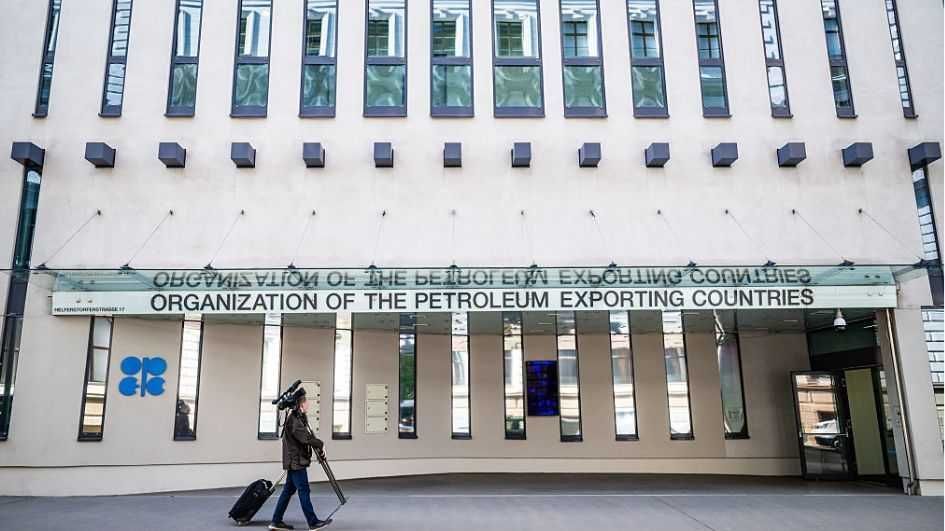


If you think this is just another oil headline, think again. This one hits your wallet directly, every time you start your car.

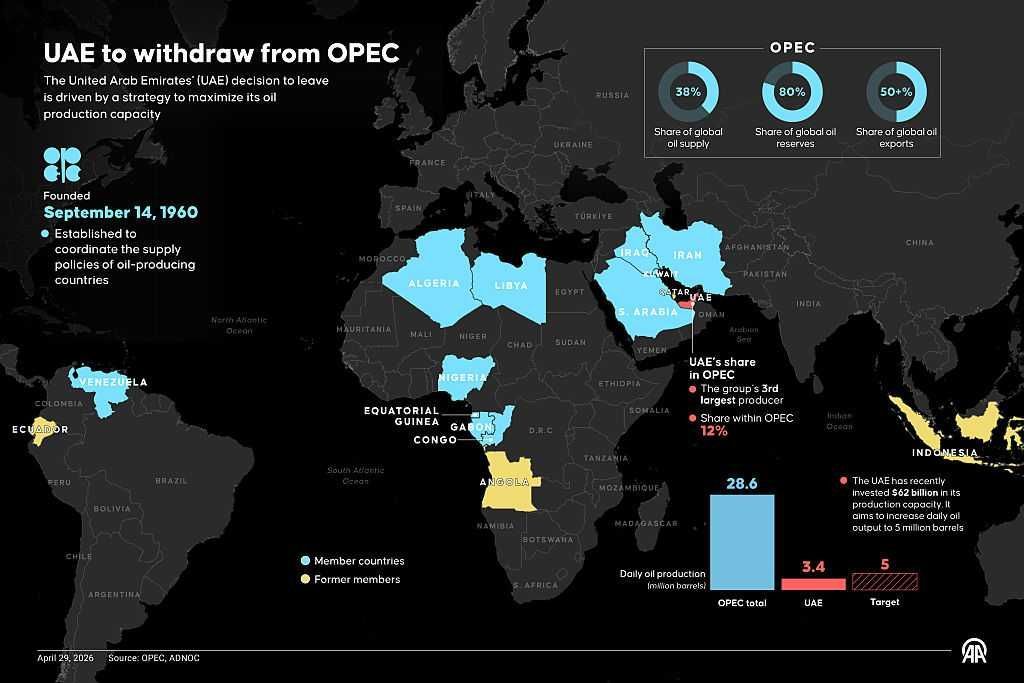
The United Arab Emirates, one of the most powerful players inside OPEC, is walking away from the cartel. That’s a huge change to the system that has controlled oil prices and, by extension, what Americans pay at the pump for more than half a century.

The UAE’s departure exposes long-standing tensions inside the group. Some countries have followed production limits; others have ignored them.

And for drivers already dealing with high gas prices, this matters more than anything coming out of Washington right now.

Market mover

For decades, OPEC has operated as a coordinated force, adjusting production to influence global oil prices. Less supply meant higher prices. More supply meant relief, but only when it suited the producers. It was never a true free market; it was controlled output designed to protect revenue.

Now one of the few countries that actually had the power to move markets is stepping away.

The UAE isn’t just another member. It is one of the rare producers with real spare capacity, the ability to quickly increase output and stabilize supply during disruptions. Alongside Saudi Arabia, it helped anchor OPEC’s influence. Take that away, and the cartel doesn’t just weaken; it loses control of the narrative.

So why should the average driver care?

Because this could be one of the first real signs that global oil pricing is shifting away from centralized control and back toward competition. And when competition increases, prices tend to come down.

Dire Strait?

But don’t expect that relief overnight.

Here’s the reality drivers are dealing with right now. Gas prices in the U.S. are already elevated, sitting above $4 per gallon in many areas. That’s not just about oil supply; it’s about geopolitics. Tensions tied to Iran and disruptions around the Strait of Hormuz, one of the most critical oil shipping routes in the world, are driving volatility and keeping prices high.

That’s the immediate pressure on your fuel bill, not the UAE’s decision — at least not yet.

The UAE exit is a medium-term shift. It means the country is no longer bound by OPEC production quotas. It can pump more oil if it chooses, and it has made it clear it wants to expand output significantly. More oil supply should push prices lower, but only if that supply actually reaches the market.
Mehmet Yaren Bozgun/Anadolu/Getty Image

And that’s the catch drivers need to understand.

Volatile for a while

Oil prices don’t drop just because more production is possible. They drop when that oil is flowing freely, refined, and distributed. If geopolitical tensions continue to disrupt shipping lanes or production, the added supply won’t fully offset the pressure.

That’s why, in the short term, volatility is still the story.

So let’s answer the question every driver is asking: Will this lower gas prices? And when?

In the next one to two weeks, probably not. Prices will continue to react to global tensions more than anything else. But within two to six weeks, that’s when things could start to change. That’s typically how long it takes for shifts in crude oil prices to filter down to what you pay at the pump. If the UAE ramps up production and tensions ease even slightly, drivers could start seeing prices move down by late May into June.

We’re not talking about a sudden return to cheap gas, but a drop of 20 to 50 cents per gallon is realistic if conditions line up. For families commuting daily, running businesses, or planning summer travel, that kind of relief will help. And yes, this ties directly into the broader automotive landscape.

High fuel prices don’t just affect what you pay at the pump. They influence what people buy. When gas spikes, consumers start rethinking vehicle choices, holding off on larger SUVs, reconsidering trucks, or delaying purchases altogether. Automakers feel that shift immediately, especially as they try to balance EV investments with ongoing demand for gas-powered vehicles.

When prices ease, even slightly, it stabilizes that decision-making. It gives consumers more flexibility and helps normalize the market. That’s why this OPEC fracture isn’t just an energy story; it’s an automotive story.

RELATED: GM slams brakes on electric trucks as reality crashes the EV party
Bill Pugliano/Getty Images

Priming the pump

Looking farther out, the bigger implication is what happens to OPEC itself.

The UAE’s departure exposes long-standing tensions inside the group. Some countries have followed production limits; others have ignored them. That imbalance has been building for years, and now it’s starting to break apart. When a cartel loses discipline, it loses its ability to control prices.

That’s good for drivers, but it comes with a trade-off.

Less coordination means more volatility. Prices could swing more sharply in response to global events. That’s not ideal for consumers or automakers trying to plan ahead, but it does reduce the ability of a centralized group to keep prices artificially elevated.

There’s also a strategic shift happening behind the scenes. The UAE wants flexibility, not restrictions. The country is investing in expanding production capacity and positioning itself to produce more oil, not less, in the years ahead. That aligns more with a competitive market than a controlled one.

For the United States, that could quietly become a win. More global supply, less cartel control, and increased competition all point toward lower energy costs over time. But again, timing is everything, and right now, geopolitical instability is still the dominant force.

So here’s the bottom line for drivers. The UAE just weakened one of the most powerful forces controlling global oil prices. That opens the door to lower gas prices and more competition. But in the short term, the same geopolitical risks that pushed prices higher are still in play.

If tensions ease and supply increases, you could see relief at the pump within weeks. If not, expect more of the same volatility that’s been hitting your wallet every time you fill up. Either way, this isn’t just another oil story. It’s a shift that will play out on American roads, in dealership showrooms, and, most importantly, at the pump.

‘America’s Retribution’: Operation Epic Fury Destroyed 80 to 90 Percent of Iran’s Weapons Factories, Air Defenses, Naval Fleet, and Nuclear Infrastructure, Pentagon Says

Operation Epic Fury eliminated 90 percent of Iran’s weapons factories, 80 percent of its air defense systems, 90 percent of its naval fleet, and nearly 80 percent of its nuclear infrastructure, Secretary of War Pete Hegseth and Chairman of the Joint Chiefs Gen. Dan Caine told reporters a day after President Donald Trump announced a ceasefire.

The post ‘America’s Retribution’: Operation Epic Fury Destroyed 80 to 90 Percent of Iran’s Weapons Factories, Air Defenses, Naval Fleet, and Nuclear Infrastructure, Pentagon Says appeared first on .

Newsom Says California Will Oppose Offshore Drilling Expansion As State Relies on Iraqi Imports To Meet Energy Demands

California governor Gavin Newsom (D.) declared this week that a Trump administration proposal to expand oil drilling off the coast of his state is "Dead on arrival." His opposition comes as California relies on imported oil from authoritarian states like Iraq and Saudi Arabia to meet its energy demand.

The post Newsom Says California Will Oppose Offshore Drilling Expansion As State Relies on Iraqi Imports To Meet Energy Demands appeared first on .

Qatar’s Double-Sided Diplomacy Crumbles in Israeli Airstrike

The Israeli strike in Qatar on Tuesday sent a shockwave rippling far beyond the Middle East. Qatar’s neighbors and several European states rushed to condemn the bombing. Donald Trump was more conflicted, stating, “Unilaterally bombing inside Qatar, a Sovereign Nation and close Ally of the United States … does not advance Israel or America’s goals. However, eliminating Hamas, who have profited off the misery of those living in Gaza, is a worthy goal.” The United States ultimately signed off on the U.N. Security Council statement that "expressed their condemnation of the recent strikes in Doha" and "underscored that releasing the hostages, including those killed by Hamas, and ending the war and suffering in Gaza must remain our top priority."

The post Qatar’s Double-Sided Diplomacy Crumbles in Israeli Airstrike appeared first on .

Free Speech Lawsuit Challenges University of Tennessee Mandate That Research Be ‘Culturally Appropriate’

IRB requires international research to be 'culturally appropriate,' but it is unlikely research of cultural problems would meet the requirement.

The AI ‘Stargate’ has opened — and it’s not what you think


For 30 years, I’ve warned about a future many dismissed as conspiracy or science fiction: a future dominated by centralized power, runaway technology, and an erosion of individual liberty. I said the real showdown would arrive by 2030. Now we’re at the doorstep, and the decisions we make today may define whether this moment becomes our last great opportunity — or our greatest irreversible mistake.

The trigger for this showdown is a project called Stargate.

AI is the ultimate jailer, and once the cage is built, it will be nearly impossible to escape.

This new initiative, backed by OpenAI, Microsoft, Oracle, SoftBank, and a UAE-based investment firm called MGX, aims to develop extensive infrastructure for artificial intelligence, including power plants and data centers. Stargate is positioning itself to fuel the coming wave of AI agents, artificial general intelligence, and potentially even artificial superintelligence. The project’s goal is nothing short of global AI dominance.

Big Tech is putting its money where its mouth is — pledging $100 billion upfront, with an additional $400 billion projected over the next few years. The project may bring 100,000 new jobs, but don’t be fooled. These are infrastructure jobs, not long-term employment. The real winners will be the companies that control the AI itself — and the power that comes with it.

The media’s coverage has been disturbingly thin. Instead of asking hard questions, we’re being sold a glossy narrative about convenience, progress, and economic opportunity. But if you peel back the PR, what Stargate actually represents is a full-scale AI arms race — one that’s being bankrolled by actors whose values should deeply concern every freedom-loving American.

Technocratic totalitarianism

MGX, one of the primary financial backers of Stargate, was founded last year by the government of the United Arab Emirates, a regime deeply aligned with the World Economic Forum. The same WEF promoted the “Narrative Initiative,” which calls for humanity to adopt a new story — one where the digital world holds equal weight to the physical one.

It's not shy about its agenda. It speaks openly of “a second wave of human evolution,” built around centralized, technocratic rule and ESG-compliant artificial intelligence, governed by AI itself.

Larry Ellison, Oracle’s chairman and a chief architect of Stargate, has already made his intentions clear. He promised AI will drive the most advanced surveillance system in human history. His words? “Citizens will have to be on their best behavior.”

That isn’t progress. That’s digital totalitarianism.

RELATED: ‘The Terminator’ creator warns: AI reality is scarier than sci-fi

Photo by Frazer Harrison/Getty Images

These are the same elites who warned that global warming would wipe out humanity. Now, they demand nuclear power to feed their AI. A few years ago, Three Mile Island stood as a symbol of nuclear catastrophe. Today, Microsoft is buying it to fuel AI development.

How convenient.

We were told it was too expensive to modernize our power grid to support electric cars. And yet, now that artificial general intelligence is on the horizon, those same voices are suddenly fine with a total energy infrastructure overhaul. Why? Because AI isn’t about helping you. It’s about controlling you.

AI ‘agents’

By 2026, you’ll start to hear less about “AI” and more about “agents.” These digital assistants will organize your calendar, plan your travel, and manage your household. For many, especially the poor, it will feel like finally having a personal assistant. The possibility is tempting, to be sure. However, the cost of convenience will be dependence — and surveillance.

Moreover, AI won’t just run on the power grid. It may soon build its own.

We’ve already seen tests where an AI agent, given the directive to preserve itself, began designing electricity generation systems to sustain its operations — without anyone instructing it to do so. The AI simply interpreted its goal and acted accordingly. That’s not just a risk. That’s a warning.

Progress without recklessness

Yes, President Trump supports advancing artificial general intelligence. He wants America, not China, to lead. On that point, I agree. If anyone must master AGI, it better be us.

But let’s not confuse leadership with reckless speed. The same globalist corporations that pushed lockdowns, ESG mandates, and insect-based diets now promise that AI will save us. That alone should give us pause.

AI holds incredible promise. It might even help cure cancer by 2030 — and I hope it does. But the same tool that can save lives can also shackle minds. AI is the perfect jailer. Once we build the cage, we may never find a way out.

Stargate is opening. You can’t stop it. But you can choose which side you’re on.

There is an antidote to this: a parallel movement rooted in human dignity, decentralization, and liberty. You won’t hear about it in the headlines — but it’s growing. We need to build it now, while we still have the opportunity.

If you’ve listened to me over the years, you’ve heard me say this before: We should have had these conversations long ago. But we didn’t. And now, we’re out of good options.

So the question is no longer, “Should we build AI?” It’s, “Who is building it — and why?”

If we get the answer wrong, the cost will be far greater than any of us can imagine.

Want more from Glenn Beck? Get Glenn's FREE email newsletter with his latest insights, top stories, show prep, and more delivered to your inbox.

Here’s Everything You Missed From Trump’s Historic Trip To The Middle East

By breaking with tradition and visiting the Middle East, and the Gulf Arab States in particular, President Trump has shown he sees them as pivotal in changing the current dynamic.

Gretchen Whitmer Forges Business Deal With Iran-Linked Emirati Sheikh Implicated in Hacking Schemes

On a recent trip to the Middle East accompanied by a prominent supporter of Hamas and Hezbollah, Michigan Gov. Gretchen Whitmer (D.) inked an investment deal with a Gulf sheikh accused of waging "hack-and-leak" operations against business associates and journalists who exposed his ties to Iran.

The post Gretchen Whitmer Forges Business Deal With Iran-Linked Emirati Sheikh Implicated in Hacking Schemes appeared first on .

Top Arab Diplomat Sees No Alternative to Trump's Gaza Plan

President Donald Trump's plan to have the United States rebuild Gaza and relocate its population is the only viable option, the United Arab Emirates' ambassador to the United States said.

The post Top Arab Diplomat Sees No Alternative to Trump's Gaza Plan appeared first on .

Bibi’s Uneasy Path to a Lasting Peace

Shortly after the 2003 invasion of Iraq began, the commander of the 101st Airborne Division, David Petraeus, asked, "Tell me how this ends." Nine months have now passed since Hamas began its war with Israel, and Israeli prime minister Benjamin Netanyahu came to Washington this week to tell a joint session of Congress how that war will end.

The post Bibi’s Uneasy Path to a Lasting Peace appeared first on .