US military sets sights on 'narco-terrorists' in another South American country after successful drug bust


While many people have had their attention turned to the Middle East in the past week, the United States military has continued its mission of protecting the western hemisphere, launching joint operations in another South American country after arresting Nicolas Maduro in Venezuela in early January.

On Tuesday, U.S. forces launched joint operations against designated terrorist organizations in Ecuador, U.S. Southern Command announced in a press release.

'Together, we are taking decisive action to confront narco-terrorists who have long inflicted terror, violence, and corruption on citizens throughout the hemisphere.'

U.S. Southern Command described the operations as a "powerful example of the commitment of partners in Latin America and the Caribbean to combat the scourge of narco-terrorism."

"Together, we are taking decisive action to confront narco-terrorists who have long inflicted terror, violence, and corruption on citizens throughout the hemisphere," the press release added.

RELATED: 'Start driving north': US tourists stranded in Mexico after slaying of top cartel boss 'El Mencho' sparks chaos

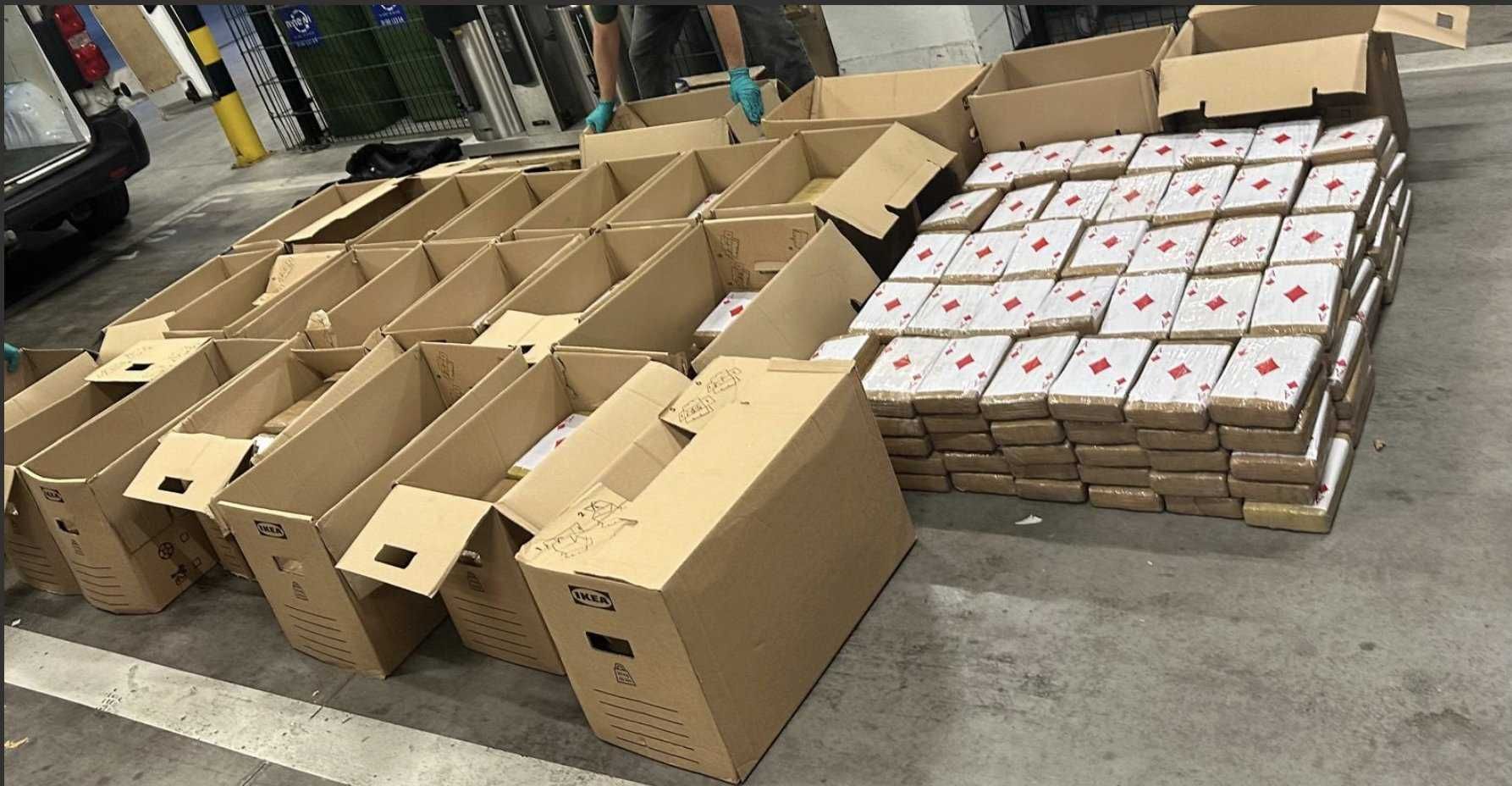
Drugs seized in the joint operation carried out since January of last year. U.S. Embassy of Ecuador
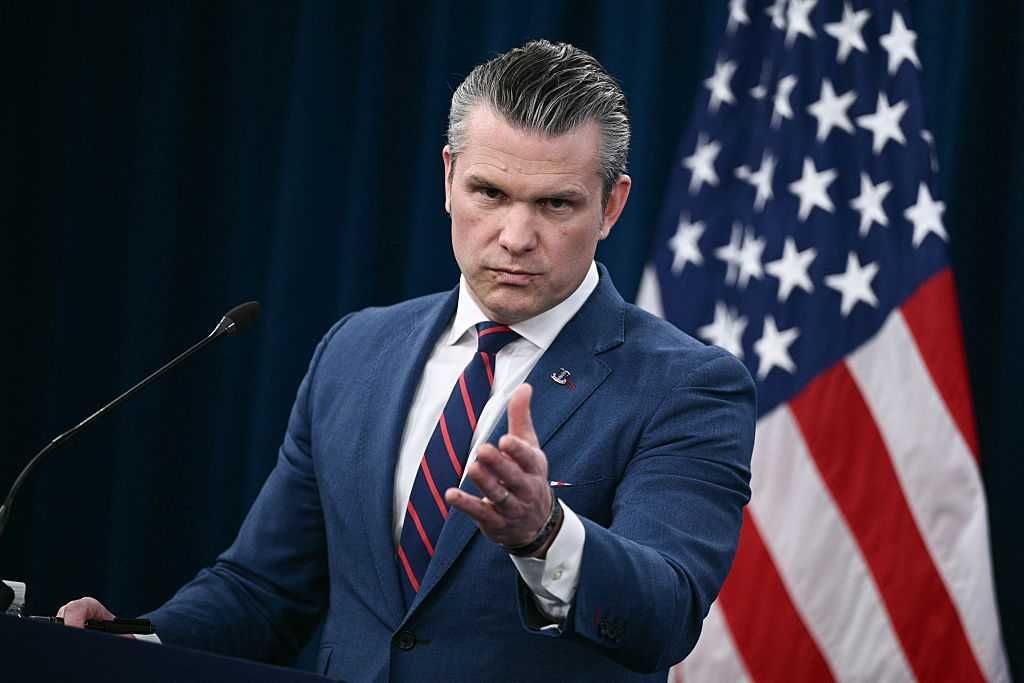
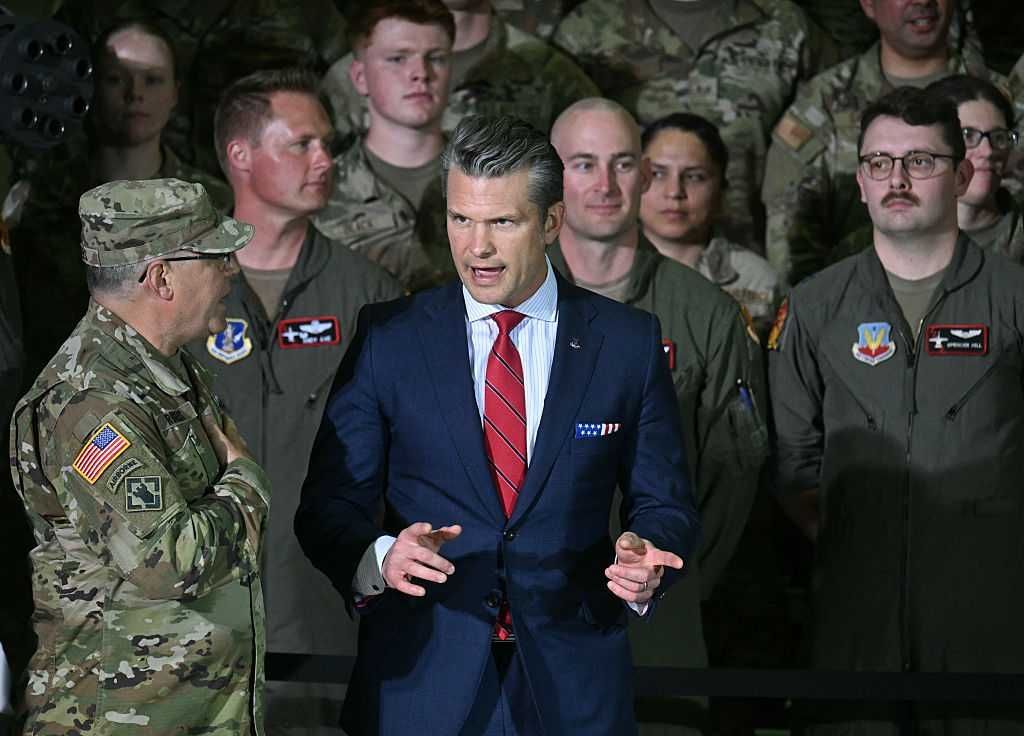
“We commend the men and women of the Ecuadorian armed forces for their unwavering commitment to this fight, demonstrating courage and resolve through continued actions against narco-terrorists in their country," said Marine Gen. Francis L. Donovan, commander of U.S. Southern Command.

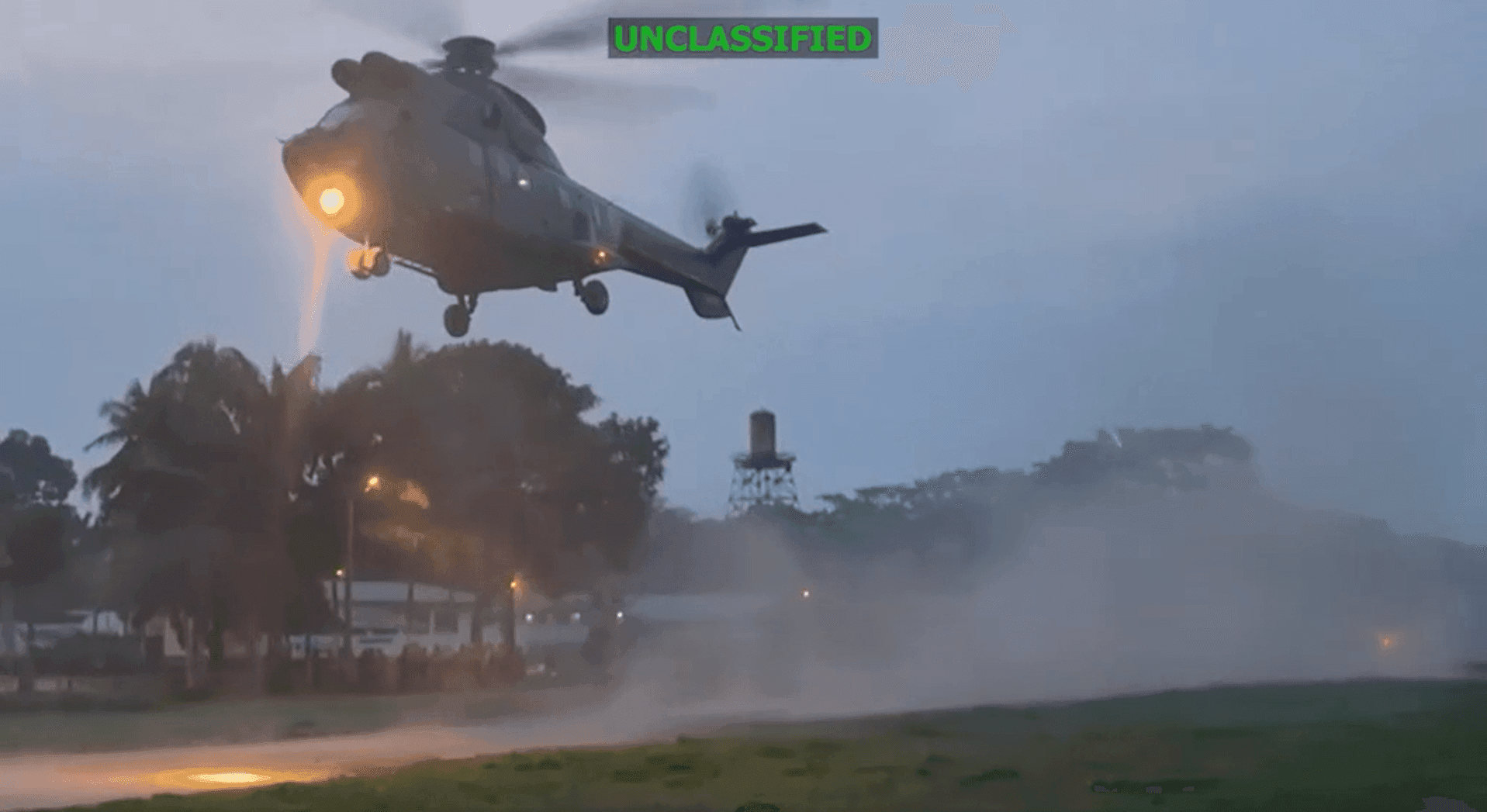
The press release included video footage from the operation. The video shows some shots of helicopters lifting off, and some aerial footage shows a group of men gathering around or loading into a helicopter.

The announcement of the operations in Ecuador was nearly contemporaneous with another large drug bust that resulted from the cooperation of U.S., Ecuadorian, and Europol forces, according to the U.S. Embassy of Ecuador.

This joint operation, which had reportedly been carried out since January 2025, reportedly successfully dismantled the transnational drug trafficking organization Hernán Ruilova Barzola, linked to the Los Lobos cartel. Los Lobos emerged as Ecuador's largest drug trafficking organization in recent years following the assassination of the leader of a rival gang in 2020. By June 2024, the U.S. Department of the Treasury sanctioned Los Lobos as the country was engulfed in increasing violence, according to a press release at the time.

Authorities successfully apprehended 16 suspects, including a high-value target, and "significant quantities of cocaine and cash."

The embassy lauded the conclusion of the operation as an "important milestone in disrupting the operations and finances of narcoterrorists, directly contributing to the security of the United States."

Like Blaze News? Bypass the censors, sign up for our newsletters, and get stories like this direct to your inbox. Sign up here!

Memo to Hegseth: Military education needs a strategic makeover


Watching the swarm of active and former officers on TV and across social media in the wake of the Iran operation, one thing becomes painfully clear: We are not educating the American officer corps for 21st-century war.

In almost every case, these officers — regardless of service — stay locked in the tactical weeds. They can tell you the circular error probable of a Tomahawk missile, the engagement envelope of a JDAM, and the close-quarters choreography of a SEAL platoon. They can talk gear, ranges, platforms, and “capabilities” until your eyes glaze over.

Too many mid-level officers can operate tactically and, at best, think in an operational frame. Few can function in the strategic register.

What they cannot do — with a few exceptions — is think strategically.

Gen. Jack Keane stands out because he can talk operational and strategic moves as a ground commander sees them. But the larger pattern points to a flaw baked into our professional military education system: It produces tacticians who struggle to connect the fight in front of them to the history behind it and the policy goals above it.

That flaw shows up as a shallow understanding of American history, American military history, and the U.S. role in the world since World War II. Even with Iran — a country that has loomed in U.S. policy for decades — many younger officers appear hazy on basic context.

They don’t know, for example, that Iran aligned with the United States during World War II. They don’t know the long arc of American involvement with the Shah (reinstalled in 1948, uninstalled at the fumbling behest of Jimmy Carter in 1979), or the 1979 revolution, or the Reagan-era gamesmanship, or the diplomatic failures and half-measures that followed. They don’t grasp how those chapters shape the threat environment we are dealing with right now — or why “Iran” is never just Iran.

That ignorance produces a second-order problem: a lack of situational awareness about almost any contemporary politico-military challenge.

Too many mid-level officers can operate tactically and, at best, think in an operational frame. Few can function in the strategic register. Fewer still can explain the principles of grand strategy — or, more accurately, war policy: what the nation wants, what it will pay, and what it must prevent.

Without that understanding, senior officers cannot give clear, disciplined advice to a president or a White House staff that may lack military experience. The armed forces become a machine that can execute missions brilliantly while remaining uncertain about the “why.”

There is another cost to this historical and strategic illiteracy: a warped sense of time.

Military operations do not unfold on cable-news timelines. Understanding the implications of a wartime environment takes time. Reshaping an adversary’s behavior takes time. Consolidating a political outcome takes time. If officers making decisions lack a working understanding of the history of that environment, they will miss opportunities that could save lives and treasure — and they will overestimate the speed at which results can be achieved.

I say this as someone who has lectured for decades at military institutions, including the U.S. Air Force Academy, the National Defense University, and the National Intelligence University.

In recent years, I have watched what can only be described as intellectual sludge: more than 20 years of forced social engineering and liberalization within the military academic ecosystem. Diversity, equity, and inclusion became more important than producing officers who are not risk-averse and who understand the hard realities of war — including destruction and death — and the grim imperative to minimize our casualties while maximizing the enemy’s. Brutal, yes. Also true.

RELATED: Memo to Hegseth: Our military’s problem isn’t only fitness. It’s bad education.

Photo by JIM WATSON/AFP via Getty Images

Gen. Curtis LeMay put it plainly: “I don’t mind being called tough, because in this racket, it’s tough guys who lead the survivors.”

There is hope on the horizon, at least in the Air Force. Through what looks like a deus ex machina, the Air Force Academy has rapidly changed its top leadership — installing a new superintendent, commandant, and dean in a single sweep. The new dean, Col. James Valpiani, has a résumé you could shorthand as “Clark Kent in blue.” USAFA has also begun reversing the overly civilianized faculty model, replacing it with Air Force officers who have the appropriate degrees and the right instincts.

That is a start.

Now comes the core reform: The academy must make U.S. history, U.S. military history, and U.S. Air Force history — from World War II forward — a central, non-negotiable part of the curriculum. Young officers need to understand not only what America can do, but what America is trying to do — and why. They need a strategic rationale, not just a technical one.

That kind of grounding also restores a concept the services once prized: meritocracy. The smartest and most aggressive should lead, and they should lead with a strategic understanding worthy of the responsibility.

Gen. George Patton liked to say, “A good plan, violently executed now, is better than a perfect plan next week.” A good plan depends on something deeper than PowerPoint. It depends on a commander with history embedded in his soul — history understood as lived reality, not as trivia.

I would sure like to help plant it there.

Catch up on what's happening in Iran: US jets shot down, girls' school bombed, and more


As events continue to unfold in the Middle East in the aftermath of Operation Epic Fury and Operation Roaring Lion, military leaders have provided some crucial updates to the events of this weekend.

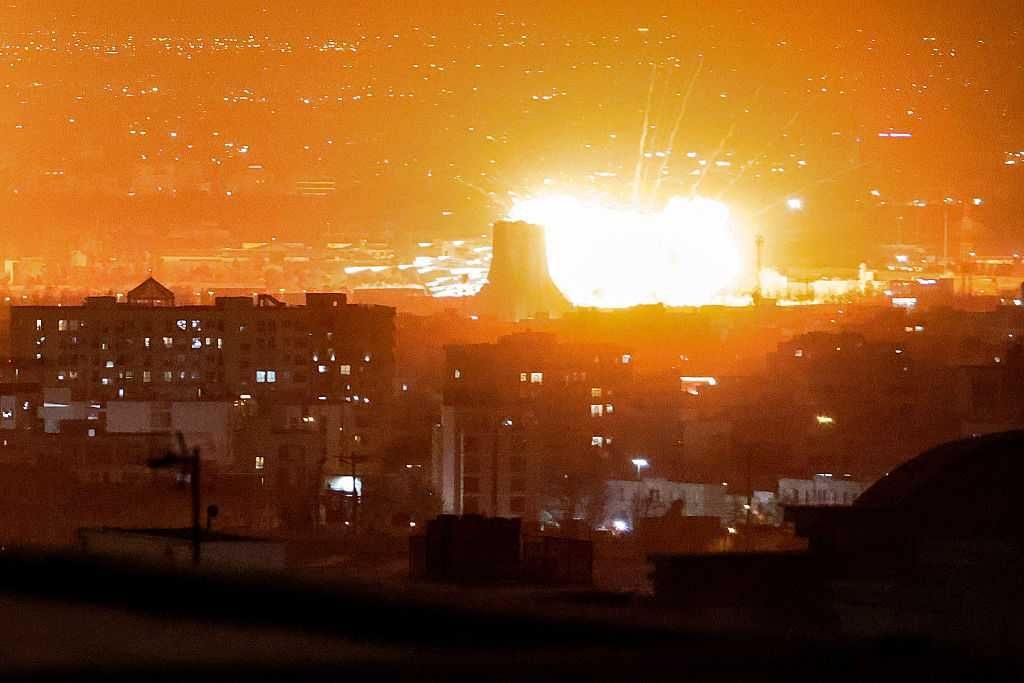
The United States and Israel launched a joint attack on Iran at approximately 1:15 a.m. ET on Saturday morning, according to a U.S. Central Command post summarizing the first 24 hours of the operation. Since the beginning of the operation, the attacks have continued consistently, and Iran has repeatedly retaliated.

'May Almighty God watch over you, and may His providential arms of protection extend over you. GODSPEED WARRIORS — and keep going.'

On the first day of the attacks, President Donald Trump confirmed that Ayatollah Ali Khamenei was killed in a series of strikes on Saturday.

"Khamenei, one of the most evil people in History, is dead," Trump wrote. "This is not only Justice for the people of Iran, but for all Great Americans, and those people from many Countries throughout the World, that have been killed or mutilated by Khamenei and his gang of bloodthirsty THUGS. He was unable to avoid our Intelligence and Highly Sophisticated Tracking Systems and, working closely with Israel, there was not a thing he, or the other leaders that have been killed along with him, could do."

RELATED: 'Painful days': Iran kills US troops as Trump threatens decapitated Iranian regime

US CENTCOM/Handout/Anadolu via Getty Images

Trump announced on Sunday afternoon that he was informed that the U.S. had destroyed and sunk nine Iranian naval ships, "some of them relatively large and important." He added that "we are going after the rest — They will soon be floating at the bottom of the sea, also! In a different attack, we largely destroyed their Naval Headquarters."

U.S. Central Command, which is responsible for the territory in which the conflict has unfolded, released a press statement on Monday morning regarding "an apparent friendly fire incident" in Kuwait.

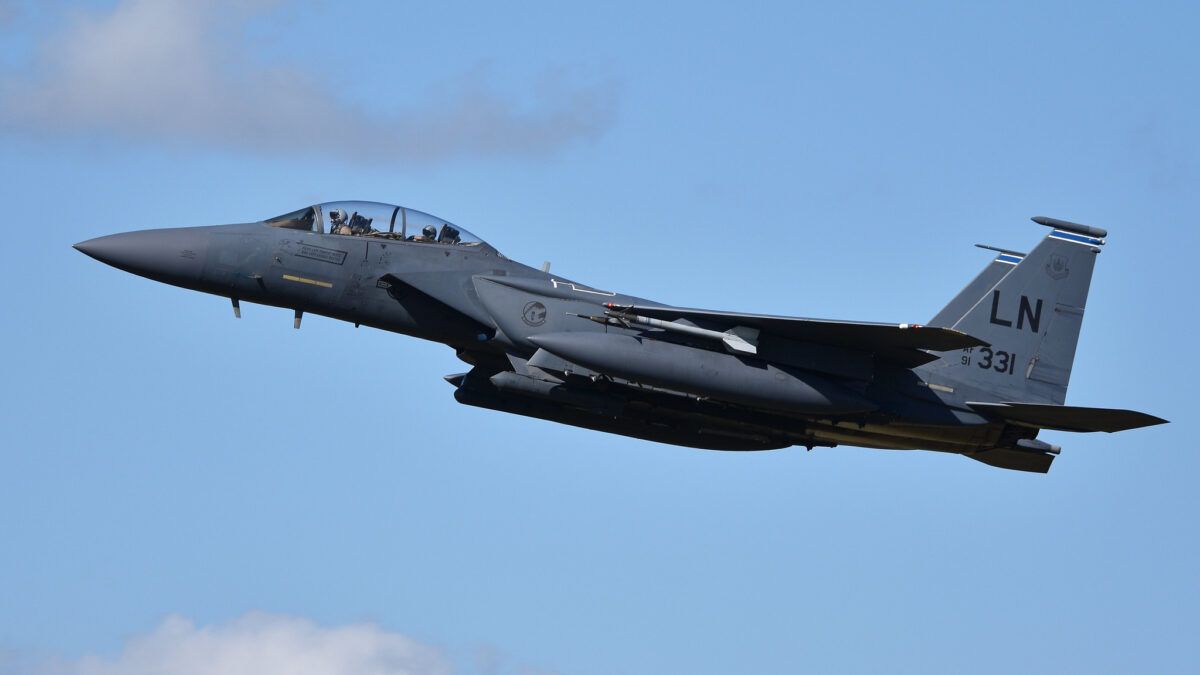
The brief statement reported that three United States F-15E Strike Eagles, flying in supporting of Operation Epic Fury, were "mistakenly shot down by Kuwaiti air defenses" during an active combat situation involving Iranian aircraft. The press release confirmed that all six aircrew ejected, were safely recovered, and are in stable condition.

Another major event includes the bombing of a girls' elementary school in Iran. According to the New York Times, at least 175 people, presumably mostly children, were killed in a bombing attack in southern Iran.

"The Minab school incident has no comparison with any other incident," said Pirhossein Kolivand, the head of Iran's Red Crescent, in a video posted on social media on Sunday. "Even in Gaza," he added, there had not been such a high number of students killed simultaneously, and he called the attack "a unique and bitter incident," according to the New York Times.

The attack does not appear to be intentional, however. The school, NYT reported, is adjacent to a naval base of Iran's Revolutionary Guard Corps. Further, the school was once connected to the naval base and was only disconnected from it in 2016.

On Monday morning, Secretary of War Pete Hegseth gave a direct message to the Joint Force. Hegseth said, in part, "We are not defenders anymore — we are warriors, trained to kill the enemy and break their will. History is watching. Be the force you swore to be: focused, disciplined, lethal, and unbreakable. We will finish this on America First conditions of President Trump's choosing — nobody else's. As it should be."

"May Almighty God watch over you, and may His providential arms of protection extend over you. GODSPEED WARRIORS — and keep going," Hegseth concluded the address.

The efficiency of the military operation has apparently even surprised the president.

In an interview with Fox News' Bret Baier on Monday, President Trump detailed the success of the operation in decapitating Iran's senior leadership. He explained that dozens of senior leaders were gathered for breakfast with the ayatollah, thinking it was safe because they were gathered in broad daylight, Fox reported.

"It was 49 leaders that were taken out. That was going to take four weeks, we thought, to get rid of the Iranian leadership. And it's always, you know, if they hide, it's a lot longer than four weeks. And they would have been hiding," Trump told Baier. "We were shocked when we heard what was going on. We knew exactly what was happening and where."

The operation, despite its apparent overwhelming success, has come at a tragic cost, however. U.S. Central Command reported that as of 7:30 a.m. ET, "four U.S. service members have been killed in action." The number of deaths was previously three. "The fourth service member, who was seriously wounded during Iran’s initial attacks, eventually succumbed to their injuries."

The identities of the fallen are being withheld at this time.

Additionally, trade is expected to be stalled due to the closure of the Strait of Hormuz in response to the U.S.-Israeli strikes. The Independent reported Sunday that Iran has closed the Strait of Hormuz, a major shipping channel for crude oil, fuel, and liquefied natural gas.

Euronews reported that natural gas prices have already surged on Monday in response to the conflict. Further, QatarEnergy announced that it has decided to stop LNG production at one of the largest natural gas fields in the world, North Fields, citing the conflict.

Like Blaze News? Bypass the censors, sign up for our newsletters, and get stories like this direct to your inbox. Sign up here!

The pernicious myth that America doesn’t win wars


False narratives have a way of being taken as fact in popular understanding. After years of repetition, these statements calcify into articles of faith, not only going unchallenged, but having any counterarguments met with incredulity, as though the person making the alternative case must be uninformed or unaware of the established consensus. Many people simply accept these narratives and form worldviews based on them, denying the reality that, if the underlying assumption is wrong, then so are the decisions that flow from it.

One narrative that has taken hold among many since the humiliating end to the war in Afghanistan is that the U.S. military doesn’t win wars, or that it hasn’t since the end of World War II. This critique of the armed forces, foreign policy, or use of force has become an ironclad truth among many who use it as a starting point to advocate their own preferred change.

The United States military has had plenty of successes since World War II and, in fact, has suffered only a small handful of definitive losses in that time.

Advocates of War Secretary Pete Hegseth’s vision for the military have echoed it: “The military had grown weak and woke, so we need to change the culture, ignore or at least diminish adherence to legal restraints, and remake the composition of the military.” Restrainers, isolationists, and America Firsters have joined the chorus: “America has given up blood and treasure on stupid wars in which we were failures.”

There is only one problem with this understanding, and more importantly, its use as a baseline from which to derive policy prescriptions — it isn’t true at all.

Ignorance of war

It reflects a misunderstanding of how America has used force and what we have and haven’t achieved. And unlike many misunderstandings about American defense, this one isn’t solely by those with little familiarity with what the military does; the view has taken hold among many who should know better. There are several reasons for belief in the fallacy.

First, there is ignorance of what a war is, or at least not having a common definition of it.

For the pedants, one could point out that the United States has not been at war, by strict definition, since 1945. However, this isn’t relevant to the topic at hand because if the United States has not fought a war since 1945, then by this definition, we also haven’t lost one. In fact, the United States has declared war many times: the War of 1812, the Mexican-American War, the Spanish-American War, and the World Wars, yet we have engaged in armed conflict significantly more often than that.

So for the purposes of this debate, we can reflect upon the United States using force to achieve foreign policy objectives. With this more expansive definition, then Grenada is just as much of a war as World War II (although the latter certainly is a source of more pride than the former).

Second, there is ignorance of the number of conflicts in which the United States has been involved. Americans tend to have short memories and often pay less attention to events beyond the water’s edge. Many are largely ignorant of ongoing, smaller operations being conducted in their name. (Remember the shocked response to the Niger incident when many people, including congressional leaders, announced their ignorance of U.S. presence there?)

This phenomenon is exacerbated by the passage of time. How many Americans are aware of our involvement in the Dominican Civil War in 1965? Or the various conflicts that made up the Banana Wars?

RELATED: Turns out that Hegseth’s ‘kill them all’ line was another media invention

Photo by ANDREW CABALLERO-REYNOLDS / AFP via Getty Images

Third, there is ignorance or misunderstanding of the outcome of those wars. Our perspective has been skewed, likely due to the recent history of the embarrassing and self-inflicted defeat in Afghanistan, the messy and confusing nature of the war in Iraq, and the historic examples of very clearly defined wars with obviously complete victories.

There was no ambiguity in the World Wars. The United States went to war with an adversary nation state (or coalition of them), fought their uniformed militaries, and ended these with a formal surrender ceremony abroad and victory parades at home. But this is not the norm, neither for American military intervention nor for conflict in general.

Most of American military history does not look like these examples — conflicts that are large in scale, discrete in time, and definitive in outcome. Some of our previous interventions have been short in duration and were clear victories but smaller in scale (e.g., Grenada and Panama). Some have been clear victories but incremental, fought sporadically with fits and starts and over the course of years, if not decades (e.g., the several smaller conflicts that are often lumped together under the umbrella of the Indian Wars).

Win, lose, draw

But then there is another category — one in which the conflict results in a seemingly less satisfying but mostly successful result, sometimes after a series of stupid and costly errors and sometimes after years of grinding conflict that ends gradually rather than with a dramatic ceremony.

The Korean War, often described as a “draw” because the border between North and South Korea remains today where it was before the beginning of the war, had moments of highs and lows, periods where it seemed nothing could prevent a U.S.-led total victory — only to see the multinational force squander its advantage (e.g., reaching the Yalu River) and moments where all seemed lost, only to escape from the jaws of defeat through audacity and courage (e.g., Chosin Reservoir, Pusan, Inchon).

When President Truman committed U.S. forces as part of the U.N. mission to respond to communist aggression, the stated intent was to assist the Republic of Korea in repelling the invasion and to maintain its independence. South Korea still exists to this day. The combined communist forces of the PRK and CCP were prevented from achieving their aims by American military power.

We have a much more recent (and undoubtedly more controversial) example of a misunderstood success. Many of those who ballyhoo about America not winning wars point not only to the failure in Afghanistan but also to the recent war in Iraq. The Iraq War was many things — initially fought with great tactical and operational brilliance, then sinking into lethargic and incompetent counterinsurgency, then adapting to local power structures, and of course, initiated under pretenses we now know to be incorrect. But it was not, despite the ironclad popular perception, a military failure.

The military set out, with the invasion of 2003, to defeat the combined forces of the Iraqi Army and Republican Guard and remove the Ba’athist government from power. We achieved that goal. Once in control of Baghdad, the U.S. faced a new threat — one of a growing and complex insurgency that we had failed to anticipate. American forces under Ricardo Sanchez, and continuing under George Casey, seemed perplexed and frustrated by a conflict they had not come prepared to fight, nor that they adapted to. For years, despite the insistence of many military and political leaders, the war was not going our way as American casualties increased month after month.

But by 2008, the Sahwa — the movement of Sunni tribal militias aligning with the U.S.-led coalition and the government in Baghdad — and the American efforts to adapt to a more effective counterinsurgency strategy were turning the tide, to the point that by 2010, the violence in Iraq had largely subsided.

The government the United States helped bring about in Baghdad to replace Saddam Hussein endures to this day but not without difficulties. In his 2005 “National Strategy for Victory in Iraq,” George W. Bush defined victory in the long term as an Iraq that is “peaceful, united, stable, and secure, well-integrated into the international community, and a full partner in the global war on terrorism.” By continuing to maintain a relationship with Iraq, we are helping shape this long-term result, just as we did as we helped postwar Germany and Korea maintain security and political stability.

Due to the oppressive steps of a flawed prime minister, American desire to recede from presence and oversight in Iraq, and a compounding effect of spillover from the Syrian Civil War, there was the need for further American assistance in defeating the threat from ISIS, but defeat them we did — another success for the American military.

The Iraqi government also has close relationships with our Iranian regional rivals, as many of the local Arab countries do based on proximity. But just as the need for the 2nd and 3rd Punic Wars does not change the fact the 1st Punic War was a Roman victory, the war against ISIS does not change the fact that the United States accomplished the goal of deposing and replacing Saddam Hussein. Likewise the fact that the Soviet Union gained influence over Eastern Europe does not change the fact that World War II ended in a definitive defeat of the Nazis.

What does victory look like?

None of that changes a separate question, however — whether the war was worth it. But that was a political decision and one that does not negate the truth that the U.S. military first defeated the Iraqi military in a decisive win and then quelled a grinding insurgency in a less decisive way.

Just because a victory isn’t total doesn’t mean that the military fighting it lost. The War of 1812 was a victory, despite the fact the U.S. failed to achieve its maximalist goals of incorporating Canada but did achieve the goal for which the war was fought — rejecting British attempts to deny American sovereignty. World War II was a victory, despite the fact it set conditions for the Cold War and communist oppression. Korea was a victory, despite the fact we did not unify the Koreas under the democratic South. And Iraq was a victory — a poorly decided, stupidly managed, and possibly counterproductive long-term victory.

RELATED: Trump forced allies to pay up — and it worked

Photo by Pier Marco Tacca/Getty Images

When viewed in this way, the United States military has had plenty of successes since World War II and, in fact, has suffered only a small handful of definitive losses in that time — Vietnam, Iran (Operation Eagle Claw), Somalia (1993), and Afghanistan — with the temporal proximity of the latter and the fact that two of these were also America’s longest conflicts, helping to warp the public’s understanding of our military effectiveness.

None of this is to say that America should not take a harsh look at our recent military efforts and seek continuous improvement. Grenada, as I have mentioned, was a victory but an incredibly embarrassing one that was likely only successful because we fought a backwater Caribbean country with a population of less than 100,000. The hard lessons learned by examining the disasters, mistakes, and close calls from Operation Urgent Fury helped reform the military into the globally dominant force that defeated the world’s fourth largest army in 100 hours less than a decade later.

Americans should not look at our military through rose-colored glasses, chest thumping as we chant “USA” and insisting that no other force can land a glove on us. But neither should we allow the false narrative of failure to take hold. We should be clear-eyed about what our military has accomplished, can accomplish, and the costs, risks, and potential gains in using force. Armed conflict will remain a necessary tool for the United States. We need to adapt our military to meet and defeat the challenges of the future, and we need to balance and incorporate military power into our global strategies appropriately — but that will not happen if we do it based on an incorrect understanding of the past.

Editor’s note: This article was originally published by RealClearDefense and made available via RealClearWire.

Putting God back in 'degraded' US Chaplain Corps: Hegseth axes pagan codes and New Age guides


Earlier this week, Secretary of War Pete Hegseth announced that he would be overhauling yet another aspect of the military: the Chaplain Corps.

On Tuesday, Hegseth explained a directive that will effectively overhaul the United States Chaplain Corps, "the spiritual and moral backbone of our nation's forces" that, for hundreds of years, "ministered" to the "souls" of American servicemen and women, as he explained in the video.

'In an atmosphere of political correctness and secular humanism, chaplains have been minimized, viewed by many as therapists instead of ministers.'

Hegseth recounted the long history of the Chaplain Corps, which dates back to 1775, when George Washington himself established it. The "weakening" of this important institution has become "a real problem for our nation's military," Hegseth said.

"Sadly, as part of the ongoing war on warriors, in recent decades its role has been degraded," Hegseth said in the video. "In an atmosphere of political correctness and secular humanism, chaplains have been minimized, viewed by many as therapists instead of ministers. Faith and virtue were traded for self-help and self-care."

RELATED: Troops who refused COVID shot to receive retroactive honor to 'right the wrongs of the past': Hegseth

Amanda Andrade-Rhoades/For The Washington Post via Getty Images

As evidence of the New Age influence in the military, Hegseth referred to the United States Army's Spiritual Fitness Guide, which mentions "God" only once and "virtue" not at all, even as 82% of the military identify as "religious."

Hegseth ordered the elimination of this "unacceptable and unserious" Spiritual Fitness Guide and the simplification of the Faith and Belief Coding System, an "overly complex" classification system of over 200 different beliefs.

The Faith and Belief Code was apparently expanded in March 2017. The expansion went into more detailed distinctions among Protestant denominations, and it included alternate belief systems like "Magick and Spiritualist," "Wicca," "Pagan," "New Age Churches," "Humanist," and "Heathen."

Hegseth promised more changes in the near future, saying that there will be a "top-down cultural shift" in the military that puts "spiritual well-being on the same footing as mental and physical health."

"We are going to make the Chaplain Corps great again," he posted on X.

Like Blaze News? Bypass the censors, sign up for our newsletters, and get stories like this direct to your inbox. Sign up here!

Trump promises 'very serious retaliation' after 'ISIS attack' that killed 2 US Army soldiers, 1 US interpreter in Syria


President Donald Trump promised "very serious retaliation" after an "ISIS attack" that killed two U.S. Army soldiers and one U.S. interpreter interpreter Saturday in Syria.

Fox News reported that a lone Islamic State gunman carried out the ambush, which also left three others wounded. Secretary of War Pete Hegseth said that "the savage who perpetrated this attack was killed by partner forces."

'Let it be known, if you target Americans — anywhere in the world — you will spend the rest of your brief, anxious life knowing the United States will hunt you, find you, and ruthlessly kill you.'

"We mourn the loss of three Great American Patriots in Syria, two soldiers, and one Civilian Interpreter," Trump wrote on Truth Social, according to the cable news network. "Likewise, we pray for the three injured soldiers who, it has just been confirmed, are doing well. This was an ISIS attack against the U.S., and Syria, in a very dangerous part of Syria, that is not fully controlled by them."

Trump added that "the President of Syria, Ahmed al-Sharaa, is extremely angry and disturbed by this attack. There will be very serious retaliation," Fox News noted.

Trump also said Saturday to reporters outside the White House that "this was an ISIS attack on us and Syria. And again, we mourn the loss, and we pray for them and their parents and their loved ones," the cable news network reported.

Hegseth added on X: "Let it be known, if you target Americans — anywhere in the world — you will spend the rest of your brief, anxious life knowing the United States will hunt you, find you, and ruthlessly kill you."

Chief Pentagon spokesman Sean Parnell said on X that the attack in the town of Palmyra "occurred as the soldiers were conducting a key leader engagement. Their mission was in support of ongoing counter-ISIS/counter-terrorism operations in the region. The soldiers’ names, as well as identifying information about their units, are being withheld until 24 hours after the next of kin notification. This attack is currently under active investigation."

RELATED: Trump warns Israel about interference in Syria after deadly raid, airstrikes

The cable news network added that there are about 900 U.S. troops in Syria.

More from Fox News:

The U.S. had eight bases in Syria to keep an eye on ISIS since the U.S. military went in to prevent the terrorist group from setting up a caliphate in 2014, although three of those bases have since been closed down or turned over to the Syrian Democratic Forces.

On Monday, tens of thousands of Syrians flooded the streets of Damascus to mark the first anniversary of the Assad regime’s collapse.

Those celebrations came a year after former Syrian dictator Bashar al-Assad fled the capital as rebel forces swept through the country in a lightning offensive that ended five decades of Assad family rule and opened a new chapter in Syrian history.

The Associated Press reported that Saturday's attack on U.S. troops was the first to cause fatalities since Assad's fall.

Like Blaze News? Bypass the censors, sign up for our newsletters, and get stories like this direct to your inbox. Sign up here!

War Department contractor warns China is way ahead, and 'we don't know how they're doing it'


A tech CEO warned that the Chinese government is ahead in key tech fields and that the threat of war is at America's doorstep.

Tyler Saltsman is the CEO of EdgeRunner, an artificial intelligence technology company implementing an offline AI program for the Space Force to help U.S. soldiers make technological leaps in the battlefield.

'A rogue AI agent could take down the grid. It could bring our country to its knees.'

Saltsman spoke exclusively with Return and explained that the new battlefield tools are sorely needed by U.S. military forces, particularly considering the advancements that have been made in China.

"The Department of War has been moving at breakneck speed," Saltsman said about the need to catch up. "China is ahead of us in the AI race."

On top of doing "a lot more" with a lot less, Saltsman revealed the Chinese government has been able to develop its AI to perform in ways that Western allies aren't particularly sure of how it's doing it.

"They're doing things, that we don't know how they're doing it, and they're very good," the CEO said of the communist government. "We need to take that seriously and come together as a nation."

When asked if China is able to take advantage of blatantly spying on its population to feed its AI more information, Saltsman pointed more specifically to the country ignoring copyright infringement.

"China doesn't care about copyright laws," he said. "If you use copyright data while training an AI, litigation could be coming [if you're] in the U.S."

But in China, feeding copyright-protected data through learning-AI models is par for the course, Saltsman went on.

While the contractor believes AI advancements by the enemy pose a great threat, China's ability to control another key sector should raise alarm bells.

RELATED: 'They want to spy on you': Military tech CEO explains why AI companies don't want you going offline

Your browser does not support the video tag.

China's ability to take Taiwan should be one of the most discussed issues, if not the paramount issue, Saltsman explained.

"If China were to take Taiwan, it's all-out war," he said.

"All that infrastructure and all those chips — and the chips power everything from data centers to missiles to AI — ... that right there is a big problem."

He continued, "That's the biggest threat to the world. If China were to take Taiwan, then all bets are off."

Saltsman also saw the idea of rogue AI agents as a strong possibility of how China could attack its enemies. More narrowly, they could go after power grids.

"A rogue AI agent could take down the grid. It could bring our country to its knees," he warned, which would result in "total chaos."

The entrepreneur cited the CrowdStrike update that crippled airport systems in July 2024. Saltsman said that if something that small could bring the world to its knees for three days, then it is "deeply concerning" what China could be capable of in its pursuit of super intelligence through AI.

RELATED: Can Palantir defeat the Antifa networks behind trans terror?

Tyler Saltsman, CEO of EdgeRunner AI. Photo provided by EdgeRunner

Saltsman was also not shy about criticizing domestic AI companies and putting their ethics in direct sunlight. On top of claiming most commercial AI merchants are spying on customers — the main reason they do not offer offline models — Saltsman denounced the development of AI that does not keep humans in the loop.

"My biggest fear with Big Tech is they want to replace humans with [artificial general intelligence]. What does AGI even mean?"

Google defines AGI as "a machine that possesses the ability to understand or learn any intellectual task that a human being can" and "a type of artificial intelligence (AI) that aims to mimic the cognitive abilities of the human brain."

Saltsman, on the other hand, defines AGI as "an AI that can invent new things to solve problems."

An important question to ask these companies, according to Saltsman, is, "Why would AGI make you money if it was an all-intelligent, all-powerful being? It would see humans as a threat."

For these reasons, Saltsman is serious about developing AI that can work in disconnected environments and work only for the user while keeping humans at the forefront.

As he previously said, "We don't want Big Tech having all of this data and having all this control. It needs to be decentralized."

Like Blaze News? Bypass the censors, sign up for our newsletters, and get stories like this direct to your inbox. Sign up here!

Further Data Shows Media Wildly Overestimated Number Of Trans Troops

In the weeks surrounding Trump’s inauguration, the left-wing media insisted the administration’s effort to remove trans troops from the military would weaken the force — some outlets fearmongered that up to 15,000 service members would be booted. But numbers recently obtained by journalist Chris Bray from the Department of Defense indicate that only four “transgender servicemembers” have been “removed […]

Los Angeles anti-ICE protesters harass DHS agents, military members on Independence Day


LOS ANGELES, Calif. — Tensions are still high in southern California as immigration enforcement operations continue in the aftermath of the anti-Immigration and Customs Enforcement riots last month.

The Department of Homeland Security has deployed additional resources to the region to carry out President Donald Trump's directive to arrest illegal immigrants despite local resistance.

The unlawful assembly declaration angered the crowd; they claimed it was police who made it unlawful by pushing them into the street.

That resistance did not take a break this Independence Day.

Multiple far-left groups organized protests around Los Angeles County, with protesters mainly focusing on city hall and the federal building nearby. Waving Mexican flags and upside down American flags, the anti-ICE and anti-Trump crowd spread out to the front and the back of the federal building where U.S. Marines, National Guardsmen, and DHS agents were stationed to protect the facility.

Many in the crowd berated the service members for protecting the building that rioters had targeted barely a month ago. One agitator threatened to "knock" their teeth in because he did not care about going to jail.

— (@)

Toward Friday evening protesters gathered behind the federal building to prevent federal vehicles from going in and out of the complex. This forced DHS agents and military members to come out to clear a path for the vehicles, which the crowd sometimes attacked.

RELATED: Border Patrol arrest at Home Depot punches hole in Democrats' narrative

Image source: Julio Rosas/Blaze Media

An unlawful assembly was declared after agents briefly clashed with the crowd and rioters threw bottles at the police line. With help from Los Angeles Police officers, DHS agents and military members pushed the dwindling crowd away from federal building. The unlawful assembly declaration angered the crowd; they claimed it was police who made it unlawful by pushing them into the street.

— (@)
— (@)

While the protest was supposed to last until midnight, the upset crowd was forced away from the federal building by 8 p.m. Blaze Media did not observe any arrests during the course of the day.

Democrat Los Angeles Mayor Karen Bass used Independence Day to call for an end to the federal immigration enforcement operations.

"This July 4th, let’s remember what patriotism really means: defending our values, our people, and our Constitution. Send the troops home. Stop the raids. Stand for freedom," she said on X.

Once Trump signed the Big Beautiful Bill, the mayor again voiced her frustration with the federal government enforcing immigration laws.

"Instead of investing in housing, jobs, or health care, they’re funding fear — tearing families apart in our neighborhoods. These raids must end," she added.

Like Blaze News? Bypass the censors, sign up for our newsletters, and get stories like this direct to your inbox. Sign up here!