The Wall Street Journal Pretends To Not Understand J.D. Vance Or Iran
 'This'll be over by August, by the end of August. And we'll have two months before the midterm elections for gas prices to come down and for Americans to sense victory.'
I was a little shocked by my own reaction to hearing Bill Gates, the famous face of the unelected world elite, push yet another omnicrisis on a prominent podcast. Especially for someone in the informal guild of prognosticators, the temptation is always strong to get caught up in what techies call “hyperstition” — and the rest of us call self-fulfilling prophecies. The urge to get swept up in the current wave of “futurist” forecasting can become almost irresistible when the tenor of the times tilts toward the apocalyptic.
But as most Americans know, we have been living under a state of elite-induced crisis for decades on end. Nuclear annihilation. Deadly pandemics. Ruinous climate change. The plot of “The Terminator” come to life. A catastrophic flip of the planet’s magnetic poles. It’s always something. And whatever it is, if you’re not running down the street clawing your face off, you’re not paying attention.
And what is a crisis, anyway? It is whatever authorizes the people with the most power to exert that power over you, personally, and ultimately anyone else, as they see fit. It’s genius!
Furthermore, if you’re not paying attention, you’re contributing to the real crisis, the one that somehow maps on top of whatever freak-of-the-week existential horror show is on the menu. Try to drop out of the apocalypse, and you’ll be deemed a moral criminal. People are suffering. It will get worse. What makes you think you’re special? How can you shirk your responsibility to the greater good? And after all, don’t forget, if you don’t cast the right votes, display the right signs, post the right expressions of solidarity, don’t be surprised when the angry mob — online and off — shows up at your door.
Because, well, we’re gonna send them. Because this is a crisis, and the only way we can ensure that it affects everyone is for everyone to believe they’re affected.
This, I think, is the principle hidden at the heart of the COVID-19 era’s inescapable hectoring that you must “believe the science.” We’re never told we have to believe anything when normal, healthy life is possible. We’re only told we must believe when the belief in question is absolutely essential to the propagation of a mass sense of total, all-consuming crisis.
And what is a crisis, anyway? Well, it is whatever authorizes the people with the most power to exert that power over you, personally, and ultimately anyone else, as they see fit. It’s genius!
Did I feel these feelings as my eyes glazed over at Gates’ all-too-convenient claims, the cure for which must surely somehow involve Gates flexing his unaccountable muscle over the Earth? No — I’m actually pretty sure I speedran that emotional experience five or six years ago.
This time, my reaction oddly made me laugh. Yes, I thought for a moment about those believe-the-science signs. But I quickly flashed on a form letter the management of my apartment building once posted in the elevators in the weird little era just before lockdowns.
It was, for its time, highly tech-saturated, but in a way that still had a lot of fluffy-bunny feelings attached to it. Founders were twee, logos were playful — the general attitude was: What could go wrong? But at ground level, where the streets had begun brimming over with abandoned scooters and bikes, the collective mood was already beginning to sour, and corporations adversely affected by all the “permissionless innovation” unfolding in tech-forward cities had begun to get wise.
RELATED: A tech-fueled Antichrist would be bad. Obsessing over the Antichrist is worse.
And so THE MANAGEMENT of my apartment building — a megacorp in its own right — posted a toneless memo in our elevators about its current policies regarding short-term rental apps. With all the low-effort audacity of what is now called the Gen Z stare, the memo explained that, per corporate policy, the apartment building, like all THE MANAGEMENT’s properties, did “not participate in Airbnb.”
I remember standing there with the feeling of having in fact to hand it to them. It was true — there were a lot of units in that brand-new building that were being flagrantly Airbnb’d, a scheme that especially seemed to benefit the many Chinese tenants. No hate, of course; that whole five-block radius of freshly risen high-rises was fueled by Chinese money and Chinese developers, and American locals such as myself reaped the benefits in the form of shut-up-and-take-my-money rental deals and round-the-corner access to some of the city’s most coveted reservations.
But I didn’t particularly want a revolving door of randos as my neighbors, and THE MANAGEMENT surely did not want tenants of any nationality cashing in on those move-in deals only to arbitrage their residence for big sublease cash. The corporation therefore decided simply that its buildings were just not participating in that reality any more.
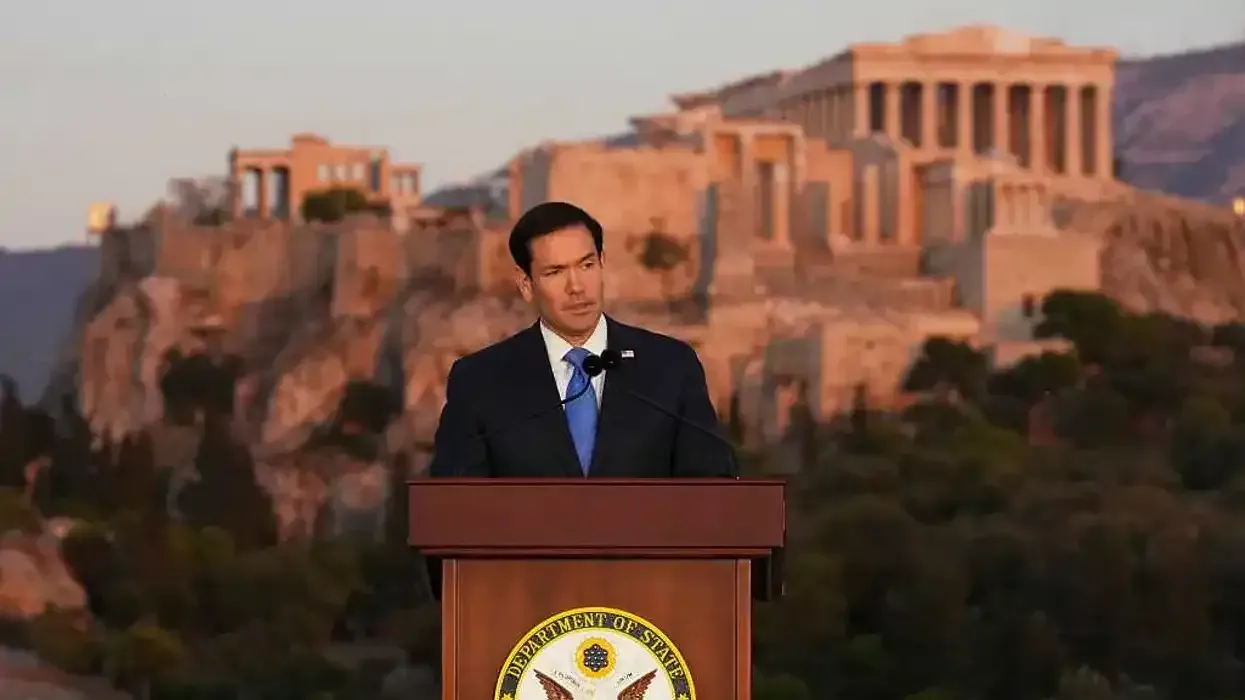
RELATED: Marco Rubio’s spicy Greece speech left out the most crucial ingredient
And like Gates’ onetime buddy and rival Steve Jobs, the corporation acquired what Jobs fans called a reality-distortion field.
Wow, I thought. I want a reality-distortion field …
Returning to 2026 reality, I noticed Gates also actually countersignaled himself on that podcast. “Let’s be like the Amish, and let’s only use AI for certain things,” he imagined certain future Americans agreeing. Later, he spoke of what people get from “helping each other or coming up with unique ideas.” What a concept — faithful families working together to strengthen one another in freeing ways?! It sounded like some sort of big old reality-distortion field.
Except instead of keeping out our given human reality, it was keeping it alive.
A little more clicking around the internet quickly revealed that many people, none Amish, are already choosing not to participate in crisis culture. “Constant warnings of collapse desensitize us,” Bruce Gilley writes in the Wall Street Journal. We “overestimate the likelihood of very salient threats,” according to the Financial Times. “Perhaps collapse is not, actually, a thing,” one can read in the New York Times magazine.
For once, it seems, the elites are becoming aware that overhyping crisis has led above all to a great populist longing, as the kids say, to “just not.”
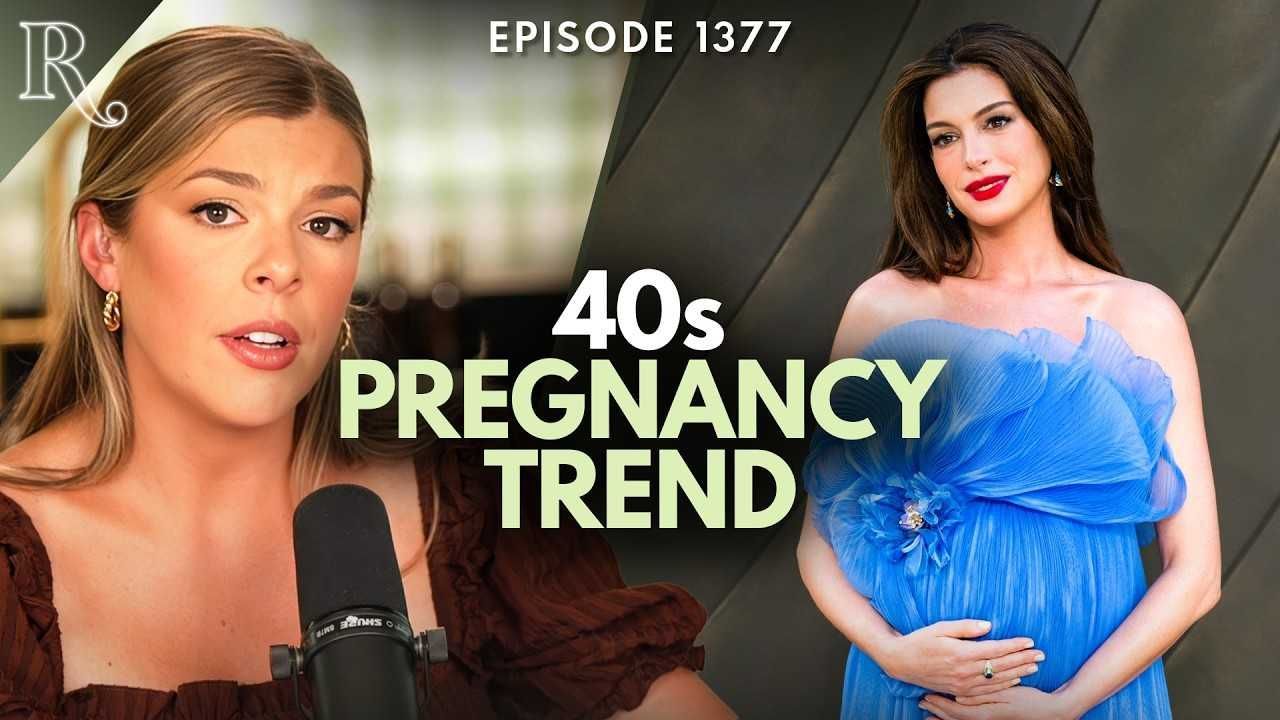
Pregnant celebrities on red carpets may make later-in-life motherhood look effortless, but BlazeTV host Allie Beth Stuckey is warning that the reality is far more complicated.
Most recently, Anne Hathaway graced the red carpet in a beautiful dress, showing off her bump at 43 years old. While this is Hathaway’s third baby, many women are taking it as proof that women can and should wait until their 40s to become a mother.
“She’s a beautiful pregnant woman. I am so happy for her,” Stuckey says. “And I’m so glad that she is on social media. She’s on the red carpet showing that you can do all of these things. You can have a baby. I also love that she is showing that you don’t have to stop having a baby when you’re 35 just because they call you ‘geriatric’ or whatever it is.”
“You can keep having a baby, and it's beautiful. It doesn’t ruin your life,” she adds.
Now, the media is running with Hathaway’s pregnancy and making it seem as if it's as easy to get pregnant in your 40s as it is in your 20s or 30s.
“The Wall Street Journal published an article on July 13 titled, ‘Your 40s used to be middle age. Not anymore,’” Stuckey explains.
“While I am happy about all the things that I listed, and I’m happy about the contribution of another image-bearer of God to the world, and I think motherhood is fantastic, the risks have not changed in association with pregnancy after 40,” she continues.
“Am I saying that you shouldn’t do it if you are a married woman? No. But just because we changed the name because geriatric was offensive doesn’t mean that the risks don’t exist. It is much more difficult to get pregnant after 35 and especially after 40,” she adds.
But the risks don’t just affect the mother.
“The risks to the baby do increase after that,” she says.
And it’s not just the health risks associated with later pregnancies that have Stuckey concerned, but the unrealistic view of time.
“It is pushing this idea that you can party through your 20s, chase your career through your 30s, choose to settle down when you are 38 and you will be just as likely to get married and have children and be a trad wife when you are 45 as if you did it when you were 25,” she says.
“I just don’t want to sell women this unrealistic vision of what their life will absolutely look like if they defer marriage for promiscuity and for their career to be a girlboss forever,” she continues.
“I don’t have a problem obviously with women getting pregnant later in life. I have a problem with us presenting that as if it ... is the ideal,” she adds.
To enjoy more of Allie’s upbeat and in-depth coverage of culture, news, and theology from a Christian, conservative perspective, subscribe to BlazeTV — the largest multi-platform network of voices who love America, defend the Constitution, and live the American dream.
 A few days before this week’s midterm elections, which saw Democrats run the table and reclaim control of the House and Senate, The Wall Street Journal’s nonsubstantive Peggy Noonan said this was exactly what she was hoping for. Unfortunately for her and other terrible people like her, she got what she wanted but not for […]

 The real story this data tells is Jackson's radicalism.
 Making America Great Again means not selling American babies.
 thefederalist.com
 www.theblaze.com
12 B-1 Bombers Left Britain over an Iranian Drone Plot | 10/6/26