The truth did not kill Jason Arday


I wanted a reckoning. I did not want Jason Arday dead.

Three days before he was found dead at his London home last week, I published a column entertaining what I admitted was a mischievous theory: Maybe the disgraced Cambridge professor was not merely a fraud but a world-class trickster who understood liberal institutions well enough to play their racial and ideological anxieties for all they were worth.

Maybe the cruelty was not that somebody finally checked. Maybe the cruelty was that almost nobody checked sooner.

I hoped someday he would confess. I even had the title of the book I wanted him to write: “I Thought You’d Believe Me.”

I wanted that book. I did not want an obituary.

Graeme Wood, writing this week in the Atlantic, makes a persuasive case that my trickster theory was a tad too generous. Arday apparently did not respond to exposure with the wink of a con man finally caught. He insisted he was not a liar. Wood reaches for Henrik Ibsen’s “The Wild Duck and its livsløgn — the “life-lie,” a sustaining self-delusion that eventually becomes impossible to let go.

Maybe that’s closer to what happened. We’ll likely never know.

What we do know is that Arday lied. A lot. His public biography accumulated claims about academic appointments, fundraising, extraordinary athletic feats, and racist attacks that proved false, dubious, or impossible to verify. His scholarship contained extensive passages alleged to have been lifted from the work of less prominent academics. Cambridge ultimately opened investigations into his academic work and qualifications and, after his resignation, agreed to an independent inquiry into his appointment.

Enough of these lies!

That includes the lie now being told about the people who exposed them.

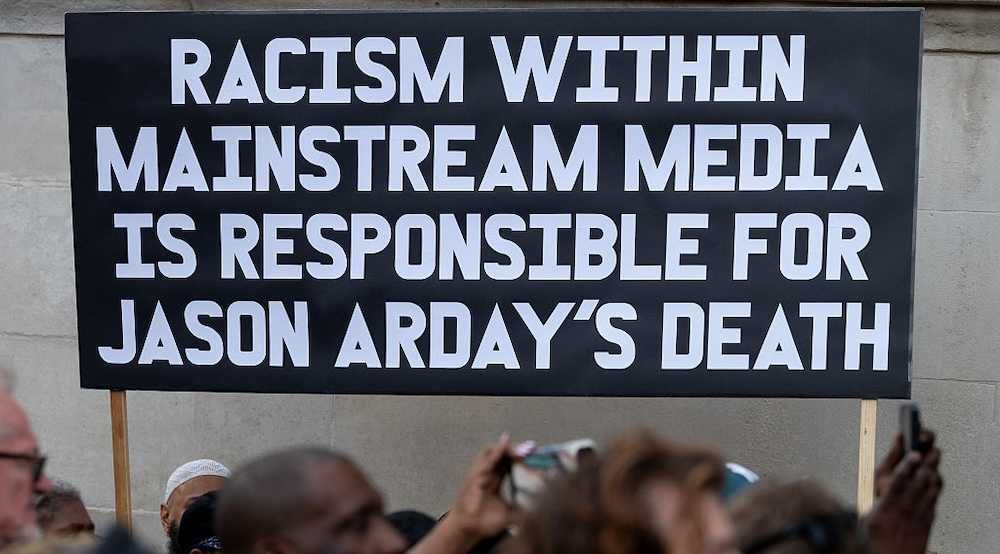
The fraud Ibram X. Kendi titled his response “The Media Lynched Jason Arday.” He says journalists have blood on their hands and treats Cambridge’s decision to investigate Arday as an abandonment of a prominent black scholar under racial attack. Wrong.

A lynching is not a metaphor for journalism you dislike. Reporting true and newsworthy facts does not become murder because the subject later dies.

What, exactly, should reporters have refused to investigate? The dissertation? The nonexistent appointments? The millions supposedly raised for charity? The 30 marathons in 35 days? The stories of racist attacks? The memoir?

RELATED: 5-star reviews for a fabulist memoir
Denise Baker/Getty Images

Precisely which question was forbidden?

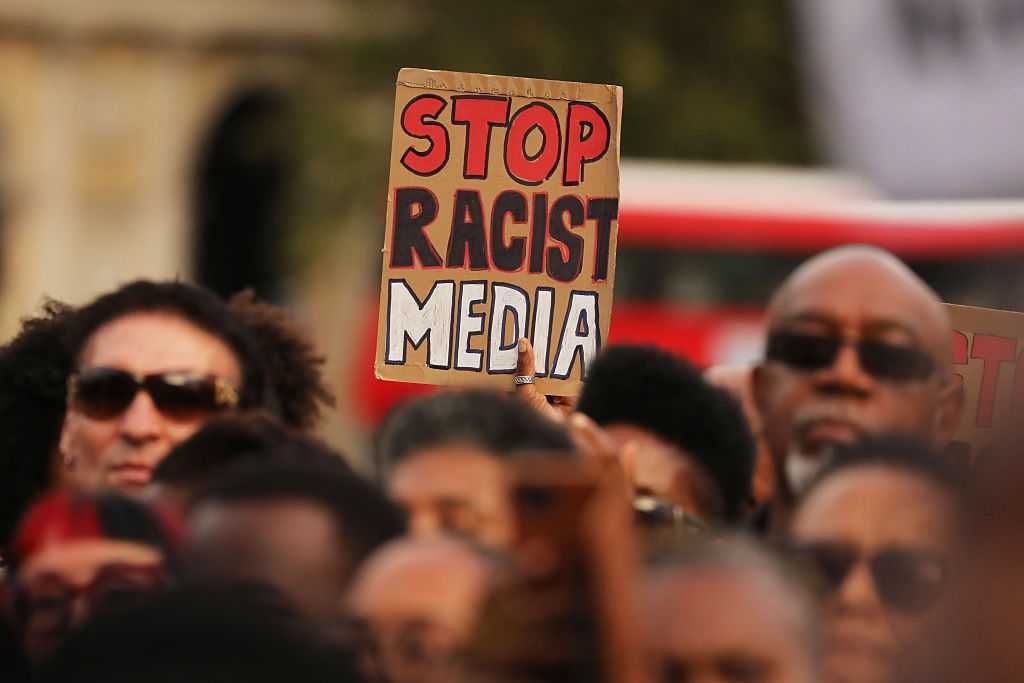
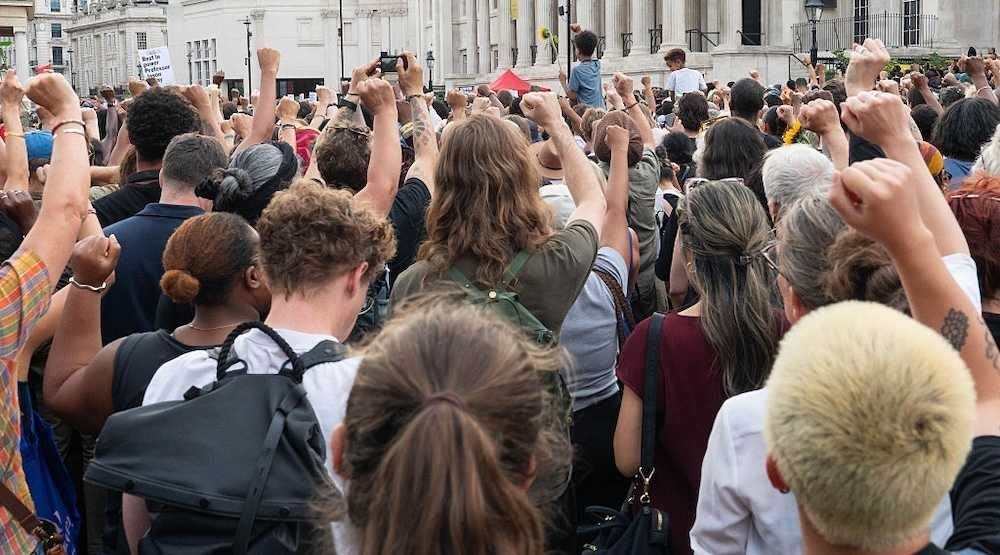
Thousands gathered in Trafalgar Square on Monday to mourn Arday. The grief was real. So was the anger at the press and at Nathan Cofnas, the academic whose investigation of Arday’s work helped start the avalanche. Cofnas has controversial views about race. So what? If he found copied work, the relevant question is whether the work was copied. His politics cannot restore originality to somebody else’s prose.

This is how the evasion works: Stop talking about the evidence and start talking about the man who found it.

Now comes the possibility of “Arday’s Law.” A petition circulating in Britain actually proposes legislation limiting how many articles may be published about one individual within a given period, on the theory that excessive coverage causes mental anguish. It had garnered more than 3,500 verified signatures as of Wednesday.

The answer to too much journalism, apparently, is a government quota on journalism.

I sometimes fear Britain is lost. Thank God for the First Amendment!

This idea did not appear from nowhere. We have spent years teaching people that speech itself can constitute harm and that institutions therefore have a duty to build ever-safer spaces around anyone who might be harmed by it.

But no space is ever safe enough.

Once speech becomes violence, censorship becomes “care.” Eventually, as we’ve seen, the safe-space logic escapes the campus. A reporter asks too many questions. Too many newspapers publish the answers. Somebody suffers. Therefore, the state must decide when everybody has said enough. No thanks.

RELATED: No, the founders did not ‘tell you so’
Guy Smallman/Getty Images

That is not “liberalism.” Liberalism properly understood demands something harder: accepting that free speech can be intrusive, offensive, unfair, and occasionally cruel while recognizing that giving government power to decide when enough has been said is much worse.

If we want to talk about who failed Jason Arday, look first at the institutions that elevated him.

Graeme Wood’s harshest argument is also his most compelling. Arday was placed in a position for which the evidence increasingly suggests he was nowhere near prepared, while colleagues and institutions such as Cambridge, the BBC, and Simon and Schuster amplified an extraordinary biography instead of bothering to check it. Eventually somebody was going to notice.

Maybe the cruelty was not that somebody finally checked. Maybe the cruelty was that almost nobody checked sooner.

After I learned that Arday had been found dead, I wrote one of my writers: Hubris met Nemesis. And the outcome was invariably the same.

That does not mean Arday got what he deserved. Quite the opposite. Nemesis in tragedy is not proportional justice. It is catastrophe. Recognition comes too late, the machinery is already moving, and the ending is worse than anyone wanted.

Arday’s family and friends deserve compassion. His kids especially. They lost someone they loved.

But compassion does not require one more lie.

Death does not authenticate a false claim. It does not make plagiarism original. And if Arday took his own life, suicide does not retroactively turn reporters into murderers.

The tragedy is terrible enough. Don’t lie about that, too.
Shelby and Eli Steele’s new film goes straight at the white-guilt grifters


Are you guilty? That depends. Are you white? Then yes, you are guilty. But whiteness is no longer the only offense. Believe in God? Believe Christ saves sinners? Believe in objective morality, the rule of law, or marriage between one man and one woman? Then skin color hardly matters. You are guilty anyway.

Guilty of what? Guilty of the sins of history, the inequities of the present, and whatever new offense the racial racketeers invent tomorrow. At least that is what grifters like Ibram X. Kendi and Robin DiAngelo have spent years selling to America, often for staggering sums underwritten by universities eager to flatter the ideology. Arizona State University, where I teach, has offered classes on the problem of whiteness. ASU’s Barrett Honors College teaches the evils of settler colonialism.

You, Mr. and Mrs. Taxpayer, are footing the bill for Struggle Session 101.

That is the backdrop for “White Guilt,” the new documentary from Shelby Steele and his son, Eli Steele, which premieres this week at ASU. Shelby Steele, a senior fellow at Stanford’s Hoover Institution and recipient of the National Medal of the Humanities, has spent decades writing about race, multiculturalism, and affirmative action. In his 2006 book “White Guilt,” he argued that racial moralism had become a tool for gaining power over others rather than a path toward justice.

The film appears at a moment when Americans have begun to see more clearly how much of the modern racial industry depends on intimidation, guilt, and fraud.

Steele understands the temptation from the inside. As a young man, he felt drawn to the black power movement. His parents had been active in the civil rights movement, and he wanted to help his community. But he came to see that race blame solves nothing. It degrades everyone it touches. Blame wielded by race remains racism, no matter who aims it or who absorbs it.

The better question, Steele argues, asks what it means to live as a free and responsible person. What happens when an individual takes responsibility for his own choices? What kind of life becomes possible when dignity comes from agency rather than grievance? That moral vision sits much closer to the American ideal than the racial spoils system now preached across much of higher education.

Steele rejects the fashionable claim that slavery was America’s original sin. The deeper sin, he argues, is the use of race to gain power over others. That temptation did not die with Jim Crow. It adapted. It migrated into institutions, party politics, nonprofits, and university bureaucracies. Today it thrives in classrooms where professors insist they do not teach racism while teaching students to judge one another by skin color, ancestry, and inherited guilt.

That fraud has paid well.

Black Lives Matter offered perhaps the clearest recent example. In the wake of Michael Brown’s death in Ferguson, BLM became a moral brand for affluent liberals, activist professionals, and corporate America. Shelby and Eli Steele explored the lie at the movement’s foundation in their earlier film, “What Killed Michael Brown?” Their new film picks up a related question: How did the language of anti-racism become such a lucrative racket?

The answer is not hard to find. Much of the left’s social justice industry runs on a simple formula: Manufacture guilt, divide people by race, promise absolution, then collect money, influence, and institutional power. Sell moral panic to well-intentioned Americans, then invoice them for redemption.

RELATED: The campus isn’t ‘misunderstood.’ It’s mismanaged — on purpose.

Artur Widak/NurPhoto/Getty Images

Want to end racism? Write a check. Sign the DEI pledge. Sit through the seminar. Keep your head down while the consultants explain that your skin makes you complicit and your silence proves your guilt.

The strategy stays simple. Divide humanity into categories. Teach each group to resent the others. Tell people that the brokenness of the world is not a permanent feature of fallen life but the fault of their neighbors. Then arrive as the enlightened manager who can fix it all, for a fee. That formula has wrecked poorer countries for generations. Now left-wing elites have imported it into American life, dressed it up in therapeutic language, and sold it as virtue.

Anyone who has spent time around a university classroom knows the script. A professor begins with a banal truth: The world is filled with injustice. The class nods. Then comes the poisonous turn: Would you like to know who is to blame? Look around the room. Identify the oppressor. Assign the guilt. Require ritual silence from some students and ritual confession from others. Repackage humiliation as education.

And you, Mr. and Mrs. Taxpayer, are footing the bill for Struggle Session 101.

Instead of surrendering to this politics of racial hatred, envy, and managed guilt, Americans should recover a better ideal. Freedom means more than license. It means responsibility. It means building a life through choice, discipline, and moral agency rather than through grievance and tribal score-settling. Whether the world crowns that life a success or a failure, it still belongs to you. No race hustler can take that from you.

“White Guilt” premieres March 25 at 6 p.m. at ASU Tempe in Bateman Physical Sciences F Wing, Room 166.

Erika Kirk Courageously Shows The Two Roads Before America

Charlie Kirk's widow shared the true Gospel of love and salvation in contrast to the left's secular religion of political hate and division.
Why more Americans are waking up to the intersectionality hoax


The best way to end racism in this country is to stop being racist — and that includes standing against the left’s obsession over race.

President Trump is cracking down on the left’s pervasive racism, veiled as “anti-racist,” by finally stopping the diversity, equity, and inclusion grift, which is just another iteration of cultural Marxism. Amid Trump’s pushback against DEI programs, however, we mustn’t overlook another destructive force used by progressives that underpins their race obsession: intersectionality.

Minorities serve the left’s intersectionality mission of dividing America.

Intersectionality is a leftist tool to pool various minorities and “marginalized” identity groups together into a politically viable mass. Each group is made to think, feel, act, speak, and — of course — vote alike.

Intersectionality is one of the ways leftists tell minority or “marginalized communities” that they are united in a glorious cause to defeat their oppressors — who always happen to be the ones to refuse the left-wing narrative.

These minority groups are often convinced by left-wing extremists to vote against their own best interests. It’s insidious.

Breaking the narrative

As your liberty-loving Latino, I can attest that race and ethnicity do not predetermine my worldview. For example, despite CNN’s claims, being Latino does not mean supporting illegal immigration. Many on the left argue otherwise.

The very idea that just because I’m Hispanic, I should automatically share a common cause with leftists who also happen to be minorities — or Democrats burdened by “white guilt” — is so absurd that even longtime Democrat mouthpiece and strategist James Carville has recently called on his own party to stop being racist.

Earlier this month, during his “Politics War Room” podcast, Carville — who has long chastised the Democratic Party for its obsession with “identity politics,” calling it “so freaking arrogant” — condemned his party as racist for constantly referring to blanket terms like “communities of color” and “people of color” to describe individual Americans. Sen. Elissa Slotkin (D-Mich.), who was on the podcast with Carville, agreed.

“The most racist thing that I hear is when people say ‘communities of color’ or ‘people of color’ because that assumes that everybody that is not white is the same,” Carville said. “Filipinos are the same as Hondurans, are the same as Nigerians, are the same as Indonesians? It’s absurd.” He continued: “And [Democrats] just keep using this language, and I think they’re too naive to know how stupid it is. That’s my own view.”

Yet these groups are lumped together by leftists in the Democratic Party and the press into one group. Why? Because, alone, they don’t make up a large enough voting bloc for left-wingers to give a darn. But together, they serve the left’s intersectionality mission: dividing America. Who cares if their issues are never addressed? They are united by collectivist thought. What matters is putting leftists in power.

The intersectional illusion

Even elitist Hollywood is rejecting the illusion of intersectionality. A Hispanic transgender person was caught failing to toe the leftist line when tweets by Oscar-nominated "Emilia Perez" star Karla Sofia Gascon surfaced. Her views on everything from George Floyd to Oscar diversity — Hollywood’s race-based award-rigging — were in complete discord with leftist orthodoxy.

I don’t particularly care about Gascon’s tweets, but the point is this: Someone who, by leftist logic, should have been all in on intersectionality because both brown and trans, wasn’t.

How many times have we seen this before? From Joy Reid’s anti-Semitic, Islamophobic, homophobic, and racist messaging blog posts to Dave Chappelle’s ongoing battle with the trans community to Kanye West’s many controversial statements.

These members of so-called minority groups aren’t supposed to say, feel, think, or do these things. But they did. Ain’t freedom grand?

Free thinking vilified

On the flip side, look at what happens when people who are supposed to be protected under this conformist blanket dare speak out of turn. Consider New York City Mayor Eric Adams (D) or Supreme Court Justice Clarence Thomas. Remember how Bruce Jenner was a left-wing darling for his transition before he donned a MAGA hat?

Take former Democratic National Committee powerhouse Lindy Li, an Asian woman who dared to say Kamala Harris was a weak presidential candidate. Li was lambasted by members of her own party for merely speaking her mind, and she ultimately left the Democratic Party altogether. In an interview, she referred to her “transition” as “like leaving a cult.”

Here we are in 2025 — and the tide is turning. I am the individual Chris Salcedo. I am a liberty-loving Latino. I am a proud Texan. I am not part of some arbitrary larger critical mass randomly lumped together by out-of-touch academics, cultural theoreticians, rowdy student protesters, or brain-dead ideologues in the biased press. And more people are waking up to the fake promise and cult-like reality of intersectionality.

Recent events in politics, entertainment, media, and economics finally indicate what we on the right have been fighting for: Intersectionality is dead. The emperor’s new clothes have been pointed out, and just like in the original fable, the clothes were never there to begin with.

Big DEI Booster Revamping K-12 History Curriculum In Republican-Run Iowa

The consultant coordinating Iowa's social studies revamp has a long history of pushing anti-Constitution prejudices about American history.

New York Times Ethicist Counsels Reader To Fight Racism By Dating Black Women

Poetic Justice is an advice column that offers better advice to submissions at other publications whose advice has failed the reader.